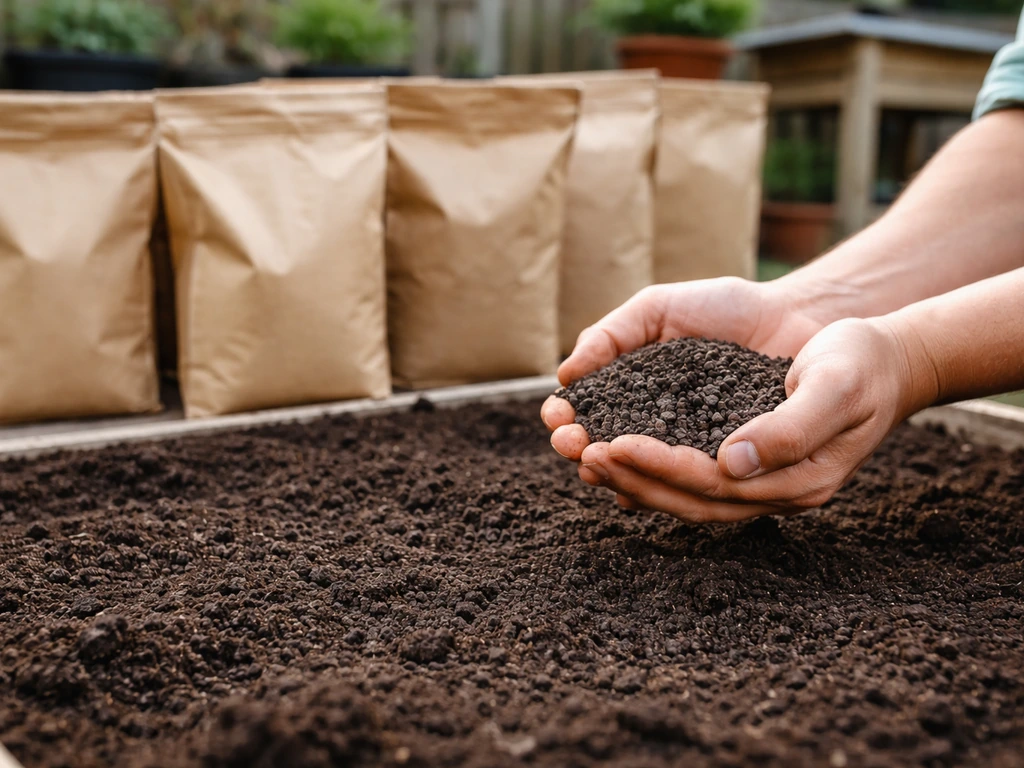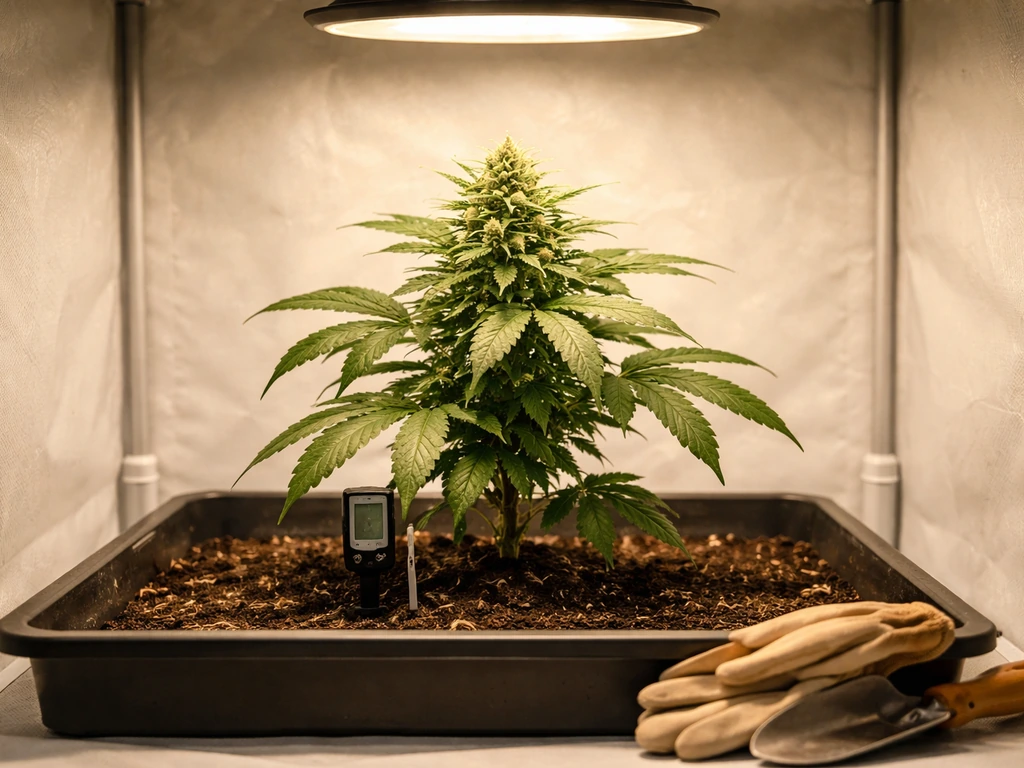
Grow More 20-20-20 is a balanced, water-soluble fertilizer that delivers equal parts nitrogen, phosphorus, and potassium to your plants. You mix it with water and apply it as a soil drench, a pot watering, or a foliar spray. For most home growers, the starting rate is 1 to 2 oz dissolved in 5 gallons of water per 20 square feet of growing area, applied every 1 to 3 weeks during the vegetative stage. That's the short answer. What follows is the full picture so you can dial it in for your specific setup, whether you're growing in soil or running a hydroponic system.
Grow More Fertilizer 20-20-20 How to Use Safely
Marcus Holloway
5 Apr 2026
What 20-20-20 actually means (N-P-K basics)
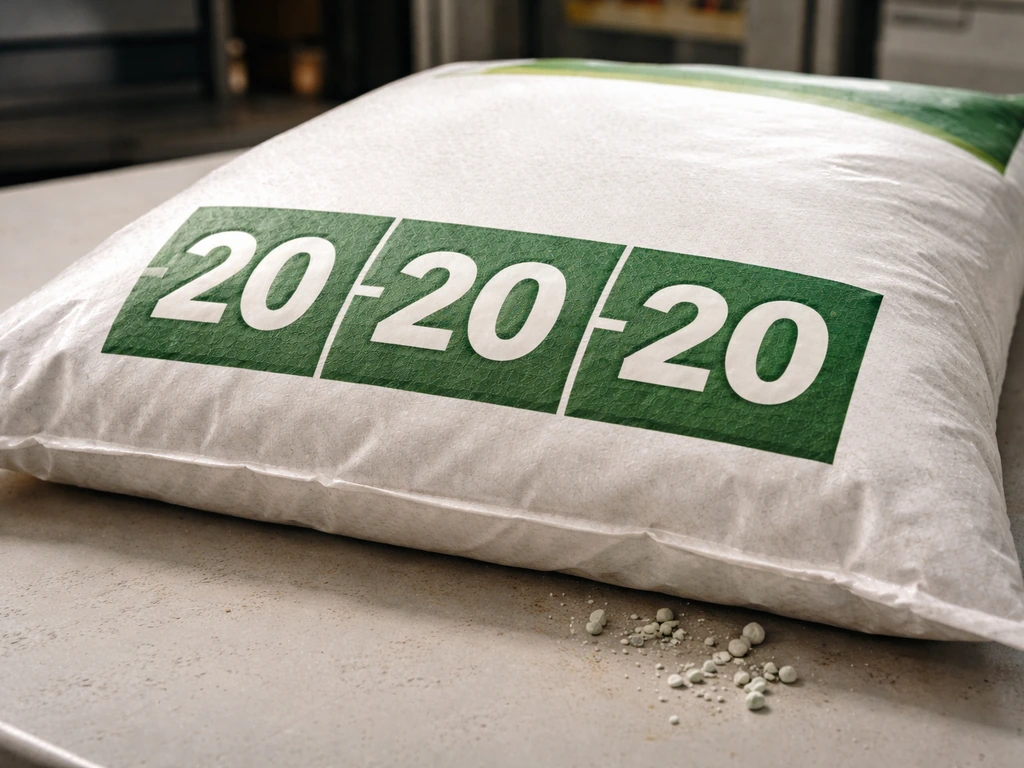
The three numbers on any fertilizer label represent the percentage by weight of nitrogen (N), phosphorus (P), and potassium (K) in that order. So a 20-20-20 formula contains 20% nitrogen, 20% phosphorus, and 20% potassium. These are the three macronutrients every plant needs in the largest quantities, and each one does a distinct job.
- Nitrogen (N): Drives leafy, green vegetative growth. It's the nutrient most responsible for how fast and how lush your plant grows above the soil line. Deficiency shows up first as yellowing on older, lower leaves that progresses upward.
- Phosphorus (P): Supports root development, energy transfer, and flowering initiation. Phosphorus-deficient plants often look weak and stunted, and can show delayed maturity.
- Potassium (K): Regulates water transport, strengthens cell walls, and supports overall plant health. A lack of it typically shows up as brown, scorched margins on the edges of older leaves.
A 20-20-20 ratio is described as "balanced" because it supplies all three in equal proportions. This makes it especially useful during vegetative growth when plants need all three simultaneously. It is not, however, a one-size-fits-all solution for every stage. More on that below.
When to reach for 20-20-20 (and when to skip it)
The sweet spot for 20-20-20 is the vegetative growth phase, when your plants are building stems, leaves, and roots before they ever think about flowering. That balanced N-P-K profile matches what a fast-growing plant actually needs right now. If you're growing cannabis, tomatoes, peppers, herbs, or leafy greens and your plants are actively putting on new growth, this fertilizer fits.
Once plants shift into flowering or fruiting, the math changes. A continued heavy nitrogen input at that stage can actually inhibit flowering and reduce fruit set in many species. If you're deep into bloom and running 20-20-20 as your primary feed, you may want to transition to a lower-N formula designed for that stage. Think of 20-20-20 as a vegetative workhorse, not a finish-line product. If you're curious how other popular nitrogen-forward options compare, the breakdown in Fox Farm Grow Big vs Big Bloom gives a useful side-by-side look at N-heavy vs. bloom-stage formulas.
Here are the clearest signs your plants are asking to be fed, specifically when a balanced formula like 20-20-20 makes sense:
- Older leaves yellowing and dropping while younger leaves look fine (classic nitrogen deficiency pattern)
- Slow, stunted growth despite adequate light, water, and temperature
- Pale green color across the whole plant rather than dark, glossy leaves
- Weak, leggy stems that can't support new growth
- Plants recently transplanted into fresh, unfertilized media
If your plants are showing brown, scorched leaf edges instead of yellowing, that's more likely a potassium deficiency or, critically, the opposite problem: too much fertilizer salt already in the medium. Don't add more until you've diagnosed it.
How to mix and apply 20-20-20 safely
Mixing rates
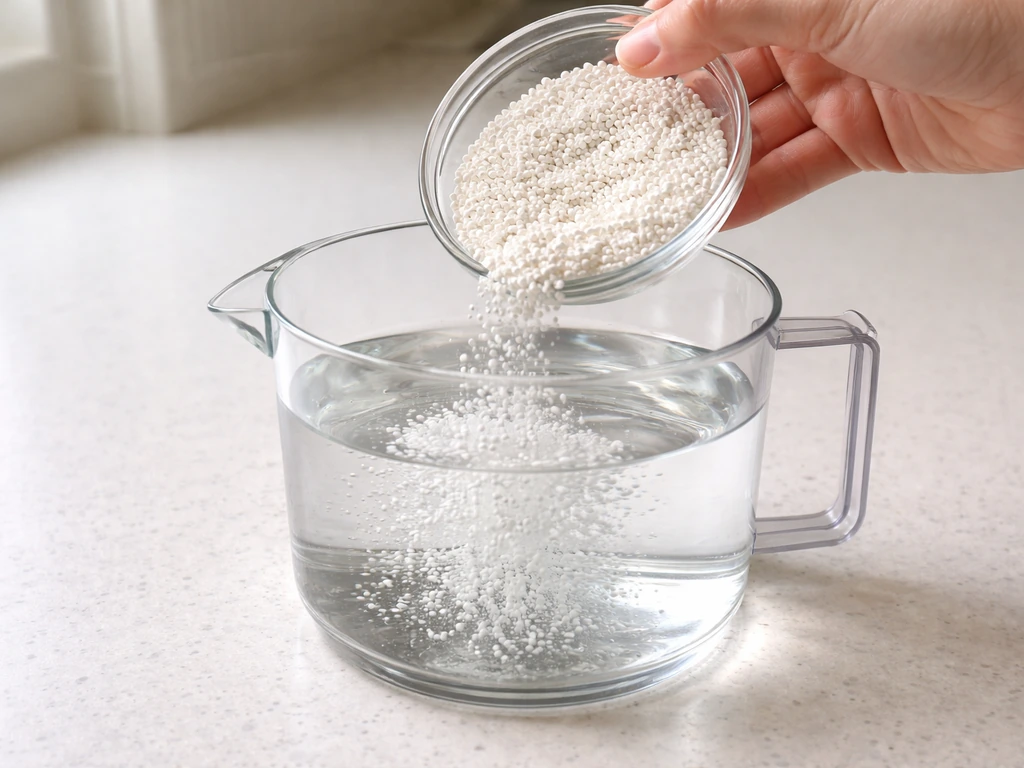
Always start by dissolving 20-20-20 fully in water before applying it to plants. The standard drench rate is around 2 lbs per 100 gallons of water, or scaled down for home use: approximately 1 to 2 oz per 5 gallons. For foliar spraying, the label rate goes higher, around 5 lbs per 100 gallons, because the solution contacts leaves rather than accumulating in the root zone. If you're following a constant-feed approach where you fertilize at every watering, use a much lower concentration in the 50 to 200 ppm nitrogen range, which is appropriate for seedlings on the low end and established vegetative plants on the higher end.
A practical ppm-based approach that extension horticulture programs use: start seedlings at around 50 ppm N from emergence through the first true leaf stage, watering every 3 days, then step up to 150 to 200 ppm N once the plant is actively growing. This removes the guesswork compared to eyeballing tablespoons into a watering can.
Application methods
| Method | Rate | Frequency | Best Use Case |
|---|---|---|---|
| Soil drench / pot watering | 2 lbs per 100 gal (≈1–2 oz per 5 gal) | Every 1–3 weeks | Established plants in containers or beds |
| Foliar spray | 5 lbs per 100 gal | Every 1–2 weeks | Quick correction of visible deficiencies |
| Constant feed (every watering) | 50–200 ppm N | Every watering (3+ times/week) | High-production containers, seedling trays |
Foliar feeding can be a fast way to correct a visible deficiency because the leaf absorbs nutrients directly, bypassing any root zone issues. If you want to compare different foliar options and understand when foliar application makes the most sense, the guide on the best grow foliar fertilizer approaches worth considering. For most routine feeding, though, soil drench or pot watering is simpler and more consistent.
One important safety note on concentration: high-rate starter solutions can become concentrated enough to burn tender roots and young transplants. If in doubt, go half strength on the first application and observe for 48 hours before committing to a full feeding schedule.
Soil vs. hydroponics: the dosing is different
Using 20-20-20 in soil
Soil acts as a buffer. It holds onto nutrients and releases them gradually, which means you have more margin for error but also more risk of salt accumulation over time. When you apply 20-20-20 in a container soil setup, always water thoroughly enough to produce some runoff, around a 20 to 25% leaching fraction. This pushes excess salts through the medium rather than letting them build up around the root zone. If you skip this consistently, salt concentrations rise, plants show symptoms of burn even at normal feeding rates, and you'll think you're underfeeding when the real problem is lockout.
Soil pH also matters more than most beginners expect. Phosphorus uptake drops significantly when soil pH climbs above 7.0. If you're applying 20-20-20 in an alkaline soil and wondering why plants still look deficient despite regular feeding, pH is likely the culprit. Test it. Aim for a root zone pH between 6.0 and 6.8 for most plants grown in soil. This is also why some growers who are used to nutrient-rich liquid programs wonder about crossover products, as explored in whether Fox Farm Grow Big Hydro works in soil, because hydro formulas behave differently in buffered media.
Using 20-20-20 in hydroponics
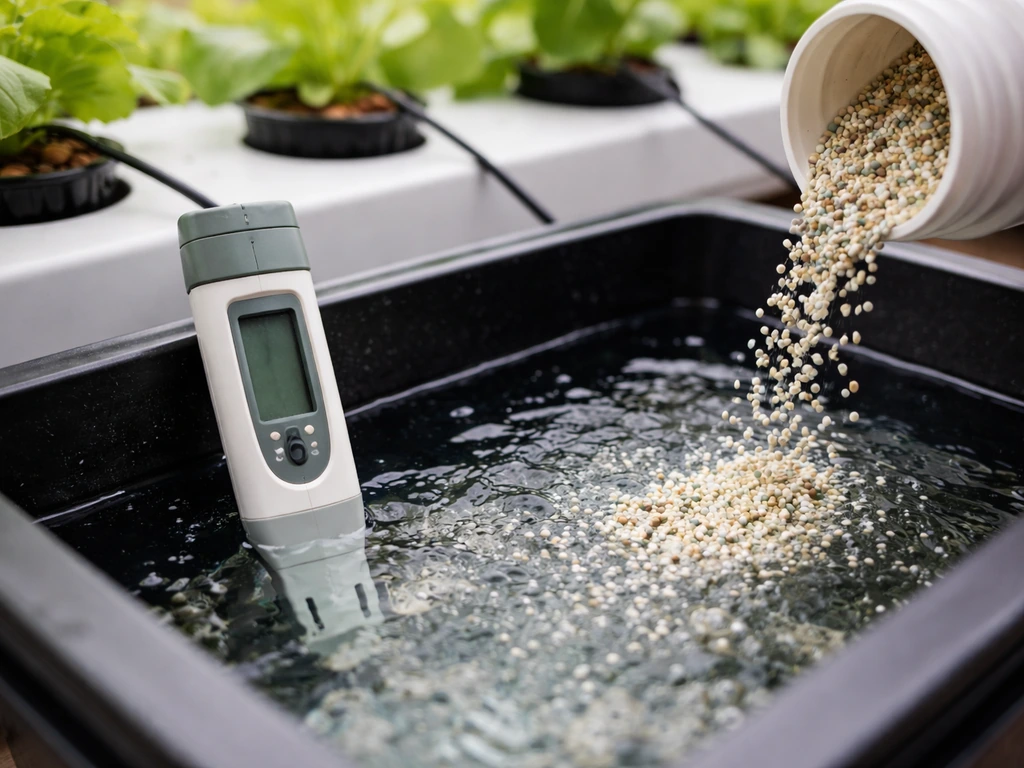
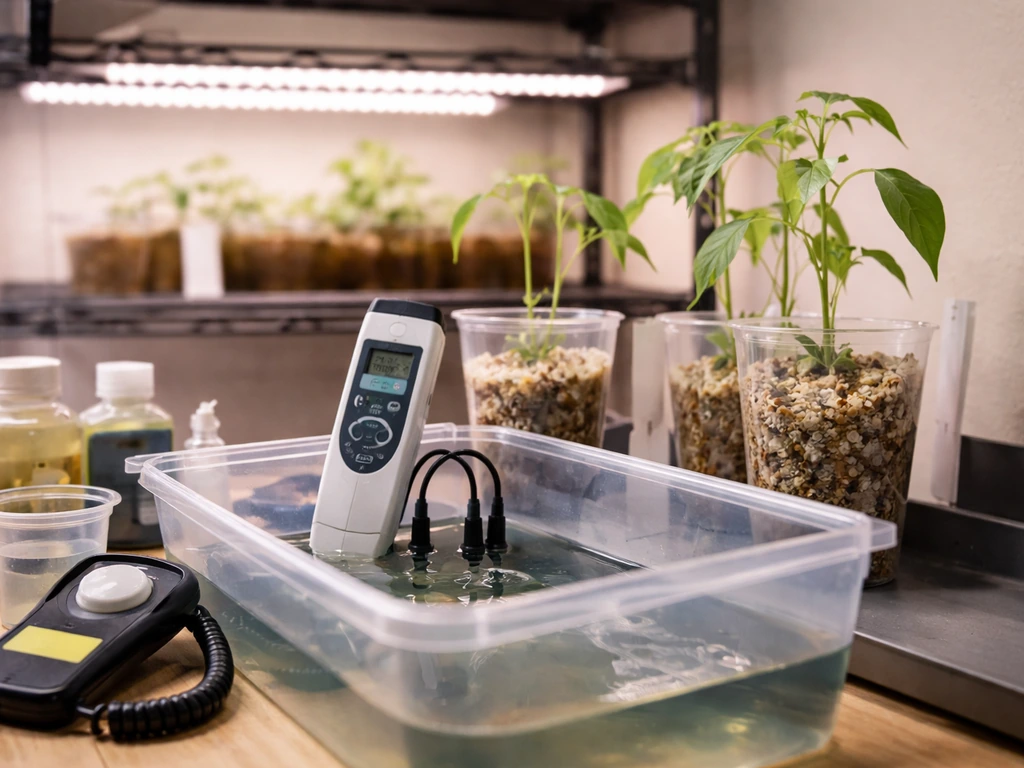
In hydroponics, there is no buffer. Whatever you put in the reservoir is what the roots get, directly and immediately. This means precision matters far more. You need to measure both pH and EC (electrical conductivity) of your nutrient solution every time you mix a fresh batch and ideally every 24 to 48 hours during an active grow.
Target EC for a vegetative stage hydro system using 20-20-20 sits roughly between 1.0 and 2.5 dS/m (millisiemens per centimeter), depending on plant species and growth stage. Target pH should stay between 5. For hydroponic (soilless) culture, Oklahoma State University extension recommends nutrient solution pH between 5 and 6 (usually about 5.5) and maintaining the root environment pH between about 6 and 6.5 pH between 5 and 6 (usually about 5.5) for hydroponic nutrient solutions, with root environment pH about 6 to 6.5. 5 and 6.2 for most crops in inert media like rockwool or hydroton. Outside that pH window, nutrient availability collapses even if your EC looks perfect on the meter.
There's also a water source issue. 20-20-20 adds a significant salt load to your reservoir, and your tap water is already contributing ions that affect EC and pH. High alkalinity source water will push pH upward over time. If you're mixing 20-20-20 into a reservoir and your pH keeps climbing, it's often the water's alkalinity, not your fertilizer mixing, that's driving it. Test your source water before diagnosing anything else. For growers who want to understand multi-nutrient management in a reservoir environment, the guide on using Advanced Nutrients Grow Micro Bloom covers the three-part approach and shows how to think about individual component ratios.
One more thing on hydro: dissolved oxygen in your reservoir should stay above 6 ppm for healthy root function. Good aeration keeps roots receptive to the nutrients you're providing. If you're feeding correctly by EC and pH but still seeing poor uptake, check your air pump output and water temperature. Warm water holds less oxygen.
Reading your plants and adjusting the program
After your first two or three feedings, your plants will tell you whether you're on track. Here's how to read what you're seeing:
| What You See | Likely Cause | What to Do |
|---|---|---|
| Dark green leaves, slow growth, no new shoots | Overfeeding nitrogen | Skip a feeding, flush with plain water, reduce concentration by 25% |
| Yellowing older leaves, fast growing tips look fine | Nitrogen deficiency | Increase feeding frequency or concentration slightly |
| Brown leaf margins/tips on older leaves | Potassium deficiency OR salt burn | Check EC and flush if EC is high; test pH before adding more K |
| Stunted plants despite feeding | pH lockout blocking uptake | Measure root zone pH, correct to 6.0–6.8 in soil, 5.5–6.2 in hydro |
| Leaf curl, crispy tips on young leaves | Fertilizer burn from over-concentration | Flush immediately, reduce rate, allow recovery before next feeding |
The single most useful diagnostic habit you can build is checking pH before assuming a nutrient problem. A balanced fertilizer like 20-20-20 becomes essentially useless if your root zone pH is outside the optimal window, because the nutrients are present but chemically unavailable to the plant. This is called nutrient lockout, and it's one of the most common reasons growers see deficiency symptoms in well-fed plants.
In hydroponics, EC gives you a second data point. If your EC is reading high (above 3 dS/m), back off the concentration before adding anything. If EC is low and plants still look deficient, pH is probably the issue. Note that EC measures total dissolved salts, not the balance of individual nutrients, so a solution can read a "correct" EC while actually being short on one specific element if your water source already contributes conflicting ions. EC is a useful indicator, not a complete picture.
For growers who want to compare how liquid-based fertilizer programs scale across different growth stages, the practical breakdown in how to use grow fast liquid fertilizer shows similar rate-adjustment logic in a different product context. The principles transfer directly.
Common mistakes and how to fix them fast
Fertilizer burn
Burn happens when the salt concentration around roots gets high enough to pull water out of root cells through osmosis, which is the opposite of what you want. You'll see it as crispy brown leaf tips, especially on younger growth, which differentiates it from potassium deficiency that shows on older leaves first. The fix is a thorough flush: run plain, pH-corrected water through the container at roughly 3 times the pot volume, then let the medium drain fully before resuming any feeding. Don't fertilize again for at least a week. This is the same approach for container growers dealing with accumulated salt deposits, where flushing clears absorbed salts from the medium.
Salt buildup in containers
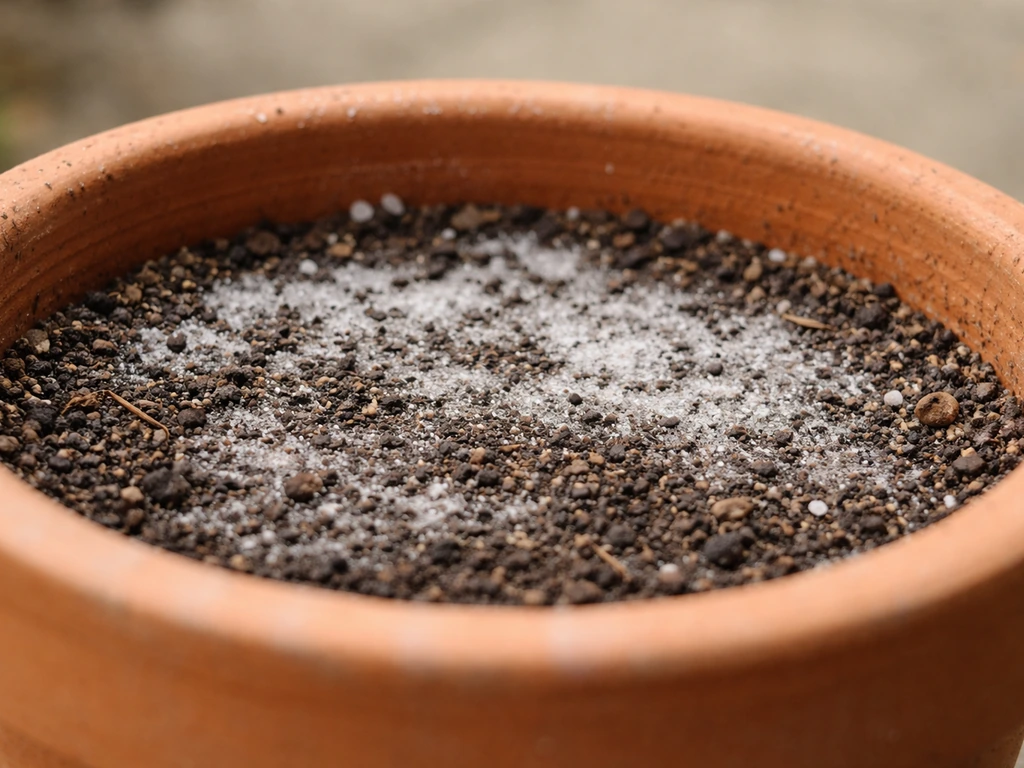
If you're growing in containers and applying 20-20-20 regularly without adequate drainage and leaching, salts accumulate. You'll often see a white crust forming on the soil surface or around drainage holes. Plants show increasingly poor response to feeding despite normal-looking leaf color. Flush the container thoroughly as described above, then resume feeding at half strength. Going forward, always ensure enough runoff per watering session.
Using it at the wrong growth stage
Running 20-20-20 through the flowering stage is one of the most common timing mistakes. High nitrogen at bloom suppresses flower development in many plant species and can cause excessive leaf growth at the expense of flowers and fruit. If you're seeing lush, green plants that refuse to flower, check your nutrient formula first. Transition to a lower-nitrogen, higher-phosphorus product when you switch photoperiod or when the plant naturally begins its reproductive phase. Some growers looking for something more versatile across stages explore options like liquid plant food formulas built to cover a wider growth window.
Expecting instant results
20-20-20 is water-soluble and acts faster than granular fertilizers, but you're still looking at 5 to 10 days before you see clear visual improvement in a deficient plant. Leaves that were already damaged don't recover; watch new growth for the response signal. If new leaves are coming in green and healthy, the feeding is working. If new growth is still showing symptoms after two full feeding cycles, revisit pH and check whether you're dealing with a different deficiency entirely.
Mixing without measuring
Eyeballing powder fertilizers into water is a reliable way to either underfeed or overfeed. Use a kitchen scale for mixing, especially in smaller volumes where small errors in measurement have big effects on concentration. A gram scale accurate to 0.1g is inexpensive and makes every feeding session repeatable. This discipline also matters when you start exploring other nutrient programs: multi-grow fertiliser mixing instructions follow the same principle of precise dilution over guesswork.
Is 20-20-20 the right choice for your grow?
For vegetative growth in soil or hydro, 20-20-20 is a solid, straightforward option that does what it says. It's particularly well-suited to growers who want one product to cover the early stages of a grow without buying a three-part nutrient system. It works in containers, raised beds, and hydroponic reservoirs when used at appropriate rates and paired with proper pH and EC management.
Its limitation is that it's not stage-specific. Once you move into bloom or fruiting, you'll want to transition to a formula with a lower nitrogen ratio and more phosphorus and potassium. If you're growing cannabis specifically and want a data point on how a nitrogen-forward product affects that plant type, the analysis in whether Fox Farm Grow Big is good for weed covers the same general principle of N-heavy products in veg versus bloom. The 20-20-20 logic is nearly identical.
The bottom line: use 20-20-20 during vegetative growth at 1 to 2 oz per 5 gallons every 1 to 3 weeks in soil, or at 1.0 to 2.5 dS/m EC with pH held at 5.5 to 6.2 in hydro. Measure before you mix, check your plants every few days, and flush if you see burn. That's the whole program.
FAQ
How do I adjust the mixing rate for seedlings or newly transplanted plants?
If the label rate and your water volume give you a starting solution strength, you should still scale down for tender plants. Use half strength for the first application, then wait 48 hours, because 20-20-20 can burn young roots even when the schedule is otherwise correct.
Can I feed 20-20-20 at every watering in soil instead of every 1 to 3 weeks?
Yes, but only if your system stays accurate. For constant feeding in soil, stick to a lower concentration strategy like the ppm approach mentioned in the article, and avoid frequent heavy dosing because salts can still accumulate even with a “balanced” fertilizer.
When should I use a foliar spray of 20-20-20 instead of watering the soil?
Foliar sprays should not replace root feeding for overall nutrition, especially in soil. Use foliar feeding mainly to correct a visible issue or bridge a nutrient shortage, and apply in low-light conditions to reduce evaporation and leaf scorch risk.
What if I mix 20-20-20 correctly but my pH and EC readings do not match what I expected?
If pH is correct and EC is in range but plants still stall, check the fertilizer solubility and mixing order. Always dissolve fully in water (no clumps), mix thoroughly, then recheck pH after the solution sits a few minutes.
How can I tell if 20-20-20 is no longer the right fertilizer for my plant stage?
Targeting the wrong stage is the most common reason for “no results.” If your plants are starting to flower or form fruit, 20-20-20 often becomes the wrong tool because nitrogen can suppress reproduction, so plan a transition to a lower-N formula at that stage change.
In hydroponics, should I correct EC only when it’s too high, or also when it starts climbing?
For hydro, don’t assume a high EC always means “more nutrients.” Measure pH and EC after mixing, then observe how EC changes over 24 to 48 hours, because evaporation and water source salts can push EC upward and force you to dilute or refresh sooner.
My soil surface has a white crust, is that always fertilizer, and what should I do next?
White crust on the surface usually points to salt buildup, but it can also come from hard water residues. If you see crust and your plants look stressed, flush with pH-corrected plain water and consider filtering or pre-treating water if the residue keeps returning quickly.
My leaves have scorched tips, how do I decide between potassium deficiency and fertilizer burn?
If only leaf edges show scorching, it can be salt stress or an uptake problem, but the fix depends on your pH test. First check runoff or reservoir pH, then consider flushing if you have salt buildup, rather than immediately increasing fertilizer.
Can I switch from 20-20-20 to a different fertilizer mid-grow without shocking the plants?
Yes, but it must be done in the same nutrient context. If you switch products mid-grow, match the new N level and the delivery method (soil vs hydro), because “balanced” ratios can still behave differently depending on buffering and existing salt accumulation.
What’s the safest flushing schedule after fertilizer burn in containers?
For container flushing, using more water than you think helps, and timing matters. Run pH-corrected plain water until you get noticeable runoff, let the pot fully drain, then resume at half strength, waiting about a week before the next full feeding as the article suggests.