What to grow based on your setup size
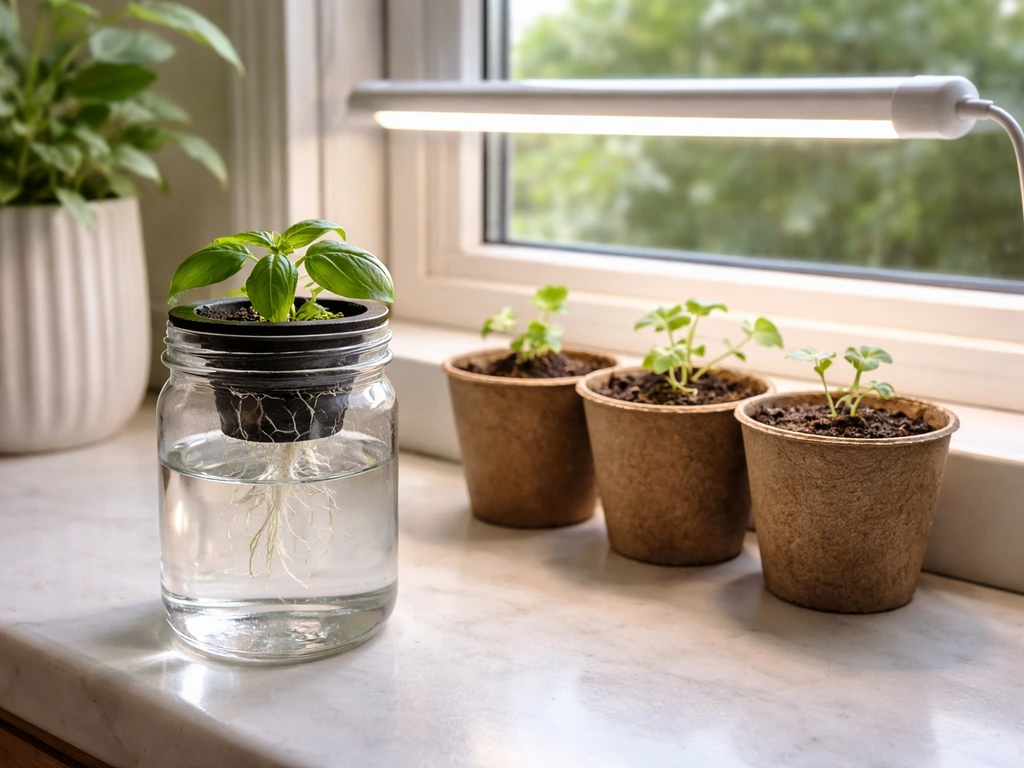
The biggest mistake new growers make is picking plants before they've thought about their system. A small countertop Kratky jar and a full NFT or DWC setup can grow the same species in theory, but the yields, effort, and results are very different. Before you buy seeds, think about what you're actually working with.
Small setups: a few pots, a basic grow light, or a Kratky-style container
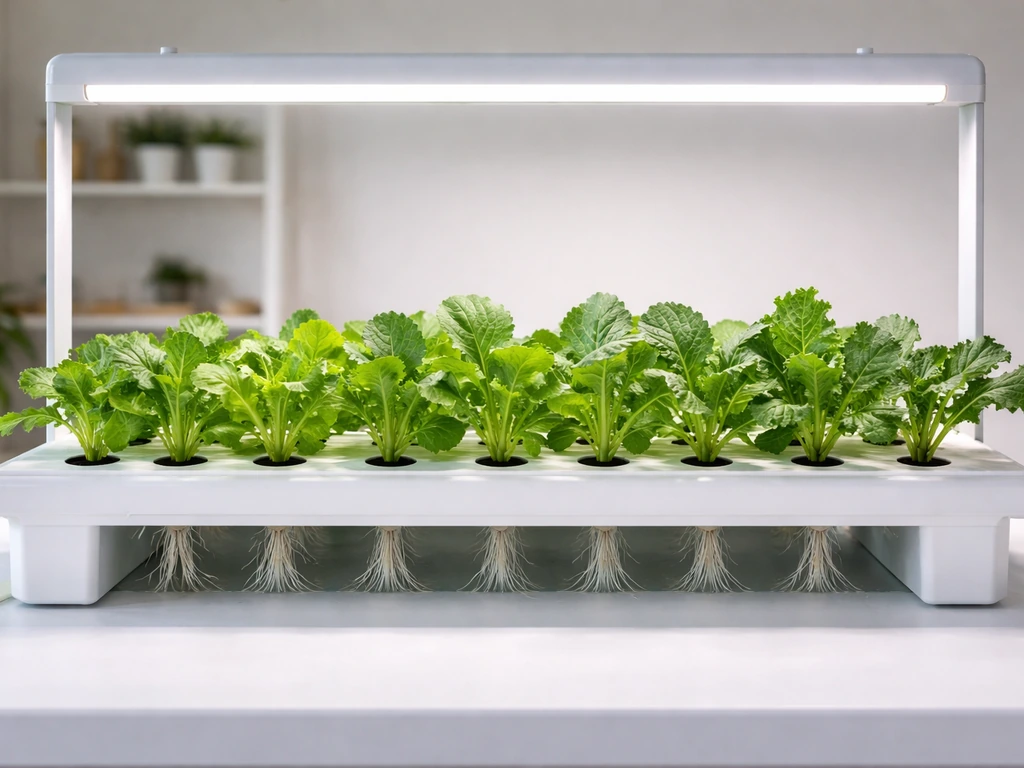
For small gardens, stick to crops with shallow root systems and fast turnover. Lettuce, basil, cilantro, spinach, green onions, and radishes are your best friends here. These plants don't need aggressive aeration, they tolerate minor pH swings better than fruiting crops, and they give you something to harvest quickly, which matters a lot when you're still learning the system. Radishes are especially satisfying because they're harvestable in about 3–4 weeks after planting, making them one of the best crops for building early confidence in a new setup.
Full systems: NFT, DWC, ebb and flow, or multi-site setups
With a full recirculating system, your options open up considerably. You can run leafy greens at scale for continuous harvests, or move into fruiting plants like tomatoes, peppers, cucumbers, and strawberries. If you're running a nutrient film technique setup, knowing what to grow in an NFT system is worth spending time on, because channel slope, flow rate, and plant root mass all affect what performs well in that format. Fruiting crops generally need more root volume, stronger lighting, higher nutrient concentrations, and more careful pH management than leafy greens do.
Best leafy greens and herbs to start with
Leafy greens and herbs are the ideal first category for any hydroponic grower, beginner or not. They have short cycles, don't require pollination, and give you clear visual feedback when something's off. Here's what performs best and what to expect from each.
Lettuce
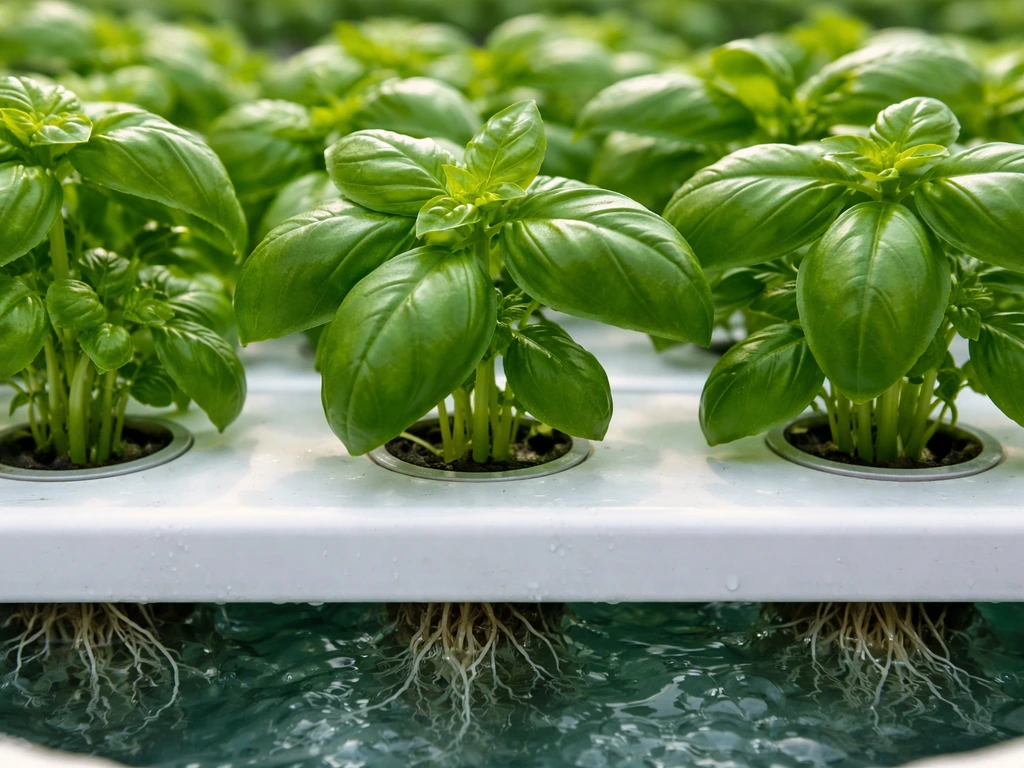
Lettuce is the gold standard hydroponic crop. It grows fast, tolerates a wide range of conditions, and can be harvested as a cut-and-come-again crop or pulled whole. Loose-leaf varieties like Buttercrunch, Green Oak, and Red Sails outperform head lettuce in most small hydroponic setups because they don't need as much depth or root room. Expect harvest-ready plants in 30–45 days from transplant.
Basil
Basil is a high-reward herb for hydroponics. In a DWC system with decent lighting, you can get a first significant cutting at around 28 days. The key with basil is to harvest aggressively: pinch the tops above a leaf node consistently and the plant will bush out and produce for months. Basil does like warmth (keep solution temps between 65–75°F) and it's sensitive to overwatering in passive systems, so active aeration helps.
Cilantro
Cilantro is a cut-and-come-again crop, meaning you harvest the outer leaves while leaving the central growing point intact. This approach gives you a continuous supply from a single plant rather than one big harvest followed by bolting. The trick with cilantro in hydroponics is temperature: it bolts fast above 75°F, so it's better suited to cooler grow spaces or winter indoor grows.
Spinach, mint, and green onions
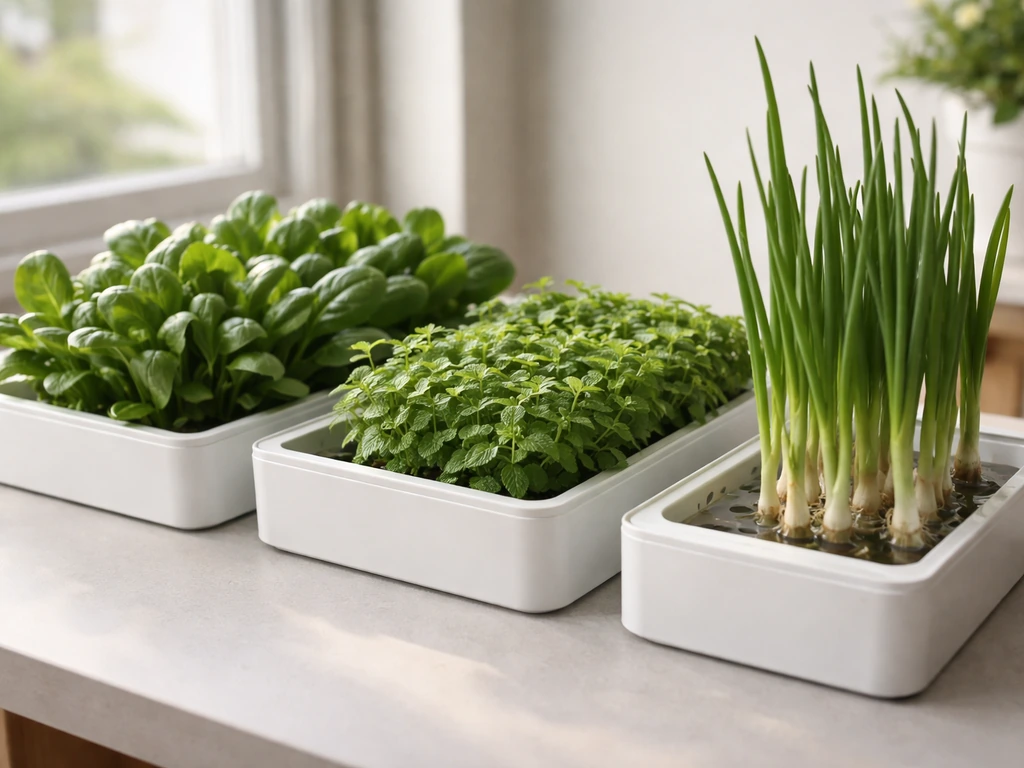
Spinach is fast and nutritious, typically ready in 40–50 days. Mint is nearly unkillable hydroponically and spreads aggressively, so give it its own container or it will dominate your system. Green onions are excellent for small spaces because they take up almost no root room and regrow after cutting, giving you multiple harvests from a single planting. If you're propagating plants from an existing crop, understanding how to grow clones hydroponically can extend the life of your best performers without starting from seed every cycle.
Best fruiting plants and high-yield crops
Fruiting crops are a bigger commitment than greens and herbs. They need stronger light, higher nutrient concentrations, more root volume, and in most cases some form of physical support (trellising or caging). But the yields can be spectacular, and there's something genuinely satisfying about pulling a tomato from a hydroponic system you built yourself.
Tomatoes
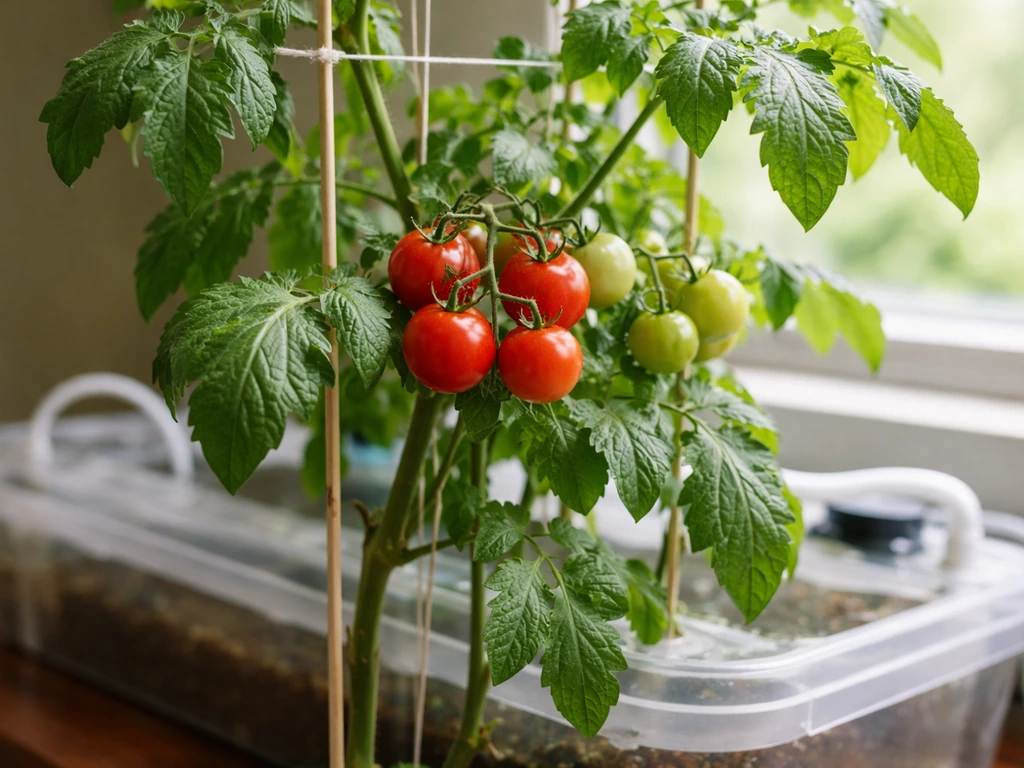
Tomatoes are the most popular fruiting crop in home hydroponic setups. Determinate (bush) varieties like Tumbling Tom or Patio are better for smaller systems, while indeterminate varieties like Beefsteak or Big Boy can produce for months but need serious vertical support and root space. Choosing the best container to grow tomatoes hydroponically matters more than most beginners realize, because root volume directly affects fruit size and yield. Expect 60–90 days from seedling to first harvest, depending on variety.
Cucumbers and peppers
Cucumbers are one of the fastest fruiting crops in hydroponics, often producing harvestable fruit in 50–70 days. They love high humidity and warm temps, and they respond extremely well to DWC and ebb-and-flow systems. Peppers take longer (70–90 days to first fruit) but produce for extended periods and don't need as much light as tomatoes do. Both crops need hand or vibration pollination indoors since there are no pollinators.
Strawberries
Strawberries are a rewarding but light-hungry crop. They need 12–16 hours of bright grow light daily and a target minimum DLI around 17 mol/m²/day for optimal yield. Running them under weak lighting will get you leaves but very little fruit. Day-neutral varieties like Albion or Seascape are the best choice for indoor hydroponic growing because they fruit regardless of photoperiod. Expect the first significant fruit harvest about 60–90 days after transplant from runners.
What to watch with fruiting crops
The biggest failure points with fruiting crops in hydroponics are nutrient imbalances during flowering and fruiting, poor pollination indoors, and inadequate light. EC (electrical conductivity) needs to be bumped up during the fruiting stage, typically to 2.5–4.0 mS/cm depending on the crop, compared to 1.2–2.0 mS/cm for leafy greens. Keep a close eye on your pH too. Letting it drift outside the 5.8–6.3 range locks out specific nutrients exactly when the plant needs them most for fruit development.
Root vegetables and other less obvious crops: what's actually feasible
Root vegetables are where hydroponics gets a little counterintuitive. Most people assume you can't grow them without soil, but several root crops do work hydroponically, with caveats.
| Crop | Hydroponic Feasibility | Best System | Notes |
|---|
| Radishes | Excellent | DWC, Kratky, NFT | Ready in 3–4 weeks; great starter crop |
| Carrots | Moderate | Deep DWC or aggregate beds | Needs 8–12 inches of depth; slower growth |
| Beets | Moderate | Aggregate/media bed | Root and greens both edible; needs space |
| Turnips | Good | Media bed, DWC | Fast-growing; good for cool temps |
| Potatoes | Difficult | Aeroponics | Possible but not beginner-friendly; needs specialized setup |
Radishes are the clear winner in this category. They're shallow-rooted, fast, and actually thrive in standard hydroponic media. Carrots and beets are doable but require significant root depth and longer grow times, so they're better suited to media bed systems with 8–12 inches of substrate. Potatoes can technically be grown hydroponically, especially in aeroponic systems, but it's an advanced project that doesn't make much economic or practical sense for most home growers.
If you're approaching this from a survival or simulation gaming angle and wondering about crop efficiency in constrained environments, the logic maps pretty closely to real hydroponics: fast-cycling, high-calorie or high-yield crops per square foot win. The best food to grow in hydroponics in RimWorld follows similar prioritization logic to what works in a real small-space system, and it's a fun way to think through space and calorie efficiency before committing to a real build.
How to choose what to grow based on light, space, and system type
Plant selection and system selection are not separate decisions. They feed into each other, and getting the match wrong is one of the most common reasons hydroponic grows underperform. Here's how to think through it.
Light is the hard limit
Low light (under a single T5 or equivalent, or relying on window light) limits you to leafy greens and herbs. These crops are genuinely productive under modest lighting. Fruiting crops, especially tomatoes, peppers, and strawberries, need high-output LEDs or HID lighting with real intensity and duration. Trying to grow tomatoes under insufficient light gives you tall, leggy plants that flower weakly and produce almost nothing. Don't fight this reality; match the plant to the light you actually have.
Space defines root volume and plant size
A 2-gallon reservoir per plant is enough for lettuce and most herbs. Tomatoes and cucumbers need 3–5 gallons of solution volume per plant minimum, and that's for smaller varieties. If you're working with a compact setup, prioritize smaller plants with faster turnover rather than trying to cram a single large plant into a space it'll quickly outgrow.
Match the plant to the system
Different hydroponic systems suit different crops. Kratky (passive, no pump) works well for lettuce, herbs, and small greens but struggles with fruiting plants. DWC (deep water culture) is versatile and handles both greens and fruiting crops well. NFT works beautifully for leafy greens but can stress larger plants with bigger root masses. Ebb and flow is flexible but adds complexity. Aeroponic systems offer the fastest growth rates but require the most technical precision in pH and EC management.
Monitoring EC and pH isn't optional in any of these systems. Guidance from university-level hydroponics research (including work by Howard M. Resh, widely referenced in Purdue Extension materials) consistently emphasizes root-zone pH and EC management as the central factor in avoiding problems like nutrient lockout, bolting in greens, and fungal issues in fruiting crops. Keep pH between 5.8 and 6.3 for most crops, and check it every 2–3 days at minimum.
A practical crop-to-system match guide
| Crop Type | Best Systems | Light Requirement | Difficulty |
|---|
| Lettuce, spinach | Kratky, NFT, DWC | Low to moderate | Beginner |
| Herbs (basil, cilantro, mint) | Kratky, DWC, NFT | Moderate | Beginner |
| Radishes, green onions | DWC, Kratky, media bed | Low to moderate | Beginner |
| Strawberries | DWC, NFT, tower systems | High (12–16 hrs) | Intermediate |
| Tomatoes, peppers | DWC, ebb and flow | High | Intermediate |
| Cucumbers | DWC, ebb and flow | High | Intermediate |
| Carrots, beets | Media bed, deep DWC | Moderate | Intermediate |
| Potatoes | Aeroponics | High | Advanced |
For players or growers trying to optimize within a specific constrained system (like limited grow spaces in a game or a real small-scale setup), thinking through what to grow in hydroponics in RimWorld can actually be a surprisingly useful mental exercise for working out crop rotation and space efficiency principles before applying them to a real garden.
Getting started: crop planning, timelines, and first-grow tips
If this is your first hydroponic grow, here's the practical path that gives you the best odds of a successful first harvest and a second one after that.
Start with one crop, not five
Every new grower wants to fill their system with variety. Resist that. Start with lettuce or basil exclusively. Learn how your system behaves: how fast the reservoir depletes, how often pH drifts, how the plants signal stress. Once you've run one full cycle successfully, add a second crop. Adding complexity before you understand your baseline is the fastest way to confuse yourself when something goes wrong.
Realistic timelines by crop category
- Radishes: 3–4 weeks from planting to harvest
- Lettuce and spinach: 30–45 days from transplant
- Basil: first significant cutting around 28 days in DWC under good light
- Cilantro and mint: ongoing harvest after 3–4 weeks of establishment
- Strawberries: 60–90 days to first fruit from transplanted runners
- Tomatoes and peppers: 60–90 days from transplant to first harvest (variety dependent)
- Cucumbers: 50–70 days from transplant to first fruit
First-grow checklist
- Choose one beginner-friendly crop (lettuce or basil recommended)
- Set up your system and run plain water through it for 24 hours to check for leaks and pump issues
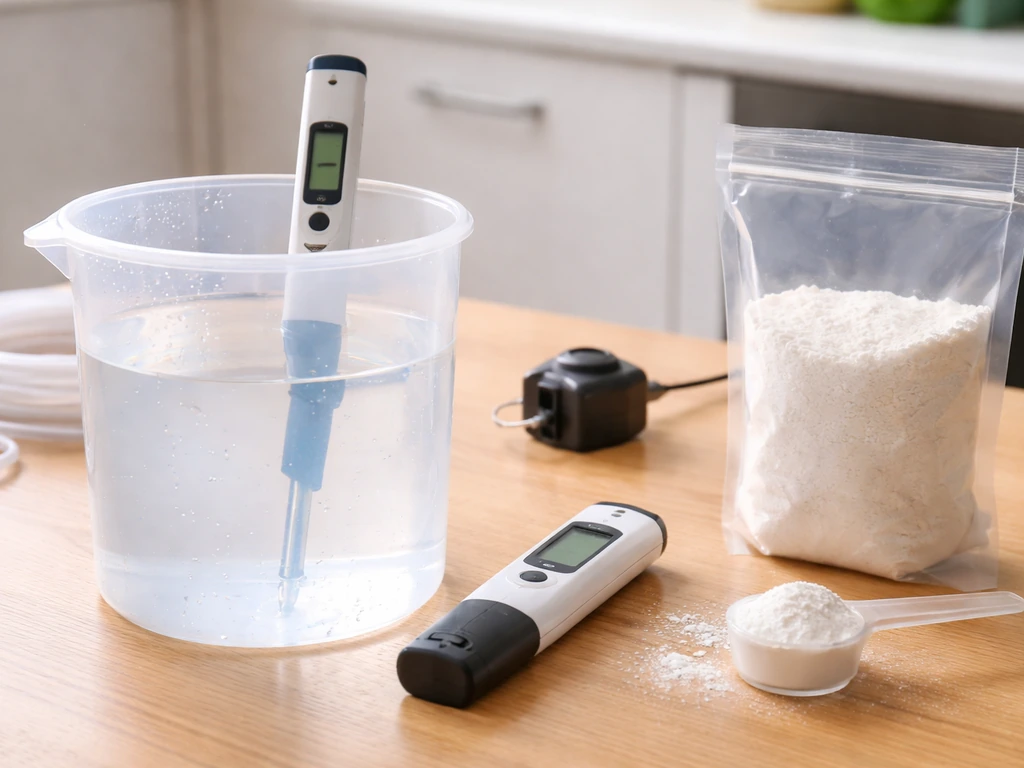
- Mix your nutrient solution and confirm pH is between 5.8 and 6.3 before adding plants
- Check and log pH and EC every 2–3 days for the first two weeks
- Top off the reservoir with plain pH-adjusted water as levels drop; do a full nutrient change every 7–14 days
- Keep a simple grow journal: date, pH, EC, any plant observations
- Harvest at the right time (don't wait for bolting in greens) and then evaluate what to grow next
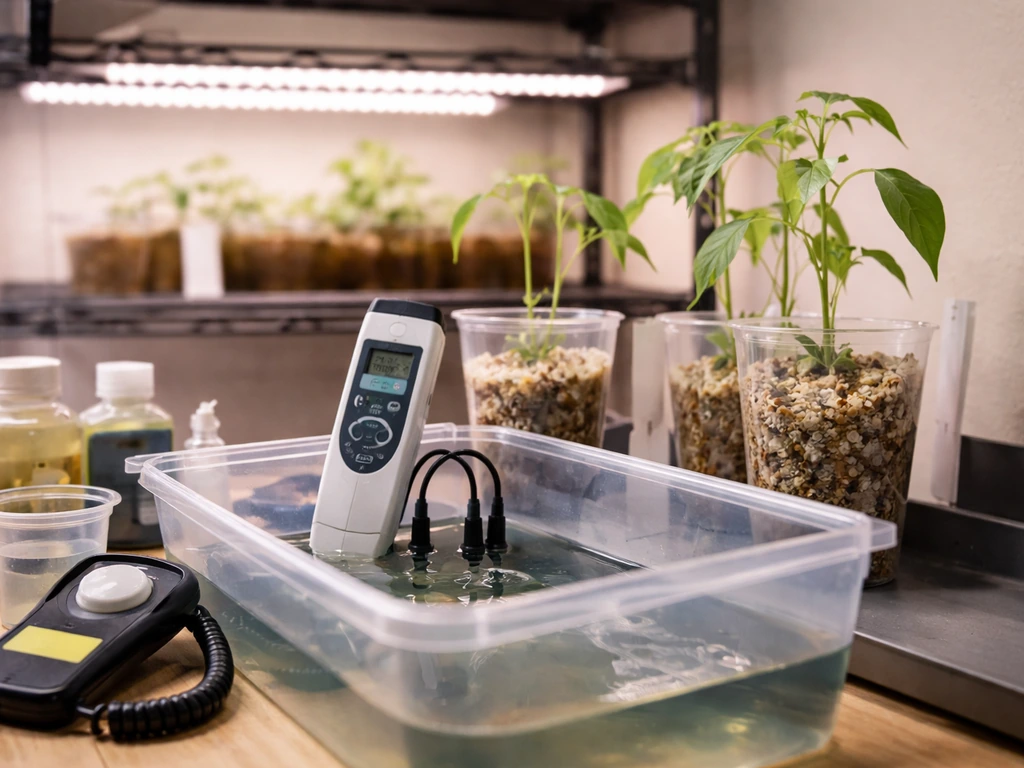
The nutrient solution management piece is non-negotiable. A pH that drifts above 6.5 or below 5.5 locks out specific nutrients and causes deficiency symptoms that look alarming but are entirely preventable. Get a reliable digital pH meter (not the cheap drops) and calibrate it regularly. EC meters are equally important once you move into fruiting crops where nutrient concentration needs to increase through the grow cycle.
Once your first crop is done, you'll have a much clearer sense of what your setup is actually capable of and what you want to try next. Most growers who start with leafy greens move toward herbs and then fruiting crops over three or four cycles. That progression isn't mandatory, but it maps well to how systems and grower confidence develop together. The best crop to grow hydroponically is ultimately the one that fits your light, your space, and your schedule, but if you're asking where to begin, start with lettuce, keep your pH in range, and go from there.