The best fertilizer for an outdoor grow depends on two things: your plant's current growth stage and whether you're growing in native soil, raised beds, or containers. For vegetative growth, you want a higher nitrogen (N) ratio. For flowering and fruiting, you shift toward phosphorus (P) and potassium (K). The simplest shortcut: use a balanced all-purpose feed early in the season, then switch to a bloom-focused formula once flowering starts. Everything below explains how to do that step by step, whether you're going organic or synthetic, soil or outdoor hydro.
Best Fertilizer for Outdoor Grow: Bloom and Veg Guide
Marcus Holloway
3 Apr 2026
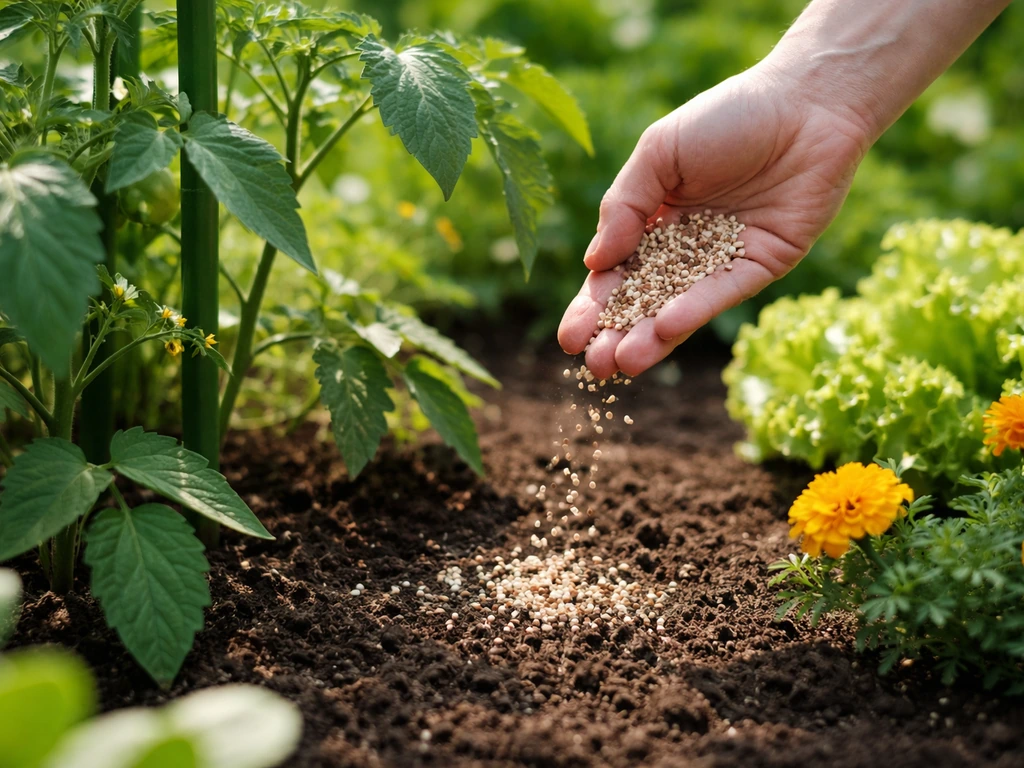
How to choose the right outdoor fertilizer (N-P-K and timing)
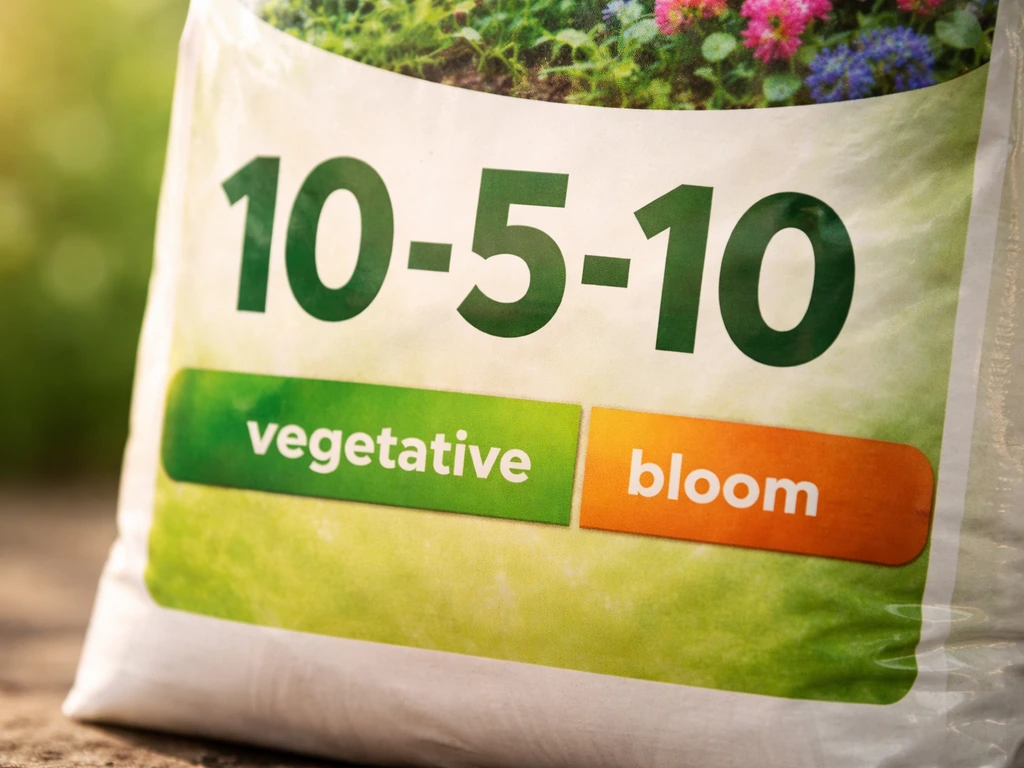
Every fertilizer label shows three numbers separated by dashes. That's the N-P-K ratio: nitrogen, phosphorus, and potassium. Nitrogen drives leafy, vegetative growth. Phosphorus supports root development and flower initiation. Potassium becomes increasingly critical as plants transition from flowering to fruiting, improving fruit quality and stress tolerance. Read those three numbers before you buy anything.
For most outdoor plants during the vegetative phase, you want N higher than P and K. Something like 10-5-5 or 4-6-2 works well here. Once flowering starts, flip that thinking: drop N, raise P and K. A ratio like 6-18-6 or 3-4-6 is much more appropriate at that stage. If you keep feeding high-N into the flowering phase, you'll get lush green growth and poor flower or fruit development.
Timing matters as much as ratio. Most extension guidance recommends splitting your fertilizer applications across the season rather than dumping it all in at planting. A preplant application (mixed into the top few inches of soil before transplanting) handles early root establishment. Follow-up feeds every 1 to 2 weeks during active growth match the plant's actual demand. Late in the season, especially in the final 4 to 6 weeks before harvest, nutrient uptake naturally slows, so pulling back on fertilizer at that point is normal and expected.
Before you apply any phosphorus, it's worth doing a basic soil test. Excess phosphorus in runoff contributes to harmful algal blooms in nearby water bodies. If your soil already tests adequate for P, you can skip P-heavy formulas and focus on N and K. University of Missouri Extension notes that phosphorus is one of the three primary nutrients and that natural soil P can limit plant growth natural soil phosphorus can limit plant growth. Many county extension offices offer soil testing services that tell you exactly what your ground needs.
One more label detail to check: slow-release vs. water-soluble. Quick-release water-soluble fertilizers are immediately available to roots when placed correctly and timed well. Controlled or slow-release fertilizers break down gradually, which reduces the risk of nutrient leaching under heavy outdoor rain. For outdoor grows exposed to weather, slow-release formulas offer a meaningful insurance policy, especially in wet climates.
Best organic store-bought options for outdoor grow
Organic fertilizers feed the soil biology first, which then feeds your plants. They release nutrients more slowly, rarely cause burn at recommended rates, and improve soil structure over time. The trade-off is that they work best when soil temperatures are warm enough for microbial activity, so in early spring they can be slow to show results.
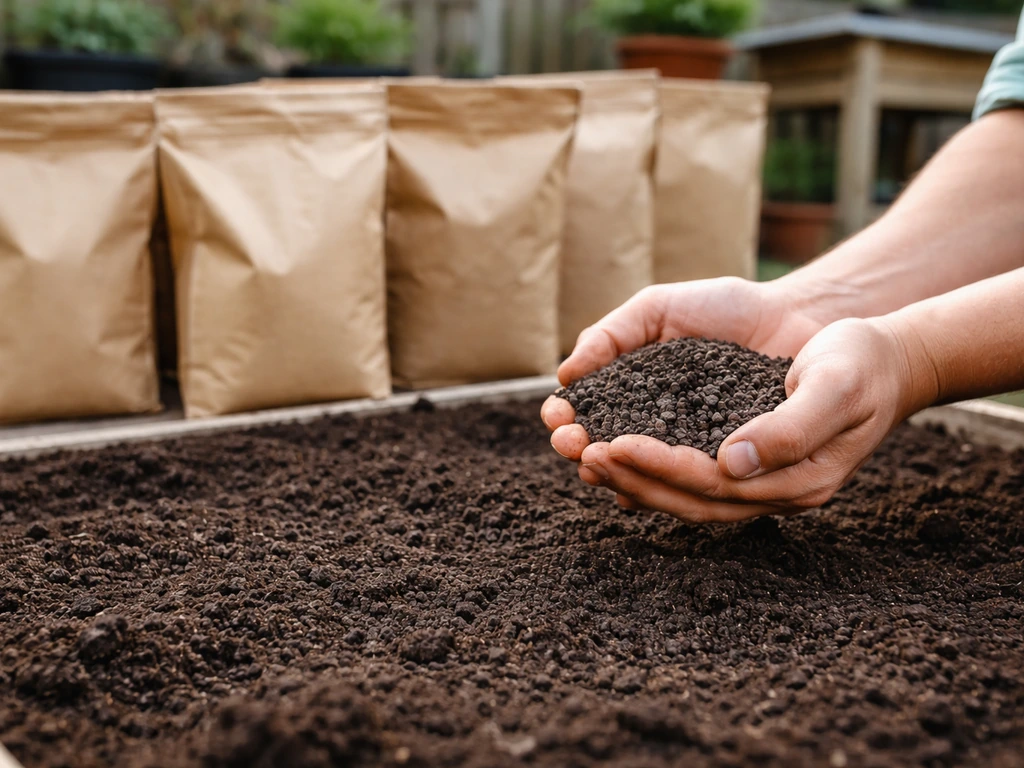
Espoma Tomato-tone (3-4-6) is one of the most practical all-around organic options for outdoor vegetable and flowering plant grows. The application method is straightforward: mix it into the top 4 inches of soil at roughly 3 lbs (about 9 cups) per application, then water thoroughly. The 3-4-6 N-P-K ratio is well-suited to plants that are transitioning from veg to early flower. It's not a bloom booster in the aggressive synthetic sense, but for organic growers who want a low-maintenance feeding routine, it holds up well across the season.
Down To Earth All Purpose 4-6-2 is another solid organic option, especially useful at transplant time. The recommended rate for transplanting is 2 to 3 tablespoons mixed with backfill soil per 4-inch start. It covers a broad nutrient base and the label clearly identifies water-soluble nitrogen content, which is helpful for dialing in how quickly it'll act. It's a blended formula, so you're getting more than just NPK, which matters for soil microbiome health over a full outdoor season.
For high-nitrogen organic top-dressing between those products, University of Maryland Extension points to cottonseed meal, blood meal, and fish meal or fish emulsion as effective organic N sources for heavy feeders. Colorado State University Extension also lists common organic fertilizer materials like cottonseed meal and blood meal, along with fish emulsion, as effective organic N sources Organic Fertilizers. Heavy feeders like large flowering plants can need around 3 lbs of nitrogen per 1,000 square feet per season. Fish emulsion is water-soluble and fast-acting compared to dry meals, so it's a good mid-season option when you need a quick green-up without going synthetic.
Best store-bought non-organic fertilizer options
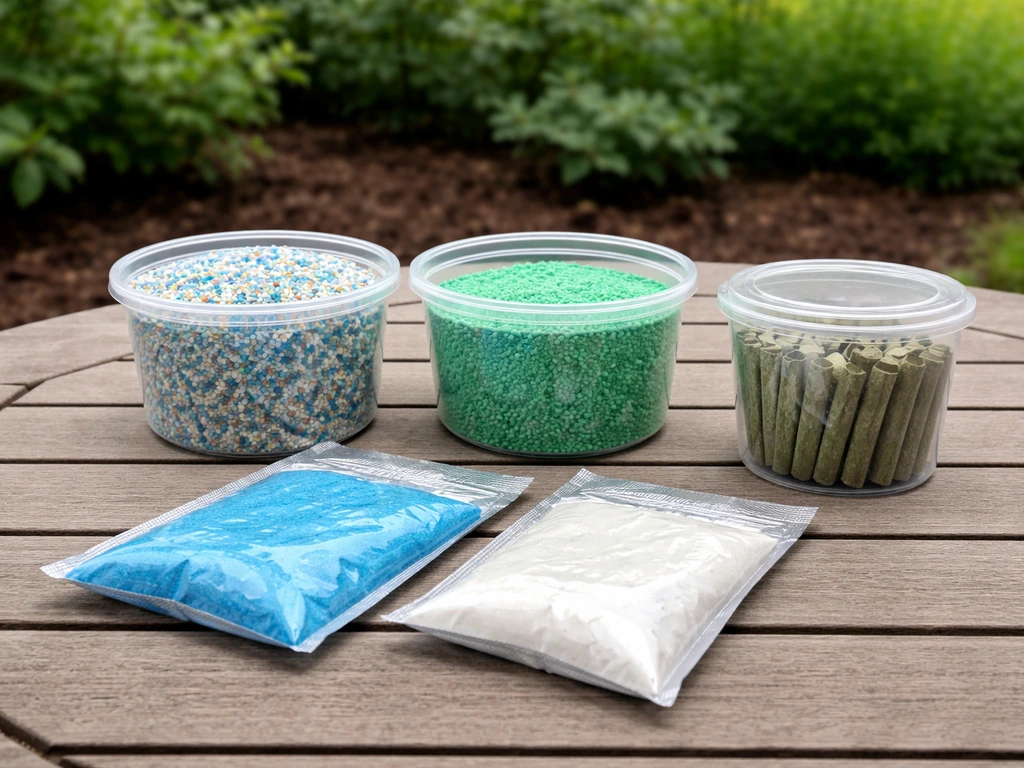
Synthetic fertilizers are precise, fast-acting, and easy to dose. The downside is that overdosing is easier, and in an outdoor setting, heavy rain can leach water-soluble nutrients out of the root zone before plants can use them. That said, if you want predictable, measurable results and you're comfortable monitoring your plants weekly, synthetic options give you tighter control.
Jobe's Tomato Fertilizer Spikes (6-18-6) are worth calling out as a timed-release synthetic format. The spike format delivers a slow, steady nutrient release right at the root zone, which reduces surface runoff and makes them surprisingly practical for outdoor container grows. The 6-18-6 ratio is higher in phosphorus, which positions it well for plants approaching or in the flowering and fruiting stage. They're not ideal for early vegetative growth, but as a transition or mid-bloom feed they're low-effort and effective.
For granular synthetics that you mix yourself, ammonium sulfate is a go-to high-N option used in dissolved fertigation systems. OSU Extension shows how to dissolve soluble granular fertilizers like ammonium sulfate into water solutions calculated by volume, which gives you flexibility in adjusting concentration by growth stage. Water-soluble granular formulas from brands like Jack's Nutrients or MasterBlend are widely used for outdoor container and drip-fed setups for the same reason: precise ppm targeting.
If you want a deeper breakdown of what growers are actually using and recommending in practice, checking out community discussions around the best nutrients for outdoor grow is a good way to see real-world results across different climates and setups before committing to a product.
Organic vs. synthetic at a glance
| Feature | Organic (e.g., Espoma, DTE) | Synthetic (e.g., Jobe's Spikes, Jack's) |
|---|---|---|
| Speed of action | Slow (microbial dependent) | Fast to medium |
| Burn risk | Low at label rates | Moderate to high if overdosed |
| Leaching risk in rain | Lower (slower release) | Higher (water-soluble formulas) |
| Soil biology benefit | High | Neutral to negative over time |
| Cost per season | Moderate | Low to moderate |
| Control over dosing | Lower precision | High precision |
| Best for | In-ground and raised bed grows | Containers, drip, and outdoor hydro-style setups |
If you're growing in native or amended in-ground soil, organic wins for long-term soil health and lower input stress. If you're in containers or running any kind of drip or fertigation system outdoors, synthetic water-soluble products give you the dosing precision you need. Many experienced outdoor growers use both: organic amendments in the base soil and soluble synthetics as top-up feeds when specific deficiencies appear. On Reddit’s r/tomatoes, growers discuss pairing a liquid feed with a granular tomato fertilizer, noting that the label dosing differs by format in real-world use Many experienced outdoor growers use both.
Bloom-focused feeding: what to use for outdoor flowering
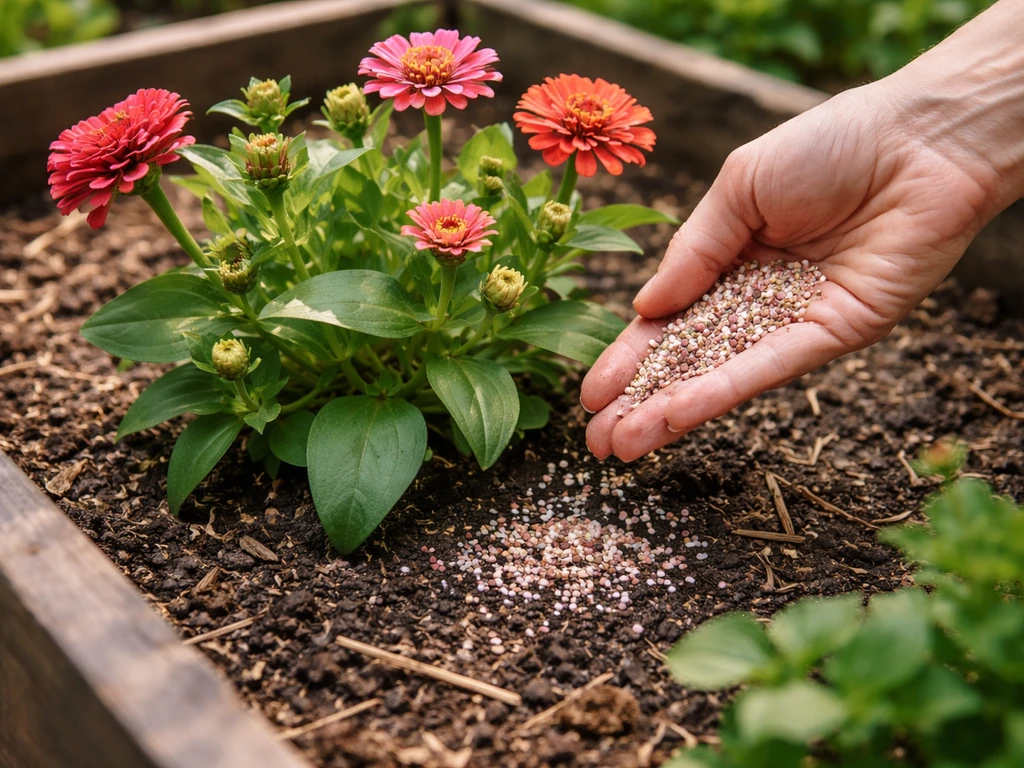
Once your plants shift into flowering, your fertilizer strategy needs to shift with them. The goal during bloom is to support flower development and, if applicable, fruit set and fill. That means reducing nitrogen and increasing phosphorus and potassium. High nitrogen at this stage pushes vegetative growth at the expense of flowers, which is the opposite of what you want.
Target N-P-K ratios during bloom: look for something in the range of 3-8-8 to 6-18-6. Phosphorus initiates and supports flower structure, while potassium drives cell wall strength, moisture regulation, and fruit quality. University of Missouri Extension recommends alternating with a high-potassium fertilizer as plants progress through fruiting stages, which is a practical and low-cost way to boost K without overcomplicating your feed schedule.
Nutrient uptake stays high from early flower set through mid-fruit development, then tapers off significantly in the final 4 to 6 weeks. That late-season slowdown is your cue to reduce feeding frequency. Continuing to push nutrients when uptake has slowed leads to salt buildup in soil and potential toxicity symptoms. For a detailed breakdown of what to feed week by week through the bloom phase, the flowering stage nutrient guide for outdoor grows covers the full progression.
For organic bloom feeding specifically, high-K options like kelp meal, greensand, or potassium sulfate work well as soil amendments. For bloom-specific synthetic feeds, choosing the best bloom nutrients for your outdoor grow is worth reading alongside this guide since it gets into brand-specific formulations and timing windows in more detail.
How to apply outdoor fertilizer safely
Soil application rates and frequency
For granular organic fertilizers like Espoma Tomato-tone, the standard approach is to work the product into the top 4 inches of soil and water it in thoroughly afterward. Dry granules sitting on the surface without water don't activate. For ongoing feeds, a every-2-week application schedule during active growth is a safe baseline for most heavy feeders. During slower growth periods or late in the season, stretch that to every 3 to 4 weeks or stop entirely.
For water-soluble synthetics applied as a drench, follow label rates exactly the first time and watch your plants for 5 to 7 days before adjusting. It's easier to add more later than to fix an overfed plant. Always water the soil before applying liquid fertilizers, not after. Applying to dry soil concentrates salts at the root zone and dramatically increases burn risk.
Foliar feeding outdoors: when it helps and when it doesn't
Foliar feeding, spraying diluted nutrients directly onto leaves, is a useful tool for correcting specific micronutrient deficiencies quickly (calcium, magnesium, iron are the most common). It is not a replacement for soil feeding. Leaf surfaces can only absorb so much before burn occurs, and it's not physically possible to meet a plant's full nutrient demand through foliar application alone.
If you're going to foliar feed, apply early in the morning or late afternoon when temperatures are lower and plants are well-hydrated. Applying in direct midday heat causes rapid evaporation, concentrates the solution on the leaf surface, and almost guarantees leaf burn. Use a fine mist sprayer and ensure thorough, even coverage without runoff pooling. MSU Extension guidance on foliar application recommends adequate water volume and consistent coverage as the key factors for effectiveness.
Runoff and heat considerations
Outdoors, you're working with weather, not against a controlled environment. Heavy rain shortly after fertilizer application can flush water-soluble nutrients below the root zone before plants absorb them. If rain is forecast within 24 hours, hold off on water-soluble feeds and use slow-release granulars instead. NC State Extension's 4R nutrient stewardship framework drives this home: applying the right nutrient at the right rate, right time, and right place is what reduces loss to the environment while actually feeding your plants.
Soil vs. hydroponic-style feeding for outdoor grows
Growing outdoors doesn't automatically mean growing in the ground. Plenty of outdoor growers run containers, fabric pots, or even outdoor drip systems, and those setups behave much more like hydroponic grows than traditional soil beds. The feeding approach changes significantly depending on which category you're in.
In native or amended in-ground soil, the existing biology and nutrient base give you a buffer. Organic amendments work with that biology. You're essentially feeding the soil, which feeds the plant. Feed frequency can be lower, and slow-release options are very practical here. Understanding what nutrients actually work well for outdoor soil grows helps you build a foundation before you start layering in specific products.
In containers or outdoor hydro-style setups, there's little to no soil buffer. You're the nutrient delivery system. Water-soluble fertilizers applied at every or every-other watering (at reduced concentration) are the norm here. UMass CAFE's guidance on constant-feed fertigation systems suggests expressing feed rates in ppm of nitrogen rather than tablespoons per gallon, which gives you much better control. A common injector ratio of 1:100 means 1 gallon of concentrated solution produces 100 gallons of final feed solution, a useful benchmark for outdoor drip setups.
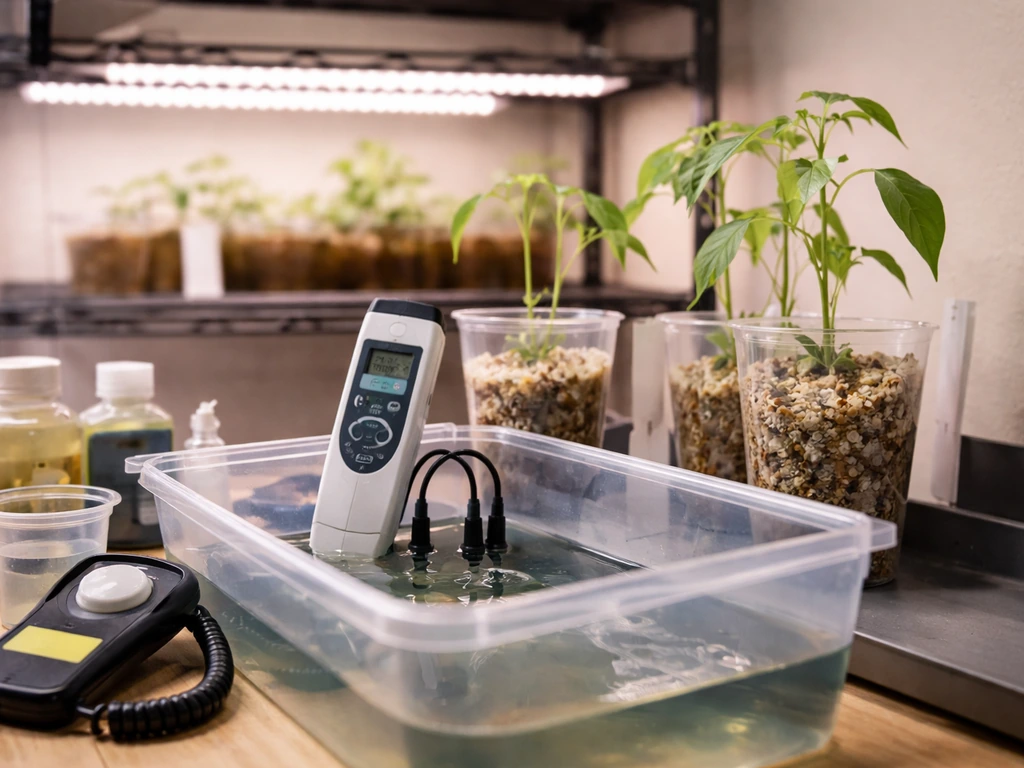
For outdoor hydro-style containers, pH and electrical conductivity (EC) matter just as much as they do indoors. OSU Extension recommends maintaining a pH of 5.0 to 6.0 and an EC of 1.5 to 3 dS/m for hydroponic nutrient solutions. Push EC too high and salt toxicity becomes a real problem. If your medium's EC creeps too high, leach it thoroughly with plain water to dilute and flush accumulated salts. A detailed feeding schedule for outdoor nutrient management can help you map out the right cadence across your whole season without guessing.
If you currently grow or plan to grow indoors as well, most of the same principles apply with some adjustments. The guide to choosing the best fertilizer for indoor grows covers how the controlled environment changes nutrient timing and product selection, which is worth reading if you run both setups.
Common problems from the wrong fertilizer and how to fix them
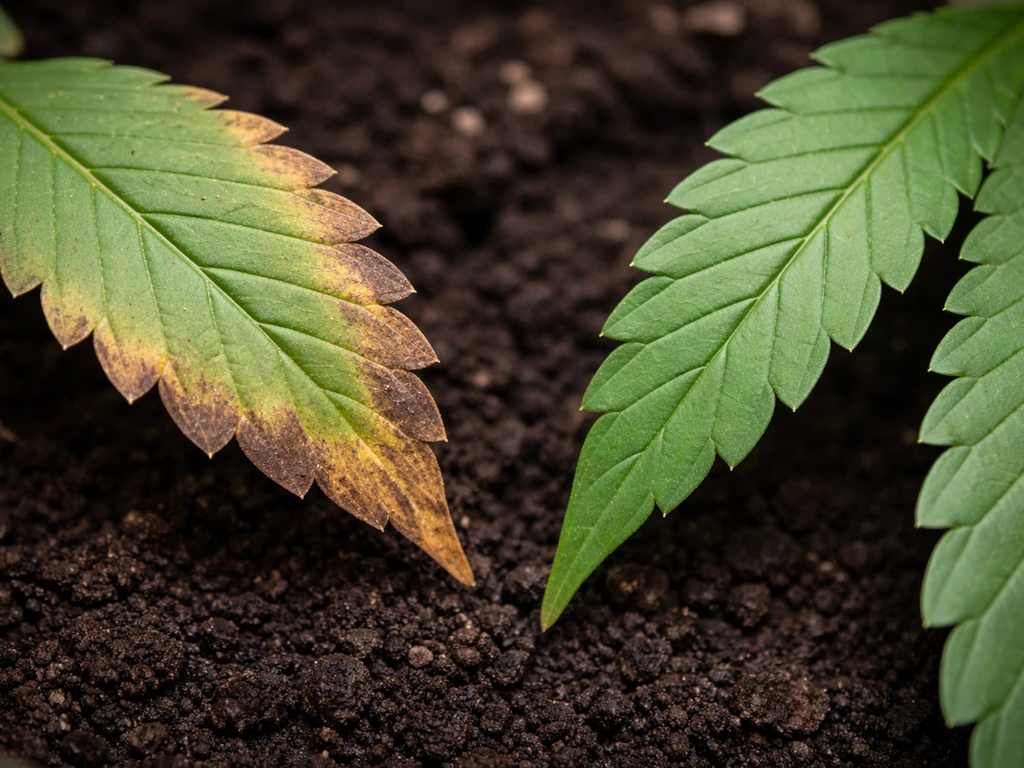
Nutrient burn
Nutrient burn shows up as brown, crispy leaf tips, usually starting on the outer edges of leaves. It's caused by excess fertilizer salts in the root zone. The fix: stop feeding, water with plain pH-adjusted water for 1 to 2 waterings to leach out excess salts, and return to feeding at half your normal dose. In containers, a full flush with 2 to 3 times the container's volume of plain water will reset salt levels effectively.
Nitrogen toxicity
Too much nitrogen produces dark, almost blue-green leaves that clawing downward at the tips (sometimes called 'the claw'). Plants may look extremely healthy at first glance but will show poor flowering and slow fruit development. University of Georgia's plant analysis guidance is clear: if tissue nitrogen tests high, stop nitrogen application entirely. Leaching with plain water helps if you're in containers or a medium that allows it. In ground soil, stopping N applications and letting rain do the work over a week or two is usually enough.
Deficiency symptoms by nutrient
- Nitrogen deficiency: yellowing starting from older (lower) leaves and moving upward. Plants look pale green overall. Fix: apply a nitrogen-rich fertilizer or fish emulsion at recommended rates.
- Phosphorus deficiency: purpling or reddish discoloration on leaf undersides, especially in cool soil temperatures. Fix: warm temperatures help, but a P-soluble feed applied at the root zone speeds recovery.
- Potassium deficiency: brown or yellow scorching on leaf margins, starting on older leaves. Often confused with burn but appears more evenly distributed. Fix: switch to a high-K formula or add potassium sulfate as a supplement.
- Calcium/magnesium deficiency: yellowing between leaf veins (interveinal chlorosis) on newer growth indicates magnesium shortage. Brown spots and hollow stem in tomatoes indicates calcium shortage. Fix: foliar spray of Cal-Mag solution in early morning, plus soil drench.
pH lockout
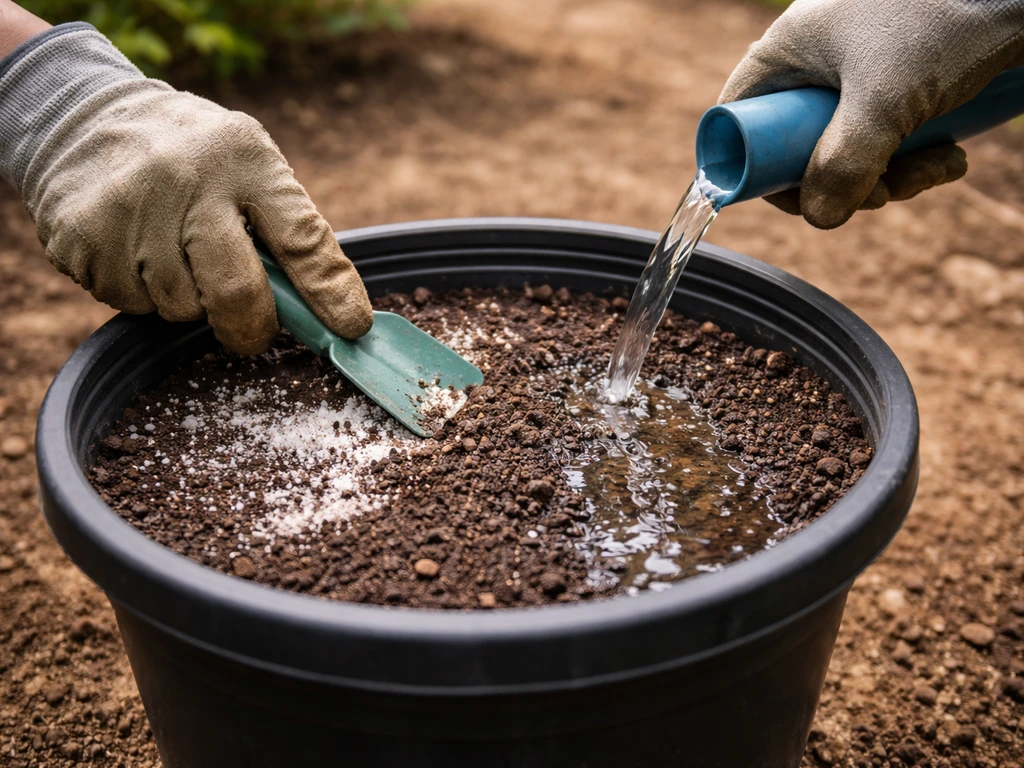
This is the most common misdiagnosed problem in outdoor grows. Plants can show all the symptoms of deficiency even when soil has plenty of nutrients. If pH is outside the usable range (roughly 6.0 to 7.0 for soil, 5.5 to 6.5 for amended mixes), plants can't physically absorb nutrients regardless of what's in the soil. Before adding more fertilizer to fix what looks like a deficiency, test your soil or medium pH first. Adjusting pH often resolves apparent deficiency symptoms within a week without adding any new nutrients.
Salt buildup in containers
Outdoor container grows are especially prone to salt accumulation because evaporation concentrates salts faster than in-ground soil. White crusty deposits on the soil surface or container sides are a visual warning sign. The fix is a thorough leach: water until significant runoff occurs, wait an hour, then water again. Missouri Extension's guidance on EC correction via leaching confirms this approach reduces salt levels effectively and is preferable to trying to correct with more product.
Getting your fertilizer strategy right from the start makes every other part of the grow easier. If you're still deciding on your genetics before you even get to feeding decisions, picking the best seeds for your outdoor grow is worth doing first since the variety you choose affects how aggressively you'll need to feed through each stage. And once you've got your base fertilizer plan locked in, building out a structured outdoor nutrient feeding schedule from seedling through late bloom is what takes your results from decent to consistently excellent.
FAQ
What’s the best fertilizer for outdoor grow if I don’t want to do a soil test?
Start with an all-purpose balanced feed during early vegetative growth, then switch to a bloom-focused formula when flowering begins. Keep doses modest and split applications (every 1 to 2 weeks) so you can course-correct based on plant response, instead of front-loading a high-P product when your baseline nutrients are unknown.
Can I use the same fertilizer the whole season and just increase the dose?
Usually no. Outdoor plants shift nutrient demand sharply at flowering, and increasing nitrogen late commonly trades flower and fruit performance for extra leafy growth. A better approach is switching ratios at the stage change and keeping dose increases small, if any, after you observe the plants for 5 to 7 days.
How do I tell the difference between nutrient deficiency and nutrient burn outdoors?
Burn is typically salt-related, it often shows as crispy brown tips beginning at leaf edges (frequently after heavy feeding or hot, dry weather). Deficiency more often shows gradual, inward changes like pale color or spotting. If you see burn, stop feeding and leach, if you see deficiency, check pH first (especially in containers) before adding more fertilizer.
Do I need to feed at a specific time of day for outdoor plants?
Yes, for foliar feeding apply early morning or late afternoon, when leaves dry slower and evaporation is lower. For soil drenches, aim to avoid feeding right before intense heat, and water thoroughly afterward so nutrients move into the root zone rather than sitting on dry soil.
What should I do if it rains right after I fertilize with a water-soluble product?
If significant rain is expected within about 24 hours, delay water-soluble feeding because it can wash nutrients below the root zone. With light, quick showers you may be fine, but after heavy rain monitor for 1 week and reduce subsequent doses until new growth confirms uptake.
How much fertilizer is too much for outdoor containers versus in-ground soil?
Containers need less and more frequent management because there’s little soil buffer and salts accumulate faster. In containers, white crust on pot surfaces is a common warning. When unsure, use half-strength feed for the first couple weeks, then increase only if leaves and stems respond without tip burn.
Is foliar feeding worth it during flowering for boosting yields?
It’s best for quick micronutrient corrections, not as a primary bloom strategy. If the issue is nitrogen, phosphorus, or potassium imbalance, foliar feeding won’t supply enough to drive flowering and fruit set reliably, so focus on correct N-P-K feeding and use foliar sprays only as a targeted fix.
What pH should I aim for if I’m growing in amended soil in pots outdoors?
In containers and hydro-style setups pH matters a lot more, but even in amended mixes an out-of-range pH can block uptake. As a practical target, keep soil-like mixes roughly in the mid-to-upper usable range (often near 6.0 to 7.0 for soil, or about 5.5 to 6.5 for amended mixes) and verify with a simple pH test before adding more nutrients.
How often should I fertilize outdoor hydro-style containers with drip or constant feed?
Use the feeding system logic, not a fixed calendar. In constant-feed or frequent drip setups, you typically adjust by concentration (often expressing nitrogen in ppm), then keep the EC and pH within safe windows. If EC rises, leach or reset the system, instead of simply increasing feed.
When should I stop fertilizing before harvest?
A common guideline is to reduce feeding during the final 4 to 6 weeks because uptake naturally slows and salts can accumulate, especially in containers. If you keep feeding at full strength that late, you increase the risk of salt buildup and potential toxicity symptoms without meaningful yield benefit.
Are slow-release fertilizers always better outdoors?
They’re often safer in wet climates because they reduce leaching risk, but they aren’t automatically “better.” If your plant is showing rapid deficiency symptoms, slow-release may act too gradually. Choose based on your weather exposure and whether you need quick correction versus steady background nutrition.
What’s a simple way to recover from fertilizer overdose in a container outdoors?
Stop fertilizing immediately, then leach with plain, pH-adjusted water until you get meaningful runoff. For many container sizes, repeating leaching (often in two cycles with a wait in between) resets salts more effectively than a single heavy watering, then return to feeding at half strength.