FloraFlex is a drip irrigation and nutrient brand built specifically for high-performance cannabis and hydroponic growing. If you've landed here, you probably already have a FloraFlex kit in your hands or you're seriously considering one. The short answer to how to grow with it: set up your reservoir and drip lines correctly, dial in your pH and EC for your chosen medium, feed by stage, and keep your emitters clean. Everything else is detail work, and that's exactly what this guide covers.
FloraFlex How to Grow: Setup, Nutrients, and Stages

Marcus Holloway
9 Apr 2026
What FloraFlex actually is and what you'll need to get started
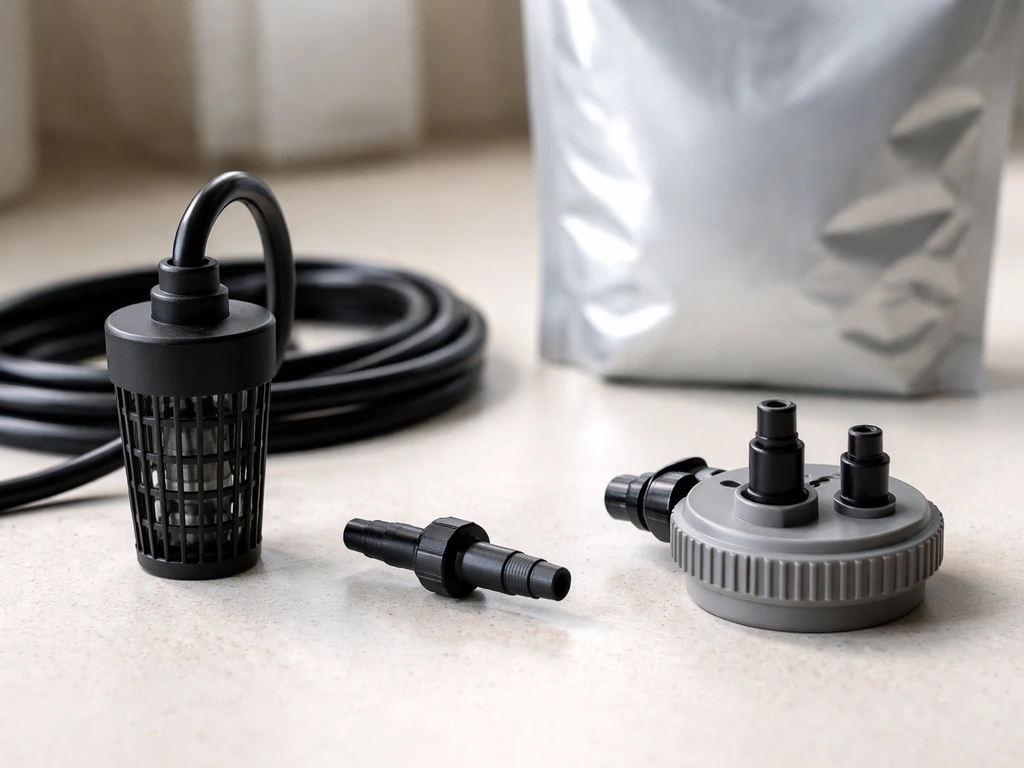
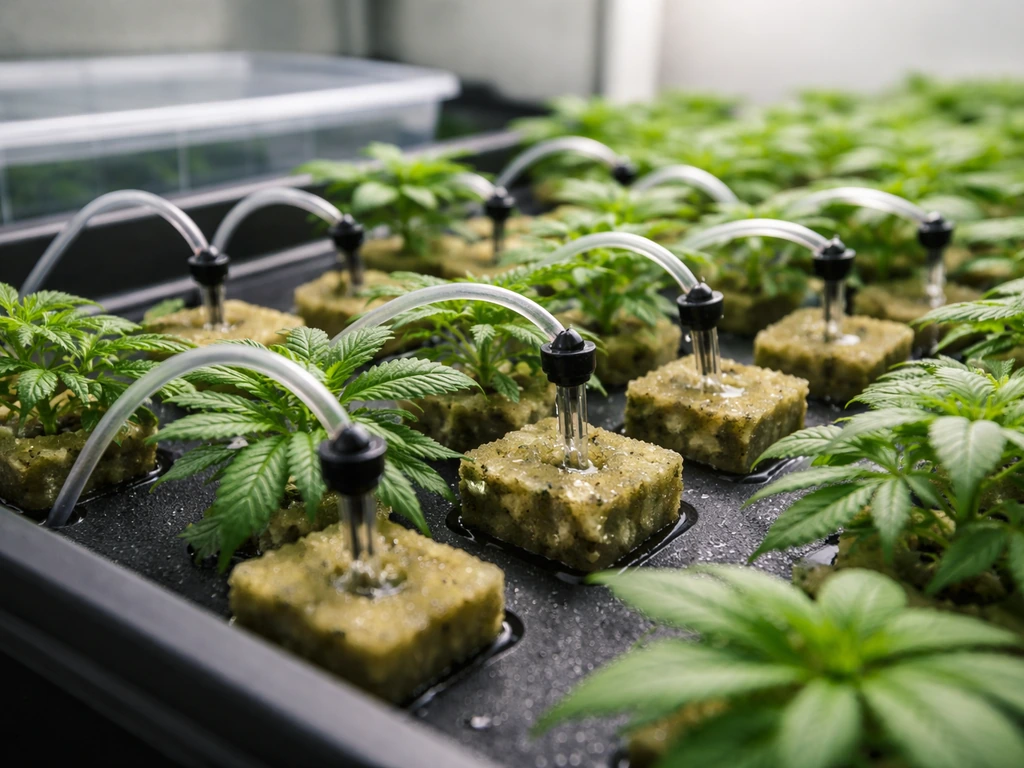
FloraFlex is both an irrigation hardware company and a nutrient line. On the hardware side, they make drip irrigation kits, basket drippers, QuickFill systems, top-feed caps, and the tubing and fittings to connect everything. On the nutrient side, they offer a two-part (or multi-part) powdered hydroponic nutrient system designed to be used alongside their hardware but also compatible with other setups. Most home growers buy the full FloraFlex ecosystem because everything is designed to work together, but you can absolutely run their nutrients through a different irrigation setup or use their hardware with other nutrient brands.
Here's the core equipment list you'll need before you can grow a single plant with FloraFlex:
- FloraFlex drip irrigation kit or QuickFill system (appropriate for your plant count and grow space)
- Reservoir (sized to your number of plants, typically 20–50 gallons for a small home setup)
- Submersible pump with a timer
- Pressure regulator (if not included in your kit — more on this below)
- Inline filter or screen filter to protect emitters from debris
- Growing medium: coco coir, rockwool, or perlite-heavy mix are the most common with FloraFlex
- FloraFlex nutrient powders (Veg and Bloom formulas at minimum)
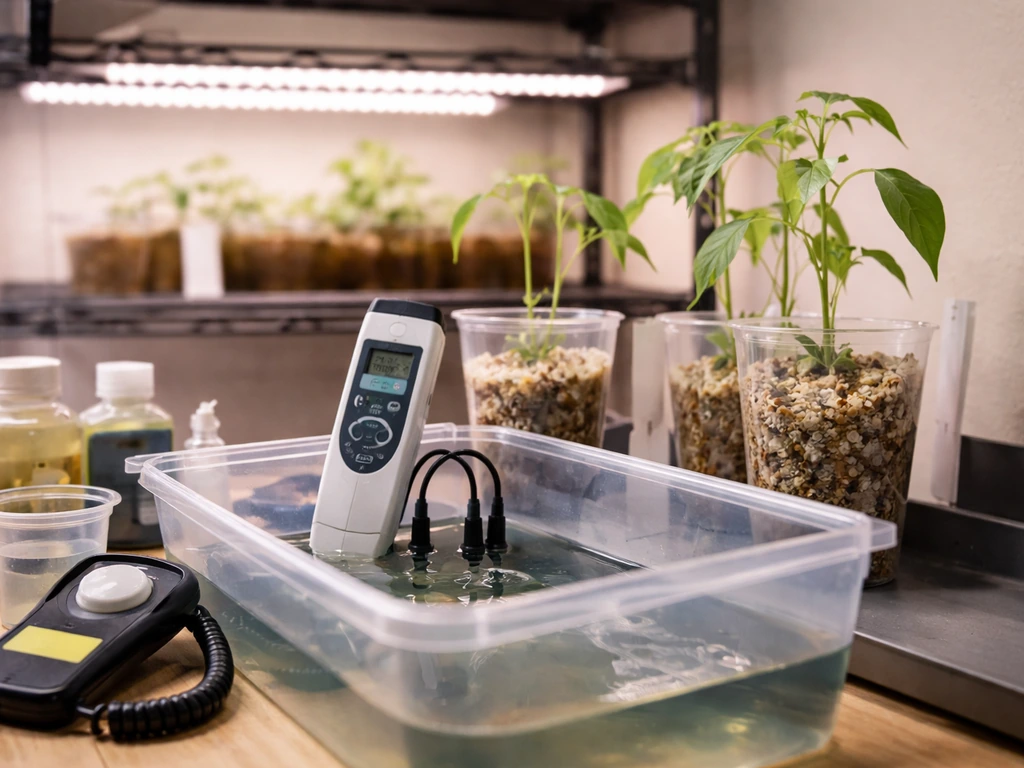
- pH and EC meters (calibrated and reliable — don't skip these)
- pH up/down solutions
- Runoff collection trays
Coco coir is the most popular medium with FloraFlex because it behaves like hydroponics in terms of pH and feeding frequency, but it's forgiving enough for beginners. Rockwool is the other common choice and gives you even more precision. Soil works too, but the pH targets shift, and the irrigation timing you'll use is quite different. I'll cover both throughout this guide.
Setting up your system: reservoir, lines, emitters, and first-run checks
Assembly is where most FloraFlex beginners run into trouble, and almost all of those problems come down to pressure inconsistency and uneven delivery. The FloraFlex QuickFill and drip irrigation kits include installation instructions, but the most important thing they don't always emphasize enough is this: consistent pressure across every emitter is what makes the difference between even feeding and plants that starve or drown on the same line.
Start by placing your reservoir at or above the height of your grow containers. If gravity isn't doing the work, your pump handles it, but keeping the reservoir elevated reduces pump strain and helps pressure stay consistent. Run your main feed line from the pump output, then branch off to individual drip lines for each plant. FloraFlex recommends adding a pressure regulator if your kit doesn't already include one, to maintain consistent water pressure across the entire system. FloraFlex also recommends adding a pressure regulator (if your kit does not already include one) to keep water pressure consistent throughout the system pressure regulator to maintain consistent water pressure. This single step prevents some emitters from flowing hard while others barely drip. Install your inline filter on the main line between the pump and the first branch point. This is your first line of defense against clogs.
Once everything is physically connected, do a plain water first run before any nutrients go in. Turn on the pump and watch every emitter. You're looking for: uniform drip rates across all emitters, no dripping from fittings or connections, and proper drainage from your containers. If one emitter runs faster than others, check for a kinked line or a missing pressure-compensating fitting. Mark any problem spots and fix them before you plant. Skipping this step is how you end up with one plant overwatered and another wilting on the same irrigation cycle.
Reservoir setup specifics
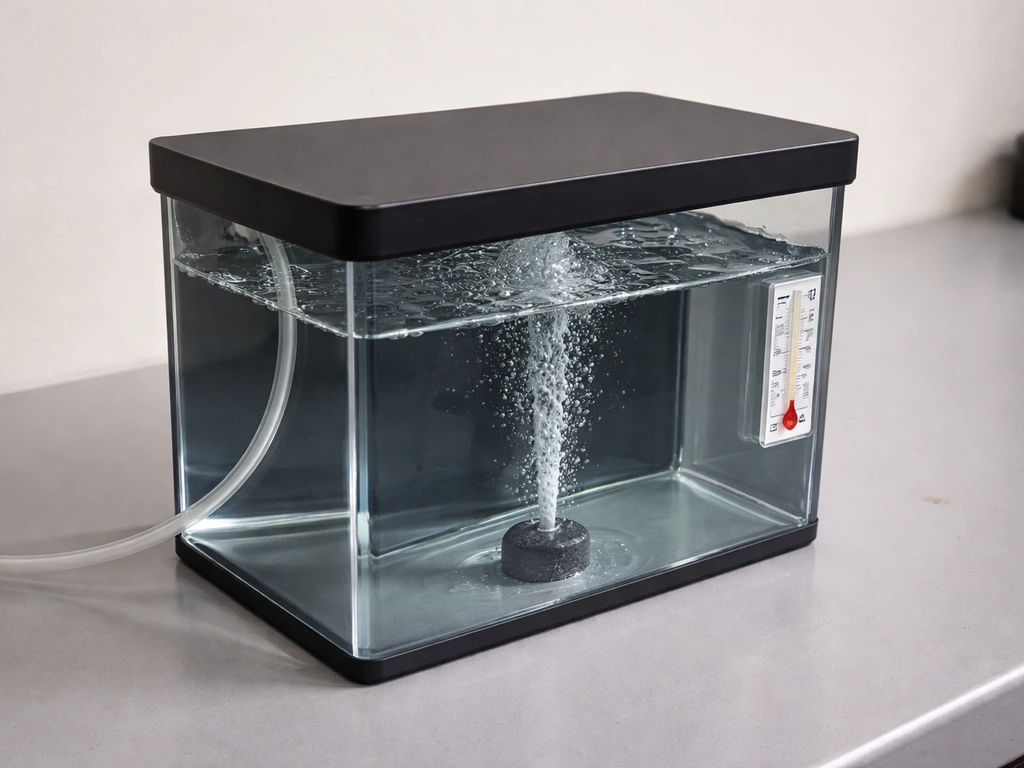
Your reservoir needs a lid to block light (algae prevention), an aeration stone or circulation pump to keep nutrients in suspension, and a thermometer to monitor water temperature. Keep reservoir water temperature between 65–72°F (18–22°C). Above 72°F, dissolved oxygen drops and root pathogens thrive. Fill with reverse osmosis water or filtered water whenever possible. Tap water with high mineral content (hard water) will throw off your EC readings and compete with your nutrient solution, so know your baseline EC before you mix anything.
Nutrients and the numbers that actually matter (pH and EC)
FloraFlex nutrients come as dry powders, which is one of the things that sets the brand apart from liquid nutrient lines. The instructions are clear: fully dissolve your FloraFlex nutrients in water before adding any additional components to the reservoir. This means dissolve the powder first, then add pH adjusters, then check your EC, then check and adjust your pH. Never dump dry powder on top of other inputs already in the reservoir.
EC (electrical conductivity) is how you measure nutrient concentration, and FloraFlex explicitly instructs growers to monitor EC levels when feeding. The right EC depends on your grow stage, your medium, and how aggressive you want to push the plant. As a general starting framework: seedlings and early veg want lower EC (around 1.0–1.8), mid-veg pushes to 2.0–2.8, and peak bloom can run 2.5–3.5 EC depending on strain and environment. Toward late flower, you'll actually drop EC back down as drybacks increase, for example pulling from 3.5 EC down to 2.5–3.0 EC as plants approach finish.
pH targets by medium
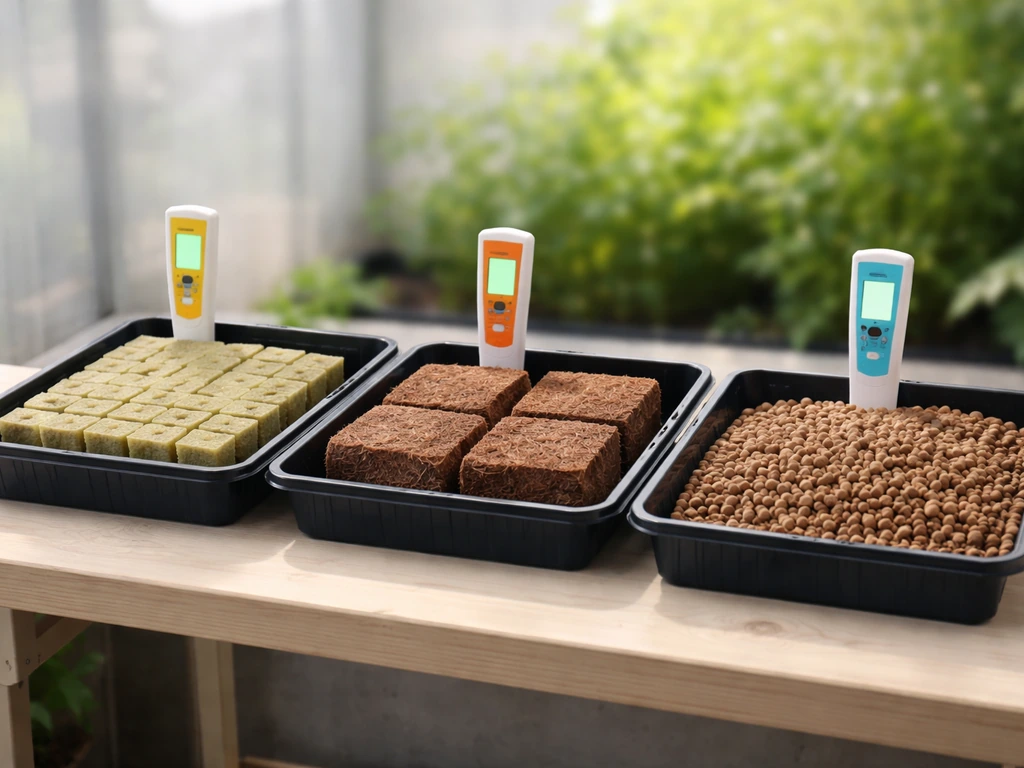
pH is where a lot of growers get tripped up because the right target depends on what you're growing in. FloraFlex's own guidance puts the optimal pH range for cannabis cultivation between 5.5 and 6.5, but your specific medium narrows that window. In coco coir, keep your input pH between 5.8 and 6.2. In rockwool and other pure hydroponic setups, you're aiming for 5.8–6.5 on the input side. Soil runs slightly higher at 6.0–6.8. Getting your flora grow dosage right matters most when your pH is dialed in, because even the best nutrient formulation locks out at the wrong pH.
Runoff pH is just as important as input pH. FloraFlex's runoff guidance gives a target runoff pH range of 5.4–6.4, and here's the practical rule: if your runoff pH is more than 0.3 points above your input pH, increase your feed strength or shorten your dryback periods. If runoff pH is more than 0.3 points below your input pH, reduce feed strength or extend drybacks. This 0.3-point rule gives you a clear action trigger instead of guessing.
| Medium | Input pH Target | Runoff pH Target | Notes |
|---|---|---|---|
| Coco Coir | 5.8–6.2 | 5.4–6.4 | Most common with FloraFlex; behaves like hydro |
| Rockwool | 5.8–6.5 | 5.4–6.4 | High precision; lower buffering capacity |
| Soil | 6.0–6.8 | 6.0–6.8 | More buffering; less frequent feeding needed |
| Hydro/DWC | 5.3–6.3 | 5.4–6.4 | FloraFlex's direct hydro guidance range |
From seedling or clone through veg: timing, training, and environment
Whether you're starting from seed or clone, the first two weeks in the FloraFlex system are about establishing roots, not pushing growth. Keep EC low (1.0–1.4 for seedlings, 1.4–1.8 for rooted clones) and irrigation frequency light. Coco coir should stay moist but not wet during this stage. You're aiming for a small dryback between irrigations so roots chase moisture downward and outward. In practical terms, that might mean one or two short irrigation events per day timed to the start of your light cycle.
Environment during early veg: keep temperatures at 75–82°F (24–28°C) with lights on and around 68–75°F lights off. Relative humidity should sit at 60–70% during veg to support vigorous growth and reduce transpiration stress on young plants. VPD (vapor pressure deficit) in the 0.8–1.2 kPa range is the target if you're dialing that in. CO2 enrichment isn't required but can accelerate veg growth if your environment is otherwise dialed. Understanding how to grow with CO2 is worth reading if you're already controlling temperature and humidity well, because CO2 only pays off when those fundamentals are locked in.
Training your plants during veg
FloraFlex drip setups work especially well with low-stress training (LST), screen of green (SCROG), or topping because the dripper placement stays fixed at the base of the plant regardless of how you shape the canopy above. Tie down or tuck branches during veg to build a wide, flat canopy. By the time you flip to flower, you want every bud site at roughly the same distance from your light. This matters more with LEDs and HPS than CMH, but it's good practice regardless. Topping and FIMing can happen as early as the 4th or 5th node and should be done at least one to two weeks before you flip to flower so the plant has time to recover.
Light schedule for veg is 18 hours on, 6 hours off for photoperiod strains. Most growers veg for 4–8 weeks depending on desired final plant size. With FloraFlex's precision irrigation, you can push harder during late veg by ramping EC up incrementally (no more than 0.2–0.3 per week) and increasing irrigation frequency to 3–5 events per day as the canopy fills out.
Flower stage: feeding schedule, light, and getting the most from your plants
Flip your photoperiod plants to 12/12 once your canopy is at roughly half your target final height, because plants typically double in height during the stretch of early flower (weeks 1–3). Switch from your FloraFlex Veg formula to the Bloom formula at flip, but don't jump EC immediately. Early flower (weeks 1–3) is still transitional, so keep EC in the 2.0–2.5 range while the stretch happens.
Mid flower (weeks 4–6) is when you push EC hardest: 2.8–3.5 EC depending on strain vigor and environmental conditions. This is also when flora grow carbo dosage becomes relevant if you're adding carbohydrate supplements to support microbial life in coco or boost brix. Irrigation frequency in peak bloom can go to 6–10 events per day in coco if you're in a hot environment with high VPD. Each event should be short (30–60 seconds typically) to keep coco in the wet-to-moist cycle without waterlogging.
Late flower (weeks 7–9 for most strains) is where you use the crop steering principle of dropping EC as drybacks increase. Pulling from 3.5 EC down to 2.5–3.0 EC as the plant moves toward finish is a documented FloraFlex recommendation. Keep pH locked to 5.8–6.2 through late bloom. Reduce nitrogen inputs, lean on phosphorus and potassium, and watch trichomes for your harvest window. A flush of plain pH-adjusted water for the final 3–7 days before harvest is optional (and debated), but if you do flush, keep pH in range and don't stop feeding entirely more than a week out.
Light and environment in flower
Drop humidity to 40–50% RH once flower is established (week 3 onward) to reduce mold risk. Temperature can run slightly cooler than veg, with lights-on temps of 75–80°F working well. Lights-off can drop to 65–70°F, and a 5–10°F differential between day and night can enhance color and resin development in some strains. Light intensity should be at maximum for your fixture once the canopy is trained flat, with LED setups typically running 800–1000 PPFD at canopy during peak bloom.
Troubleshooting the most common FloraFlex problems
Clogged emitters and uneven delivery
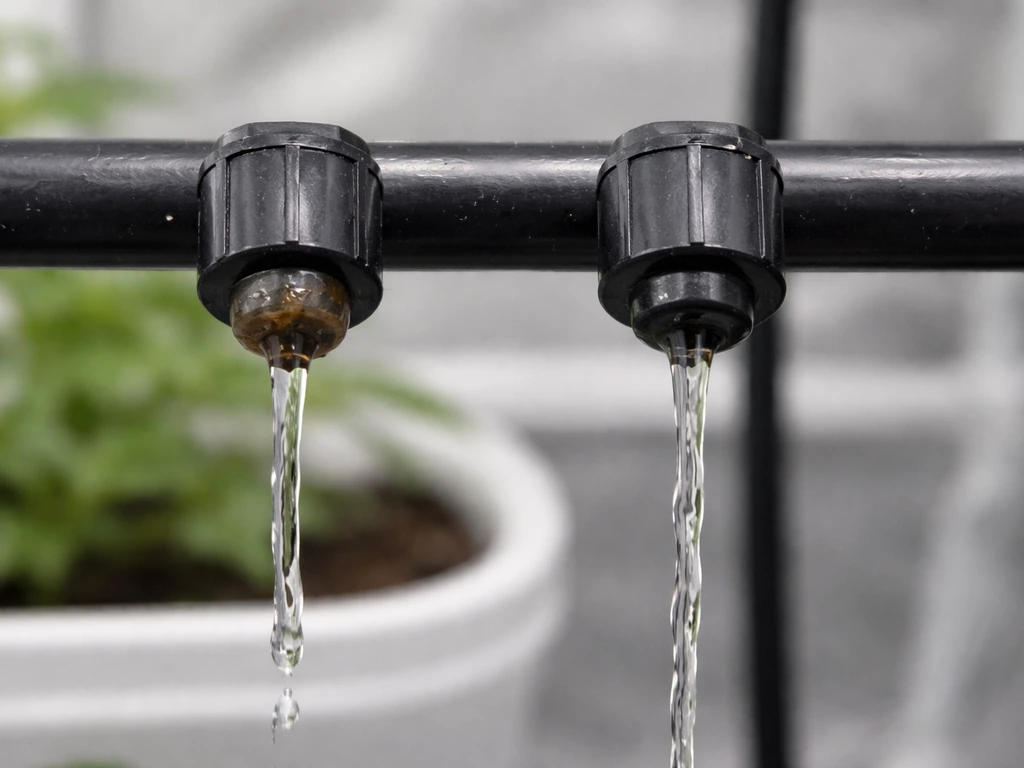
Clogged emitters are the number one FloraFlex complaint, and they're almost always preventable. The main causes are undissolved nutrient salts, biofilm buildup, and debris getting past a missing or bypassed filter. If emitters are dripping unevenly or one plant looks dry while its neighbor looks overwatered, check emitters first. Remove the affected drippers and soak them in warm water for 15–20 minutes. If the clog persists, a diluted hydrogen peroxide soak (3% H2O2, 10 minutes) usually dissolves organic buildup. Then flush clean water through the line before reinstalling. Going forward, always dissolve nutrients fully before they enter your reservoir and confirm your inline filter is clean and in place. FloraFlex’s Full Tilt schedule fertigation instruction PDF also lays out their recommended injection and mixing workflow to help prevent undissolved nutrients and clogging issues always dissolve nutrients fully before they enter your reservoir and confirm your inline filter is clean and in place..
Root problems
Brown, slimy roots in a FloraFlex setup almost always point to one of three things: reservoir temperature above 72°F, light leaking into your medium or reservoir, or overwatering with insufficient dryback. Root rot caused by Pythium thrives in warm, stagnant, poorly oxygenated water. Fix the environment first: drop reservoir temp, add airstone circulation, and seal any light leaks. Beneficial bacteria products (like Hydroguard) added to the reservoir can help recover a mildly infected system. If roots are fully brown and slimy, flush aggressively with clean pH-adjusted water plus H2O2, then reassess.
pH swings
If your reservoir pH drifts up overnight, your plants are likely consuming nutrients (especially nitrogen and potassium), leaving hydrogen ions behind and raising pH. That's normal to a point, but if it swings more than 0.5 in 24 hours, your reservoir is probably too small for your plant load or your EC is too low. If pH swings down rapidly, suspect CO2 buildup in the reservoir, inadequate aeration, or microbial activity. Increase circulation, check for dead plant material in the reservoir, and clean the system if swings don't stabilize within 48 hours.
Nutrient deficiencies and excess
Most visual deficiencies in a well-calibrated FloraFlex setup are pH-induced lockouts, not actual nutrient absence. If you see interveinal yellowing (iron or manganese), check pH before adding more product. If you're seeing tip burn or clawing (nitrogen toxicity), drop EC by 0.3–0.5 and check that your runoff EC isn't climbing more than 0.3 above your input EC, which would indicate salt buildup in the root zone. Calcium and magnesium deficiencies are the exception: if you're using RO water without a cal-mag supplement, you will see these. Add cal-mag before adjusting pH and before adding primary nutrients.
Keeping the system clean and wrapping up at harvest
System cleanliness is maintenance, not optional. Biofilm, algae, and salt deposits accumulate in lines and emitters between runs and will clog your next crop if you don't address them. FloraFlex's own cleaning guidance recommends hydrogen peroxide or odorless bleach for system cleaning, with bleach requiring heavier dilution and triple rinsing before you introduce any plants or nutrients. H2O2 at 3–5% is the safer and faster option for most home growers because it breaks down into water and oxygen and doesn't leave residue if you give it a single clean water flush.
After harvest, here's the cleaning sequence that works:
- Drain and remove all remaining nutrient solution from the reservoir.
- Fill the reservoir with clean water and run the pump for 10–15 minutes to flush nutrient residue from all lines.
- Drain again, then fill with your cleaning solution (3% H2O2 or diluted bleach at manufacturer-recommended ratio).
- Run the cleaning solution through the entire system for 20–30 minutes, letting it sit in lines and emitters.
- Drain the cleaning solution completely.
- Run two full reservoirs of plain clean water through the system as a rinse (three rinses if you used bleach).
- Remove basket drippers and emitters individually, rinse with clean water to remove any detergent or peroxide residue, then air dry before storage or reinstallation.
- Inspect all fittings, tubing connections, and the inline filter for wear or mineral deposits. Replace any components showing cracking or significant buildup.
Between-run maintenance also means checking your pH and EC meters: recalibrate both before every new grow. A meter that's off by 0.3 pH will cost you a whole run in a precision system like FloraFlex. Store your meters properly (pH meter probe submerged in storage solution, not plain water and definitely not dry), and replace electrode probes annually if you're running back-to-back crops.
Once your system is clean and your next medium is prepped, you're starting fresh with a genuine advantage: you know where the problems live in your specific setup and you have the runoff and EC data from the last run to inform your next feeding decisions. That data is worth keeping in a simple grow log. Even a basic spreadsheet tracking daily pH, EC in, and EC out by week will help you spot patterns that translate directly into better yields. FloraFlex is a high-performance system, and the growers who get the most out of it aren't the ones with the biggest reservoirs. They're the ones who check their numbers consistently and respond to what the plants actually tell them.
FAQ
What should I do if my FloraFlex system delivers uneven feeding across plants?
If you see uneven runoff or one plant consistently receives less than its neighbors, verify emitter-to-emitter pressure first (regulator installed, correct orientation, no kinked tubing). Then check that your dryback settings are comparable across containers, because a larger container or one with looser coco can hold more water and mask feed differences even when drippers are uniform.
How often should I test pH and EC in a FloraFlex reservoir?
Best practice is to keep your nutrient reservoir covered and aerated, and measure pH and EC at least daily during transitions (early veg to veg push, and veg to stretch). If you cannot test daily, increase target stability by using a slightly higher aeration rate and avoid large nutrient additions that cause fast pH and EC swings.
What’s the correct order to mix FloraFlex nutrients, and why does it matter?
For FloraFlex, mix order matters. Fully dissolve the powder first, then add pH adjustment, and only then fine-tune EC if needed. Adding pH adjusters after nutrients ensures you do not lock in the wrong chemical form, and rechecking after mixing prevents “false” EC readings from incomplete dissolution.
Can I just top off my reservoir when EC drops?
Do not top off with fresh water without recalculating. If you add RO or water to a reservoir, EC drops and pH may drift, which can create a mismatch between what the plants receive and your planned stage targets. Instead, either remove a portion and remix to the target EC, or log the change and recalibrate pH and EC immediately after the adjustment.
How do I adjust irrigation frequency versus event length when coco stays too wet?
Aim for uniform wet-to-moist cycling, not long constant saturation. If your coco is staying wet too long, shorten event duration and increase the number of events to spread irrigation more evenly, then confirm runoff is happening and runoff EC is not rising far above input EC (salt buildup sign).
What should I do if my runoff EC is consistently higher than my input EC?
If runoff EC climbs more than about 0.3 above input EC, treat it as salt accumulation. Reduce feed strength slightly or increase dryback to restore the balance, then reassess after 2 to 3 irrigation cycles so you do not chase fluctuations caused by the medium’s buffering.
How do I know if my reservoir is too small?
Bigger reservoirs are not automatically better. What matters more is that your reservoir can maintain stable pH and EC under your plant load, and that you manage temperature and aeration. If you see pH swings greater than about 0.5 in 24 hours, first check temperature, aeration, and that EC is not too low for the load, then consider increasing volume if everything else is correct.
My reservoir pH rises overnight. Is that normal, and how should I troubleshoot it?
If pH drifts up overnight, confirm you are not also seeing a rise in runoff EC and confirm reservoir temperature is below 72°F. Then check aeration and circulation, remove any dead plant material, and ensure your drybacks are not so long that salts concentrate. Small pH drift can be normal, but large swings indicate a management or system stability issue.
Why do clogs keep coming back even after I flush and clean?
Clogged emitters can come from more than dissolved salts. Also inspect for biofilm or algae in tubing runs, confirm your inline filter is installed on the main line before branching, and verify you dissolved powders completely before they enter the reservoir. If clogs repeat on the same drippers, check that connection points are not leaking debris or that tubing sections are not degrading internally.
What cleaning method is safest for FloraFlex lines between runs?
For cleaning, start with the least aggressive option that restores flow and clarity. H2O2 (3 to 5%) is generally safer and leaves no residue if followed by a clean water flush. If you use bleach, plan for heavier dilution and multiple rinses, then only restart once you confirm no lingering odor and the system runs clear.
How do I maintain accuracy for pH and EC meters so I do not mis-feed?
Your meters need consistency more than perfection. If you recalibrate only once, electrode drift can still occur mid-run. A practical rule is to recalibrate pH and verify EC against a standard before each new grow, and recheck if you see unexpected lockout-like symptoms that do not match other measurements.
Do I always need cal-mag with FloraFlex?
Cal-mag is only a must when your starting water lacks calcium and magnesium, especially with RO. If you are not using RO, you may already have adequate hardness, and over-adding can drive your EC too high or unbalance uptake. Measure input water hardness or at least track early runoff trends to decide if cal-mag is needed and how much.
What’s the quickest way to diagnose why one plant looks worse than the rest?
If one plant shows severe deficiency signs earlier than others, do not automatically increase nutrients. In many cases it is pH-related lockout or uneven delivery, so verify emitter performance for that plant, then check input and runoff pH for that container, and compare runoff EC to input EC before changing your recipe.