Growing plants in water, whether through a full hydroponic system or simple water-only propagation, is absolutely a good idea for the right grower. But "good to grow water" means different things depending on what you're trying to do, and picking the wrong method or skipping a few setup steps is how most beginners end up with yellow leaves, slimy roots, or a dead reservoir. This guide cuts through that and gives you a direct answer on whether hydroponics fits your situation, which beginner system to start with, and exactly how to dial in nutrients, pH, and maintenance from day one.
Good to Grow Water: Hydroponic Setup, Care, and Fixes

Marcus Holloway
8 Apr 2026
What "grow water" actually means
The phrase covers two fairly different practices. The first is water-only propagation: taking a cutting, suspending it in plain water (often in a glass jar), and waiting for roots to develop before transplanting into soil or a hydroponic medium. This is beginner-friendly, costs almost nothing, and works well for herbs, houseplants, and clones. No nutrients needed in the early stages, since the cutting lives off stored energy.
The second, and far more involved, meaning is hydroponics: growing plants from start to finish in a water-and-nutrient solution, with no soil at all. This is what most people are actually chasing when they search for growing in water, because the potential gains in growth speed and yield are real. In a well-run hydroponic setup, plants can grow 30 to 50 percent faster than in soil because roots access nutrients directly, without having to break down organic matter first. The catch is that you're responsible for everything the soil used to do automatically: buffering pH, holding nutrients, and providing oxygen to the root zone.
Both approaches count as "growing in water," but the rest of this guide focuses on hydroponics as a complete growing method, since that's where the real decisions and learning curve live. If you're just rooting cuttings, the short version is: use clean room-temperature water, change it every few days, keep it out of direct sun, and transplant once roots are 1 to 2 inches long.
Is hydroponic growing actually a good idea for you?
Hydroponics isn't universally better than soil. It's faster and more precise, but it demands more attention and upfront investment. Here's an honest side-by-side so you can make the call before you spend any money.
| Factor | Soil | Hydroponics |
|---|---|---|
| Setup cost | Low ($20–$100 to start) | Moderate to high ($50–$500+) |
| Skill required | Low; forgiving of mistakes | Medium to high; errors move fast |
| Growth speed | Standard | 30–50% faster in optimized setups |
| Water use | Higher (drainage/runoff) | Lower (recirculating systems reuse solution) |
| Nutrient control | Indirect; soil buffers inputs | Direct; grower controls everything |
| Forgiveness | High; soil corrects minor pH/EC drift | Low; problems escalate quickly |
| Space efficiency | Average | High; can stack or scale vertically |
| Pest/disease risk | Fungus gnats, soil pathogens common | Root rot, algae, pythium if neglected |
| Ongoing maintenance | Occasional watering and feeding | Weekly reservoir changes, daily checks |
If you're a first-time grower with no experience managing nutrients or pH, start with soil. It's more forgiving, and you'll build intuition for what healthy plants look like before you have to troubleshoot a nutrient lockout in a reservoir at midnight. If you've grown in soil before, understand basic plant nutrition, and want faster growth and tighter control, hydroponics is genuinely worth the jump. The resource at good to grow hydroponics is a solid starting point for digging deeper into system-specific setups once you've decided to make the move.
Pick your first hydroponic method: DWC, Kratky, or NFT
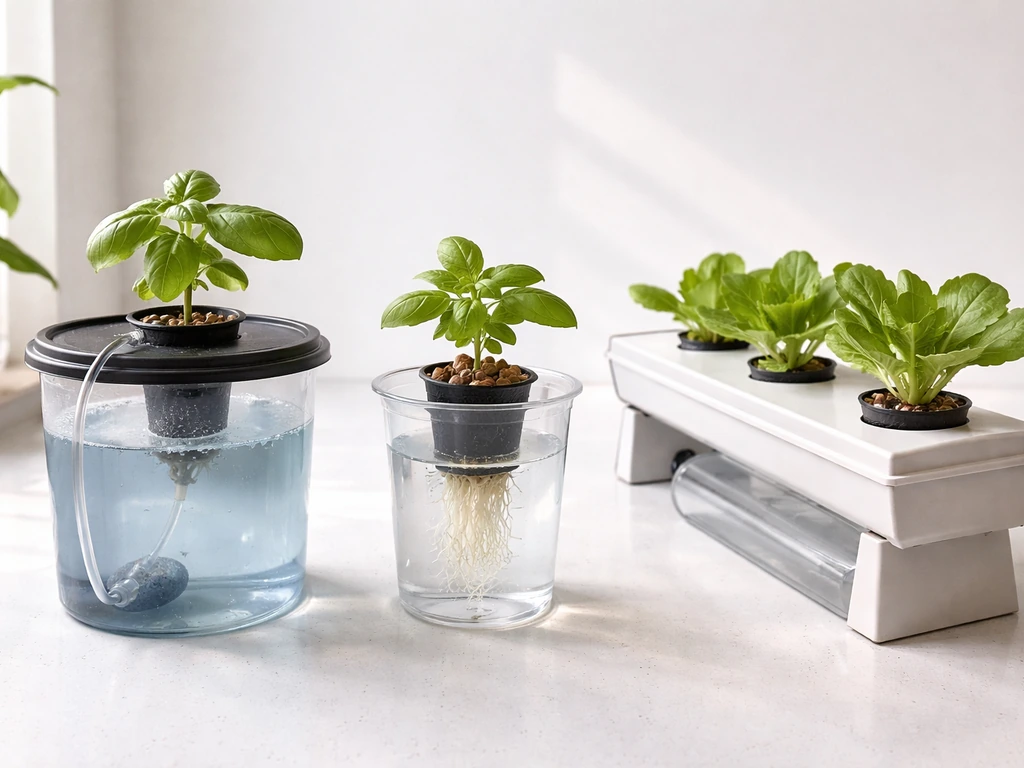
There are dozens of hydroponic techniques, but three are genuinely beginner-accessible. Here's what each one is, what it does well, and who should use it.
Deep Water Culture (DWC)
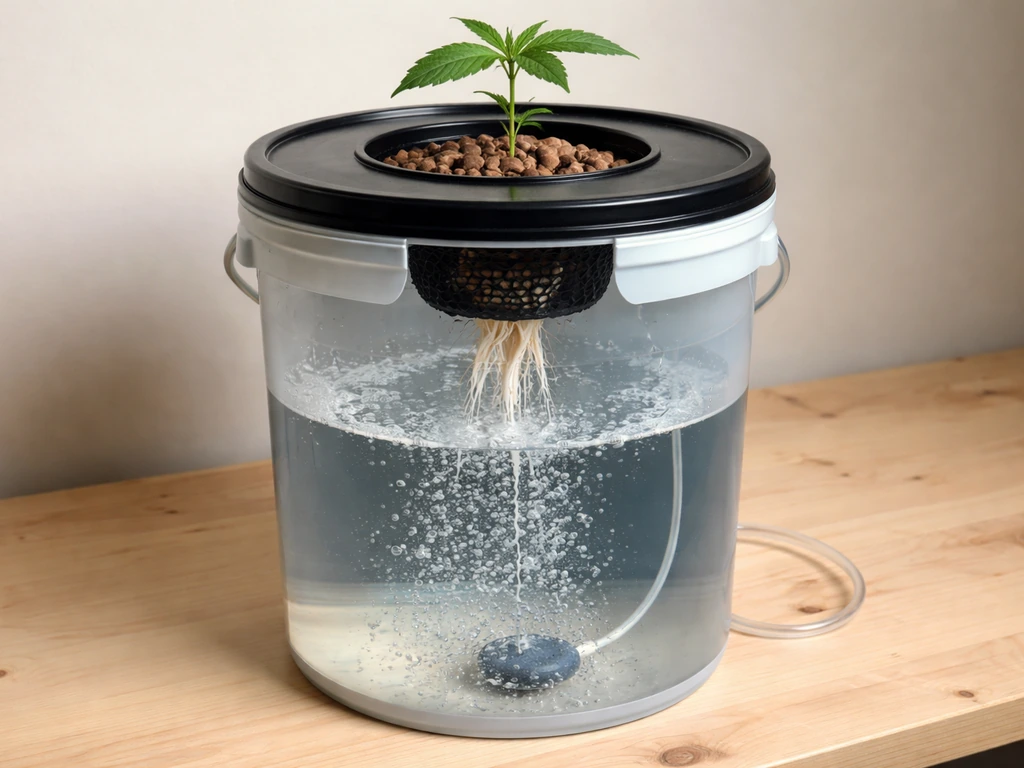
Deep water culture suspends plant roots directly in a reservoir of oxygenated, nutrient-rich water. An air pump and airstone keep the solution oxygenated so roots don't drown. It's the most popular beginner active system because it's cheap to build (a 5-gallon bucket, air pump, net pot lid, and airstone cost about $30 to $50), easy to monitor, and produces fast, vigorous growth. Best for: fast-growing plants like lettuce, basil, cannabis, and tomatoes. Not ideal for large vine crops that need heavy structural support above the reservoir.
Kratky Method (passive, no pump)
The Kratky method is a passive hydroponic technique where the plant sits above a reservoir and only the root tips initially contact the nutrient solution. As the plant drinks down the water level, an air gap forms between the water surface and the net pot, which gives roots access to oxygen without any pump or electricity. It's the simplest possible hydroponic setup and requires almost zero maintenance between top-offs. Best for: leafy greens, herbs, and low-maintenance indoor setups. Not recommended for heavy-feeding plants or anyone who wants to run multiple plants in a recirculating system.
Nutrient Film Technique (NFT)
NFT runs a thin, continuous stream of nutrient solution along the bottom of angled channels. Roots sit mostly in air inside the channel, with just their tips touching the shallow film of moving water. This maximizes oxygen exposure to roots and is highly water-efficient. It's also scalable, which makes it popular in commercial setups. The downside is that pump failure immediately stresses plants since there's no buffer of standing water. Best for: experienced growers scaling up production, lettuce, strawberries, and herbs. Not ideal for absolute beginners because of the pump dependency and precise channel slope requirements.
| Method | Active/Passive | Best For | Beginner Friendly | Equipment Cost |
|---|---|---|---|---|
| DWC | Active (air pump) | Fast-growing crops, cannabis, tomatoes | Yes | $30–$80 |
| Kratky | Passive (no pump) | Herbs, leafy greens, low-maintenance setups | Very much so | $10–$30 |
| NFT | Active (water pump) | Lettuce, commercial-style scaling | Less so | $80–$300+ |
My recommendation: start with Kratky if you want the lowest barrier to entry and are growing herbs or greens. Start with DWC if you want speed and don't mind managing a pump and doing weekly reservoir changes. Skip NFT until you've run at least one successful DWC or Kratky grow.
Your setup checklist for today
Once you've chosen a method, here's what you actually need to get running. I've kept this focused on DWC since it's the most common starting point, but the water quality and environmental targets apply to all methods.
Equipment
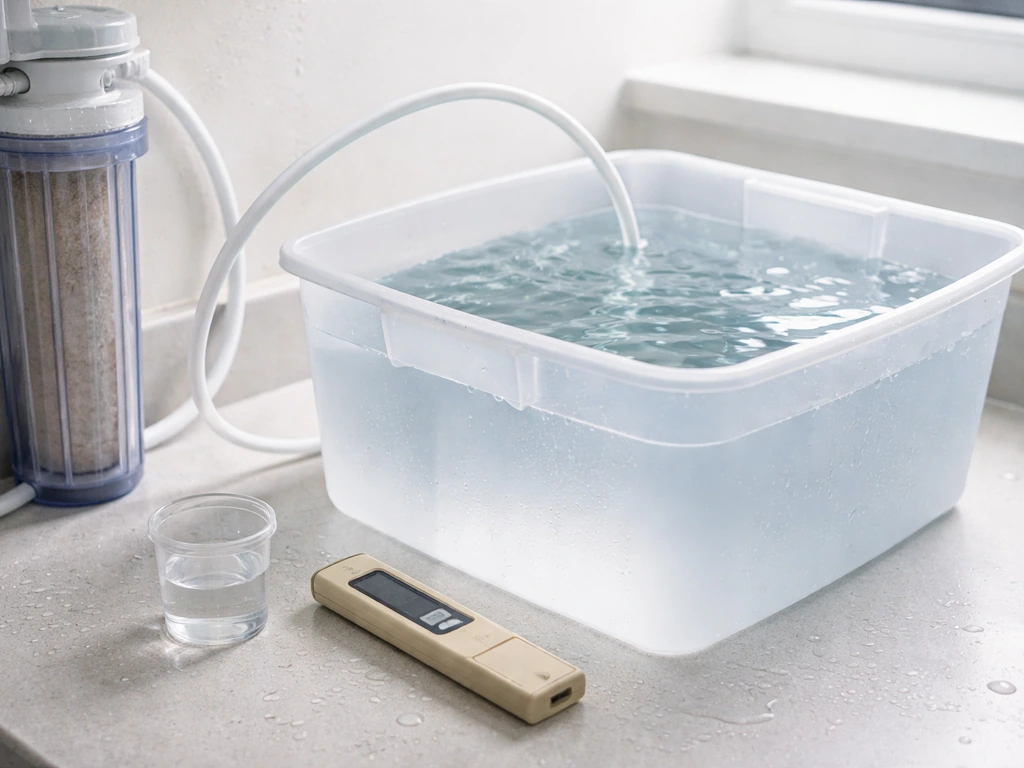
- 5-gallon opaque bucket or tote (opaque is critical to block light and prevent algae)
- Net pots (2-inch or 3-inch) to hold your growing medium and plant
- Growing medium: hydroton (clay pebbles), rockwool cubes, or coco coir plugs
- Air pump rated for your reservoir size, plus airline tubing and an airstone
- pH meter (digital, not strips; strips aren't accurate enough for hydroponics)
- EC/TDS meter for measuring nutrient concentration
- pH up and pH down solutions
- A quality two-part or three-part hydroponic nutrient solution
- Thermometer for water temperature
- Timer for lights
Water quality
Start with filtered or reverse osmosis (RO) water if your tap water is above 200 ppm TDS or has heavy chlorine/chloramine treatment. High mineral content in tap water eats into your EC headroom and can interfere with nutrient ratios. If your tap water is clean and under 150 ppm, you can use it. Let it sit 24 hours in an open container to off-gas chlorine, or use a small amount of sodium thiosulfate to neutralize chloramine instantly.
Lighting
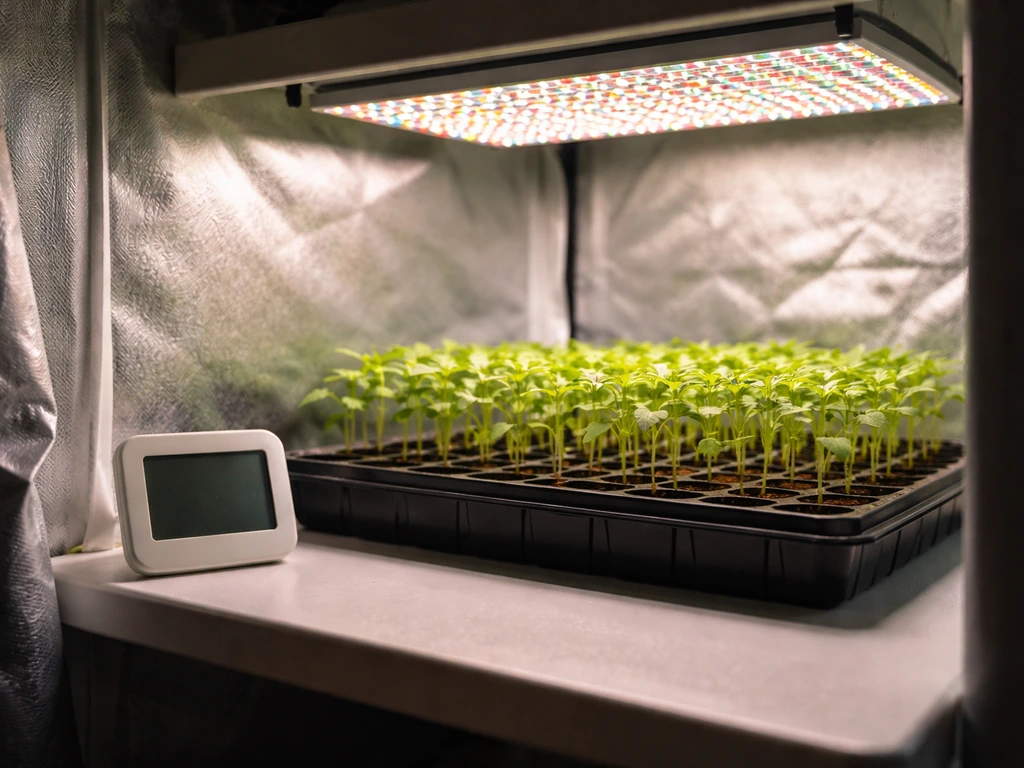
Most hydroponic crops need 14 to 18 hours of light per day in vegetative growth. A full-spectrum LED panel is the standard choice now: it runs cooler than HID lights, uses less electricity, and covers the right spectrum for both veg and flower. For a single 5-gallon DWC bucket, a 100 to 200 watt LED panel is plenty. Keep the light 18 to 24 inches above the canopy and adjust as plants grow.
Temperature and airflow
Ambient air temperature should stay between 70 and 80°F (21 to 27°C). Water temperature in the reservoir is just as important: keep it between 65 and 72°F (18 to 22°C). Warm water holds less dissolved oxygen, which stresses roots and promotes pythium. Below 65°F slows growth and nutrient uptake. A small oscillating fan improves air circulation around leaves, strengthens stems, and helps manage humidity. Target relative humidity between 50 and 70% during vegetative growth.
Nutrients, pH, and EC: the numbers that matter
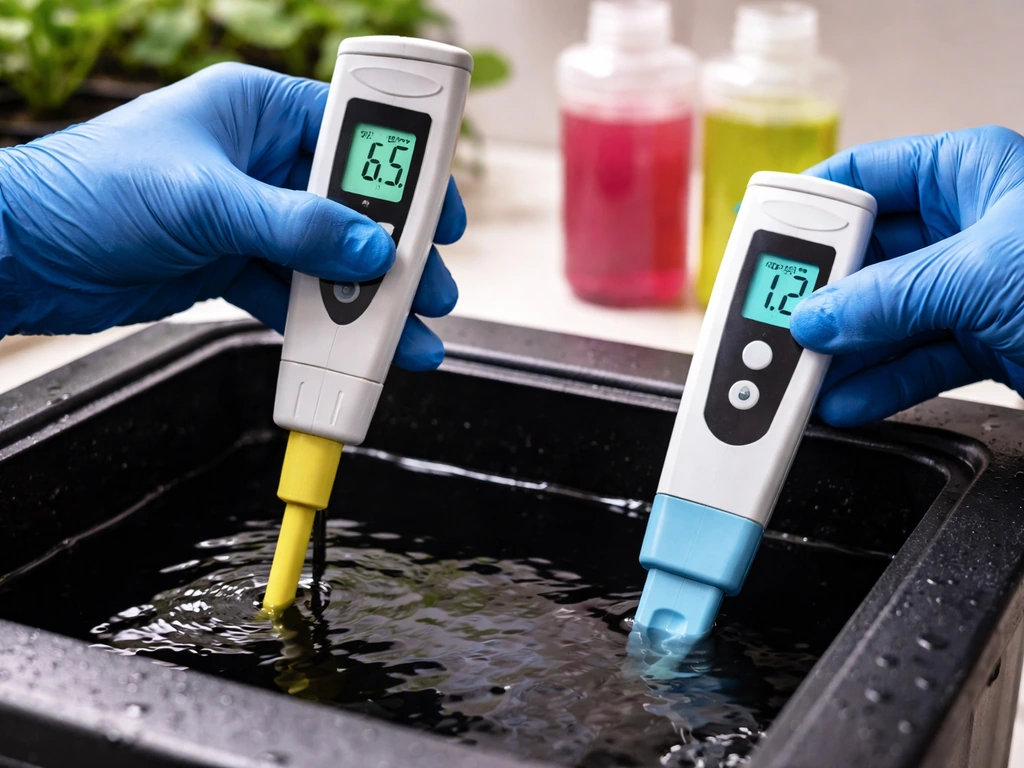
This is where most beginners get tripped up, and it's also where hydroponics gets its reputation for being complicated. But the core targets are simple once you understand what you're measuring.
pH targets
Keep your reservoir pH between 5.5 and 6.5 for most crops. The sweet spot is 5.8 to 6.2. Outside this range, nutrient lockout happens even if your solution has plenty of nutrients in it, because pH affects which ions are chemically available for root uptake. Check pH daily in the first two weeks, then every other day once you understand how your system drifts. Unlike soil, which buffers pH naturally, hydroponics has no such backstop. As Oklahoma State University Extension research confirms, pH and EC can shift directly with nutrient addition, water alkalinity, and plant uptake in hydroponic systems, which is why daily monitoring isn't optional when you're just getting started.
EC (electrical conductivity) targets
EC measures the total dissolved nutrient concentration in your solution. For seedlings and young plants, target 0.8 to 1.2 mS/cm. For vegetative growth, 1.2 to 2.0 mS/cm. For flowering or fruiting plants, 2.0 to 2.8 mS/cm. If EC climbs higher than your target (plants are drinking water faster than nutrients), top off with plain pH-adjusted water. If EC drops (plants are drinking nutrients faster), add a small dose of nutrient solution. Track both numbers together, because a rising EC alongside a falling pH usually means your plants are feeding hard and you need a partial reservoir change soon.
Mixing nutrients
Always add nutrients to water, never water to concentrated nutrients. Mix each part separately before combining. For a two-part system (grow A + grow B), add Part A to water first, stir, then add Part B. Never mix Parts A and B directly together in concentrate form or you'll get nutrient precipitation. Shake the solution, check EC, then adjust pH last. Adjusting pH after nutrients are mixed prevents the pH adjustment from reacting with nutrient salts before they're diluted.
A simple feeding schedule (first 4 weeks)
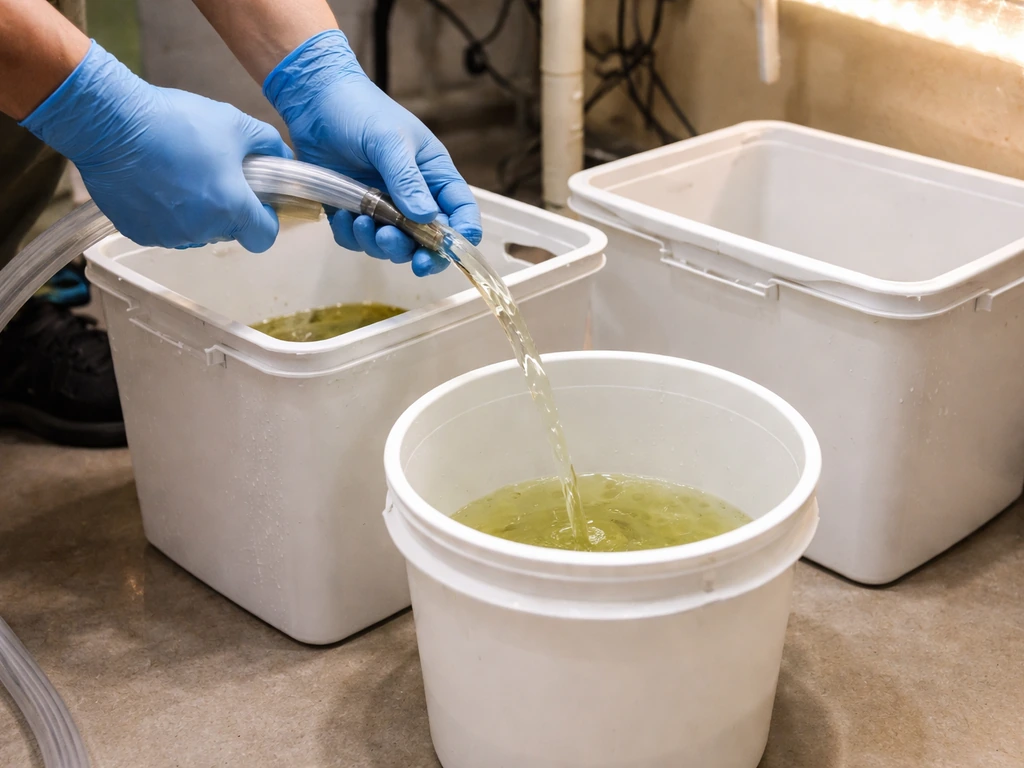
- Week 1: Plain water at pH 5.8 to 6.0 for seedlings or fresh clones. EC 0.4 to 0.6. Let roots establish.
- Week 2: Introduce nutrients at 25% of recommended label dose. Target EC 0.8 to 1.2, pH 5.8 to 6.2.
- Week 3: Ramp up to 50% label dose if plants look healthy. EC 1.2 to 1.6. Check for any deficiency signs.
- Week 4: Move to 75% to full dose for established vegetative plants. EC 1.6 to 2.0. Full reservoir change at end of week 4.
Keeping your reservoir healthy week to week
A hydroponic system is only as healthy as its reservoir. Neglect here causes 90% of the problems growers complain about. The good news is that a simple routine covers most of it.
Full reservoir changes
Change your entire reservoir every 7 to 14 days. Over time, unused nutrients accumulate, pH buffers degrade, and microbial activity builds up even in apparently clean systems. A full change resets the slate. Drain completely, rinse with plain water, then refill with fresh nutrient solution mixed from scratch. Mark the water level on day one so you can track consumption accurately between changes.
Dissolved oxygen
In DWC, your air pump is doing critical work. University of Missouri Extension research recommends maintaining dissolved oxygen above 6 ppm in systems where roots are submerged. Practically, this means: run your air pump continuously (not on a timer), use an airstone sized for your reservoir volume, and keep water temperature below 72°F since warmer water holds dramatically less oxygen. If you can get a dissolved oxygen meter, it's worth the investment for any serious DWC setup.
Preventing algae
Algae needs two things: light and nutrients. Block both from your reservoir and you won't have an algae problem. Use an opaque bucket or wrap your reservoir in black plastic or foil tape. Cover any gaps around net pots with black fabric or tape. Never use clear containers for hydroponic reservoirs. If algae appears despite this, do a full reservoir change, clean all surfaces with a diluted hydrogen peroxide solution (3%), and seal all light leaks before refilling.
Root health checks
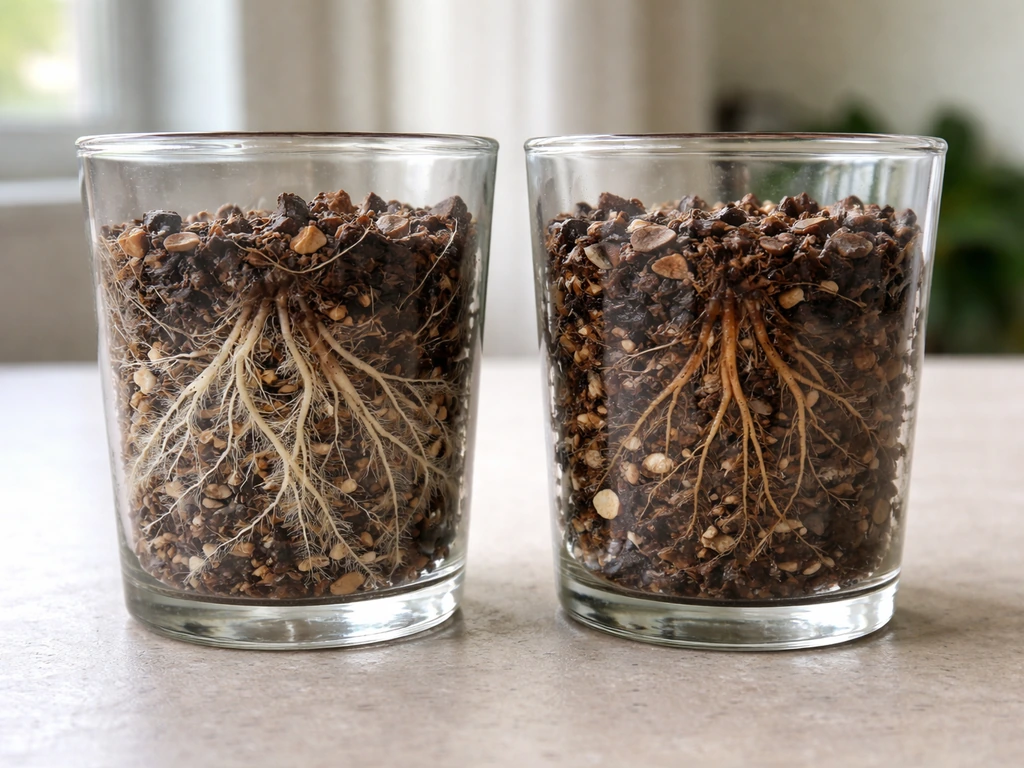
Healthy roots are white to cream-colored with a slight fuzz (root hairs). Brown, slimy, or foul-smelling roots indicate root rot (pythium). Catch it early by checking roots at every reservoir change. If you spot early browning, add beneficial bacteria products containing Bacillus subtilis or Trichoderma, do a full change, lower water temperature, and increase aeration. Severe root rot usually means starting over.
Troubleshooting: what's going wrong and how to fix it fast
Here are the most common problems, why they happen, and what to do about them. Catching these early makes the difference between a minor correction and a failed crop.
| Symptom | Likely Cause | Fix |
|---|---|---|
| Yellow leaves (lower, older leaves first) | Nitrogen deficiency or pH lockout | Check pH first (adjust to 5.8–6.2), then check EC; increase N-rich nutrient dose if pH is correct |
| Yellow leaves (new growth, upper leaves) | Iron or calcium deficiency, often pH-related | Lower pH to 5.5–6.0 range; these nutrients lock out above 6.5 |
| Slow or stunted growth | Low EC, wrong temperature, or low dissolved oxygen | Check EC (may be too low), verify water temp is 65–72°F, confirm air pump is running |
| Cloudy or smelly water | Bacterial overgrowth or root rot | Full reservoir change, clean with 3% H2O2, lower temp, add beneficial bacteria |
| Green slime in reservoir | Algae from light exposure | Block all light leaks immediately; full change and clean; use opaque containers only |
| Wilting despite full reservoir | Root rot cutting off water uptake, or overheating | Check root color; if brown/slimy, treat for root rot; check water and air temp |
| Brown leaf tips | Nutrient burn (EC too high) | Partial reservoir change with plain pH water to dilute EC; target your growth-stage range |
| Purple or red stems | Phosphorus deficiency or temperature stress | Check pH (phosphorus locks out below 5.5); verify ambient temp isn't too cold |
The single most important troubleshooting habit is measuring before adjusting. Every time something looks off, grab your pH and EC meters first. Most symptoms in hydroponics trace back to one of those two numbers being outside range, and adjusting nutrients blindly without knowing your baseline will make things worse, not better.
Where to learn more and find equipment
Once your system is running, you'll want to source quality nutrients and equipment from places that actually understand hydroponic growing. If you're in Southern California, better grow hydro pasadena is worth checking out for local access to supplies and in-person advice. For growers in the UK or Wales, better grow hydro cardiff is a regional option with hands-on staff. If you're in the Midwest, the team at quality grow hydroponics kansas city can help you source the right gear for your setup. And if you're thinking more broadly about what makes a hydro shop worth using, the breakdown at better grow hydro covers what to look for when picking a supplier.
For growers who want to go deeper on system-specific nutrient strategies, the guide on quality-grow-hydroponics breaks down EC management and solution mixing in more detail. And if the broader question of how much and when to water is still on your mind, the principles behind water what you want to grow translate well from soil-based irrigation logic to hydroponic top-off and reservoir management.
Your realistic first two weeks
Here's what the first two weeks should actually look like so you go in with the right expectations and don't panic at the first sign of a small drift.
- Day 1: Set up reservoir, mix plain pH-adjusted water (5.8–6.0), place seedlings or clones, confirm air pump is running, set lights on timer.
- Day 2–3: Check pH and water level daily. Expect minor pH drift. Adjust with pH up or down as needed. Don't add nutrients yet.
- Day 4–7: Roots should start reaching into the solution. Watch for healthy white root development. Introduce nutrients at 25% dose at day 5–7.
- Day 7–10: Check EC and pH daily. Note how fast the plant is drinking. Top off with plain water if EC rises (plant drinking water). Top off with diluted nutrient solution if EC drops.
- Day 10–14: First full reservoir change at day 14. Mix fresh solution at 50% nutrient dose. Check roots at changeover. Healthy roots mean you're on track.
- Week 3 onward: Increase nutrient dose by 25% per week up to your target EC for the growth stage. Reservoir changes every 7–14 days. Monitor daily.
Growing in water works. It's not magic and it's not as complicated as some resources make it sound. Get your pH and EC tools, pick one simple system, follow the maintenance routine, and you'll be harvesting faster than any soil grow you've done before. The growers who fail aren't the ones who tried something difficult. They're the ones who skipped daily checks, used clear containers, or ignored early root symptoms. Don't be that grower.
FAQ
Can I leave cuttings in water indefinitely and skip a transplant?
Yes, but you need to manage it differently than for soil. For propagation, use clean, room-temperature water with no nutrients, then transplant when roots are 1 to 2 inches. If you leave a cutting in plain water too long, it can stall because the root environment stays oxygen-poor compared with hydro setups, so timing matters.
What’s the correct way to top off a hydro reservoir when EC is off?
If you do top-off, use pH-adjusted water only, and recheck pH and EC after topping. Top-off raises volume without replacing exhausted salts, so EC usually stays high or climbs, while pH can drift. When EC repeatedly rises despite top-offs, do a partial or full reservoir change.
Can I run the air pump on a schedule instead of continuously?
For DWC, aim for a continuously running air pump rather than cycling. If you must use a timer for noise or power, keep breaks very short and verify plants stay stable, because oxygen drops quickly when roots are submerged. Airstone size and water temperature affect dissolved oxygen more than most beginners expect.
Is it okay to mix soil into hydroponic water for “extra nutrition”?
Usually no. Even small amounts of soil can introduce microbes, which can cause biofilm buildup, inconsistent nutrient uptake, and algae. For hydro, use inert media only if needed for support, and keep roots in the water culture or your chosen net pot environment.
What should I do if my roots turn brown and slimy?
Reset the system. If roots are brown and slimy, and the smell is bad, it is usually root rot. Remove affected plants, drain completely, rinse, scrub light-blocking surfaces, refit with fresh mixed nutrients, then correct temperature and aeration first. Beneficial bacteria can help early cases, but severe cases often need a restart.
How often do I really need to test pH in a hydro system?
Don’t wait for plants to show symptoms. Check pH daily in the first two weeks as the guide recommends, then at least every other day. If your reservoir is stable (slow drift) you can extend slightly, but any time you change nutrients, add chemicals, or see EC and pH move in opposite directions, tighten monitoring.
EC and pH both look wrong. Should I adjust both immediately?
If you see EC high and pH low (or pH high), that pattern tells you nutrient availability is shifting, not just “too much fertilizer.” The safest step is to measure again, then do a partial reservoir change if the drift is ongoing. Only adjust one variable at a time, otherwise you lose the diagnostic value of your readings.
Will adding a strong fan affect EC or water levels?
Yes, but keep it controlled. A fan helps leaf airflow and humidity management, but it can also dry media surfaces and increase evaporation, which concentrates EC. If you run an oscillating fan, mark your reservoir water level and track consumption so you can top off without unexpectedly spiking EC.
I used a clear bucket. Can I just “wait and see” for algae?
Don’t use clear containers if you can avoid it. Light hitting the reservoir feeds algae, which competes for nutrients and can worsen oxygen conditions through biofilm. If you already used a clear bucket, switch to an opaque reservoir or fully wrap it before problems spread.
Can I mix Part A and Part B at the same time to save effort?
You can, but it may create nutrient precipitation and messy chemistry if not done carefully. The guide’s “add nutrients to water, not water to concentrate” rule exists to reduce salt shock and precipitation. If you change formulations or brands, mix separately, confirm EC, then adjust pH last.
What if my pH keeps bouncing even after adjusting?
Keep a small pH buffer on hand, but don’t assume any correction will hold. Use a consistent pH adjuster, change slowly, and recheck after mixing because pH changes lag. If pH won’t stabilize within your target range after a full refresh, investigate water alkalinity and ensure you are using the correct dilution and ratios.
Do I need a dissolved oxygen meter for DWC?
If you cannot measure dissolved oxygen, use practical safeguards: keep water cooler within the stated range, run the air pump continuously, and size the airstone appropriately. For larger buckets or higher plant loads, oxygen demands increase, so dissolved oxygen meters are most useful when you scale up or see recurring stress.
I travel often. Is NFT a bad choice because of pump dependence?
Start smaller or choose a different method. NFT is highly pump-dependent and can stress plants immediately if flow stops, while Kratky tolerates less intervention. If your schedule means frequent missed checks, Kratky or DWC with a reliable, continuously running setup is usually safer than NFT.
Does letting tap water sit 24 hours remove chloramine too?
If your tap water has chlorine or chloramine, let water sit only works reliably for chlorine. For chloramine, neutralization is usually needed (such as sodium thiosulfate as mentioned), otherwise roots can be stressed and microbial balance can get weird. Also measure TDS because high minerals reduce your nutrient headroom.
If I only buy a few things, what are the must-haves before nutrient tuning?
For “what should I buy first,” prioritize meters and light suitable for your crop before upgrading hardware. At minimum, have a reliable pH meter and an EC meter, plus basic water filtration steps if your TDS is high. If you skip measurement, troubleshooting becomes guesswork and causes nutrient lockout.