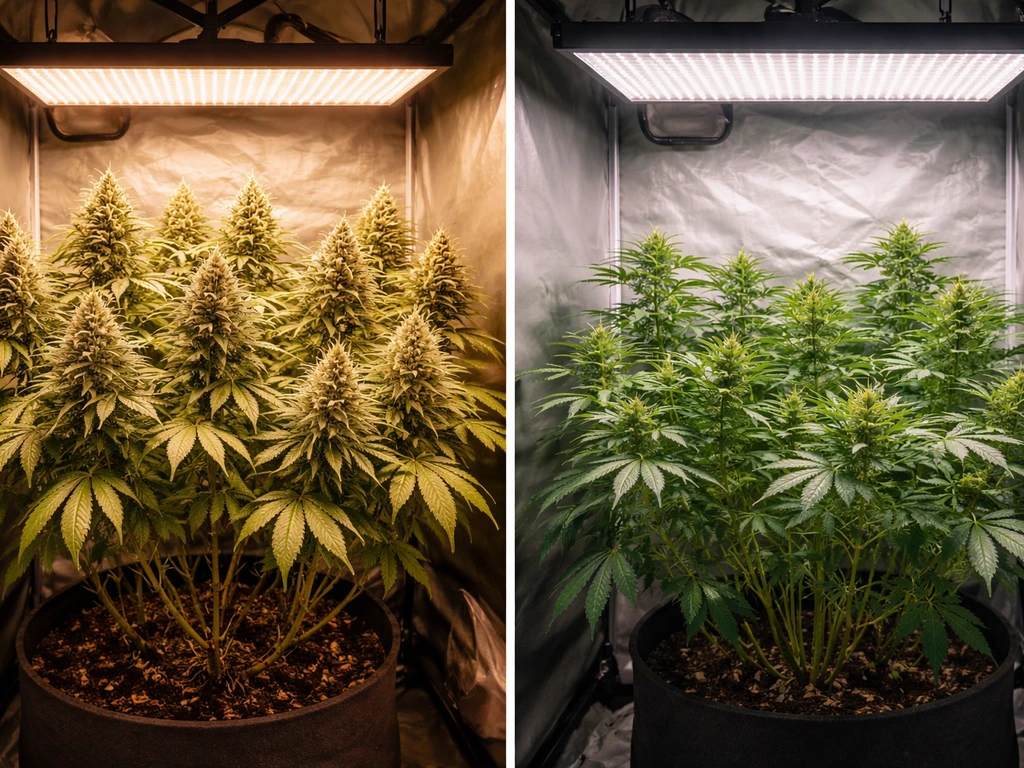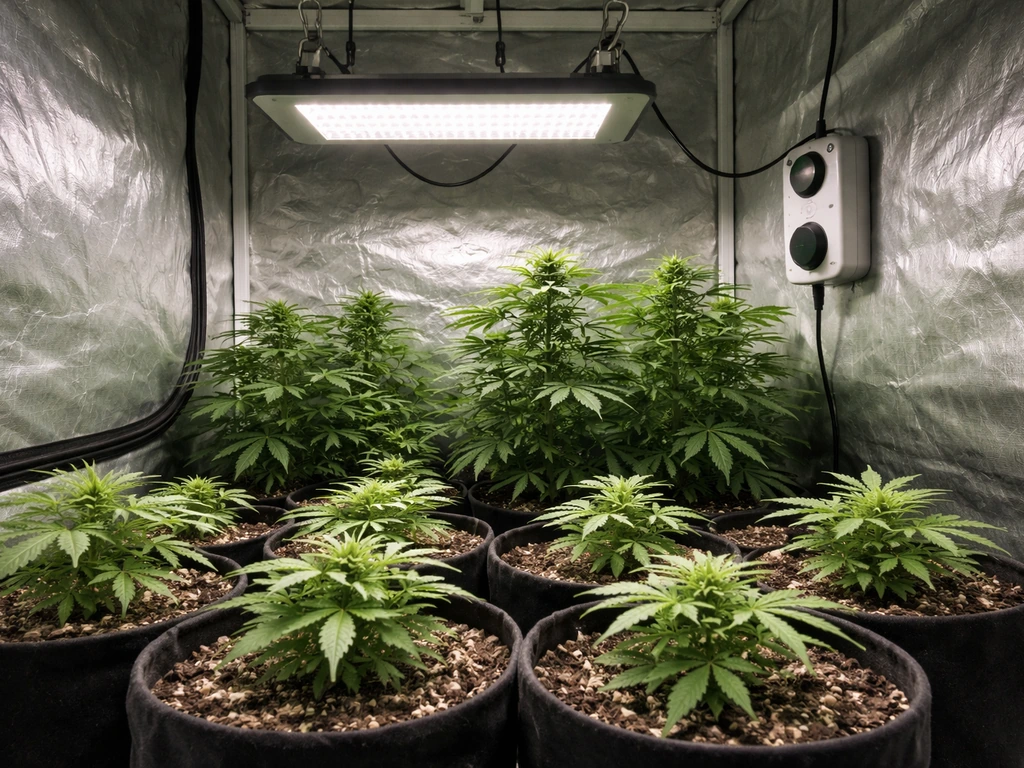
Yes, autoflowers can grow on a 12/12 light schedule. They will germinate, grow, flower, and finish under 12 hours of light and 12 hours of dark. But here is the honest answer that most growers need to hear: 12/12 is not ideal for autoflowers, and choosing it without a good reason will cost you yield. If you are running 12/12 because a photoperiod plant is sharing the same tent, or because your electricity situation demands it, this guide will show you how to make the best of it. If you have a choice, you will want to keep reading to the end before locking in that schedule.
Can Autoflowers Grow on a 12/12 Light Schedule? How to Do It
Marcus Holloway
15 Apr 2026
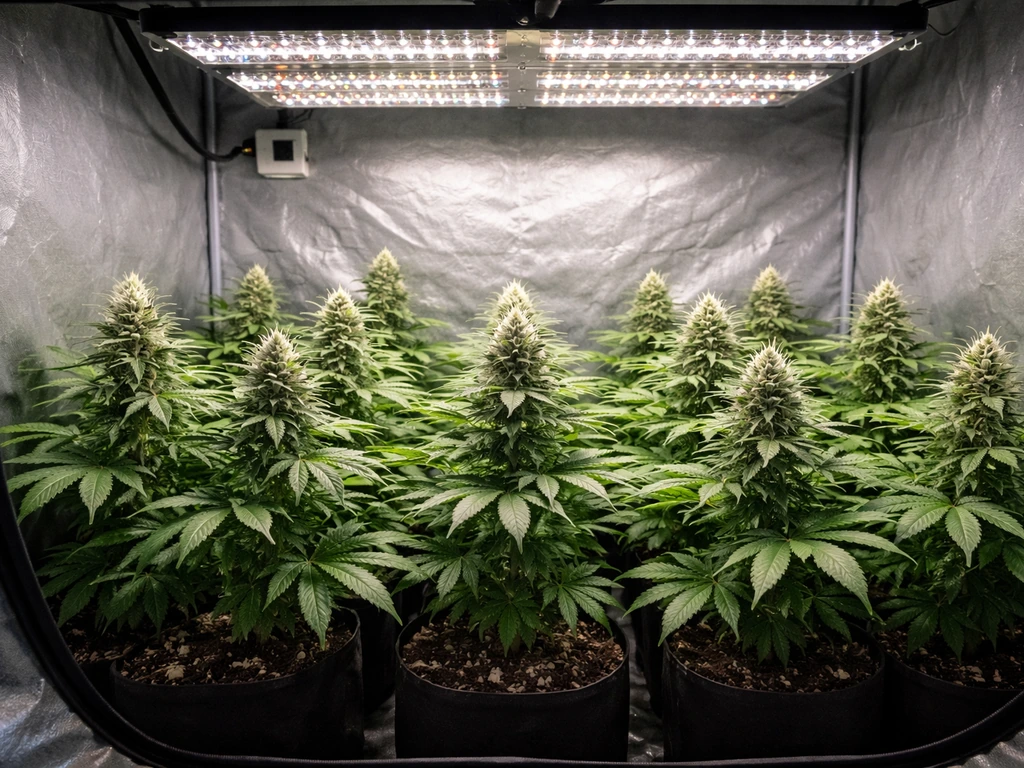
Autoflowers vs photoperiod plants: why light schedule matters
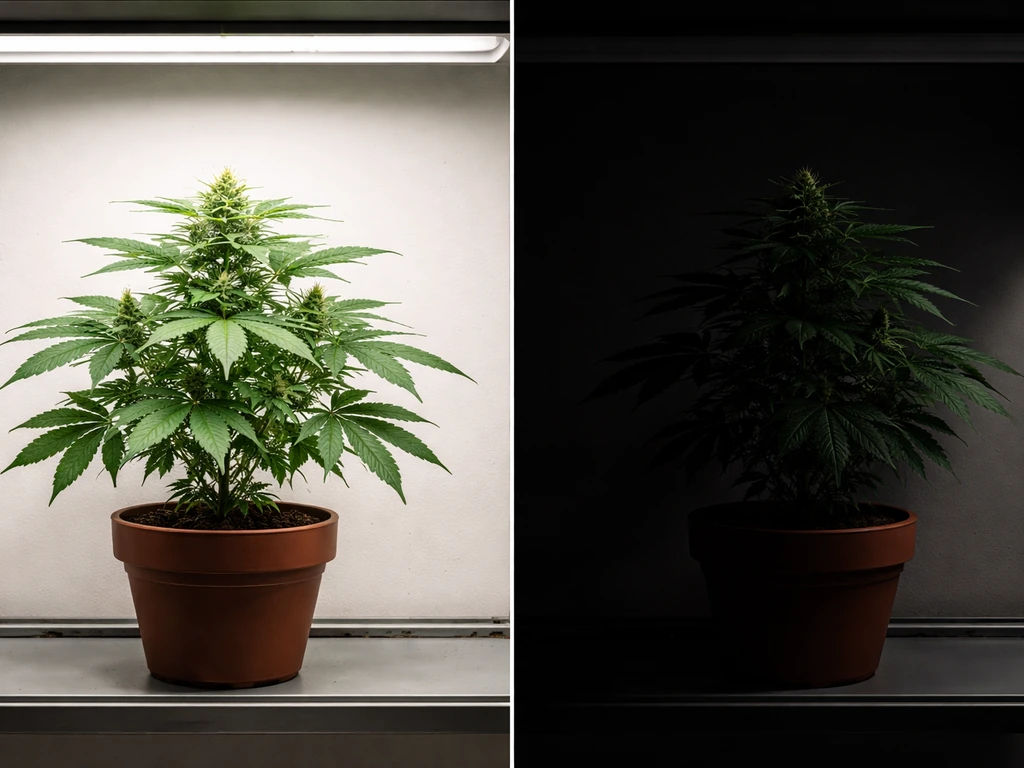
Photoperiod cannabis strains measure darkness to decide when to flower. They need a reliable stretch of uninterrupted dark, typically 12 hours, to trigger the hormonal shift into bloom. Even a brief pulse of light during that dark window, a phone screen, a leaky tent zipper, can delay or prevent flowering entirely. Their entire life cycle is governed by the clock.
Autoflowers are different at a genetic level. They carry ruderalis genetics, which means blank" rel="noopener noreferrer">flowering is driven by age, not light. A seedling that is three to four weeks old will begin flowering whether it is sitting under 12 hours of light or 20. It simply does not care about photoperiod length the same way. This trait evolved in plants growing at high latitudes where light schedules are unpredictable, and it is why breeders crossed ruderalis with indica and sativa strains to create modern autoflowering varieties.
The practical implication is that autoflowers are genuinely light-schedule agnostic when it comes to triggering flower. But the total amount of light they receive per day still has a direct effect on how much energy is available for photosynthesis, growth, and bud production. More hours of light means more energy, more growth, and usually more yield. That is the core tension when you start talking about 12/12 for autos.
So can you grow autoflowers on 12/12? direct answer and expectations
You can, and they will complete their life cycle. Autoflowering varieties are documented to bloom under 12/12, 18/6, 20/4, and even 24/0. The plant will not stall waiting for the right signal the way a photoperiod strain would. What changes is performance.
On 12/12, expect roughly 15 to 30 percent less yield compared to the same strain grown under 18/6 or 20/4. Vegetative growth will be noticeably slower because the plant has six fewer hours of light each day to build leaves, stems, and root mass before it starts flowering. Since autoflowers flower based on age rather than light change, the onset of flowering happens at roughly the same week regardless of schedule, which means a smaller plant enters flower on 12/12 than it would have under a longer light period. Smaller plant at flip, smaller final canopy, smaller harvest.
That said, 12/12 is a legitimate choice when you are growing autoflowers alongside photoperiod plants in the same room and your photoperiod strains are already in flower. Matching the room to one schedule is often more practical than splitting the space. Just go in with calibrated expectations.
How 12/12 affects growth, flowering timing, and yield (what to watch for)
The first thing you will notice on 12/12 is slower early development. Seedlings on 12/12 look almost lazy in weeks one and two compared to seedlings under 18/6. Node spacing tightens slightly, and leaves are sometimes narrower. This is not a problem, it is just less energy per day going into the plant.
Flowering onset is not meaningfully delayed by 12/12. Most modern autoflowers begin showing pistils between weeks three and four from germination regardless of schedule. What is different is that the plant entering flower on 12/12 is physically smaller, so it has fewer bud sites to develop. You will see fewer main colas, shorter lateral branches, and a flatter canopy. Final dry weight can drop from a typical 40 to 60 grams per plant (under 18/6) to closer to 25 to 40 grams on 12/12, depending on strain and care.
Total time from seed to harvest does not change dramatically, typically 70 to 90 days regardless of light schedule, because the auto is running on its internal genetic timer. You are not trading time for yield on 12/12, you are simply trading light hours directly for grams.
- Week 1-2: Slower leaf development and shorter stems than 18/6 autos
- Week 3-4: Flowering signs appear on schedule (pistils, preflower clusters)
- Week 4-6: Bud sites form but canopy is more compact and lower than 18/6 plants
- Week 7-9: Buds fatten at similar rate, but total bud mass is reduced
- Week 9-11: Harvest window arrives on the auto's internal schedule, not yours
Best practices if you must run 12/12: intensity, temperature, dark-cycle rules
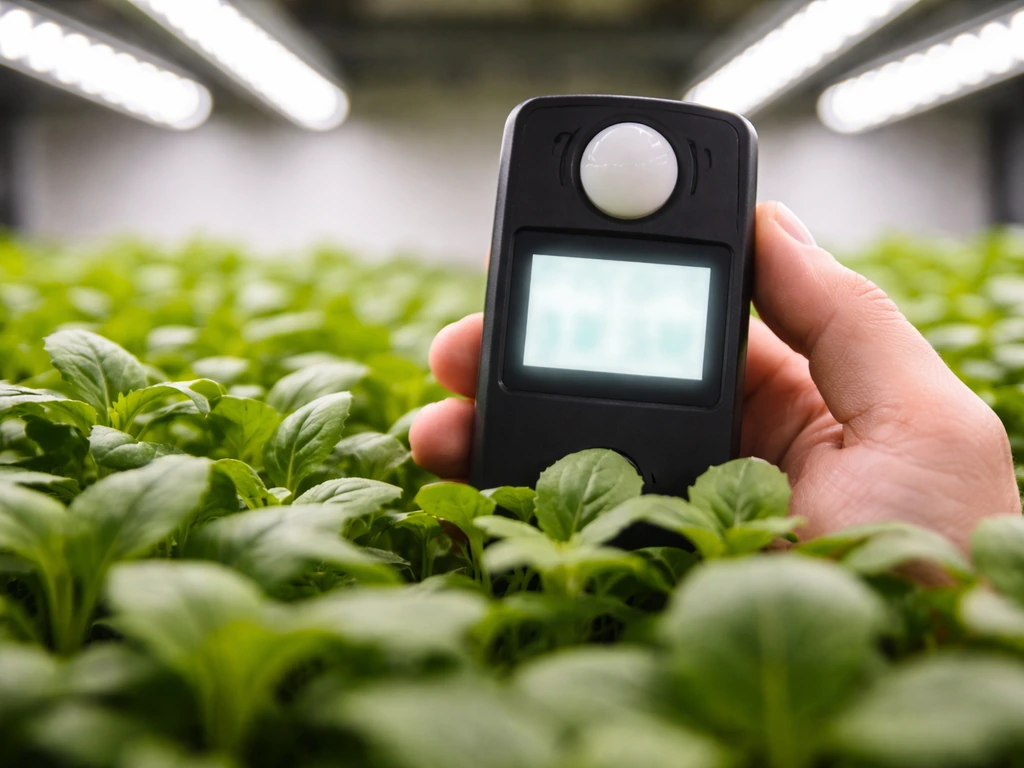
If 12/12 is your schedule, the single most important thing you can do to compensate for fewer light hours is maximize light quality and intensity during those 12 hours. Target a PPFD of 600 to 900 micromoles per square meter per second at the canopy during vegetative growth, and push to 800 to 1000 during flower. This is higher than the minimum threshold but still within the range most autoflowers can handle without light stress. Spreading that intensity evenly across the canopy matters more on 12/12 because there is no extra time to make up for shadowed spots.
LEDs with a full spectrum (covering both blue-heavy and red-heavy output) work well for autos on 12/12. You do not need to shift spectrum aggressively at flower onset the way you might with photoperiods, since flowering is age-driven, but keeping red wavelengths (630 to 660 nm range) present through the second half of the cycle helps bud development. If you are running HPS or CMH, the same intensity targets apply.
Temperature management is critical. With fewer light hours, the room will drop temperature during the 12-hour dark period, sometimes significantly. Aim for 70 to 78 degrees Fahrenheit (21 to 26 Celsius) during lights-on and try not to let the dark period drop below 60 to 62 degrees Fahrenheit (15 to 17 Celsius). Large temperature swings between light and dark periods can stress autoflowers and slow growth further, which is the last thing you need when you are already limiting their light.
Protect the dark period. Even though autoflowers are not photoperiod-dependent, a truly uninterrupted dark cycle is still good growing practice. Light leaks during the dark period will not prevent an autoflower from flowering, but they can cause mild stress and inconsistent development. Seal your tent properly and avoid opening it during the dark cycle for checks or watering if you can help it.
Soil vs hydroponic: adjustments for nutrients, watering, and setup under 12/12
Soil grows on 12/12
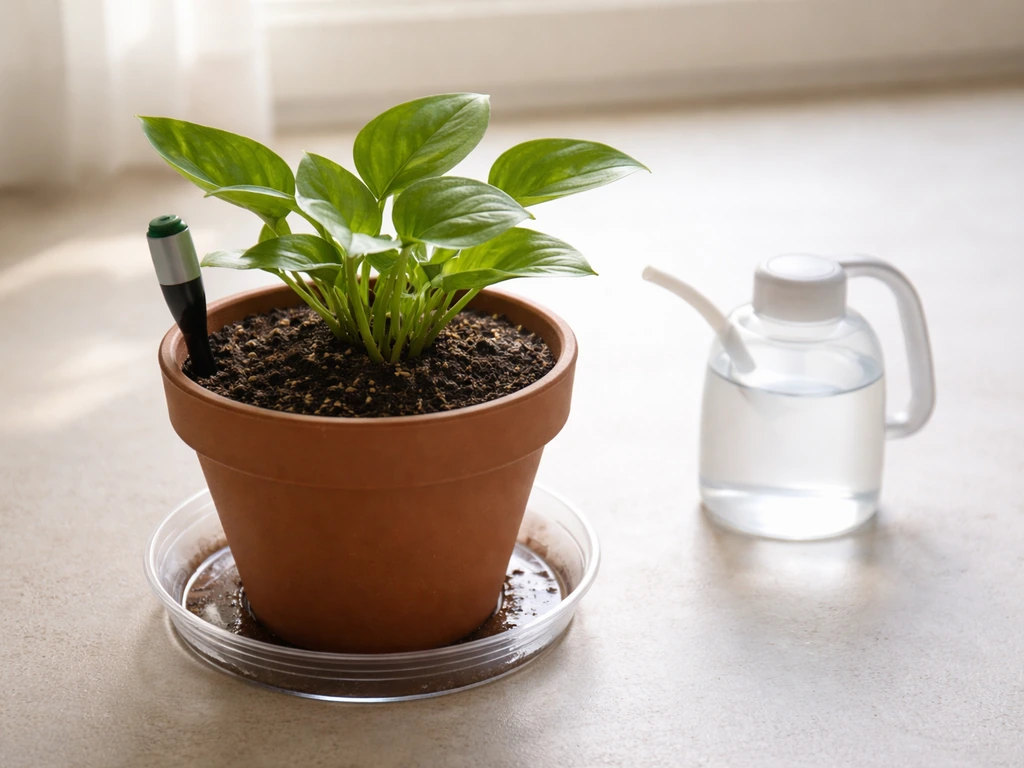
In soil, the slower growth rate on 12/12 means the plant's nutrient uptake is also slower. One of the most common mistakes I see is growers pushing their standard nutrient schedule without accounting for reduced daily photosynthesis. If the plant is processing less light, it is consuming fewer nutrients, and overfeeding becomes a real risk. Start at 50 to 75 percent of the manufacturer's recommended dose and watch the leaves closely. Pale green or yellowing lower leaves signal a potential deficiency, while dark green, clawing tips signal nitrogen excess. Adjust from there rather than assuming the chart is right.
Watering frequency also drops on 12/12. The plant transpires less water when it is under light for fewer hours, so the pot or container will dry out more slowly. Stick to the lift-test or finger-knuckle-depth method: water when the top inch or two of soil is dry and the container feels noticeably lighter. Overwatering is the number one soil problem on slower light schedules, and it compounds stress the plant is already experiencing from reduced light.
pH still matters as much as ever. Keep root-zone pH between 6.0 and 7.0 in soil, with 6.2 to 6.8 being the sweet spot for nutrient availability. If you are wondering whether you can skip commercial nutrients altogether, check out what growing autoflowers without nutrients actually looks like in practice before you decide.
Hydroponic grows on 12/12
If you are growing autoflowers hydroponically, the same principle of dialing back nutrient concentration applies on 12/12. Target an EC (electrical conductivity) of 0.8 to 1.2 during early veg, rising to 1.4 to 1.8 during peak flower. These are slightly lower than what you might use on a more aggressive 18/6 schedule because the plant is simply not processing inputs at the same rate. Avoid letting reservoir EC creep upward from week to week without matching it to actual plant demand.
Hydro systems like DWC and NFT are actually well-suited to 12/12 autoflower runs because oxygen delivery to roots and precise nutrient control can partially compensate for the reduced light hours. Keep reservoir temperature between 65 and 72 degrees Fahrenheit (18 to 22 Celsius) to prevent root rot. Maintain pH between 5. Bluelab’s hydroponics troubleshooting guidance shows a recommended pH band of roughly 5.5, 6.5 (and notes a hydroponics pH window around 5.8, 6.2) Maintain pH between 5.5 and 6.5 in hydroponics. 5 and 6.1 throughout the grow, checking it daily in active systems.
| Factor | Soil on 12/12 | Hydro on 12/12 |
|---|---|---|
| Watering frequency | Reduced (slower drying) | Continuous feed cycles, but reduce EC |
| Nutrient dose | 50-75% of label dose | EC 0.8-1.8 range, lower end early on |
| pH target | 6.2-6.8 | 5.5-6.1 |
| Root zone oxygen | Aerate with perlite (30%+ mix) | Air pump critical, check daily |
| Risk to watch | Overwatering and root suffocation | Nutrient salt buildup and root rot |
| Recovery speed from stress | Slower (buffered medium) | Faster (direct root access) |
Troubleshooting common problems when running autos on 12/12
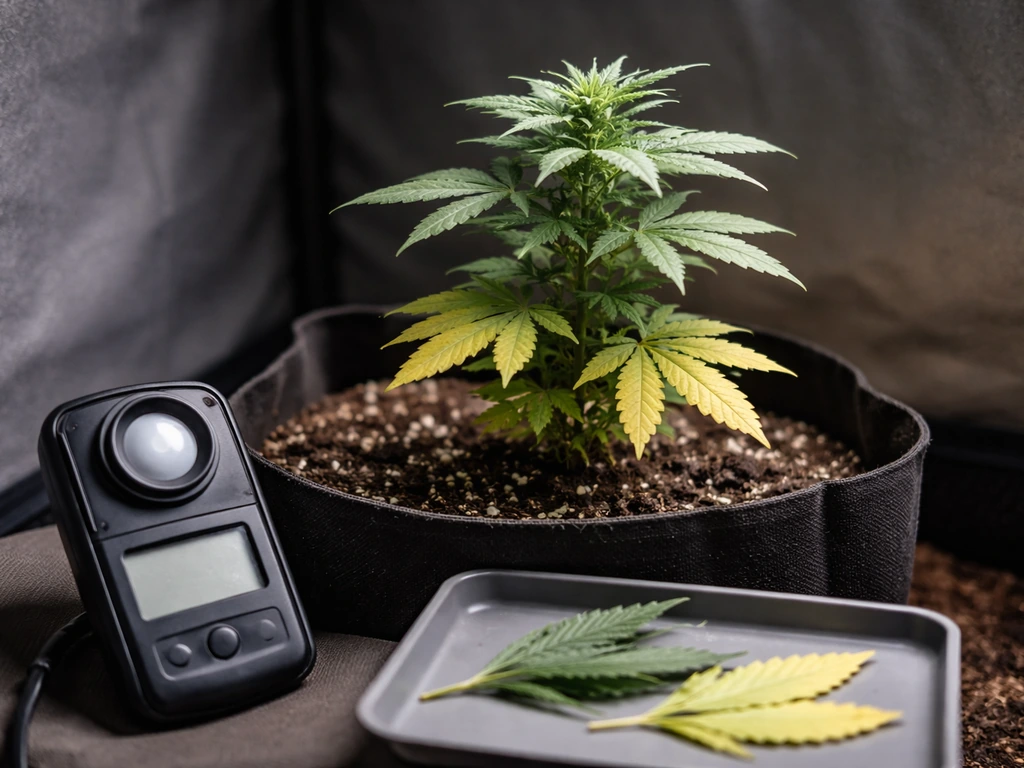
Slow or stunted growth is the most frequent complaint from growers running autos on 12/12. Before assuming something is wrong with the plant, check light intensity at canopy level. A PPFD meter is the most useful diagnostic tool here. Many budget LED panels that claim to cover a 4x4 area at full power barely hit 400 PPFD at canopy, which is well below what an autoflower needs even on a long schedule. On 12/12, inadequate light intensity compounds the reduced daily light total and can genuinely stall growth.
Yellowing or pale lower leaves during mid-veg often indicates a nitrogen deficiency caused by underfeeding, but on 12/12, the same symptom can also come from overwatering compressing root oxygen and blocking nutrient uptake. Check your watering frequency first before reaching for a nutrient boost.
Tip burn or dark, clawing leaves usually signal nitrogen toxicity from overfeeding a plant that is not growing fast enough to consume what you are giving it. Flush with plain pH-corrected water for one feeding, then reintroduce nutrients at a lower concentration.
Airy or loose buds at harvest are a common 12/12 outcome and are mostly caused by insufficient light intensity during flower, not a problem with the schedule itself. If you experienced adequate PPFD (above 700 during flower) and buds are still airy, check that dark period temperatures did not drop below 60 degrees Fahrenheit regularly, as cold dark periods reduce resin development and bud density.
- Slow growth: Check canopy PPFD first, then review watering frequency and root health
- Yellowing lower leaves: Confirm it is not overwatering before adjusting nutrients
- Dark clawing leaf tips: Nitrogen toxicity from overfeeding; flush and reduce dose
- Airy buds: Increase light intensity if possible and protect the dark period from cold
- No flowering by week 5: Rare in autos, but check for seed authenticity or extreme heat stress
- Root rot in hydro: Drop reservoir temp, increase aeration, flush with hydrogen peroxide solution
Decision guide: 12/12 vs 18/6 or 20/4 and how to transition
If you are still deciding which schedule to run, here is the straightforward answer: 18/6 is the practical sweet spot for most indoor autoflower growers. It delivers strong growth, good yield, manageable heat, and a reasonable electricity bill. It is the schedule I default to for dedicated autoflower grows. If you want to push maximum production and your grow space can handle the heat and humidity, 20/4 gives a measurable yield bump over 18/6 for most strains. Autoflowers do grow faster than photoperiod plants in many conditions, and a longer daily light period lets them express that speed fully.
12/12 makes sense when your grow space is already running that schedule for photoperiod plants in flower, when electricity cost is a real constraint, or when heat management in a small space is easier with fewer light-on hours. If any of those apply, run 12/12 and follow the intensity and environment guidance above. If none of those apply, choose 18/6.
| Light Schedule | Yield Potential | Electricity Use | Heat Load | Best For |
|---|---|---|---|---|
| 12/12 | Lowest (25-40g per plant typical) | Lowest | Lowest | Shared rooms with photoperiod plants, heat or cost constraints |
| 18/6 | Strong (40-70g per plant typical) | Moderate | Moderate | Most home growers, best all-around choice |
| 20/4 | Highest (50-80g+ per plant typical) | Higher | Higher | Experienced growers, well-ventilated spaces |
| 24/0 | Similar to 20/4 but less efficient | Highest | Highest | Not recommended; no rest period for the plant |
How to switch from 12/12 to 18/6 mid-grow
If your autoflower is already a few weeks into a 12/12 schedule and you want to switch to 18/6, do it gradually to avoid temperature and humidity swings that stress the plant. Add two hours of light per day every two or three days until you reach 18/6. For example: 12/12 to 14/10, hold for two days, then 16/8, hold for two days, then 18/6. The autoflower will not experience any flowering disruption because it is not photoperiod-dependent, but the gradual shift keeps the environment stable.
If you are starting fresh from seed, there is no reason to start on 12/12 and switch later unless your situation demands it. Just begin at 18/6 from germination and maintain it straight through harvest. Autoflowers do not need or benefit from a schedule change at flower onset the way photoperiods do.
Quick setup checklist for autos on your chosen schedule
- Set your timer before placing plants in the space and verify it with a test run
- Measure PPFD at canopy level with a quantum meter; target 600-900 in veg, 800-1000 in flower
- Confirm dark period temperature stays above 60 degrees Fahrenheit and lights-on stays below 82
- Dial nutrients to 50-75% of label dose (soil) or EC 0.8-1.2 early in veg (hydro)
- Check soil moisture by weight or finger test before each watering; do not schedule-water
- Seal tent or grow space for light leaks even though autos are not photoperiod-sensitive
- Log plant height and internode spacing weekly to catch slow growth early
- Adjust nutrient concentration based on plant response, not the feeding chart alone
Whether 12/12 is your only option or a calculated choice, you now have everything you need to run it without leaving yield on the table unnecessarily. And if you are still weighing the broader question of whether the auto route is right for you at all, working through whether you should grow autoflowers in the first place will help you make a fully informed call before you drop seeds. If you are still wondering should i grow autoflowers instead of sticking with photoperiods, it is worth checking that decision before you choose any light schedule whether you should grow autoflowers. For growers curious about outdoor performance comparisons, it is also worth understanding how much bigger autoflowers can grow outside versus the controlled indoor environment to appreciate the full picture of what these plants can do when light is not the limiting factor.
The bottom line: autoflowers will not fail on 12/12, but they will underperform compared to their potential. Run 18/6 if you can. If 12/12 is the reality, max out your light quality, protect your environment, feed conservatively, and the plant will do the rest on its own schedule.
One more note for anyone considering a mixed-strain setup: if you are thinking about running autos specifically on a 12/12 cycle as a deliberate strategy alongside other plants, the guidance above applies directly. You are not hurting the auto by running it on a photoperiod schedule, you are just accepting a yield trade-off in exchange for simplicity.
FAQ
If I move my autoflower onto 12/12 after it already started growing, will it still finish normally?
You can start 12/12 at any point, but if you begin later than germination you may notice the plant stays smaller because it has fewer total light hours before it reaches its age-based flowering phase. Best practice is to commit early (from seed) if 12/12 is unavoidable, and otherwise keep the most stable schedule you can from germination.
Will opening my tent during the dark period hurt an autoflower on 12/12?
For autoflowers, the key is consistent daily light delivery, not darkness length. However, many growers see better results when the schedule is stable and lights-off is not frequently interrupted, because recurring sensor triggers and temperature swings during the “dark” period still stress the plant. If you must check on it, plan minimal openings and keep the room conditions steady.
How do I compensate for possible weak spots in my canopy when running autos on 12/12?
If your light schedule is fixed at 12/12, the main lever is canopy PPFD and uniformity. Raise fixture height carefully only if it improves coverage without dropping PPFD, and consider adding supplemental side lighting to reduce shadowing. Uneven hotspots can also drive stress, so aim for a fairly even PPFD map across the whole canopy rather than chasing one bright center.
Can I use the same nutrient schedule I used on 18/6 for my autos on 12/12?
Yes, but do it cautiously. In soil, a common sign you are feeding too much is dark green foliage with clawing tips, even if the plant looks “slow.” On 12/12, reduce nutrient strength first and verify you are not overwatering, because waterlogged roots can mimic nutrient problems by limiting uptake.
What temperature range matters most on 12/12 for bud density?
Most autoflowers will still finish, but cold dark periods are more likely to show up as airy buds and reduced resin density. If you regularly see dark-period temps below the low-60s Fahrenheit, tighten your heating strategy or move the plants so the lights-off period stays in range, since the schedule cannot “save” bud quality from cold stress.
Does 12/12 make the grow take longer if my plant is small when it flips?
Generally, longer total plant growth time is not the goal on 12/12, because the auto’s flowering timing is age-driven. What changes is how big the plant gets before it enters peak flowering. If you want a larger final canopy under 12/12, focus on early vigor (strong light intensity and correct watering) rather than trying to delay flowering.
Do I need to change my exhaust or HVAC settings when switching from 18/6 to 12/12?
Your ventilating plan needs to match the lower heat load during the dark period. If the exhaust or circulation strategy is tuned for 18/6, you may get larger temperature swings at lights-off on 12/12. Keep airflow consistent, but adjust heating to maintain your dark-period temperature target.
If I do not have PPFD readings, how can I avoid the most common 12/12 light mistakes?
A PPFD meter is useful, but also check how the measurement was taken. PPFD varies widely by height and angle, so measure at multiple points across the canopy, then average. On 12/12, underestimating PPFD is a frequent reason autos end up stunted or airy.
What’s the biggest hydroponics adjustment people miss when running autos on 12/12?
In hydro, keeping reservoir temperature in range and pH stable matters even more because root stress shows up faster when plant demand is lower. Also, avoid letting EC drift upward week to week, because reduced photosynthesis on 12/12 can make the plant “sip” nutrients instead of consuming them at your usual rate.