Yes, you can grow autoflowers and photoperiod plants together in one space. Plenty of growers do it. But there are real tradeoffs you need to understand before you start, because the two plant types have fundamentally different relationships with light. Get that wrong and you'll end up with stunted autoflowers, hermaphroditic photoperiods, or a harvest that never quite lines up. Get it right, and a mixed grow is a genuinely efficient way to keep your space productive year-round.
Can You Grow Autoflower and Photoperiod Together? Setup Guide
Marcus Holloway
12 Apr 2026
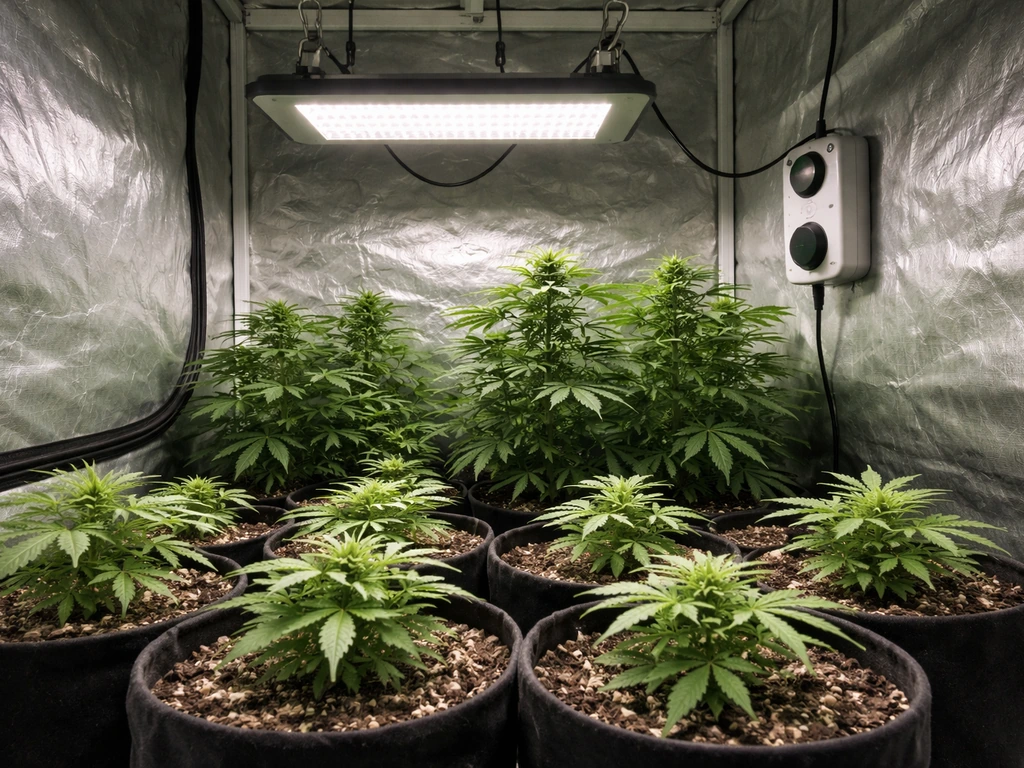
The core difference you need to understand first
Autoflowers flower on their own internal clock. Autoflowering cannabis varieties switch from vegetative growth to flowering based on plant age using an blank" rel="noopener noreferrer">internal clock, rather than requiring a change in the light/dark ratio. They don't need a change in light hours to trigger bud production. They'll typically begin showing flowers around 3 to 4 weeks after germination, and most go from seed to harvest in as little as 8 weeks, regardless of how many hours of light they receive each day. Photoperiod plants are the opposite: they flower in response to darkness. Specifically, they need blank" rel="noopener noreferrer">roughly 12 hours of uninterrupted darkness per day to reliably trigger and sustain flowering. Even a brief light interruption during that dark window can stall flowering, push the plant back toward vegetative growth, or cause hermaphroditism. That's the fundamental tension in a mixed grow. Autoflowers grow faster than photoperiod plants precisely because they skip the light-cycle dependency entirely.
Key differences at a glance
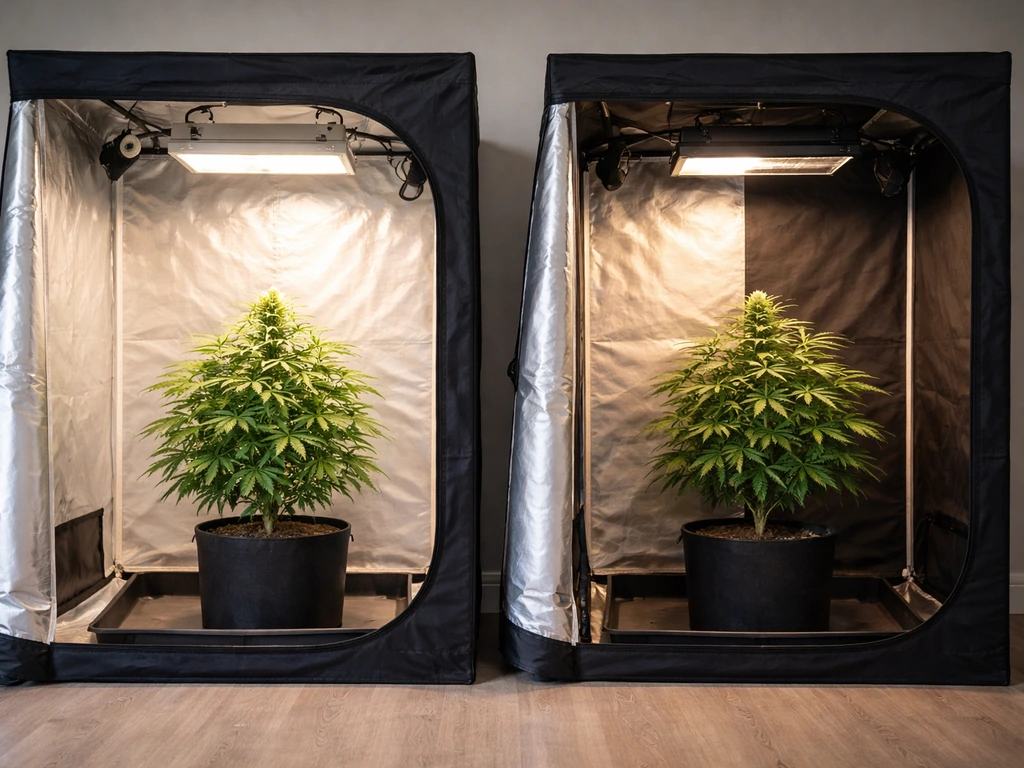
| Feature | Autoflower | Photoperiod |
|---|---|---|
| Flowering trigger | Age/genetics (internal clock) | Light cycle (12/12 dark period) |
| Typical veg duration | 3–4 weeks automatically | Grower-controlled (weeks to months) |
| Seed to harvest | 8–10 weeks on average | 14–22+ weeks depending on strain |
| Ideal daily light hours | 18–20 hours (18/6 or 20/4) | 18/6 veg, then 12/12 to flower |
| Sensitivity to light interruption | Low | High — can hermie or revert |
| Size at harvest | Generally smaller | Larger, more variable |
| Outdoor flexibility | High — multiple harvests per season | One main harvest per season |
If you're still deciding whether autoflowers are the right choice for your setup at all, it's worth thinking through the broader question of whether you should grow autoflowers before committing to a mixed grow.
Planning a schedule that actually works
The most workable approach for a mixed grow is to stagger your start dates rather than drop both plant types into the tent at the same time. Here's why: if you start an autoflower and a photoperiod on the same day, the auto will be deep into flowering or nearly done by the time your photo is ready to flip to 12/12. That creates a light-schedule conflict right at the worst moment for both plants.
A practical timeline that many growers use: start your photoperiod seeds first and give them 4 to 6 weeks of vegetative growth under an 18/6 schedule. Then introduce your autoflower seeds. The auto will flower on its own around week 3 to 4, and you can often time things so both plants finish around the same window. Alternatively, start the auto first, harvest it, and immediately flip your photo to 12/12 once the auto is out of the tent. This avoids the overlap problem entirely but requires planning around two separate harvest dates.
The simplest one-tent version works like this: run everything at 18/6 until your photoperiod is ready to flower, then flip to 12/12. Your auto will continue to flower and finish under 12/12 because it doesn't need the long light hours to flower. The catch is that autos running under 12/12 receive less daily light than they'd get under an 18/6 or 20/4 schedule, which does reduce their final yield. That's a real tradeoff, not a myth.
Managing light cycles without stressing your photoperiods
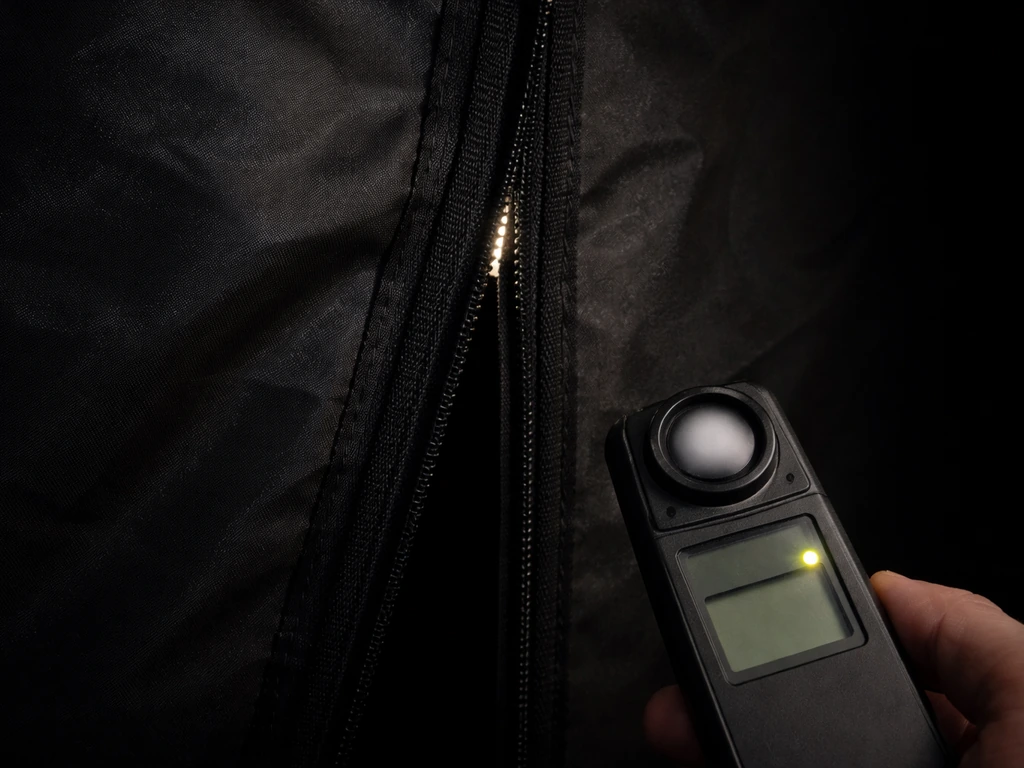
Photoperiods need complete, uninterrupted darkness during their 12-hour dark window. Even a small light leak from a phone screen, a timer LED, or a poorly sealed tent zipper can be enough to disrupt flowering or trigger hermaphroditic traits. One of the most useful habits you can build is to sit in your grow space during lights-off and look for any unintended light sources. Your eyes will adjust after a minute or two and you'll catch leaks that are invisible in normal light.
Autoflowers are far more forgiving. They can handle brief interruptions without the same consequences, and they perform well across a wide range of daily light totals. An 18/6 schedule is the most common choice because it gives autos plenty of light while keeping the space manageable in terms of heat and electricity. Some growers bump to 20/4 once their auto shows early flowering signs, which can boost yield without meaningfully stressing the plants. Running autos on a 12/12 schedule is possible but not ideal because they simply produce less when light hours are cut that short.
If you're running a mixed grow under one light, the 18/6 schedule is your best default until you need to flip your photos. At that point, switching to 12/12 will trigger photoperiod flowering within a few days, and your autos will continue flowering unaffected, just with a smaller final yield than they'd achieve under longer days. That's the real cost of keeping both types in one unpartitioned space.
Using physical partitioning
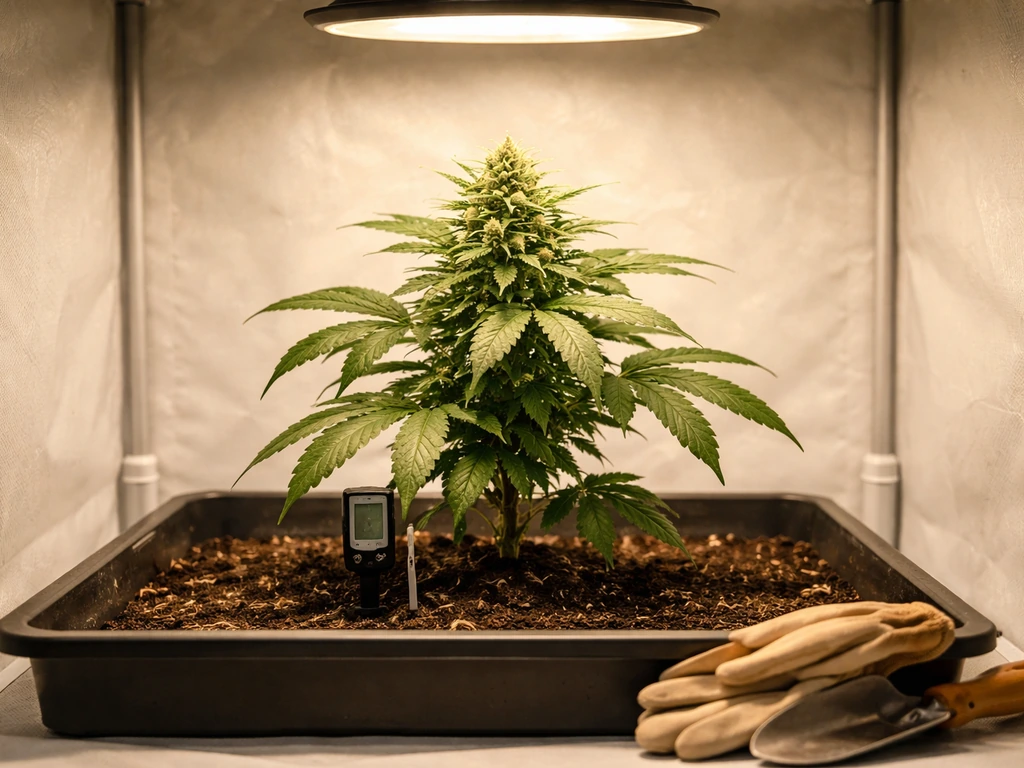
If you want both plant types to get their optimal light schedules simultaneously, physical separation is the only clean solution. This means either running two separate tents (a 2x2 or 3x3 for autos at 18/6, and a larger tent for photos that you flip independently), or building a partition inside a single large tent using Panda film or Mylar sheeting. Partitioned tents work but require two separate timer-controlled lights and enough airflow on each side to prevent heat buildup. It's more equipment and more management, but it removes the light-schedule conflict entirely and lets your autos run at 18/6 or 20/4 while your photos get clean, uninterrupted 12-hour dark periods.
Soil vs. hydro in a mixed grow: what changes
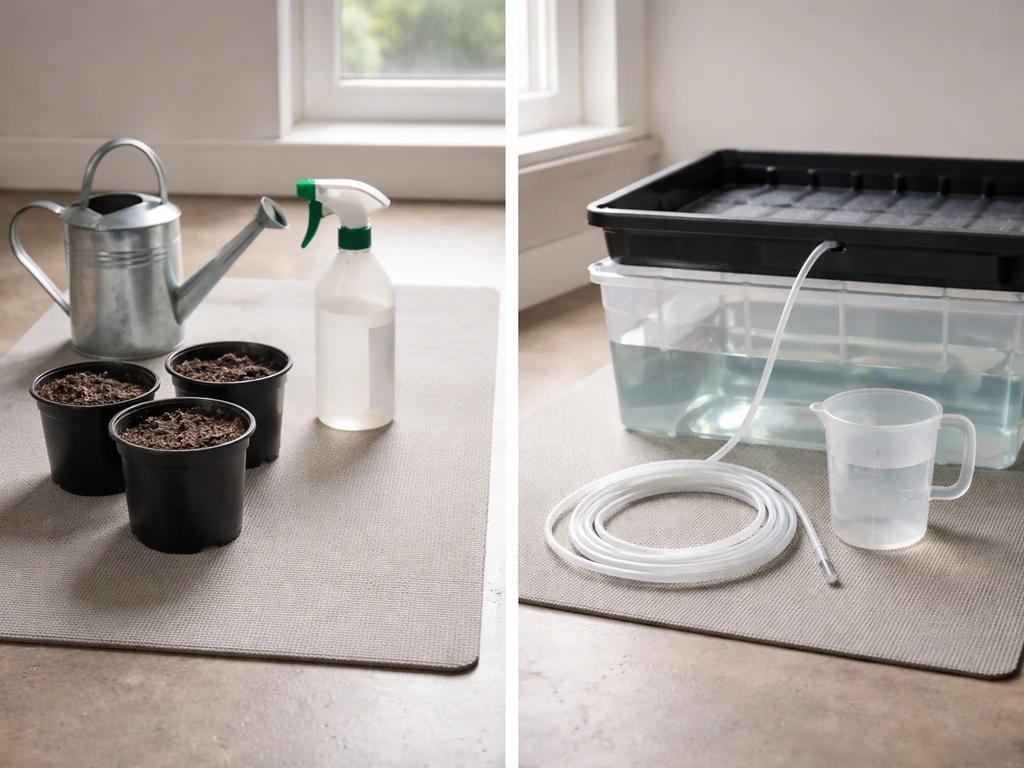
Medium choice matters more in a mixed grow than in a single-strain run, because autos and photos have different nutrient appetites and timing needs. Here's how to think through it.
Soil grows
Soil is more forgiving when plants are at different feeding stages, which makes it a better fit for most mixed grows. Autos are generally lighter feeders than photoperiods, especially during veg. If you're pushing heavy nutrients into your photoperiod during its vegetative stretch, the auto in the same medium may show signs of overfeed (leaf tip burn, dark green coloration, nutrient lockout). The fix is to feed each plant individually rather than mixing nutrients into a shared reservoir or watering all plants from the same batch. Use separate watering cans and dial in each plant's feed based on its actual stage. Autoflowers can grow without heavy nutrient inputs in quality amended soil, which actually simplifies things when you need to keep feeding programs separate.
Hydroponic grows
Hydro is harder to manage in a mixed grow because most hydroponic systems share a reservoir. Autos and photos in the same nutrient solution will almost certainly be at different feeding stages at the same time, and there's no clean way to feed them differently when they're drawing from one tank. The most practical workaround is to use separate containers and separate reservoirs even if they sit under the same light. Deep water culture (DWC) buckets are well-suited to this because each plant has its own isolated root zone. If you're considering a shared recirculating system, a mixed grow will create constant friction between what each plant needs at any given week. Growing autoflowers hydroponically works extremely well in individual systems, but shared hydro and mixed plant types is a combination that requires careful management.
| Factor | Soil | Hydroponics |
|---|---|---|
| Nutrient flexibility | High — feed each plant separately | Low in shared systems; use separate reservoirs |
| Feeding timing | Easier to stagger by plant stage | Difficult without isolated containers |
| Overfeeding risk (autos) | Moderate — buffered by soil | Higher — direct uptake, less buffering |
| pH management | Forgiving (6.0–7.0 range) | Critical (5.5–6.5, check daily) |
| Setup complexity | Lower | Higher in mixed grows |
| Best for mixed grows? | Yes, especially for beginners | Only with separate DWC or containers |
Outdoors, the medium and environment considerations shift significantly. If you're thinking about mixing plant types in an outdoor setup, it helps to understand how autoflowers grow bigger outside compared to indoor constraints, which can change your spacing and zoning decisions.
Layout strategies: one area vs. separate zones
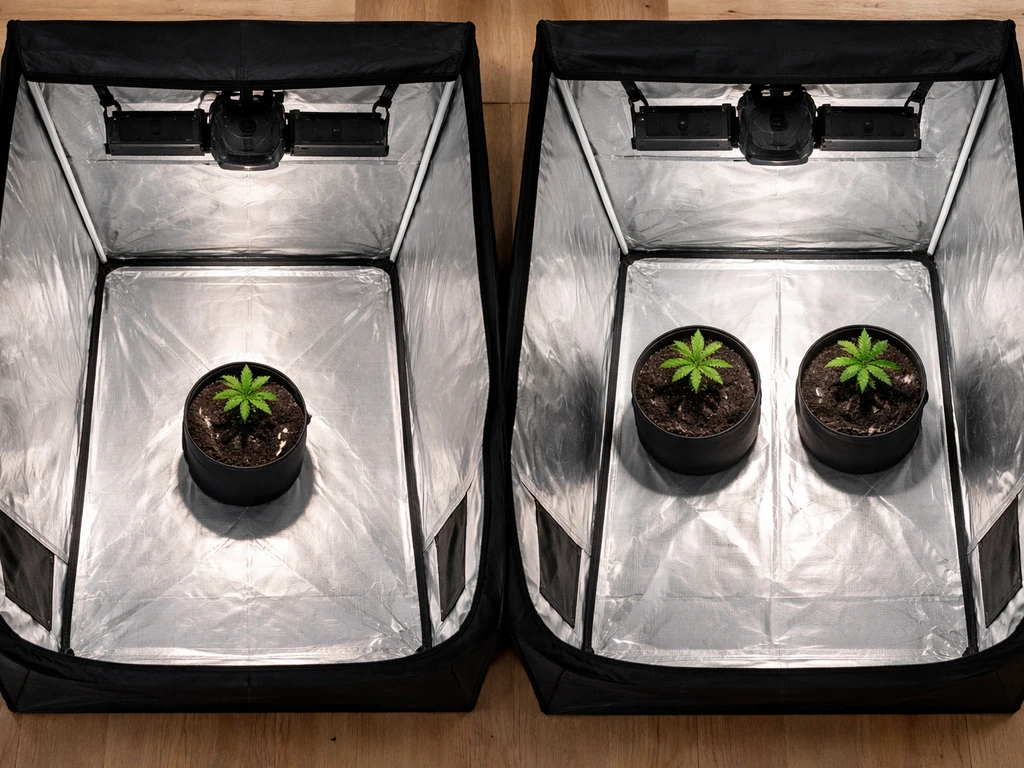
How you physically arrange your plants will determine how much of a headache this whole operation becomes. There are three realistic options.
- One tent, one light, one schedule: Run everything at 18/6 until photos need to flip, then go to 12/12 for the rest of the grow. Autos finish under reduced light hours. Simple to manage, but autos yield less. Best for growers who prioritize simplicity and don't mind a modest reduction in auto harvest weight.
- One large tent, physical partition, two lights on separate timers: Autos get 18/6 on their side, photos get 12/12 on theirs. Full optimization for both plant types. Requires light-proof partition material, two independent timer circuits, and good airflow design. Best for growers who want maximum yield from both types.
- Two separate tents: The cleanest solution. A small auto tent (2x2 or 3x3) runs at 18/6 or 20/4 independently, while a larger photo tent runs whatever schedule you choose. No cross-contamination of light cycles, easier to manage independently, and you can run autos on a perpetual harvest cycle while photos are in veg or flower. More upfront equipment cost, but the fewest day-to-day problems.
For canopy management in a single-tent mixed grow, expect the photoperiod to outgrow your auto during its vegetative phase. A photo that's been in veg for 6 weeks will likely be significantly taller than an auto at the same point. Use low-stress training (LST) on the photo to keep it flat and prevent it from shading your auto. Raise your auto container on a platform or inverted pot if needed to keep both canopies at a similar distance from the light.
Common problems and how to fix them
Photoperiod won't flower or reverts to veg
This is almost always a light leak. Do your lights-off inspection with fresh eyes: close the tent completely, wait 5 minutes for your eyes to adjust, then look carefully at every seam, zipper, and duct opening. Tape over timer LEDs and controller displays. Even a faint glow from a ballast indicator can be enough to disrupt florigen accumulation during the dark period. If your photo is already mid-flower and showing signs of reverting, seal all leaks immediately and give it 2 to 3 additional weeks of clean 12/12 before reassessing.
Autoflower growth stalls or seems slow
If your auto seems to be growing unusually slowly or not flowering by week 4 to 5, check two things first: light intensity at canopy level, and whether it's being shaded by a taller photoperiod plant. Autos don't respond to light-schedule changes the way photos do, so adjusting your timer won't fix a stunted auto. The issue is almost always environmental: too little light, root-bound containers, or overfeeding. Transplant stress can also slow autos significantly, which is why most growers start autos directly in their final container rather than transplanting. Whether autoflowers can grow in 12/12 is a common question when this happens, and the answer is yes, but expect smaller yields than you'd get under longer light periods.
Hermaphroditism in photoperiods
Hermies in photos during a mixed grow are almost always caused by light stress: either a light leak during the dark cycle, an inconsistent timer that's occasionally running lights longer or shorter than set, or physical light from outside the tent creeping in during your dark window. Fix the light environment first. If the plant has already produced a few pollen sacs, remove them carefully with tweezers and check daily. If it's heavily hermaphroditic, the plant is likely stressed beyond recovery in that cycle and harvesting early may be the best option to prevent pollination of the rest of your crop.
Uneven canopy and competition for light
A photoperiod in extended veg will almost always be taller than an auto at the same age. If your light source is a single overhead fixture, the taller photo will intercept more light and the auto will suffer. Use LST aggressively on the photo: bend main branches outward and use plant ties to keep the canopy flat. Elevate your auto containers to bring their tops closer to the light. If you're using an LED panel with adjustable height, you may need to compromise on height (not optimal for either plant, but workable). Separate light sources, even adding a small supplemental LED over the auto, will dramatically improve both plants' performance.
Harvest timing mismatch
If your auto finishes weeks before your photo is ready, you have two options: harvest the auto early (check trichomes, not just the calendar) or leave it in the tent. Leaving an auto past peak ripeness will cause degradation of THC to CBN and reduced overall quality. Harvest it on time and adjust your container layout to give the photo more space and light.
Which setup should you actually use?
If you're a beginner or running a single tent: use the one-tent, one-light, 18/6 approach. Start your photo first, give it 4 to 6 weeks of veg, then introduce your auto. Run 18/6 until your photo is ready to flip, then go to 12/12. Accept that your auto will yield slightly less under 12/12 and plan accordingly. Keep feeding separate, watch for light leaks religiously, and use LST to manage canopy height differences.
If you're an experienced grower with space for two tents: run them separately. It eliminates the light-schedule tension, lets both plant types perform at their best, and gives you a perpetual harvest option if you keep cycling autos. The two-tent setup is objectively the better long-term infrastructure for anyone who wants to grow both types regularly.
If you want to try a partitioned single tent: use light-proof Panda film, run two independently timed lights, and make sure each side has its own exhaust. This is the middle-ground option that works well but requires more upfront effort to set up correctly.
One last thing worth keeping in mind: the light schedule question that drives most of the complexity in a mixed grow is fundamentally about what your photoperiod needs, not your auto. Autos are flexible. Photos are not. Build your setup around protecting the photo's dark cycle, and your autos will adapt to whatever light hours remain. If you ever want to run a space dedicated entirely to autoflowers and explore how different light schedules affect their performance, the range of options from 18/6 all the way up to 20/4 is worth experimenting with. And if you're ever curious whether a dedicated auto space makes more sense than mixing plant types, thinking through the case for growing autoflowers on their own terms is a useful exercise before your next setup decision.
FAQ
If I use one light for both, can I run autos on 18/6 and photos on 12/12 at the same time?
It depends on the photo’s flowering schedule and where the light is coming from. If your tent stays on a single timer and you flip photos to 12/12 while autos continue on 18/6, do not share the same dimmer or smart plug that could cause brief power cycling. Any momentary change during the photo’s dark window can trigger stress, so use one reliable timer for the photo side (or the whole tent), then design the auto schedule around that reality.
What should I expect if I run autos on 12/12 in a mixed tent?
Yes, but “not ideal” usually means more than just yield. Under 12/12, autos typically gain less daily energy than they do on longer schedules, which can result in smaller final size and sometimes slower recovery from early stress. If you must do 12/12, plan to start autos earlier or expect to compensate with better root space and stable conditions rather than relying on the light hours to do the heavy lifting.
Why do mixed grows often end up with harvest dates that never match?
The biggest mistake is assuming auto timing will line up perfectly once you switch the photo schedule. Because autos follow their own development, they may be in a sensitive stretch when the photo is flipped to 12/12. Use a staggered start date and treat the photo flip as the fixed event, then choose the auto start so the auto’s key flowering period overlaps with the photo’s flowering window as smoothly as possible.
How do I know whether a light leak is actually coming from my equipment?
Light leaks are not only from the tent zipper, a loose seam, or external room lights. Also check internal electronics, LED indicators on fans or controllers, and even reflections off glossy walls or a nearby window. The article’s lights-off inspection is most reliable if you cover the light source completely and wait for your eyes to fully adjust before searching.
What’s the most common nutrition mistake when autos and photos share the same grow space?
To prevent feeding-related issues, avoid watering everything from one mixed nutrient plan. Instead, feed photos and autos based on their own stage, and do not “top off” with extra nutrients because the photo looks hungry. If you are using soil, the safest approach is separate watering and separate measuring cups, so an auto does not become a nutrient experiment when the photo needs a higher EC.
Is there a way to run autos and photos together in hydro without constantly adjusting nutrient strength?
In shared hydro reservoirs, mixing plant types creates a constant conflict because photos and autos usually need different strength and sometimes different pH targets at the same calendar week. A practical way to reduce failure is to run separate roots in separate reservoirs (even if they share the same overall setup), because it keeps each plant’s environment stable instead of averaged.
My auto looks slow, but the timer is correct. What should I check first?
If your auto is not showing flowers by week 4 to 5, first verify canopy-level light intensity and check for shading from the taller photo. Then confirm the auto is in its final container to avoid transplant stress. Overwatering, root binding, or inconsistent temperature can also delay flowering in ways that a timer change will not fix.
How do I respond if my photoperiod plant starts showing signs of hermaphroditism?
If a photo develops pollen sacs during a mixed grow, treat it as a light-stress problem first, not a genetics issue. Remove any visible sacs carefully with tweezers, then enforce a fully clean dark cycle for 2 to 3 additional weeks before reassessing. If the plant becomes heavily hermaphroditic, harvesting early may be the lowest-risk option to prevent pollination of nearby plants.
Will my auto struggle even if my light schedule is perfect?
Yes, physical layout matters even with perfect schedules. If one overhead light is used, the taller photoperiod plant will usually shade the auto, reducing the auto’s effective light and slowing growth. Use LST on the photo, raise the auto container, and consider a small supplemental light aimed only at the auto to eliminate the shading problem.
If my auto finishes early, should I leave it in the tent until the photo is ready?
Leaving an auto past peak ripeness can degrade product quality over time, since THC can convert to more sedating byproducts. The practical move is to harvest based on trichomes, not the day count, then reconfigure the layout so the photo gets more light after the auto is removed.
What’s the tradeoff decision between a single tent and two separated environments?
If you want one-tent simplicity, the best default is the 18/6 approach until you flip the photoperiod, then accept reduced auto yield because autos receive less total light daily. If you want optimal performance for both, the clean solution is separation, either two tents or a correctly sealed and independently timed partition with its own exhaust so heat and airflow stay controlled.