"Water what you want to grow" comes down to one practical idea: stop watering on autopilot and start watering based on what your plants actually need, at the stage they're actually in, with water that's actually compatible with your growing method. That means knowing your water quality, matching your watering frequency and volume to your medium and plant stage, tying nutrient delivery into your watering routine, and having a simple system that keeps everything consistent. Whether you're growing in soil or running a hydroponic setup, the framework is the same. The execution is different. This guide walks you through both.
Water What You Want to Grow: Soil and Hydroponics Plan

Marcus Holloway
24 Mar 2026
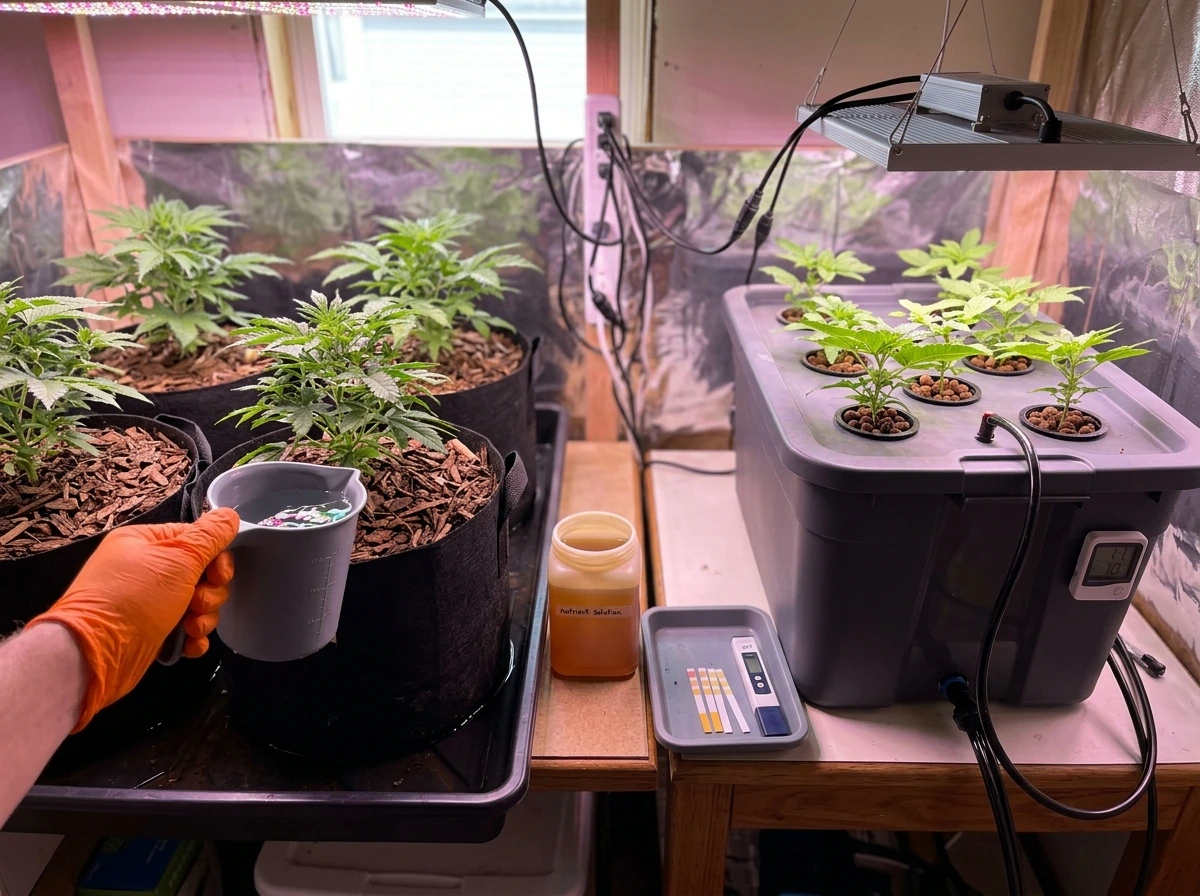
What "Water What You Want to Grow" Actually Means
Most watering problems aren't about effort. They're about misalignment. You're watering on a fixed schedule when your plants need a moisture-based schedule. You're giving the same amount in week two as you did in week eight. You're using tap water without knowing its pH or hardness and then wondering why your leaves are showing deficiencies even though you're feeding correctly.
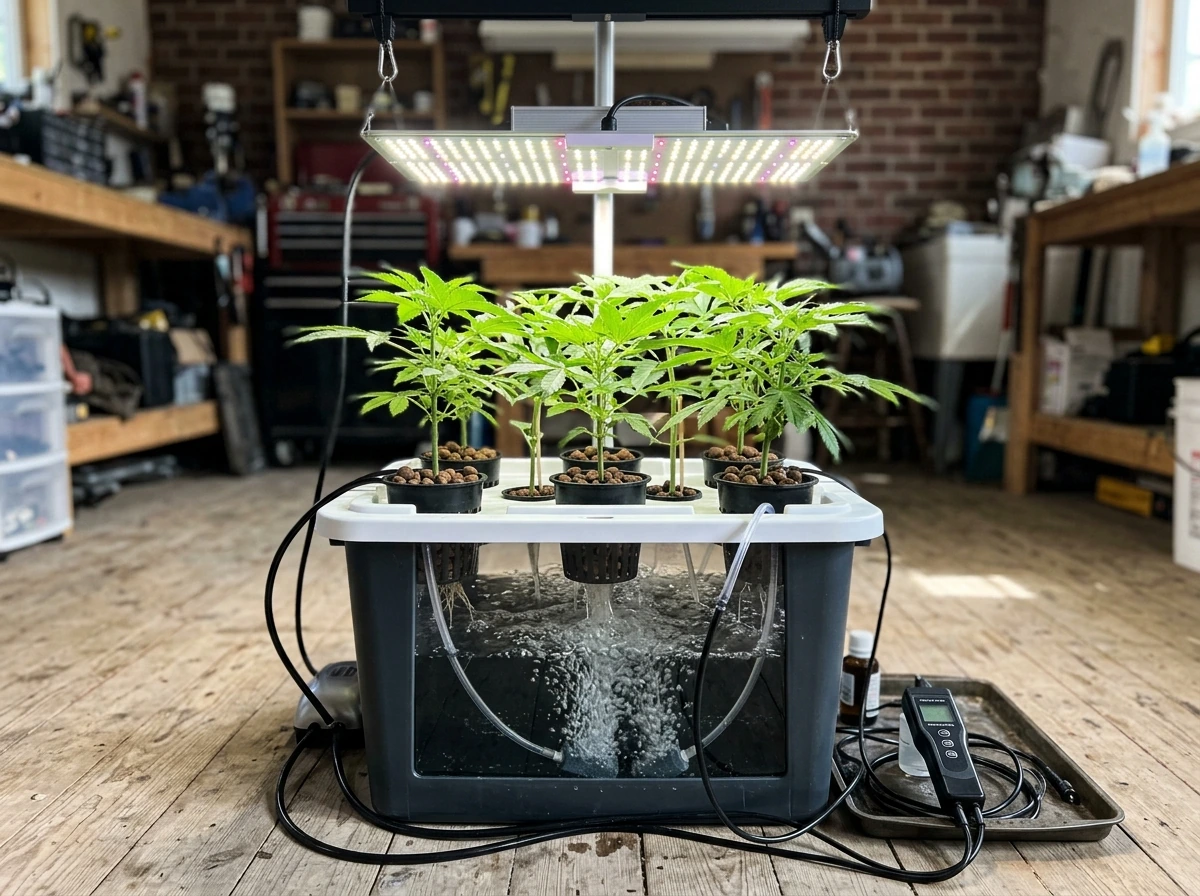
"Water what you want to grow" means your watering decisions are driven by plant need, not habit. A seedling needs far less water than a plant in peak flowering. A plant in clay-heavy soil holds moisture longer than one in a fast-draining coco coir mix. A DWC hydro system has completely different oxygen and replenishment requirements than a flood-and-drain table. If you're setting up hydroponics in Kansas City, pay extra attention to your source water so pH and hardness stay in range. Once you align your watering to those realities, most of the common problems (drooping, yellowing, stunted growth) start to disappear.
There are two sides to this: the quality of the water you're delivering, and the method and timing of delivery. Both matter. Get one wrong and the other can't save you. Let's start with quality, because most growers skip it.
Test Your Water Before You Water Anything
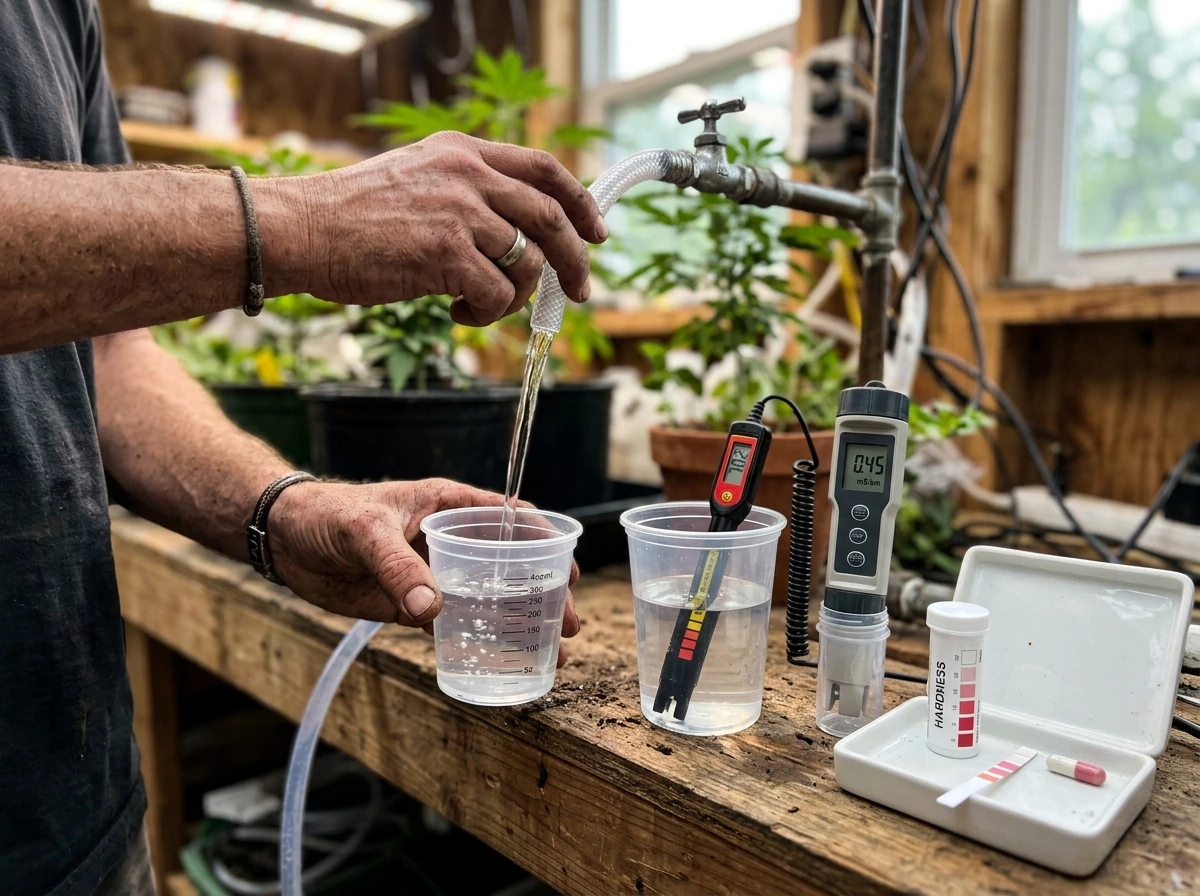
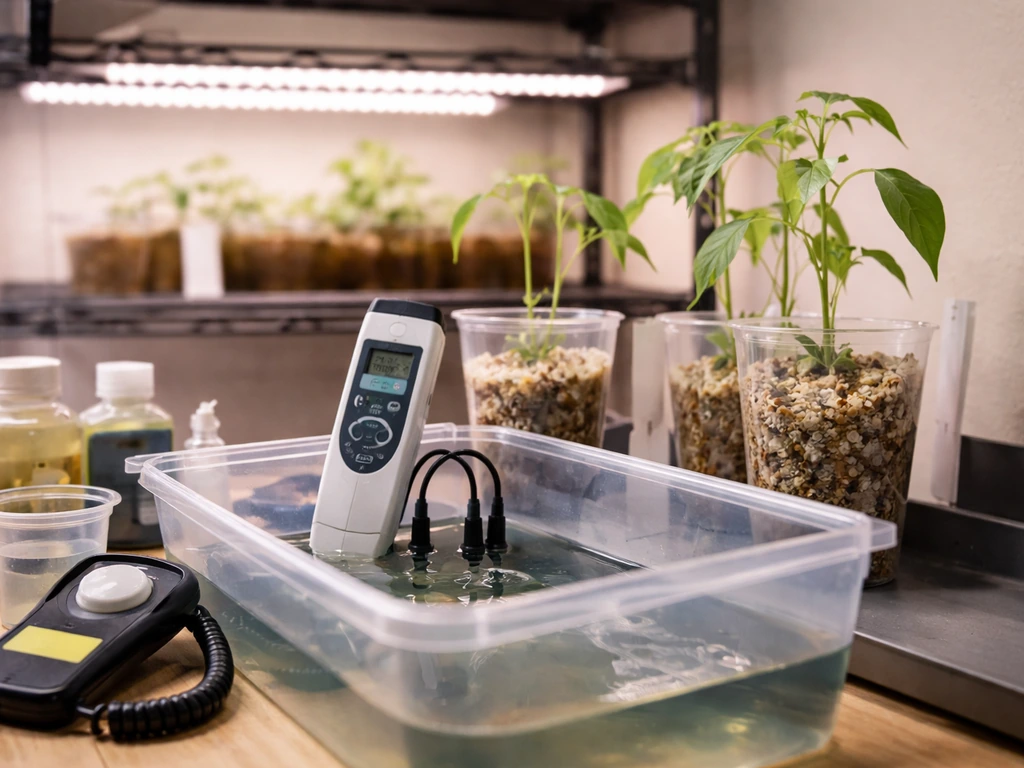
Your source water has three numbers that matter before you add a single drop of nutrient: pH, electrical conductivity (EC), and hardness. If you're growing in hydroponics or other soilless setups, dialing in your water numbers like pH, EC, and hardness helps protect quality-grow-hydroponics performance too. These three interact directly with your plants' ability to absorb nutrients. You can have the most dialed-in feeding schedule in the world and still get lockout symptoms if your source water is fighting you.
pH: The Most Important Number in Your Grow
blank" rel="noopener noreferrer">For hydroponic and soilless systems, you want your nutrient solution pH sitting between 5.5 and 6.5. quality-grow-hydroponics This is the window where the full range of macro and micronutrients stays available to roots. Drop below 5.5 and you risk iron and manganese toxicity. Climb above 6.5 and you start seeing calcium, magnesium, and iron deficiencies because those elements precipitate out of solution. For soil grows, the target range is slightly wider, roughly 6.0 to 7.0, because the organic matter and microbial activity in soil buffers pH better than an inert medium or water solution.
Here's what most people don't realize: your media pH drifts over time, and your source water is often the biggest driver of that drift. Alkaline tap water (high carbonate hardness) will push your media pH up with every watering. This is a slow creep that can take two to three weeks to become a visible problem, which is why growers often can't trace the deficiency back to their water source.
EC and Hardness: Know What's Already in Your Water
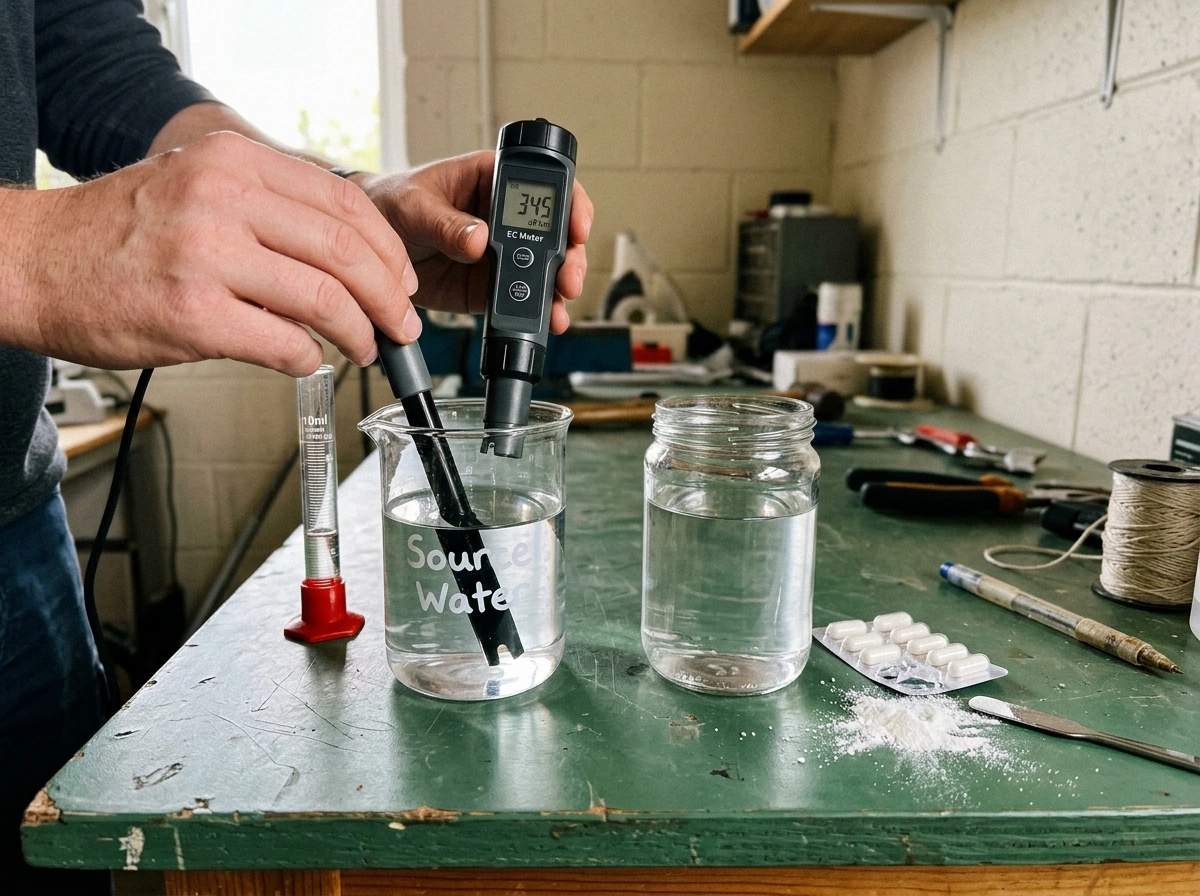
EC (electrical conductivity) measures the total dissolved ions in your water. If your tap water already has an EC of 0.5 or higher before you add anything, that background load eats into your available nutrient budget and can cause over-concentration problems. Measure your source water EC with a digital meter before you mix nutrients. Aim for source water EC under 0.3 if possible. Anything above 0.5 is worth filtering or blending with RO (reverse osmosis) water before use.
Hardness is your water's calcium and magnesium carbonate content. High-hardness water sounds like a benefit (free Cal-Mag!) but in hydroponics it creates a serious problem: when you adjust pH downward with acid, the carbonates form precipitates (scale) that can clog emitters, coat roots, and throw off your actual nutrient ratios. A standard ion-exchange water softener removes hardness effectively, but it swaps calcium and magnesium for sodium, which is worse for plants. For high-hardness source water, an RO filter is the cleaner solution.
Quick Water Test Checklist
- Fill a clean container with your source water and let it sit 15 minutes (this off-gasses chlorine somewhat, though a carbon filter is more reliable).
- Test pH with a calibrated digital pH meter. Note the number.
- Test EC with a digital EC/TDS meter. Note the number.
- If pH is above 7.5 or EC is above 0.5, plan to use pH-down solution and/or RO filtration.
- If you're on well water or have hard water, get a basic water hardness test strip or ask your municipality for a water report.
- Record your baseline numbers. You'll compare to these after mixing nutrients.
Soil vs. Hydroponics: How Watering Works Differently
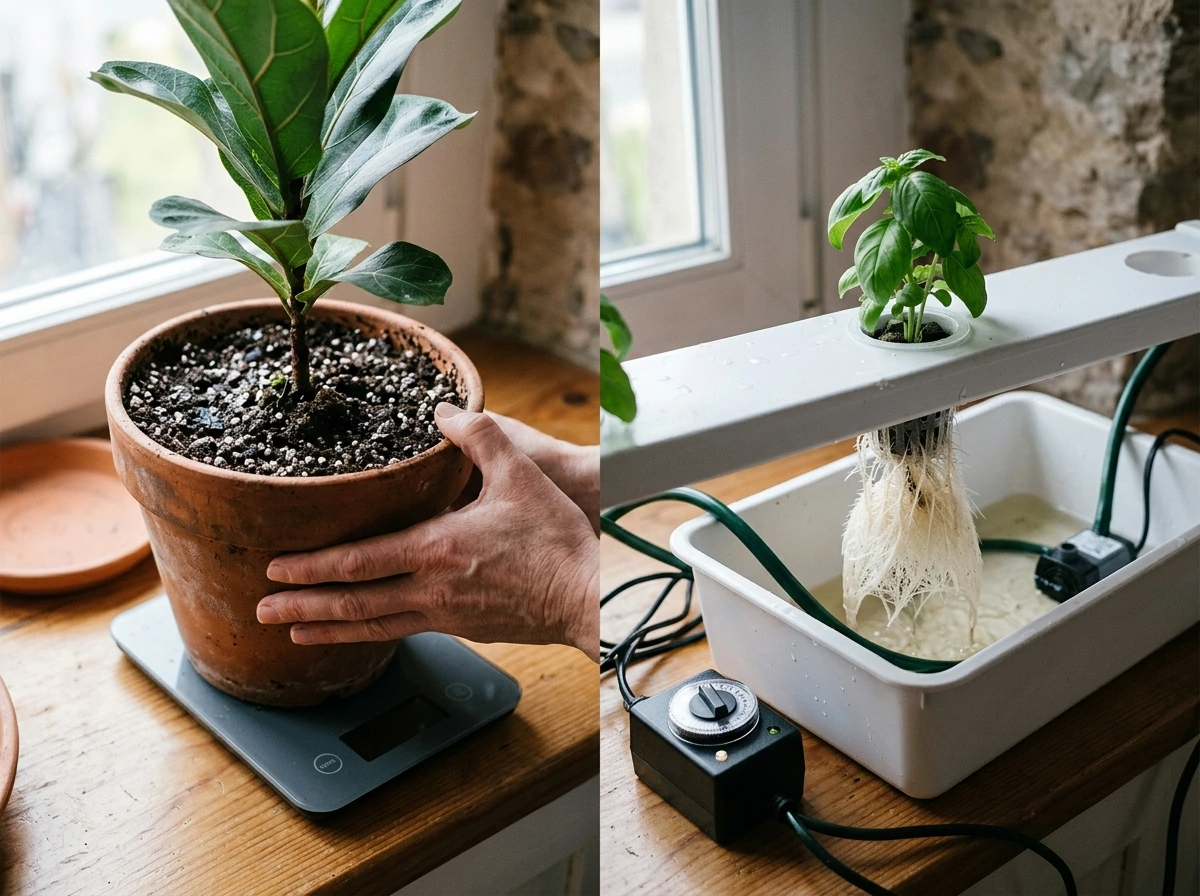
The logic of watering is fundamentally different between soil and hydro. In soil, you're managing a moisture reservoir and letting the plant draw from it on its own timeline. In hydroponics, you're delivering water (and nutrients) directly and constantly, and your main concern shifts to oxygen availability and nutrient solution freshness. Trying to apply soil watering logic to a hydro system is one of the most common beginner mistakes.
| Factor | Soil | Hydroponics |
|---|---|---|
| Watering trigger | Moisture depletion (feel test, sensor, or weight) | Timed cycles or reservoir top-up schedule |
| Primary risk of overwatering | Root suffocation from oxygen displacement | Root rot from low dissolved oxygen in stagnant solution |
| pH target | 6.0 to 7.0 | 5.5 to 6.5 |
| EC monitoring | Less critical, buffered by soil | Critical, test every 1 to 2 days |
| Flushing | Periodic leaching run to reset salt buildup | Reservoir change every 7 to 14 days |
| Oxygen management | Managed by drainage and dry-down cycles | Managed by air stones, DO levels above 6 ppm, and flood/drain cycles |
| Water volume per session | Enough for 10 to 20% runoff | Flood to full root zone, then drain completely |
Watering Soil the Right Way
The goal in soil is to keep moisture in the range where roots can access it without the medium becoming waterlogged. Think of it as managing a water "checkbook": your plant and evaporation are constantly withdrawing, and your watering sessions are the deposits. The target is to replenish soil moisture to roughly 85% of field capacity (the point where water drains freely and air pockets remain). Watering to saturation and never letting the soil partially dry out removes those air pockets and suffocates roots.
The simplest check is the lift test: pick up your pot. A dry pot feels noticeably lighter than a watered one. Combine that with a finger test (insert your finger 2 inches into the soil; if it's still moist, wait) and you have a reliable trigger that doesn't require any equipment. For larger setups or outdoor beds, a soil moisture sensor takes the guesswork out completely and lets you schedule irrigation based on actual depletion rather than calendar days.
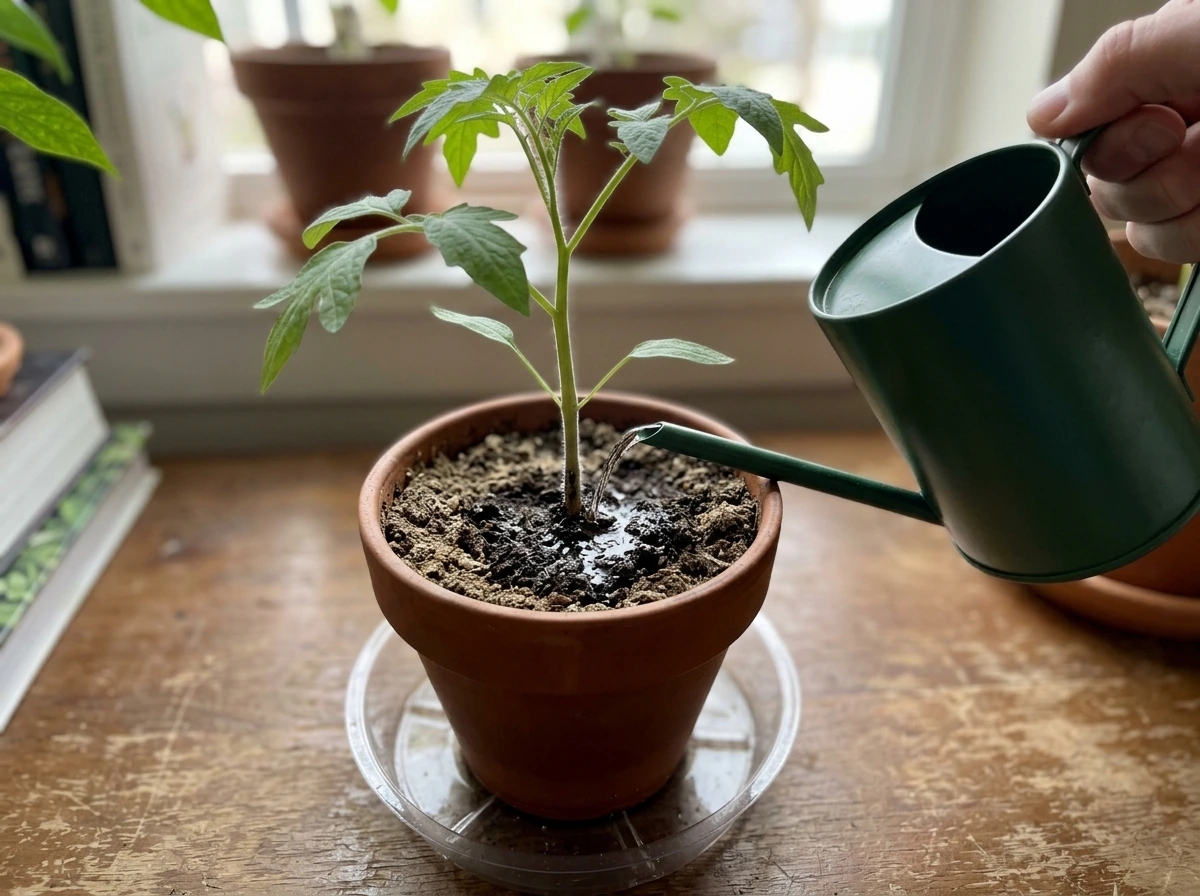
When you do water, water thoroughly. Shallow watering encourages surface roots and leaves the bottom of the root zone dry and compacted. Water until you see 10 to 20% runoff from the bottom of the container. That runoff also helps flush accumulated salts from the medium and prevents them from concentrating at root level.
Watering in Hydroponics
In hydro, your plants don't pull water from a stored reservoir in the medium. They depend entirely on what you deliver through the system. The biggest variable you're managing here isn't moisture level, it's oxygen. Dissolved oxygen (DO) in your nutrient solution needs to stay above 6 ppm for healthy root function. DO drops as water temperature rises, so keeping your reservoir temperature between 65 and 72°F is critical. Above 75°F and you're fighting root rot regardless of how good your pH is.
In flood-and-drain (ebb-and-flow) systems, the drain cycle is as important as the flood. When the solution drains, it pulls fresh oxygen-rich air into the root zone. When the solution floods, it pushes stale air out. This exchange is what keeps roots alive and aerobic. A cycle that floods but doesn't drain fully, or drains too slowly, defeats the whole purpose. Run your flood cycles frequently enough that roots stay moist but never sit in standing solution between cycles, typically 2 to 6 times per day depending on your medium and growth stage.
A Stage-by-Stage Watering Plan
Your plants' water needs change dramatically from seedling to harvest. Using the same watering schedule across all stages is one of the easiest ways to hurt an otherwise healthy grow. Here's a practical breakdown of what to do at each stage.
Seedlings (Weeks 1 to 2)
Seedlings have tiny root systems and almost no ability to handle excess moisture. In soil, water only the immediate area around the stem, not the whole container. You're trying to keep the top inch moist without saturating the medium. A spray bottle is often better than a watering can at this stage. In hydro, keep the nutrient solution level lower so roots have to reach slightly for water, and run shorter flood cycles (or keep the solution level just touching the bottom of the net pot). EC should be minimal at this stage: 0.8 to 1.2 is plenty.
Vegetative Stage (Weeks 3 to 6, or until flip)
Root systems are expanding fast and water demand increases accordingly. In soil, you can now water the full container and use the lift/feel method to determine frequency. Larger pots in veg may only need watering every 2 to 3 days. In hydro, flood cycles increase to 4 to 6 times per day as canopy size and transpiration rate climb. EC in solution can move up to 1.6 to 2.2 depending on strain and medium. Monitor runoff or reservoir EC daily and adjust if numbers drift outside your target range.
Flowering and Fruiting (Weeks 7 onward)
Peak demand. Plants are drinking the most water they ever will during this stage, and they're also the most sensitive to pH swings because micronutrient uptake becomes more critical during bud or fruit development. In soil, water frequency may increase to daily or near-daily in large plants under high-intensity lighting. In hydro, keep reservoir fresh (full changes every 7 to 10 days minimum) and watch EC closely since high transpiration can cause the reservoir to concentrate as water is consumed faster than nutrients. Top off with plain pH-adjusted water between reservoir changes to keep EC stable.
Pre-Harvest Flush (Final 1 to 2 weeks)
In soil, switch to plain pH-adjusted water for the final 1 to 2 weeks before harvest. This clears accumulated salts and residual nutrients from the medium and root zone. In hydro, drain and replace the reservoir with plain water at pH 5.8 to 6.0 for the final week. This isn't just tradition: flushing improves the quality of what you're growing and gives you a clean read on whether previous nutrient delivery was accurate.
Connecting Nutrient Delivery to Your Watering Schedule
Nutrients and water are inseparable in practice. Every time you water, you're either delivering nutrients, maintaining the balance you've built, or clearing out what's accumulated. Getting this tied together intentionally is what separates growers who chase deficiencies all season from those who rarely have to.
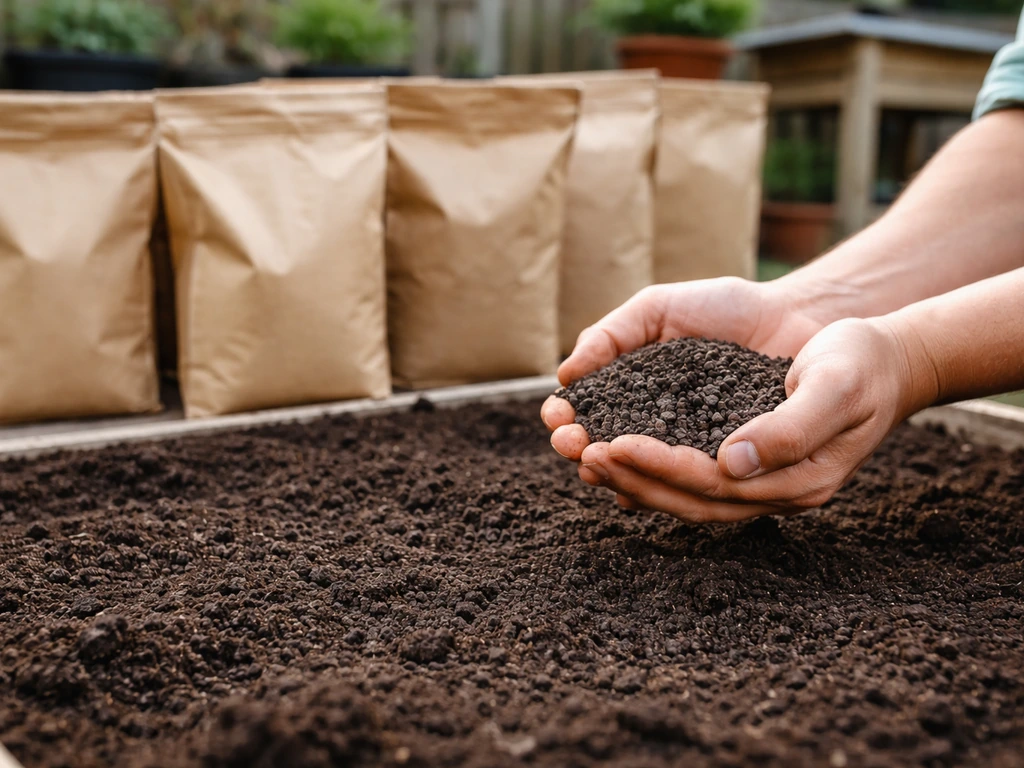
Soil Fertilizer Schedules
In soil, you don't have to feed with every watering. A common and effective pattern is feeding on two waterings, then flushing with plain water on the third. This prevents salt buildup and gives you a natural reset point. Mix liquid nutrients into your water after pH-adjusting the water itself, then check the final pH of the solution (nutrient additions shift pH, usually downward). Always mix nutrients at the lower end of label recommendations for the first few weeks in a new grow and increase based on plant response.
Hydro Nutrient Mixing
In hydro, mix nutrients into your reservoir in the correct order: add water, add base nutrients (Part A, then Part B if using a two-part system), then pH adjust. Never mix concentrated nutrients together directly before diluting. Check EC after mixing to confirm your target strength, then check and adjust pH last. Record both numbers. When you top off the reservoir between full changes, use pH-adjusted plain water (not nutrient solution) to replace what was consumed, since plants drink water faster than they consume nutrients and your EC will creep up if you top off with full-strength solution.
One thing that catches growers off guard in hydro: EC tells you total dissolved ions, not whether each individual nutrient is at the right concentration. If your source water has high hardness (lots of calcium and magnesium already), your EC will read correctly but your actual nutrient ratios are off. This is why starting with RO or low-EC source water and building your nutrient profile from scratch gives you the most control.
Fixing Common Watering Problems
Most plant problems that look like nutrient deficiencies are actually watering problems in disguise. Before you add anything to your water or change your feed schedule, run through this troubleshooting list.
Overwatering
Overwatering is the most common mistake for new growers. The plant looks droopy, but the leaves are firm and curling downward rather than wilting limply. The medium stays wet for days. Roots in a saturated medium have no access to dissolved oxygen, and the plant essentially starts suffocating from the bottom up. Fix: let the medium fully cycle to near-dry before the next watering. If you're in a container, remove saucers that let the pot sit in standing water. In hydro, check that drain cycles are completing fully and that your reservoir isn't overfilled.
Underwatering
Underwatered plants droop too, but the leaves feel thin and papery rather than firm. The medium is bone dry and the pot is very light. In severe cases the medium pulls away from the container edges. Fix: water thoroughly and slowly so the dry medium can absorb without the water channeling straight through. If a soil plug has become hydrophobic (water beads off the surface), soak the container in a tray of water for 20 to 30 minutes to rehydrate fully.
pH-Driven Nutrient Lockout
If you're seeing yellowing leaves, purpling stems, or brown leaf margins and your feeding schedule looks correct, check your medium pH and your water pH before anything else. A media pH drift outside the 5.5 to 6.5 range (hydro) or 6.0 to 7.0 range (soil) will lock out specific nutrients regardless of what you're delivering. Test the pH of your runoff water: if it's significantly higher or lower than your input pH, your medium has drifted. Correct with a flush using pH-adjusted water and monitor over the following week.
Root Issues and Brown Roots in Hydro
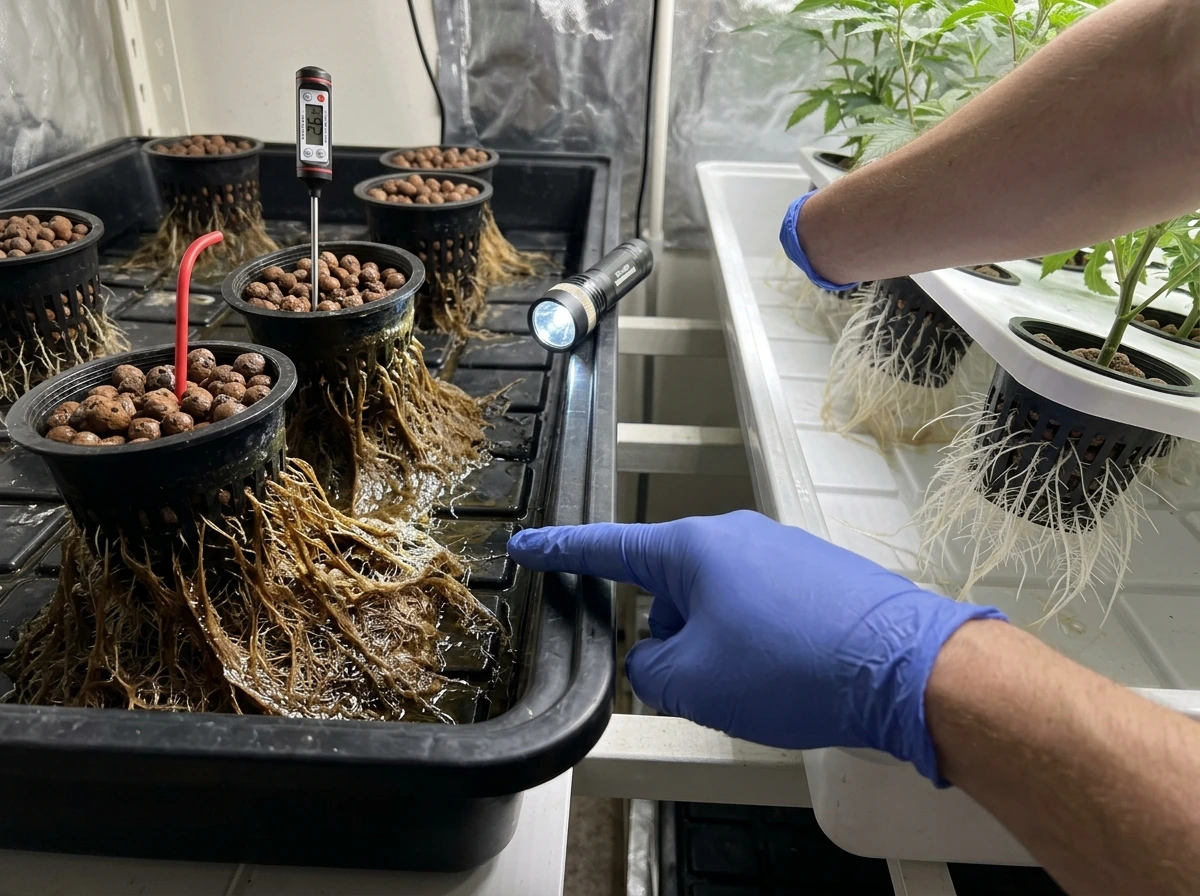
Brown, slimy roots in a hydro system are almost always a combination of high reservoir temperature, low dissolved oxygen, and light leaks into the root zone. White roots are healthy. Tan or light brown is a warning. Slimy brown is root rot in progress. Address: drop reservoir temperature to under 72°F, increase aeration (bigger air stone, more air volume), check that your reservoir lid and any net pots are fully light-sealed, and consider adding a beneficial bacteria product (Hydroguard or similar) as a biological control. Clean and flush the entire system between grows.
Inconsistent Watering Leading to Nutrient Swings
Skipping watering sessions, then overcompensating, creates boom-and-bust nutrient availability cycles in soil. In hydro, letting a reservoir run low before topping off concentrates nutrients and creates EC spikes. Both produce stress symptoms that look like deficiencies or toxicities. The fix is consistency, which is mostly a systems problem. A timer, a simple log, or automation is almost always a better solution than trying to manually maintain a perfect schedule.
Tools and Routines That Make Watering Repeatable
You don't need a complex setup to water consistently. You need the right tools for your method and a simple routine you'll actually follow. Here's what's worth having versus what's optional.
Essential Tools
- Digital pH meter: A calibrated pen-style pH meter is non-negotiable for both soil and hydro. Budget around $20 to $50 for a reliable one. Calibrate with buffer solution monthly and before any important reading. Cheap pH strips are not accurate enough for grow use.
- Digital EC/TDS meter: Pair this with your pH meter. Measures the total dissolved solids in your water before and after mixing nutrients. Essential for hydro, useful for soil.
- Soil moisture sensor (soil grows): A simple probe sensor gives you a real reading rather than a guess. More reliable than the finger test for larger containers or raised beds.
- Timer (hydro or automated irrigation): A basic outlet timer for your pump handles flood-and-drain cycles without you being present. In soil, a timer paired with a drip system or irrigation line removes the human consistency problem entirely.
- Reservoir with a lid (hydro): Light-proof, easy to clean, appropriately sized. Aim for a reservoir that holds at least 1 gallon per plant, ideally more for stability.
A Simple Daily Watering Routine
- Check reservoir or medium moisture level first thing. Note whether it's time to water or not. Don't water by the calendar.
- If watering in soil: check pH and EC of your water/nutrient mix before delivering. Water to runoff, check runoff pH and EC.
- If running hydro: check reservoir pH and EC. Adjust if either has drifted. Top off with plain pH-adjusted water if the level has dropped.
- Log your readings in a simple notebook or spreadsheet: date, pH in, EC in, pH out (runoff or reservoir), EC out, any visual notes on plant health.
- Once a week in hydro: full reservoir change. Clean reservoir, mix fresh nutrients, recheck pH and EC.
- Once every 2 to 3 weeks in soil: a plain-water flush session to clear accumulated salts before returning to feeding schedule.
When to Automate
If you're missing waterings regularly, or if you travel even occasionally, automation pays for itself almost immediately in plant health. A basic drip timer for soil containers or a pump timer for a flood-and-drain table costs under $30 and eliminates the most common consistency failure in home growing. More advanced controllers can dose pH and nutrients automatically, which is worth considering if you're running multiple hydro systems. For most home growers with one or two setups, a timer plus a daily visual check is all you need. Related topics like managing reservoir quality and hydroponic nutrient solutions connect closely here and are covered in depth in the hydro-specific guides on this site, including better grow hydro pasadena.
The bottom line is this: good to grow hydroponics is mostly about observation and response, not a fixed schedule. good to grow hydroponics Test your water, know your medium, match your volume and frequency to your growth stage, and keep your pH in range. For a deeper dive into improving hydro results, check out better grow hydro tips and workflows. Do those four things consistently and you've solved the majority of problems that show up in a home grow. Everything else is refinement.
FAQ
Can I just top off my hydro reservoir with water when it drops, instead of doing full changes?
Yes, but only if you also manage oxygen and solution strength. For most hydro setups, letting the reservoir sit at a stable level for long periods without proper aeration and temperature control is risky. If you do want “set and forget,” keep the reservoir light-sealed, maintain dissolved oxygen (usually via strong aeration), keep water temp in the mid 60s to low 70s, and replace on the same 7 to 10 day minimum schedule you’re already targeting.
How often should I calibrate my pH and EC meters for watering decisions?
You should calibrate at least every few weeks and whenever readings look inconsistent with plant behavior. Use fresh calibration solution for your specific EC probe, and rinse the probe with RO or distilled water between measurements to prevent salt buildup on the sensor tip. A poorly calibrated meter is a common reason growers “chase” EC and pH changes that never actually were correct.
What should I do if my hydro pH keeps drifting the same direction day after day?
In hydro, pH drifting is often a sign that your reservoir is becoming biologically or chemically imbalanced, not just a “daily measurement” issue. If pH keeps sliding even when you top off with pH-adjusted plain water, check source water quality first, confirm your nutrient mixing order, and inspect for light leaks or weak aeration. Then shorten the cycle toward more frequent reservoir refreshes rather than continually correcting pH in place.
When I flush, how do I know the salts are actually gone and not just moved around?
Yes, but the method matters. If you flush salts by adding plain pH-adjusted water, do it until runoff is consistent rather than doing a quick partial rinse. Then wait a day and re-check pH in runoff or medium, because immediate post-flush values can look “fixed” while the rest of the root zone catches up.
How dry is too dry in soil before I water again?
For soil, the goal is not “only when dry,” it’s “avoid waterlogged conditions while still letting a realistic drying cycle happen.” Use the lift and finger check together, then adjust for your pot size and lighting intensity. If pots stay wet for several days in a row, you’re almost certainly watering too often or your drainage is too slow.
What are the most common watering mistakes specific to seedlings and early veg?
For seedlings, avoid saturating the whole container and avoid nutrient strength that’s even mildly high. If you use a sprayer or localized watering, make sure the immediate root zone stays evenly damp, not constantly wet. In hydro, shorter flood cycles and lower EC prevent oxygen stress, but still watch for rapid wilting, which can indicate both dryness and insufficient solution contact.
If I filter my tap water or use RO, do I need to change how I manage nutrients and Cal-Mag?
Using RO or softened water changes your nutrient strategy. RO typically has very low background ions, so your nutrient solution may reach target EC with less “top-up,” while softened water can add sodium that pushes you toward different balance needs. Either way, you still measure source water EC and adjust your nutrient recipe based on final solution EC and pH, not on assumptions about “cal-mag already included.”
Is runoff testing useful, and what should I test for after watering?
Yes, especially in containers. Runoff can be a moving target if the medium is very dry at the start of watering, or if you only water until a little drips out. Water slowly enough to prevent channeling, aim for the documented runoff goal for your setup, then test runoff pH (and sometimes EC) to see whether the root zone is drifting.
My plant looks deficient, how do I tell whether it’s watering pH/oxygen versus a true nutrient shortage?
No, and this is a frequent misread during nutrient lockout. A deficiency pattern can come from low oxygen, incorrect pH, or salt buildup, and each has a different “signature.” If leaves are yellowing while the medium stays wet, prioritize overwatering and oxygen issues. If you see purple stems or margins browning, prioritize pH and runoff comparison before increasing nutrients.
Are soil moisture sensors worth it, and how do I avoid getting bad schedules from them?
You can, but you need an irrigation trigger tied to real depletion. A moisture sensor is most helpful when it you can trust calibration, place in a consistent location within the pot, and avoid testing error from sensor placement near the drip line. If you already use lift and finger checks, sensors can still help outdoors where heat and wind make evaporation unpredictable.
What’s the biggest way automation can still cause problems in watering systems?
Even if you automate watering, consistency is still limited by the system’s failure points. Check that timers are running, that pumps return to the correct cycle times, and that emitters are not clogging. In hydro, confirm the reservoir level and overflow management daily at first, then reduce frequency once stable. Automation reduces calendar mistakes, but it does not prevent chemistry drift or sensor/probe failure.