To use FloraGro in soil, start at half the recommended dose (around 2. If you want the full step-by-step flora grow how to use routine for soil mixing and feeding frequency, follow the schedule details in the guide below. 5 ml per gallon during early veg), always add FloraMicro to your water first before mixing in FloraGro, target a final solution pH of 6. 0 to 6.
How to Use FloraGro in Soil: Mix, Dose, and Troubleshoot

Marcus Holloway
3 May 2026
5 for soil, and feed every second or third watering rather than every time you water. That single routine covers 80% of what you need to know. The rest of this guide fills in the details so you can dial in dose by growth stage, catch problems before they get serious, and keep your soil from building up salts over time.
What FloraGro Is and Where It Fits in the Nutrient Program
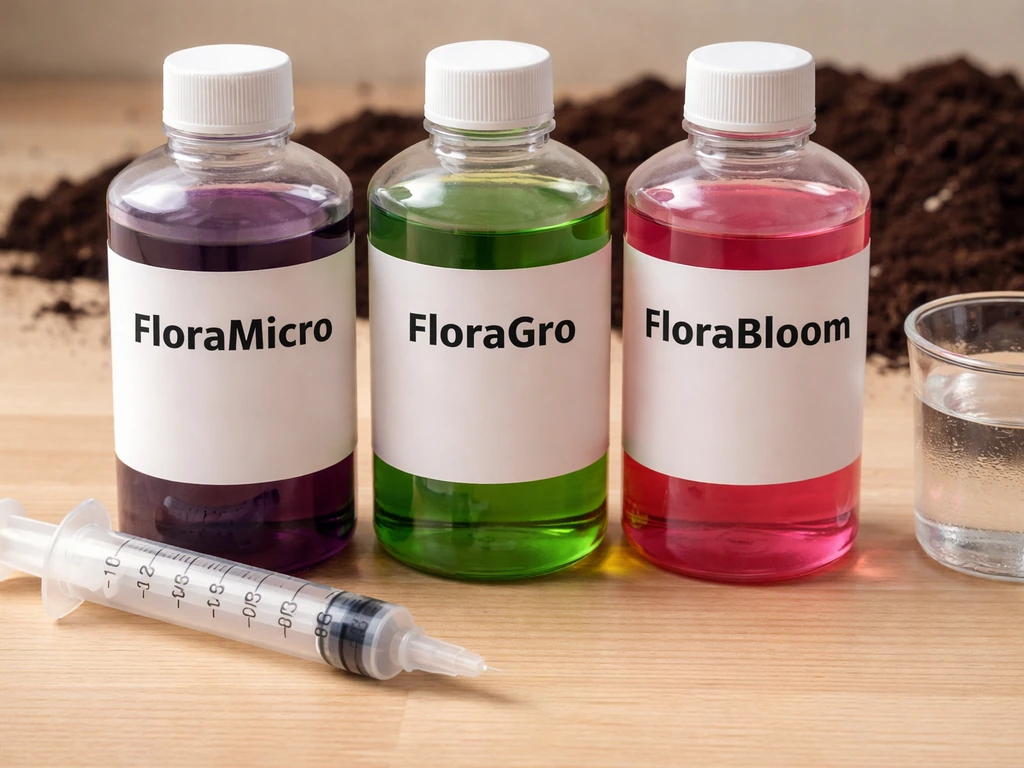
FloraGro is one bottle in General Hydroponics' three-part FloraSeries system, which also includes FloraMicro and FloraBloom. You never use just one bottle on its own. The way GH designed this system, FloraMicro is the foundation: it provides nitrogen, calcium, micronutrients, and trace minerals that plants need at every stage. FloraGro is then added to FloraMicro to layer in additional nitrogen and potassium, which drives the structural and foliar growth you want during the vegetative phase. FloraBloom handles the phosphorus, potassium, magnesium, and sulfur that flowering and fruiting plants need later.
In practical terms, FloraGro is your 'growth engine' bottle. It's the one that gets plants pushing new leaves, thickening stems, and building the green canopy they need before you flip to flower. During late veg you use all three bottles together but with FloraGro dominant. During full flower you taper FloraGro down and let FloraBloom take over. This ratio-shifting approach is what makes the FloraSeries flexible enough to work from seedling to harvest with just three bottles.
Soil vs. Hydroponics: Make Sure You're Using It Right for Your Setup
FloraGro was originally formulated for hydroponic systems where the nutrient solution is the only food source. Soil is a different environment, and that changes how you apply it. To grow flora organically, focus on soil health first and use only inputs you consider organic, then apply FloraGro only if it fits your organic rules. Real soil holds cation exchange capacity (the ability to buffer and store nutrients), which means plants in soil can draw on reserves between feedings.
You don't need to feed at full hydro strength, and you don't need to feed every watering. FloraGro is often used in hydroponic setups too, but you need to adjust how frequently you feed and what pH you target how to use general hydroponics flora grow. If you treat soil like a hydro reservoir and pump it with full-strength nutrients every day, you'll almost certainly over-feed and build up salts.
Coco coir sits between these two worlds. If you're growing in straight coco or a coco/perlite blend, treat it much closer to hydroponics: feed at every watering, target pH around 5.8 to 6.0, and use doses closer to the full GH recommendation. Pure soil with organic matter buffers much more aggressively, so you'll run lower doses and wider pH ranges. A peat-based potting mix with perlite (something like 70/30) is the most common setup for home growers and is what the soil-specific instructions below are written for.
| Growing Medium | Feeding Frequency | Target pH Range | Starting Dose vs. Label |
|---|---|---|---|
| Soil (peat/perlite blend) | Every 2nd or 3rd watering | 6.0 to 6.5 | 50% of label dose |
| Coco coir (pure or with perlite) | Every watering | 5.8 to 6.0 | 75 to 100% of label dose |
| Recirculating hydroponics | Continuous reservoir | 5.5 to 6.5 | Full label dose |
| Amended organic soil (super soil) | Water only or very light feed | 6.2 to 6.8 | 25% or skip entirely |
How to Measure, Mix, and Apply FloraGro in Soil
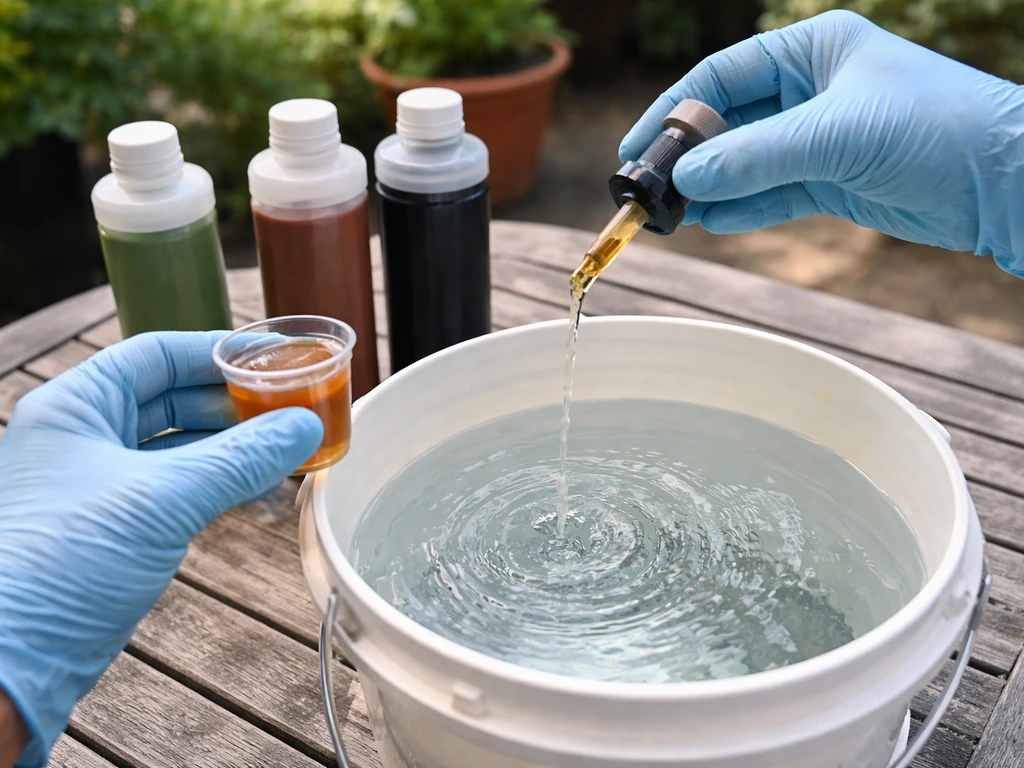
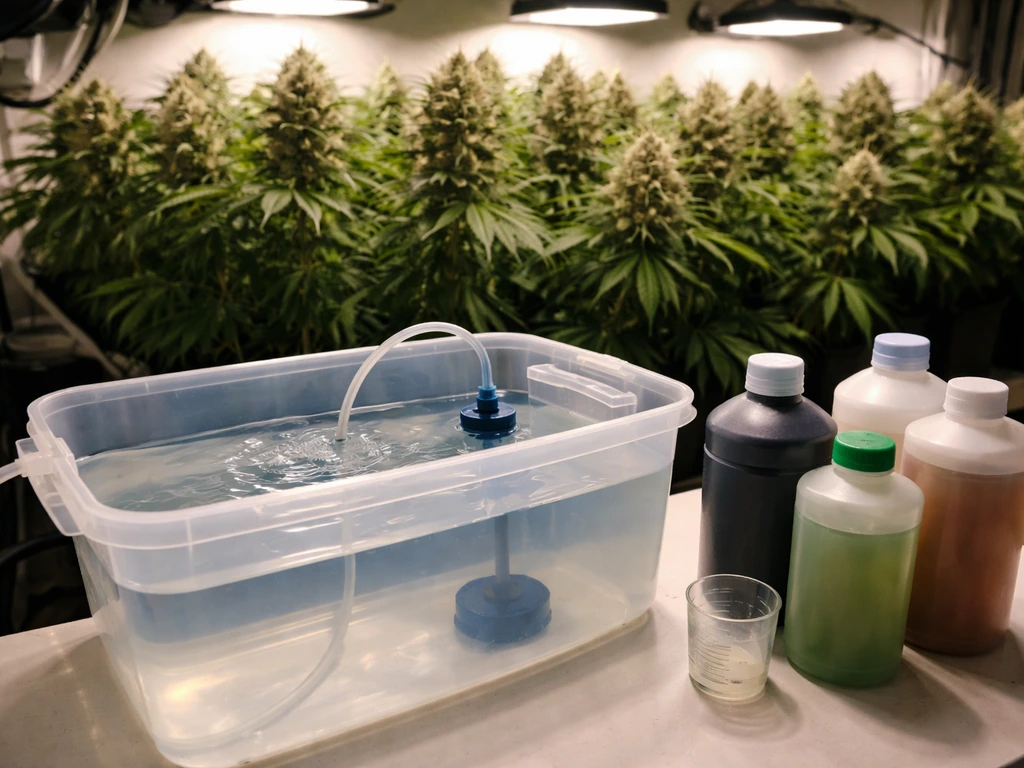
The mixing order matters more than most beginners realize. GH is explicit about this: never mix the concentrated nutrient bottles together directly, because combining FloraMicro and FloraGro in concentrated form causes an immediate chemical reaction that locks nutrients out and makes them unavailable to plants. The correct sequence is to always add FloraMicro to your water first, stir well, then add FloraGro, stir again, and only then add FloraBloom if you're using it. Skipping this order is one of the most common reasons growers get unexpected deficiencies.
- Start with your full volume of water (ideally pH-neutral, around 7.0 before adding nutrients).
- Measure FloraMicro and add it first. Stir or shake for 30 seconds.
- Measure FloraGro and add it to the same container. Stir again.
- Add FloraBloom if your current growth stage calls for it. Stir.
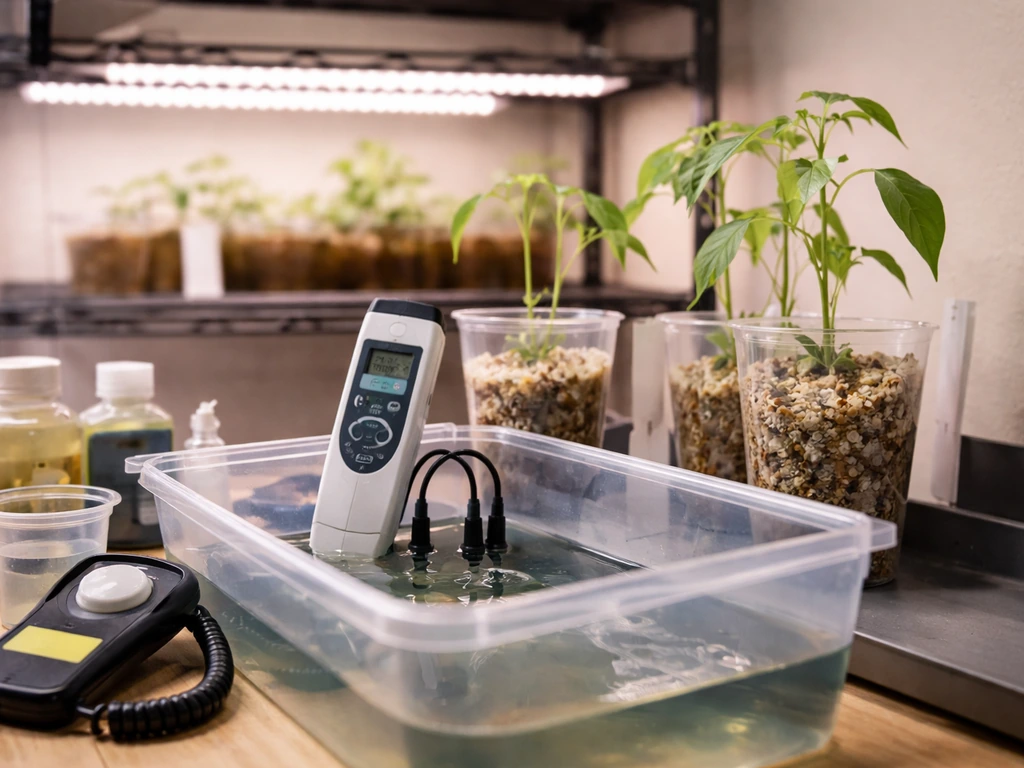
- Check the pH of the mixed solution with a calibrated meter and adjust to 6.0 to 6.5 for soil.
- Check EC if you have a meter (see the targets below by stage).
- Apply to soil slowly and evenly until you get about 10 to 20% runoff from the bottom of the pot.
For measuring small amounts accurately, use a 1 ml or 5 ml graduated syringe rather than the bottle cap. The GH label gives doses per gallon, and at a starting half-strength for soil, you're working with 2 to 3 ml per gallon, which is hard to eyeball reliably. A cheap set of syringes or a small measuring cup makes a big difference in consistency.
Feeding Schedule by Growth Stage
The ratios of the three FloraSeries bottles shift as plants move through their life cycle. FloraGro starts as the dominant bottle, then gets reduced as plants enter flower. Here's how that plays out week by week in soil. General Hydroponics provides a FloraGro blank" rel="noopener noreferrer">growth-stage feed chart with specific FloraGro dosages (ml/gal) for stages such as seedling or clone, vegetative, transition or early flower, and late flower.
Seedling Stage (Weeks 1 to 2)
Skip FloraGro entirely for the first two weeks. Seedlings are sensitive, and most quality seed-starting mixes have enough nutrients to carry them through early growth. If you see yellowing after week one and you're in a completely inert medium, use a very diluted feed: around 1 ml FloraMicro and 1 ml FloraGro per gallon, pH'd to 6.2. Feed once per week at most. Overfeeding seedlings is far more common and more damaging than underfeeding.
Early Vegetative (Weeks 2 to 4)
This is when FloraGro becomes your main tool. A lot of growers also rely on the Holland Secret method to fine-tune how to use FloraGro by stage for steadier results holland secret grow how to use. Start at half the label dose and watch the plant's response over 5 to 7 days before increasing. A typical starting recipe for soil: FloraMicro 2.5 ml/gal, FloraGro 2.5 ml/gal, FloraBloom 1 ml/gal. Feed every second watering. If the plant looks healthy, deep green, and is pushing new nodes quickly, hold that dose. If leaves are pale or growth is slow, step up by 0.5 to 1 ml increments.
Mid to Late Vegetative (Weeks 4 to 6)
Plants can handle higher doses now that the root system is established. Work toward full-strength veg ratios: FloraMicro 3 to 5 ml/gal, FloraGro 3 to 5 ml/gal, FloraBloom 1 to 2 ml/gal. Target EC in the runoff of around 1.2 to 1.8 mS/cm. Keep feeding every 2nd to 3rd watering and give plain pH'd water on the off days to let the soil breathe and flush minor salt buildup.
Transition and Early Flower (Weeks 6 to 8)
This is where the ratio shifts. Start cutting FloraGro back and increasing FloraBloom. A common transition recipe: FloraMicro 4 ml/gal, FloraGro 2 ml/gal, FloraBloom 3 ml/gal. You still need FloraGro during early flower because plants continue building structure for the first 2 to 3 weeks of flower, but you're no longer pushing maximum vegetative growth.
Mid to Late Flower (Weeks 8 to Flush)
Drop FloraGro to 1 ml/gal or remove it entirely during peak and late flower. The plant is done building new structure and needs phosphorus and potassium far more than nitrogen now. Excess nitrogen late in flower causes loose bud structure and can affect taste and finish quality. Final two weeks before harvest, most growers do a plain water flush to clear accumulated salts from the soil.
| Growth Stage | FloraMicro (ml/gal) | FloraGro (ml/gal) | FloraBloom (ml/gal) | Target Runoff EC |
|---|---|---|---|---|
| Seedling (wk 1-2) | 0 to 1 | 0 to 1 | 0 | Under 0.8 |
| Early Veg (wk 2-4) | 2.5 | 2.5 | 1 | 0.8 to 1.2 |
| Mid-Late Veg (wk 4-6) | 3 to 5 | 3 to 5 | 1 to 2 | 1.2 to 1.8 |
| Transition/Early Flower (wk 6-8) | 4 | 2 | 3 | 1.6 to 2.0 |
| Mid-Late Flower (wk 8+) | 3 to 4 | 0 to 1 | 4 to 5 | 1.8 to 2.2 |
| Pre-Harvest Flush | 0 | 0 | 0 | Under 0.5 |
pH and EC: The Numbers That Actually Keep Your Plants Healthy
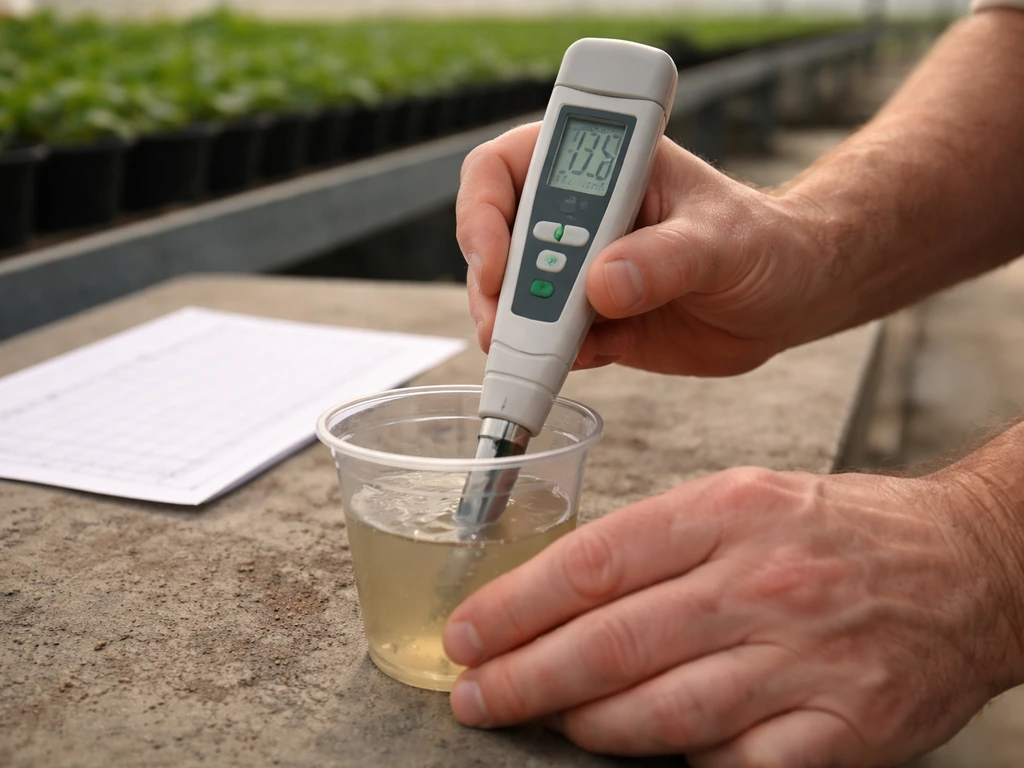
In soil, pH is the single biggest factor controlling whether your plants can actually use the nutrients you're giving them. FloraGro's product label targets a solution pH of 5.5 to 6.5, but for soil specifically you want to stay in the upper half of that range. Aim for 6.0 to 6.5 in the water you apply. Below 6.0 in soil, calcium and magnesium become less available. Above 6.8, iron and manganese start to lock out. Most deficiencies in soil that look like a nutrient problem are actually a pH problem.
To test pH properly in soil, collect the water that drains from the bottom of your pot (runoff) and test that. The runoff pH tells you what's actually happening at the root zone, which can be quite different from what you put in. If your runoff pH is drifting below 6.0, water in with solution pH'd at 6.5 to 6.8 to push it back up. If runoff is above 6.8, water in closer to 5.8 to 6.0. Small adjustments over several waterings are more effective than trying to swing pH dramatically in one feeding.
EC (electrical conductivity) tells you the total dissolved salt load in your solution or runoff. In soil, high runoff EC (above 3.0 mS/cm) is a warning sign of salt accumulation. If you see that number creeping up over several weeks of feeding, do a thorough plain-water flush: water with 2 to 3x the pot volume in plain pH'd water and collect the runoff until EC drops back below 1.5. After flushing, restart feeding at a lower dose.
Common Mistakes, Deficiencies, and How to Troubleshoot Them
Most problems with FloraGro in soil fall into a handful of repeating patterns. Here's what to look for and what to do about it.
Nitrogen Deficiency (Pale Yellow Leaves, Starting at the Bottom)
Lower leaves turn yellow and drop while upper leaves stay green. This is classic mobile nutrient deficiency where the plant is pulling nitrogen from old growth to feed new growth. In soil, this usually means either you're underfeeding, your pH is off (preventing uptake), or the plant has used up what the soil had and needs more. First check pH. If pH is in range, bump FloraGro up by 1 ml/gal and feed two waterings in a row instead of every other.
Nutrient Burn (Leaf Tips Brown and Curling)
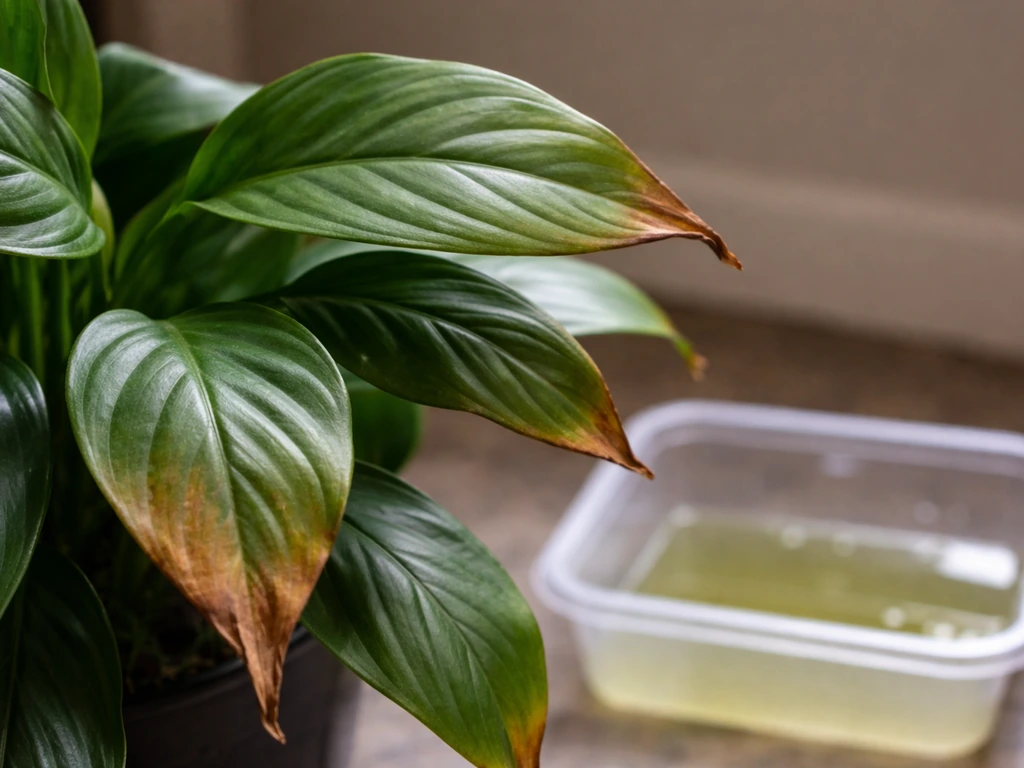
Brown, crispy tips that start at the very end of leaves and work inward mean the plant is getting more dissolved salts than it can process. This is overfeeding. Cut your dose by 25 to 50%, flush the pot with plain pH'd water, and let the medium dry out a bit more between waterings. Tip burn that shows up on the newest growth first is especially telling of excess feeding.
Calcium and Magnesium Issues (Spots, Edges, New Growth Distortion)
Cal-Mag issues in soil are almost always pH-driven. Brown spots scattered across mid-canopy leaves, leaf edges cupping or turning brown, or new growth coming in twisted all point toward pH being too low (below 6.0). FloraMicro carries calcium, but if the root zone pH is off, the plant can't absorb it. Check runoff pH first. If pH checks out and symptoms persist, add a dedicated Cal-Mag supplement at 1 to 2 ml/gal alongside your regular feed.
Salt Buildup and Lockout (Slow Growth, General Decline)
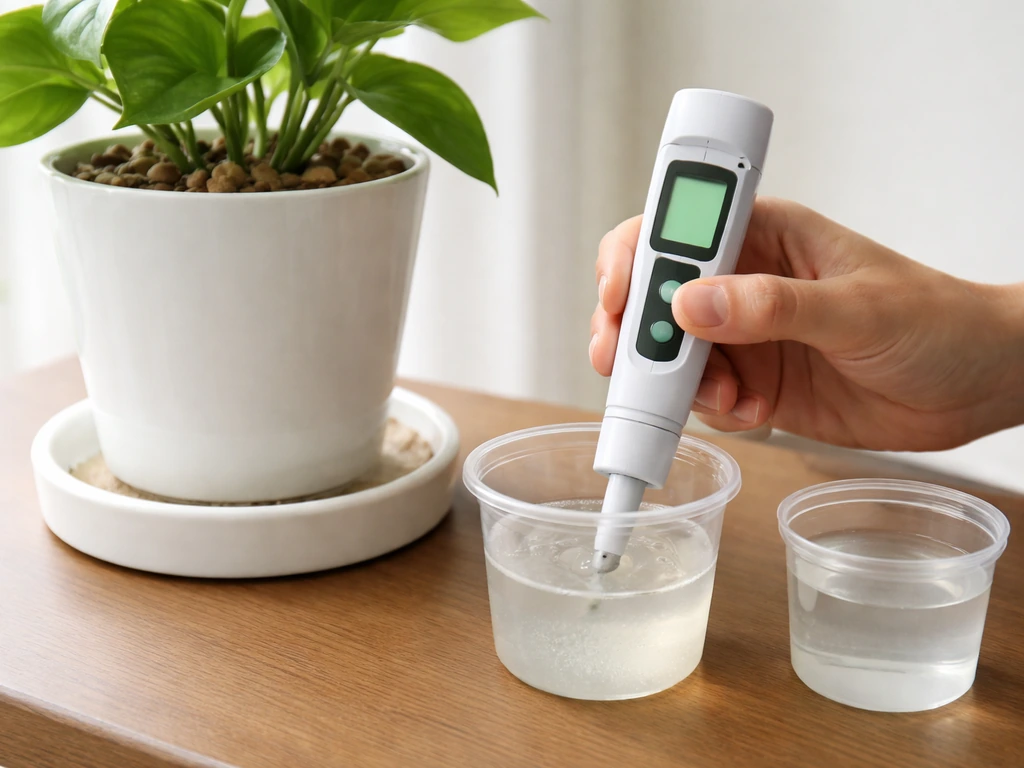
If a plant looks generally unhappy despite correct pH and what seems like appropriate feeding, check your runoff EC. If it's significantly higher than what you're putting in, salts have accumulated. A thorough flush, then a two-week reset at 50% dose, often turns plants around completely within 10 days.
Mixing Order Errors (Multiple Deficiencies at Once)
If you see multiple deficiency symptoms appearing simultaneously and quickly, especially in a plant that was fine last week, the most likely culprit is mixing FloraMicro and FloraGro together in concentrate before adding them to water. The resulting precipitate (visible as a cloudy or flaky residue) ties up multiple nutrients at once. Dump the mixed solution, rinse your container, and start over with the correct order: FloraMicro in water first, then FloraGro, then FloraBloom.
Getting Your Soil Setup Right So Nutrients Actually Work
No nutrient product fixes a bad soil setup. FloraGro works best when the physical conditions of your growing medium are dialed in first. Here's what matters most.
Drainage and Aeration
Soil that stays wet for more than 3 to 4 days between waterings is too dense. Roots need oxygen to drive active nutrient uptake, and waterlogged soil shuts that down fast. A standard mix of quality potting soil with 20 to 30% perlite added provides both water retention and the drainage gaps roots need. For 3-gallon pots, this usually means watering until you get runoff, then waiting until the top inch of soil is dry and the pot feels noticeably lighter before watering again.
Pot Size and Watering Volume
Watering volume matters because nutrients only distribute through the root zone if the water moves through the whole pot, not just the top few inches. A slow, even pour that allows the medium to absorb water before more is added distributes nutrients far more evenly than a fast dump. Target 10 to 20% runoff from the bottom of the pot at each feeding watering. This tells you the root zone is getting fully wetted and minor salts are being pushed out.
Starting Soil Nutrient Content
Many bagged potting soils (especially anything labeled 'premium' or 'garden mix') come pre-loaded with nutrients that can last 3 to 6 weeks. If you're starting seeds or transplants in a rich pre-amended soil, don't start FloraGro feedings right away. Wait until the plant shows signs that the soil's native nutrients are running low (lighter leaf color, slower growth) before introducing your liquid feed program. Starting FloraGro too early in a nutrient-rich soil is a fast track to overfeeding.
Calibrate Your pH and EC Meters
Cheap pH meters drift. Calibrate your pH meter with a fresh calibration solution (7.0 and 4.0 buffer) at least once per week when you're actively growing. An uncalibrated meter that's reading 0.5 units off will have you chasing ghost problems that don't exist while the real pH issue goes undetected. EC meters are more stable but benefit from a quick calibration check monthly. This single habit prevents more headaches than any other practice in soil growing.
If you're comparing FloraGro to other nutrient systems or thinking about how much to use per gallon as you scale up your grow, the dosing relationships and per-gallon calculations worth knowing about are covered in companion guides. The core approach stays the same: start low, adjust based on plant feedback, keep pH in range, and flush your soil periodically to reset salt levels. Do those four things consistently and FloraGro in soil will deliver reliable, repeatable results from veg through harvest.
FAQ
Can I use FloraGro without FloraMicro and just adjust the nitrogen myself?
No. FloraMicro supplies calcium and trace minerals that FloraGro does not replace, so skipping it commonly leads to calcium-related problems even if the plant looks “green” at first. If you want fewer bottles, use a complete three-part regimen, or switch to a nutrient line designed for single-part use, rather than trying to approximate the missing minerals.
What exact water pH should I adjust to for soil, and should it be based on runoff or the reservoir?
For soil, aim to mix to about 6.0 to 6.5 in the water you apply, then verify using runoff pH from the pot bottom. If runoff drifts below 6.0, raise the input toward 6.5 to 6.8 gradually, and if runoff sits above 6.8, lower the input toward 5.8 to 6.0. The runoff trend is what matters for long-term correction.
How do I know if my EC is coming from my fertilizer strength or from salt buildup in the soil?
Compare runoff EC to your feed EC. If runoff EC is much higher than what you fed and it keeps creeping up week to week, that indicates accumulation in the root zone. If runoff EC tracks close to your input, your issue is more likely pH, water distribution, or plant stage rather than salts.
Is it okay to feed FloraGro every watering in soil if my plants look hungry?
Generally no. Soil needs recovery time so oxygen returns and minor salt levels can redistribute. The article’s approach, feed every 2nd to 3rd watering and use plain pH’d water on off days, reduces salt stress and makes nutrient uptake more consistent.
Can I reuse leftover nutrient solution from one day to the next?
It’s better not to. Nutrient solutions can change over time due to precipitation, aeration changes, and pH drift, which undermines the stability you rely on in soil. Mix fresh for each feeding, and if you must store it short term, recheck pH before applying.
My pH runoff is fine, but leaves still show deficiency-like symptoms. What should I check next?
Check EC (runoff vs input) and watering coverage. If runoff EC is elevated, flush and restart at half dose. If salts are not high, ensure you’re watering enough volume to wet the full pot, aiming for roughly 10% to 20% runoff, because under-wetting can mimic nutrient problems even with correct mix ratios.
Do I flush with plain water every time I change the feeding schedule?
Not necessarily. A full flush is most helpful when you see salt buildup (for example, runoff EC trending high) or when you’ve had an overfeeding episode with tip burn. For routine schedule transitions, you can simply taper doses and use off-day plain pH’d water as the article suggests.
What should I do if seedling leaves yellow early, but my soil wasn’t “inert”?
Don’t assume you must fully start FloraGro immediately. The article recommends limiting early feeding to a very diluted supplement approach, about 1 ml each of FloraMicro and FloraGro per gallon, pH near 6.2, and feeding no more than once per week. Also confirm your potting mix isn’t staying too wet, since root oxygen issues can also cause pale growth.
How accurate do I need to be with small FloraGro doses like 1 ml to 2 ml per gallon?
Accuracy matters a lot at those levels because small errors become large percent changes. Use a graduated syringe for small volumes, not the bottle cap, and measure per gallon (or per your water volume) consistently. If you overestimate by even 0.5 ml per gallon repeatedly, you can raise EC enough to cause salt stress.
Should I target different EC values for different stages, or is 1.2 to 1.8 mS/cm always the goal?
Use 1.2 to 1.8 mS/cm as a practical veg guideline, but watch runoff and plant response rather than treating it as a fixed constant. If runoff EC rises steadily above about 3.0 mS/cm, that’s a clear sign to flush and restart lower, regardless of stage.
Does Cal-Mag matter in soil even if I keep pH in range?
It can, but in soil the most common Cal-Mag-like symptoms are pH-related. If runoff pH is within target yet you still see brown spotting, cupping, or twisted new growth consistent with calcium issues, then add Cal-Mag at about 1 to 2 ml/gal alongside your regular feed. If pH is the problem, Cal-Mag alone usually won’t fix it.
How do I prevent the mixing mistake that causes nutrient precipitates?
Follow the sequence and never combine concentrates together: add FloraMicro to water first, stir, then add FloraGro, stir again, and add FloraBloom last. If you notice cloudiness or flakes, treat that as a “stop and restart” event, rinse containers, and redo the mix in the correct order.