An NFT (nutrient film technique) system works best with fast-growing, lightweight crops that thrive with their roots sitting in a thin, moving film of nutrient solution. The short answer: leafy greens and herbs are your bread and butter, certain fruiting plants can work with the right setup, and root vegetables are basically off the table. The rest of this guide breaks that down so you can make a confident plant selection today, not after a failed harvest.
What to Grow in NFT Hydroponics: Best Crops to Start With

Marcus Holloway
14 Apr 2026
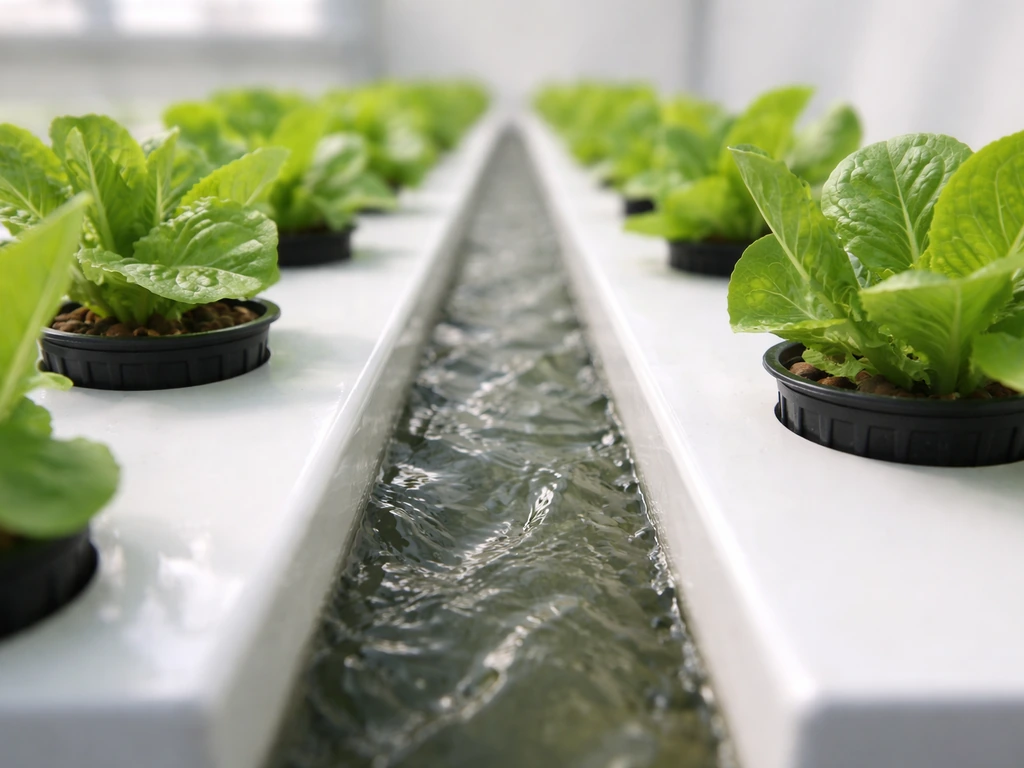
What an NFT system can realistically support
In an NFT setup, a thin film of nutrient solution, roughly 2 to 3 mm deep, flows continuously through sloped channels at about a 1. 2% to 3. 0% gradient. A standard flow rate sits around 15.
8 gallons per hour (GPH) per channel, which is roughly 1 liter per minute. UMN Extension’s small-scale hydroponics guidance also discusses maintaining an NFT setup and points to research on how nutrient solution flow rate affects lettuce growth and root morphology maintaining an NFT setup and research on nutrient solution flow rate affecting lettuce growth and root morphology.
That shallow, moving stream keeps roots wet while exposing the upper portion of the root mass to air, which is critical for oxygen uptake. The Purdue Extension guideline puts it at about 10 liters of water flow per plant per hour as a practical target for NFT.
That design has consequences for what you can grow. Plants need to be light enough that a small net cup in a channel hole can support them. Their roots need to tolerate continuous moisture without waterlogging (since there's no dry phase). They also need to be harvested or turned over fast enough that the system stays clean and efficient. Heavy, sprawling plants stress the channels, clog the flow, and make the system fight against itself. Compact, fast-maturing crops make everything click.
If you're brand new to hydro and wondering whether NFT is the right system for your goals, it helps to think broadly about what to grow hydroponically before locking into a specific method. NFT shines in certain niches but it's not a universal fit.
Leafy greens and herbs: the core NFT crop list
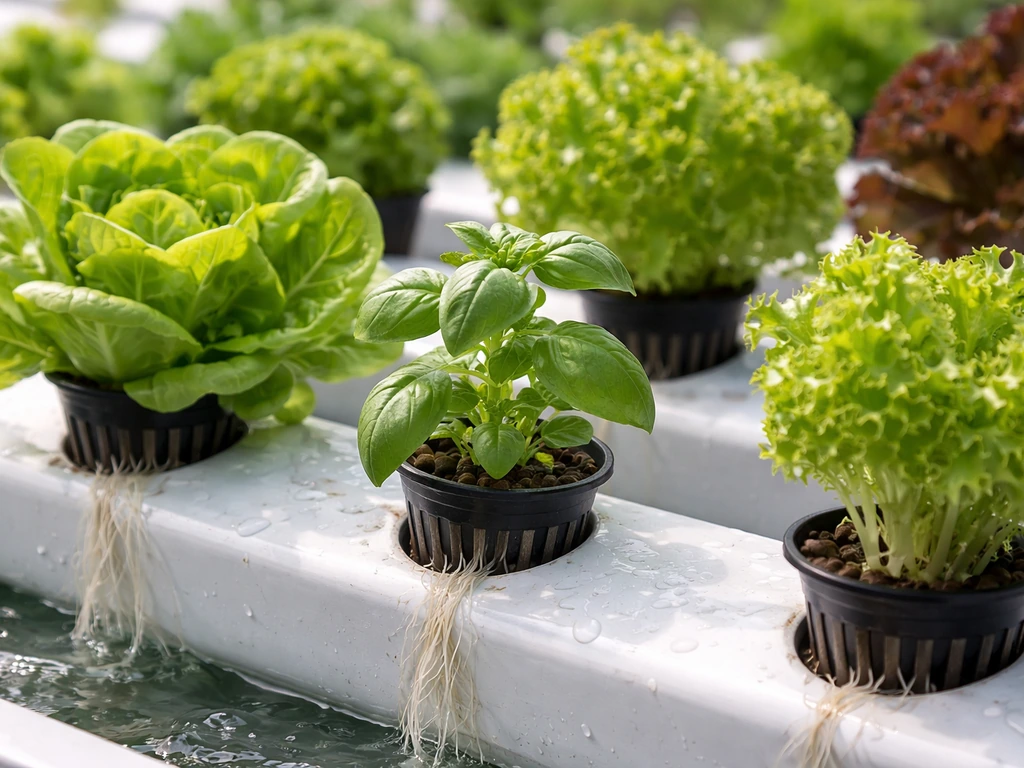
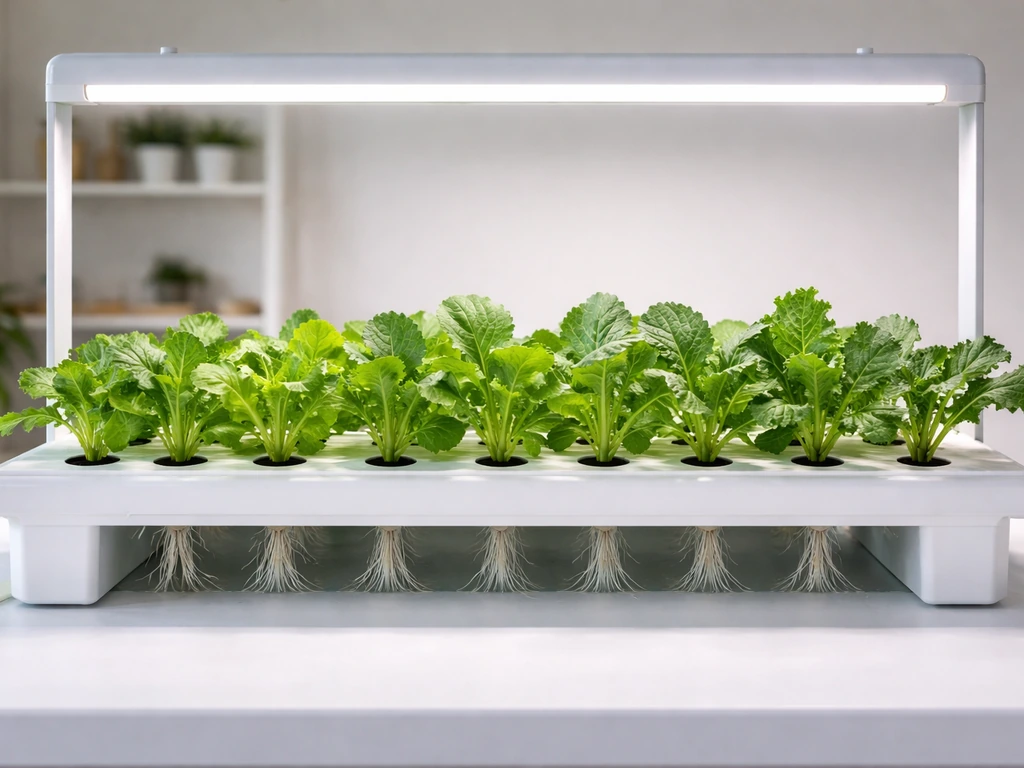
These are the crops NFT was essentially designed for. Lettuce is the gold standard. It's fast (30 to 60 days to harvest depending on variety), lightweight, and thrives in the cooler nutrient solution temps that NFT systems naturally maintain. The ideal nutrient water temperature for lettuce sits around 65 to 68°F. Research comparing water temps of 18.3°C versus 21.1°C in NFT lettuce production found measurable differences in growth rates and Brix, so temperature management genuinely matters, not just for plant health but for flavor and yield. Target a pH of 5.5 to 6.5 and an EC of 0.8 to 1.2 dS/m for lettuce, and you'll get consistent results.
Spinach works well too, though it wants a slightly higher nutrient concentration: pH 5.5 to 6.6 and EC 1.8 to 2.3 dS/m. Keep that in mind if you're running lettuce and spinach in the same channel, since their EC targets don't perfectly overlap. Mixing crops with very different nutrient demands in one reservoir is one of the most common beginner mistakes.
Herbs are where NFT gets really fun for home growers. Basil, cilantro, parsley, mint, chives, and arugula all adapt well to the system. Basil is a particularly popular choice, though it's worth noting it's more prone to pythium root rot than lettuce, so oxygen and temperature control matter more with it.
- Lettuce (butterhead, romaine, loose-leaf): fastest ROI, easiest management, beginner-ideal
- Spinach: slightly more nutrient-demanding, great in cooler grow spaces
- Basil: thrives in warmth but vulnerable to root rot if water temp creeps above 72°F
- Cilantro: fast grower, harvest-heavy, worth succession planting every 2 weeks
- Mint: aggressive grower, consider isolating in its own channel to prevent root crowding
- Arugula: very fast, 25 to 40 days, ideal for first-timers who want quick wins
- Kale and Swiss chard: slightly slower but manageable; choose compact varieties
- Watercress: loves the wet root environment of NFT more than almost any other crop
Fruiting plants: when NFT works and when it doesn't
Fruiting crops like tomatoes, peppers, cucumbers, and strawberries can grow in NFT, but they need a more deliberate setup. The key difference from leafy greens is nutrient and water demand. The same reference that gives lettuce-type flow rates notes that fruiting vegetables require higher water flow rates due to their greater overall demand. You're also dealing with larger, heavier plants that need physical support beyond what a net cup provides. That means trellising, stakes, or a separate support structure running alongside the channels.
Tomatoes are the most common fruiting NFT crop in commercial greenhouse production. At home, they're doable but require consistent attention to EC (typically 2.0 to 5.0 dS/m depending on growth stage), pH (5.5 to 6.5), and physical support. If you want to try tomatoes in your system, smaller indeterminate varieties or cherry tomato cultivars are far more manageable than large beefsteaks. For more on container and system choices for tomatoes in hydro, the question of what is the best container to grow tomatoes hydroponically covers a lot of the tradeoffs worth understanding before you commit.
Strawberries are genuinely well-suited to NFT and have been grown this way commercially for decades. Their roots don't get as massive as tomatoes, the plants stay compact, and they tolerate the continuous-flow environment. Cucumbers and peppers sit somewhere in the middle: they work, but they demand more monitoring and a more robust pump setup than leafy greens require.
Crops to avoid or treat with caution
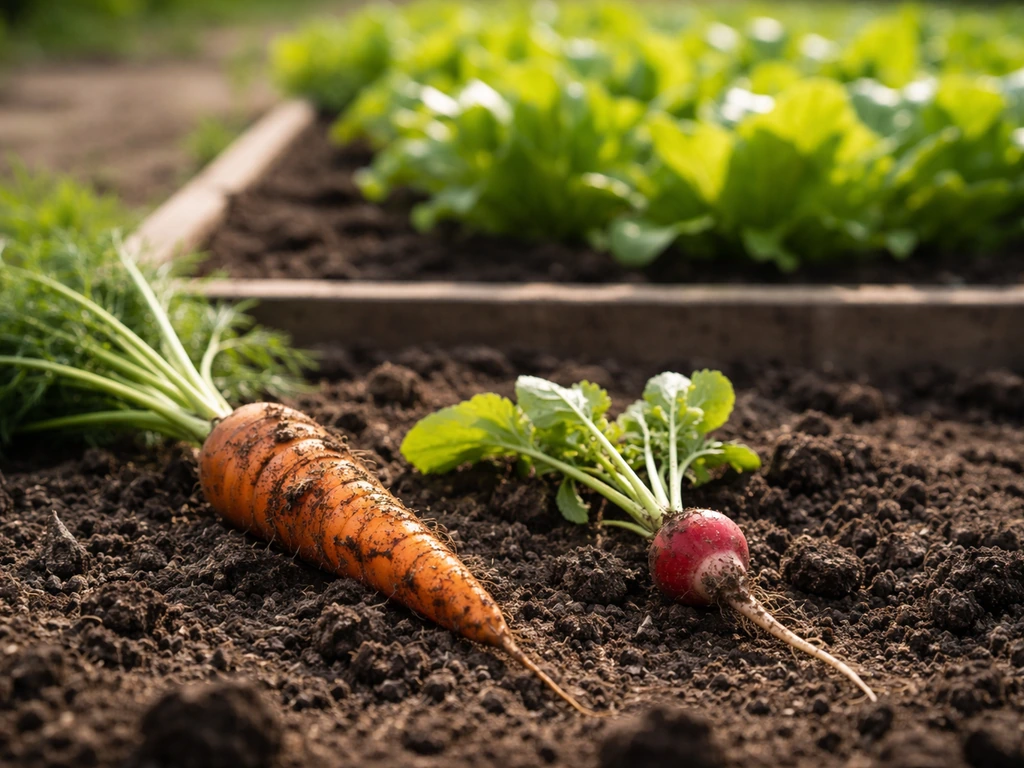
Root vegetables are essentially incompatible with NFT. Carrots, beets, radishes, turnips, and potatoes all develop their edible portion underground (or in media). An NFT channel's thin film of water gives roots nowhere to expand into a harvestable form. OSU Extension describes nutrient film technique as bathing plant roots in a thin, continuous stream of nutrient solution, which can make it hard for crops that need room to form underground storage organs the thin film of water gives roots nowhere to expand into a harvestable form. Even if the plant survives, you won't get a meaningful yield.
Large, heavy plants like corn, squash, melons, and full-size indeterminate tomatoes are technically possible but impractical for home growers. The channels weren't designed to bear that weight, and the root masses can block flow, creating stagnant zones that invite pythium and other root pathogens. The same goes for plants with sprawling, thick root systems, like mature sweet potatoes or parsnips.
High-nutrient-demand plants can also cause problems if your reservoir and pump aren't sized appropriately. Pushing EC above roughly 3.5 dS/m (around 2,000 ppm TDS) risks phytotoxicity, so heavy feeders that need rich solutions require more precise management than most home setups comfortably deliver.
| Crop | NFT Suitability | Main Concern |
|---|---|---|
| Lettuce | Excellent | Keep water temp below 68°F |
| Basil / Herbs | Excellent to Good | Pythium risk if water runs warm |
| Spinach | Good | Higher EC needs vs. lettuce |
| Strawberries | Good | Needs reliable pump uptime |
| Cherry Tomatoes | Moderate | Needs trellis support, higher EC |
| Cucumbers / Peppers | Moderate | Flow rate and support requirements |
| Large Tomatoes | Difficult | Weight, root mass, flow blockage |
| Root Vegetables | Avoid | No space for root development |
| Corn / Squash / Melon | Avoid | Size, weight, root clogging |
Picking your first plants based on your setup and experience
If you're new to NFT, start with lettuce. Full stop. It's forgiving, fast, and gives you feedback quickly so you can learn how your system behaves before you commit to anything more demanding. Arugula is another strong first pick for the same reasons. Once you've run two or three successful lettuce cycles, you'll understand how your system's temperature, flow rate, and pH stability actually behave in your environment, which is more valuable than any spec sheet.
Intermediate growers who've dialed in their leafy greens setup can move toward basil, spinach, or strawberries. These crops add complexity without the full infrastructure overhaul that fruiting crops require. If you're already propagating your own starts, learning how to grow clones hydroponically is a smart next step, since clones give you genetic consistency and faster transplant readiness compared to starting everything from seed.
Advanced growers with stable systems, proper trellis infrastructure, and a solid handle on EC and pH management can try cherry tomatoes, cucumbers, or peppers. Just go in knowing these crops will test your system's limits and require more active management than leafy greens.
Setup details that make your chosen crop actually succeed
Temperature and dissolved oxygen
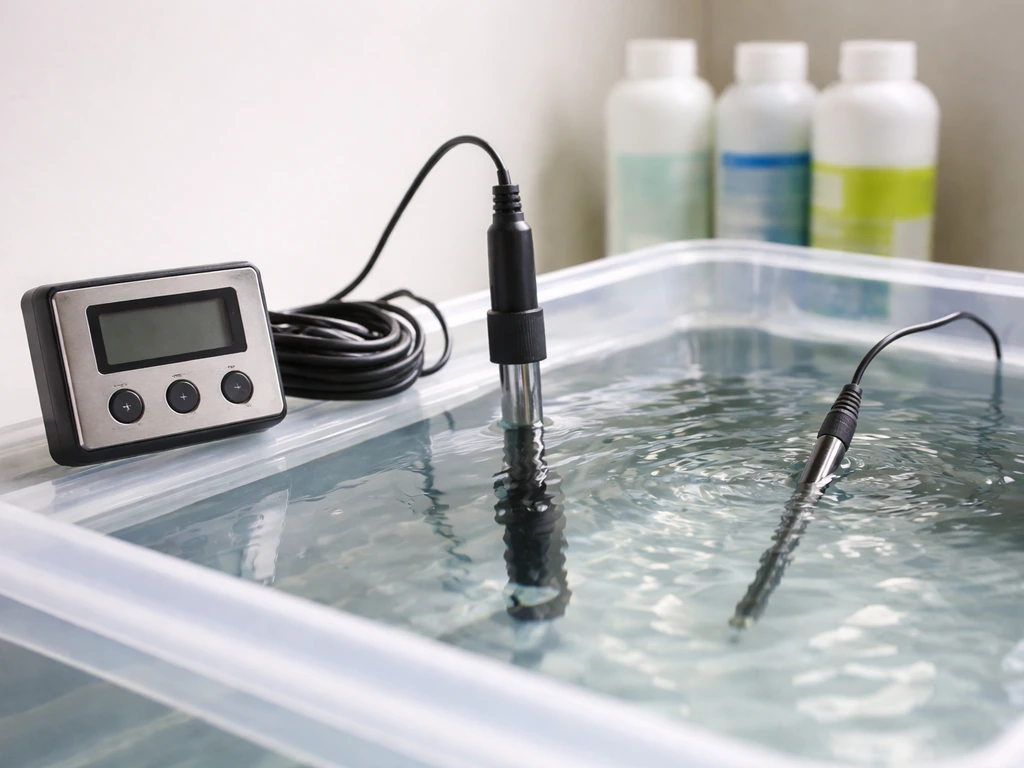
Dissolved oxygen is the variable most beginners underestimate. As water warms, it holds less oxygen, and low oxygen at the root zone is the number-one driver of pythium root rot in recirculating systems. The recommended approach is to keep nutrient solution temperature between 68°F and 72°F (20 to 24°C) as a general working range, with the cooler end of that being preferable for lettuce and basil. In summer, you may need to actively chill your reservoir to stay in that window. The broader operational temperature range for high dissolved oxygen is roughly 18°C to 27°C (65 to 80°F), but root rot risk climbs fast above 72°F.
pH and EC management
Most NFT crops want pH between 5.5 and 6.5. Letting pH drift above 7.0 locks out key micronutrients even if your EC looks fine. Check pH daily when you're starting out. For EC, the general rule is leafy greens want lower concentrations (0.8 to 1.8 dS/m) and fruiting crops want higher (2.0 to 5.0 dS/m at peak). Don't push beyond roughly 3.5 dS/m without good reason, since that's where phytotoxicity risk starts. A general working TDS target for most home NFT crops lands between 1,000 and 1,500 ppm.
Root support and channel slope
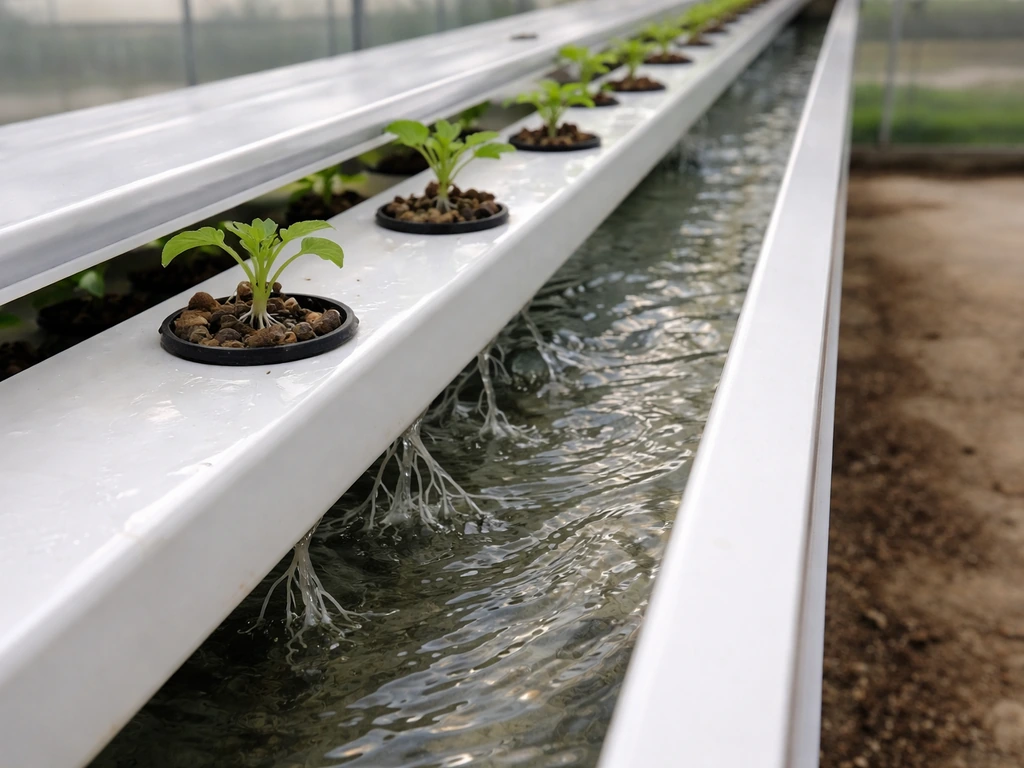
Net cups hold seedlings in place, but the channel slope does the real work of moving solution past the roots. Keep your slope in that 1.2% to 3.0% range. Too shallow and nutrient solution pools, creating oxygen-deprived stagnant zones. Too steep and the film moves too fast for roots to absorb effectively. For most home systems, a 2% slope (about 2 cm of drop per 100 cm of channel length) is a reliable starting point.
Algae and pest control
Keep your channels covered and light-proof. Light hitting nutrient solution grows algae fast, and algae compete with plants for nutrients, clog channels, and create habitat for fungus gnats and other pests. Cover any exposed reservoir or channel surfaces with opaque material from day one.
A practical starting plan: what to plant and when to harvest
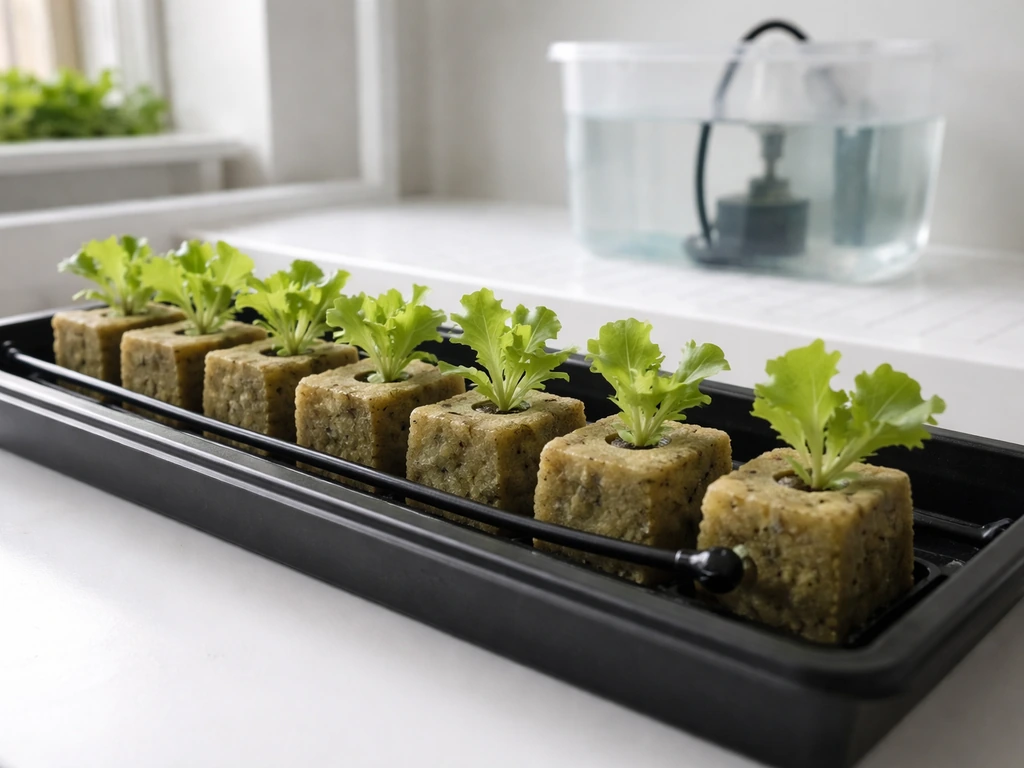
Here's a simple, repeatable plan for a beginner running a small NFT system with 12 to 24 plant sites. Start with two varieties of lettuce (one butterhead, one romaine or loose-leaf) and one herb (arugula or basil, depending on your space temperature). This gives you variety without overcomplicating nutrient management.
- Week 1: Start seeds in rockwool cubes or rapid rooters. Keep in a humid propagation tray, aim for 72 to 75°F ambient temp.
- Week 2: Seedlings develop first true leaves. Begin dilute nutrient solution (EC 0.4 to 0.6 dS/m) to harden them off.
- Week 3: Transplant into NFT channels. Set EC to 0.8 to 1.0 dS/m, pH 5.8 to 6.2, water temp at 65 to 68°F.
- Week 4: Check daily. Top off reservoir with pH-adjusted water. Roots should be visible trailing into the channel.
- Week 5 to 6: Begin harvesting outer leaves (cut-and-come-again method) or harvest full heads depending on variety.
- Week 6 to 7: Full harvest of first round. Clean channels, top off nutrients, and transplant your next seedling batch.
Running this cycle continuously, you can have fresh harvests every two to three weeks once you're staggering plantings. Start a new batch of seeds every two weeks and you'll never have a gap. For a 12-site system, six sites in active vegetative growth and six recently transplanted keeps the channel productive year-round.
Once you're comfortable with this rhythm, think about what you want to add next. The decision isn't just about what tastes good; it's about what your system can support at its current capacity. Thinking through the full landscape of options, including which crops deliver the most food value per square foot of channel space, is the same kind of thinking behind choosing the best food to grow in a hydroponic setup for maximum practical output.
The crops worth growing in an NFT system are the ones that match the system's strengths: fast growth, light root mass, moderate nutrient needs, and tolerance for continuous moisture. Lettuce, arugula, basil, spinach, and watercress check all those boxes. Add strawberries or cherry tomatoes once you know your system. Skip the root vegetables entirely. That's the practical shortlist, and it's the one that gives you the most reliable results with the least troubleshooting.
It's also worth noting that NFT is just one approach in a broader hydroponic toolkit. If you're curious how it stacks up against other methods or want to think through which system fits your specific growing goals, exploring hydroponic system options and crop planning strategies can help you make sure NFT is actually the right fit before you invest further in your setup.
FAQ
Can I grow different NFT crops in the same channel or same reservoir?
Yes, but only if your system can handle different feed targets. If you mix crops, set the nutrient solution to the midpoint of their EC and pH needs and be ready to compromise, or run separate reservoirs (or separate channels) for lettuce versus basil, spinach, or strawberries.
What happens if I don’t harvest leafy greens on time in NFT?
For many beginners, the easiest way is to harvest early and restart often. If you wait too long, plants get large and can block the channel film, which reduces flow and oxygen at the roots. A practical rule is to harvest leafy greens as soon as they hit the size your net cups and channel spacing can support.
Is watercress as forgiving as lettuce in NFT?
Watercress is often the exception people get surprised by, it generally performs best with cooler, well-oxygenated solution and consistent flow. If your room runs warm, treat watercress like lettuce (prioritize temperature control) and consider chilling in hot weather to reduce root rot risk.
My plants look healthy at first, then start browning or wilting in NFT, what should I check?
It usually means your roots are getting too little oxygen or flow is uneven. Check for channel clogging (plant debris, biofilm, or root mat), confirm your slope, and verify that the film depth stays shallow and consistent. Warm reservoir temperatures can also rapidly increase pythium risk, even if pH and EC look fine.
Do I really need to cover the channels and reservoir, or is it only about algae?
Use covers and opaque components from day one, but also make sure you do not trap heat. For a reservoir lid, choose something opaque and insulating so algae stays down, while still helping you keep nutrient temperatures in the target window (especially if you are growing in summer).
How often should I test pH and EC once my NFT cycle is running?
Measure pH and EC in the reservoir, then confirm with small spot checks in the channel if you see drift. Beginners often assume readings stay stable, but recirculating systems can shift pH and EC as plants consume nutrients, and warm temperatures can accelerate changes.
If my plants grow slowly, should I raise EC?
Avoid pushing EC up to “fix” slow growth, because high EC can burn roots in NFT’s continuously wet environment. If growth is sluggish, start by checking dissolved oxygen (temperature first), then verify flow rate and film depth, and only then adjust EC toward the crop’s expected range.
What’s the easiest fruiting crop to try after lettuce, and how do I prepare?
Most fruiting crops are more sensitive to management because they are heavier and typically need stronger support plus higher water and nutrient demand. Start with cherry tomato cultivars or smaller indeterminate types, and plan trellis space before planting so you do not end up handling plants after roots have already filled the channel area.
Can strawberries replace lettuce as my beginner crop in NFT?
Yes, but you need different expectations. NFT can work for strawberries because plants stay relatively compact, but you still need clean supports and you must prevent runners and foliage from interfering with flow. Also, strawberries can be more sensitive to solution stability, so avoid large EC or pH swings during changes.
Why can’t I grow carrots or potatoes in NFT?
Not reliably. Root vegetables develop edible portions underground, but NFT provides a thin film that does not support root expansion into a harvestable shape. You may see leaf survival, but yields are typically non-competitive, so it is better to use NFT for leafy crops and herbs and choose a media-based system for roots.
Which variety traits should I look for when choosing what to grow in NFT?
In general, stick to compact, fast-maturing varieties and keep an eye on how much surface area the plant canopy takes up. If you cannot harvest on schedule, the plant mass can shade the nutrient film and crowd net cups, both of which increase algae and can reduce oxygen.
How do I avoid having an NFT system that produces everything at once and then nothing?
A simple plan is staggered sowing, for example start a new batch every two weeks and harvest two to three weeks later, so you always have plants at multiple growth stages. Keep a consistent rotation pattern to prevent gaps, and do not let all sites mature at once.