Aeroponics can grow almost anything that thrives in hydroponics, but the honest answer is that some crops are dramatically easier than others. Leafy greens, herbs, and cannabis clones are where most home growers start and succeed. Fruiting crops like tomatoes, cucumbers, and strawberries are absolutely possible but demand more dialed-in systems. Root crops like potatoes are a real thing in aeroponics, just not the way most people picture it. Here is a clear breakdown of what grows well, what grows with effort, and how to choose your first crop based on the system you actually have.
What Can You Grow with Aeroponics? Beginner Crop Guide
Marcus Holloway
9 Apr 2026
Best plants for aeroponics: fast wins vs. bigger projects
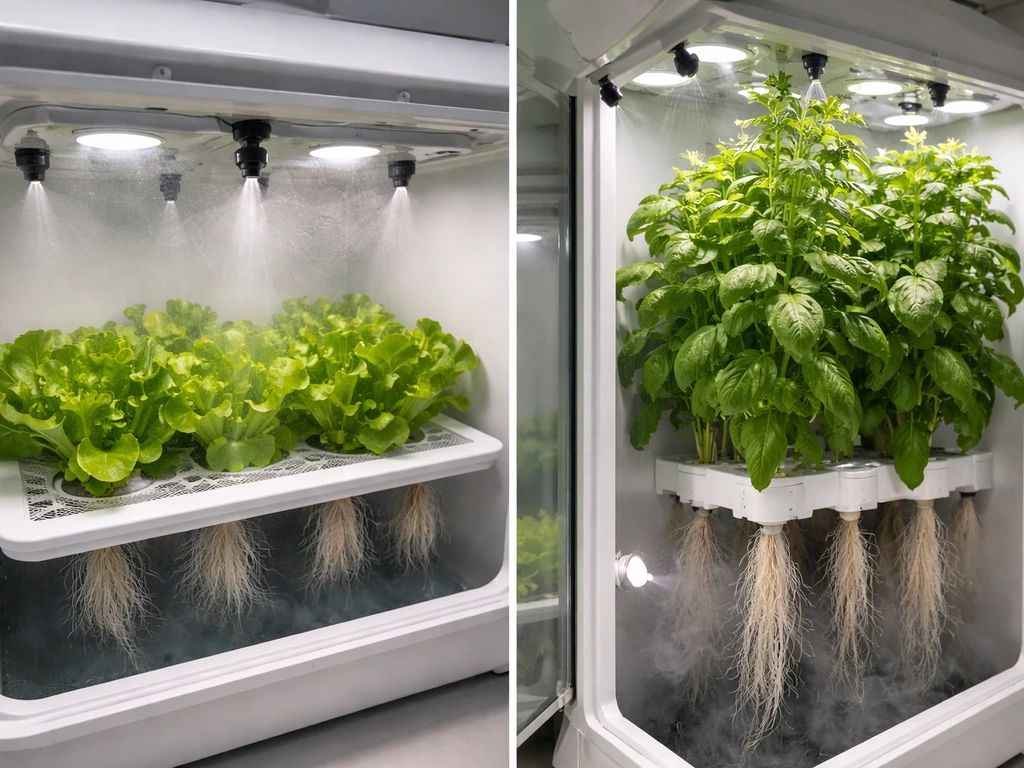
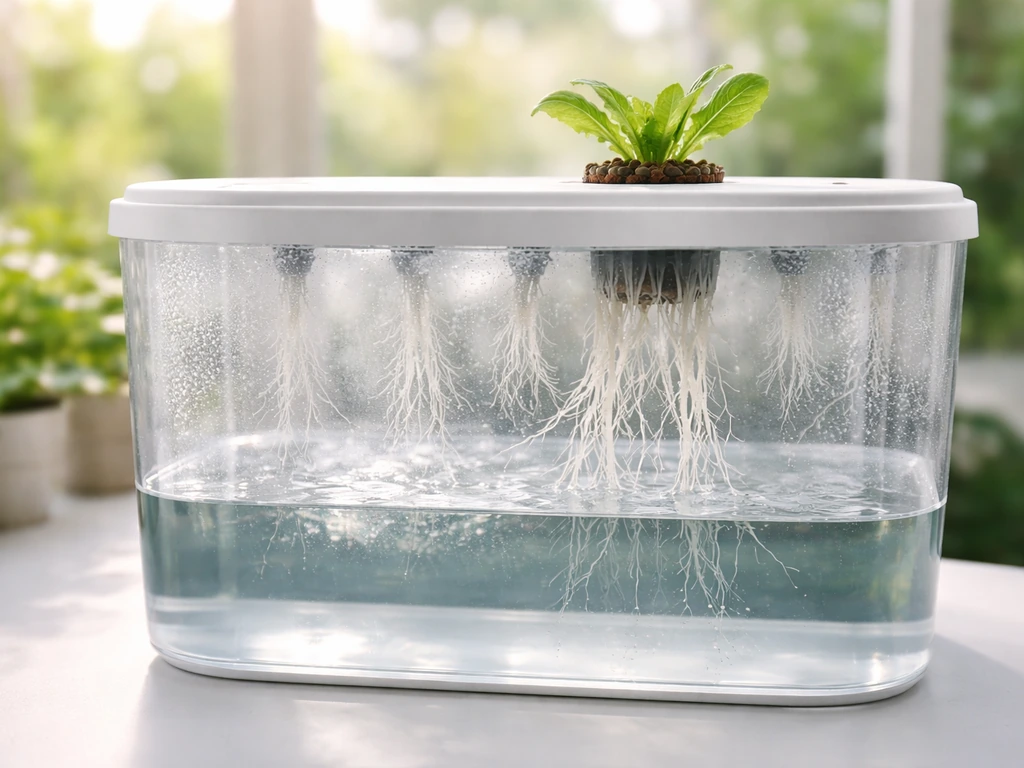
The fastest wins in aeroponics are crops with shallow, fibrous roots, low-to-moderate nutrient demands, and short grow cycles. Lettuce sits at the top of that list for good reason. It matures quickly, tolerates some early-stage dialing-in of your pH and EC, and gives you visible feedback fast. If you're asking whether you can grow anything hydroponically in an aeroponic system, lettuce is the proof-of-concept crop that will tell you whether your setup works before you invest time in slower crops.
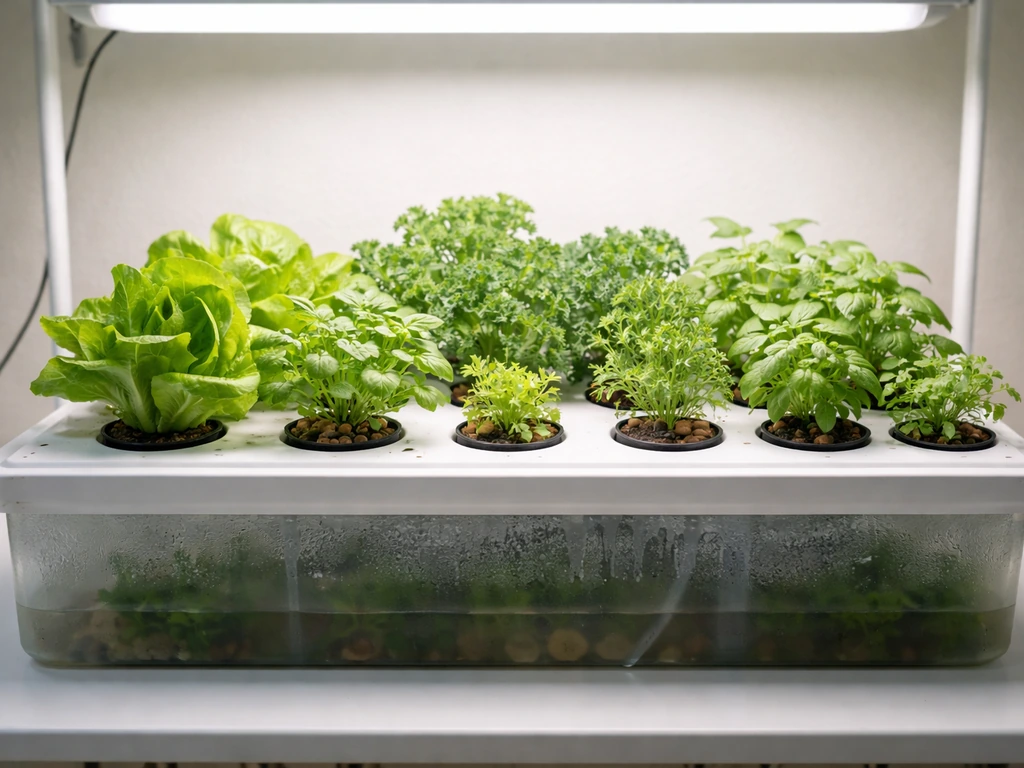
Beyond lettuce, basil and other soft herbs are consistently reported as forgiving first crops. They respond well to aeroponics because their roots love the oxygen-rich mist environment, and they tolerate minor fluctuations in misting intervals better than fruiting plants do. If you get your mist schedule and filtration right on herbs, you are ready to scale up.
| Crop | Difficulty | Time to Harvest | Best For |
|---|---|---|---|
| Lettuce | Easy | 30–45 days | First-time aero growers |
| Basil / Herbs | Easy | 3–5 weeks | Fast feedback, forgiving margins |
| Spinach / Kale | Easy–Moderate | 35–50 days | Cool-weather setups |
| Strawberries | Moderate | 60–90 days | Intermediate growers |
| Tomatoes / Cucumbers | Moderate–Hard | 70–100+ days | Experienced growers with reliable systems |
| Cannabis (clones/veg/flower) | Moderate | Varies by stage | Growers already familiar with hydro |
| Potatoes (minitubers) | Specialized | 60–90 days | Propagation-focused setups |
Leafy greens and herbs: where aeroponics really shines
Leafy greens are the sweet spot for aeroponics. Lettuce, spinach, kale, arugula, bok choy, and Swiss chard all thrive when their roots get consistent, oxygen-rich mist. The key parameter targets for lettuce in aeroponics are pH 5.5–6.5 (aim toward 5.5–6.0 for most of the grow) and EC in the range of 0.8–1.2 dS/m for established plants. For seedlings just getting started, drop your nutrient solution to around EC 0.5 dS/m and keep humidity high while the roots establish. These crops are forgiving enough that small pH swings won't kill them overnight, which is exactly what you want when you're still tuning your system.
Herbs are equally well-suited. Basil, cilantro, parsley, mint, chives, and dill all perform well. Basil in particular is popular in the aeroponics community because it roots aggressively in mist conditions, produces fast, and makes mistakes obvious before they become catastrophic. Mint spreads readily and benefits from the contained root zone that aeroponics provides. One thing to watch with herbs: some varieties (like mint and oregano) prefer slightly cooler conditions, so keep your root chamber between 65–78°F (18–25°C) to cover most of them.
For light, leafy greens don't need high intensities. Seedlings can root well under as little as 100 µmol/m²/s, and most lettuce varieties don't need more than 200–250 µmol/m²/s at peak growth. This makes them practical for smaller, lower-wattage indoor setups. If you're wondering how this compares to what you can grow hydroponically in general, leafy greens are top performers across all soilless methods, and aeroponics just amplifies their natural preference for oxygenated root zones.
Fruiting crops and flowering plants: possible, but earn it first
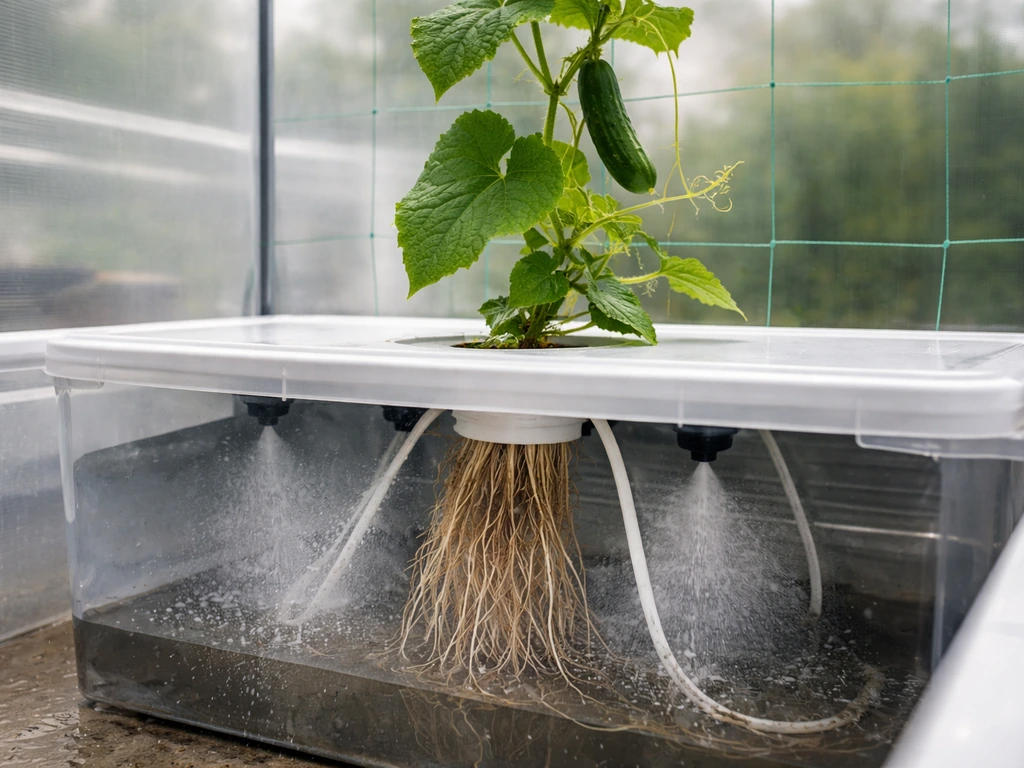
Tomatoes, cucumbers, peppers, and cannabis are all grown in aeroponics systems, including commercial ones. The difference between these and lettuce is that fruiting crops have larger root masses, longer cycles, and higher nutrient demands, which means system reliability matters much more. A pump failure or clogged nozzle that a lettuce plant might survive for 20–30 minutes becomes a crisis for a tomato plant with dense root mass in the middle of flowering.
For cucumbers, target EC 1.7–2.5 dS/m and pH 5.8–6.0 once plants are established. Start lower (around EC 1.0–1.2) during the first two weeks after transplant and ramp up as root mass develops. Tomatoes and peppers follow similar escalating EC logic. The general aeroponic parameter range for flowering/fruiting crops is EC 1.2–1.8 dS/m, with pH held at 5.5–6.5. If you're running cannabis specifically, veg stage targets align closely with leafy green parameters (EC 0.8–1.2), then you step up for flower.
Strawberries are a realistic mid-difficulty project. They work well in aeroponic towers and bucket systems. Target pH 5.5–6.5 and EC 1.2–2.0 mS/cm as your operational range. Some commercial aeroponics growers run strawberries at much lower EC (around 500 µS/cm) using precise dosing systems, but for home growers a practical EC of 1.2–1.6 mS/cm is a solid starting point. Strawberries need physical support as fruit develops, so plan your trellis or netting before they flower.
Cannabis deserves a mention here because many readers on this site are growing it. Aeroponics is a well-suited method for cannabis, particularly for cloning and propagation (more on that below), but also for full veg and flower cycles. The oxygen-rich root zone promotes dense, healthy root development. Keep root chamber RH at 65–75%, air temperature at 65–78°F, and dial pH to 5.5–6.3 throughout the cycle. One real advantage of aeroponics for cannabis is that nutrient uptake is highly efficient, so you often use less input to achieve the same results as deep water culture or coco. Whether you're wondering about growing weed without adding nutrients or building a full nutrient program, aeroponics rewards precision over guesswork.
Roots and tubers: aeroponics does grow them, just not the way you'd think
Potatoes, sweet potatoes, radishes, and beets can technically be grown in aeroponics, but the reality is more nuanced than most guides admit. Potatoes in particular have been studied extensively in aeroponic research contexts. Cornell University and agricultural programs in places like Peru have used aeroponics to produce potato seed minitubers, generating more seed stock per plant than conventional field methods. The roots hang in mist and the tubers form on the stolons in the dark, humid chamber. One study on potato minituber production in aeroponics (cultivar and plant origin effects) also describes that nutrient delivery is via fine fog particles around 30, 100 microns blank" rel="noopener noreferrer">the nutrient delivery is via fine fog particles (30–100 microns). It works, and it works well at a research or commercial propagation scale.
For home growers, potato aeroponics is feasible if you build or buy a system with adequate vertical chamber depth (at least 12–18 inches below the net cup) and reliable misting coverage across the whole root zone. A full-cone spray pattern is important here because large root masses develop dry shadows, where certain areas of the root system miss mist entirely and begin to desiccate. The practical challenge is that most consumer aeroponic towers are too shallow and too narrow for full-size potato production. Radishes and small beets are more realistic in a standard home setup. Radishes are fast (25–30 days) and their compact root structure is manageable in most systems.
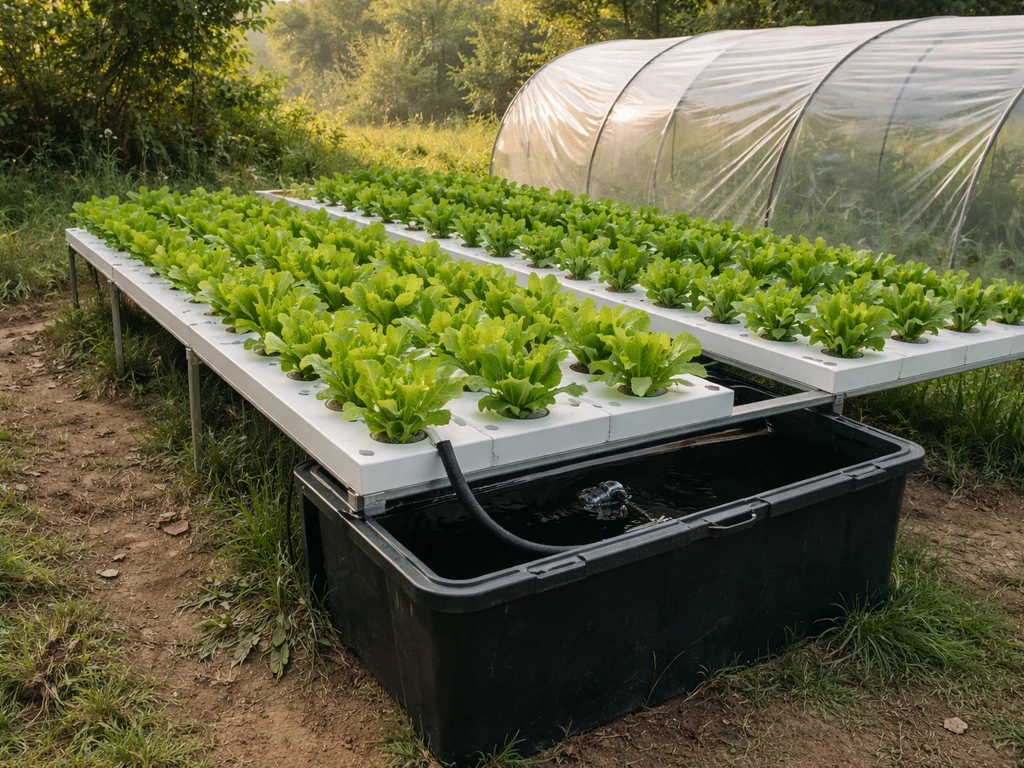
If you're considering outdoor growing to give root crops more vertical space, there are useful options to explore. Knowing whether you can grow hydroponics outside opens up the possibility of placing a larger DIY aeroponic chamber in a greenhouse or covered patio, where you have more height and insulation control than a typical indoor tent allows.
Seedling propagation and cloning: aeroponics at its best
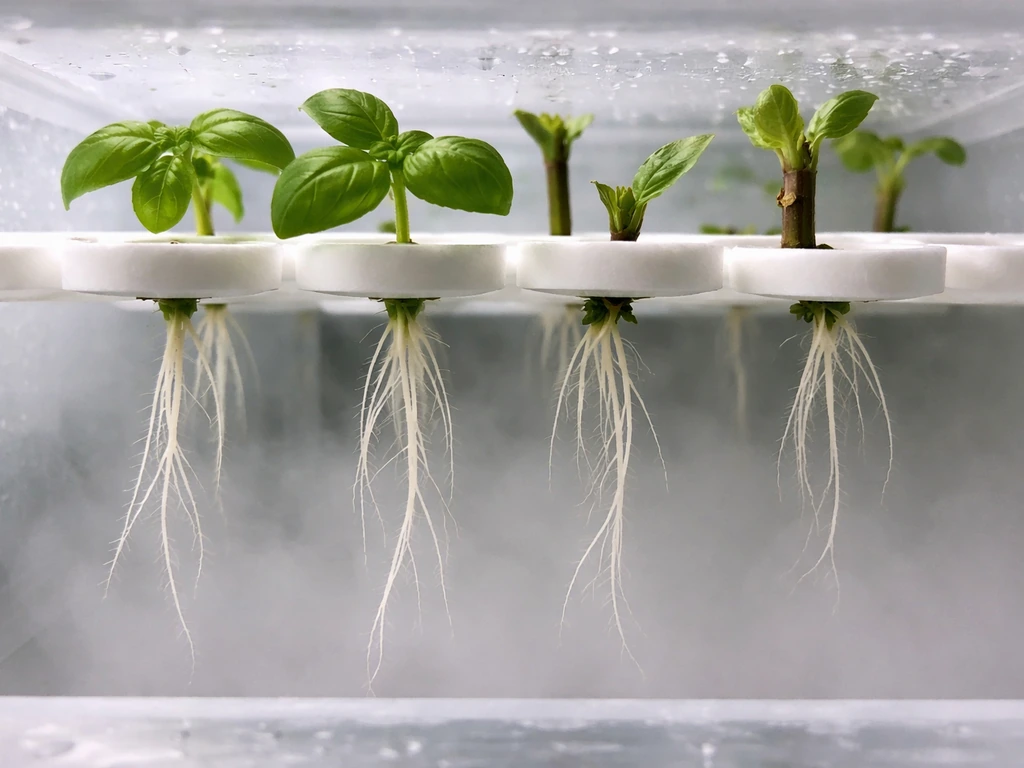
This is arguably where aeroponics outperforms every other method. Aeroponic cloners and propagators produce roots faster than rockwool-in-a-tray setups, and the roots that form in mist conditions are dense, white, and well-adapted to hydroponic transplant. The reason is simple: the mist delivers oxygen and moisture simultaneously at the root initiation sites, which is exactly the environment a cutting needs.
For cuttings, the key variables are humidity and misting interval. Clone chambers should start at very high humidity, often 90–99% RH in the first few days, then gradually vented down toward 60–70% RH as roots emerge. If humidity drops too early or misting intervals are too long, cuttings will wilt before roots can form. Keep your dome or lid on during the first 5–7 days and resist the urge to open it constantly. Light intensity should be low, around 100–150 µmol/m²/s or a simple 6500K T5 fixture, because cuttings without root systems cannot handle high transpiration demand.
Sanitation is non-negotiable in clone chambers. Pathogens spread fast in warm, humid mist environments. Clean your sprayer heads by soaking them in 5% acetic acid (plain white vinegar) or a dilute bleach solution between runs. Biofilm buildup inside nozzles is one of the most common causes of uneven misting, which shows up as cuttings on one side of the chamber rooting fine while others on the opposite side wilt. A clean nozzle is a productive nozzle.
For seedlings started from seed rather than cuttings, the same principles apply: dilute your nutrient solution to EC 0.5 dS/m until the first true leaves appear, keep humidity elevated, and use a gentle misting interval (every 3–5 minutes for most propagator setups). Once roots are visible through the net cup, you can start dialing nutrients up toward your crop-appropriate target range.
What actually determines what you can grow
System type and root chamber size
Not all aeroponic systems are built for the same crops. A compact vertical tower (the kind sold for lettuce walls and herb gardens) has shallow chambers and close plant spacing, which suits leafy greens perfectly but will frustrate you if you try to grow indeterminate tomatoes or root crops in it. A horizontal bucket-style or trough aeroponic system gives you more root depth and supports larger plants. Match the crop to the system before you buy seeds.
Nozzle pattern and misting schedule
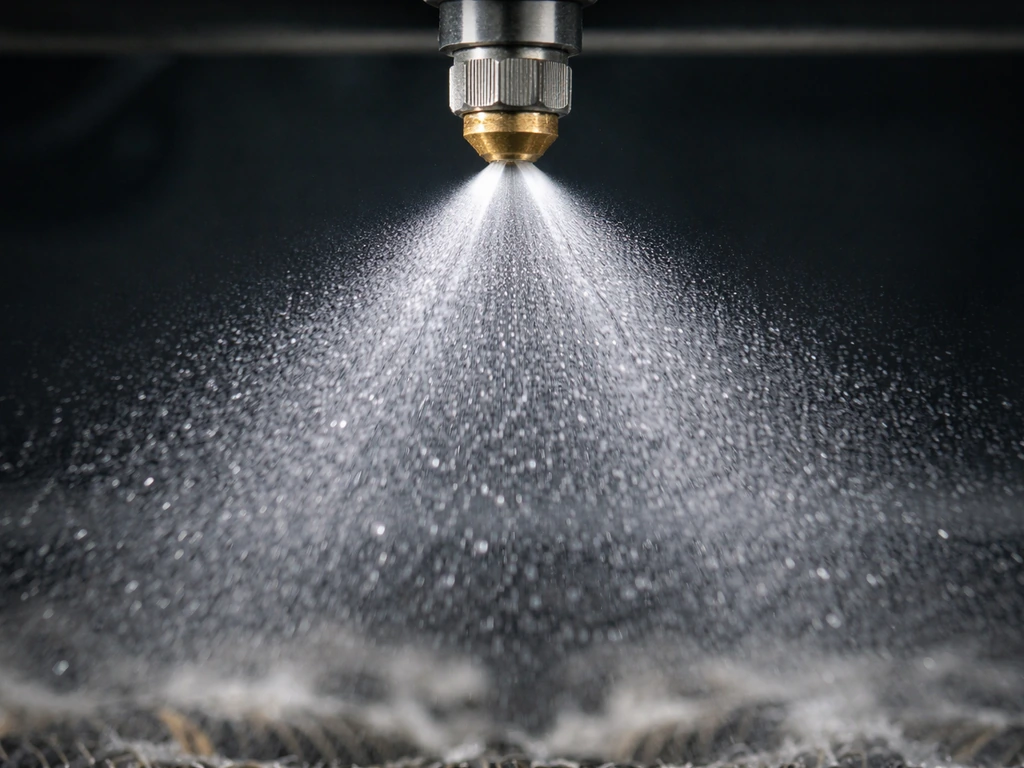
Full-cone spray nozzles are the standard recommendation for most aeroponic crops because they distribute mist evenly across the root zone. Flat-fan or hollow-cone patterns work for specific setups but can leave dry zones in a dense root mass. Misting schedules vary by crop and system: leafy greens typically do well with 30-second mist cycles every 3–5 minutes during lights-on, while heavier root crops need longer coverage. Adjust based on what you see: if roots look damp and white, your schedule is working. If they look dry or start to brown at the tips, increase misting frequency before adjusting anything else.
pH and EC targets by crop stage
pH and EC are your two most important dials. Keep solution pH at 5.5–6.5 for virtually all aeroponic crops, with most performing best at the lower end of that range (5.5–6.0). EC should scale with crop stage and plant type: start at 0.5 dS/m for seedlings, move to 0.8–1.2 for leafy greens at full growth, and step up to 1.2–1.8 for fruiting and flowering plants. Check pH daily if your system is new or unstable; once things are dialed in, daily spot checks and weekly full water changes are a reasonable rhythm.
Temperature, humidity, and light
Root chamber temperature should stay between 65–78°F (18–25°C). Above that range, dissolved oxygen in your solution drops, beneficial bacteria bloom faster, and root disease pressure climbs. Air temperature for the canopy follows standard crop-specific guidance, but 65–78°F works well for most aeroponic crops as a baseline. Root chamber relative humidity ideally sits at 65–75% during production. Lighting needs scale with the crop: leafy greens are light-efficient and don't need high DLI, while fruiting crops and cannabis need substantially more.
Common limits, what goes wrong, and picking your first crop
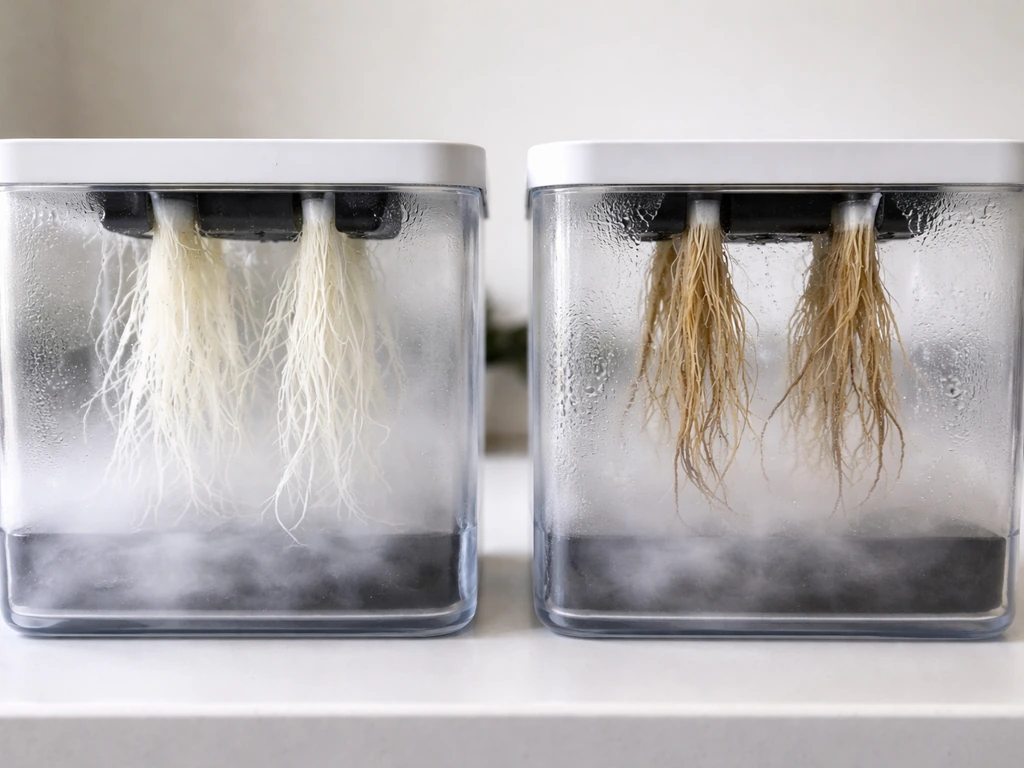
The biggest recurring problems in aeroponics are not nutrient problems, they are engineering problems. Root browning, wilting, and stunted growth most often trace back to four things: clogged nozzles from unfiltered water and mineral buildup, inadequate misting coverage creating dry zones in the root mass, poor sanitation allowing biofilm and pathogens to establish, and pump or power failures leaving roots exposed to dry air. A Reddit aeroponics discussion about mister orientation warns that placing misters in a way that creates dead zones near the lid can be risky for young clones inadequate misting coverage creating dry zones in the root mass. The critical thing to understand about aeroponics is that there is no standing reservoir of water around the roots. If the mist stops, roots begin to dry out within minutes. A pump failure at 2 a.m. can wipe out a week of growth by morning. For this reason, a battery backup, a pump alarm, or at minimum a manual check schedule is not optional.
Filtration is your first line of defense against clogs. Use filtered or RO water, and pre-filter your nutrient solution before it reaches your pump and nozzles. Clean your nozzles every 2–3 weeks even when everything looks fine, not just when you see a problem. Mineral scale builds gradually and you won't notice reduced flow until it's already affecting your root zone.
For choosing your first crop, the answer is almost always lettuce or basil. Both are forgiving while you tune your system, both give you visible results fast enough to tell you if something is off, and both have well-documented parameter targets (pH 5.5–6.5, EC 0.8–1.2) that are easy to dial in with basic meters. Once you've run two or three successful cycles and your misting schedule, pH stability, and filtration are consistent, you're ready to step up to strawberries, cannabis, or cucumbers.
One last thing worth knowing: aeroponics does not change the fundamental biology of your crops, it just changes how you deliver water and nutrients. If you already understand hydroponic nutrient management and root-zone health, transitioning to aeroponics is mostly an engineering and scheduling exercise. If you are brand new to soilless growing, it is worth reading up on the wider universe of what is possible, because the crop list for aeroponics overlaps heavily with the full range of what you can grow in any soilless system. Start simple, learn your system, then expand your crop list with confidence.
FAQ
What can you grow with aeroponics if your chamber is shallow?
Yes, but only within limits of your equipment. Choose crops with fibrous, fast-regenerating roots (lettuce, most leafy greens, basil, cilantro). If you try a deep-rooted or heavy-fruiting crop without enough chamber depth, mist distribution becomes uneven and you will see dry, browned root zones.
Can I put already-established plants into an aeroponic system right away?
Start with cuttings or seeds, not transplanting big rooted plants. Aeroponics depends on mist contacting the root initiation zone, so large existing root balls often get stressed until new roots form, which can delay recovery by 1 to 3 weeks.
How do I know my aeroponics setup will handle a specific crop before growing it?
Use a short “test run” with your target crop before committing seed lots. Run your full mist cycle, confirm nozzle coverage (roots should look uniformly damp and white), then verify pH stability over 24 hours and EC drift during lights-on to catch early filtration or dosing problems.
What should I troubleshoot first if my roots are browning or plants are wilting?
If you notice wilting or browning in a localized area, check for dry shadows caused by nozzle coverage or spray pattern mismatch before changing nutrients. In aeroponics, misting failures show up fast, so adjust frequency and confirm uniform coverage first, then re-check pH and EC.
Do fruiting crops require a “more powerful” aeroponics system than lettuce?
Most systems can handle leafy greens, but a practical indicator is whether your pump cycle can keep roots uniformly damp. If your output cannot maintain a consistent wet look across the entire root zone for 30-second intervals (without gaps), fruiting crops are risky until you upgrade nozzles, pressure, or chamber spacing.
Why does my plant health seem uneven across the chamber?
Nozzle clogs can look like “nutrient issues.” Mineral buildup or biofilm often causes uneven misting, which leads to stunted growth on one side and delayed recovery. That is why cleaning on a schedule (every 2 to 3 weeks) can prevent problems before you see dramatic symptoms.
What EC mistake do beginners make when starting aeroponics from seed?
Many growers prefer slightly lower EC for seedlings (around 0.5 dS/m) to avoid root tip damage, then ramp after true leaves appear. A common mistake is copying adult plant EC targets too early, especially under high humidity where plants look healthy while roots are actually stalling.
Can I propagate cuttings in aeroponics without a humidity dome?
Yes, but humidity control matters more than people expect. If RH drops too early, cuttings wilt before roots form, even if misting continues. Keep the dome/lid closed early, then vent gradually, and prioritize stable RH (not frequent lid checking).
How quickly can an aeroponics failure ruin a crop?
A pump can fail and still “run” intermittently, producing weak mist or short cycles that dry roots too quickly. Add a pump alarm or at least a routine manual check during lights-on, because root drying can start within minutes of reduced mist output.
Do I need to adjust pH every day in aeroponics, or only when it drifts?
Start at the lower end of the pH band for most leafy crops, and confirm with daily meter checks when your system is new or changing filters. If pH swings are frequent, do not chase readings with large adjustments, instead stabilize your source water, filtration, and dosing method first.
What happens if the root chamber runs too warm or too cool?
Root zone temperature is a major edge case for aeroponics because there is no reservoir buffering temperature changes. If the root chamber creeps above the 65 to 78°F range, dissolved oxygen decreases and disease pressure increases, so use insulation or a small controller if your space is variable.
Is strawberries-in-aeroponics easy, and what support do I need?
Yes, but support is part of the “crop feasibility” decision. Strawberries need trellis or netting plan before flowering because fruit adds weight quickly and can contact wet surfaces, increasing rot risk. Plan support geometry around your plant spacing in the tower or bucket system.