If you searched 'slow grow flower co' hoping to find a seed brand, strain catalog, or grower product line, the short version is: Slow Grow Flower Co is actually a small urban micro flower farm and botanical art studio based in Palm Beach on the Gold Coast in Queensland, Australia (slowgrowflowerco.com.au). It is not a seed bank, fertilizer brand, or cannabis cultivar line. That said, if you landed here because your flowering plant is genuinely growing too slowly and you need to fix it today, you are in exactly the right place. This guide covers how to identify whether your slow growth is a genetics issue, an environment issue, or a care issue, and then walks you through concrete soil and hydroponic grow plans to get your plant back on track.
Slow Grow Flower Co Guide: Diagnose Slow Growth Fast
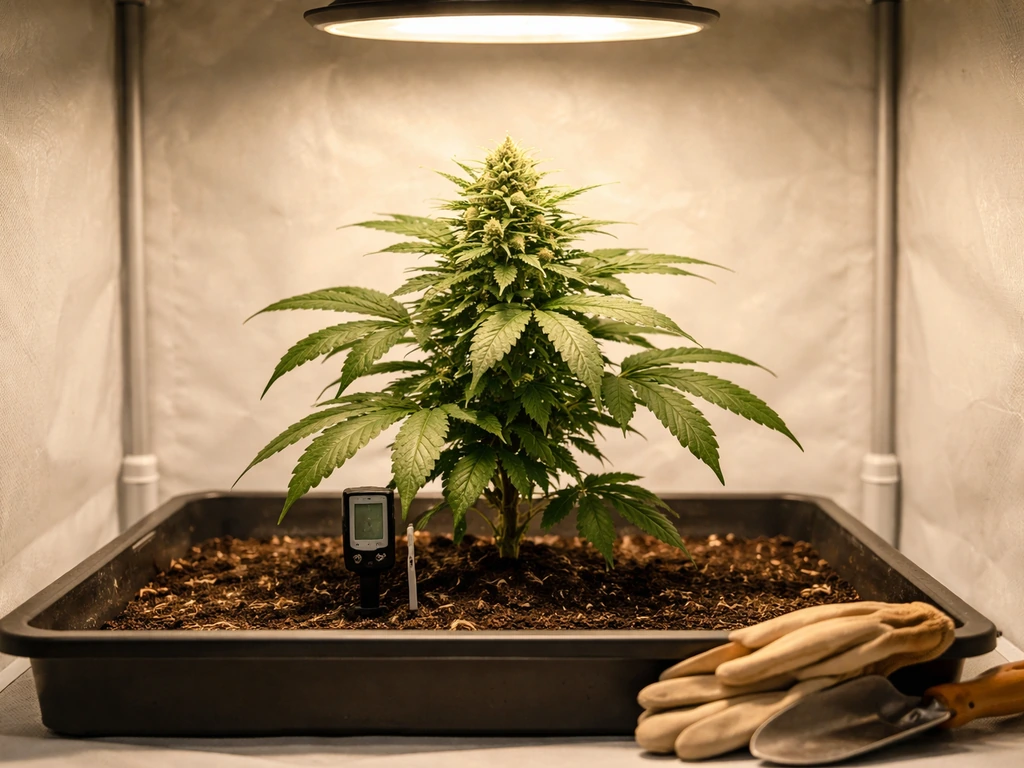
What 'Slow Grow Flower Co' Actually Is (And What You Should Confirm First)
Slow Grow Flower Co is a boutique Australian business, not a commercial seed house or nutrient company. They grow and harvest freshly cut local flowers and foliage from their Palm Beach, QLD location and pair that with botanical art. If you were hoping to buy seeds, clones, or a specific slow-flowering cultivar from them, you will want to contact them directly through their site or Instagram (@slowgrowflowerco) to check what they actually sell or supply.
Before you do anything else on the growing side, answer these four questions because they change everything about your approach:
- What is the exact variety or cultivar you are growing? (Common name, breeder name, or strain name if applicable)
- Is it a seed-grown plant or a clone/cutting, and how old is it right now?
- What is its expected flowering time and natural growth habit, slow or vigorous?
- Are you growing indoors or outdoors, in soil or a hydroponic system?
Some plants are genuinely slow growers by genetics: certain heirloom flowers, long-season varieties, and some cannabis cultivars with a longer vegetative period or extended flowering window. If your plant is supposed to be slow, the job is to support that pace without stalling it further. If it is supposed to be fast and it is crawling, something in your environment or care routine is the bottleneck.
Diagnose the Problem in the First 30 Minutes
You do not need lab equipment to figure out why a plant is growing slowly. Run through these four checks in order. Most slow-growth causes reveal themselves within half an hour if you are looking at the right things.
Light: intensity, spectrum, and distance
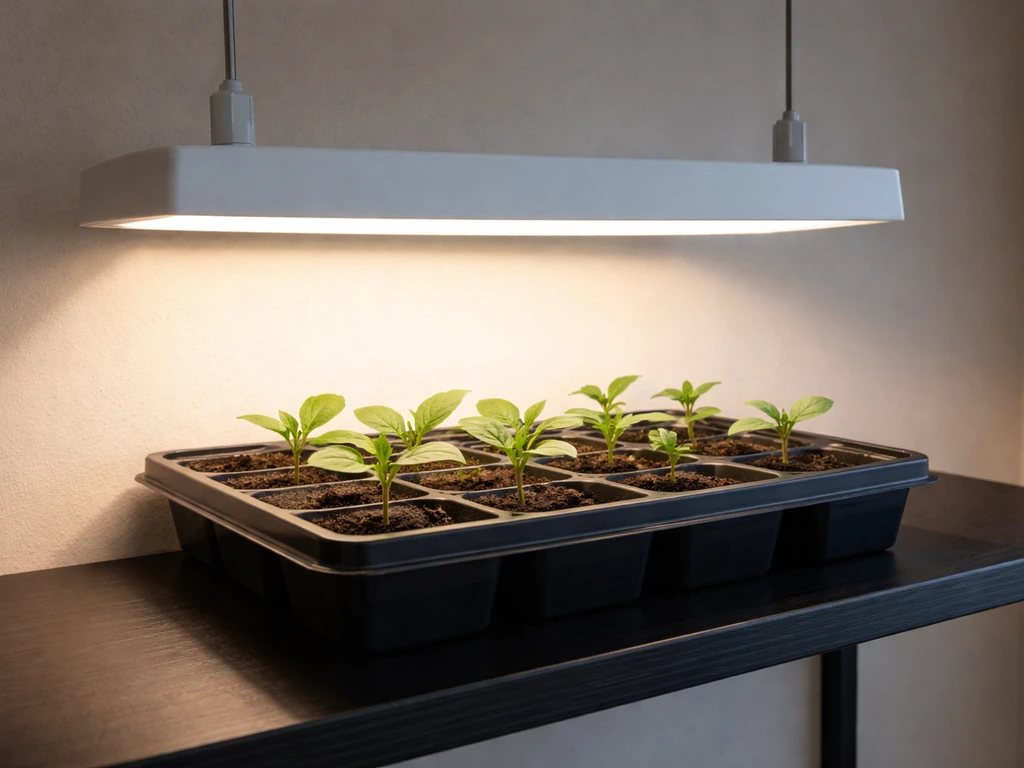
Low or incorrect light is the single most common cause of slow growth indoors. A seedling or young vegetative plant needs at least 200 to 400 PPFD (micromoles per square metre per second) at canopy level. Flowering plants want 600 to 900 PPFD or more. If you do not have a PAR meter, hold your hand flat at canopy height for 30 seconds. If you barely feel warmth from the light source, it is almost certainly undersized or positioned too far away. Also check your light spectrum: blue-dominant light (5000K and above, or the veg channel on a full-spectrum LED) drives vegetative growth, while red-dominant light (2700K to 3000K range, or the bloom channel) triggers and supports flowering. Running the wrong spectrum for the stage will visibly stall growth.
Water: too much is usually the culprit
Pick up the pot. If it feels heavy and the top two centimetres of medium are still damp, you are overwatering. Roots that sit in waterlogged medium become oxygen-starved and essentially stop growing, which slows everything above ground. Let the medium dry to the point where the pot feels noticeably lighter before watering again. For seedlings, that drying cycle might take two to four days. For larger plants in a five-litre pot, it might be one to two days.
Roots: what they look like and how to check
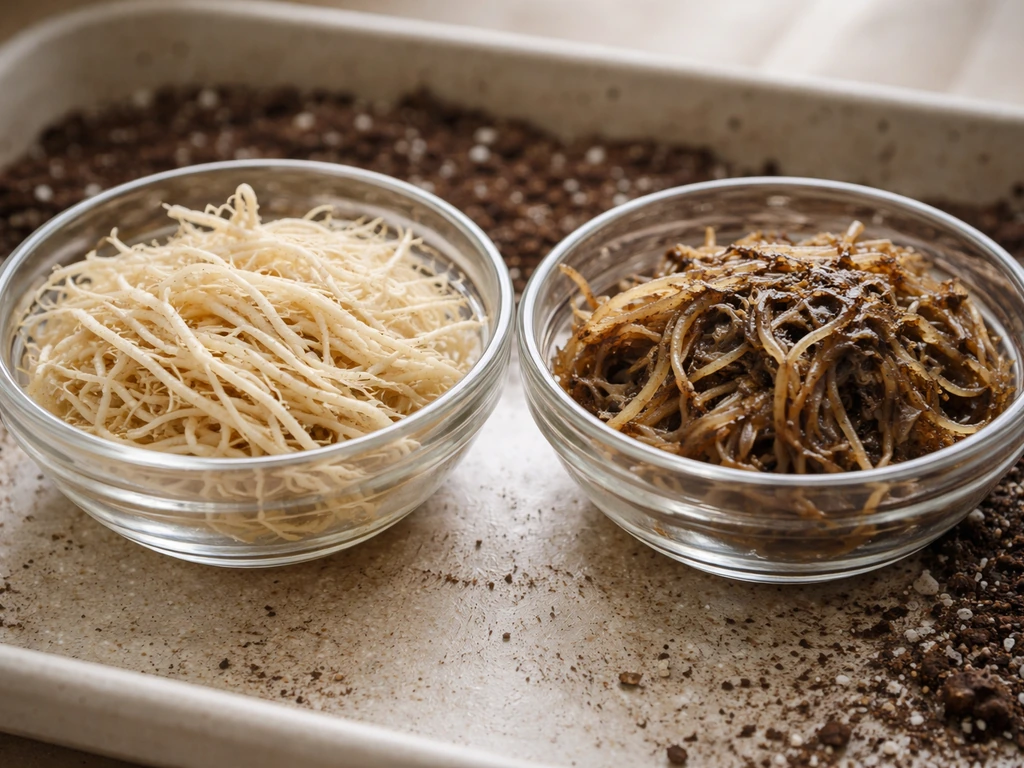
Gently tip the plant out of its pot (or check the drain holes). Healthy roots are white to off-white and firm. Brown, slimy, or musty-smelling roots indicate root rot, usually caused by overwatering or a pythium infection. Roots that are densely circling the bottom of the pot with no room to expand mean the plant is root-bound and has hit a hard growth ceiling. Either repot up by 30 to 50 percent in container volume, or treat root rot before anything else.
Environment: temperature and VPD
Most flowering plants thrive between 20°C and 28°C during the day with a 4°C to 6°C night drop. Below 15°C, most plants slow their metabolism significantly, and above 32°C, photosynthesis efficiency drops and plants close their stomata. Vapour pressure deficit (VPD) matters too: if your room is too humid (above 70 percent relative humidity in flower) or too dry (below 40 percent in veg), gas exchange and nutrient uptake both suffer. Seedlings and clones prefer 65 to 75 percent RH. Flowering plants do best at 45 to 55 percent RH. A cheap digital thermometer and hygrometer combo (under $20 at most hardware stores) tells you in seconds whether your environment is in range.
Soil Grow Plan for Slow-Growing Flowering Plants
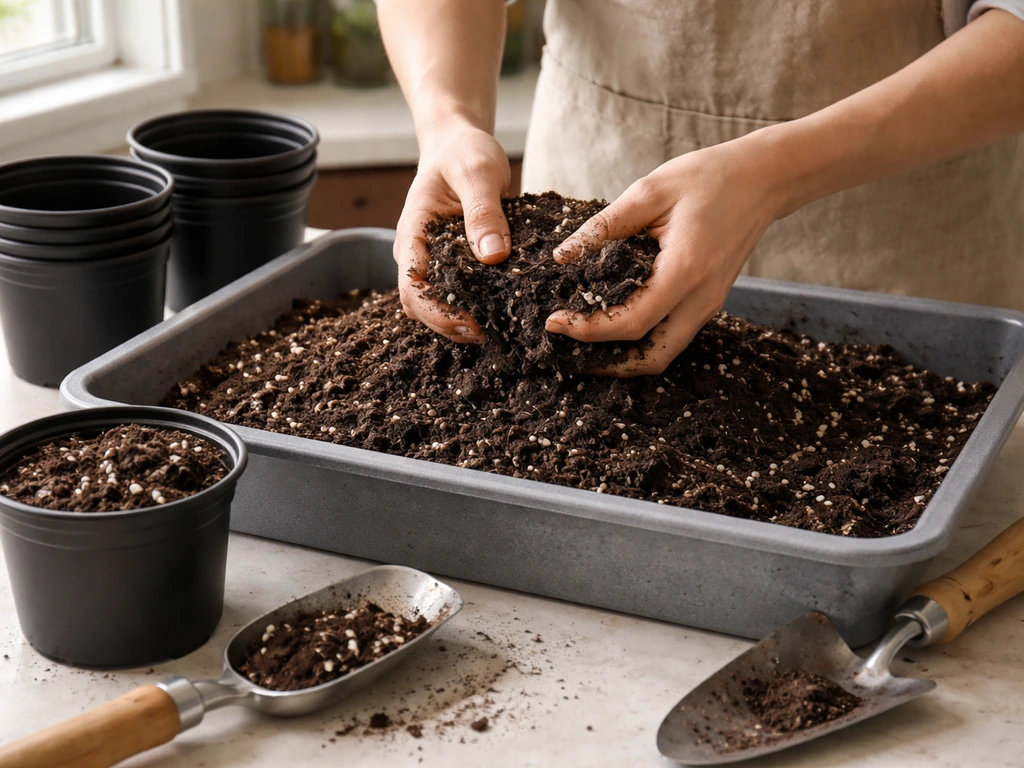
Soil is more forgiving for slow growers because it buffers pH swings and holds nutrients longer, but it also makes mistakes easier to hide until they become serious. Here is a practical soil setup built for consistency.
Medium choice and pot sizing
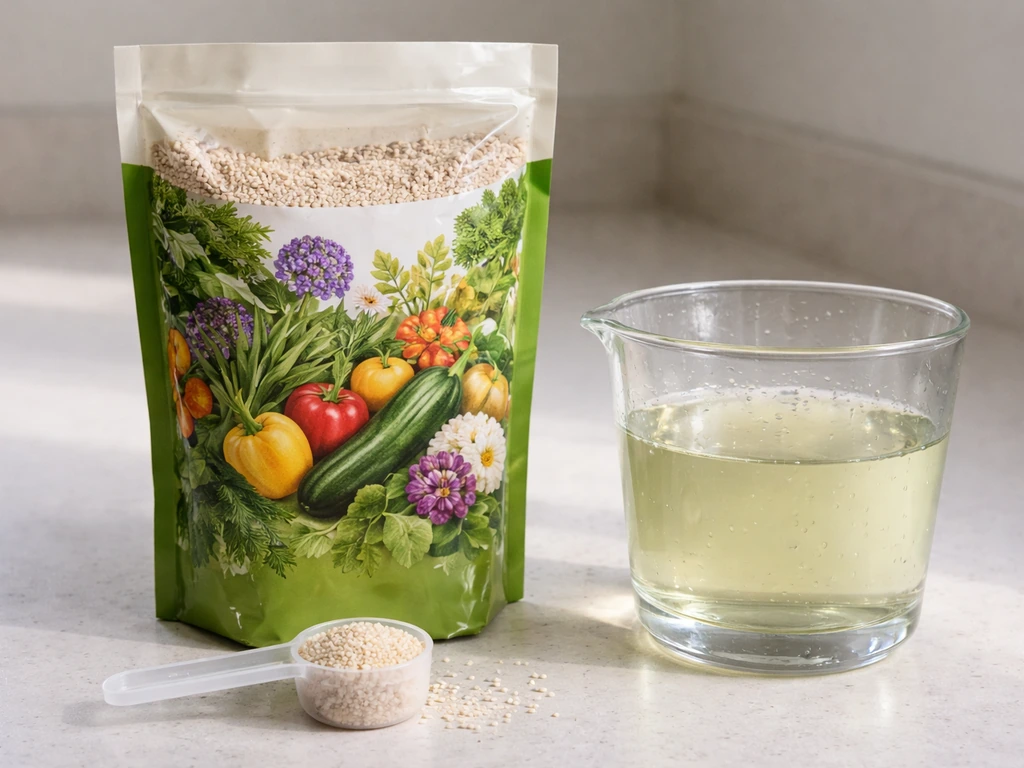
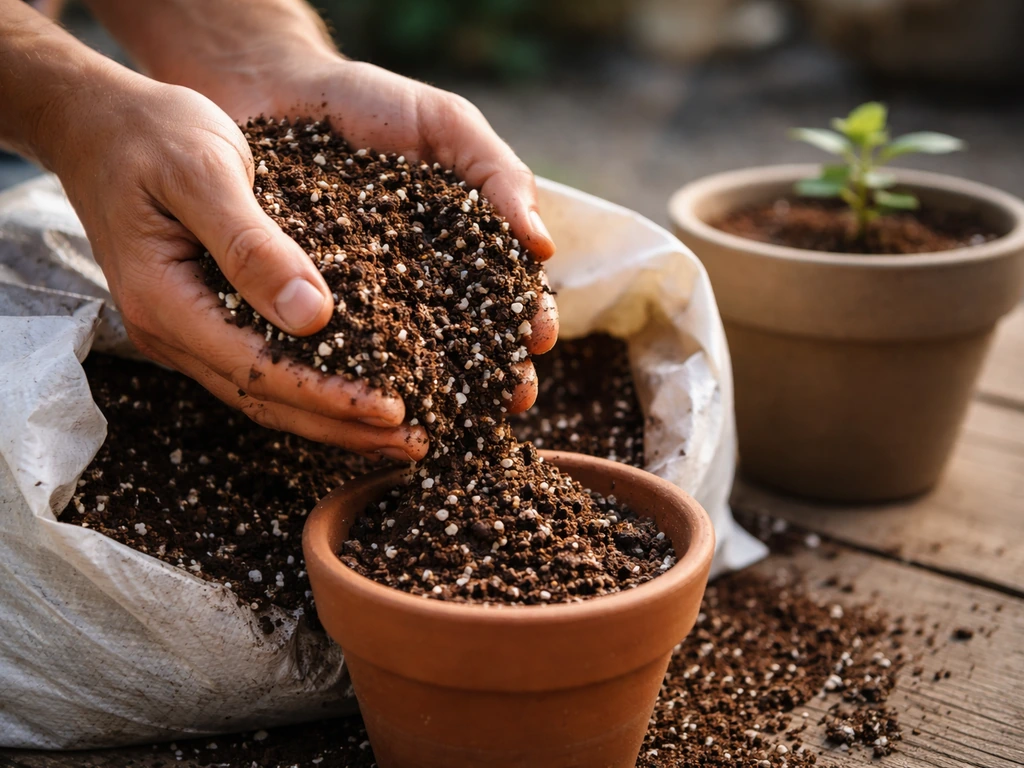
Use a well-aerated, slightly amended potting mix. For many growers, choosing a grow better seed raising mix with good aeration and the right moisture balance helps seedlings establish faster before you increase feeding well-aerated, slightly amended potting mix. A good organic potting mix with perlite added at a 20 to 30 percent ratio gives you the drainage and aeration that slow growers need to avoid root stagnation. Avoid dense, cheap potting soils that compact and hold too much moisture. For pot sizing, start seedlings in 500ml to 1 litre containers, transplant to 3 to 5 litres once the plant fills the container with roots (usually when you see roots at the drain holes), and move to 10 to 15 litres for the flowering stage. Going too large too early can lead to overwatering problems because the roots cannot take up water fast enough from a large volume of wet medium.
Watering schedule and pH
Water to roughly 20 percent runoff to flush any salt buildup from the bottom of the pot, then wait until the top few centimetres of soil dry out before watering again. Target a soil pH of 6.0 to 6.8 for the widest nutrient availability window. If you are using tap water, test it. Many municipal supplies in Australia come in above 7.0, which will gradually lock out iron, manganese, and zinc over weeks of watering. A simple pH pen and a pH down solution (phosphoric or citric acid based) is a straightforward fix. Products like a slow grow fertilizer designed for flowering plants can simplify nutrient management considerably.
Nutrient strategy in soil
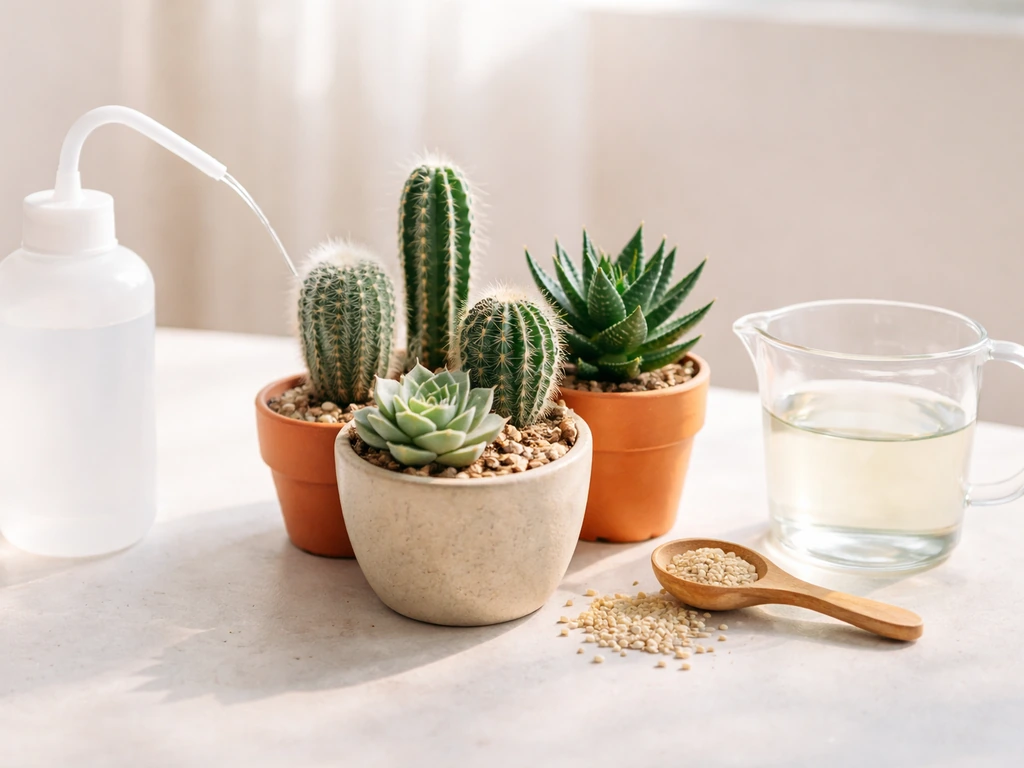
For veg, use a balanced NPK fertilizer with slightly higher nitrogen (something like 3-1-2 or 4-2-3 ratio). Cactus and succulent fertilizer works differently, so use a cactus-focused formula only when you are growing those plants. In the transition week before flip and the first two weeks of flower, taper nitrogen down and increase phosphorus and potassium. By mid-flower, you want very low nitrogen and elevated P and K. An all-purpose plant food can cover early veg, but you will want a dedicated bloom booster for the flowering stage. If you are using a pre-amended organic potting mix, you may not need to add nutrients for the first three to four weeks at all. Watch the plant: pale green or yellowing new growth is a nitrogen deficiency signal; purple stems or leaves in a cold room is usually phosphorus uptake impaired by low temperature, not a deficiency itself.
Hydroponic Grow Plan for Slow-Growing Flowering Plants
Hydroponics removes the soil buffer but gives you much more direct control over root zone conditions, which is a powerful advantage for troubleshooting slow growers. When something goes wrong, you can correct it in hours rather than days.
System choice for slower growers
Deep water culture (DWC) and drain-to-waste systems (like coco or rockwool slabs with drip irrigation) are the most practical choices for flowering plants with a slower pace. DWC is aggressive and fast when dialled in, which suits you if you are trying to push a slow grower forward. Coco coir systems offer a middle ground: they behave a bit like soil in terms of ease but feed like hydroponics in terms of nutrient precision. Avoid nutrient film technique (NFT) for slow growers or beginners, as it has a very small buffer and roots dry out quickly if anything goes wrong.
pH, EC, and root zone management
In hydroponics, target a pH of 5.5 to 6.2 (5.8 is the sweet spot for most flowering plants). EC (electrical conductivity, which measures nutrient concentration) should run 0.8 to 1.2 mS/cm for seedlings, 1.4 to 2.0 mS/cm in veg, and 1.8 to 2.4 mS/cm in mid-flower. If EC climbs above your target between feeds, the plant is taking up more water than nutrients, which often means it is too warm or too dry. Top up with plain pH-adjusted water. Keep reservoir temperature between 18°C and 22°C to prevent pythium (root rot), and run an air stone in DWC for continuous oxygenation. Check roots weekly. White and slightly furry is healthy. Brown slime means something is wrong, usually temperature or contamination.
Root health specifics
In hydro, root health is everything. Add a beneficial bacteria or mycorrhizal inoculant at transplant to colonise the root zone and outcompete pathogens. Change your reservoir completely every seven to ten days for DWC to prevent salt and pathogen buildup. If you see slimy roots, remove the plant, rinse roots gently with 3 percent hydrogen peroxide solution diluted 1:10 with water, clean the reservoir thoroughly, and refill with fresh nutrients. Acting fast at the first sign of root rot recovers most plants within a week.
Nutrient and Light Strategy Across Every Stage
Here is the stage-by-stage breakdown for a slow-growing flowering plant, whether you are in soil or hydro.
| Stage | Light Schedule | Light Intensity (PPFD) | Key Nutrients | pH Target |
|---|---|---|---|---|
| Germination / seedling (Week 1-2) | 18/6 hours light/dark | 100-250 | Minimal, use seedling-specific mix or very dilute feed at 25% strength | Soil: 6.0-6.5 | Hydro: 5.8-6.0 |
| Early veg (Week 3-5) | 18/6 | 300-500 | Higher N, balanced P and K (NPK ~3-1-2) | Soil: 6.0-6.8 | Hydro: 5.6-6.0 |
| Late veg / transition (Week 6-8) | 18/6 then flip to 12/12 | 500-700 | Taper N, increase P and K, add a transition/bloom booster | Soil: 6.0-6.8 | Hydro: 5.8-6.2 |
| Early flower (Week 1-3 of flower) | 12/12 | 600-800 | Low N, elevated P and K, consider a bloom base nutrient | Soil: 6.0-6.8 | Hydro: 5.8-6.2 |
| Mid to late flower (Week 4 onwards) | 12/12 | 700-900 | Very low N, high P and K, add a PK booster in mid-flower | Soil: 6.2-6.8 | Hydro: 5.8-6.2 |
| Flush / final week | 12/12 | 700-900 | Plain pH-adjusted water only (or very light feed) | Soil: 6.0-6.5 | Hydro: 5.8-6.0 |
For light, the single best upgrade you can make for a slow grower is ensuring you are hitting target PPFD at canopy level. A quantum board LED with a dimmer gives you the flexibility to ramp up intensity as the plant grows without burning it. Keep lights at the manufacturer's recommended distance and use a PAR meter or a free PAR estimation app (with some caveats on accuracy) to confirm you are hitting the right range. Do not skip a gradual light intensity ramp-up with new seedlings: start at 50 percent power and increase 10 to 15 percent every three to four days.
Common Causes of Stalling and How to Fix Them Fast
Nutrient lockout and toxicity
Lockout happens when pH is out of range and the plant physically cannot absorb nutrients that are present in the medium. The fix is almost always a pH correction, not adding more nutrients. In soil, flush with two to three times the pot volume of pH-adjusted water (pH 6.5), let it drain, and resume normal feeding. In hydro, drain and refill the reservoir at the correct pH. If you have been feeding heavily and see dark green, clawing leaves with downward-curling tips, that is nitrogen toxicity. Flush and feed at 50 percent strength for the next two waterings.
Deficiencies
Yellowing starting from the bottom of the plant and moving upward is classic mobile nutrient deficiency, usually nitrogen or magnesium. Yellowing starting from new growth at the top is an immobile nutrient issue like iron, calcium, or manganese. Before adding any supplement, check your pH first. Nine times out of ten, correcting pH resolves a deficiency faster than adding the deficient nutrient at the wrong pH.
Temperature and VPD issues
If your grow room is below 18°C, nutrient uptake slows down dramatically and the plant essentially goes into a low-power mode. Add a small ceramic heat emitter or adjust your light schedule so the lights-on period falls during the coldest part of the day. If temperatures spike above 30°C, add intake ventilation, a clip fan for canopy airflow, and consider a small air conditioner or portable cooler for the space.
Transplant shock
After transplanting, most plants pause visible growth for three to seven days while roots establish. This is normal. To minimise shock: water in with a dilute mycorrhizal or seaweed solution, keep humidity higher (65 to 75 percent) for the first 48 hours after transplant, and hold off on any fertilizer for three to five days. Do not transplant during or just before the light-off period, it stresses the plant more.
Pests and root rot
Fungus gnats are the most common soil pest to cause slow growth. Their larvae eat root hairs, which directly slows nutrient uptake. Symptoms look like a mild nutrient deficiency combined with slow growth. Let the top three centimetres of soil dry out completely between waterings (gnat larvae need moisture to survive), and use yellow sticky traps to monitor adult populations. For root rot in hydro or soil, treat with a hydrogen peroxide drench (3ml of 3 percent H2O2 per litre of water) as an emergency measure, and follow up with beneficial bacteria to rebuild the root zone.
Soil vs. Hydro: Which One Suits a Slow Grower Better?
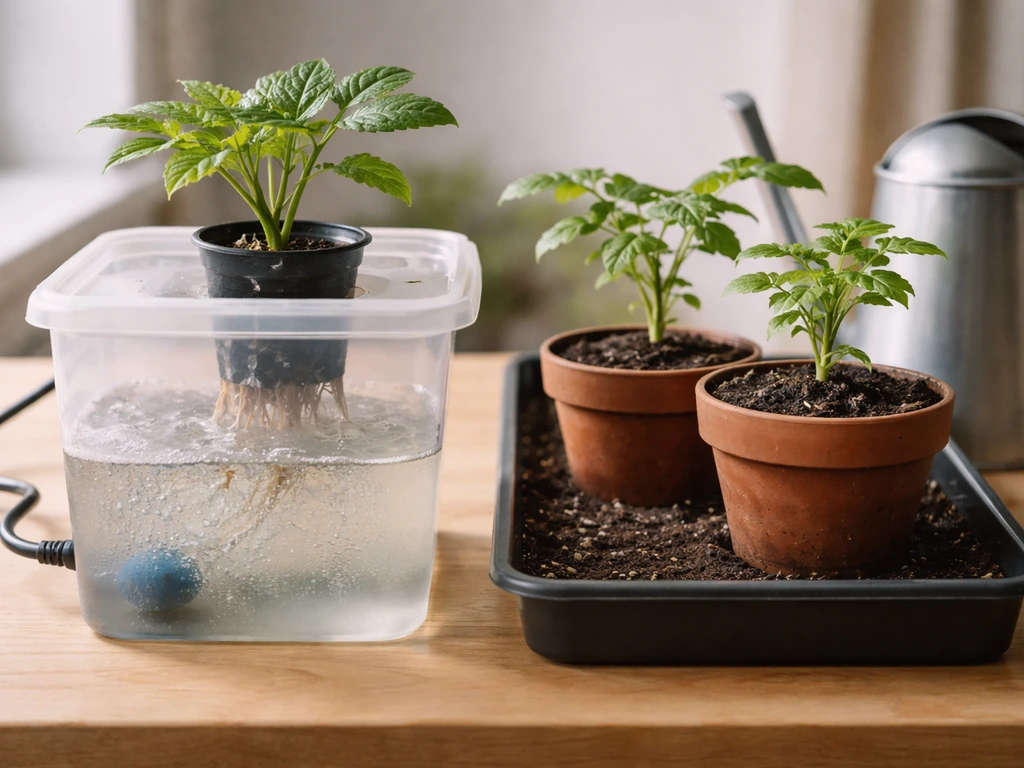
| Factor | Soil | Hydroponics (DWC or Coco) |
|---|---|---|
| Learning curve | Lower, more forgiving | Steeper, requires active monitoring |
| Growth speed | Moderate, buffered by organic matter | Faster when dialled in, can push a slow grower |
| Nutrient control | Less precise, soil buffers inputs | Very precise, adjustable same day |
| Root health visibility | Hard to see without removing plant | Visible in reservoir or coco/rockwool |
| Overwatering risk | High if drainage is poor | Lower in DWC, manageable in coco |
| Cost to start | Low to moderate | Moderate to high for initial setup |
| Best for slow growers? | Yes, if environment is dialled in | Yes, if you want faster correction and more control |
If you are a beginner working with a slow-growing flowering variety and you want the most reliable outcome, start in a quality organic potting mix with added perlite. Once you understand how your specific cultivar behaves through one full cycle, moving to a coco or DWC system will let you push growth rates significantly. Pair either approach with the right slow grow fertilizer and a solid monitoring routine and you will see consistent results. If you are looking for grow better organic fertiliser options from Bunnings, choose a slow-release organic formula suited to the flowering stage.
Week-by-Week Expectations and Your Monitoring Checklist
Here is what a realistic slow-growing flowering plant looks like from seed to flower, and what you should be checking at each point. Times assume a moderately slow cultivar with a 10 to 12 week total cycle from sprout to harvest.
| Week | Expected Progress | What to Check |
|---|---|---|
| Week 1-2 | Germination, cotyledons visible, first true leaves emerging | Soil moisture, temperature 22-26C, humidity 65-75%, light at 100-200 PPFD |
| Week 3-4 | Second and third node developing, stem thickening | pH of feed water, root check at drain holes, VPD in range |
| Week 5-6 | Bushy vegetative growth, nodes tightening, canopy filling | EC of runoff or reservoir, light intensity at canopy, any pest signs |
| Week 7 (transition) | Stretch begins after light flip, pre-flower sites showing | Switch to bloom nutrients, taper nitrogen, raise P and K |
| Week 8-9 (early flower) | Pistils or petals forming, bud or bloom sites developing | pH daily in hydro, check for cal-mag deficiency, maintain 45-55% RH |
| Week 10-11 (mid flower) | Buds or blooms swelling, fragrance increasing | Monitor EC, watch for lockout, keep temps 22-26C, reduce N to near zero |
| Week 12+ (late flower) | Ripening indicators (colour change, resin, trichome shift) | Flush if needed, maintain airflow to prevent mould, final checks before harvest |
Your weekly prevention checklist
- Check pH of feed water or reservoir every feed (soil) or daily (hydro)
- Weigh or lift pots to gauge moisture before each water (soil only)
- Inspect undersides of leaves for pests at least twice per week
- Measure canopy temperature and humidity morning and evening
- Check roots at drain holes or in reservoir once per week
- Record EC and pH in a simple logbook or phone note to track trends
- Confirm light height and intensity has not drifted as the canopy grows
- Adjust nutrient ratios at each stage transition, not mid-stage unless something is wrong
If X Then Do Y: Quick Troubleshooting Workflow
Use this as your immediate next-steps guide if your plant is stalled right now.
- Plant is not growing at all in week 1-2 after germination: check soil temperature (needs to be above 20C), confirm humidity is above 60%, and make sure the light is not too close (seedling burn looks like bleached or curling cotyledons).
- Plant is growing but very slowly in veg: check PPFD at canopy (likely too low), check pH of your water and runoff, and check whether the pot is too large for the current root system.
- Plant has stopped growing after a recent transplant: give it five to seven days, keep humidity up, and do not fertilize yet. If it is still stalled after ten days, check roots for rot.
- Plant was growing fine then suddenly stalled mid-veg: run a pH check immediately. Check for pest pressure (look under leaves). Lift the pot, if it is heavy and soil is wet, you are overwatering.
- Plant entered flower but buds or blooms are tiny and slow to develop: ensure light is on 12/12 consistently with no light leaks, confirm you have switched to a bloom nutrient ratio, and check that temperatures are not above 30C during lights-on.
- Leaves are yellowing despite feeding: correct pH first before adding any more nutrients. Flush and recheck. If yellowing continues after pH correction, identify whether it starts from old growth (mobile deficiency, likely N or Mg) or new growth (immobile deficiency, likely Ca, Fe, or Mn).
- Roots are brown or slimy in hydro: emergency hydrogen peroxide rinse, reservoir clean and refill, drop reservoir temperature below 22C, add an airstone if not already running.
- Plant has visible bugs or webs: identify the pest (fungus gnats, spider mites, aphids), treat with appropriate organic spray (neem oil, spinosad, or insecticidal soap depending on pest), and fix the underlying condition (usually moisture or heat) that allowed them to establish.
Slow plant growth almost always comes back to one of four things: not enough light, a pH problem blocking nutrient uptake, a root zone issue (overwatering or root rot), or an environment that is too cold or too humid. Fix those four things systematically and most flowering plants recover and hit their expected pace within one to two weeks. If you are working with a genuinely slow-maturing variety, support it with the right growing medium, a well-timed nutrient plan, and consistent environmental conditions, and let genetics do the rest.
FAQ
How can I tell if “slow growth” is actually normal for my plant versus a problem?
Compare growth against the plant’s expected stage, not just overall speed. If new leaves are forming but at a slower pace, that often points to environmental limits (light intensity, temperature, or RH), while complete pauses with drooping, yellowing, or root issues usually signal a root zone or pH/lockout problem. Also check whether growth is evenly slow across new and old tissue, this helps distinguish immobile versus mobile nutrient patterns.
What should I do if my light is bright but my plant still looks stalled?
Re-check canopy PPFD position and heat. Even with a strong light, plants can stall if the fixture is too far, dimming is inconsistent, or the spectrum is mismatched for the stage. If your hand test feels warm but growth is still slow, measure PPFD if possible and verify you are not exceeding target temperatures near the canopy (heat stress can reduce nutrient uptake even when light seems adequate).
Is it better to water more often or less often for a slow grower?
For slow growers, the goal is consistent wet and dry cycles that keep oxygen in the root zone. If you water too frequently, roots stay oxygen starved, and growth slows even if nutrients are correct. If you water too infrequently, plants reduce uptake and look stalled too, so use weight (pot feels lighter) or the top-soil dry check, then water to the planned runoff target instead of guessing by day count.
What’s the fastest way to confirm pH lockout versus a real nutrient deficiency?
First correct pH, then look for change within days. The quickest decision aid is to test the incoming water pH and the medium run-off (soil) or adjust reservoir pH (hydro), because many “deficiency” symptoms improve after pH correction. If you add more fertilizer before fixing pH, symptoms can worsen due to further lockout or salt buildup.
How do I prevent root rot in hydro or in consistently wet soil?
Control reservoir temperature and oxygenation first. In DWC, keep the reservoir in the recommended cool range and run an air stone to maintain dissolved oxygen. In soil, avoid staying wet at the top, use an aerated mix with perlite, and size pots so roots can actively transpire water. If you see early brown slimy roots, act immediately, delayed correction often turns recoverable stress into full rot.
My plant is root-bound, should I repot immediately or wait?
If roots are circling the container and growth has plateaued, repot as soon as possible, but avoid doing it right at the most stressful lighting transition. If you can, repot when temperatures are stable and keep humidity slightly higher for 48 hours to reduce transplant shock. Going up in container size gradually (for example 30 to 50 percent) is usually safer than jumping to a much larger pot at once.
Can I use hydrogen peroxide to fix nutrient problems or just root rot?
Hydrogen peroxide is mainly for emergency root zone sanitizing, not as a general nutrient solution. If you use it for roots, pair it with clean reservoir or medium and then restore biological activity with beneficial bacteria or inoculant. For pH lockout, salt issues, or nutrient imbalances, correcting pH and feed strategy typically fixes the cause faster than peroxide.
What EC or fertilizer strength should I start with if I’m trying to speed up a slow flowering plant?
Start lower and only increase after the plant responds, because pushing EC too early can cause tip problems and salt buildup that looks like stalling. Use your stage targets as guardrails, then adjust based on whether EC rises between feeds (uptake water faster than nutrients) or falls too quickly (nutrients being consumed or the system is too dry or cold). If you are unsure, prioritize pH correctness and stable environment before increasing EC.
How do I know if the issue is humidity versus temperature?
Use both readings, but look at symptoms. If RH is high in flower and airflow is weak, you often see slow growth plus risk of fungal issues, roots can also suffer in saturated conditions. If temperatures drop below the active growth range, plants often slow uniformly and appear “sleepy” without clear nutrient pattern. When either one is out of range, nutrient uptake suffers, but correcting temperature usually improves response more immediately than changing fertilizer.
What’s the safest way to change systems (soil to coco or hydro) when growth has been slow?
Do the change after you have stabilized the current problem, especially light and pH, otherwise you will stack stressors. Plan the transition so you can monitor pH and moisture closely in the new system, then expect a pause as roots adapt. It helps to start with a slightly gentler feeding approach for the first week in coco or hydro, then ramp based on root health and new leaf development.
My symptoms look like nitrogen deficiency, but could it be something else?
Before adding nitrogen, check pH and temperature. Many “nitrogen-like” slow growth issues are actually lockout, because plants cannot absorb what they need even when nitrogen is present. Also check where yellowing starts (older leaves versus new growth) since that pattern points to different nutrients, and pH correction often resolves the issue faster than supplementation.
If I’m dealing with fungus gnats, will fixing watering alone always solve it?
Letting the top portion dry is necessary, but it usually is not sufficient on its own. Use yellow sticky traps to monitor adults, reduce frequency of overly wet cycles, and avoid leaving consistently damp conditions. If larvae pressure is high, consider additional root-safe measures, because heavy gnat infestations can keep chewing root hairs and permanently slow the plant until populations drop.