Cacti and succulents need far less fertilizer than most houseplants, and the biggest mistake growers make is treating them like tomatoes or tropicals. Feed them at roughly 1/4 strength with a low-nitrogen, higher-phosphorus and potassium formula (something like a 2-7-7 or 2-8-8 NPK) only during active growth in spring and summer, water the soil first before applying, and stop completely in fall and winter. Do that, and you'll sidestep 90% of the problems these plants face from fertilizing.
Grow Better Cactus and Succulent Fertilizer: How to Feed Safely

Marcus Holloway
5 May 2026
Why cacti and succulents need a different fertilizer approach
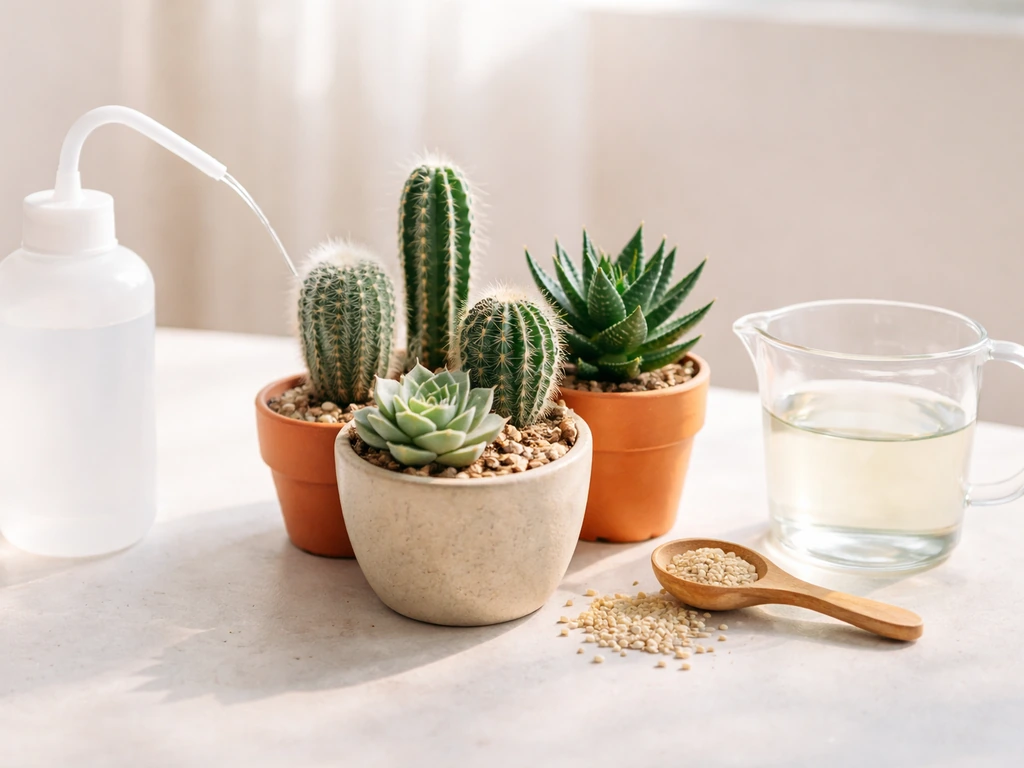
These plants evolved in nutrient-poor soils where over-delivering food is genuinely harmful. UMN Extension describes their nutrient requirements as 'relatively low,' and that's not an understatement. Their cells are built to store water and tolerate stress, not chase rapid growth. Because slow grow plants rely on stored energy and stress tolerance, over-fertilizing can quickly lead to salt buildup and fertilizer burn. When you push heavy feeding, soluble salts accumulate in the growing medium faster than the roots can process them. Once those salts hit a toxic threshold, they start pulling water out of root cells instead of letting water flow in (an osmotic reversal), which is exactly the mechanism behind fertilizer burn. TAMU AgriLife Extension calls this out specifically: excessive soluble salts cause burn and predispose plants to root diseases, which in slow-growing succulents can be fatal before you even notice.
The other timing issue is dormancy. In fall and winter, when light drops and temperatures cool, cacti and succulents dramatically slow their metabolic rate. SDSU Extension is direct about this: don't fertilize during the slower-growth fall and winter period. If you keep feeding when a plant isn't actively growing, nutrients just sit in the medium and build up as salts. The plant isn't drawing them down, so toxicity compounds with every watering cycle.
Choosing the right NPK and trace nutrients
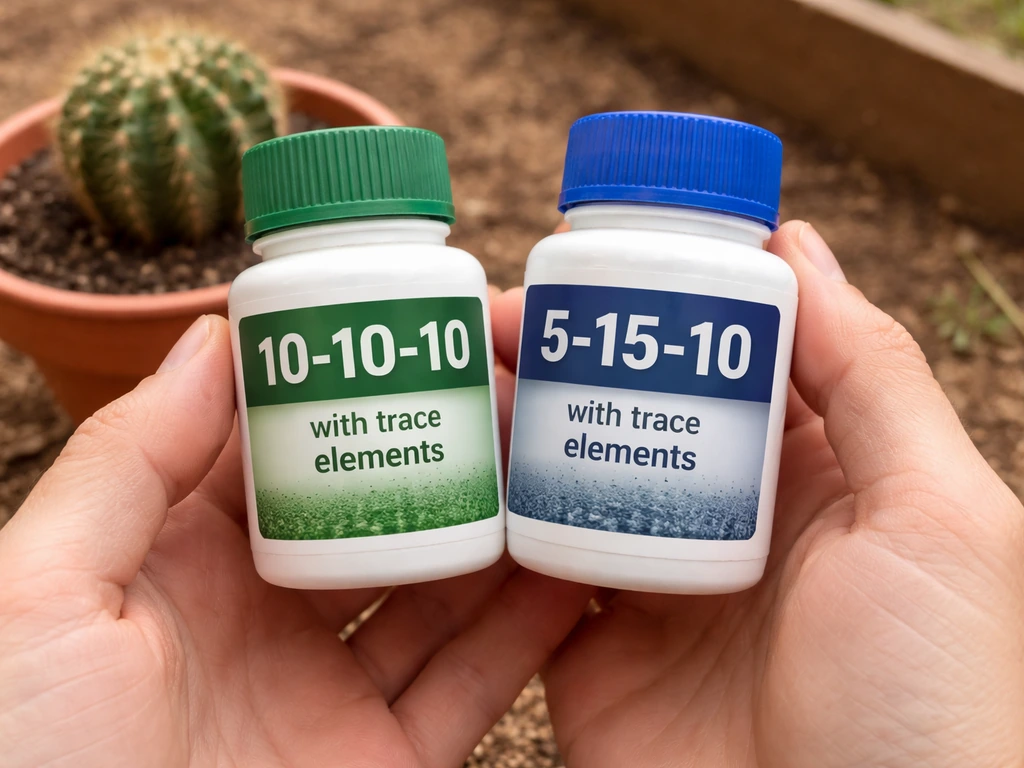
The three numbers on any fertilizer label represent nitrogen (N), phosphate (P2O5), and potash (K2O) as percentages of the product's weight. For cacti and succulents, you want a formula where nitrogen is low and phosphorus plus potassium are higher. Nitrogen drives leafy, green, fast growth. Too much of it on a cactus or succulent produces soft, stretched tissue that's more vulnerable to rot and cold damage. Phosphorus supports root development and flowering, while potassium strengthens cell walls and improves stress tolerance. A 2-7-7 or 2-8-8 ratio is close to ideal for most common succulents and cacti.
Trace elements matter, but you usually don't need to obsess over them unless you're growing in a hydroponic or soilless medium where they aren't naturally present. In standard cactus or succulent potting mix, most trace elements (iron, manganese, zinc, copper, boron, molybdenum) are available in sufficient quantities. When you're growing hydroponically or in an inert medium like perlite or LECA, a complete hydroponic nutrient solution that includes chelated micronutrients becomes essential, since there's no soil mineral reserve to fall back on.
| Nutrient | Role for Cacti/Succulents | Too Much | Too Little |
|---|---|---|---|
| Nitrogen (N) | Cell growth and green coloration | Soft, etiolated growth, salt buildup | Pale color, very slow growth |
| Phosphorus (P) | Root development, flowering | Rare toxicity; locks out micronutrients at very high levels | Poor root system, no blooms |
| Potassium (K) | Cell wall strength, stress tolerance | Can block calcium/magnesium uptake | Weak, limp tissue |
| Calcium/Magnesium | Cell integrity, photosynthesis | Rare in soil; can clog hydro systems | Mushy or bleached leaves |
| Iron/Trace elements | Enzyme function, chlorophyll | Rare unless pH is very low | Yellowing between leaf veins |
Fertilizing schedule: seasons, growth stages, and indoor vs outdoor
The simplest way to think about timing: feed when the plant is actively growing, stop when it isn't. For most cacti and succulents in the Northern Hemisphere, active growth runs from roughly March through September or October, with the peak being late spring through midsummer. UMN Extension recommends feeding cacti just once or twice a year during late spring or summer. Succulents are a bit more flexible and can handle monthly feeding during that same active window, but even then, 'more frequent' means monthly at 1/4 strength, not weekly at full dose.
Indoor plants
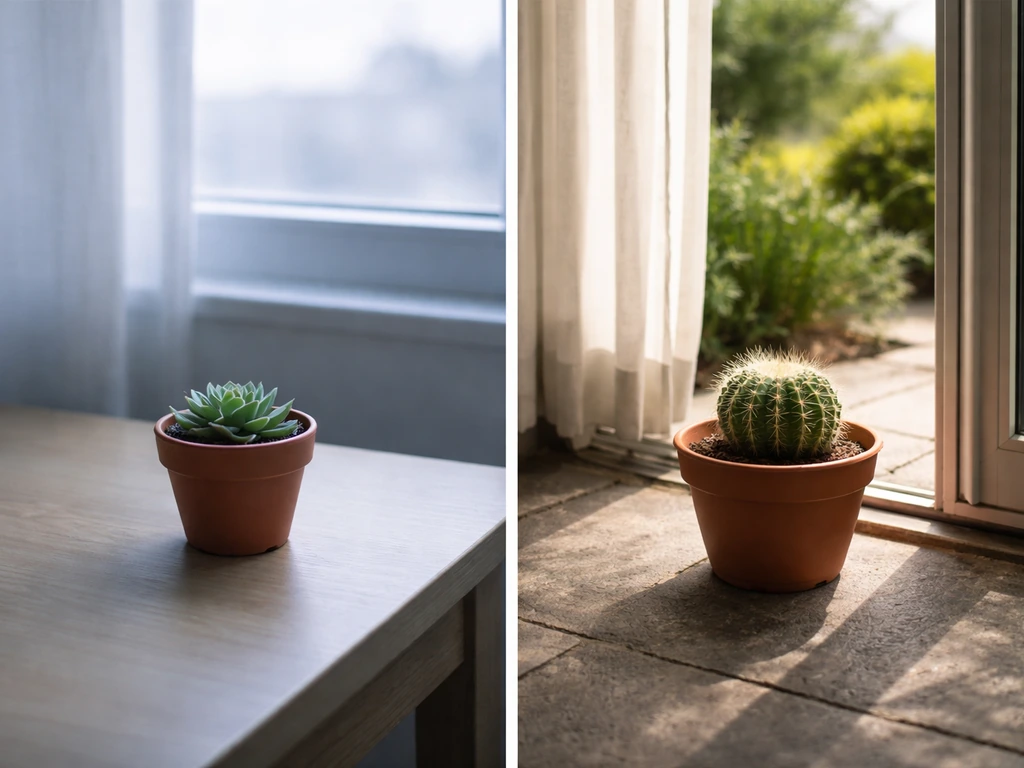
Indoor succulents don't follow seasons as rigidly because your home environment stays relatively stable year-round. However, light levels still change with the seasons, and UMN Extension connects increased spring light to increased plant water and nutrient needs. Watch the plant, not the calendar. If it's pushing new growth (new pads on a cactus, fresh leaves on an echeveria, extending stolons), it's in an active phase and ready for light feeding. If it's sitting still for weeks, hold off. Indoor plants near a south-facing window that gets strong light year-round can sometimes handle light feeding into November, but when growth stalls, so does feeding.
Outdoor plants
Outdoor plants follow natural seasonal cues more predictably. Start feeding in March or April once nighttime temps are consistently above 50°F and you see new growth emerging. Feed monthly through August, then taper off entirely in September. Skip feeding entirely in October through February. One thing to watch with outdoor plants: if you've had significant rainfall, natural nutrients from the environment and organic matter in the soil may already be supplementing the plant. You can reduce or skip a monthly feed if the plant just got rained on heavily for several days.
- March to April: Resume feeding at 1/4 strength as new growth appears
- May to August: Feed monthly at 1/4 strength liquid or apply slow-release per label
- September: Final feeding, then taper off
- October to February: No fertilizer; water sparingly only
How to apply fertilizer safely
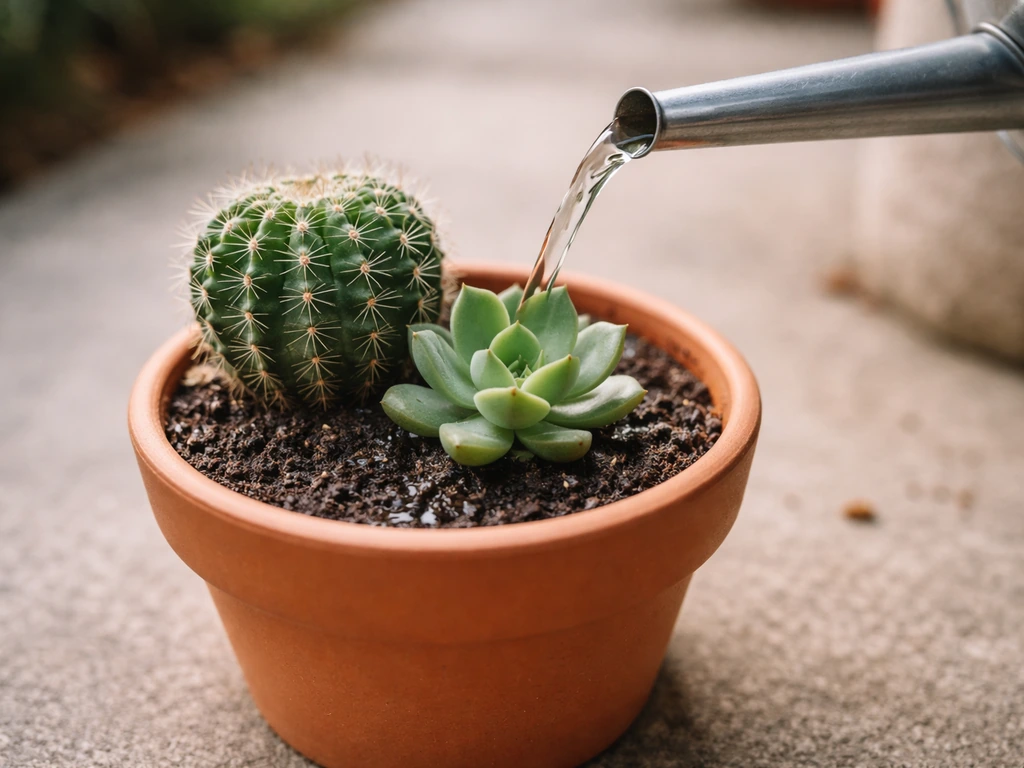
The most important rule before applying any liquid fertilizer to cacti or succulents: water the plant first. Fertilizing into dry soil concentrates salts right at the root zone, which is exactly how you get root burn. Give the plant a normal watering, let it drain, and then apply your diluted fertilizer solution. Penn State Extension explains that fertilizer salts damage roots by slowing net water flow into root tissue, and that effect is dramatically worse when the soil is already dry and salts have nowhere to disperse.
Dilution rates
UF/IFAS Extension recommends diluting fertilizer to 1/2 to 1/4 of the label rate for succulents. For most general-purpose liquid fertilizers, 1/4 strength is the safer default. A product like Schultz Cactus Plus 2-7-7 is already formulated for these plants and specifies just 7 drops per quart of water. If you're using an all-purpose fertilizer like a general plant food, dilute it to 1/4 of whatever the label recommends for regular houseplants. A general care reference from Down To Earth Distributors suggests diluting to 1/4 strength from March through October, which lines up with the active-growth window.
Soil feeding vs foliar feeding
Stick to soil feeding for the vast majority of cacti and succulents. Foliar feeding (spraying nutrients directly onto leaves or pads) works for some plants but introduces real risks with succulents: the waxy cuticle that makes succulents drought-tolerant also makes foliar nutrient absorption inconsistent, and wet leaf surfaces in poor airflow can trigger fungal issues. If you're troubleshooting a specific micronutrient deficiency (like iron chlorosis), a diluted foliar iron spray can be a quick fix, but it shouldn't be your standard feeding method. Keep the routine simple: diluted liquid to the soil, or slow-release granules/spikes mixed into the medium.
Frequency and what 'feeds every time you water' actually means
Some liquid fertilizers like Schultz Cactus Plus are marketed as 'feeds every time you water,' meaning the dose is so dilute per application that it's safe to add with each watering. This approach works well during peak active growth (May through August) because the plant is regularly drawing down nutrients. Outside that window, or if your plant only gets watered every 2 to 3 weeks, don't feed every water session. Monthly is a safe baseline for most succulents during the growing season.
Soil vs hydroponics: different feeding strategies
The site covers both soil and hydroponic growing methods, and the approach to feeding cacti and succulents is genuinely different between the two. In soil, the medium acts as a buffer: it holds nutrients and slowly releases them, gives beneficial microbes a habitat, and naturally moderates salt concentration. In hydroponics or soilless setups (pure perlite, LECA, coco coir), there is no buffer. Nutrients are delivered directly in solution, which means precision matters a lot more, and the margin for error is narrower.
Soil growing
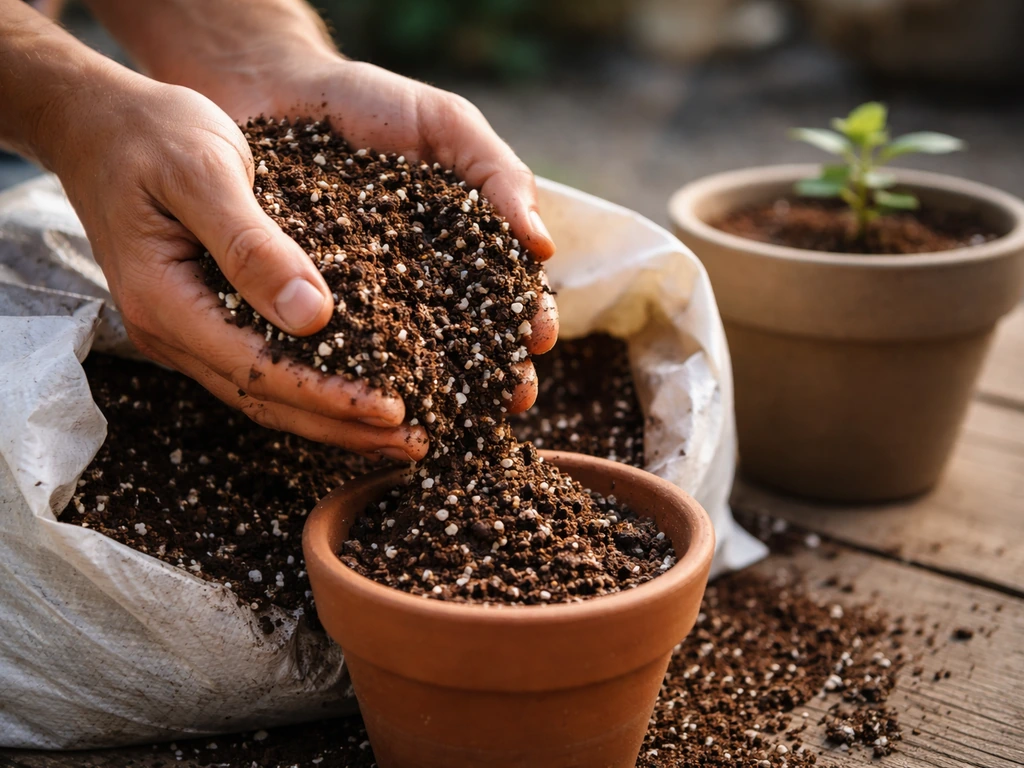
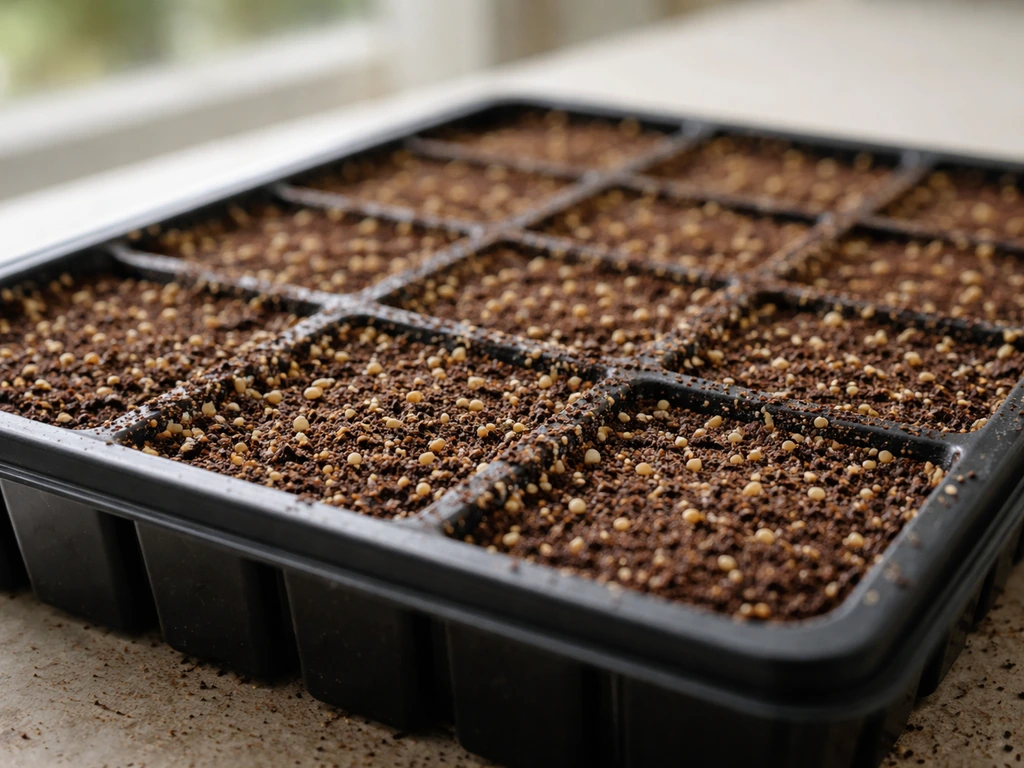
For soil-grown plants, liquid fertilizers or slow-release granules/spikes applied at reduced rates are both effective. Use a well-draining cactus/succulent potting mix as your base (pairing it with the right soil medium is worth exploring separately). If you are repotting or starting propagation, choose a grow better seed raising mix that drains quickly to help seedlings establish without excess salts well-draining cactus/succulent potting mix. Using a grow better organic potting mix can help you keep nutrients available while supporting the well-draining structure cacti and succulents need. Apply liquid fertilizer monthly during active growth at 1/4 label strength, always to pre-moistened soil. Slow-release spikes like Jobe's Organics Succulent Fertilizer Spikes (2-8-8) can be inserted at the start of the growing season and left alone; the slow nutrient release keeps salts from spiking. The downside is less control if the plant's needs change. Flush the pot with plain water every few months during the growing season to prevent salt buildup, especially if you're on hard tap water, which already carries dissolved minerals.
Hydroponic growing
Growing succulents or cacti hydroponically is less common but entirely doable, and it's popular in propagation and commercial settings. The key metric is electrical conductivity (EC), which measures the total dissolved salt concentration in your nutrient solution. Because cacti and succulents are salt-sensitive, you want to keep EC significantly lower than you would for a vegetable crop. As a reference point, General Hydroponics Flora Series feed charts use EC ranges of 0.6 to 0.8 mS/cm for early growth stages, rising to 1.7 to 2.1 for peak flowering stages on heavy feeders. For cacti and succulents, you'd stay closer to the low end: 0.6 to 1.2 mS/cm during active growth is a reasonable working range. Start at the bottom and watch how plants respond before creeping it up.
Reservoir management matters. Change the reservoir completely every 7 to 10 days rather than just topping off with plain water, because the nutrient ratios shift as plants selectively absorb different elements. Check pH regularly and keep it between 5.5 and 6.5 for most succulents in hydro; outside that range, nutrient uptake becomes unreliable regardless of what's in the reservoir. As Truleaf.org's hydroponics guidance notes, if EC is too high, water flows out of root cells instead of in, which is osmotic stress and mirrors the salt burn mechanism in soil. Flush your system with plain pH-adjusted water every 4 to 6 weeks to clear mineral accumulation from the growing medium and reservoir walls.
| Factor | Soil Growing | Hydroponic Growing |
|---|---|---|
| Fertilizer type | Slow-release spikes or diluted liquid | Complete hydroponic nutrient solution with micronutrients |
| Feeding frequency | Monthly during active growth | Continuous (in reservoir); change weekly |
| Key metric to monitor | Visual plant signs, occasional soil flush | EC and pH of reservoir solution |
| Salt management | Flush pot with plain water every few months | Full reservoir change every 7-10 days; periodic plain-water flush |
| Buffer zone | Medium provides some buffering | No buffer; precision is critical |
| EC target (active growth) | Not directly measured | 0.6-1.2 mS/cm for cacti/succulents |
| Risk level | More forgiving; salt builds slowly | Less forgiving; problems develop faster |
How to spot and fix fertilizing problems
Most fertilizing problems with cacti and succulents fall into two camps: overfeeding (far more common) and underfeeding (rarer, usually only a problem after years of no feeding in depleted soil). Knowing which one you're dealing with changes your response completely.
Signs of overfeeding
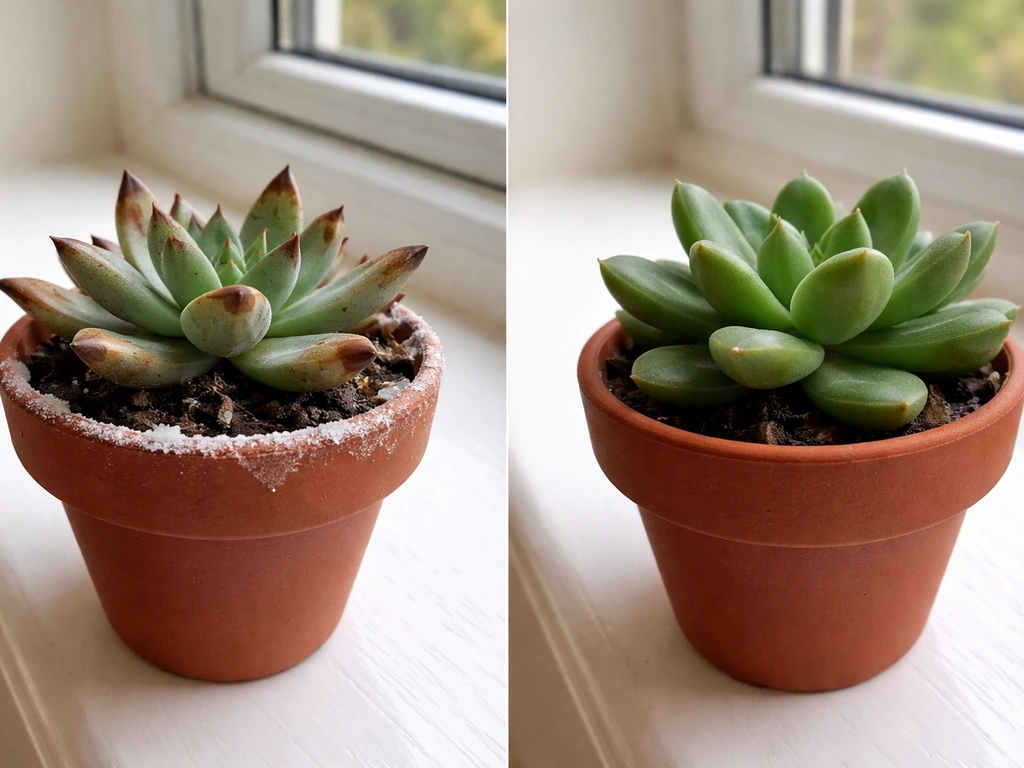
- White or crusty salt deposit on the rim or outer surface of the pot, or on top of the soil
- Leaf tip burn or brown, crispy edges on succulent leaves (leaf margin necrosis, per Colorado State Extension)
- Wilting or wrinkling despite the soil being moist (roots can't pull water in due to osmotic pressure from salt)
- Brown or dead root tips visible when you unpot the plant
- Soft, stretched, unusually fast but weak growth (nitrogen push from over-application)
- Sudden leaf drop or mushy lower leaves after a heavy feed
If you see salt crust or leaf tip burn, stop feeding immediately and leach the pot. Leaching means running a large volume of plain water slowly through the pot (roughly 3 to 4 times the pot's volume) to flush accumulated salts out of the drainage holes. Penn State Extension specifically recommends leaching when plants won't be using the accumulated nutrients going forward. Do this once, let the plant recover for 2 to 4 weeks with plain water only, then resume feeding at half your previous rate. For hydroponic setups, drain and refill the reservoir with plain pH-adjusted water for one full cycle before mixing a fresh, lower-EC nutrient solution.
Signs of underfeeding
- Very pale or washed-out coloring, especially in the newer growth
- Extremely slow growth even during the active spring/summer period
- Yellowing between leaf veins (possible iron or magnesium deficiency, especially in hydro or old depleted soil)
- No flowering at all in plants that should bloom seasonally
- Overall lack of vigor without any visible pest or watering issue
Underfeeding is easy to fix: introduce a diluted liquid fertilizer at 1/4 strength and give it 3 to 4 weeks before expecting visible improvement. Don't overcompensate by doubling the dose to 'catch up.' Nutrient uptake is gradual, and a shock dose after a long dry spell is more likely to burn than to help. If the plant is in old, depleted potting mix, repotting into fresh cactus/succulent medium will do more than fertilizing alone.
What to actually buy: fertilizer types and what to look for
Before you spend money, understand the tradeoffs between the main fertilizer formats available for succulents and cacti. No single option is perfect for everyone, and the right choice depends on how involved you want to be.
Liquid fertilizers
Liquid fertilizers give you the most control. You mix them fresh each time, which means you can adjust concentration based on the season or the plant's current growth stage. Schultz Cactus Plus 2-7-7 is a well-regarded example specifically formulated for these plants at a very low nitrogen ratio. Miracle-Gro Succulent Plant Food is another widely available option, applied directly to soil and then watered in. When using any liquid fertilizer, the 1/4 strength rule is your starting default unless the product is already formulated for cacti/succulents and specifies otherwise. Liquids are also ideal for hydroponic setups since you're building a nutrient solution anyway.
Slow-release granules and spikes
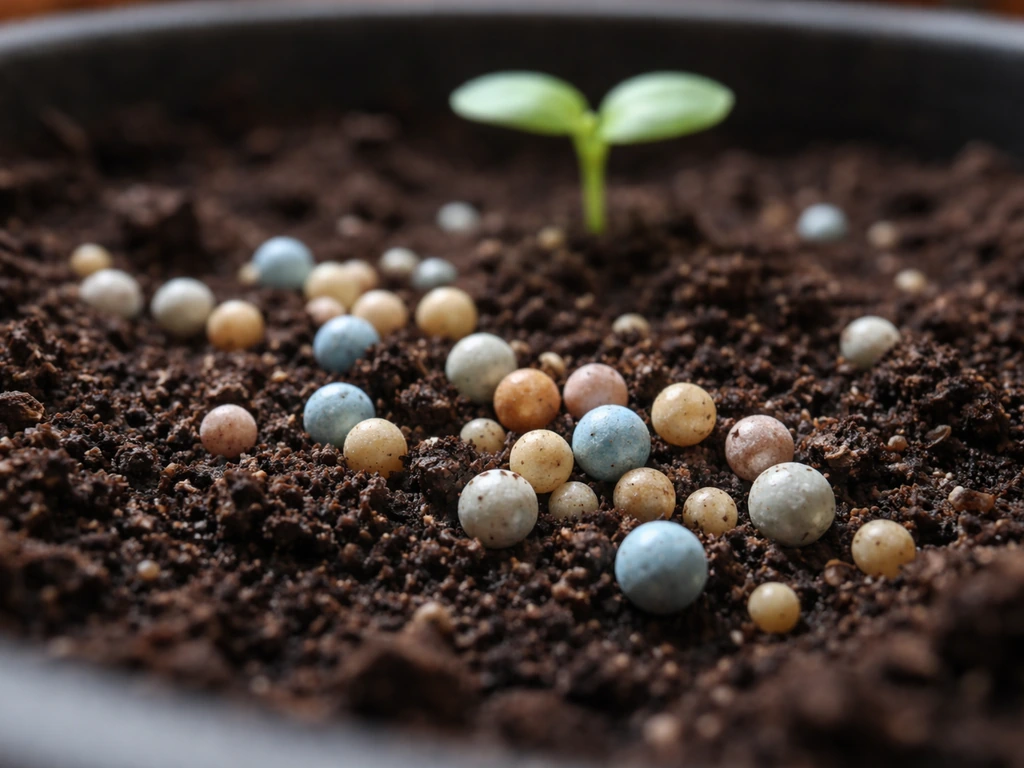
Slow-release fertilizers are the low-maintenance option. Products like Jobe's Organics Succulent Fertilizer Spikes (2-8-8) are pre-measured and inserted into the soil at the start of the growing season, breaking down gradually over months. UNH Extension points out that over-application risk is very low with slow-release fertilizers used correctly, which is a real advantage for plants this salt-sensitive. The tradeoff is less precision: you can't dial back the dose if you see stress symptoms, and you'll need to physically remove and replace spikes if you repot. Granules can be incorporated into the potting mix during repotting for a season-long gentle release.
Organic vs synthetic
Organic fertilizers (like the Jobe's Organics line or fish emulsion-based products) break down slowly and feed soil microbes, which gradually convert nutrients into plant-available forms. They're gentler, carry a lower salt index, and are harder to overapply. If you are shopping at Bunnings, look for an organic fertiliser designed for cacti and succulents so you can grow better with a safer, lower-nitrogen option Organic fertilizers. The downside is inconsistent nutrient availability if soil temperature or microbial activity is low, and some have an odor that makes them less appealing indoors. Synthetic fertilizers are immediately available to roots, more precise in NPK ratio, and typically cheaper per application. They also carry higher salt indexes, which is the main reason to use them conservatively. For most home growers, either works fine if you apply at 1/4 strength and follow seasonal timing. If you tend to forget feeding schedules, organic slow-release spikes in spring are the safer bet. If you like dialing things in and adjusting, a liquid synthetic like Schultz 2-7-7 or a comparable product gives you more flexibility.
| Fertilizer Type | Best For | Pros | Cons | Salt Risk |
|---|---|---|---|---|
| Liquid synthetic (e.g., 2-7-7) | Active control, hydro setups | Precise, fast-acting, easy to dilute | Requires more frequent attention | Moderate (dilute to 1/4 strength) |
| Slow-release spikes/granules (organic) | Low-maintenance soil growing | Set-and-forget, low salt risk, feeds microbes | Less precision, can't quickly adjust | Low |
| Slow-release granules (synthetic) | Seasonal soil application | Consistent release, convenient | Less control if problems arise | Low-moderate |
| Organic liquid (fish/kelp emulsion) | Gentle soil feeding, beginners | Low salt index, feeds soil biology | Odor, inconsistent in cold temps | Low |
Features to look for on the label
- NPK ratio with low nitrogen (first number) relative to phosphorus and potassium
- Labeled specifically for cacti, succulents, or drought-tolerant plants
- Includes chelated micronutrients if you're growing in soilless or hydroponic media
- Clear dilution guidance, ideally with a recommended dilution at 1/4 to 1/2 standard rate
- For hydro: a complete nutrient solution or a product compatible with EC-based mixing
- A salt index noted or implied as low (organic or slow-release products generally qualify)
One last thing worth mentioning: whatever fertilizer you choose, the medium you're growing in shapes how effective it will be. A well-draining cactus mix pairs well with any of the above approaches, while heavy or water-retentive soil increases the risk of salt accumulation regardless of how carefully you feed. If you're also evaluating potting mixes, slow-grow fertilizer formulas, or all-purpose plant foods for other plants in your collection, the feeding principles here (low nitrogen, seasonal timing, salt management) are a useful reference point for comparing how different plant types diverge in their nutrient needs. If you're considering slow-grow fertilizers like those from Slow Grow Flower Co, the same low-nitrogen, active-season timing, and salt-management principles apply to prevent fertilizer burn.
FAQ
Can I use a general houseplant fertilizer to grow better cacti and succulents if it has a higher nitrogen number?
Yes, but treat it as a high-salt product, dilute more aggressively (usually 1/4 label strength as a starting point), and only feed during active growth. If your formula is very nitrogen-heavy (for example, “all-purpose” with a large first number), consider switching to a cactus/succulent-labeled or low-NPK mix, because you may still get stretched, soft growth even at reduced doses.
How do I know if my cactus or succulent is suffering from overfeeding versus underwatering?
Overfeeding often shows salt-related signs, like white crust on the soil, leaf tip burn, or edge browning, and the plant may look “waterlogged” despite dry soil. Underfeeding is slower to reveal, with gradual pale color or stalling growth over weeks to months, not sudden burn. If you see crust or burning, stop feeding and leach immediately, because the fix is different than simply waiting.
What water should I use when flushing or leaching to prevent fertilizer problems?
Use plain water that will disperse salts without adding more minerals. If you have hard tap water, consider using filtered or dechlorinated water, and leach slowly so salts migrate out through the drainage holes. Also, always allow full drainage after flushing, because leftover salty solution in the bottom of the pot can re-concentrate.
Should I fertilize after repotting or starting propagation?
Generally wait. After repotting, the plant is establishing and roots are disturbed, so feeding too soon increases the risk of salt burn before new roots can function. A practical rule is to wait until you see active new growth and improved root activity, then start at half-strength in spring or early summer.
Do I need to adjust fertilizer strength if my plants are in smaller pots?
Yes. Smaller pots dry and concentrate salts faster, so they are more likely to show fertilizer burn if you apply the same dose as you would for larger containers. Keep the 1/4 label rule, and consider staying near 1/4 or even slightly lower for very small pots, especially if your watering interval is short.
Can I fertilize a cactus or succulent that is showing slow growth but isn’t clearly “dormant”?
First check light and watering, because weak light is a more common cause of stalled growth than low nutrients. If light and temperatures support growth and the plant has been pushing new growth, you can feed lightly at 1/4 strength. If there is no new growth for several weeks, hold fertilizer, since continuing to feed when the plant is not actively taking up nutrients increases salt buildup.
What’s the safest way to apply fertilizer if my plant only gets watered every 2 to 3 weeks?
Choose either a monthly schedule at diluted strength or use a slow-release spike inserted at the start of the growing season. Avoid “every time you water” products unless the labeled dosing is truly designed to be harmless at each watering and your plants are in peak active growth, because long gaps mean fertilizer accumulates between watering cycles.
Is foliar feeding ever a good idea for correcting nutrient issues?
Only in narrow situations, like treating a clearly identified deficiency as a temporary measure. For routine feeding, soil application is safer. If you do foliar, use a very diluted solution and apply with good airflow to prevent wet leaf surface problems, and stop if you see spotting or stress.
How often should I flush my potting mix, and does it depend on fertilizer type?
For liquid feeding, flushing every few months during the growing season helps clear accumulated salts. For slow-release spikes, flushing is still useful but usually less frequent, since spikes release nutrients gradually. If you use hard water or notice crusting, flush sooner. In all cases, leach and then resume at a reduced rate if you had symptoms.
How do I manage fertilizer in hydroponics if EC starts rising?
If EC creeps high, don’t “push through.” Drain and refill with pH-adjusted plain water for a full cycle, then restart with a lower-EC nutrient solution closer to the low end of the recommended range. Also check that you are not topping off with nutrient concentrate, because selective uptake and evaporation can make the remaining solution progressively stronger.
Can I mix different fertilizers or boosters to “customize” feeding for grow better cactus and succulent fertilizer results?
Be careful, because combining products can unintentionally increase nitrogen or total dissolved salts, raising burn risk. If you want to customize, start from one base fertilizer formulated for cacti/succulents (or a low-NPK plan) and change only one variable at a time, ideally by adjusting concentration, not stacking multiple nutrient sources.