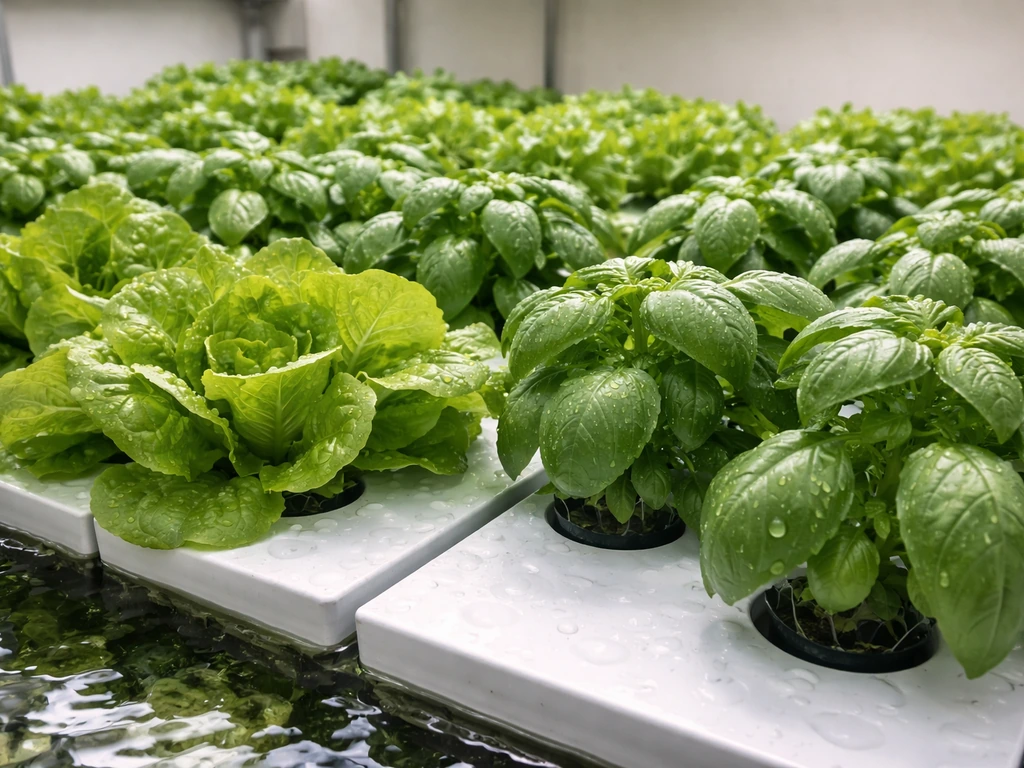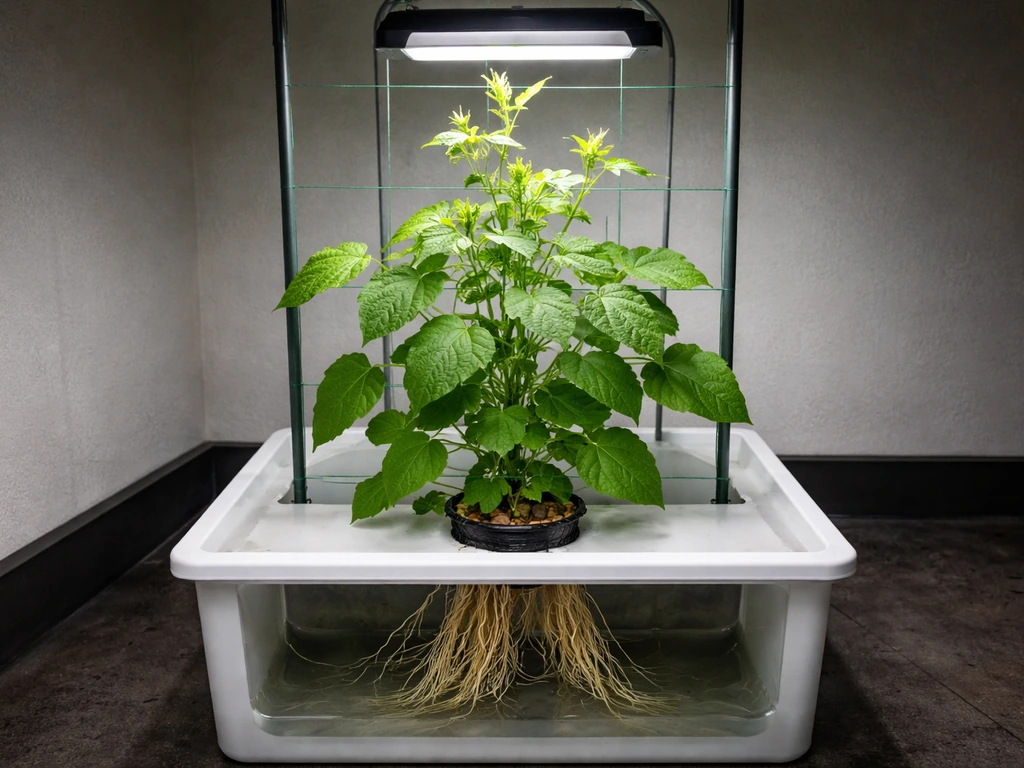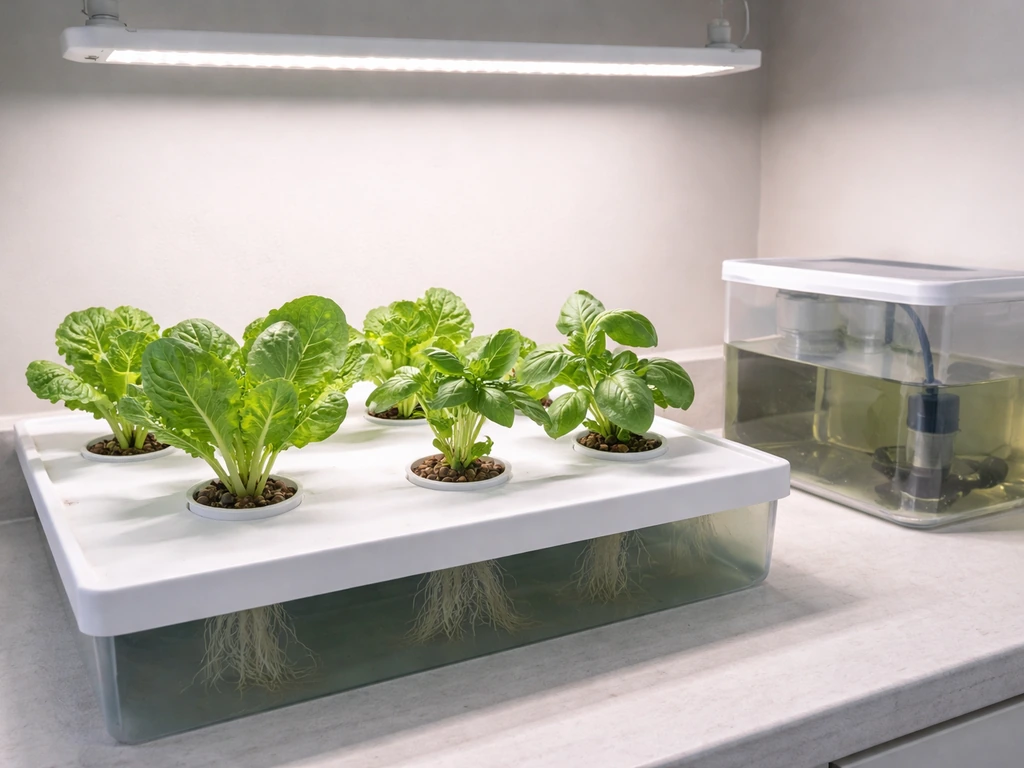
The most profitable hydroponic crops for most growers are microgreens, basil, and lettuce, in roughly that order, because they turn fast, sell at strong prices, and fit almost any indoor setup. Microgreens can go from seed to sale in 7 to 14 days and fetch $3 to $7 per ounce wholesale. Basil consistently commands $9 to $24 per pound and can be harvested repeatedly over weeks.
What Is the Most Profitable Hydroponic Crop to Grow?

Marcus Holloway
11 May 2026
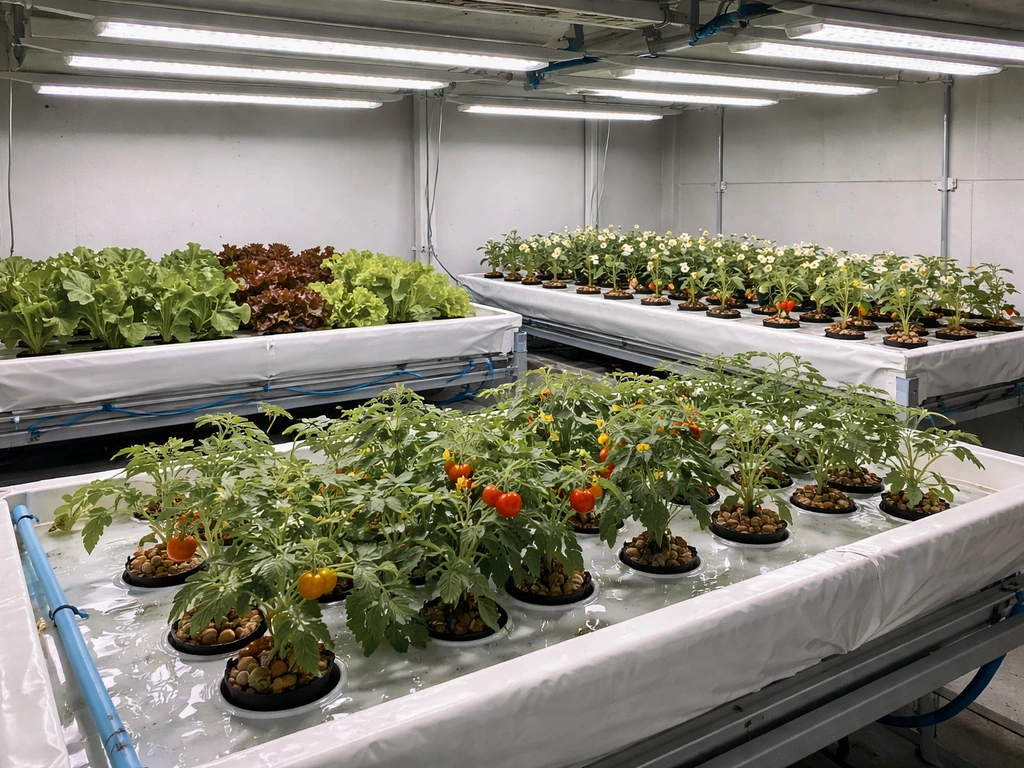
Lettuce runs 30 to 45 days per cycle in a well-tuned NFT or DWC system and nearly sells itself to restaurants and farmers markets. That said, 'most profitable' depends heavily on your local market, your space, and your system, so this guide will give you a real framework to calculate which crop actually pencils out for your situation.
What 'Most Profitable' Actually Means in Hydroponics
The number most people obsess over, selling price per pound, is almost useless on its own. A crop that sells for $30/lb but takes four months to mature and fills your whole grow room is less profitable than a crop that sells for $8/lb but cycles every three weeks. The metric that actually matters is profit density: dollars per square foot per month. That single number lets you compare crops fairly regardless of how they're priced or how long they take.
To calculate profit density, you need five inputs: (1) yield per square foot per harvest, (2) cycle time in days, (3) selling price per unit, (4) input costs per cycle (seeds, nutrients, electricity, packaging), and (5) your local market price reality. That last one kills more business plans than any grow issue. Always verify what buyers in your area actually pay before choosing a crop, not what someone in a YouTube video claims.
Here's a simple formula to use: Profit Density ($/sq ft/month) = ((Yield per sq ft × Selling price) minus Input costs per sq ft) divided by Cycle time in months. Run this for each candidate crop with realistic local numbers, and the winner usually becomes obvious fast. We'll apply this to specific crops in the comparison section below.
The Top Money-Making Hydroponic Crop Categories
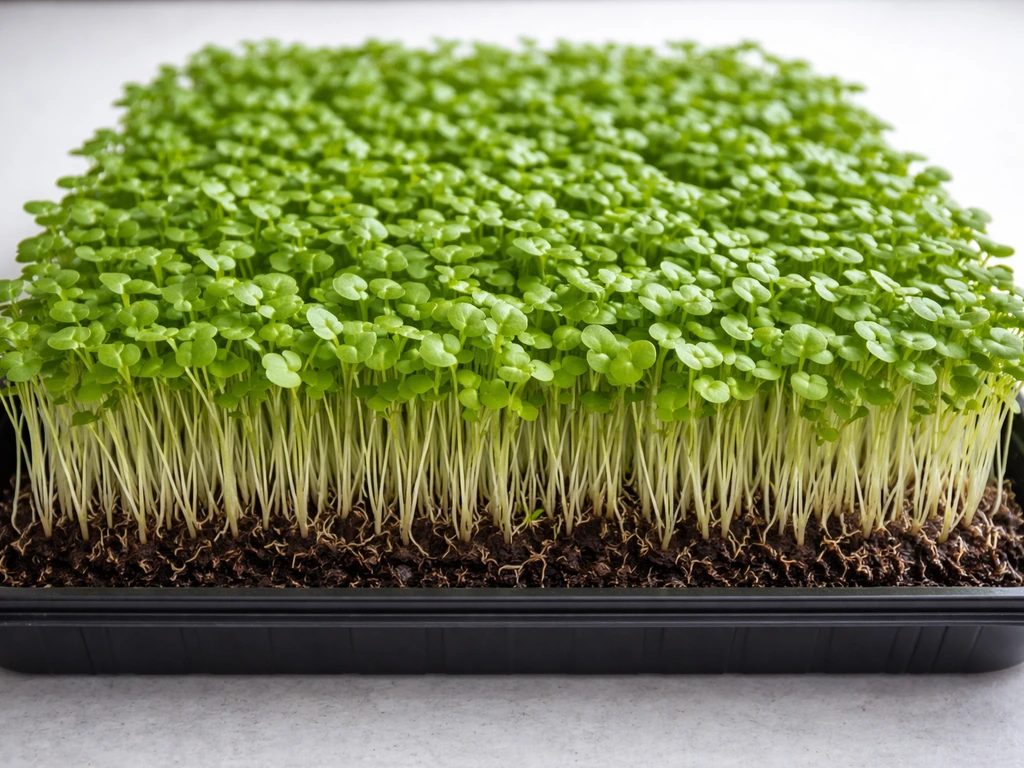
Fast Greens and Microgreens
Microgreens are in a class of their own for turnover speed. A 7x14-inch tray can be seeded, grown, and harvested in 7 to 14 days depending on variety, yielding roughly 2 to 4 oz of fresh product per tray. Scale that across a rack of 20 trays, and you're looking at a meaningful weekly harvest from a very small footprint. Radish, sunflower, pea shoots, and wheatgrass are some of the fastest and highest-yielding varieties. They don't even require a recirculating hydro system, shallow trays with a wicking medium work fine, which keeps startup costs low.
Lettuce and other salad greens sit in the next tier. They take longer (4 to 6 weeks), but they're incredibly reliable in NFT channels or DWC systems, and the consistent head or leaf weight makes pricing and yield prediction easy. Restaurants and food co-ops love consistent supply, which means repeat buyers and less time spent selling.
High-Value Herbs
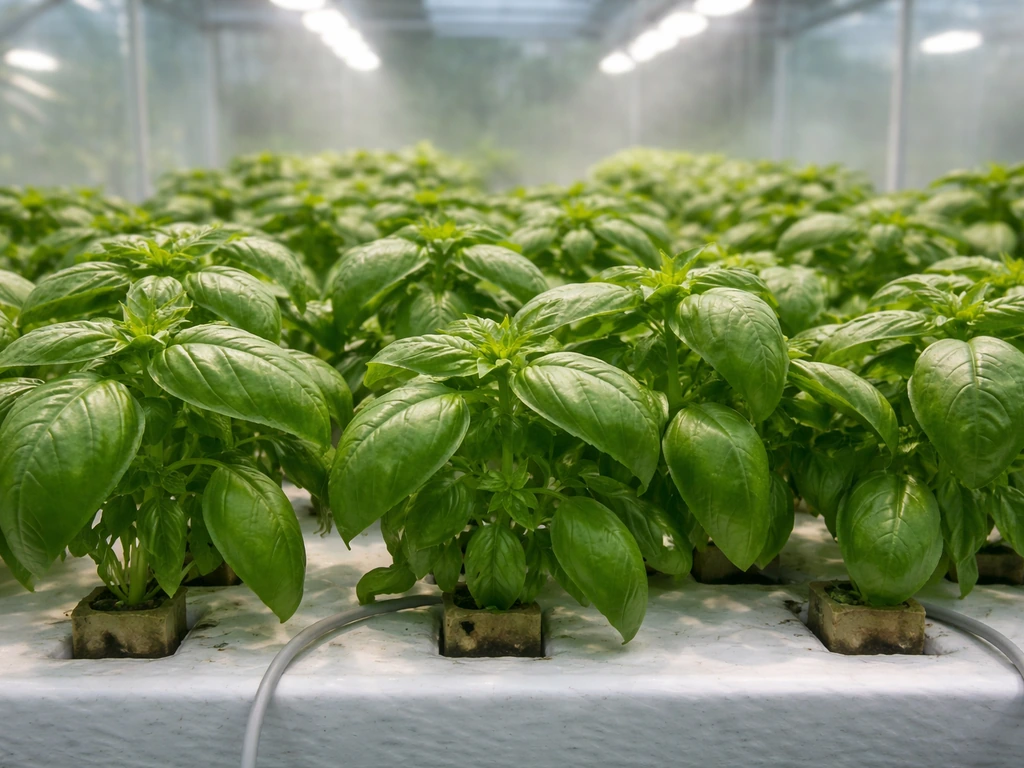
Basil is the standout herb for hydroponic profitability. It grows aggressively under 14 to 16 hours of light per day, hitting first harvest around 3 to 4 weeks from seed, and then continuing to produce with repeated leaf harvests. Mint, cilantro, and dill also command strong wholesale prices, mint in particular runs $18 to $24 per pound at wholesale, which is excellent. These herbs fit naturally in DWC buckets, NFT systems, or even Dutch bucket setups. The key is keeping basil and other herbs at their sweet spot: pH 5.5 to 6.5 and EC between 1.0 and 1.6 mS/cm. Push EC above 1.6 and you'll see tip burn and stunted growth that slashes your marketable yield.
Specialty and High-Value Crops
Strawberries, cherry tomatoes, and specialty peppers occupy a higher-effort, higher-reward tier. Hydroponic strawberries can yield 1.5 to 2.5 lbs per plant per season, and greenhouse-grown strawberries in soilless systems have been documented at 5 to 10 kg per square meter, significantly better than field production. The catch is that fruiting crops need more light, more nutrients, more management, and more time. They're not beginner crops if you're trying to maximize early profit, but they make strong sense as an add-on to an established operation or for growers with experience managing fruiting plants.
Crop-by-Crop Comparison
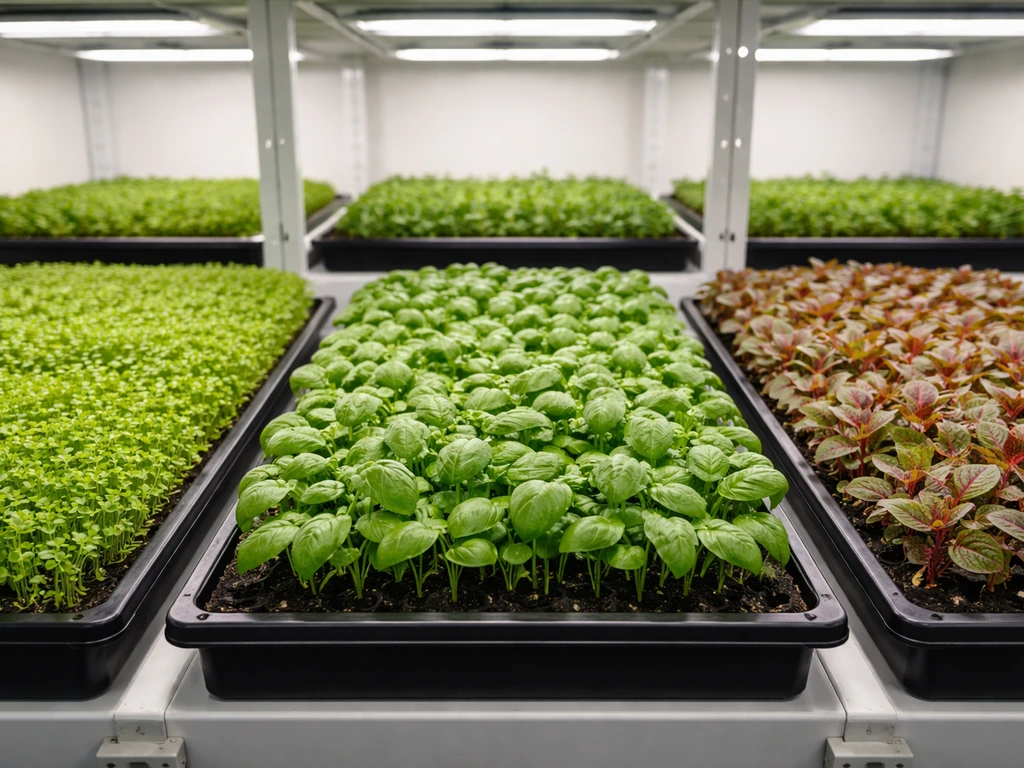
| Crop | Cycle Time | Yield (per sq ft) | Wholesale Price | Difficulty | Best System |
|---|---|---|---|---|---|
| Microgreens | 7–14 days | 2–4 oz per tray (7x14") | $3–$7/oz | Easy | Tray/wicking or shallow flood |
| Basil | 3–4 weeks to first harvest, then ongoing | ~0.5–1 lb/month (multi-harvest) | $9–$24/lb | Easy–Moderate | DWC, NFT, or Kratky |
| Lettuce | 30–45 days per cycle | ~0.5–1 lb per head/plant | $2–$5/head (retail) | Easy | NFT, DWC, vertical systems |
| Mint | 3–5 weeks to first harvest | ~0.5–0.75 lb/month | $18–$24/lb | Easy | DWC, NFT |
| Cilantro | 3–4 weeks | ~0.25–0.5 lb per cut | $12–$24/lb | Easy–Moderate | NFT, DWC |
| Strawberries | 60–90 days to first fruit | 1.5–2.5 lbs/plant/season | $4–$8/lb (organic premium) | Moderate–Hard | Dutch bucket, NFT, vertical towers |
| Cherry Tomatoes | 60–80 days to first fruit | 3–6 lbs/plant (ongoing) | $3–$6/lb | Hard | Dutch bucket, drip, DWC |
Looking at this table through the profit density lens, microgreens and basil win at the beginning and intermediate levels because of their fast cycles and high per-ounce or per-pound pricing. Mint is underrated, the wholesale price is excellent, it grows vigorously in hydro, and growers often overlook it. Fruiting crops only make sense if you have the setup and experience to support them without constant crop failures eating into your margin.
Matching the Right Crop to Your Setup
Before locking in a crop, run through these four constraints honestly. A crop that performs well in a 500-square-foot commercial greenhouse is not automatically the right pick for a 4x8-foot tent in a spare bedroom.
Space
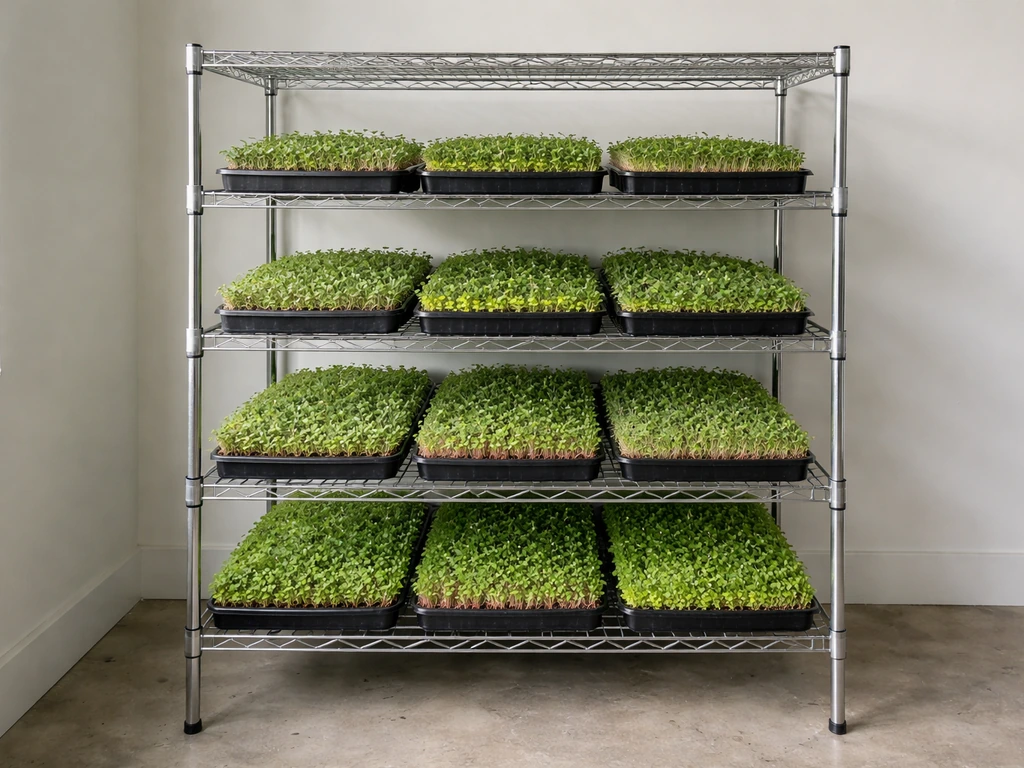
Microgreens have the best space-to-revenue ratio of any crop because you can stack trays vertically and turn them over every one to two weeks. A single 4-foot wire rack with five shelves and a couple of LED panels can run 20+ trays at a time. Lettuce and herbs need more horizontal real estate but scale well with vertical NFT wall systems. Fruiting crops need height, tomatoes and peppers want at least 5 to 6 feet of vertical space and wide spacing, so they're inefficient in tight quarters unless you're running a dedicated Dutch bucket row.
Light and Electricity
Microgreens need minimal light, they can even be germinated in darkness for the first few days, then finished under low-intensity LED panels. Herbs like basil want 14 to 16 hours per day and respond well to full-spectrum LEDs in the 400 to 700 nm range. Fruiting crops are the most light-hungry: tomatoes and peppers want high-intensity lighting at 18+ hours per day during veg, which drives up your electricity bill significantly. If you're in a high-electricity-cost area (above $0.15/kWh), fruiting crops start looking less attractive unless you have excellent yield and pricing to compensate.
Budget and System Type
For under $200, you can run a productive microgreen operation or a basic Kratky/DWC setup for herbs. NFT systems run $300 to $800 depending on scale but offer excellent efficiency for lettuce and herbs with minimal nutrient waste. Dutch bucket systems for fruiting crops typically start at $500 and up once you add drip lines, timers, and the reservoir. Aeroponics gives you the fastest growth rates but the highest upfront cost and most maintenance, not a good starting point unless you already understand hydroponic troubleshooting well.
Experience Level
If you're newer to hydroponics, start with microgreens or lettuce. Both are forgiving, have well-documented growing parameters, and give you fast feedback loops, you'll see results (or problems) in days, not months. Herbs are a strong second step. Fruiting crops should come after you've dialed in your pH management, nutrient top-offs, and pest monitoring.
Making a mistake on a 90-day tomato crop is much costlier than making a mistake on a 14-day microgreen tray. The best plants to grow hydroponically and the best greens to grow hydroponically are both topics worth exploring in detail once you've picked your starting crop category, since variety selection within a category matters nearly as much as the category itself.
For example, beans can be grown hydroponically too, and the right varieties, support structure, and nutrient targets make a big difference beans to grow hydroponically. If you want a quick starting point for the best greens to grow hydroponically, focus first on lettuce and fast salad varieties that match your cycle time. If you're still deciding, review the best plants to grow hydroponically so you can pick a category that matches your goals and resources.
How to Actually Maximize Your Profit
Succession Planting
The single biggest profitability lever available to any hydroponic grower is succession planting: staggering your seedings so you have something ready to harvest every week instead of everything at once. With microgreens, this is almost automatic, seed one or two trays every three to four days and you'll have continuous harvests. With basil or lettuce, plant a new batch every two weeks so you're always cutting mature plants while the next batch is in early growth. This eliminates income gaps and keeps your buyers supplied consistently, which is what turns one-time sales into recurring accounts.
Reducing Downtime Between Cycles
Every day your system sits empty is lost revenue. After harvest, your goal is to have the system cleaned, refilled, and re-seeded within 24 to 48 hours. Keep pre-measured nutrient mixes ready. Have your next batch of seedlings already germinating in a separate propagation area so they're ready to drop into the system as soon as the previous crop clears. Pre-germinating in rockwool cubes or rapid rooter plugs gives you a 5 to 10 day head start on every cycle.
Cultivar Selection
Not all varieties of the same crop perform equally in hydro. For basil, Genovese types are the restaurant standard and command the best prices, while Thai basil opens a separate specialty market. For lettuce, Butterhead and Oakleaf varieties tend to resist tip burn better than Iceberg under artificial light.
For microgreens, radish, sunflower, and pea shoots consistently come up in yield trials as high-producers with fast finish times, radish in particular has documented fresh yields in the range of 82 to 97 grams per tray from just 10 grams of seed. Choosing cultivars that perform well in controlled environments is essentially free yield improvement, so don't skip this step.
If you're trying to pick the best strains to grow hydroponically, cultivar selection within each category can make a big difference in both yield and how consistently the crop finishes. If you're growing cannabis hydroponically, strain selection matters just as much, and you'd want to look specifically at hydro-adapted genetics, that topic has its own deep rabbit hole worth exploring.
Nutrient and pH Optimization
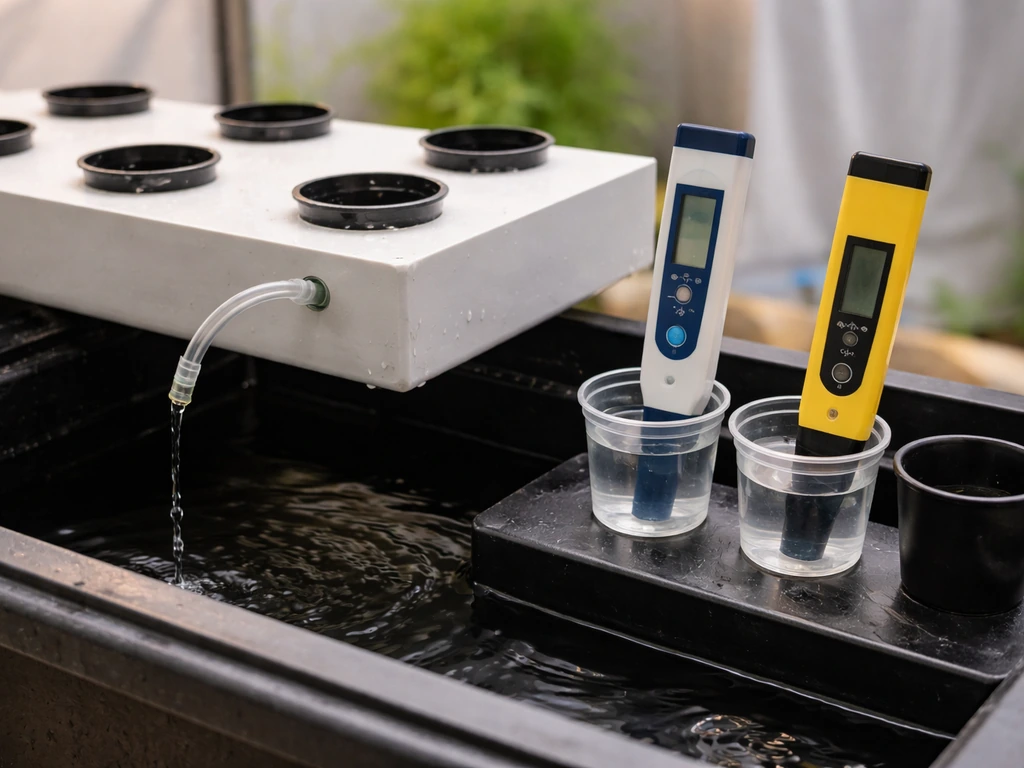
For herbs and greens, keep pH firmly in the 5.5 to 6.5 range and check it daily when you're starting out (every 2 to 3 days once you know how your system drifts). EC for herbs should sit between 1.0 and 1.6 mS/cm, lower for seedlings, higher for mature plants pushing maximum growth. For fruiting crops, EC needs to increase as plants develop, typically ranging from 1.5 to 3.5 mS/cm depending on crop stage. Running your EC too low starves the plant; running it too high induces salt stress that reduces fruit size and leaf quality. Both hurt your sellable yield and your bottom line.
Where Profit Gets Lost: Pests, Disease, and Root Problems
Root rot (Pythium) is the most common and most destructive problem in recirculating hydroponic systems. It spreads fast in warm, low-oxygen reservoirs. Prevention is far cheaper than treatment: keep reservoir temps below 68°F (20°C), maintain strong aeration, and sanitize between cycles. UV irradiation of recirculating nutrient solution is proven to reduce Pythium pressure, though it also affects beneficial bacterial populations in the root zone, worth knowing if you're using bioprotectants. Hydrogen peroxide at appropriate concentrations can disinfect a system effectively, but populations rebound within about two days, so it's not a set-it-and-forget-it solution. Peroxyacetic acid sanitizers (PAA) and dilute bleach solutions (around 150 to 200 ppm) run through the system for a few hours are practical between-cycle cleaning approaches.
For insects, the main threats to herbs and greens are aphids, thrips, and fungus gnats. Yellow sticky cards near canopy level are your early warning system, check them twice a week. Fungus gnats breed in wet growing media and attack roots, which is why keeping the top of your growing medium drier than the root zone matters.
Aphids and thrips can devastate a basil crop quickly once established, so catching them at 5 insects per card rather than 500 is the difference between a cultural fix and a crop loss. The University of Connecticut's IPM guidance for greenhouse herbs emphasizes cultural prevention first: good airflow, clean surfaces, and early monitoring are more effective than any spray program applied after the fact.
Common loss points to monitor and prevent:
- Root rot (Pythium): keep reservoir cool and well-oxygenated, sanitize between cycles, consider UV or beneficial microbes
- Nutrient lockout from pH drift: check and adjust pH daily or every other day
- Tip burn on lettuce and basil: caused by calcium deficiency or low airflow — add a small fan and verify calcium levels
- Aphid and thrip outbreaks: use yellow sticky cards for early detection, introduce beneficial insects if operating at scale
- Fungus gnats: let the top of your medium dry slightly, use yellow cards at substrate level
- Cross-contamination between cycles: fully drain, rinse, and sanitize the reservoir and channels before each new crop
Your Decision Checklist and a Simple Profit Calculator

Use this checklist before committing to a crop. Running through it takes about 20 minutes and will save you from picking a crop that looks profitable on paper but doesn't fit your actual situation.
- Verify local selling price: call or visit two farmers markets, one restaurant, and one food co-op. Ask what they currently pay for the crop you're considering. If they don't buy it locally at all, that's a red flag.
- Calculate your usable grow space in square feet. Include only the area that's actually under adequate light.
- Pick two to five candidate crops and estimate yield per square foot per cycle from the comparison table above.
- Estimate input costs per cycle: seeds + nutrients + electricity + packaging. For a small system, electricity is often $10 to $30/month; nutrients for herbs/greens are $5 to $15/month at small scale.
- Plug into the profit density formula: ((Yield/sq ft × Price) minus Inputs/sq ft) divided by Cycle months = $/sq ft/month.
- Compare the result across your candidate crops. The highest number wins — adjusted for your own difficulty tolerance and experience level.
- Choose your #1 crop, start one small test batch before going full scale, and track actual yield and actual sell-through rate before scaling up.
Here's a worked example using 10 square feet of growing space: Microgreens at $5/oz average price, 3 oz yield per sq ft per cycle, 14-day cycle, $0. For example, a pricing workbook like the Microgreen Manager microgreen pricing workbook uses per-ounce pricing and shows that a 2 oz clamshell at $3. 50 and an 8 oz food-service clamshell at $14 both work out to $1. 75 per ounce [per-ounce pricing example (2 oz at $3.
50 and 8 oz at $14 both equal $1. 75/oz)](https://microgreenmanager. com/public/microgreen-pricing-workbook. pdf).
50/sq ft input cost = ((3 × $5) minus $0. 50) / 0. 47 months = roughly $30. 85 per sq ft per month.
Basil at $15/lb average, 0. 75 lb per sq ft per month, inputs $0. 75/sq ft/month = ($11. 25 minus $0.
75) / 1 month = $10. 50 per sq ft per month. Microgreens win on pure density, but basil wins on simplicity and lower labor if trays aren't your thing. Both beat most fruiting crops at beginner-to-intermediate scale.
Start Here Based on Your Situation
| Your Situation | Best Starting Crop | System Recommendation |
|---|---|---|
| Complete beginner, under $200 budget | Microgreens | Shallow trays, no reservoir needed |
| Beginner with $300–$600, wants recurring harvests | Basil or lettuce | Kratky jars or simple DWC bucket |
| Intermediate, wants restaurant accounts | Basil + lettuce combo | NFT system, 2–4 channels |
| Experienced, wants to diversify | Add mint, cilantro, or specialty microgreens | Expand NFT or add Dutch bucket for herbs |
| Advanced, large space, high investment tolerance | Strawberries or cherry tomatoes | Dutch bucket with drip irrigation |
The most important next step is the one most growers skip: talk to your buyers before you build. A 10-minute conversation with a chef or market manager will tell you more about your local profit potential than any spreadsheet. Once you know there's demand, come back to the yield and input numbers, run the profit density formula, and start small. One well-managed 4x4-foot microgreen rack or a four-bucket DWC herb setup will teach you more in 60 days than months of planning, and it gives you real numbers to scale from.
FAQ
Is microgreens always the most profitable hydroponic crop, or can lettuce/basil outperform them?
If you have to choose one “most profitable” answer for most beginners, microgreens usually win because you get fast, repeatable harvests and you can stack trays vertically. The exception is when your local buyers will not pay a premium per ounce, in which case lettuce or basil (with more predictable supply) can beat microgreens on profit density.
What’s the fastest way to tell if the “best price per pound” crop is actually the most profitable?
Don’t compare crops using $/lb or $/oz alone, because harvest timing changes everything. A simple way to stress-test your decision is to calculate profit density twice, once with your optimistic price and once with a conservative lower price, then see which crop still stays on top.
Where do microgreens profitability plans usually fail?
Microgreens can be high-profit even with short cycles, but your real risk is inconsistent demand and labor time for frequent harvesting and washing. If you cannot reliably sell every harvest within a day or two, factor “spoiled or discounted product” into input costs, otherwise your profit density will be overstated.
How much does variety choice change profitability, compared with choosing microgreens vs basil vs lettuce?
Yes, choose varieties based on how they behave in artificial light and your nutrient setup. For lettuce, some types tolerate higher EC and artificial spectra better, reducing tip burn. For basil, sticking to commercially accepted cultivars can stabilize buyer willingness to pay.
What nutrient mistake most commonly ruins profits in basil and other herbs?
For basil and other herbs, EC that is too high can lower marketable yield through tip burn and slowed growth. Start by matching your target EC to the crop stage, and keep pH in range, because nutrient uptake problems often look like “low fertilizer” when the real issue is drift.
How do I estimate sellable yield if not all of the harvested product is marketable?
Use a “plant count to usable weight” check. For example, if you seed densely to maximize yield but you later have a high fraction of stems, deformed leaves, or rejects, your effective profit density drops. Track sellable ounces or pounds per tray, not just total fresh weight.
Should labor be included when calculating which crop is most profitable?
Most growers underestimate labor hours per cycle, especially for microgreens with frequent harvests. Include harvesting time, rinse and drying (if you do it), packaging, and sanitation time in per-cycle input costs, then compare labor per square foot per month across crops.
At what point do electricity costs make fruiting crops like tomatoes or peppers unprofitable?
Yes, high electricity costs can erase the advantage of light-hungry crops. A practical decision rule is to compute your monthly kWh cost and compare it to the added revenue you expect from higher yields and faster growth, then decide whether you need more efficient LEDs, shorter photoperiods, or a different crop category.
How should I verify local pricing so my spreadsheet matches reality?
Selling price is local. Before you commit, ask buyers how they want product packed, what weight format they accept (ounce, clamshell, head), and whether they pay the premium consistently year-round. Many crops have strong seasonal demand, so your “average price” should be weighted by season.
What’s the biggest practical reason succession planting increases profit?
Succession planting changes profitability most when it prevents empty space. If you cannot prep the next batch in time, your schedule gaps will force you to discount or discard product. Plan propagation and cleaning so the system is re-filled within 24 to 48 hours as a standard operating target.
How can I reduce root rot risk without overreacting to every alarm?
If your reservoir temperature climbs above the recommended range, root disease pressure rises and you can lose a whole cycle, which is catastrophic for long-duration crops like lettuce heads or fruiting plants. Track reservoir temps daily during warm periods and slow down cycling risk by improving aeration and shading/insulation.
What’s the most effective early warning system for insects in an indoor hydroponic setup?
Start with monitoring and cultural controls, because sprays often come late for fast-moving problems like thrips on basil. Use sticky cards at canopy height, inspect twice per week, and treat early when counts are still low to avoid a population explosion.
Should I match crop choice to my hydroponic system, or can I grow anything in anything?
Yes, some crops perform differently depending on whether you recirculate nutrients. If you are troubleshooting-resistant or budget-limited, start with simpler approaches like shallow tray or basic NFT/DWC for greens and herbs, then move to higher-maintenance systems after you can keep pH and EC stable.
What experiment should I run before scaling up to a full rack or greenhouse row?
If you’re not sure, run a 2-crop test in parallel for one full cycle, then compare profit density using your real harvest weights, real buyer price, and your real input costs. Scaling from small trials is usually safer than relying on assumed yields.
How does packaging and trimming quality affect which crop is most profitable?
Most profitability “winners” assume you can sell clean, uniform product. If you struggle with consistent presentation, focus on crops that match your packaging and trimming workflow, since uniform microgreens and reliable lettuce formats can reduce rejects.