The short answer: apply Spray-N-Grow Micronutrients once a week for reliable results, or every one to three weeks if you want a more relaxed schedule. The manufacturer confirms it is safe enough to use daily, but weekly is the sweet spot where most growers see consistent benefits without waste or buildup. Everything below breaks that down by growth stage, growing method, and environment so you can build a schedule that actually fits your setup.
How Often Can I Use Spray and Grow Indoors or Hydro?

Marcus Holloway
21 Apr 2026
What Spray-N-Grow is actually used for
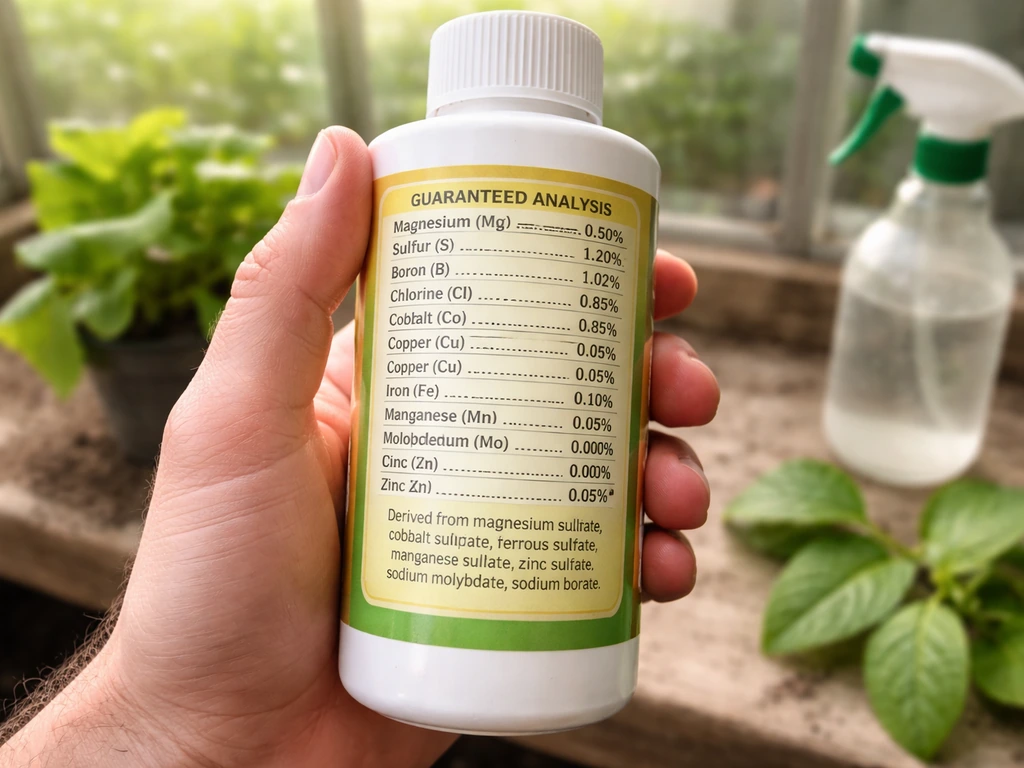
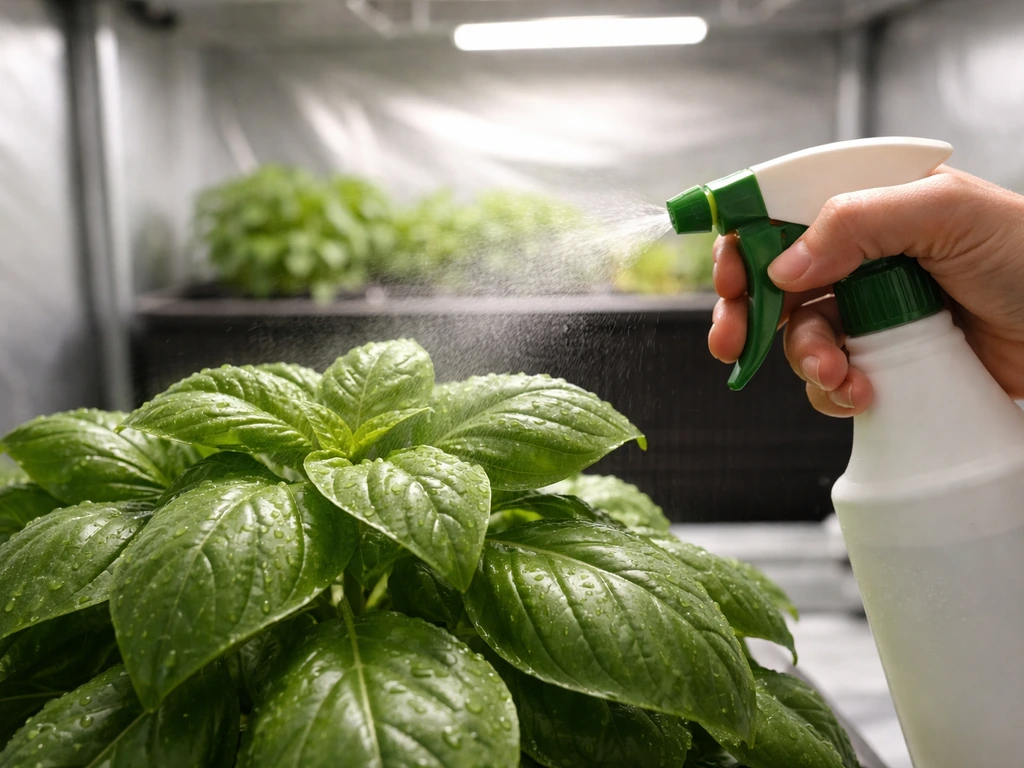
Spray-N-Grow Micronutrients is a foliar supplement, not a base fertilizer. The manufacturer describes it as a blend of 17 naturally occurring micronutrients, positioned as 'vitamins for your plants' rather than an NPK food source. You spray it directly onto leaves, where it is absorbed through the stomata, and it works alongside whatever feeding program you already run, whether that is a complete liquid fertilizer in a hydroponic reservoir or a slow-release soil amendment.
Because it delivers micronutrients through the leaf rather than the root zone, foliar application bypasses common root-zone problems: pH swings that lock out trace minerals, cold nutrient solution that slows uptake, and oxygen deficiency in the root zone. This is why the hydroponic guidance from the manufacturer specifically highlights foliar feeding as a workaround when root-zone conditions are temporarily off. For soil growers, it fills micronutrient gaps that standard NPK fertilizers often miss. It is not a replacement for your base nutrient program, and the product page makes that clear.
One thing worth knowing before you build your schedule: Spray-N-Grow is a concentrate. The product page lists a dilution of 2 teaspoons per quart of warm water, and the FAQ specifies 2 tablespoons per gallon. One mixed quart covers 125 to 250 square feet of canopy, so a 32-ounce bottle goes a long way even on a weekly schedule.
Quick answer: how often to spray by growth stage
Here is a fast reference for frequency across the main growth phases. These are starting points, not hard rules. Adjust based on how your plants respond after the first two or three applications.
| Growth Stage | Recommended Frequency | Notes |
|---|---|---|
| Seedling (weeks 1–2) | Every 2–3 weeks or skip entirely | Seedlings have minimal leaf surface and thin cuticles; start light and watch for sensitivity |
| Early vegetative (weeks 3–5) | Once per week | Stomata are active, canopy is expanding, uptake is efficient at weekly intervals |
| Late vegetative / pre-flower | Once per week | Good time to load micronutrients before the flowering transition increases demand |
| Flowering / bloom | Once per week up to harvest | Product can be used up to the day of harvest; spray lights-off and ensure leaves dry before lights-on to protect trichomes |
| Stressed or recovering plants | Additional application as needed | Manufacturer recommends an extra spray for plants under stress; do not exceed daily |
Building your spray schedule for soil and hydro
Soil grows
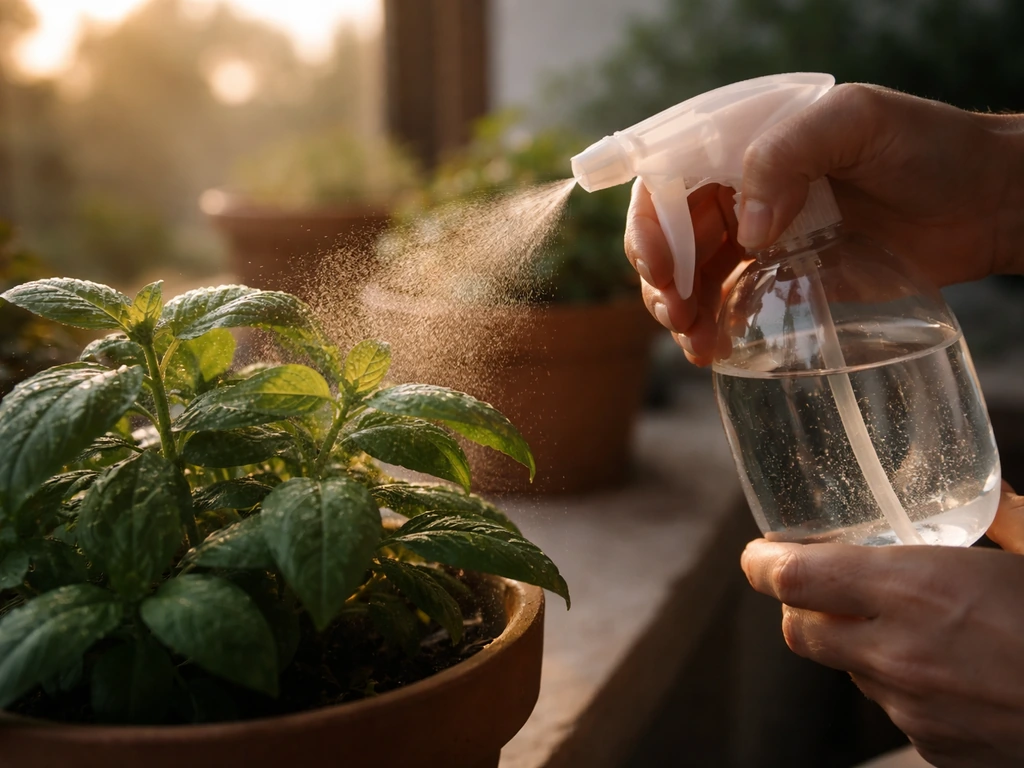
For soil growers, a weekly foliar spray fits naturally into most watering routines. Pick one consistent day each week, spray in the morning before 9 am or in the evening after 6 pm (more on timing below), and you are done. The gap between sprays matters because the leaf cuticle needs time to normalize after each application, and micronutrients absorbed through leaves are not immediately flushed out the way root-fed nutrients can be. Spacing sprays at least five to seven days apart keeps the leaf surface clean and prevents mineral film buildup that can eventually block light and clog stomata.
If your soil is already rich in trace minerals or you are using a well-formulated organic medium, you can stretch to every two to three weeks without sacrificing results. Think of weekly as the performance schedule and bi-weekly or tri-weekly as the maintenance schedule.
Hydroponic and indoor grows
Hydroponic growers get the most out of Spray-N-Grow because foliar delivery sidesteps any temporary pH or temperature issues in the reservoir. Weekly applications work well here too, but the timing rules are stricter indoors. The manufacturer's hydroponic guidance says to spray with the lights off and leave them off until the leaves are completely dry. This protects against lens-effect burn (water droplets focusing light onto leaf tissue) and also exploits the fact that stomata are more open in the dark, improving absorption.
In a sealed indoor room, spray just before lights-out or during your dark period. If your dark cycle is only six to eight hours and ambient humidity is high, make sure there is enough airflow to dry the leaves before lights come back on. A small oscillating fan running during and after application handles this easily. For deep water culture or high-humidity environments above 70 percent relative humidity, consider extending the interval to every ten days to avoid pushing total leaf-surface moisture to a level that promotes mold.
Mixing the solution correctly

Frequency only matters if the solution is mixed right. Use lukewarm water at 80 to 100 degrees Fahrenheit and allow the mixed solution to stand for 15 minutes before applying. The water pH must be 7.1 or higher for the product to activate, which you will see as a color change in the solution. If the color change does not appear after mixing, add a small pinch of baking soda (up to one tablespoon per gallon) until you see it. Do not use a hose-end sprayer for this product; a hand pump or trigger sprayer with a fine-mist nozzle is the correct tool. Applying incorrectly mixed or unactivated solution wastes product and can leave residue on leaves.
Application tips to avoid leaf burn and patchy coverage
Spray timing is the single most important variable for avoiding burn. Applying in direct sunlight or with high-intensity grow lights on concentrates heat at every water droplet on the leaf surface. Even with correct dilution, midday or lights-on application raises the risk of bleaching or burning, especially on strains with dense foliage where droplets pool. Always spray in the early morning (before 9 am), in the evening (after 6 pm), or during lights-off for indoor setups. The manufacturer states that the closer to sunrise or sunset, the better the uptake, because stomata are most open near those transition points.
For coverage, spray until leaves are very wet or until you see very slight runoff starting at the leaf tips. That is the saturation point the hydroponic guidance recommends. Do not just mist the tops of leaves. Turn branches or tilt plants to hit the undersides too, since stomata density is often higher on the abaxial (under) surface. A fine-mist setting on your sprayer produces smaller droplets that adhere better and are less likely to pool and cause burn.
- Always use a fine-mist sprayer, not a coarse stream or hose-end sprayer
- Spray early morning or evening outdoors; spray lights-off indoors
- Cover both sides of leaves for complete stomata contact
- Spray until very wet but not until large droplets are running off onto the substrate
- Leave lights off and run fans until leaves are dry before resuming the light cycle indoors
- Test on a single plant before treating your entire crop, especially with a new batch of solution
That last point about testing on one plant first comes directly from the manufacturer's hydroponic guidance, and it is genuinely good advice. Water quality, grow room temperature, and plant genetics all influence how a specific canopy responds. If you are growing multiple strains, the most sensitive one will show stress first, so pick your most tender plant as the test subject and wait 24 hours before spraying the rest.
How to tell if you are overusing or underusing it
Signs of overuse
Spray-N-Grow is safe for daily use according to the manufacturer, but growers who spray too frequently without proper timing often see secondary problems. Watch for a whitish or chalky mineral film on the leaf surface after sprays dry, which signals residue buildup rather than absorption. If you spray under lights or during hot conditions, you may see small tan or bleached spots where droplets concentrated heat. In high-humidity indoor environments, spraying too often without adequate airflow and drying time creates the moisture conditions that mold and powdery mildew thrive in. If you notice any of these signs, drop back to every two weeks, check your spray timing, and make sure leaves are fully dry before the next application.
Signs of underuse or deficiency
Micronutrient deficiencies tend to show up as interveinal chlorosis (yellowing between leaf veins while veins stay green), unusual leaf curl, slow growth relative to what you expect at that stage, or lackluster coloration during flowering. These are not always caused by insufficient foliar feeding, since root zone pH issues can produce identical symptoms. But if your base nutrition is dialed in and you are seeing those signs, bumping Spray-N-Grow from bi-weekly to weekly is a reasonable first adjustment. For visibly stressed plants, the manufacturer recommends an additional application beyond your normal schedule.
When to stop or switch
If stress symptoms persist after two to three weeks of adjusted spray frequency, foliar feeding is probably not the root cause and you should look elsewhere: root zone pH, overwatering, or a base nutrient imbalance. Stop foliar applications temporarily so you can isolate the variable. If you are approaching the end of flowering and want to run a final flush, you can continue Spray-N-Grow up to the day of harvest since it is a micronutrient supplement, not a nitrogen-heavy product that affects taste or residue. That said, if organic certification or a specific crop quality standard matters to you, check whether the product is appropriate for your setup, which leads directly to the next section.
Safety checks and reading your specific label first
The frequencies in this article are based on the manufacturer's published product page and FAQ for Spray-N-Grow Micronutrients. If you purchased a different Spray-N-Grow product (the company makes multiple formulations), or a third-party reseller repackaged the product, your label may carry different dilution rates or application windows. The manufacturer's own hydroponic guidance says it directly: mix exactly according to manufacturer's recommendations, and read the label first. That is not filler advice. Dilution rates, water temperature, activation requirements, and pH minimums are all product-specific, and getting any one of them wrong makes the product less effective even if your frequency is perfect.
- Locate the specific product label for the Spray-N-Grow item you purchased and confirm the dilution ratio (the standard concentrate is 2 teaspoons per quart or 2 tablespoons per gallon)
- Check the recommended frequency on your label; if it says every 1 to 3 weeks, start at once per week and adjust from there
- Verify your water pH is at or above 7.1 before mixing; if not, raise it slightly before adding the product
- Use lukewarm water at 80 to 100 degrees Fahrenheit and let the mixed solution stand 15 minutes before spraying
- If no color change appears after mixing, add baking soda in small amounts (up to 1 tablespoon per gallon) until you see the change
- Test on one plant in your grow before treating the full canopy, especially if you have not used the product before or are starting a new batch
One related consideration: if you are also researching whether Spray-N-Grow qualifies as an organic input for your operation, that question has its own nuances worth looking into separately. If you are trying to confirm whether Spray-N-Grow is an organic option, the key point to check is whether it is labeled as an organic input is spray n grow organic. Similarly, if you are trying to manage pests alongside micronutrient supplementation, keep your foliar pest sprays and Spray-N-Grow on separate days so you can accurately assess which product is causing any reaction you observe. If you are also using natural bug control with your micronutrient program, separate the pest treatment from your Spray-N-Grow days so you can tell what is working. If you are using natural bug control alongside foliar micronutrients, add your pest treatment on a different day so you can protect plants without confusing results how to protect your outdoor grow from bugs naturally. If you are also looking for Halo Grow, you can find it through reputable online retailers and select local grow shops that stock hydroponic supplies where to buy halo grow.
The practical takeaway is straightforward: once a week, early morning or lights-off, fine mist, both sides of leaves, fully activated solution. That schedule works across vegetative and flowering stages, applies to both soil and hydro, and stays within the manufacturer's stated safety margin. Dial it back to every two to three weeks if you are in a low-demand stage or a stable, micronutrient-rich medium, and add an extra application if your plants are visibly stressed. Start there, watch your plants for two to three weeks, and adjust based on what you see.
FAQ
Can I spray Spray-N-Grow and then immediately water or mist the plants again?
It is best to wait, because the product needs time to be absorbed and the leaf surface needs to dry. If you have to mist for humidity control, separate it by several hours and confirm leaves are fully dry before the lights come back on (especially indoors).
What should I do if I accidentally mix it too strong (higher concentration) but still followed the timing?
Stop using that batch and remix correctly. Over-concentration increases the chance of mineral residue and leaf spotting, even if you spray at night. If you already sprayed, monitor for chalky film or tan bleaches, and skip the next application to let the leaf surface normalize.
Is it okay to use Spray-N-Grow on seedlings or very young plants?
You can use it on young plants, but start at the lower end of the label dilution and stick to the less frequent interval (about every 2 to 3 weeks) for the first couple applications. Watch closely for mild stress on the most sensitive leaves, since young foliage can be more reactive.
Should I spray the underside of leaves every time?
Yes, for best results. Stomata density is often higher on the underside, and partial coverage can make symptoms look like a deficiency even when you are spraying frequently. Aim for uniform wetting, with very slight runoff only, then ensure full drying.
Does leaf runoff mean I used too much?
Not necessarily, but it depends on how much. The goal is saturation, which can include slight runoff at the tips. If you see heavy dripping or solution running down into stems and onto media, you may be over-applying, increasing waste and residue.
Can I combine Spray-N-Grow with other foliar products or tank-mix it with my regular nutrients?
Avoid mixing unless the label explicitly allows it. Foliar blends can alter pH and activate differently, which can cause poor uptake or residue. If you want to use multiple foliar inputs, apply them on separate days so you can identify what caused any reaction.
What if the activation color change never happens even after adding baking soda?
Do not proceed. If you cannot reach the required activation behavior (and you still cannot confirm proper activation), the solution is likely not meeting the pH minimum or mixing conditions. Recheck water pH, warm temperature, and dilution, then remix and verify color change before spraying.
How do I clean up residue if I see a chalky mineral film after spraying?
Pause foliar feeding for at least one interval, then improve drying and reduce frequency. For residue on the leaf surface, wiping gently with a clean damp cloth can help, but avoid damaging leaf hairs or stressing plants. In the next application, use correct dilution and ensure leaves are fully dry before lights-on.
How often can I use Spray-N-Grow during flowering if I’m also trying to avoid mold?
Keep to weekly at most in high humidity, and consider stepping to every 10 to 14 days if your environment stays above about 70% relative humidity. The key control is full drying before lights-on, plus enough airflow during and after spraying.
What schedule should I use if I frequently change lighting intensity or photoperiod indoors?
Base spray timing on the current light cycle rather than a fixed clock time. Spray during the dark period (or just before lights-out), and do not spray right after changing intensity, since higher-intensity lighting increases risk of droplet bleaching if leaves are not perfectly dry.
When should I stop foliar spraying and focus on root-zone correction instead?
If interveinal chlorosis, curl, or slow growth persists after two to three weeks of adjusted foliar frequency, stop foliar feeding temporarily. Then check pH and base nutrient balance, since those issues can produce the same symptoms foliar micronutrients are meant to address.
Can I use Spray-N-Grow more than once per week because the manufacturer says daily is safe?
In practice, daily use is usually unnecessary and increases the risk of residue, leaf spotting, and fungal pressure in humid rooms. Use weekly as the default, then adjust to every two to three weeks when plants look stable, and only increase if the plants show clear, persistent micronutrient-related stress.