If you're searching for 'Rich Grow bug killer,' you're almost certainly looking at Richgro Bug Killa, a granular insecticide with imidacloprid (70 g/kg) as its active ingredient. It works as a systemic, meaning the plant absorbs it and the pest is killed when it feeds. Neonicotinoids, including imidacloprid, bind to insect nicotinic acetylcholine receptors and can be [found in nectar and pollen](https://pmc. ncbi.
Rich Grow Bug Killer Guide for Safe, Effective Pest Control

Marcus Holloway
26 Apr 2026
nlm. nih. gov/articles/PMC3338325/), which is why they are central to pollinator exposure risk assessment. That's effective for a lot of common soil-garden pests, but it's not the right tool for every situation, and it can cause serious problems in hydroponic systems if used carelessly.
Here's how to figure out exactly what you're dealing with, whether Richgro Bug Killa (or something else entirely) is the right call, and how to apply it so it actually works.
What 'Rich Grow Bug Killer' Actually Refers To
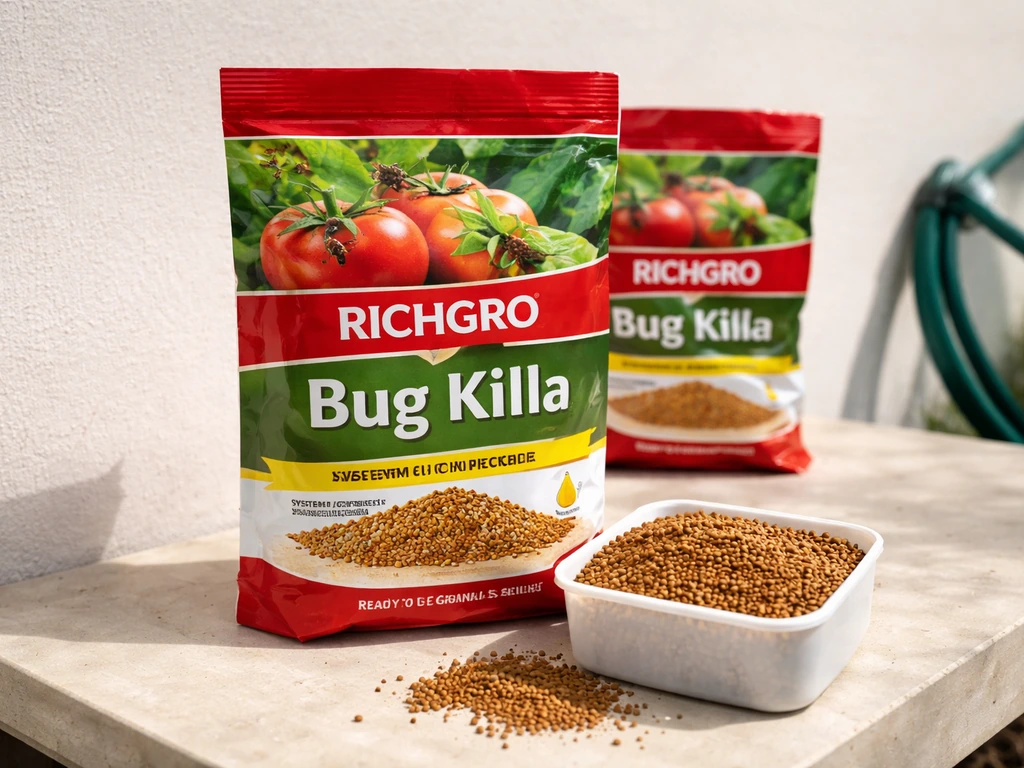
The brand is Richgro, not 'Rich Grow,' and they make several different products. The one most commonly associated with 'bug killer' searches is the Richgro Bug Killa Granulated Insecticide, available in a 1 kg bucket. Its active ingredient is imidacloprid at 70 g/kg. Imidacloprid is a neonicotinoid, a class of systemic insecticide that plants take up through their roots. Once absorbed, it's toxic to insects that feed on the plant's tissue or sap.
Worth knowing: Richgro makes other products too, including a moss control product with a completely different active ingredient (pydiflumfetofen). So if you grabbed something from the Richgro shelf that doesn't match what's described here, check the label or pull the Safety Data Sheet from Richgro's SDS page to confirm exactly what you have. Never assume two products from the same brand do the same thing.
Imidacloprid is genuinely useful against soft-bodied, sap-sucking insects like aphids, whiteflies, and some thrips. It's applied to the soil and watered in. But it won't do much for spider mites (which aren't insects), it's slow-acting, and it has real implications for pollinators and beneficial insects if plants are flowering outdoors. A broad scientific review of evidence for neonicotinoid risks to honey bees, including exposure through pollen and nectar and other plant products, supports using caution language around pollinators and beneficial insects implications for pollinators and beneficial insects. If you're growing in a hydro system, it introduces risks that we'll cover in detail below.
Identify the Pest Before You Buy or Apply Anything
Using the wrong product is the single most common reason a treatment fails. Imidacloprid won't kill spider mites. Bti won't touch aphids. Spend five minutes on pest ID before you spend money or put anything on your plants.
Quick Visual ID Guide
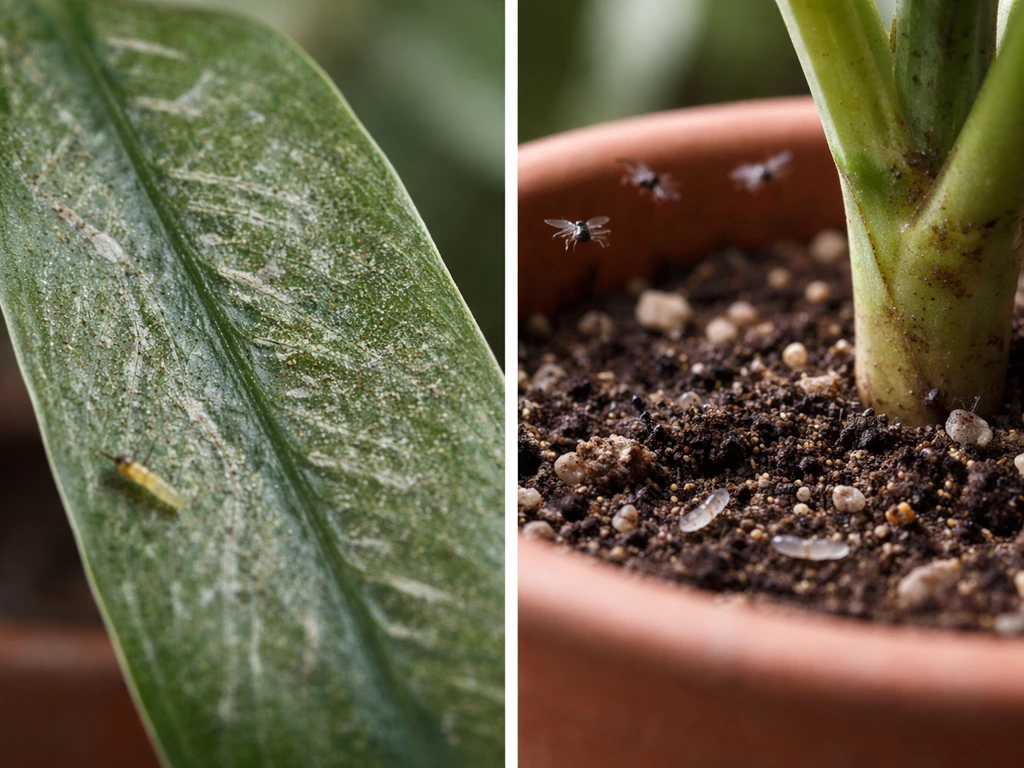
| Pest | Where You See Them | Key Signs | Common in Soil? | Common in Hydro? |
|---|---|---|---|---|
| Fungus Gnats | Soil surface, lower stems, growing medium | Tiny black flies hovering at pot level, larvae in top inch of growing medium | Yes (larvae in media) | Yes (rockwool, coco, DWC surfaces) |
| Spider Mites | Undersides of leaves | Tiny yellow stippling on leaves, fine webbing under canopy | Yes | Yes (dry, hot environments) |
| Aphids | New growth, shoot tips, undersides of leaves | Clustered soft-bodied insects, sticky honeydew residue, yellowing | Yes | Yes |
| Thrips | Leaf surfaces, flowers | Silver-grey streaks or stippling, tiny cigar-shaped insects | Yes | Yes |
| Whiteflies | Undersides of leaves | Cloud of tiny white flies when plant is disturbed, sticky leaves | Yes | Yes |
| Root Aphids | Root zone | Stunted growth, waxy white deposits on roots | Yes | Yes (hard to spot) |
For thrips specifically, look for linear silvery streaks across leaves and a rough, stippled texture from their rasping mouthparts. The damage pattern looks a bit like someone dragged sandpaper across the leaf surface. Spider mite damage looks similar at first but you'll see the webbing under leaves if you look with a loupe. Fungus gnats are often misidentified as a minor nuisance when the real damage is their larvae chewing through roots in your growing medium.
Soil vs Hydro: Where the Pest Is Living Matters
In a soil grow, many pests complete part of their life cycle in the medium itself, especially fungus gnats and root aphids. That means foliar sprays alone won't solve the problem if larvae are in the soil. In hydro, there's no soil buffer, so root zone issues like root aphids or pythium-linked root damage can escalate fast. Floating debris or pupating insects can also clog emitters and contaminate reservoir water. Your pest ID needs to account for where the pest actually lives, not just where you see it.
Choosing the Right Control Method
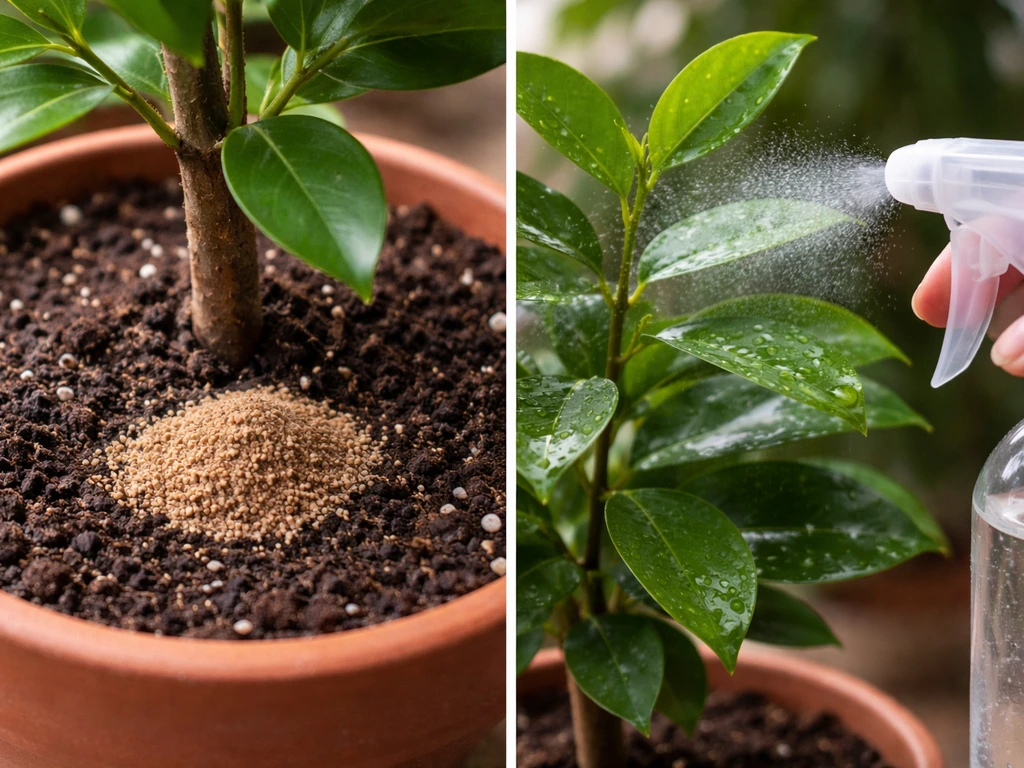
Once you know what you have, you can match it to the right control. Here's the honest breakdown: Richgro Bug Killa (imidacloprid) is a solid choice for soil-grown plants with sap-sucking insects when you're not near harvest. For everything else, you'll want a different tool, or a combination.
When Imidacloprid (Richgro Bug Killa) Makes Sense
- Aphids, whiteflies, or thrips on soil-grown plants in vegetative stage
- You want a systemic approach so you don't have to spray the whole canopy
- Plants are at least 4-6 weeks from harvest (systemic residues need time to clear)
- You're not growing anything that will be pollinated by bees outdoors (imidacloprid is toxic to pollinators)
When to Use Something Else
| Pest | Better Option | Why |
|---|---|---|
| Spider Mites | Insecticidal soap, horticultural oil, predatory mites (Phytoseiulus persimilis) | Imidacloprid has no effect on mites; soaps/oils disrupt their cuticle directly |
| Fungus Gnats | Bti (Bacillus thuringiensis israelensis) drench, yellow sticky traps, letting medium dry out | Bti targets only fly larvae in the growing medium; non-toxic to everything else |
| Thrips (heavy infestation) | Spinosad-based spray, insecticidal soap, blue/yellow sticky traps for monitoring | Spinosad is highly effective on thrips and safer near harvest than systemics |
| Root Aphids | Beneficial nematodes (Steinernema feltiae), soil drench with neem/azadirachtin | Root zone access needed; foliar or granular surface treatments won't reach them |
| Whiteflies | Yellow sticky traps + insecticidal soap or pyrethrin spray | Fast knockdown needed; systemic can work longer-term but traps interrupt breeding cycle |
For a non-chemical-first approach, especially if you're growing organically or close to harvest, start with physical controls: strong water sprays to knock mites and aphids off leaves, sticky monitoring cards to catch flying adults, and diatomaceous earth at the soil surface for crawling insects. These don't replace chemical treatment for a heavy infestation, but they reduce population pressure and work safely alongside whatever you apply.
How to Use Richgro Bug Killa (or Any Insecticide) Safely and Effectively Right Now
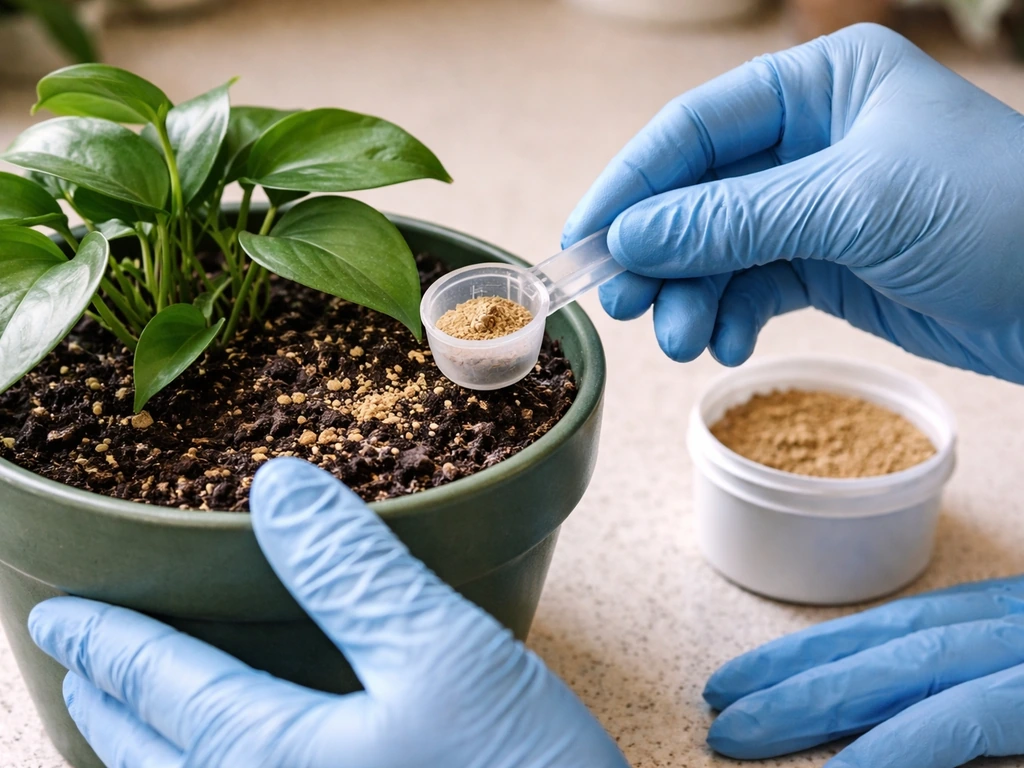
Application quality determines results more than product choice in most cases. A perfectly chosen product applied carelessly will fail.
Granular Imidacloprid (Richgro Bug Killa): Step-by-Step
- Water your plants normally the day before application so the medium is moist but not saturated. Dry soil won't distribute the granules effectively.
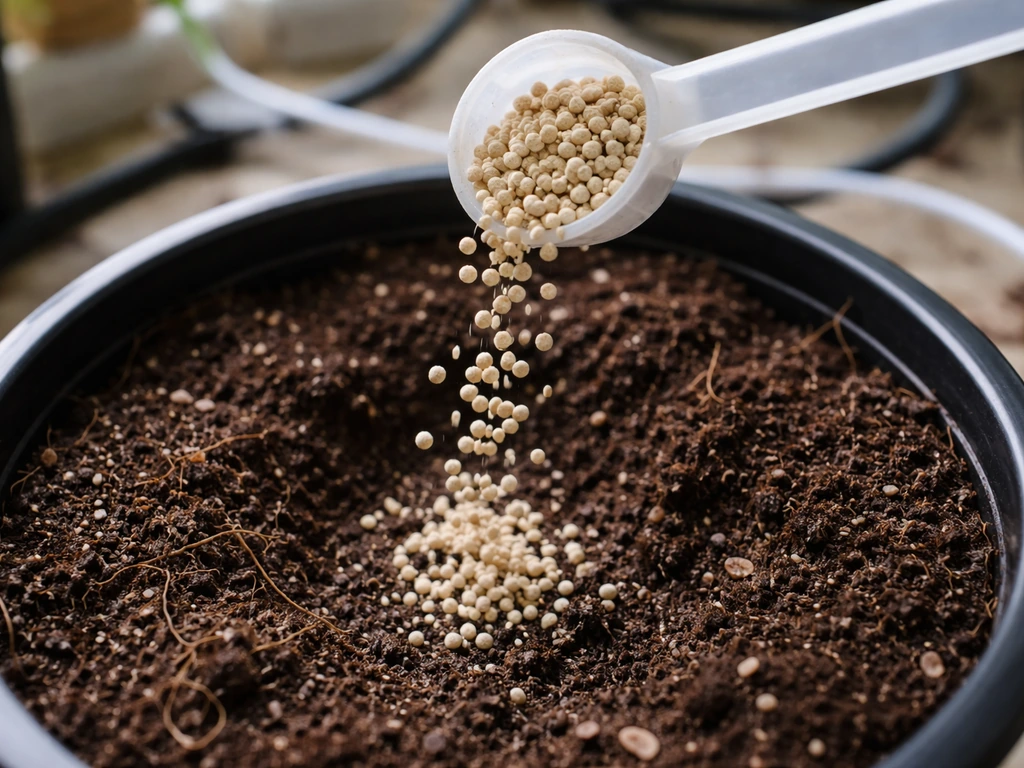
- Apply granules evenly to the soil surface at the rate on the label (typically around the drip line of the plant, not piled against the stem).
- Water in thoroughly immediately after application. The imidacloprid has to move through the growing medium to the root zone to be taken up.
- Keep the treated area moist for the first few days. If the medium dries out before the roots absorb the active ingredient, effectiveness drops significantly.
- Wear gloves during application and wash hands afterward. Avoid inhaling dust from the granules.
- Keep pets and children out of the treated area until watered in and the surface has dried.
- Ventilate the grow space well during and after application, especially indoors.
Foliar Spray Application (Soaps, Oils, Spinosad, Pyrethrins)
- Mix at the dilution rate on the label. More concentrated does not mean more effective, and too strong a dilution of insecticidal soap or oil can burn leaves, especially in high-VPD environments.
- Spray in the evening or during lights-off in an indoor grow. Oils and soaps on leaves under strong light or high temperatures can cause phytotoxicity.
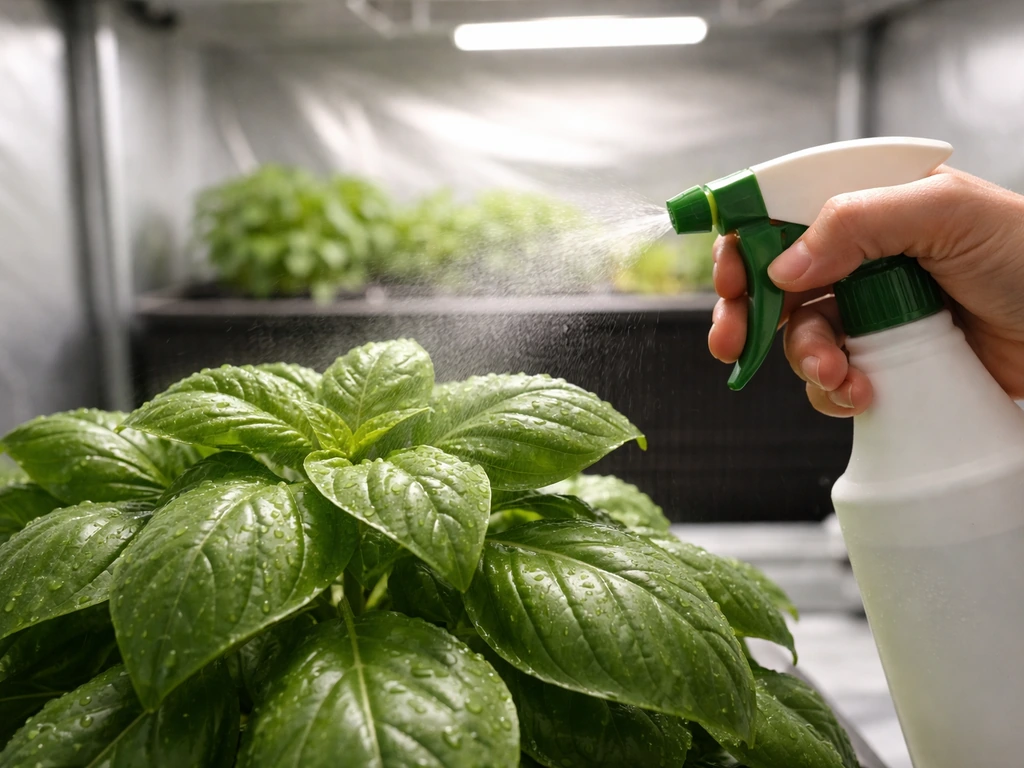
- Cover both the upper and lower leaf surfaces. Spider mites and thrips hide under leaves; most foliar sprays only work by direct contact.
- Don't spray open flowers or buds if you can avoid it. Residue on flowering sites can affect quality and create contamination issues.
- Repeat on a 3-5 day cycle for at least two to three applications to break the pest life cycle. One application kills active adults but rarely eggs.
- Allow the spray to dry fully before turning lights back on or closing the tent.
Timing Treatments to Your Plant Stage
This is where a lot of growers make expensive mistakes. Applying a systemic insecticide like imidacloprid in late flower means the active ingredient will be present in the plant tissue at harvest. Foliar sprays in late flower leave residue on buds. Neither outcome is acceptable if you're growing for consumption.
| Plant Stage | Imidacloprid (Systemic Granular) | Foliar Sprays (Soap/Oil/Spinosad) | Biological Controls (Bti, Predatory Mites) |
|---|---|---|---|
| Seedling / Clone | Not recommended (root systems too delicate) | Use at half label rate; test one plant first | Safe; preferred option at this stage |
| Vegetative | Safe and effective; water in well | Full label rate; repeat every 3-5 days | Safe; release predatory mites if mites present |
| Early Flower (weeks 1-3) | Use only if infestation is severe; 4+ weeks needed before harvest | Avoid spraying buds directly; lower canopy only | Safe; biological preferred from this stage forward |
| Mid to Late Flower (weeks 4+) | Do not use | Do not use on buds; remove heavily infested material | Still safe; predatory mites, Bti for fungus gnats only |
| Within 2 weeks of Harvest | Do not use | Do not use | Physical removal, water spray only |
If you discover an infestation in late flower, your real options narrow considerably. Physical removal of badly affected leaves, strong water sprays to knock pests off, and aggressive environmental controls (lower humidity to 40-45%, increase airflow) are your best tools at that point without risking contamination at harvest.
Hydroponic Setups: Specific Precautions
Hydro growers need to be significantly more careful with any pesticide application. Your reservoir and nutrient solution are an open system, and contamination can spread fast, affect pH and EC readings, harm beneficial microbial populations in organic hydro systems, and in worst cases wipe out a whole reservoir of plants if a concentrated chemical hits the water.
What Not to Do in a Hydroponic System
- Do not apply Richgro Bug Killa granules to hydroponic growing media (rockwool, hydroton, coco without soil buffering) with the intention of root uptake. Imidacloprid applied this way can leach directly into the reservoir at unpredictable concentrations.
- Do not spray any foliar insecticide directly over an open reservoir or nutrient solution tank.
- Do not apply oils or soaps to net pot lids or surfaces where runoff could drip into the reservoir.
- Do not use systemic soil drenches designed for soil media in deep water culture or NFT systems.
What Works in Hydro
- Foliar sprays applied to the canopy only, with reservoir covered or foliar application done outside the system if possible.
- Bti (Bacillus thuringiensis israelensis) as a reservoir additive at labeled rates for fungus gnat larvae. It's toxic only to fly larvae and safe for plants and reservoir biology.
- Yellow sticky cards hung just above net pots to capture adult fungus gnats before they lay eggs.
- Beneficial nematodes (Steinernema feltiae) applied to any media component (rockwool slabs, coco, grow medium in flood-and-drain trays) for root-zone pests.
- Predatory mites released directly on the canopy for spider mite control, with no reservoir risk at all.
- Physical reservoir isolation: cover all reservoir openings with light-blocking caps during any spray application.
If you're running a recirculating system and suspect root zone pests, do a visual root check. Healthy roots are white and firm. Brown, slimy, or stunted roots indicate either root rot or root-feeding insects. These have different treatments, and misdiagnosing root rot as root pests (or vice versa) will waste time you don't have.
Building Resistance-Proof Prevention Into Your Routine
Using the same insecticide repeatedly is how you create resistant pest populations. Imidacloprid resistance in aphids and whiteflies is well-documented in commercial horticulture, and it will happen in your grow room too if you rely on one product exclusively. The fix is rotation and prevention, not just reaction.
Monitoring: Catch Problems Before They Explode
Yellow sticky cards are your early warning system. For thrips specifically, place them vertically in the canopy with the bottom third below the top leaf level and the top two-thirds above the canopy. This catches both adults moving up through the canopy and any flying in from outside. Check cards every 3-4 days during a suspected infestation, weekly as a preventive measure. A spike in trapped insects tells you population is building before visible plant damage appears.
Sanitation Protocol Between Grows
- Remove all plant material, growing media, and debris completely after each grow. Pupating insects and eggs hide in corners, under trays, and in growing media residue.
- Wipe down all surfaces with a diluted hydrogen peroxide solution (3% H2O2 diluted 1:1 with water) or isopropyl alcohol (70%).
- Wash and sterilize any reusable containers, trays, and net pots before the next cycle.
- Allow the grow space to remain empty and dry for at least 48-72 hours between grows. Many pest life stages can't survive without a host plant for more than a few days.
- Quarantine new clones or seedlings from other sources for 1-2 weeks before introducing them to your main grow space.
Rotating Your Control Methods
Never rely on one product for more than two consecutive treatment cycles. Spray and grow products can be used safely only when you follow the label rate and timing for your specific crop and growth stage how often can i use spray and grow. Alternate between different modes of action: for example, use insecticidal soap for one application cycle, spinosad for the next, then introduce predatory insects as a biological control for ongoing suppression. For soil grows, imidacloprid can be part of that rotation during veg, but it shouldn't be the only tool you reach for. This approach also aligns well with broader organic and natural growing practices if you're growing without synthetic pesticides outdoors.
When the Treatment Didn't Work: Troubleshooting
If you treated and still have a problem a week later, work through this checklist before retreating. If you still need the right product, check reputable garden retailers and online marketplaces for halo grow supplies in your area.
- Wrong pest ID: Imidacloprid won't kill spider mites. Soaps won't reach root-zone larvae. Reconfirm what you're dealing with using a hand loupe on leaf undersides and a sticky card check.
- Incomplete coverage: Foliar sprays fail when the undersides of leaves aren't coated. Use a pressure sprayer and tip leaves to access the undersides.
- Granular not watered in properly: Imidacloprid granules sitting dry on the surface won't reach the roots. Rewater thoroughly.
- Life cycle mismatch: One application kills active adults but not eggs. Wait 3-5 days and retreat to catch the next generation as it hatches.
- Resistance: If you've been using the same product for multiple cycles and it's losing effectiveness, switch to a completely different mode of action immediately.
- Environmental conditions helping the pest: Spider mites thrive above 27°C and below 40% humidity. Fungus gnats explode when growing media stays wet. Fix the environment alongside treatment or you're fighting uphill.
FAQ
I searched “Rich Grow bug killer,” how do I make sure I actually bought the right product?
Do not substitute it just because the bucket says something similar, especially if you are in hydroponics. Confirm the active ingredient on the label (it should specify imidacloprid for “Bug Killa”), because other Richgro products can use different actives and behave very differently.
What should I expect for timing after applying Richgro Bug Killa, and when do I stop waiting and reassess?
Yes, imidacloprid is slow to show full results. If you do not see meaningful reduction within about a week, assume either the pest was misidentified, the application rate was too low, or the pest is living in a part of the system the treatment does not reach.
Why do aphid treatments work for some pests but not for spider mites, even when the plant looks “almost the same”?
Richgro Bug Killa is not effective for spider mites because they are arachnids, not insects. If your damage includes webbing under leaves or stippling that worsens in hot, dry conditions, switch plans to controls targeted for mites rather than repeating imidacloprid.
How can I tell whether the infestation is on the leaves or actually coming from the root zone?
Do a quick leaf and root separation check. If you see adults or sap-suckers on foliage, leaf treatments can help, but if you find slimy or stunted roots, the problem may be root rot or root-feeding insects, which requires different actions than foliar insect control.
What options do I have if I discover the infestation during late flower?
If you are in late flower, assume systemic residues are a problem. Your safer path is usually physical removal (badly affected leaves), strong water knockdown, and tightening environmental conditions like humidity and airflow rather than extending systemic insecticide use into harvest time.
How do I prevent resistance when I keep getting the same insect problem back again?
Repeated use is the quickest way to lose effectiveness. A practical rule is not to rely on imidacloprid for more than two consecutive treatment cycles, then rotate modes of action (for example, insecticidal soap, then a different chemistry, then consider biological control) to slow resistance.
Where should I place sticky traps to actually catch thrips, and how often should I check them?
Sticky card placement should match the pest’s movement, not just general monitoring. For thrips, put the cards vertically in the canopy with the bottom third under the top leaf level and most of the card above the canopy, then check every few days during a suspected outbreak.
Should I inspect roots before I apply another round of insecticide in hydro?
If you suspect root zone pests in a recirculating system, inspect roots visually before retreating. Healthy roots are typically white and firm, while brown, slimy roots point to rot or another issue that may be worsened by treating the wrong target.
What are the biggest risks if I apply imidacloprid in hydroponics and something seems “off” in the reservoir afterward?
If you treat hydro and notice pH, EC, or reservoir clarity changing soon after dosing, stop and check the solution. Concentrated chemicals can disrupt beneficial microbes and rapidly spread through an open reservoir, so treat contamination risk as a first-class concern.
What’s the fastest way to troubleshoot when my “bug killer” didn’t work at all?
Pest control often fails because the product does not match the life stage and habitat. Use pest ID first, then map it to where it lives (leaf, soil/medium, or root zone) so your control method reaches the pest where it feeds or develops.