Here is the short answer: Spray N Grow micronutrients (the flagship foliar feed) is not certified organic. It contains iron sulfate and zinc chloride, and it carries no OMRI listing or USDA National Organic Program (NOP) compliance claim on the micronutrient product itself. Some other products in the Spray N Grow lineup, like their Soil Optimizer and Revitalize biofungicide, do carry organic certifications, but the core micronutrient spray does not. If you are trying to maintain a certified or organic-aligned grow, that distinction matters a lot, and this article will walk you through exactly how to verify it, what it means for your setup, and what to do next.
Is Spray N Grow Organic? How to Verify the Label Fast

Marcus Holloway
16 Apr 2026

What Spray N Grow actually is (and why growers reach for it)
Spray N Grow is a foliar micronutrient solution made to supplement whatever base fertilizer program you are already running. Its primary active ingredients are iron sulfate and zinc chloride, delivered as a liquid foliar feed that you spray directly onto leaves. The idea is that plants absorb micronutrients more efficiently through leaf tissue than through the root zone, so a targeted foliar application fills in trace-element gaps faster than waiting for soil or reservoir uptake. The manufacturer positions it as an add-on, not a replacement for your main feeding regimen.
Growers tend to pick it up because micronutrient deficiencies (the kind that show up as interveinal chlorosis, leaf curl, or slow bud development) can stall a grow even when your macronutrients look perfect. It has a long track record, it is widely distributed, and it works across soil and hydroponic setups according to the manufacturer's own hydroponics-specific application directions. That accessibility is exactly why the organic question comes up so often. Plenty of people buy it without checking the label for certification language, and then realize mid-grow that they need to know whether it fits their organic plan.
What 'organic' actually means in a growing context
The word 'organic' gets used loosely in gardening and growing, and that looseness is where a lot of confusion lives. In a casual sense, growers use 'organic' to mean naturally derived, free from synthetic chemicals, or soil-food-web friendly. In a legal and regulatory sense, it means something much more specific. Under USDA NOP rules (7 CFR §205.105 and §§205.601–205.602), substances used in certified organic crop production are evaluated on a two-track system: nonsynthetic substances are allowed unless specifically prohibited, while synthetic substances are prohibited unless specifically allowed by the National List. Zinc chloride, for example, is a synthetic compound, so whether it qualifies depends entirely on whether it appears on the allowed National List, not on whether it came from a mineral source.
For practical purposes as a home grower (who may not be pursuing USDA certified organic status but still wants to run a clean, organic-aligned grow), the useful question is: does this product carry a recognized third-party certification, like an OMRI listing, or does the manufacturer explicitly claim NOP compliance for this specific product? Marketing language like 'natural,' 'plant-based,' or 'mineral-derived' does not equal certified organic. You need a certification claim backed by a certifying body, not just ingredient sourcing language.
How to verify whether Spray N Grow is organic right now
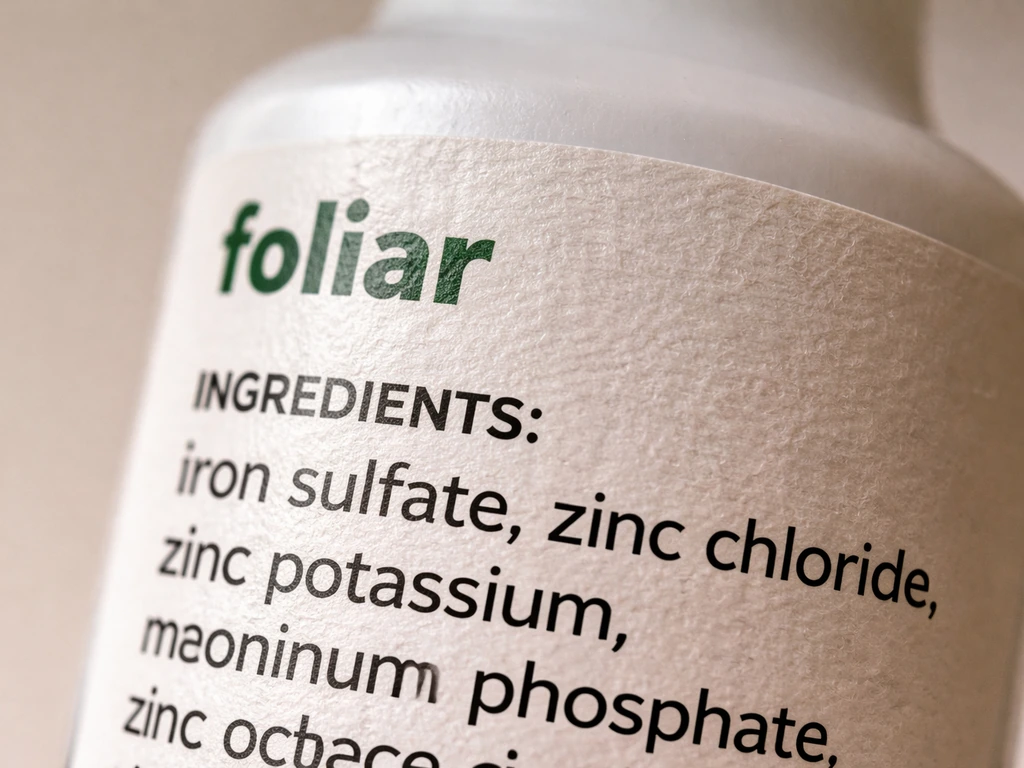
The fastest way to verify is to check three things in order: the product label, the OMRI database, and the manufacturer's own product page language. Here is what you will find for each Spray N Grow product.
The micronutrient foliar spray (the main product)
The Spray N Grow Micronutrients product page does not claim USDA organic certification or NOP compliance. The ingredient list shows iron sulfate and zinc chloride, and the product is positioned as a supplement to your regular fertilizer program. State fertilizer registration records (Washington state records from 2013 and 2019, for instance) list the same ingredients and classify the product as a micronutrient/mineral input, not as a certified organic input. If you search the OMRI database for Spray N Grow micronutrients, you will not find it listed. OMRI listing is the clearest signal for whether a product is verified for use in organic production, so its absence is meaningful.
Under the USDA's NOP 5034-1 guidance on permitted materials for organic crop production, specific iron forms like iron sulfates can appear on the allowed list, but that allowance is form-specific and use-specific. The presence of zinc chloride in the formulation adds complexity, since synthetic chloride compounds face scrutiny under organic rules. The bottom line: the micronutrient product has not gone through the process of getting listed as an approved organic input, and you should treat it as non-certified for organic compliance purposes.
Other products in the Spray N Grow lineup
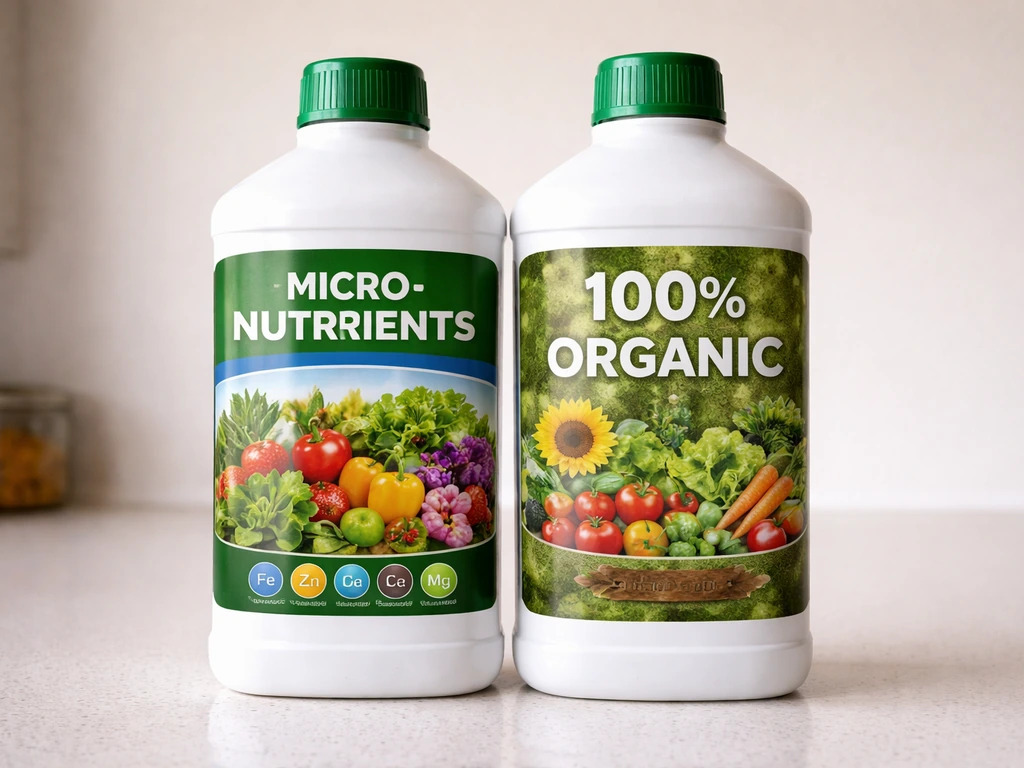
This is where it gets important to read labels by product, not by brand. Spray N Grow's Soil Optimizer is explicitly described by the manufacturer as '100% organic' and carries an OMRI listing, meaning it has been independently verified for use in organic production. Their Revitalize biofungicide is labeled 'Organic biofungicide' and includes 'National Organic Program Compliant' language, which is a specific regulatory claim, not a marketing line. So if you are using Revitalize for disease control, you are on solid organic ground. If you are using the core micronutrient spray, you are not in certified-organic territory. Same brand, very different certification status across products.
To do your own verification: pull up the OMRI Products List search tool at omri.org and search the specific product name. Then cross-check the manufacturer's product page for explicit NOP or OMRI language. If neither source shows a certification, treat the product as non-certified regardless of how it is marketed. Finding organic-certified grow inputs can sometimes feel like a scavenger hunt, and this two-source check cuts through the noise quickly.
What to do if Spray N Grow micronutrients doesn't fit your organic goals
If you are committed to running a certified or organic-aligned program, you have solid alternatives for each function that Spray N Grow micronutrients serves. The key is matching the replacement to the specific deficiency or goal you were trying to address.
- For iron deficiency: look for chelated iron products (iron EDTA or iron DTPA) that carry OMRI listing, or kelp-based micronutrient blends that are NOP compliant. Check labels for the 'OMRI Listed' seal before purchasing.
- For zinc deficiency: zinc sulfate monohydrate is on the USDA National List as an allowed synthetic in organic crop production when used as a plant nutrient, but only when the deficiency is documented. OMRI-listed zinc inputs exist and are the safer choice for compliance.
- For broad-spectrum micronutrient supplementation: seaweed/kelp extracts (like those derived from Ascophyllum nodosum) are widely OMRI-listed and cover a range of micronutrients and trace minerals as a foliar feed. They are a practical organic alternative to a synthetic micronutrient spray.
- For disease control: if you were using Spray N Grow products partly for that function, Revitalize itself (the biofungicide in their lineup) is NOP compliant and can stay in your program.
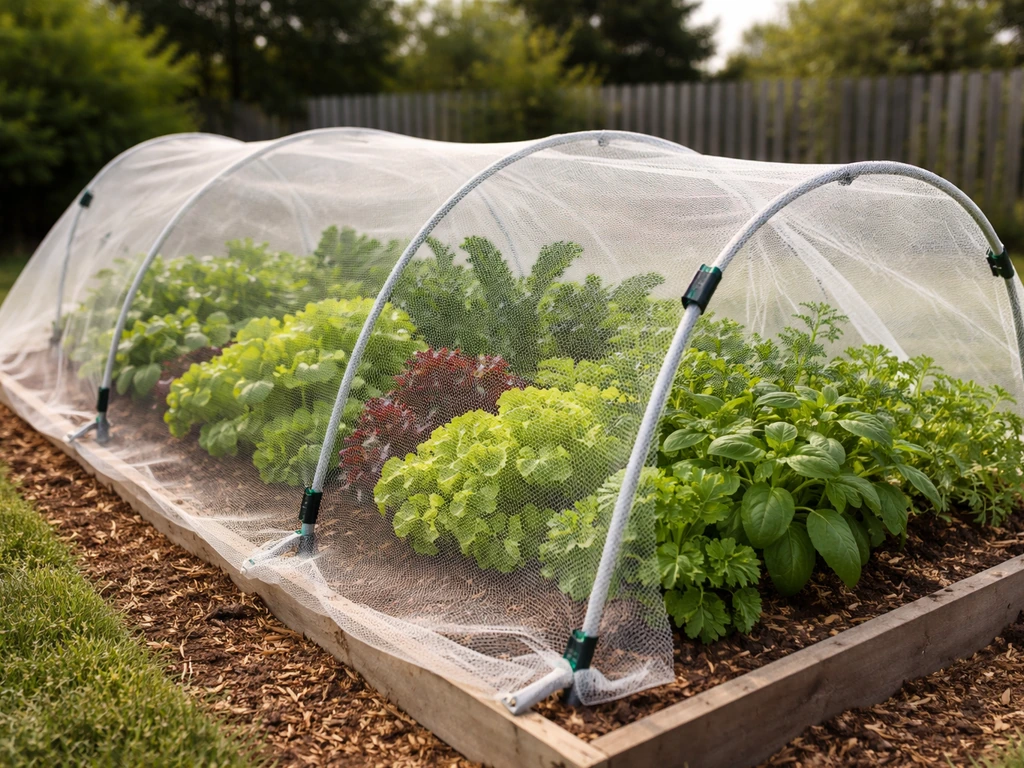
- For pest pressure: organic IPM strategies, including beneficial insects and physical barriers, are the first line of defense under organic practice standards (§205.206 requires preventive and cultural approaches before any input).
When you switch inputs mid-grow, watch your plants for about a week after the first application to confirm the deficiency is being addressed. Foliar uptake is fast (usually 24–72 hours for initial response), so you will know pretty quickly if the replacement product is doing the job. For a deeper look at keeping pests out of the picture without reaching for synthetics, protecting your outdoor grow from bugs naturally covers cultural and biological controls that pair well with an organic input plan.
Soil vs. hydroponics: using Spray N Grow responsibly in both systems
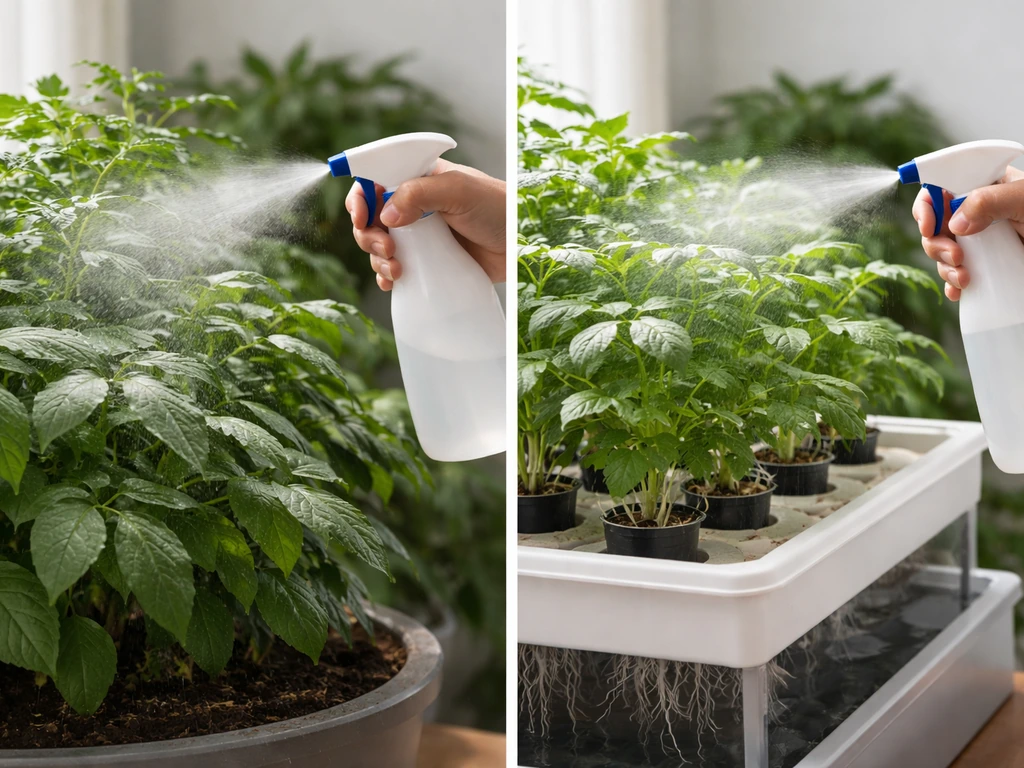
Whether you are running soil or hydro, Spray N Grow micronutrients is always applied as a foliar spray, not added to a reservoir or soil drench. The manufacturer's hydroponics-specific directions treat it explicitly as a foliar feed supplement rather than a reservoir nutrient, and that is an important operational distinction. You are not replacing your base nutrient solution with it; you are adding micronutrient coverage on top of your existing program via leaf application.
| Factor | Soil Grows | Hydroponic Grows |
|---|---|---|
| Application method | Foliar spray onto leaves (not a soil drench) | Foliar spray only, not added to reservoir |
| Organic compatibility | Non-certified for USDA organic; synthetic inputs can affect organic soil biology | Organic certification less common in hydro, but NOP compliance still relevant if certifying |
| pH sensitivity | Less critical for foliar; soil pH affects soil uptake separately | Foliar mixing pH should match label specs; hydro water chemistry amplifies inconsistencies |
| Timing with other inputs | Wait 5–7 days before/after chemical fertilizers, fungicides, or insecticides | Same 5–7 day buffer applies; foliar schedule should be mapped week-by-week |
| Disease pressure risk | Moisture on leaves can encourage fungal issues; apply in low-humidity conditions | High-humidity grow tents amplify foliar moisture risk; monitor closely after application |
| Organic alternative | OMRI-listed kelp or chelated iron foliar sprays | Same OMRI-listed foliar products work; check that they are safe for foliar in hydro environments |
One thing that catches growers off guard with foliar feeding in enclosed environments: applying any foliar spray increases leaf surface moisture, and in warm, humid grow spaces, that creates a window for fungal issues. The manufacturer's recommendation to wait 5–7 days around chemical fertilizer, fungicide, or insecticide applications is partly about residue and compatibility, but it also gives your canopy time to dry out and reset between applications. This spacing discipline is good practice regardless of whether you are using Spray N Grow or an organic alternative. If you want more context on how bug and disease pressure intersects with your input choices, it is worth reviewing your full IPM approach alongside your nutrient program.
In hydroponic systems specifically, foliar feeding performance is sensitive to water chemistry. Mixing your foliar solution to the right pH (typically 5.5–6.5 for most foliar feeds, but check your specific product label) and applying when lights are off or during lower-intensity periods helps with absorption and reduces stress. Do not eyeball this in a hydro setup; the controlled environment that makes hydro efficient also makes it less forgiving of sloppy application. For more on spacing out your foliar applications over time, how often you can apply Spray N Grow covers the scheduling details directly from the manufacturer's guidance.
Your checklist for today
You do not need to overthink this. Run through these steps and you will have a clear answer and a plan within the next 30 minutes.
- Identify which Spray N Grow product you have or are considering. The micronutrient foliar spray, Soil Optimizer, and Revitalize are different products with different certification statuses.
- Check the label for an OMRI Listed seal or explicit 'National Organic Program Compliant' language. If neither appears, the product is not certified organic.
- Cross-check at omri.org using the product search. This takes under two minutes and gives you a definitive answer independent of marketing language.
- If you are using the micronutrient spray in an organic program, swap to an OMRI-listed kelp or chelated iron foliar product for the same micronutrient function.
- If you are using Revitalize or Soil Optimizer, those can stay in your organic program as-is based on current manufacturer claims and OMRI/NOP status.
- Map your foliar application schedule with a 5–7 day buffer around any other sprays or chemical fertilizer applications, and plan applications for low-humidity windows to reduce fungal risk.
- In hydro: confirm your foliar mixing pH matches label specs and apply as a foliar feed only, never into the reservoir.
The broader takeaway here is that 'organic' on a product is only as meaningful as the certification behind it. With Spray N Grow, the brand includes genuinely organic-certified products right alongside non-certified ones, which makes brand-level assumptions risky. Read each product individually, verify with OMRI or NOP compliance language, and make the call based on what the label actually says rather than what the brand name suggests.
FAQ
If Spray N Grow has some organic-certified products, does that automatically mean the micronutrients spray is organic?
Not always. “Organic” and “certified organic” are different. For organic-aligned buying, you should rely on a specific certification signal on that exact SKU (for example, an OMRI listing or an explicit NOP-compliant claim on the label), not just the brand name or ingredient origin.
How can I confirm I’m looking up the exact Spray N Grow product, not a different variant with a different certification status?
Check the exact product name and, if listed, the product size or variant. OMRI listings are tied to specific formulations, so a different Spray N Grow micronutrient mix could theoretically have different status, even within the same product line.
What should I do if OMRI search comes up blank but the label uses “natural” or “mineral” wording?
If you cannot find a match on OMRI or you cannot find a clear NOP/OMRI statement on the product page and label, the safest assumption is non-certified for organic compliance purposes. Don’t rely on “natural,” “mineral-derived,” or “plant-based” language as a substitute for a certification claim.
Can I judge organic compliance by the presence of ingredients like iron sulfate, since some iron forms can be allowed?
For an organic program, treat compliance as product-by-product and use-by-use. Even if one ingredient form can be allowed, the full formulation and its intended use still need to meet the National List requirements, so you cannot conclude compliance from a single ingredient alone.
I already bought the micronutrient spray mid-grow. What’s the quickest decision workflow to avoid making a compliance mistake?
Use a “stop and verify” approach before you commit to the next foliar application. Write down the exact product name, run the OMRI check for that name, then compare it to the manufacturer label wording for that same SKU. If those do not align, pause and switch to an input that is verified for the same purpose.
If I switch away from Spray N Grow micronutrients, do I need an exact micronutrient-for-micronutrient replacement, or can I use any iron and zinc source?
Yes, but only if you can match the purpose, timing, and application method. Spray N Grow micronutrients are foliar-applied as a supplement, so a replacement should also be suitable for foliar use, not just any fertilizer that happens to contain iron and zinc.
How long should I wait to see whether a new foliar micronutrient product is actually correcting the deficiency?
Plan for an observation window after the switch. Since foliar responses can show up within roughly 24 to 72 hours, you can usually confirm whether the deficiency is improving within about a week, and then adjust your plan based on the plant response.
Does foliar micronutrient verification change in hydroponics, or do I still follow the same product-by-product compliance checks?
In hydroponics, don’t treat foliar feeding like reservoir feeding. The operational requirement is still leaf application and matching the foliar solution pH to label guidance, then applying during appropriate light conditions to reduce stress and improve uptake.
If I’m not pursuing USDA certification, does “not organic” still matter for plant health and overall grow quality?
No. Even non-organic certified products may be compatible with your IPM goals, but they will not meet certified organic requirements unless the specific SKU is verified. If certification is required, choose an OMRI-listed or explicitly NOP-compliant foliar micronutrient product for that exact function.
If foliar sprays seem to cause problems, could it be because it’s not organic, or is it more likely an application environment issue?
Mixing and application conditions can make results look like “certification differences.” In warm, humid spaces, foliar sprays increase leaf moisture, so you should maintain spacing between applications and ensure good canopy drying regardless of whether the input is organic-certified or not.