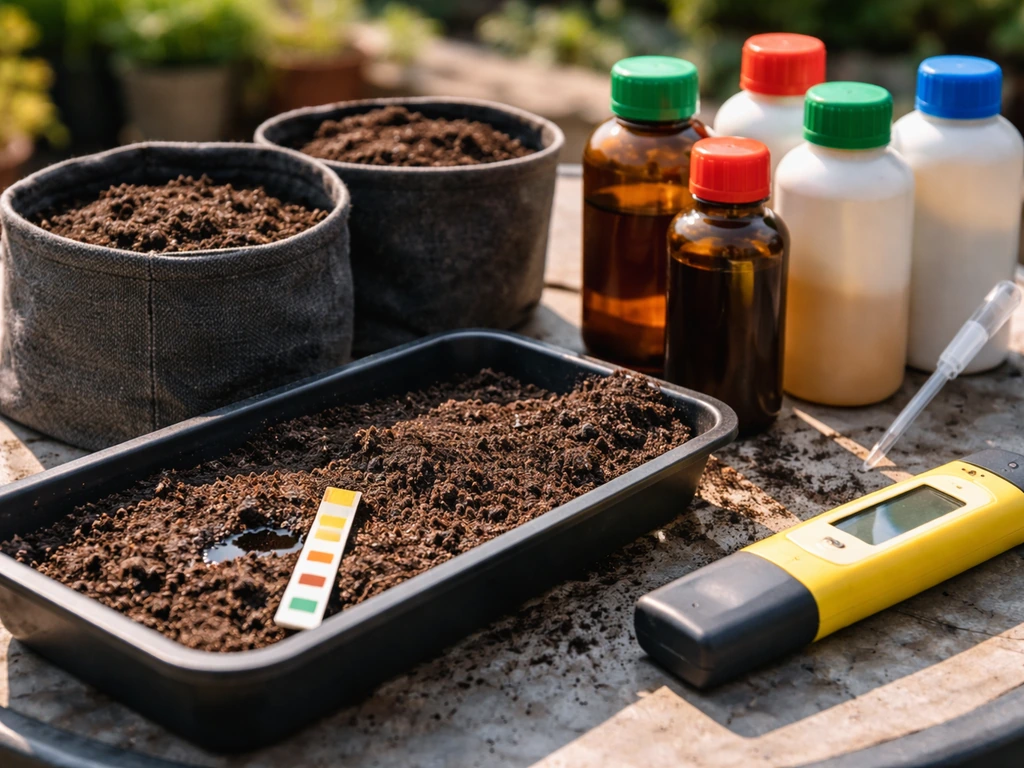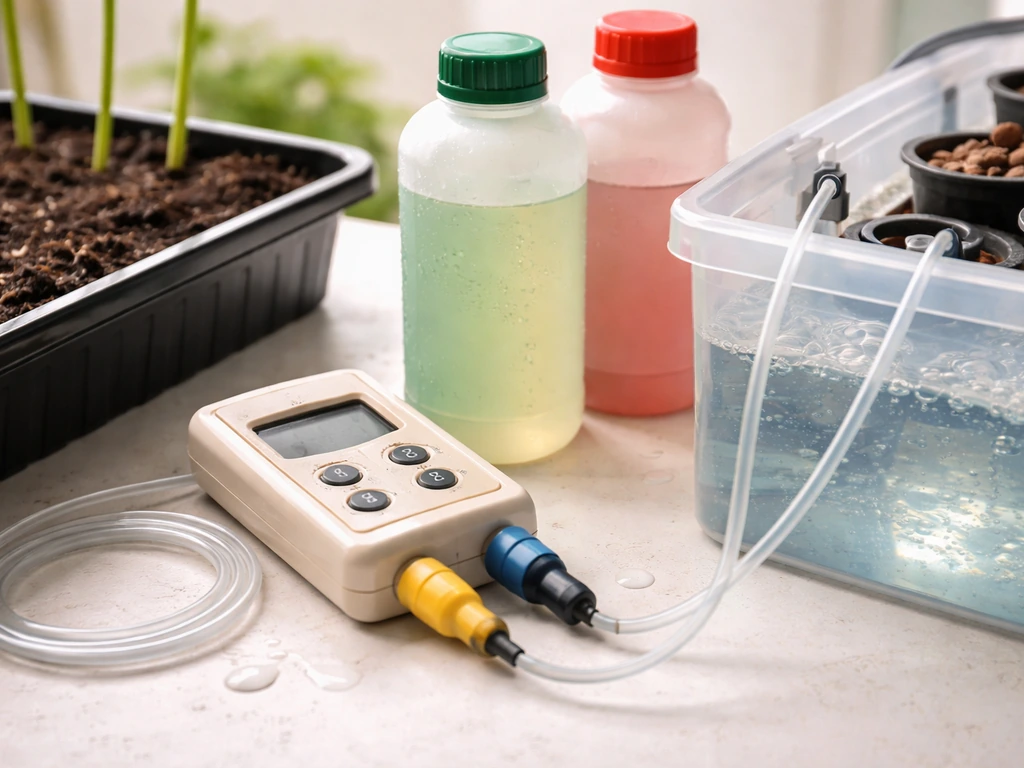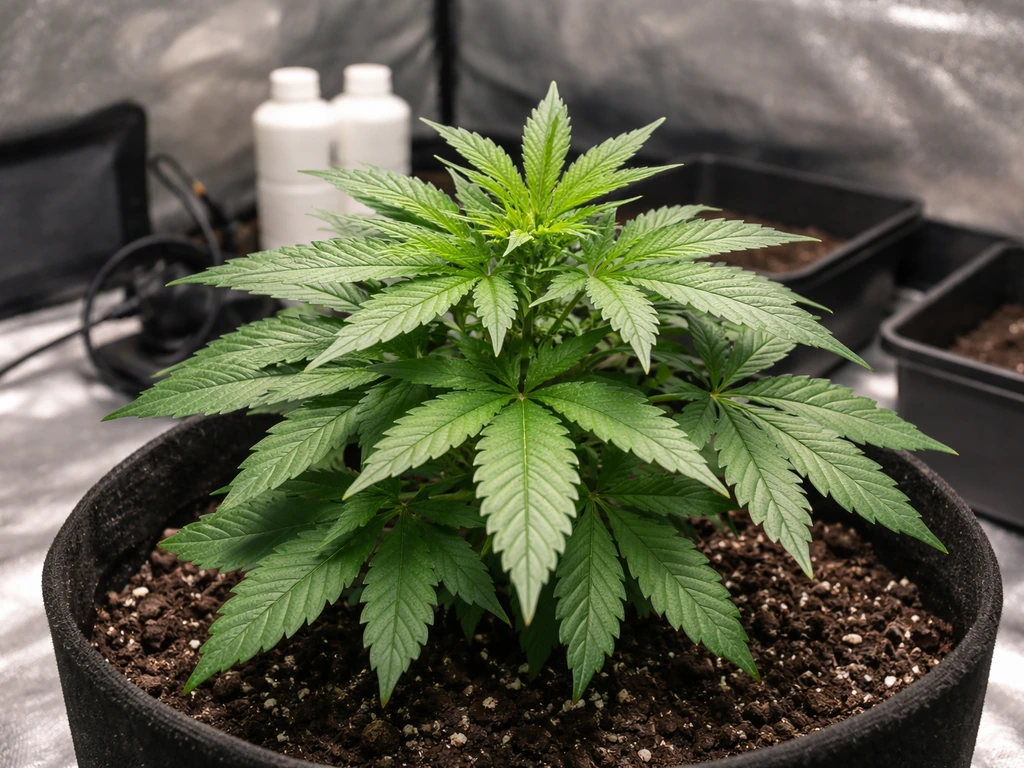
For most indoor grows, a 2-part or 3-part liquid nutrient system matched to your medium gives the best results. In soil, keep pH between 6.2 and 6.5 and feed at a modest EC (around 1.0 to 2.0 mS/cm depending on stage). In hydroponics or coco, target pH 5.5 to 6.2 and EC 0.8 to 1.8 mS/cm. Start with a reputable base line like General Hydroponics FloraSeries, CANNA Coco A+B, or Biobizz for organics, follow the manufacturer's stage-based feed chart, always add nutrients before checking pH, and you will avoid 90% of the problems that trip up indoor growers.
Best Indoor Grow Nutrients: Choose, Mix, and Feed by Stage

Marcus Holloway
29 Apr 2026
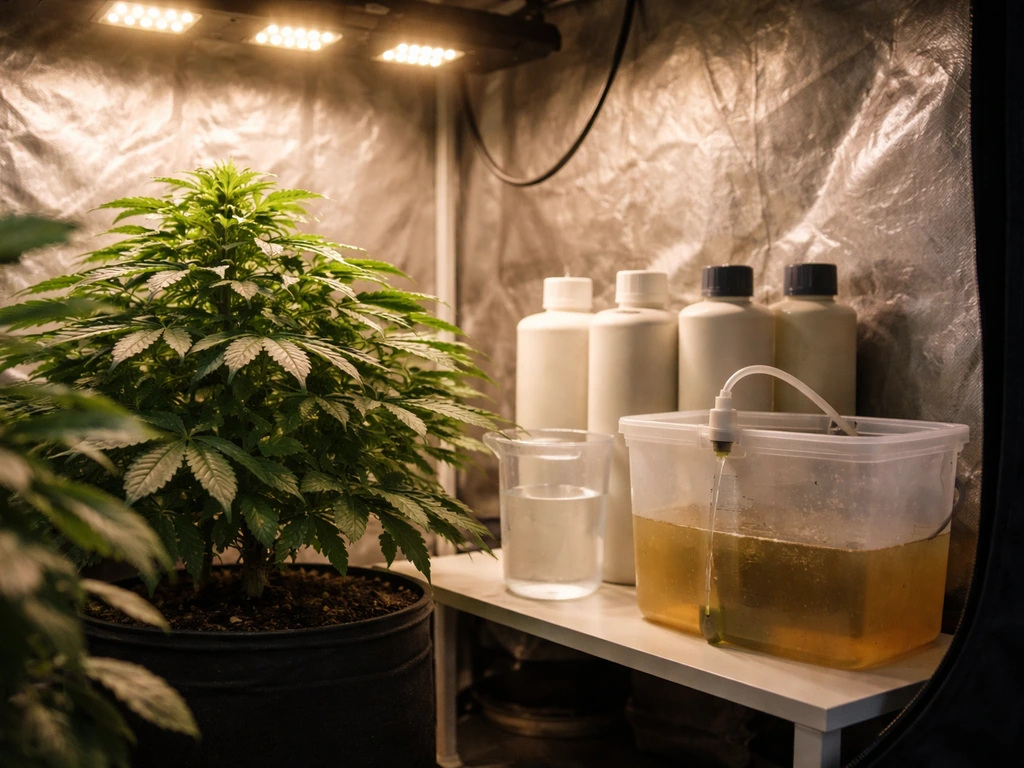
How to choose the best nutrients for your indoor grow
"Best" is meaningless without knowing your plant, your medium, and your growth stage. If you want the best grow nutrients, treat “best” as a starting point and match the formula to your plant, medium, and growth stage rather than chasing one brand. If you are wondering what nutrients does weed need to grow, the main answer is nitrogen, phosphorus, and potassium adjusted by growth stage. A vegetative cannabis plant in soil needs a nitrogen-forward formula at moderate strength.
That same plant in week 6 of flower needs far less nitrogen and a lot more phosphorus and potassium. A seedling needs almost nothing at all. Before you buy anything, answer three questions: What am I growing? What am I growing it in?
What stage is it at right now?
Plant type matters because some crops (cannabis, tomatoes, peppers) are heavy feeders that respond well to aggressive EC targets, while herbs and leafy greens are lighter feeders that burn easily if you push EC too high. Medium matters because soil buffers pH and holds residual nutrients, while coco and hydroponics are essentially inert and depend entirely on what you put into the solution. Growth stage matters because nutrient ratios shift dramatically from seedling through veg to flower and finally to flush. A nutrient line built around stage-based feeding removes the guesswork.
Soil vs. hydroponics: which nutrient lines actually work
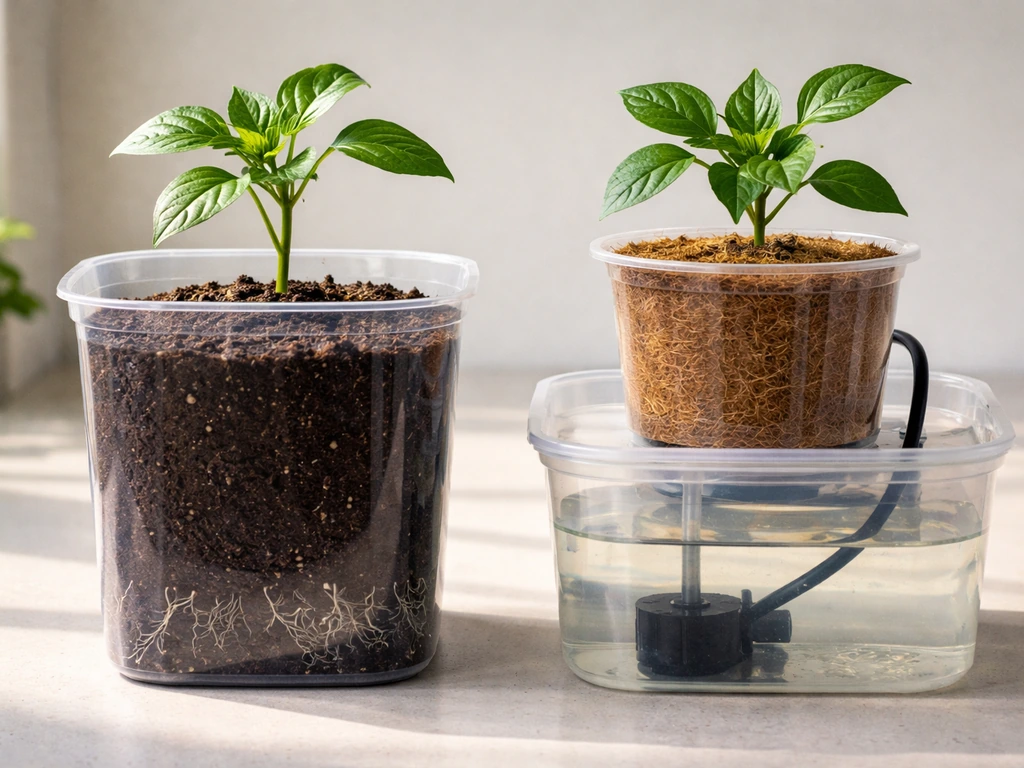
Soil and hydro have different pH windows and different tolerances for formula complexity, so using the wrong product in the wrong medium costs you yield and time. Here is how the main nutrient line options stack up across both categories.
| Nutrient Line | Best Medium | System Type | pH Target | EC Range (mS/cm) | Good For |
|---|---|---|---|---|---|
| General Hydroponics FloraSeries | Hydro / Coco / Soil | 3-part liquid | 5.5–6.5 | 0.8–2.4 | All stages, experienced growers |
| CANNA Coco A+B | Coco exclusively | 2-part liquid | 5.5–6.2 | 0.8–1.8 | Coco specialists, cannabis |
| Biobizz Bio·Grow + Bio·Bloom | Soil / Light mix | 2-bottle organic | 6.2–6.5 | 1.0–2.0 | Organic soil growers |
| Jack's Nutrients 3-2-1 | Hydro / Coco | 3-part powder | 5.5–6.2 | 1.2–2.2 | Cost-conscious, precise growers |
| House & Garden Aqua Flakes | Recirculating hydro | 2-part liquid | 5.5–6.0 | 1.0–2.2 | DWC / NFT systems |
| Fox Farm Trio | Soil / Coco | 3-bottle liquid | 6.0–7.0 | 1.0–2.4 | Beginners, soil growers |
For coco in particular, CANNA Coco A+B is purpose-built and the targets on the label (pH 5.5 to 6.2, EC 0.8 to 1.8) are well-tested. If you are running a recirculating deep water culture system, House & Garden's pH-stable line is worth the extra cost because it drifts less between reservoir changes. For soil beginners, Fox Farm Trio and Biobizz are forgiving because soil buffers pH swings that would cause lockout in a bare hydro system.
Complete one-bottle vs. 2-part vs. 3-part systems
This is where a lot of beginners overspend or underbuy. Here is the honest breakdown of each format.
One-bottle or complete formulas
These are convenient but limited. A single-bottle formula has to compromise on nutrient ratios because it cannot change the NPK balance between veg and flower. They work fine for simple crops like herbs and lettuce, or for growers who want a no-fuss approach and accept slightly lower performance. For cannabis or heavy-fruiting plants through a full cycle, one-bottle formulas usually fall short in late flower.
2-part systems
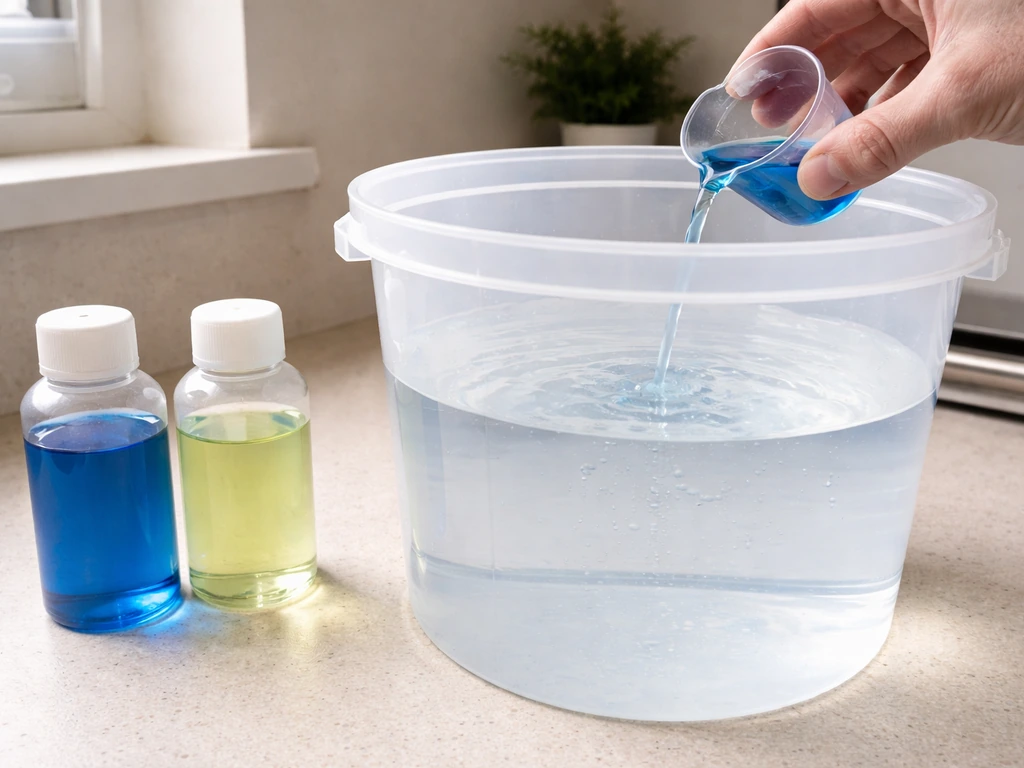
CANNA Coco A+B is the classic example. You always mix equal parts A and B (never add them to each other in concentrate form, always dilute into water separately). The benefit is simplicity with some flexibility: you can adjust overall EC up or down by stage without changing the formula balance. This is the sweet spot for most growers running a single crop type through the full cycle. The limitation is you cannot shift the NPK ratio dramatically in late flower without adding a separate bloom booster.
3-part systems
General Hydroponics FloraSeries (FloraMicro, FloraGro, FloraBloom) is the most widely used example. You dial in the ratio of each bottle by growth stage, which means you can go heavy on nitrogen in veg and heavy on phosphorus and potassium in flower, all from the same three bottles. This is the most flexible format for a full indoor grow cycle and the one experienced growers tend to stick with. The trade-off is that you need to follow a feed chart carefully and mix in the right order: always add FloraMicro first, then FloraGro, then FloraBloom. Mixing parts out of order or combining concentrates can cause precipitation and nutrient lockout before the solution even reaches your plants.
Supplements: cal-mag and beyond
In most indoor setups, especially those running reverse osmosis water or soft tap water, a calcium-magnesium supplement is not optional, it is essential. General Hydroponics CALiMAGic (1-0-0) is the standard go-to. It is derived from magnesium sulfate and calcium carbonate and adds the secondary nutrients that base formulas often underprovide. Add cal-mag to your reservoir before your base nutrients. Beyond cal-mag, most beginners do not need the full shelf of additives, silica, enzymes, and bloom boosters that nutrient companies push. Get the base dialed in first.
How to mix and feed correctly: EC, PPM, pH, and schedules
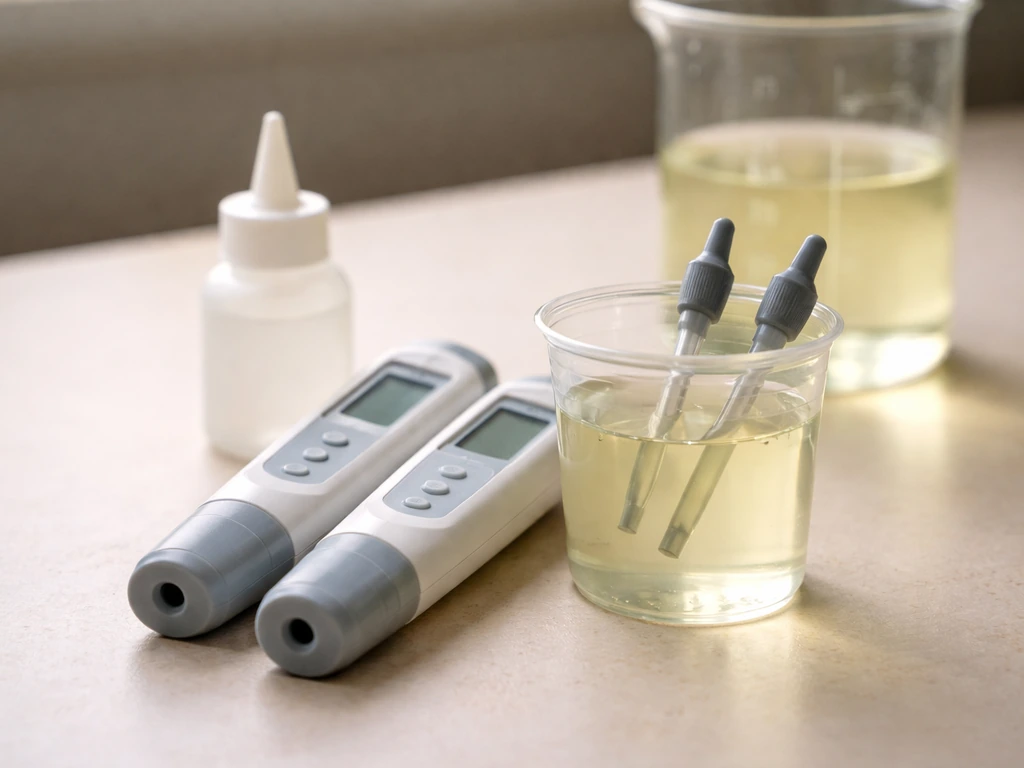
This is the step where most indoor nutrient problems actually start. Mixing incorrectly or skipping pH adjustment causes more deficiencies than the wrong product choice.
Understanding EC and PPM
EC (electrical conductivity) measures total dissolved salts in your solution and is the most reliable way to know if your nutrient strength is appropriate. PPM (parts per million) is just EC converted to a concentration figure: 1 ppm equals 1 mg/L. Most meters display both. EC in mS/cm is the more precise unit and the one used on most professional feed charts. If your meter only reads PPM, multiply EC by 500 (on the 500 scale, common in North America) or by 700 (on the 700 scale) to get the PPM equivalent. Always calibrate your EC meter with a calibration buffer solution before use because an uncalibrated meter will give you meaningless readings.
Stage-by-stage EC targets
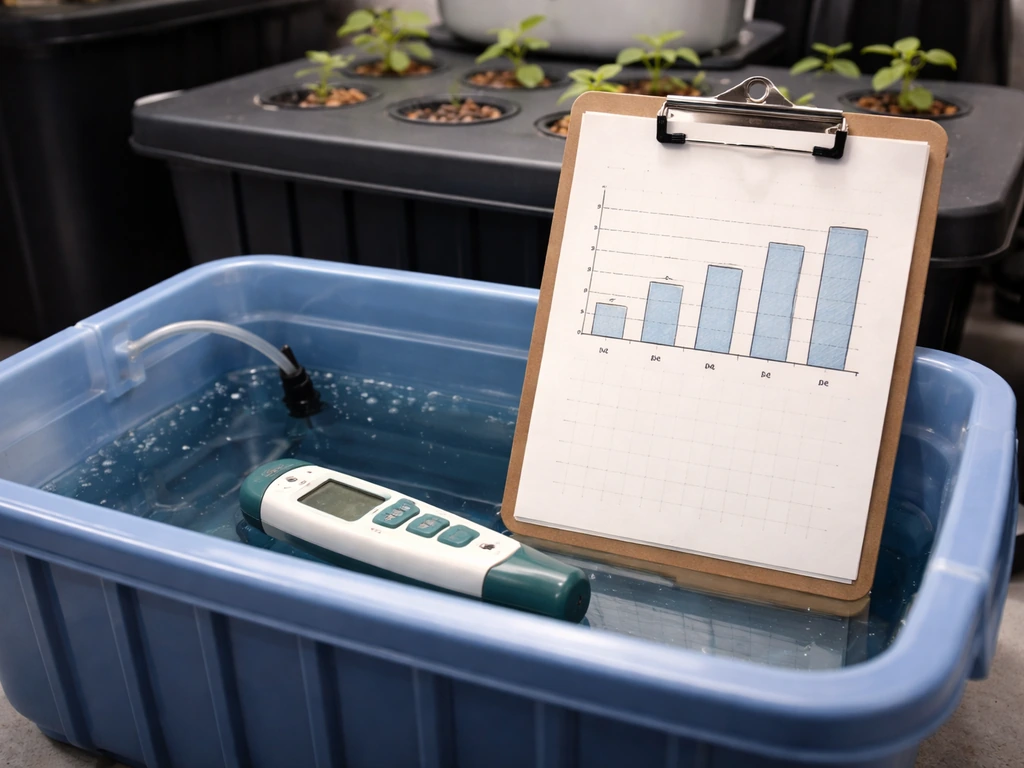
| Growth Stage | Target EC (mS/cm) | Approximate PPM (500 scale) | Notes |
|---|---|---|---|
| Seedling / Propagation | 0.4–0.8 | 200–400 | Plain or very lightly fed water only |
| Early Veg | 0.8–1.2 | 400–600 | Ramp up slowly |
| Full Veg | 1.2–1.8 | 600–900 | Nitrogen-forward formula |
| Early Flower | 1.4–2.0 | 700–1000 | Begin shifting to bloom ratio |
| Peak Flower | 1.6–2.4 | 800–1200 | Max feed strength for heavy feeders |
| Late Flower / Pre-Flush | 1.0–1.4 | 500–700 | Pull back, monitor runoff EC |
| Flush | 0.0–0.4 | 0–200 | Plain water or flushing agent |
Jack's Nutrients and the GH FloraSeries feed charts both follow this arc, and their PDFs show the exact amounts per gallon or per liter at each stage. Use the General Hydroponics FloraSeries Basic Feed Charts PDF to match your nutrient mix to the exact stage-based amounts shown in the charts their PDFs show the exact amounts per gallon or per liter at each stage. Start at the lower end of each EC range and only push higher if your plants are responding well (deep green leaves, no tip burn, healthy root color).
pH: the number that controls everything
You can have a perfect EC and a perfect nutrient formula and still grow starving plants if your pH is wrong. pH controls which nutrients are chemically available for uptake. In hydroponics and coco, keep pH between 5.5 and 6.2, ideally drifting across that range rather than locked at one point. In soil, the target is slightly higher: 6.2 to 6.5. Biobizz specifically states 6.2 to 6.5 as the ideal range for their soil systems. Most hydroponic crops follow the 5.5 to 6.5 window from Missouri Extension guidance, with 5.5 to 6.0 being tighter for recirculating systems.
Always mix nutrients into water first, check and adjust EC, then check and adjust pH last. pH adjusters interact with the nutrient solution, so adding pH-down or pH-up after nutrients gives you a stable final reading. Use phosphoric acid or citric acid to lower pH, and potassium hydroxide to raise it. When tap water pH is extremely high, sulfuric acid or phosphoric acid can be used to acidify before adding nutrients, as OSU Extension recommends for high-alkalinity water sources.
A practical mixing order to follow every time
- Start with your base water (RO, tap, or well water) in the reservoir or mixing bucket
- Add cal-mag supplement first if using RO or soft water
- Add Part A (or FloraMicro if using GH 3-part) and stir well
- Add Part B (or FloraGro) and stir
- Add Part C (FloraBloom) or any bloom additives and stir
- Check EC and compare to your stage target
- Adjust pH to target range (5.5–6.2 for hydro/coco, 6.2–6.5 for soil)
- Check pH again after 5 minutes and fine-tune if needed
- Never mix concentrated Part A and Part B directly together
Common indoor nutrient problems and how to fix them fast
Most indoor nutrient issues fall into three categories: deficiency (not enough of something), toxicity (too much), and lockout (the nutrient is present but unavailable because of pH). Lockout is by far the most common and most misdiagnosed. Always check pH before changing your nutrient dose. A pH above 7.0 can cause nitrogen lockout even when your solution has plenty of nitrogen in it.
Quick diagnosis guide
| Symptom | Likely Cause | First Check | Fix |
|---|---|---|---|
| Yellowing lower leaves, slow growth | Nitrogen deficiency or lockout | pH out of range | Correct pH to 5.8–6.2, flush if in hydro, re-feed at correct EC |
| Purple stems and leaf undersides | Phosphorus deficiency or cold temps | Root zone temp, pH | Warm roots above 18°C, correct pH below 6.2 in hydro |
| Brown leaf tips, crispy edges | Nutrient burn (EC too high) | EC reading | Dilute solution or flush with plain water, reduce feed strength |
| Brown spots with yellow halos | Calcium deficiency | pH and cal-mag dose | Add CALiMAGic or equivalent, ensure pH is 6.0–6.5 |
| Interveinal yellowing on new growth | Iron or manganese deficiency | pH (usually too high) | Drop pH to 5.5–5.8 in hydro, often self-corrects |
| Wilting with wet media | Root rot or overwatering | Root color, dissolved oxygen | Improve drainage, add beneficial bacteria, check water temp |
| Slow growth, pale plants overall | EC too low / underfeeding | EC reading | Increase nutrient strength to stage-appropriate EC target |
Fixing nutrient lockout step by step
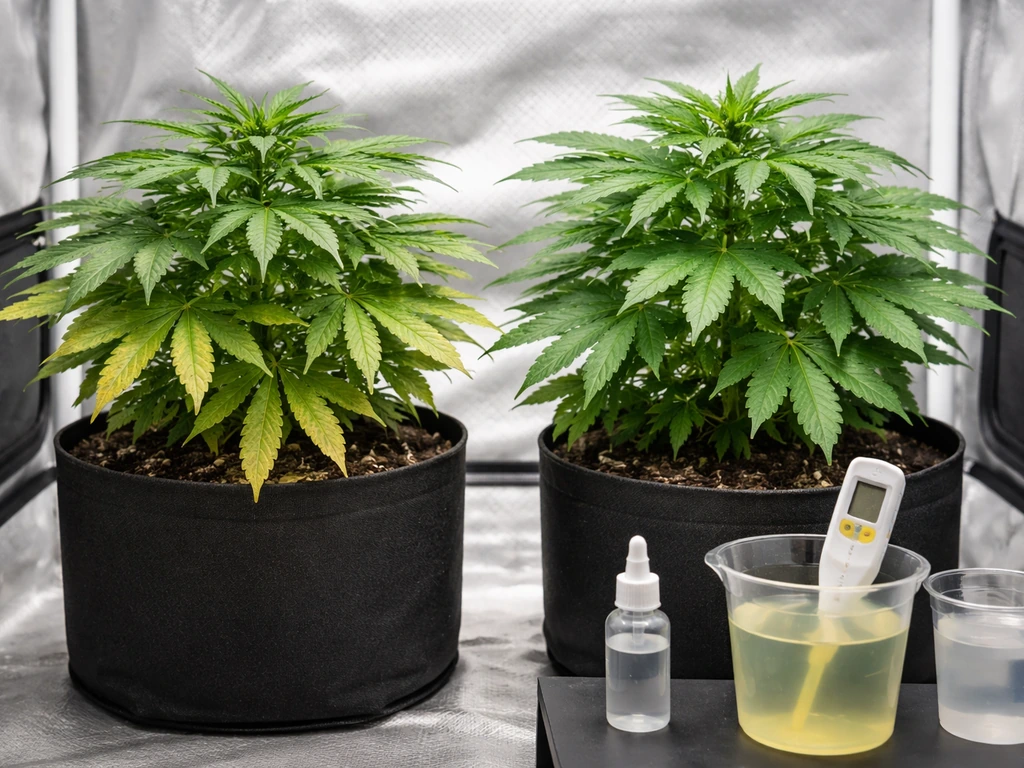
- Check pH immediately: in hydro/coco it should be 5.5–6.2, in soil 6.2–6.5
- Check EC to rule out salt buildup (if EC in runoff is much higher than input, salts are accumulating)
- Flush the medium with pH-adjusted plain water until runoff EC drops
- Mix a fresh nutrient solution at the correct EC for the growth stage
- Confirm final pH is in the 5.5–6.5 range before watering back in
- Monitor for 48–72 hours: most lockout symptoms stop progressing once pH is corrected
- Do not add more nutrients before flushing, more feed on a locked-out plant makes it worse
Organic vs. synthetic indoor nutrient strategies
The organic vs. synthetic debate is real, but the right answer depends on your setup more than your philosophy. In a living soil system, organic nutrients feed the microbial life that in turn feeds your plant roots. Biobizz Bio·Bloom, for example, is a 100% organic liquid formula dosed at roughly 2 to 4 mL per liter in flower, and it works beautifully in soil with active biology. The downside is that organic nutrients are slower to respond (microbial conversion takes time), harder to flush rapidly, and can cause inconsistent EC readings because not all organic content is immediately dissolved or detectable by an EC meter.
Synthetic nutrients in hydroponics or coco give you immediate control and faster correction when something goes wrong. You adjust the solution and the plant responds within 24 to 48 hours. That precision is why most competitive hydro growers use synthetics. The trade-off is salt buildup over time if you do not flush properly, and the fact that synthetic-heavy grows do not build living soil biology.
A hybrid approach works well for many soil growers: a synthetic base like Fox Farm Trio for reliable EC targets combined with organic top-dressing or microbe inoculants to build soil life. If you want a fully organic indoor grow, stick to amended living soil with organic liquid feeds and accept that you will dial in EC and pH with less precision. If you want the best organic nutrients for indoor soil grow, focus on living-soil style inputs and stage-matched organic feeds, then fine-tune pH and EC as your plants respond. For more on fully organic feeding strategies, the dedicated organic indoor soil nutrient approach covered in a separate guide goes much deeper on amendment ratios and organic feed schedules.
Where to start: beginner picks, ratios, and a simple feeding plan
If you are just starting out and want to get something working today, here is the clearest path forward based on your medium.
Beginner in soil
Pick up Biobizz Bio·Grow and Bio·Bloom (organic, forgiving, hard to burn beginners) or Fox Farm Grow Big plus Tiger Bloom (synthetic, more immediate control). Follow the manufacturer's feed schedule at half strength for the first two weeks, then move to the recommended dose. Keep pH at 6. For the best nutrients for soil grow UK conditions, pair that stable pH with stage-matched nutrients and a sensible EC range to avoid lockout Keep pH at 6.. 2 to 6.5. Use a cheap pH pen (under $20) and a bluelab or Apera EC pen. Feed every second or third watering in soil, not every watering, and let the pot almost dry out between feeds to promote root development.
Beginner in coco or hydroponics
CANNA Coco A+B is the simplest entry point for coco: equal parts A and B, target EC 0. 8 to 1. 2 in early veg, ramping to 1. 4 to 1.
8 in flower, pH 5. 5 to 6. 2. For hydro, GH FloraSeries 3-part is the most documented and widely supported line with the most available feed charts.
Start on the "light" feed chart setting from GH's official weekly chart, not the aggressive one. Add CALiMAGic at 1 to 2 mL per liter if you are using RO water or soft tap water. Before planting into new coco, rinse it with pH-adjusted water containing a light nutrient solution at EC 0. 65, as CANNA Canada recommends, to pre-charge the coco and prevent calcium lockout on day one.
A simple 8-week feeding plan outline
| Week | Stage | Target EC (mS/cm) | pH Target | Key Action |
|---|---|---|---|---|
| 1 | Seedling | 0.4–0.6 | 5.8–6.2 | Plain water or 1/4 strength feed, no cal-mag yet |
| 2–3 | Early Veg | 0.8–1.2 | 5.8–6.2 | Begin base nutrients at half strength, add cal-mag |
| 4–5 | Full Veg | 1.2–1.8 | 5.8–6.2 | Full veg formula, nitrogen-forward ratio |
| 6 | Transition | 1.4–2.0 | 5.8–6.2 | Shift toward bloom ratio, reduce nitrogen |
| 7–10 | Peak Flower | 1.6–2.4 | 5.8–6.2 | Full bloom formula, maintain cal-mag |
| 11 | Late Flower | 1.0–1.4 | 5.8–6.2 | Reduce overall EC, monitor runoff |
| 12 | Flush | 0.0–0.4 | 6.0 | Plain water or flushing agent only |
This plan works for cannabis, tomatoes, peppers, and most heavy-feeding indoor crops. Lighter feeders like herbs and lettuce should stay at the lower end of each EC range throughout. Adjust week count to match your actual veg and flower duration. The key habit to build from day one is measuring pH and EC every single feed, logging the results, and not making multiple changes at once when something looks off.
To dial in the best cannabis grow nutrients, measure EC and pH each feed and follow a stage-based feed chart for your medium. Change one variable, wait 48 hours, and observe before changing another. That single discipline will make you a better indoor grower faster than any premium nutrient line.
If you are planning to grow in a specific medium, it is worth diving into coco-specific nutrient strategies or soil-focused organic approaches separately, since the feeding cadence and amendment choices differ enough to warrant their own deep dives. If you are specifically looking for the best organic grow nutrients, start by comparing organic soil and living-soil liquid feed options soil-focused organic approaches. The fundamentals here, pH control, stage-matched EC, correct mixing order, and fast lockout diagnosis, apply across all of them.
FAQ
How do I know my EC meter and pH pen are reading correctly before I start mixing nutrients?
Calibrate both tools first, ideally the same day you mix. Use an EC calibration buffer that matches your meter’s expected range, and a fresh pH calibration solution (do not rely on “last week” calibration). If readings drift when you recheck in the same calibration liquid, replace or recharge the probe, because small EC errors can make you overfeed.
Do I need to measure runoff, or is measuring the reservoir enough?
Reservoir testing alone can miss root-zone problems, especially in recirculating setups or large pots. Check runoff pH and EC occasionally to confirm the plant is actually taking up what you intend. A big gap between reservoir EC and runoff EC usually means you are either overfeeding salts or not getting uniform wetting.
What EC or pH adjustments should I make first if my plants show signs of stress?
Treat pH and mixing issues as the first suspects, because lockout looks like deficiency. First verify you mixed in the correct order and that the final pH is in range for your medium. Then adjust EC by a small step (for example, 0.1 to 0.3 mS/cm) and wait about 24 to 48 hours before changing anything else.
Can I mix nutrients in one container and then add pH down or up?
Yes, but only if you mix the nutrients into water first, check EC, then adjust pH after. Add pH adjuster slowly and stir well, because pH adjusters can change the solution’s chemistry and slightly shift EC readings. Recheck pH and EC after adjustment, so your “final” targets are actually met.
Do I have to flush with plain water at the end, and when is it actually worth it?
Flushing can matter if you are growing with synthetic nutrients and salt buildup is high, but it is less about timing and more about reducing accumulated salts. Use runoff EC trends as your guide, if runoff EC stays elevated, a controlled plain-water or low-EC rinse may help. In organic or living-soil style grows, rapid flushing is less effective because nutrient availability depends on microbial breakdown.
Why does my coco still lock out even when the pH looks correct?
Common causes are un-rinsed coco dust and inconsistent wetting. Always rinse and pre-charge coco, and avoid letting the coco dry hard between feeds in early stages. Also confirm the final solution pH after it sits for a few minutes, because some pH adjusters and mixing order can cause minor drift.
What should I do if my soil pH is drifting upward over time?
Soil pH drift often comes from water alkalinity, overfertilizing, or using nutrient sources that raise pH. Test your input water pH and alkalinity, then consider using lower-alkalinity water or an acidification step before mixing. Also reduce EC or feed frequency until the soil stabilizes, because repeatedly adding salts can force nutrient availability issues.
Is it okay to switch nutrient brands mid-grow?
It is usually risky mid-grow because stage charts and formulas differ, even when they target similar EC and pH. If you must switch, do it gradually by mixing old and new products at reduced strength for several feedings, and monitor pH and EC as well as leaf color response. A full switch with no ramp can trigger lockout or oversupply one nutrient.
How often should I feed in soil, especially if I am trying not to overdo nutrients?
If you are using a typical soil approach, feeding every watering is often too aggressive in early veg. Let the pot partially dry between nutrient feeds, then feed until runoff is minimal, and increase frequency only as the plant grows and roots occupy more volume. The “right” cadence is indicated by stable runoff behavior and consistent leaf color, not just the calendar.
What is the most common mixing mistake that causes nutrient problems?
Mixing concentrates together directly or out of order is a frequent cause of precipitation and lockout. Always dilute into water separately, follow the manufacturer’s bottle order, and never combine two concentrates at full strength in the same measuring spoon or tube. If you see cloudiness or particles, discard the mix and remake.
Should I aim for the middle of the EC range or the top end for faster growth?
Start at the lower end, then raise EC only if the plant is clearly responding. Faster growth is not guaranteed at higher EC, and leafy oversupply often leads to tip burn and hidden lockout later. Use response signals like steady new growth, healthy root color, and no leaf edge damage as your trigger to move up.
Do I need silica, enzymes, or bloom boosters in addition to base nutrients?
Most beginners do not need them immediately. Prioritize a correct base program, calcium-mag when using RO or soft water, and accurate pH control first. Add supplements only if you have a specific issue to solve (for example, verified root problems or a targeted performance goal), because extra products add variables and make diagnosis harder.