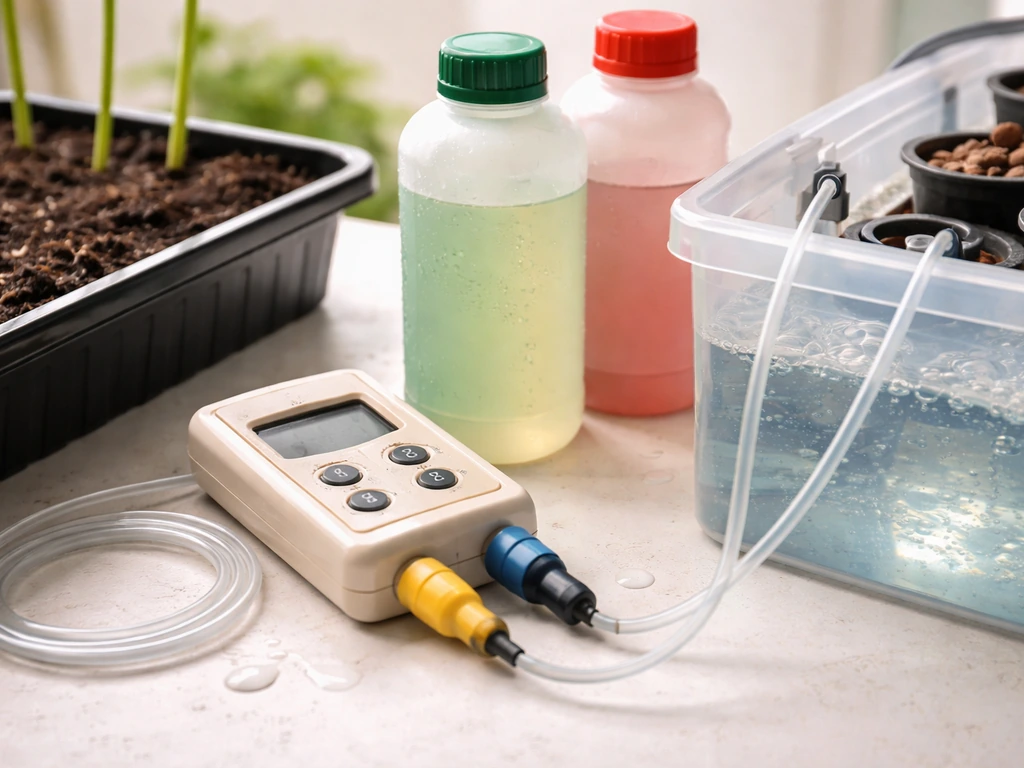
For a UK soil grow, your core nutrient lineup is nitrogen (N), phosphorus (P), and potassium (K), backed up by calcium, magnesium, and sulphur, plus a full trace element profile covering iron, manganese, zinc, boron, copper, molybdenum, and nickel. A good pre-amended compost like Bio Bizz Light Mix or Plagron Grow Mix handles most of this out of the bag for the first few weeks, then you supplement with a liquid feed matched to the growth stage: high-N formulas during vegetative growth, and a low-N, high-K bloom formula once flowers or fruit set begins. Keep your soil pH between 6.2 and 6.8 and you will rarely see a lockout. That is the whole framework in one paragraph. Everything below is the detail you need to execute it confidently.
Best Nutrients for Soil Grow UK: A Simple Guide

Marcus Holloway
24 Apr 2026

What 'best nutrients for soil' actually means (NPK, micros, and pH)
When growers talk about nutrients, they usually mean the NPK ratio on a bottle. Nitrogen drives leafy, vegetative growth. Phosphorus supports root development and flowering. Potassium regulates water use, strengthens cell walls, and improves fruit and flower quality. These three are called macronutrients because plants consume them in the largest quantities. But the secondary nutrients, calcium, magnesium, and sulphur, are just as important for healthy growth and are regularly deficient in UK container grows where the buffering capacity of the soil is limited.
Micronutrients are the next tier: boron, zinc, molybdenum, iron, manganese, copper, chlorine, and nickel. Plants need tiny amounts, but deficiencies show up fast and can mimic other problems. Iron deficiency hits the youngest leaves first (interveinal yellowing on new growth), while manganese deficiency tends to show on more mature leaves. Knowing which leaves are affected helps you diagnose accurately rather than throwing random supplements at a plant.
pH is the variable that ties all of this together. Even if every nutrient is present in your soil, a pH that is too low or too high locks them out at the root zone. At pH below 6.3, phosphate binds to soil particles and becomes unavailable, while aluminium, manganese, and iron concentrations in the soil solution rise to potentially toxic levels. At very acidic pH (below 4.5), manganese can reach outright toxic concentrations. The RHS advises liming to bring soil pH up toward 6.5 to 7 if it drops below 6.3. For most crops in a UK grow, a target of 6.3 to 6.8 is the practical sweet spot, close to where phosphate fixation is lowest and the full micronutrient profile remains available.
Know your setup: UK soil mix types, living soil vs buffered mixes
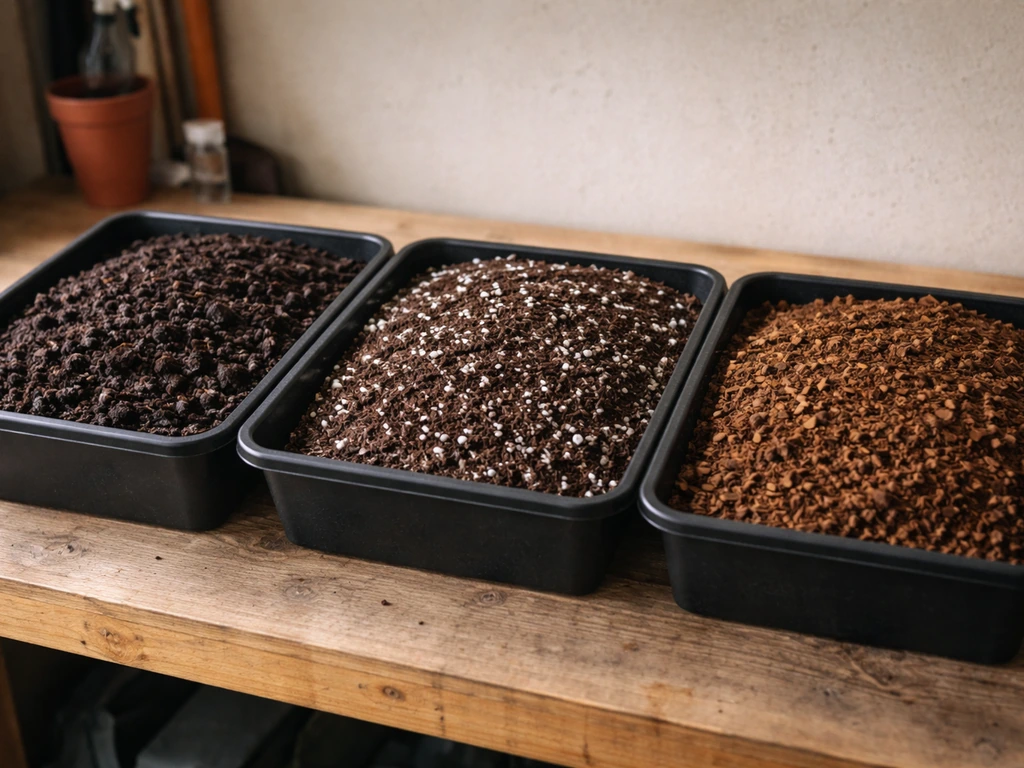
Not all soil grows are equal, and the type of growing medium you are starting with dictates how much supplemental feeding you actually need. UK indoor growers mostly work with peat-free or peat-reduced bagged composts, amended super soils, or pre-buffered cannabis-specific mixes. Outdoor growers are dealing with native garden soil that could be anything from heavy clay in the Midlands to light sand on the coast.
Living soil and heavily amended mixes
Living soil is a hot topic right now, and for good reason. A properly built living soil, one loaded with compost, worm castings, mycorrhizae, and slow-release organic amendments like bat guano, fish bone meal, and kelp meal, can feed plants through an entire cycle with little to no liquid feeding. The microbial ecosystem converts locked organic compounds into plant-available nutrients on demand. The Royal Horticultural Society notes that organic fertiliser nutrient compounds typically need to be broken down by soil organisms before plants can use them microbial ecosystem converts locked organic compounds into plant-available nutrients on demand. The RHS backs this up with no-dig growing, noting that plants in mulched, organically enriched beds rarely need additional fertiliser. The catch is that living soil takes time and money to build, and hungry crops like tomatoes or heavy-feeding plants may still need a liquid top-up during peak demand stages.
Pre-buffered and light-mix composts
Most UK indoor growers use a light-mix or all-mix style compost from brands like Bio Bizz, Plagron, or Canna Terra. These are pre-buffered, meaning the pH is dialled in and there is enough nutrient charge to carry seedlings and young plants for two to four weeks before you need to start feeding. After that charge runs out, you take over with liquid feeds. This is the most beginner-friendly approach and the one where a clear stage-based feeding plan matters most.
Basic multi-purpose compost and garden soil
Budget growers often use standard multi-purpose compost or work in native garden soil. These are fine as a base, but they offer less consistency. UK multi-purpose composts often have a high initial nutrient charge that can burn seedlings, and garden soil pH varies wildly by region. You need to test first and amend before planting, not after problems appear.
Stage-based feeding plan: seedling through flower
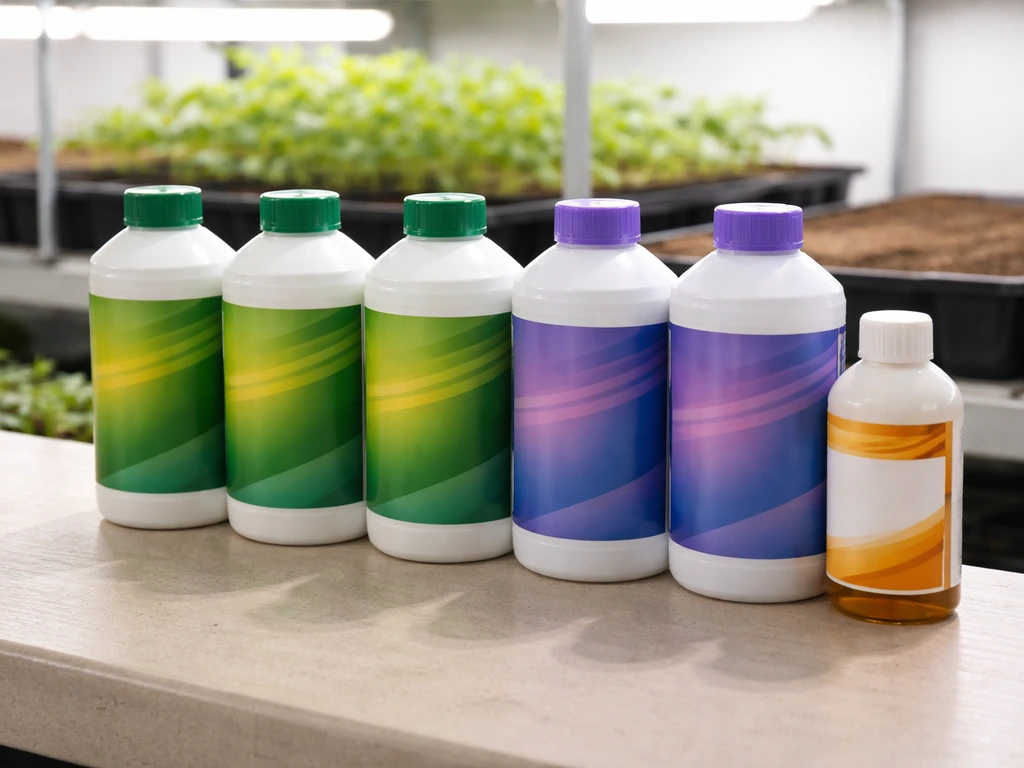
One of the most common mistakes I see is growers treating the entire grow cycle with the same nutrient profile. If you are wondering what nutrients cannabis needs to grow, this stage-based approach is the best place to start. Using the best cannabis grow nutrients is all about matching the right NPK and micronutrients to each growth stage stage-based feeding plan. Your plant's nutritional needs change dramatically from germination to harvest, and your feeding schedule needs to change with them.
Seedling stage (weeks 1 to 2)
Do not feed seedlings in the first week. Their root systems are too small to handle nutrient salts, and most good seed composts or seedling mixes have enough food built in. If you are using a peat-free seed compost, the RHS recommends introducing a high-nitrogen liquid plant food once seedlings are established and showing true leaves. Start at a quarter of the recommended dose and work up. At this point you want gentle growth, not a surge.
Vegetative stage (weeks 2 to 5 or until pre-flower)

This is when nitrogen becomes your best friend. For a complete guide to picking the best grow nutrients by growth stage, see the stage-based feeding plan and matching NPK profiles high-nitrogen liquid feed. A high-N formula with a lower P and K profile drives healthy canopy development without pushing the plant toward early flowering. The RHS specifically recommends a high-nitrogen, low-potassium feed for leafy and vegetative growth, citing something like a 20-0-10 NPK ratio as an example profile. You do not need that extreme a ratio, but the principle holds: N forward during veg. Feed every seven to ten days with a liquid feed at half to full strength, or use a controlled-release granular fertiliser applied at planting that provides background nutrition throughout.
Transition and early flower (week 5 to 8)
As plants shift to reproductive growth, flip your formula. Reduce nitrogen and bring up phosphorus and potassium. This is where a dedicated bloom or flower formula comes in. Products like Vitax Liquid Tomato Feed (NPK 4:2:6) are designed exactly for this, with higher K supporting fruit and flower development. Vitax's dosing guidance starts at once every seven days and increases to every three days once fruiting is well underway. That escalation tracks closely with peak nutrient demand as flowers and fruits bulk up.
Peak flower and finishing (week 8 to harvest)
Keep feeding your bloom formula at full strength through peak flowering. Many growers add a potassium and phosphorus booster supplement at this point. In the final week or two before harvest, many experienced growers flush with plain pH-corrected water to clear residual salts from the root zone, though this is debated. What is less debatable is that stopping nitrogen feeds well before harvest (around two weeks out for most crops) prevents late-stage nitrogen toxicity from affecting end product quality.
| Growth Stage | Key Nutrient Profile | Feeding Frequency | Example Product |
|---|---|---|---|
| Seedling (wk 1–2) | Very low, balanced or skip entirely | None to once per 10 days at quarter strength | Plain water or very dilute high-N liquid |
| Vegetative (wk 2–5) | High N, moderate P, lower K | Every 7–10 days | High-N liquid feed (e.g. 20-0-10 profile) |
| Transition/Early Flower (wk 5–8) | Balanced to low-N, rising P and K | Every 7 days | Bloom formula (e.g. Vitax Liquid Tomato 4:2:6) |
| Peak Flower (wk 8–harvest) | Low N, high P and K | Every 3–7 days | Bloom booster + base bloom formula |
| Flush/Finish (final 1–2 wks) | Plain water or very low strength | Every watering | pH-corrected water |
Choosing products in the UK: organic vs mineral, and what to look for
UK growers are fortunate to have a wide range of nutrient products available through garden centres, online retailers, and specialist grow shops. The main decision is whether to go organic or mineral (synthetic), and there are genuine trade-offs on both sides.
Organic nutrients
Organic nutrients include fish blood and bone, seaweed extracts, worm castings teas, bat guano, and organic liquid feeds like Bio Bizz Grow and Bloom or Canna Bio Vega and Flores. For a deeper breakdown of the best organic grow nutrients, focus on stage-matched NPK plus calcium, magnesium, and sulphur. For a deeper breakdown of the best organic grow nutrients, focus on stage-matched NPK plus calcium, magnesium, and sulphur. They feed the soil biology as well as the plant, are harder to overapply to toxic levels, and work especially well in living soil setups. The downside is slower uptake and less precise NPK control. The RHS recommends slow-release organic fertilisers like fish, blood, and bone as a solid baseline for UK soil growing, with the caveat to always follow label dosing to avoid run-off and water pollution risk.
Mineral (synthetic) nutrients
Mineral feeds give you immediate, predictable nutrient availability and precise NPK ratios. Brands like Plagron Terra Grow and Bloom, Canna Terra, and General Hydroponics (used at soil-appropriate dilutions) are widely available in UK grow shops. These are better suited to growers who want tight control over feeding schedules and EC levels. The risk is over-salting the soil with repeated applications, which is where good EC monitoring and occasional flushing become important.
Supplements worth considering
- Cal-Mag: Calcium and magnesium supplement (e.g. Canna CalMag Agent or Plagron CalMag Pro). Essential in UK soft-water areas where tap water lacks hardness. Mix before other nutrients.
- Epsom Salts (magnesium sulphate): The RHS-recommended quick fix for magnesium deficiency on light soils. Dissolve 20g per litre and apply as a foliar spray or soil drench.
- Sulphate of Potash (0-0-48 + sulphur): A straightforward UK potassium supplement available in garden centres. Good for boosting K during flowering without raising N.
- Seaweed extract: Low-NPK but rich in micronutrients, auxins, and cytokinins. Brands like Maxicrop are widely available and affordable in the UK. Use as a root drench or foliar feed.
- Mycorrhizal inoculants: Not a nutrient, but products like Rootgrow help establish root networks that massively improve nutrient uptake efficiency.
A quick note on soil vs hydro nutrients: hydroponic formulas are designed for inert media with no buffering capacity, so they are highly concentrated and immediately available. Applying hydro-strength nutrient solutions to soil can rapidly oversalt the root zone and disrupt soil biology. If you are adapting a hydro nutrient range (like GHE or Canna Aqua) for soil use, dial the dose back to 50 to 60 percent of the recommended hydro rate and monitor your runoff EC carefully. This is a genuinely different context compared to coco coir or a deep water culture grow. Coco coir is different, so you need coco coir nutrient formulas tuned to its buffering capacity and watering schedule.
How to apply nutrients safely: dosage, schedule, and avoiding overfeeding
Overfeeding is far more common than underfeeding in soil grows, especially with beginners who think more nutrients equals faster growth. The opposite is usually true. Salt build-up in the root zone raises EC to levels the plant cannot absorb against, effectively causing a drought response even when the soil is wet. Here is how to stay safe.
- Start at half the recommended dose. Always. Work up to full strength over two to three feeds once you confirm the plant is responding well.
- Alternate plain-water feeds with nutrient feeds. In soil, a common rhythm is one nutrient feed followed by one or two plain-water feeds, especially in containers. This prevents salt accumulation.
- Feed after the soil has partly dried out, not when it is already wet. Feeding into waterlogged soil compounds stress and reduces uptake.
- Mix nutrients in water before checking pH. Add CalMag first if using it, then base nutrients, then additives, then check and adjust pH to 6.3–6.8.
- Use the recommended dose from the label as a ceiling, not a target to exceed. Products like Miracle-Gro Performance Organics Fruit and Veg (NPK 4-1.5-4) specify half a cap per litre for pot-grown fruit and veg. That is the dose the manufacturer tested. Do not double it.
- Flush containers every three to four weeks with 1.5 to 2x the pot volume of plain pH-adjusted water to clear salt accumulation, especially with mineral feeds.
The RHS recommends weekly liquid feeding for crops with high demand (like tomatoes using homemade feed) and fortnightly for less demanding plants. That cadence is a sensible default. If you are growing in rich amended soil, err toward fortnightly. If you are in a light-mix compost past its initial charge, weekly or every five days is appropriate during peak growth.
Troubleshooting nutrient issues: deficiency, lockout, and toxicity
The hardest part of soil growing is diagnosing what is actually wrong with a struggling plant. The symptoms of deficiency, lockout, and toxicity often look similar, so you need to approach this systematically rather than immediately reaching for a supplement bottle.
True deficiency
A true deficiency means the nutrient is genuinely absent or insufficient in the root zone. Nitrogen deficiency is the most common and shows as stunted, spindly plants with pale yellow leaves, sometimes with a pinkish tint on stems, progressing from older (lower) leaves upward. Magnesium deficiency shows as interveinal yellowing on older leaves (yellowing between the veins while veins stay green). Iron deficiency hits new growth first, with yellowing between veins on the youngest leaves. If you identify a true deficiency, address it with a targeted supplement or a switch to a more complete base nutrient.
Nutrient lockout
Lockout is more common in soil than true deficiency. This is when nutrients are present in the soil but unavailable because pH is out of range, EC is too high, or one nutrient is being antagonised by another. For example, excess potassium competes with calcium and magnesium uptake. High manganese in acidic soils (below pH 6) can interfere with iron uptake, creating apparent iron deficiency even when iron is present. The fix for lockout is not more nutrients: it is correcting pH, flushing excess salts, and then resuming feeding at a lower dose once the root zone is reset. If substrate EC is very high, leach heavily with a dilute balanced feed to restore equilibrium.
Nutrient toxicity
Toxicity looks like dark, over-green (nitrogen toxic) plants with clawed, curled leaves, or brown leaf tips and margins (nutrient burn). Phosphorus toxicity is less common in soil but can manifest as widespread micronutrient lockout because excess P binds trace elements. Toxicity almost always traces back to overfeeding or a pH-induced nutrient excess, such as manganese becoming toxic at very low pH. The response is the same: flush, correct pH, and back off your feeding rate for the next cycle.
| Issue | Common Symptoms | Likely Cause | First Fix |
|---|---|---|---|
| Nitrogen deficiency | Pale yellow lower leaves, stunted growth, pink stem tints | Insufficient N in feed or exhausted soil | Switch to high-N liquid feed at correct dose |
| Magnesium deficiency | Interveinal yellowing on older leaves | Light soil, low Mg feed, or K excess | Epsom salts drench (20g/L) or CalMag supplement |
| Iron deficiency (apparent) | Yellowing between veins on newest leaves | pH too high (above 7) or Mn excess at low pH | Adjust pH to 6.3–6.5, check for Mn toxicity |
| Nutrient burn/toxicity | Dark leaves, brown leaf tips, clawing | Overfeeding or salt build-up | Flush with pH water, reduce feed dose by 50% |
| Lockout (general) | Multiple symptoms, good nutrient supply | pH out of range or high EC | Check and correct pH, flush, reduce EC |
Soil testing and monitoring basics
You cannot manage what you do not measure, and in a soil grow, pH and EC are the two numbers that tell you almost everything you need to know about nutrient availability.
Testing soil pH
Basic soil pH test kits are available at any UK garden centre for a few pounds. Digital pH meters are more accurate and worth the investment if you are running multiple containers or growing cycle to cycle. For soil, take a sample from the root zone, mix with distilled water at a 1:1 ratio, and test. Aim for 6.3 to 6.8 for most crops. If you are growing brassicas specifically, Teagasc targets 6.5 to 6.8. If you have added lime or other pH amendments, retest after 40 to 60 days to see the full effect, as pH corrections in soil take time to fully stabilise.
Monitoring runoff EC and pH
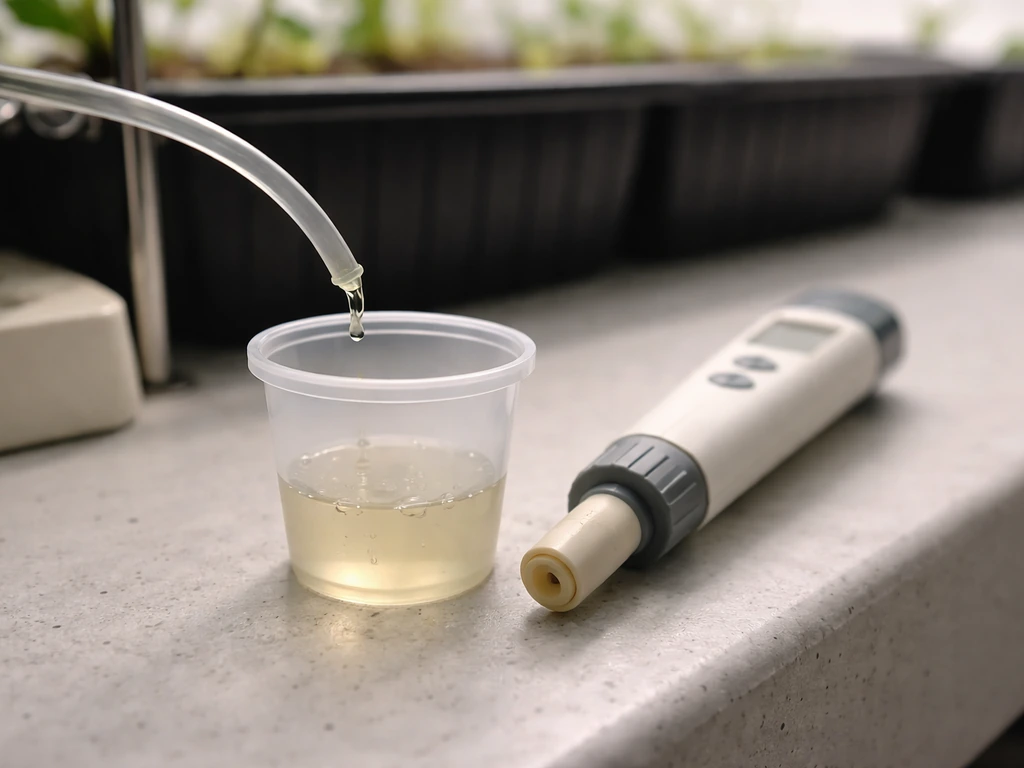
Runoff monitoring is simpler than it sounds. When you water a container, collect the first 10 to 20 percent of water that drains from the bottom and test its pH and EC. Runoff pH higher than your input pH suggests the soil is alkaline and you may need to adjust your input water down slightly. Runoff EC that is significantly higher than your input solution EC means salt is accumulating in the root zone and it is time to flush. In soil, a runoff EC of under 2.0 mS/cm is generally comfortable for most crops. Over 3.0 mS/cm is a sign to flush before your next feed.
When to retest and when to adjust
Retest pH at the start of each grow cycle, after any liming or acidification amendment, and any time plants show unexplained symptoms. For EC, check runoff monthly as a minimum, or after any change in your feeding strength or frequency. Do not chase perfect numbers every watering. Soil is a buffered medium and naturally smooths out minor fluctuations. The goal is trend management, not perfection.
Quick start: what to do today and your UK shopping checklist
If you are reading this because something is wrong with your plants right now, here is the fastest path to a fix. First, stop adding more nutrients. Then test your soil pH. If it is below 6.2, your problem is almost certainly lockout rather than deficiency. Correct the pH with a pH-up solution or a light lime application, flush the container with 1.5x its volume of pH-corrected water, and wait five to seven days before resuming feeding at half strength. If pH is in range and you have been feeding regularly, flush anyway and drop your nutrient dose by 50 percent for the next two to three feeds. Most soil grow problems resolve within a week of correcting pH and reducing feed strength.
If you are starting fresh and want to build a solid nutrient setup from day one, here is what to look for in a UK garden centre or specialist grow shop.
UK shopping checklist: beginner setup
- Pre-amended light-mix compost (Bio Bizz Light Mix, Plagron Grow Mix, or similar) for indoor containers
- High-nitrogen liquid feed for veg stage (Elixir Gardens High Nitrogen Liquid Plant Food 20-0-10, or Bio Bizz Grow)
- Bloom/flower liquid feed (Vitax Liquid Tomato Feed NPK 4: 2:6, or Miracle-Gro Performance Organics Fruit and Veg 4-1.5-4)
- Epsom salts (magnesium sulphate) for Mg correction, available at any pharmacy or garden centre
- Basic soil pH test kit (or a budget digital pH pen)
- pH Up and pH Down solutions for water adjustment
UK shopping checklist: experienced grower additions
- CalMag supplement (Canna CalMag Agent or Plagron CalMag Pro) for soft-water UK regions
- Seaweed extract (Maxicrop Original or similar) for trace elements and biostimulants
- Sulphate of Potash (0-0-48) for precise K supplementation in late flower without adding N
- Mycorrhizal inoculant (Rootgrow or Xtreme Mykos) applied at transplant
- Digital EC meter for runoff monitoring
- PK booster supplement (e.g. Canna PK 13/14, Plagron Green Sensation, or similar) for peak flower
- Worm castings for top-dressing between feeds in organic grows
The conservative ramp-up plan that works for nearly every soil grow is this: start feeding at 25 percent of recommended dose in week two or three, move to 50 percent by week four, and reach full label dose only once the plant is actively growing and showing no stress signs. Never exceed label doses in soil. From there, switch to your bloom formula at transition, push feeding frequency up as demand peaks, and flush in the final stretch. That cycle, matched with pH monitoring and occasional runoff EC checks, covers 90 percent of what you need to get a healthy crop from soil in the UK.
FAQ
Can I use the full label dose of nutrients in soil right away?
Yes, but do it by stage and with a cap. For seedlings and young plants, keep to 25% to 50% of the label rate until you see active, stress free growth. Once in veg, use your chosen N forward feed, then only ramp to full label dose when plants are actively growing and runoff EC is not climbing. In soil, extra dose mostly creates salt build up, not faster growth.
What if I only have hydroponic nutrient bottles, can I use them in soil?
Don’t treat coco rules as soil rules. Soil compost already has buffering and built-in nutrients, so hydro blends are often too strong. If you must use a hydro brand, start at 50% to 60% of the hydro label strength, then adjust based on runoff EC and plant response rather than on a fixed schedule.
How do I know I am overfeeding in soil if the plant still looks green?
Use EC trend plus your watering frequency. If plants are wilting but soil is wet, and especially if runoff EC rises steadily, you likely have salt build up. A practical trigger is runoff EC getting well above your input EC by a noticeable margin, or consistently exceeding about 3.0 mS/cm, then plan a flush and reduce future feed concentration.
How often should I measure pH and EC in a UK soil grow?
For most soil grows, don’t rely on watering alone, you need at least trend monitoring. Check runoff pH and EC after the first real watering with a new feed strength, then review weekly during peak growth or monthly at minimum. If you change nutrient type, increase frequency, or apply amendments like lime or sulphur, retest soon after the change.
What’s the quickest way to tell deficiency vs lockout when symptoms appear?
If you see slow growth after correcting pH, assume nutrient availability rather than just pH. Look for signs like older leaves yellowing (magnesium), new leaves yellow between veins (iron), or general pale, slow growth (nitrogen). The decision aid is to confirm whether leaves affected are old or new, then pick a targeted supplement or switch to a fuller base feed instead of adding random bottles.
What is the correct way to flush a container when I suspect salt build up?
Partial flushing can be risky, you want enough water to actually move salts through the root zone. A common approach is flushing with about 1.5 times the container volume using pH corrected water, then waiting 5 to 7 days before resuming at half strength so the root zone re-stabilises. After that, reduce feed concentration for the next few feeds rather than returning immediately to full strength.
My runoff pH is higher than my input water pH, what should I do?
If runoff pH is consistently higher than your input pH, your mix is likely drifting alkaline, and raising nutrient availability will require adjusting input water pH down slightly and possibly correcting soil pH with amendments. If runoff pH is still high after correction, retest your soil pH again after several weeks because pH changes in soil take time to stabilise.
Do I still need to feed if I’m using a pre-amended light mix or all mix?
Yes, especially in rich or recently amended compost. If you’re using an all mix, light mix, or super soil-style base, you may only need liquid feeding later, after the initial nutrient charge fades. Start with a reduced dose once you’re past early weeks, then decide based on growth and runoff EC rather than starting full feeding on day one.
When should I stop nitrogen and switch fully to bloom in soil?
Sticking too long with high nitrogen is a common cause of late issues. A practical rule is to stop nitrogen feeds around the final two weeks for most crops, then switch to your bloom formula earlier at transition with reduced N and higher P and K. This helps avoid late nitrogen toxicity that can affect end quality.
How does my watering style change nutrient management in soil?
Nutrients should match your irrigation pattern. If you water lightly and frequently, salts can accumulate on the surface and the root zone can still become concentrated. If you water thoroughly and allow proper runoff, nutrients distribute more evenly, runoff testing becomes more meaningful, and flushes are more effective when needed.
Should I chase exact pH numbers every time I test?
Aim for a stable target rather than perfect readings. Don’t chase tiny swings, soil buffers fluctuations. If pH is close to target and plants are healthy, adjust only when trends show drift. Retest after liming or acidifying amendments because the effect can take weeks, not days.