
Switch from grow to bloom nutrients on the first day you flip your lights to 12/12, or the moment you see the first signs of flower initiation outdoors. That's the trigger. You don't wait until buds are visible, and you don't do it mid-vegetative stage hoping to speed things up. The flip is your green light to start transitioning the nutrient profile from nitrogen-heavy to phosphorus and potassium-forward, and getting that timing right is the difference between a smooth flowering stretch and a plant that's either starving or drowning in the wrong elements.
When to Switch From Grow to Bloom Nutrients: Timing + Steps

Marcus Holloway
13 May 2026
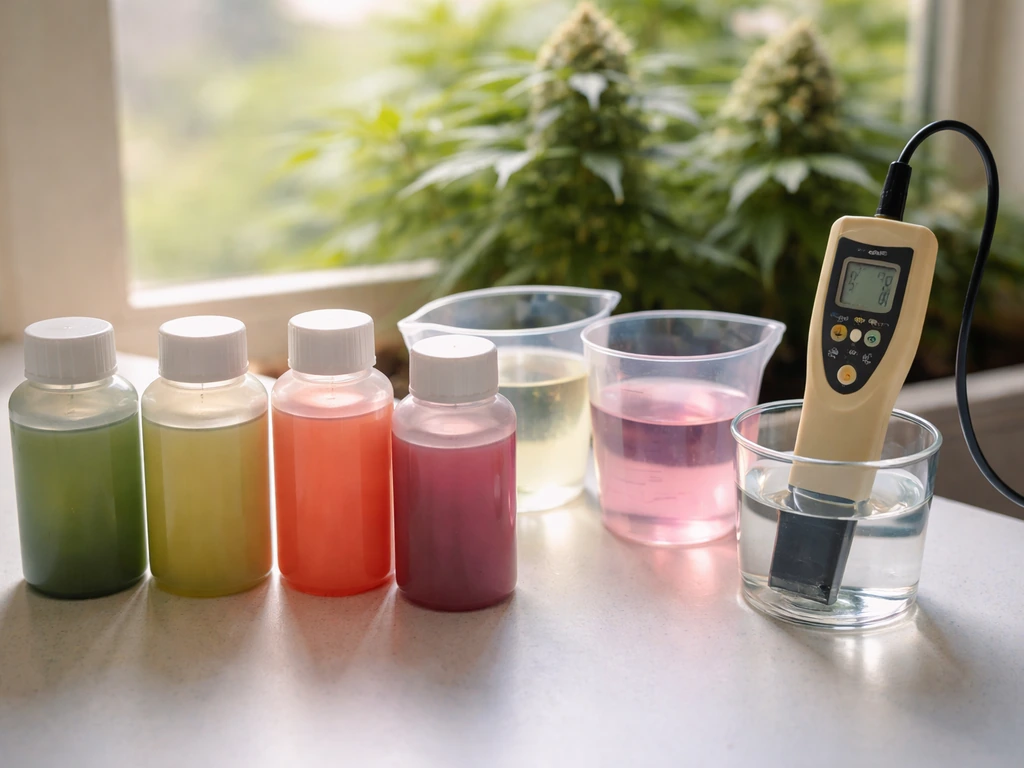
What grow and bloom nutrients actually do
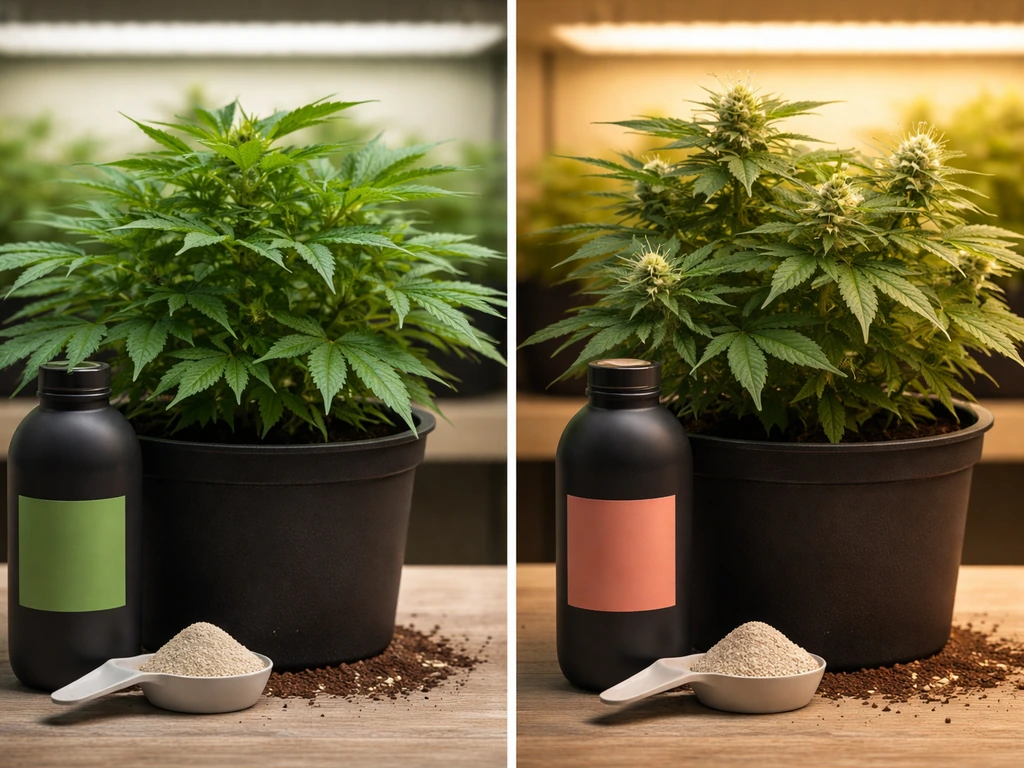
Grow (vegetative) nutrients are built around nitrogen. High nitrogen drives leaf production, stem elongation, and the structural development your plant needs before it ever thinks about flowering. The NPK ratio on a grow formula typically leads with N, something like 3-1-2 or similar, because that's what a plant building biomass actually needs.
Bloom nutrients flip that priority. Once a plant shifts into flowering mode, it needs phosphorus to fuel root development and early bud formation, potassium to regulate water movement and strengthen cell walls, and magnesium to support photosynthesis through peak flower production. General Hydroponics puts it plainly: plants consume more nitrogen during vegetative growth and more phosphorus, potassium, and magnesium once they start flowering. Their FloraBloom formula, for example, is specifically built to supply P, K, magnesium, and sulfur for exactly this reason. Bloom formulas also tend to bring more calcium and micronutrients calibrated for the stress of heavy flower production, not just green growth.
Supporting micronutrients shift too. Iron and manganese uptake becomes less critical, while the demand for sulfur, boron, and zinc increases as terpene and resin production ramps up. If you keep feeding a nitrogen-heavy vegetative formula into week 3 of flower, you'll see overly lush, dark green growth, stretched internodes, and delayed bud development. That's not a happy plant, that's a confused one.
How to recognize the right time to switch
The most reliable visual cues come from the plant itself, not the calendar. Here's what to look for before or right at the point of switching:
- Visible pre-flowers forming at nodes (pistils or early calyxes developing)
- Stretch rate is accelerating, internodes growing noticeably faster than during stable veg
- Growth tip structure changing from broad alternating fan leaves to tighter, more compressed bud sites
- For outdoor plants: days shortening past the tipping point for your strain, typically late July to mid-August depending on latitude
- For indoor plants: you've just flipped to 12/12 or are about to
General Hydroponics' Pro Feedchart Usage Guide ties the start of an Early Bloom recipe directly to "the first day of flower initiation (12:12 photoperiod)." That's not week 1 of flower, it's day 1. The early bloom window is specifically designed for that high-P, high-K, reduced-N transition, and starting it at the flip gives the plant the right resources exactly when it needs them. If you're growing outdoors, the same principle applies, just replace "12/12 flip" with "first signs of flower initiation," which is also covered in more detail for outdoor growers.
Switch timing mapped to plant stage
Seedling stage
Don't use either full-strength grow or bloom nutrients in the seedling stage. Seedlings need almost nothing for the first 1-2 weeks beyond what's already in their starting medium or a very diluted starter solution. Introducing bloom nutrients here would be actively harmful, pushing the plant into signaling it doesn't have the biology to respond to yet.
Vegetative stage

This is the grow nutrient phase. Keep running your nitrogen-forward formula until you're ready to flip. There's no benefit to starting bloom nutrients early in veg, even if your plant looks "big enough" to flower. Premature bloom nutrient use causes phosphorus and potassium buildup without the plant being in the right metabolic state to use them, which can actually lock out other nutrients.
Transition and early flower (weeks 1-3 of flower)
This is where the switch happens. On the day of your 12/12 flip, or when you confirm flower initiation outdoors, start moving toward your bloom formula. Most growers do this as a gradual transition over 3-5 days rather than a hard cutover: run your last grow feed, then on the next feeding start the bloom formula at reduced strength (around 50-75% of your target EC), then ramp up to full bloom strength by day 5-7.
CANNA's guidance for Aqua Flores, for instance, specifies use "from the moment that flowers start to form," which aligns with that first day of the generative period. Don't sit on grow nutrients waiting for buds to be clearly visible. By then you've already missed the transition window.
How to make the switch without shocking your plants

The biggest mistake growers make is a hard cutover: dumping the grow formula and immediately running a full-strength bloom solution. Plants can handle a lot, but abrupt shifts in nutrient profile and EC stress them out, especially in hydro where there's no buffer. Here's how to do it cleanly:
- Run your last grow-formula feeding the day before the flip (or on the flip day itself as a final veg feed)
- Mix your new bloom solution starting at 50-75% of your target bloom EC, not full strength
- Follow proper mixing order: silicon products first if you use them, then FloraMicro or your base micros, then bloom concentrate, stirring well between each addition. General Hydroponics specifically recommends adding FloraMicro first, then FloraGro and/or FloraBloom, and adding phosphorus-containing bloom products after calcium products
- Start with fresh water each reservoir change. Stir concentrates thoroughly before adding to the reservoir
- Run this reduced-strength bloom solution for the first 3-5 days of flower
- Ramp to full bloom EC by day 5-7 once the plant shows no signs of stress
- In soil, consider a light water-only feeding between the last grow feed and first bloom feed if you want to clear residual nitrogen from the root zone before loading bloom nutrients
For growers using flushing agents between nutrient changes, General Hydroponics' FloraKleen is designed specifically for clearing fertilizer residue between nutrient changes. A single pass with a flushing solution in hydro before loading your bloom reservoir gives you a clean slate, though this is optional if your previous feed was correctly dosed.
pH, EC, and feeding schedule after the switch
Your bloom formula runs at different EC targets and ideally a slightly different pH than your veg formula. CANNA’s Terra/Grow schedule language links this generative period to flower formation and specifies EC reference conditions for the transition stage. Get these dialed in from day 1 of the bloom phase, not after you see problems.
| Parameter | Vegetative (Grow) | Early Bloom | Peak Bloom |
|---|---|---|---|
| EC (hydro) | 1.2–2.0 mS/cm | 2.0–2.5 mS/cm | 2.0–2.5 mS/cm |
| EC (soil) | 0.8–1.4 mS/cm | 0.9–1.6 mS/cm | 0.9–1.6 mS/cm |
| pH (hydro) | 5.5–6.0 | 5.2–5.8 | 5.2–5.8 |
| pH (soil) | 6.0–6.5 | 5.8–6.2 | 5.8–6.2 |
| Runoff target (soil/rockwool) | 5–15% | 5–10% | 5–10% |
General Hydroponics' FloraSeries Basic Feed Charts put Early Bloom EC in the 2.0-2.5 mS/cm range. CANNA Aqua Flores targets 1.3-2.1 mS/cm total solution EC in hydro (that's the combined solution EC including your source water), with a pH of 5.2-5.8 for hydro and 5.8-6.2 for their Terra (soil) line. These ranges aren't arbitrary. Bloom nutrients contain heavier phosphorus loads, and at pH values outside these windows, phosphorus interacts with calcium and can precipitate out of solution. Atlas Scientific notes that pH balance directly determines which nutrients are bioavailable: too low and calcium and magnesium get locked out even if they're present in your solution.
Feeding schedule adjustments after the switch usually mean feeding slightly more frequently in the first 1-2 weeks of flower as plants entering the stretch are consuming more water and nutrients. After the stretch slows (typically weeks 3-4), you can settle into a consistent bloom feeding rhythm and start monitoring runoff EC to catch any salt buildup early. Grodan's growing guidance targets 5-15% runoff during vegetative growth, and that discipline of runoff monitoring becomes even more important as you push EC higher during bloom.
Problems you might see after switching (and how to fix them)
Nutrient lockout
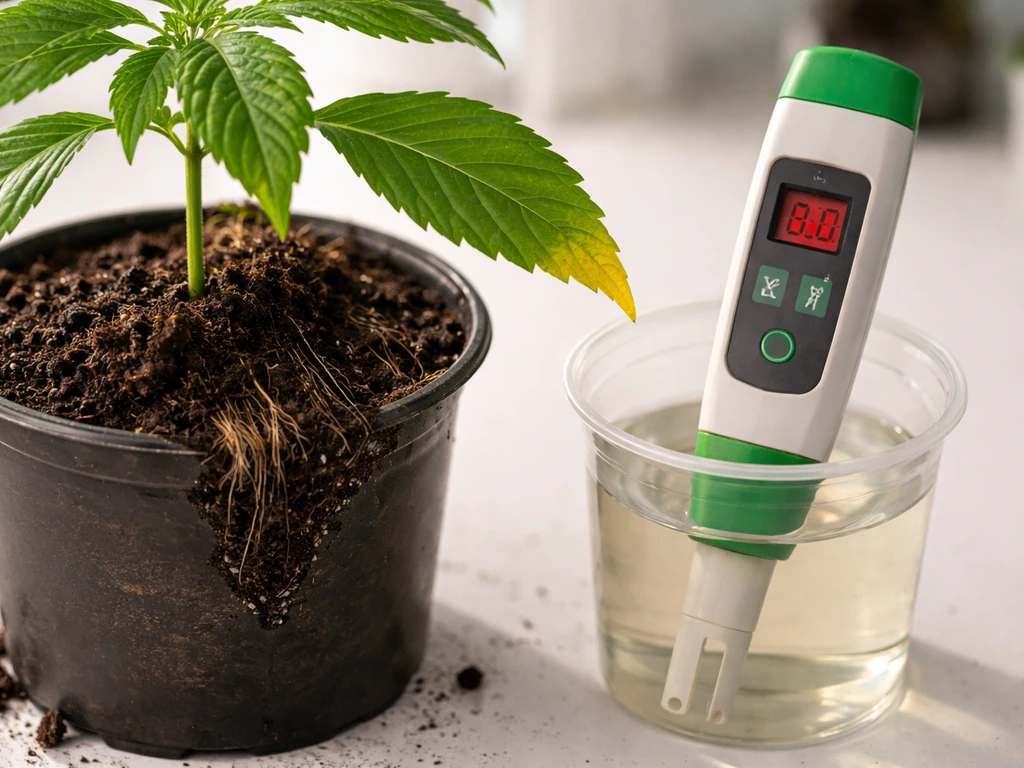
Lockout happens when nutrients are present in your solution but the plant can't uptake them, usually because of pH being out of range or competing ionic interactions. After switching to bloom, the most common trigger is pH drift. Bloom formulas behave differently in solution than grow formulas, so your reservoir or soil pH can shift more than you expect on day 1 or 2. Check pH daily for the first week. In hydro, recalibrate your pH meter before each reservoir change. If you see yellowing on young growth (not older leaves), check pH first before assuming it's a deficiency.
Nitrogen deficiency
Some nitrogen deficiency in late flower is normal and even desirable. But if you see rapid yellowing of fan leaves in week 1-2 of flower, that's premature. It usually means you cut nitrogen too hard, too fast. Your bloom formula still contains some nitrogen, it just has less than your grow formula. If the deficiency is severe early, add a small dose of your grow formula or a dedicated cal-mag with nitrogen alongside your bloom formula for the first week, then taper it off by week 3.
Phosphorus and potassium deficiencies
These are more common than most growers expect after switching, usually because they're not running bloom EC high enough or their pH is blocking uptake. Phosphorus deficiency shows up as dark, sometimes purple-tinged lower leaves, slow bud development, and poor root growth. Potassium deficiency appears as brown leaf edges (tip burn that works inward) and weak stems. Check EC first: are you actually delivering enough P and K? Then check pH. If both look right, check whether old nutrient salt buildup from the veg phase is causing interference. A flush or reservoir reset usually resolves it within a few days.
Overfeeding and leaf tip burn
Tip burn right after switching usually means you jumped to full bloom EC too fast. Bloom nutrients are heavier on salts, and plants need a few days to adjust. If you see the first 1-3mm of leaf tips going brown and crispy, drop your EC by 0.2-0.3 mS/cm and run a slightly higher water volume through the medium. Don't panic and flush aggressively unless the damage is spreading rapidly. Give the plant 48-72 hours at the lower EC and monitor.
General toxicity
If you see clawing (leaf tips curling downward), dark green coloration, and overall plant stiffness, that's usually nitrogen toxicity, meaning you haven't actually completed the transition off grow nutrients or you're adding too much of a veg-heavy base. Reassess your formula ratios, reduce feed strength to 50% for 3-5 days, then rebuild using a proper bloom-stage formula.
Soil vs. hydroponics: the switch works differently
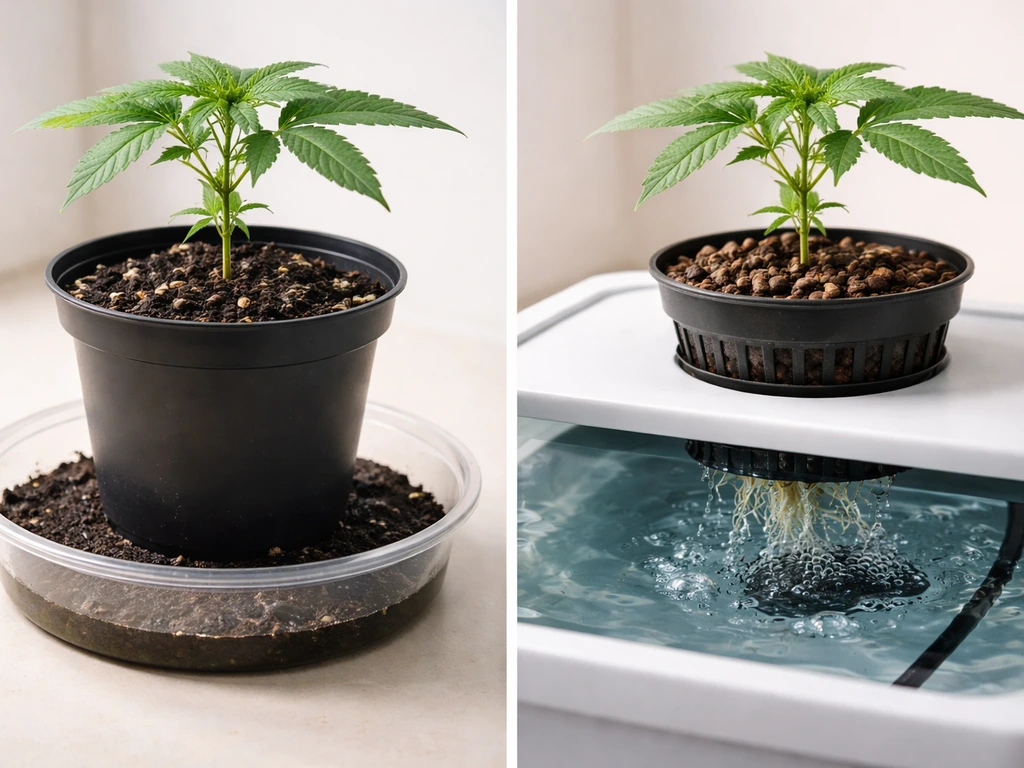
The timing trigger is the same in both systems (12/12 flip or first flower signs), but how you execute the switch and how quickly the plant responds differs significantly between soil and hydro.
Soil: slower transitions, more buffering
Soil buffers nutrient changes. When you switch formulas, the old nutrient profile doesn't vanish immediately. Residual nitrogen from grow nutrients can persist in the root zone for several feedings, which means the plant has a softer landing. This is actually an advantage: you can make the formula switch on day 1 of flip without risking immediate shock, and the medium absorbs the mismatch.
The downside is that if you overfed nitrogen late in veg, it can linger into early flower and delay bud development. EC readings in soil should target CANNA Terra Flores' suggested range of 0. 9-1. 6 mS/cm (combined solution EC), and pH should sit at 5.
8-6. 2 for optimal bloom nutrient availability. Runoff EC monitoring helps you catch salt accumulation before it becomes a lockout problem.
Hydroponics: instant response, no margin for error
In hydro, whatever is in your reservoir is immediately available to the roots. That's the power of hydro and the risk. A hard cutover to full-strength bloom formula on day 1 of flower will stress plants because there's no medium to buffer the shift. The gradual ramp described earlier (50-75% EC for the first 3-5 days) is more important in hydro than in soil.
EC targets post-switch should aim for CANNA Aqua Flores' range of 1. 3-2. 1 mS/cm (combined solution including water EC), and pH should be dialed to 5. 2-5.
8. Some systems like CANNA Aqua use pH stabilizers built into the formula, which helps reduce pH drift without constant manual adjustment, but you still need to verify pH at each reservoir check. In rockwool or other inert media, soaking and conditioning at pH 5. 5-6.
0 before introducing bloom nutrients prevents the substrate itself from interfering with your target pH range.
| Factor | Soil | Hydroponics |
|---|---|---|
| Transition speed | Gradual (medium buffers) | Immediate (no buffering) |
| EC range (bloom) | 0.9–1.6 mS/cm | 1.3–2.5 mS/cm |
| pH target (bloom) | 5.8–6.2 | 5.2–5.8 |
| Flush needed at switch? | Optional, beneficial if N-heavy veg | Recommended (FloraKleen or plain water flush) |
| Runoff monitoring | Important, 5–10% target | Less applicable (recirculating) or high runoff systems |
| pH drift risk | Lower (soil buffers) | Higher (monitor daily first week) |
| Response time to correction | 1–3 days | 12–24 hours |
If you're running hydro and want to do a clean nutrient transition, a single pass of a flushing agent like FloraKleen between your grow reservoir and your first bloom reservoir is a good practice. It clears residual fertilizer salts and gives you a true clean start on your bloom program. In soil, a plain water feeding (no nutrients) between your last grow feed and first bloom feed achieves a similar result without the need for a dedicated flush product.
One more thing worth noting if you're planning an outdoor grow: the timing considerations for switching outdoors are somewhat different because you're working with natural photoperiod changes rather than a controlled flip. In outdoor grows, do si dos outdoor grow plants should also follow the same move from grow to bloom once you spot the first flower initiation signs.
One more thing to remember for outdoor plants is that the exact timing should follow the first signs of flower initiation first signs of flower initiation outdoors. That distinction matters for how you read early flower signs and when exactly to make the formula change. In general, banana plants are triggered by season and growing conditions rather than a nutrient switch, so timing depends on your local climate banana grow in which season.
Your practical checklist for switching
- Confirm flip day or first flower signs before making any formula changes
- Run one final grow-formula feed or a plain water feed to clear residual nitrogen from the root zone
- Mix your first bloom solution at 50-75% of your target bloom EC using proper nutrient order (silicon first, then micros, then bloom concentrate)
- Adjust pH to the bloom-stage target: 5.2-5.8 for hydro, 5.8-6.2 for soil
- Monitor pH daily for the first 5-7 days after switching
- Check plants at 48-72 hours for tip burn (back off EC if present) or early yellowing (add small nitrogen supplement if deficiency appears too fast)
- Ramp to full bloom EC by day 5-7 if plants look healthy
- Start monitoring runoff EC in soil or rockwool after week 2 of bloom to catch salt buildup early
FAQ
Can I switch from grow to bloom nutrients only when I see buds, instead of on the first day of flower initiation?
You can, but it usually costs you early flowering performance. Bloom nutrients are most useful during the first shift into the generative stage, so waiting for visible buds often means the plant spent the first days on the nitrogen-heavy profile, which can slow root and early bud development. If you are already seeing bud formation, switch as soon as you notice the initiation phase, then use the recommended gradual ramp to avoid shock.
How do I know if I switched too early or too late when the plant already looks healthy?
Watch what changes in the first 7 to 10 days after the switch. Early switch signs include continuing strong vegetative push (vigorous new leaves, long internodes) with little bud set progress, while late switch signs can include dark green foliage plus delayed bud development and uneven flowering stretch. The practical decision aid is to confirm you are truly at flower initiation, then match EC and pH to bloom targets rather than relying on plant size.
Should I keep the same pH and EC targets right after switching, or can I change them gradually?
Aim to change them gradually, especially in hydro. Even when pH and EC are correct on paper, plants often respond to the first few changes as a transition stressor. In practice, maintain bloom pH targets from day 1, then adjust EC with smaller steps (like 0.2 mS/cm at a time) if you see tip burn or stalled uptake.
What if my water has very high alkalinity, can that ruin the grow to bloom switch?
Yes. High alkalinity makes pH drift harder to control, and bloom formulas are more sensitive to pH-related precipitation and lockout interactions. If your pH climbs quickly after mixing, you may need stronger source-water correction or more frequent reservoir checks during the first week, because the switch happens when uptake patterns are changing most rapidly.
Is a flush necessary between grow and bloom nutrients?
Not always. It is optional if your grow feeding was accurately dosed and you kept pH and EC in range, since residual salts may be minimal. It is more valuable in hydro when doing a clean transition, or when you suspect leftover salt buildup is contributing to phosphorus or potassium deficiency symptoms after the switch.
My plant shows early yellowing after switching, does that always mean nitrogen deficiency?
Not necessarily. Early yellowing can also be driven by pH drift or root uptake issues, especially if it appears shortly after changing reservoirs. A useful workflow is: confirm EC delivery first, check pH next (especially for young growth), then only treat it as nitrogen shortage if pH is stable and EC is not low for your bloom stage.
How long should the nutrient transition ramp take, and what if I only have time for a hard cutover?
The safer approach is a 3 to 5 day ramp (for example, starting the bloom at 50 to 75% strength, then reaching full strength by day 5 to 7). If you must hard cut over, reduce the bloom strength immediately (do not start at full strength), then increase only after 48 to 72 hours of stable color and no worsening tip burn or clawing.
Do I need to change the feeding frequency when I switch to bloom nutrients?
Often yes during the first stretch. Plants typically consume more water as they enter the stretch, so you may need slightly more frequent feedings or higher water delivery to keep EC stable. After the stretch slows, you can usually return to a consistent rhythm, but runoff EC monitoring becomes more important to prevent hidden salt buildup.
Can I use grow nutrients plus cal-mag and still get good flowering results?
You can correct specific deficiencies this way, but it is not a complete substitute for a bloom formula. Grow nutrients carry a nitrogen-forward balance that can undermine the intended phosphorus and potassium shift. If you do add a small nitrogen component early in flower, taper it off by week 3 so you do not keep the plant in a vegetative signal.
What runoff targets should I watch for after the switch, and what if runoff changes dramatically?
Runoff monitoring helps detect salt accumulation and distribution issues. If runoff EC rises quickly or consistently after switching, it may indicate you are pushing too much bloom EC or watering volume is insufficient. If runoff is suddenly very low, it can indicate overly dilute feeding or drainage problems, which can cause uptake imbalance even when your reservoir EC looks correct.