Yes, autoflowers can and often do grow bigger outside than they would under typical indoor setups. The catch is that "bigger" isn't automatic. Outdoor sun, unrestricted root space, and the right temperatures create the conditions for genuinely impressive plants, but cold snaps, poor soil, undersized pots, and late starts can just as easily produce stunted, disappointing results. This guide cuts through the noise so you know exactly what drives outdoor autoflower size, what realistic numbers look like, and what you can do right now to push your plants toward their genetic ceiling.
Do Autoflowers Grow Bigger Outside? A Practical Guide
Marcus Holloway
17 Apr 2026
What actually determines how big an autoflower gets
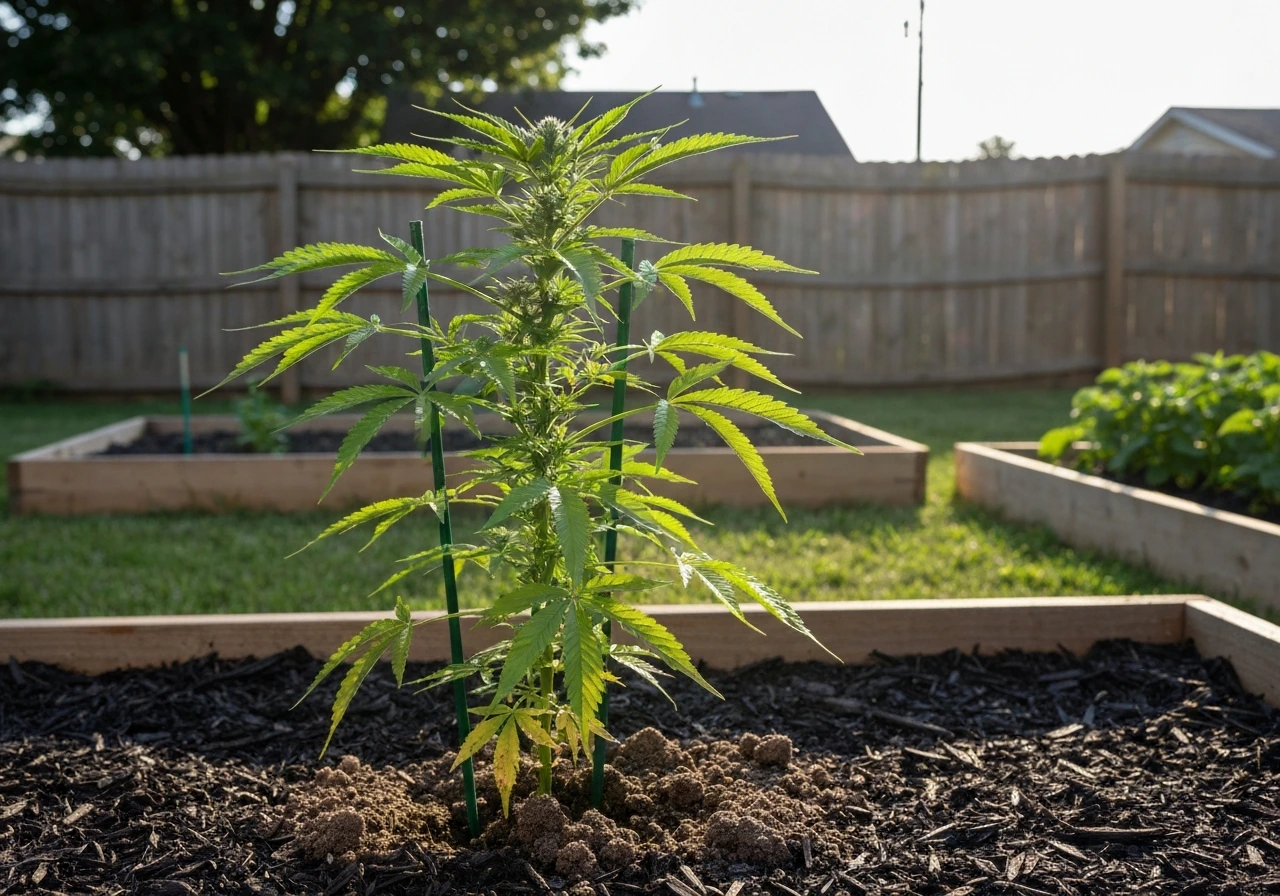
Autoflowers are age-based, not light-schedule-based. They flower on an internal clock, not because you flip to 12/12. That single fact shapes everything about how you grow them and why outdoor conditions interact with their size differently than with photoperiod plants. The final size of any autoflower comes down to five things: genetics (the hard ceiling), light intensity and duration, root volume, nutrition, and stress. Get all five right and you hit the genetic ceiling. Mess up any one of them during that fixed vegetative window and the plant moves into flower before it had a chance to build the structure to support big yields.
Genetics set the upper limit. Some strains are built compact, topping out around 1 to 2 feet regardless of conditions. Others, labeled XXL or described as having a Haze or Sativa lean, can push past 4 feet outdoors with ease. Light intensity determines how fast the plant can photosynthesize and build mass during that veg window. Root volume determines how much water and nutrients the plant can pull in at any given moment. Nutrition fuels the engine. And stress, whether from cold, transplant shock, pests, or inconsistent watering, burns time from an already tight clock. There's no extending the schedule to recover.
Outdoor vs indoor: why the numbers can look so different
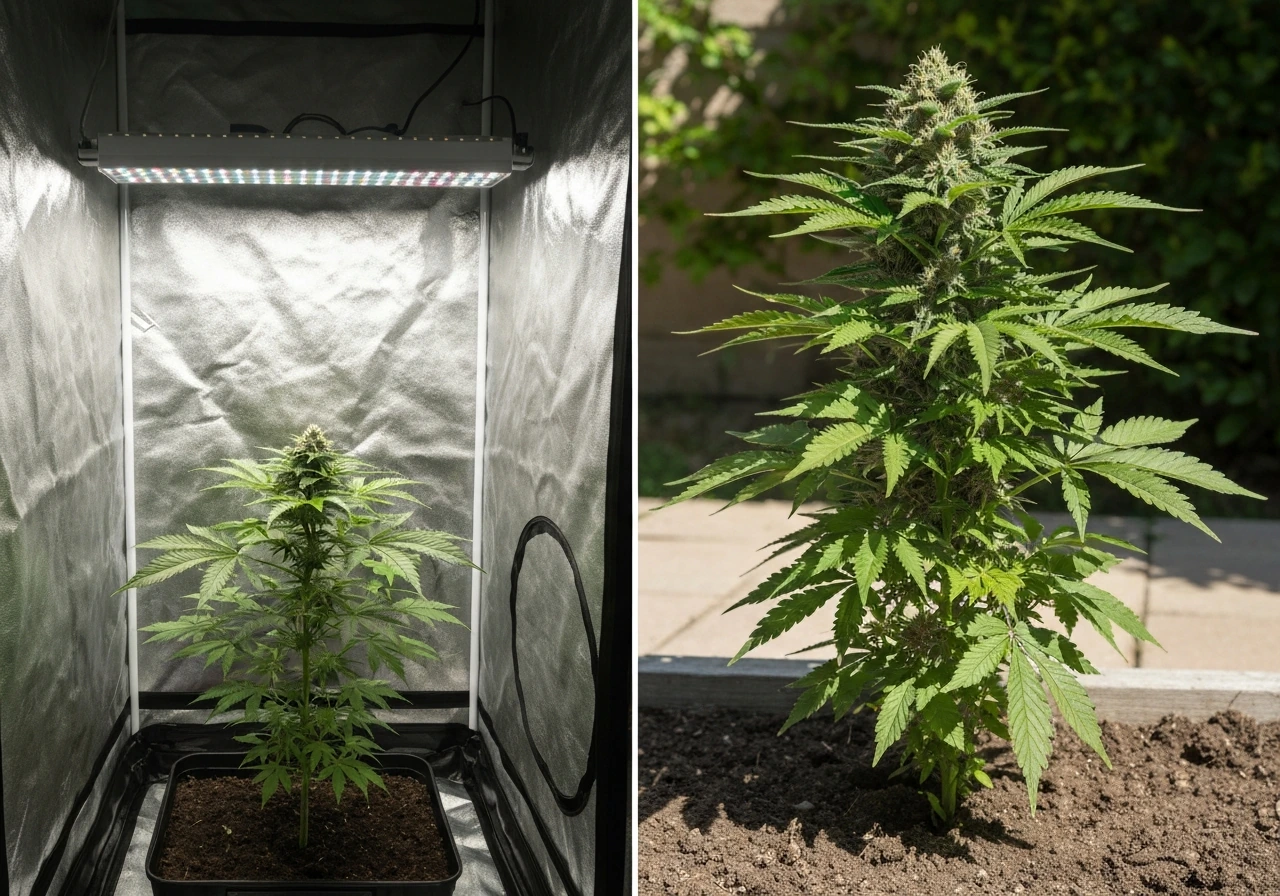
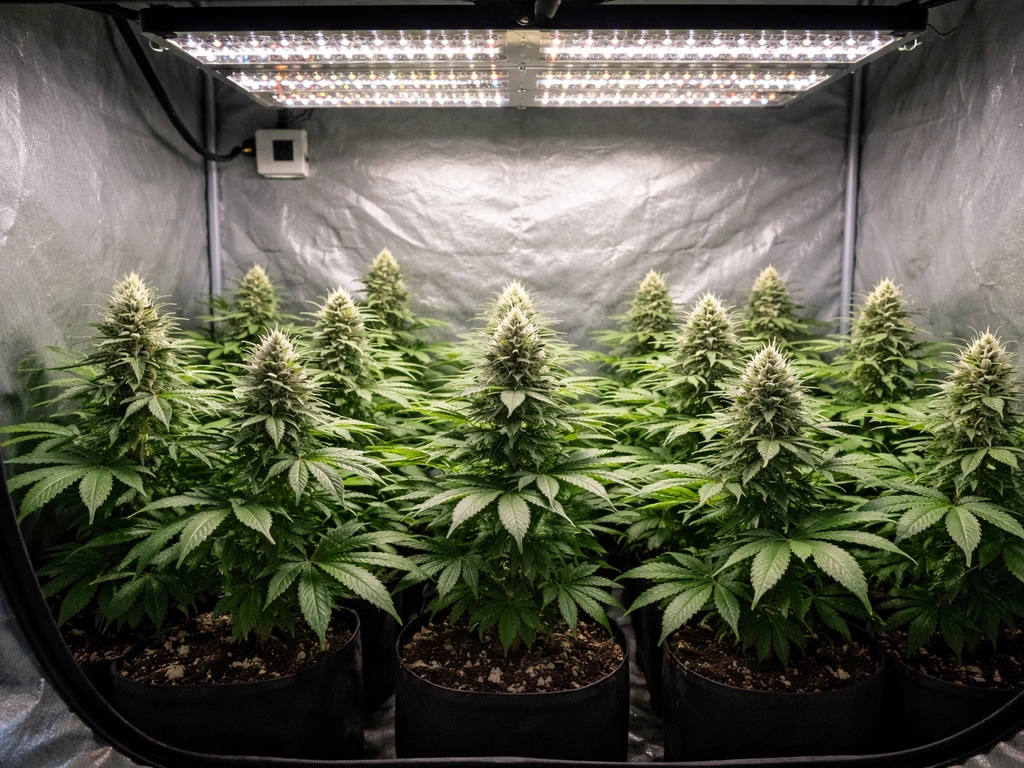
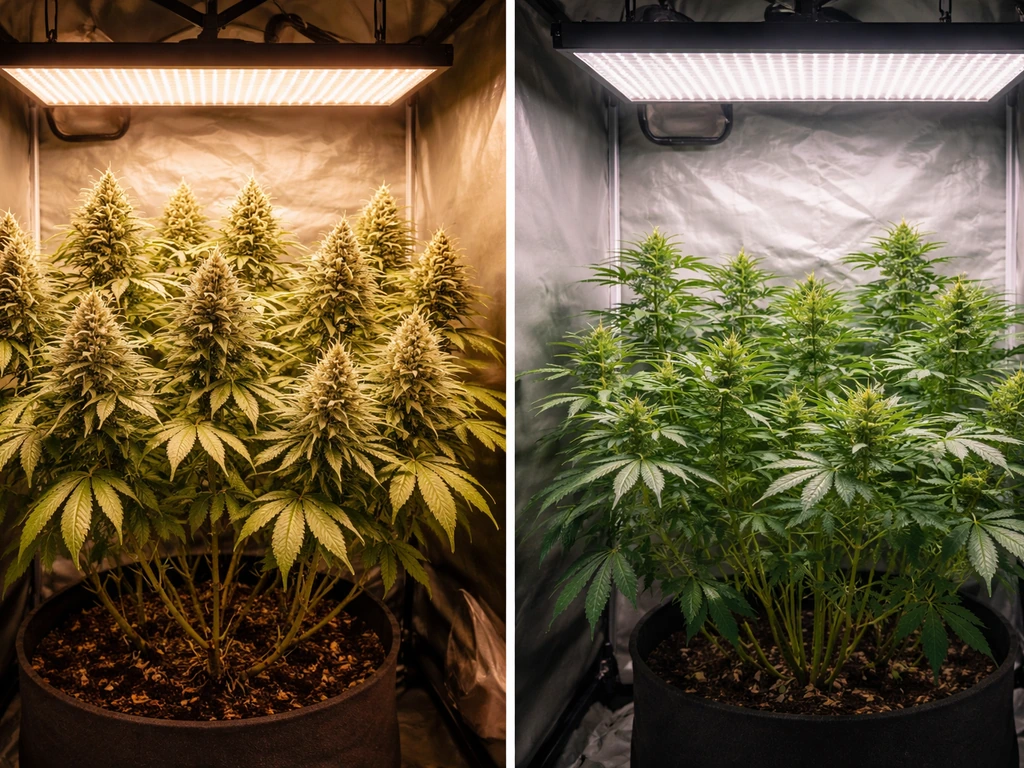
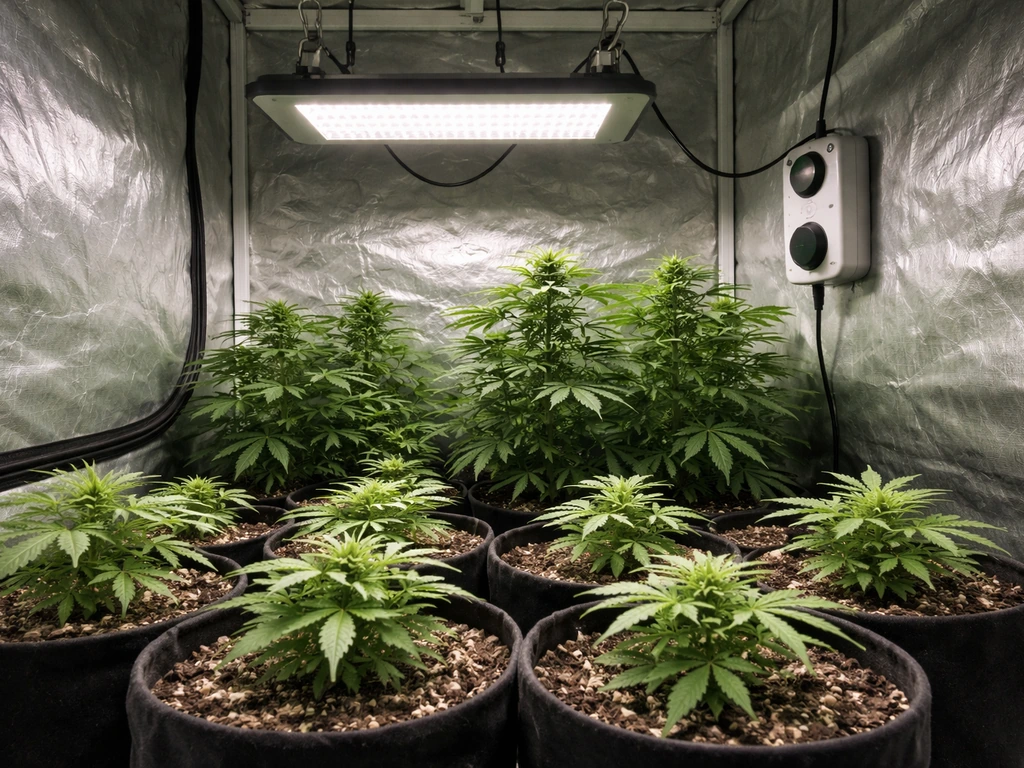
Indoor autoflowers under a solid LED setup typically stay in the 65 to 85 cm range. Move that same genetics outside into full summer sun and it's realistic to see 120 to 150 cm, with outdoor yields ranging from 130 to 180 grams per plant dried. That's not marketing copy, that's the difference between 600 to 900 PPFD from a decent grow light versus the full-spectrum, high-intensity output of direct sun at peak summer. The sun simply delivers more usable light across a wider canopy than most home LED rigs, and the plant responds by building more lateral structure before it flips.
But outdoor growing also introduces variables you can't control the way you can in a tent. Temperature swings between day and night, humidity, wind, rain consistency, and the angle of the sun all matter. In ideal conditions, 5.3 to 6.2 oz per plant dried is a reasonable general target outdoors, but individual plants in a great season with the right strain and setup can exceed that. The floor is also lower outdoors: a poor run can produce plants that barely match mediocre indoor results. The honest comparison is that outdoor growing raises the ceiling and lowers the floor simultaneously.
If you're still deciding whether outdoor growing is the right move for your situation, it's worth thinking through the full picture. whether you should grow autoflowers at all depends on your climate, space, and goals, and that question is worth settling before you commit to an outdoor run.
Light and temperature: the two levers that matter most outside
During the vegetative phase, autoflowers perform best with at least 16 hours of light per day. That's why a summer grow started in late May or June in most Northern Hemisphere locations catches the longest days and gives plants the most energy to build canopy before they flip. If you plant in early spring or late summer when day length drops toward 13 to 14 hours, plants still flower on schedule but with less vegetative mass built up first. The result is smaller plants, full stop.
Temperature is just as important as light. The target range during veg is roughly 20 to 22°C (68 to 72°F), moving up to 22 to 25°C (72 to 77°F) during flowering. Temperatures below 15°C (59°F) slow metabolism noticeably. Below 18°C (65°F), most strains show real growth delays. Young seedlings exposed to cold nights in early spring often look like they've stalled, because they have. The plant doesn't die, but it wastes days that it can't recover because the flowering clock keeps running regardless. Night temperatures are often the bigger issue than daytime: a warm afternoon followed by a 10°C night is enough to set plants back.
Wind is the underrated size-killer outdoors. A consistent breeze builds strong stems, which is actually good, but strong gusts or sustained wind during early veg can physically stress young plants and trigger a mild stress response that eats into growth rate. Positioning plants near a windbreak, fence, or wall on the prevailing-wind side makes a noticeable difference.
Getting your outdoor feeding and watering right
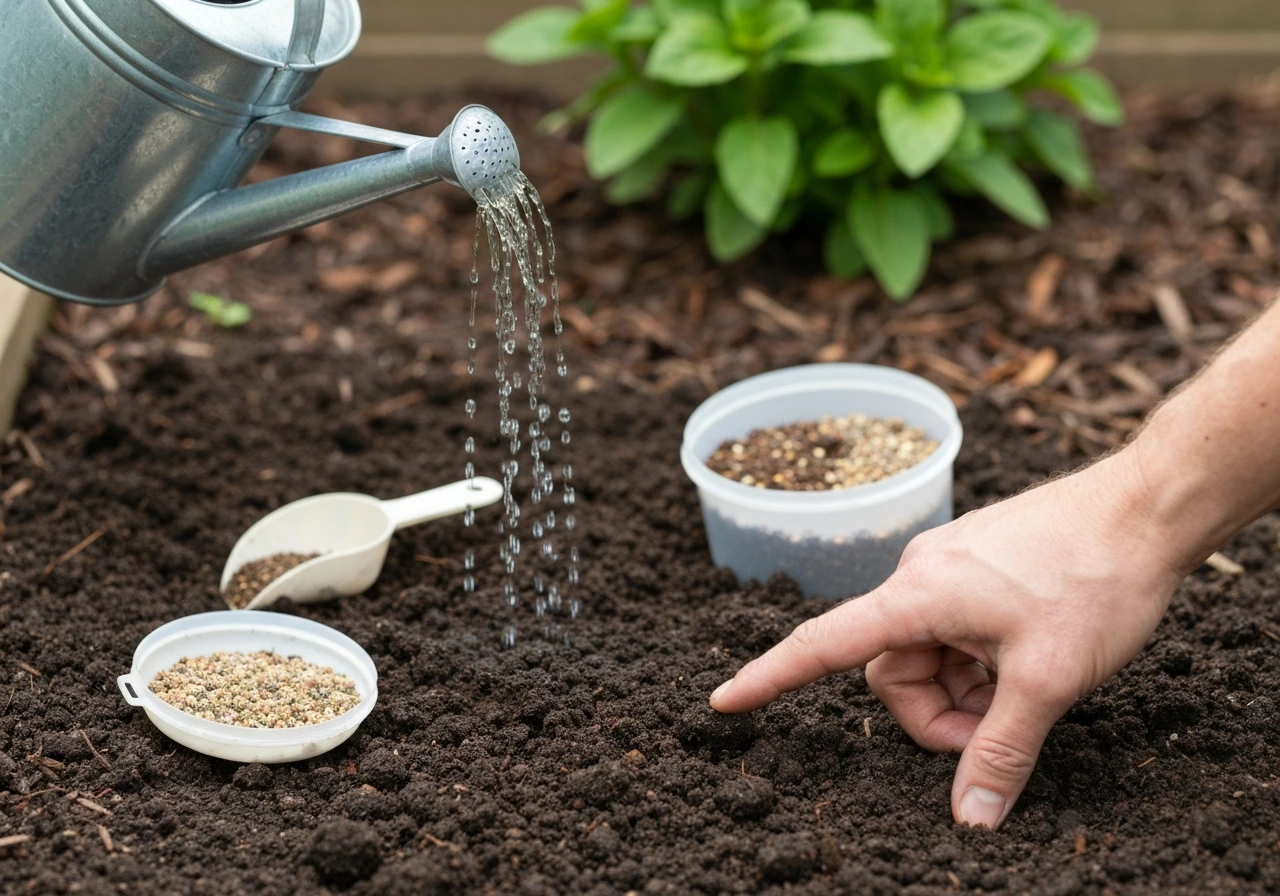
Outdoor feeding is different from indoor feeding in a few important ways. Rain dilutes your soil nutrient profile. Temperature swings affect how quickly microbes in living soil break down organic matter. Runoff from heavy rain can leach nutrients faster than you expect. And because outdoor pots dry out unevenly depending on sun exposure, watering schedules need to flex with the weather rather than run on a fixed timer.
For watering timing, water close to sunrise. Evaporation is lowest in the morning, which means more water reaches the root zone rather than evaporating off the top of the medium. This approach also means the medium isn't sitting wet overnight, which reduces mold and root rot risk. Maintain a wet/dry cycle: let the top inch or two of the medium dry out between waterings rather than keeping it constantly saturated. That wet/dry rhythm drives root expansion as the plant chases moisture.
For nutrients, the core mistake outdoors is overfeeding during early veg and causing lockout. Start light, maybe 25 to 50% of the recommended dose on any bottled nutrient line, and escalate based on what the plant shows you. Yellowing lower leaves in mid-to-late veg is normal nitrogen cycling, not deficiency. Yellowing new growth or curling tips is a sign of excess or lockout. Soil pH outdoors should stay between 6.0 and 7.0 for most autoflower grows. Check it regularly, especially after heavy rain events, because acidic runoff can drag pH down over time and lock out calcium, magnesium, and phosphorus even if they're present in the medium. If you're curious about whether autoflowers can grow without added nutrients, the short answer is they can manage in rich living soil for a while, but outdoor plants pushing for real size will benefit from supplementation by mid-veg.
If you're using living soil outdoors, pre-enriching it with worm castings before transplant gives plants a slow-release organic baseline that buffers against the gaps in your feeding schedule and rainfall events. Some outdoor growers also mix in water-absorbing gel crystals to help the medium hold moisture more consistently between waterings, which smooths out the feast/famine cycle that happens when rain is irregular.
Pot size, root space, and training: what to do and what to skip
Container size is one of the most direct levers you have for outdoor autoflower size. The longer the grow runs and the more light the plant receives, the larger the container needs to be to match root demand. A plant in a 3-gallon pot will be measurably smaller than the same genetics in a 7-gallon pot in the same conditions. For outdoor grows where you're chasing size, 5 to 7 gallons is a solid starting point, and 10+ gallons makes sense for XXL varieties or in-ground equivalents.
In-ground planting is the other option and it removes the container ceiling entirely. Roots can expand in all directions, which supports larger plants and more even moisture and nutrient uptake. The trade-off is that in-ground plants can't be moved, they're exposed to soil-borne pests, and you lose some control over the medium composition. Fabric pots are a good middle ground: they air-prune roots, prevent circling, and promote a dense, fibrous root structure that supports bigger canopies while keeping the portability advantage.
Training is where a lot of growers overcomplicate outdoor autoflower grows. The firm consensus is to skip high-stress training (HST) like topping and FIMing. Autoflowers don't have enough vegetative time to recover from the stress and yield loss that topping creates. Low-stress training (LST), where you gently tie down branches to open up the canopy without cutting anything, is a different story. It's low risk, it exposes more bud sites to light, and it can meaningfully increase yield without costing recovery time. Start LST in the first two to three weeks of veg, before the stems lignify. After week four, the plant is usually too stiff and too close to flowering to train effectively.
| Training Method | Risk Level | Recovery Time Needed | Recommended Outdoors? |
|---|---|---|---|
| Low-stress training (LST) | Low | None | Yes, weeks 2-3 of veg |
| Topping | High | 7-14 days minimum | No, skip for autos |
| FIMing | High | 5-10 days minimum | No, too risky |
| Defoliation (light) | Medium | 2-4 days | Only if overcrowded canopy |
| Scrog (screen) | Low-Medium | Minimal | Only in stable, sheltered spots |
Picking the right genetics: strains that actually get big outdoors
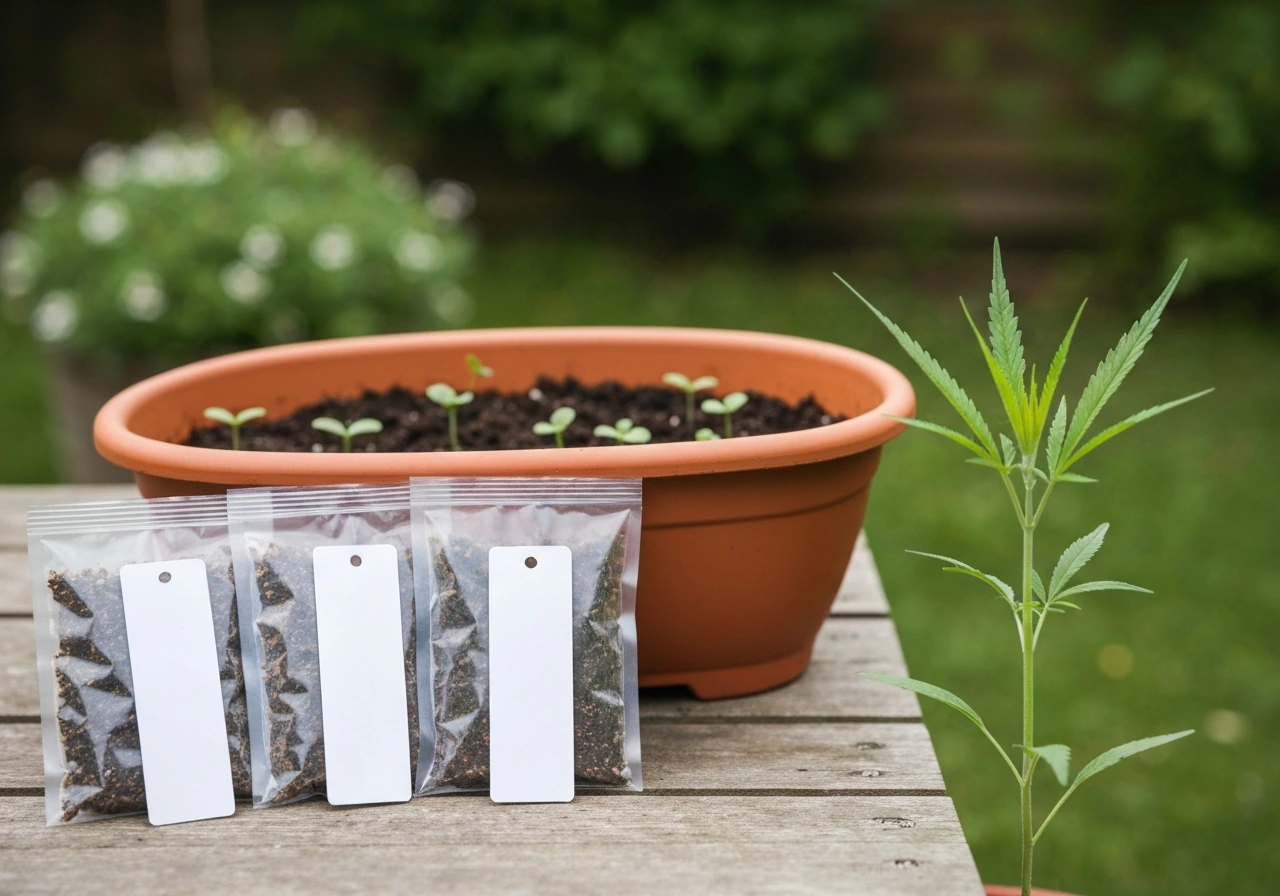
If you want big outdoor autoflowers, genetics is the starting point, not an afterthought. Compact indica-dominant autos are designed for stealth and fast cycles, not impressive height. If you plant them expecting 5-foot plants, you'll be disappointed every time. What you want to look for are strains marketed as XXL, Big Yield, or with a Haze, Sativa, or tall-phenotype lineage. Dutch Passion's Auto Ultimate is a well-known example of an XXL autoflower that can push several hundred grams per plant outdoors in good conditions, and it comes with the caveat that bigger plants drink more and eat more, so your feeding and watering game needs to match the genetics.
When evaluating a strain for outdoor size potential, look at the listed outdoor height and outdoor yield separately from the indoor numbers. Strain data sheets and product pages will often list separate figures for indoor (65 to 85 cm) and outdoor (120 to 150 cm or more) because the same genetics behaves differently with full sun. An outdoor height reference of around 4 to 5 feet is realistic for top-tier XXL strains in a good climate. More compact strains top out at 1 to 3 feet regardless of what you do. That gap is genetics, not technique.
It's also worth thinking about how your outdoor strain selection interacts with your overall garden setup. If you're running a mix of plant types, growing autoflowers and photoperiod plants together is possible but requires some planning around light schedules and canopy height differences.
Timing and stress prevention: don't waste the veg window
Because autoflowers run on an internal clock, every week of stunted growth in early veg is a week the plant never recovers. The goal is zero stress during the first three to four weeks. That means planting directly into the final container (no transplanting), germinating indoors and hardening off seedlings gradually before putting them outside, and not starting too early in spring when night temperatures are still dropping below 15°C regularly.
For most Northern Hemisphere growers, the sweet spot for outdoor autoflower planting is late April through early June. This catches increasing day length, warming soil temperatures, and avoids the cold shoulder seasons. You can run successive crops through the season: one started in May, another in July. The May crop benefits from the longest days; the July crop finishes before fall cold arrives. Both strategies beat planting once in March and watching seedlings stall in cold nights.
Pests are the other timing issue. Outdoor plants are exposed to aphids, spider mites, fungus gnats, and caterpillars in ways that indoor grows mostly aren't. Check plants every two to three days during veg, especially the undersides of leaves. Early intervention with neem oil or insecticidal soap is far less stressful to the plant than waiting until an infestation is established. A plant dealing with a serious pest load during weeks two to four of veg will almost always finish smaller than a clean plant.
Understanding how autoflowers compare to photoperiod plants in growth speed also helps you set the right expectations for your timing plan. Autos typically finish in 70 to 90 days from seed, which means planning your planting date backward from your first expected frost date gives you a clear window.
Why your outdoor autos aren't getting bigger (and how to fix it)
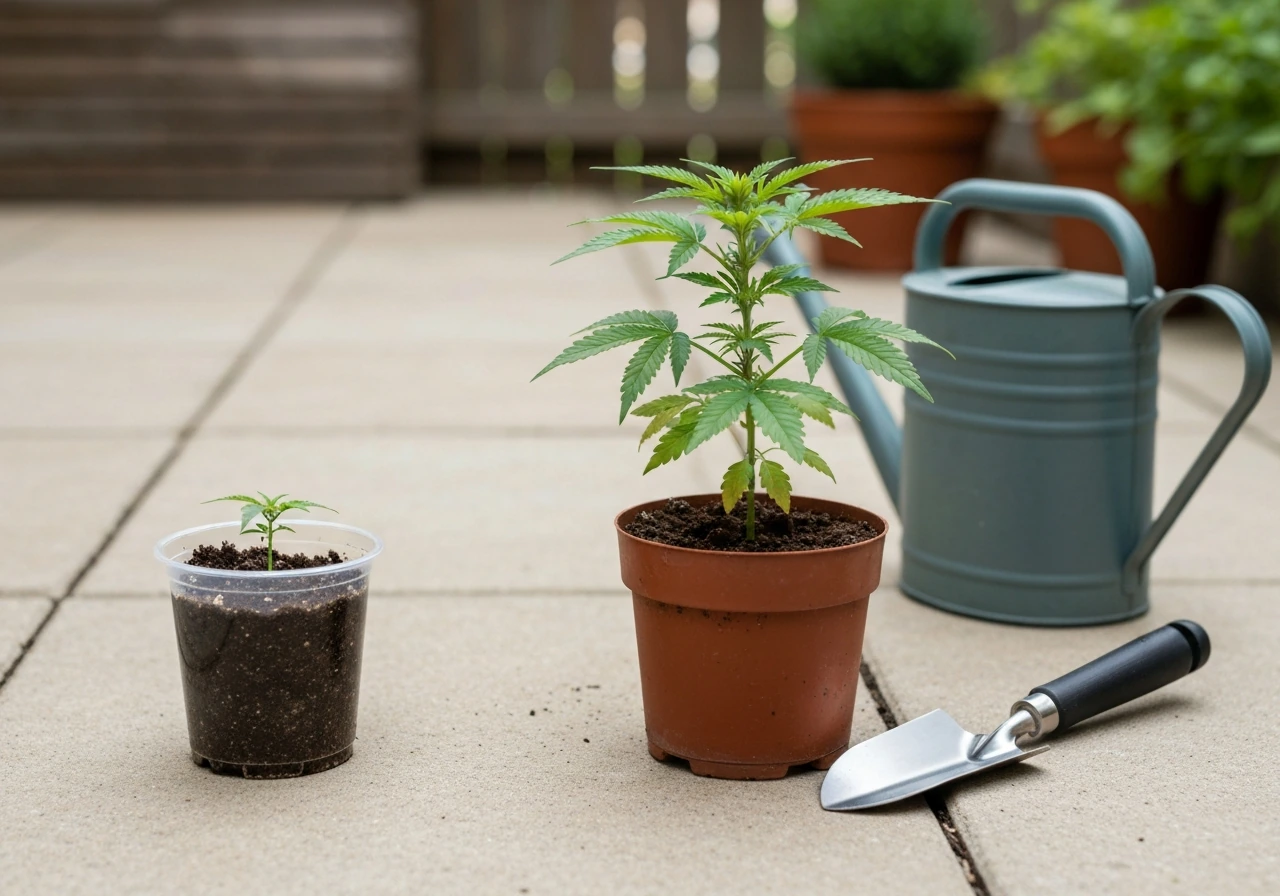
If your outdoor plants are staying small, the cause almost always falls into one of a handful of categories. Here's how to diagnose each one:
- Small containers: If your plant is in a 1 to 2 gallon pot and seems to have stopped growing, it's almost certainly root-bound. The fix for the next grow is to start in a 5 to 7 gallon pot. Mid-grow, you can try carefully transplanting early in veg (weeks 1 to 2 only), but transplanting autos carries real stress risk and should be a last resort.
- Cold stress: If plants look purple, dark, or are growing very slowly in the first two weeks, check your overnight lows. Consistent nights below 15°C are stalling them. Use a cloche or cold frame to trap heat at night during early season.
- Nutrient lockout: If lower and mid-canopy leaves are yellowing while new growth looks pale or twisted, check your soil pH. A reading below 6.0 or above 7.0 blocks nutrient uptake regardless of what's in the medium. Flush with pH-corrected water and resume at a lower feeding dose.
- Overwatering: Drooping leaves that don't recover after watering, combined with slow growth, often signal waterlogged roots. Let the medium dry out more between waterings and improve drainage if needed.
- Late germination or wrong timing: Plants started after late July in most climates finish with shorter day lengths and lower sun angles, which translates directly to smaller plants. Plan your next run to start no later than early June.
- Pest damage: Leaves with stippling, webbing, or visible insects slow photosynthesis during the critical veg window. Identify the pest, treat with an appropriate organic solution, and inspect every few days.
- Transplant shock: If you moved seedlings from solo cups or small containers into final pots after week two, you may have disturbed the root zone enough to cause a setback. Next grow, direct-sow or transplant at week one maximum.
One situation that confuses growers is when plants look healthy but just don't seem to be stretching. Sometimes this is simply genetics: a compact indica auto in full sun still won't grow to 4 feet. If you've ruled out all the stressors above, the honest answer may be that the strain you chose has a low ceiling. Switch to an XXL or Sativa-leaning auto next run.
It's also worth checking your light schedule assumptions. Some growers moving from indoor to outdoor wonder whether reduced light hours late in the season will trigger flowering prematurely. To understand the mechanics, whether autoflowers can grow in a 12/12 light cycle explains why autos flower regardless of the schedule, which removes one variable from your troubleshooting list.
If you're running an unconventional setup, like supplementing outdoor plants with artificial light to extend hours, whether you can grow autos on 12/12 covers what to expect from reduced light schedules and whether supplementing is worth the effort. And for growers who want to take outdoor growing further, growing autoflowers hydroponically is an option that pairs high nutrient control with either indoor or outdoor environments, especially in greenhouse setups.
Your outdoor autoflower size checklist
Use this before and during your next outdoor run to stack the conditions in your favor:
- Choose an XXL or tall-phenotype auto strain with documented outdoor heights above 100 cm if you want maximum size.
- Start seeds no earlier than when overnight lows are consistently above 15°C (59°F), targeting late April to early June for most Northern Hemisphere climates.
- Plant directly into final containers of at least 5 gallons, or go in-ground if portability isn't a concern.
- Use fabric pots to promote air-pruned root structure and avoid circling roots.
- Pre-enrich outdoor soil with worm castings and ensure drainage is good before planting.
- Water at or just before sunrise, maintain a wet/dry cycle, and check soil pH every one to two weeks, targeting 6.0 to 7.0.
- Start nutrients at 25 to 50% of recommended dose and escalate only when the plant signals it's ready, watching new growth for deficiency signs.
- Apply low-stress training in weeks two and three of veg only, avoiding any topping or high-stress techniques.
- Position plants to maximize sun exposure from 9am to 5pm and provide a windbreak on the prevailing wind side.
- Inspect for pests every two to three days during veg and treat early with organic options.
- Plan successive runs (May and July) rather than a single early start to maximize your season without risking cold stress.
FAQ
If I have strong summer sun, will my outdoor autoflowers automatically grow bigger than indoor?
Not necessarily. If a late start or cool nights reduce the vegetative window, the plants can flower on the clock before they build the structure needed for bigger size, even if they get plenty of sun later. Aim to start when night temperatures are consistently above about 15°C (59°F), and confirm your local season gives you enough warm days before flowering accelerates.
What outdoor mistakes stop autos from getting bigger even in hot weather?
Full sun helps, but leaf burn and nutrient problems can cap growth. If you see taco-shaped leaves, persistent clawing, or rapid yellowing after a feeding bump, back off nutrients and ensure the plant gets consistent watering rather than letting the soil swing between bone-dry and saturated. Bigger outdoors is usually a balance of light plus stable roots, not just maximum brightness.
How does heavy rain affect outdoor autoflower size, and what can I do about it?
Rain can push the medium into a nutrient- and oxygen-stress cycle. If you grow in containers, consider a simple cover to keep heavy downpours from constantly saturating the soil, while still allowing airflow. In-ground plants are harder to protect, so focus on raised beds and well-draining soil to prevent waterlogging that slows root uptake.
Can overfeeding outdoors during early veg make autos stay small?
In many cases, yes. Too much fertilizer early can cause nutrient lockout, which shows up as new growth problems (twisting, curling, or off-color) and slower overall build. The practical fix is to start lighter (around 25% to 50% of the labeled dose) and increase only after you confirm steady growth and stable leaf color, then stop escalating before the first signs of flowering.
If my plants look slightly off after rain, should I suspect pH?
pH matters outdoors because runoff and living soil activity can drift the effective pH at the root zone. Check pH after heavy rain or if you notice recurring deficiencies despite “feeding correctly.” If you see persistent issues, test the runoff or medium itself, then adjust to keep most autos in roughly the 6.0 to 7.0 range.
Is transplanting an autoflower outdoors likely to reduce final size?
Yes, direct root disturbance is a common size killer with autos because they cannot pause their internal schedule to recover. The safest approach is transplant-free growing into the final pot, and if you must move them, do it when seedlings are small and handle them gently to avoid tearing roots.
Why do my autoflowers look stalled even though daytime temps seem fine?
Yes. Moving from a warm afternoon to a cold night is often worse than a cool daytime spell because it drags down metabolism during the most growth-critical hours. If your lows are dropping near 10°C to 12°C (50°F to 54°F), consider temporary protection like cloches or row covers during nights to prevent stalling.
What is the highest-impact time to prevent stress on outdoor autos?
Because autos run on a fixed timeline, stress in weeks 1 to 4 can permanently reduce the structure they can build. Treat early veg like a “no excuses” period: avoid topping, minimize root disturbance, keep watering consistent, and start only when nights are warm enough to prevent repeated cold-stress stalls.
Will upgrading pot size alone make a noticeable difference outdoors?
A small pot limits water and nutrient availability, which can cap height and yield. For outdoor size chasing, 5 to 7 gallons is a practical baseline, and 10+ gallons often makes a visible difference for XXL phenotypes. If you want to keep containers compact, accept that the genetic potential may not fully express.
Can I use supplemental lighting outdoors to increase autoflower size?
Some light can help, but the most common reason it fails is that added light arrives too late, or the plants are already behind due to cold nights or early stress. If you do supplemental lighting, time it to support veg, use it consistently, and prioritize stable roots and feeding so the plant can actually convert that extra light into growth.
How do I tell normal leaf yellowing from a problem that will shrink my autos?
Yes, nutrient lockout can look like deficiency but with the wrong “leaf pattern.” If lower leaves yellow while new growth is healthy, it can be normal cycling. If the tips curl, new growth turns wrong, or color issues worsen after you feed more, it is often lockout. Back off feeding, check medium pH, and correct watering consistency before adding more nutrients.
Does wind really affect final size, or is it only about stem strength?
Grow in a windbreak zone and use supportive staking early if your stems are getting battered. Mild steady breeze is fine, but gusts during early veg can slow growth. Watch the first few weeks closely, since that is where the “lost time” matters most for final size.
If I go hydroponic outdoors, will my autos definitely get bigger?
Hydroponic or soilless approaches can work outdoors, especially in greenhouse conditions, because nutrient delivery is more controllable and can reduce the feast/famine swings from irregular watering. However, if your setup still experiences large temperature swings, root stress can offset the benefits. The biggest win is stability, not the medium type itself.