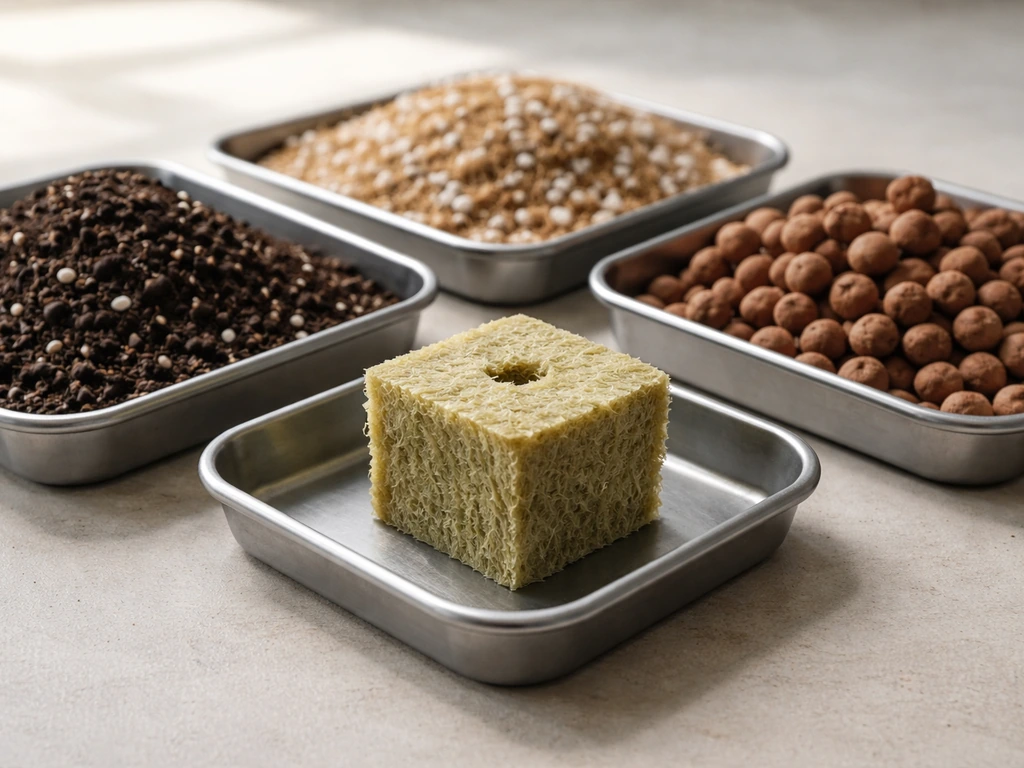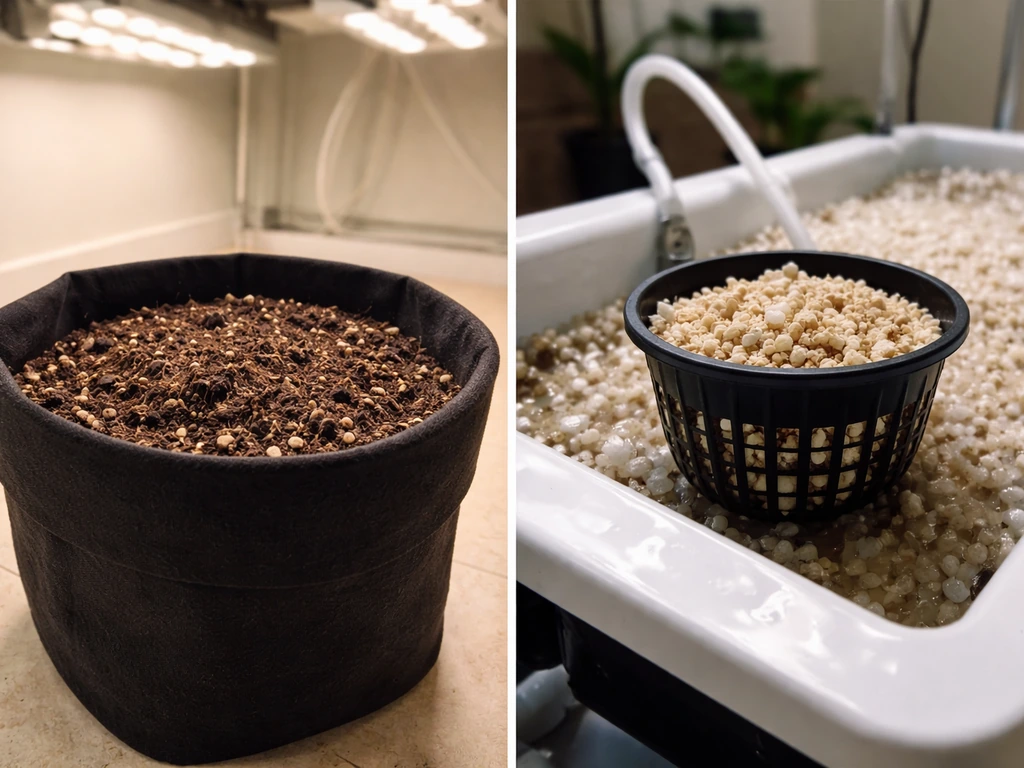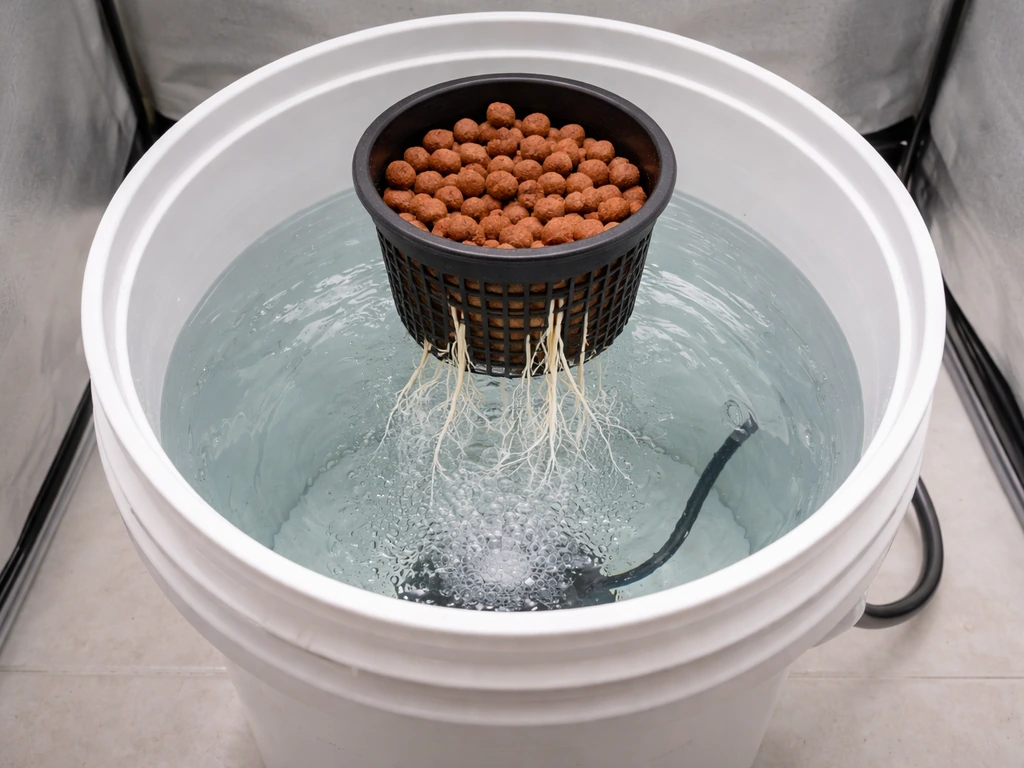
For most ebb-and-flow setups, expanded clay pebbles (hydroton) are the best all-around grow medium. They drain fast, hold their structure through hundreds of flood cycles, and leave plenty of air space around roots between floods. If you're running smaller plants or seedlings, rockwool cubes are a close second because they're easy to slot into net pots and transition cleanly from propagation into the tray. Coco coir works too, but it holds more moisture than clay pebbles, so you need to dial your flood timing carefully or you risk waterlogging. Everything else is a niche choice with real trade-offs.
Best Grow Medium for Ebb and Flow Hydroponics: 2026 Guide

Marcus Holloway
5 May 2026
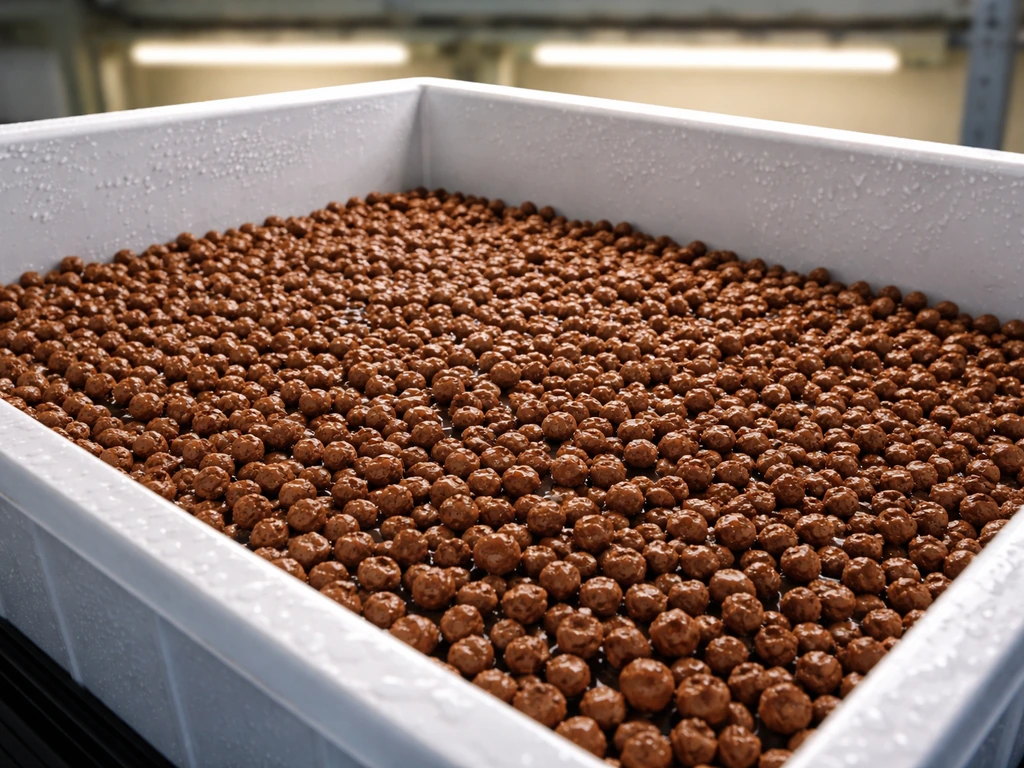
What makes a medium 'best' for ebb and flow
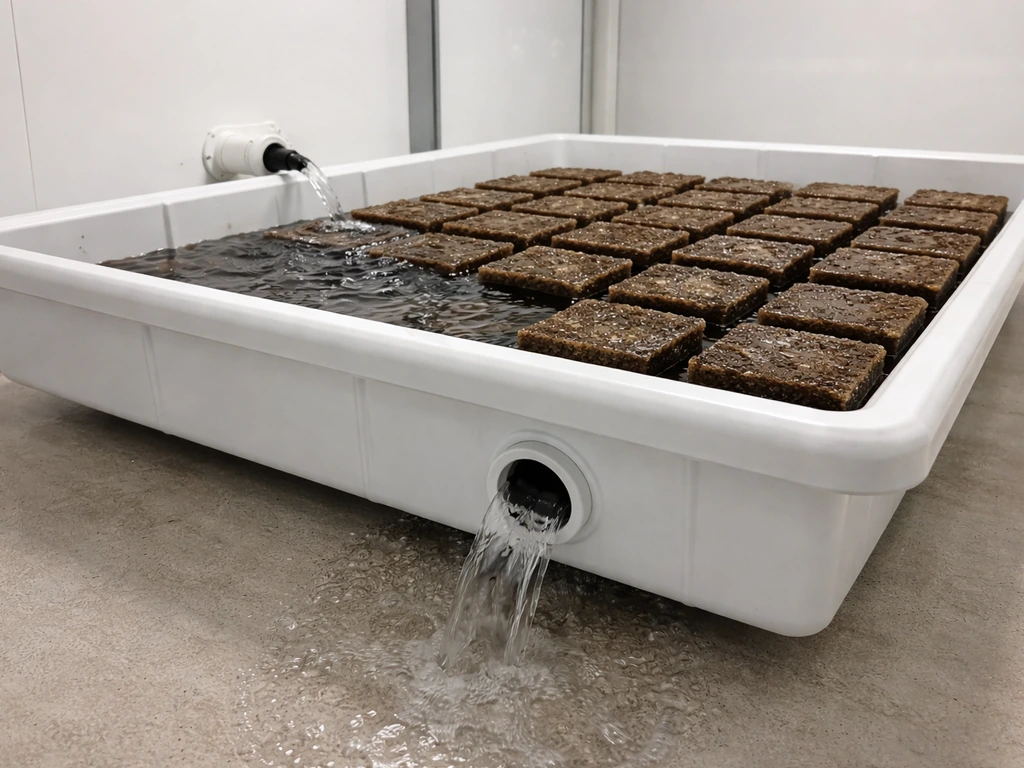
Ebb and flow works by flooding your tray or buckets with nutrient solution, then draining completely back to the reservoir. The drain phase is just as important as the flood. As the water recedes, it pulls fresh oxygen down into the root zone, replacing the stale, oxygen-depleted air left behind from the previous flood. If your medium holds too much water after the drain, roots sit in a saturated zone with no air and root rot follows fast. That's the core problem you're solving when you pick a medium for this system.
The ideal ebb-and-flow medium does four things well: it drains almost completely when the pump cuts off, it holds just enough moisture to keep roots from drying out between floods, it stays physically stable so it doesn't compact or shift in the tray, and it's inert enough that it won't mess with your nutrient solution pH or EC. Capillary action matters too. A medium that wicks moisture upward between floods keeps upper roots from drying out in deep pots without you having to flood more frequently.
For the record, ebb and flow is the same thing as flood and drain. You may see both terms used depending on the source or product. The mechanics are identical.
Key properties to look for
- Fast, complete drainage: water should clear within 5 to 15 minutes of the pump stopping
- Low water retention after drainage (under 20% by volume is ideal for most crops)
- High air porosity so roots get oxygen between floods
- pH neutrality or easy pH stability so your nutrient solution stays consistent
- Physical stability so it won't float, collapse, or clog your drain fittings
- Compatibility with your net pot or basket top size (2-inch, 3-inch, 4-inch are common)
- Reusability or low-cost disposability depending on your cycle frequency
The best media for ebb and flow, ranked
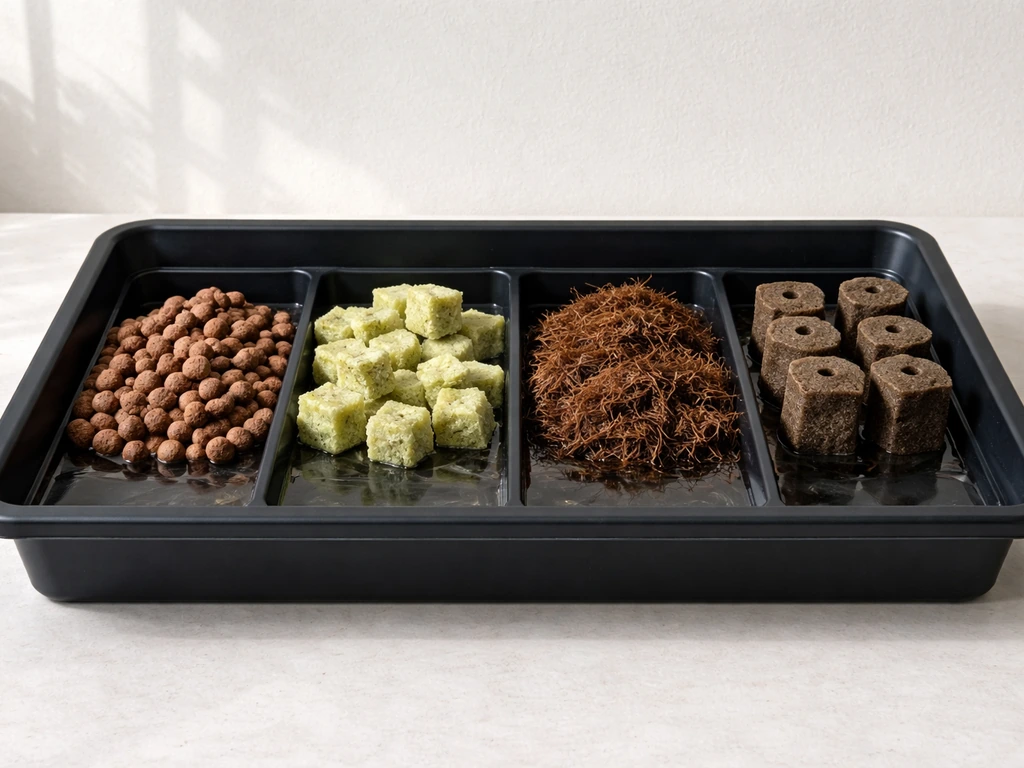
Here's how the most common options stack up across the properties that matter most in a flood-and-drain system. This is based on real-world performance, not just specs.
| Medium | Drainage Speed | Water Retention | Air Porosity | pH Stability | Reusability | Best For |
|---|---|---|---|---|---|---|
| Expanded clay pebbles (hydroton) | Excellent | Low | Excellent | Very stable (rinse well first) | High (sterilize between runs) | All stages, all crop types |
| Rockwool cubes/slabs | Good | Medium-high | Good when fresh | Needs pre-soaking to pH 5.5 | Low (single use typical) | Seedlings, small-to-mid plants |
| Coco coir (loose or blocks) | Good | Medium-high | Medium | Slightly acidic, needs buffering | Medium (1-2 runs) | Veg and flowering, experienced growers |
| Grow plugs (Rapid Rooter, Grodan) | Good | High | Medium | Generally stable out of bag | Single use | Seedlings and clones only |
| Perlite (standalone or mixed) | Excellent | Very low | Excellent | Neutral | Low (floats in trays) | Mixed with coco, not standalone |
| River rock / gravel | Excellent | Very low | Good | Variable (test before use) | High but heavy | Budget setups, large containers |
1. Expanded clay pebbles (the go-to choice)
Clay pebbles are what most serious ebb-and-flow growers run, and for good reason. The porous, lightweight ceramic balls drain fast, don't compact, and provide excellent oxygen access to roots between floods. They're inert, so they don't buffer or alter your nutrient solution once you've rinsed the dust off. You can reuse them for years with proper sterilization. The main downside is they have low water retention, which means you need to flood more frequently with seedlings or small transplants that have limited root development to reach moisture lower in the pot.
2. Rockwool cubes and slabs
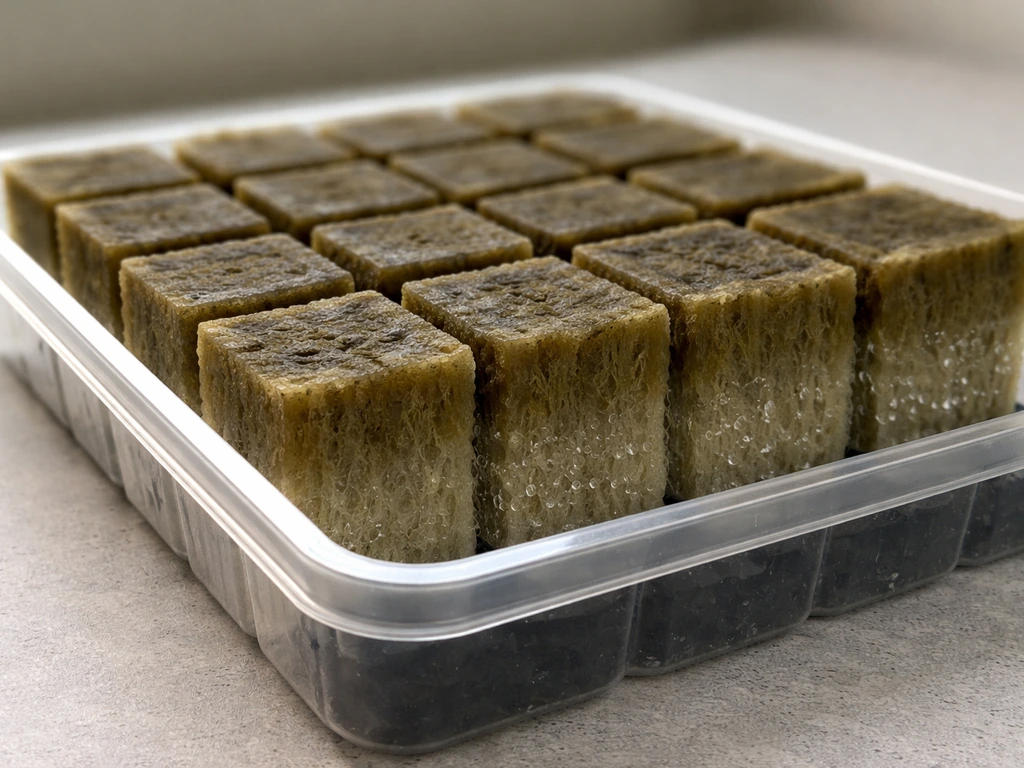
Rockwool is excellent for propagation and early veg because it holds moisture long enough to keep young roots hydrated between floods. The problem is it retains a lot of water, so once plants are bigger and your flood frequency increases, you can end up with chronically wet roots. It's also single-use in practice because sterilizing mineral fiber is difficult and unreliable. Rockwool's pH starts around 7 to 8 out of the package and needs conditioning before use. Skip this one for large containers in mature flowering plants unless you're running short flood durations and timing carefully.
3. Coco coir
Coco holds more water than clay pebbles and has a slight natural acidity, so it behaves more like a soil-adjacent medium in a hydroponic system. That can be a feature or a bug depending on your experience level. Experienced growers who want the water retention of coco with the oxygenation of a flood-and-drain system can make it work well, especially for longer wet-dry cycles in flowering. But beginners often overflood with coco and end up with saturated roots and low oxygen. If you're comparing media more broadly, you'll find a deeper breakdown of coco's behavior as a standalone hydroponics substrate in the coco-specific guide on this site.
4. Grow plugs
Rapid Rooters, Grodan GroblockS, and similar pre-formed propagation plugs are designed for starting seeds and rooting clones, not for filling a full tray. They hold too much water for sustained use in flood-and-drain without very infrequent flooding. The best use case is starting your seedlings or clones in plugs, then transplanting into clay pebbles or coco once roots are established.
5. Perlite
Standalone perlite is a bad idea in ebb-and-flow trays. It floats. Individual pieces migrate and clog your drain fittings. As a 10 to 20% additive mixed into coco coir, though, it meaningfully improves drainage and aeration. If you're running a coco-based system and want better drainage without switching media entirely, add perlite at that ratio.
How to prepare each medium before you use it
Every medium needs preparation before it goes into your system. Skipping this step is one of the most common mistakes new ebb-and-flow growers make, and it causes pH problems, dust contamination, and inconsistent performance from day one.
Clay pebbles: rinse thoroughly, then soak
- Pour clay pebbles into a bucket or mesh bag and rinse under running water until the water runs clear. This removes clay dust that will raise your nutrient solution pH and cloud your reservoir.
- Soak in pH-adjusted water (pH 5.8 to 6.2) for at least 12 hours, ideally 24 hours. This pre-saturates the pores and helps stabilize pH.
- Drain fully before loading into your tray or pots. Do not use dry clay pebbles directly in a system.
Rockwool: pH conditioning is non-negotiable
- Soak rockwool in pH 5.5 water (use pH down to adjust) for a minimum of one hour. Rockwool's natural pH can run 7 to 8, which will immediately drive your nutrient solution out of range if you skip this.
- Some growers use a dilute nutrient solution (EC around 0.5 to 0.8) for the soak to begin conditioning the fiber.
- Do not squeeze or wring rockwool. You'll collapse the fiber structure and ruin drainage.
- Check the soak water pH after the soak. If it's still above 6.0, soak again with fresh pH 5.5 water.
Coco coir: buffer before use
- If using compressed coco bricks, rehydrate with water and break up any clumps completely. Dry pockets cause channeling where nutrient solution bypasses roots.
- Buffer coco by soaking in a calcium-magnesium solution (600 to 800 ppm) for several hours. Coco's cation exchange sites naturally bind calcium and magnesium, so unbuffered coco will lock out those nutrients from your feed solution.
- Rinse after buffering, drain well, and check pH (target 5.8 to 6.2 after buffering).
- Check that your final coco blend has no more than 10 to 20% perlite if you're adding it for drainage.
Grow plugs: minimal prep
- Soak briefly in pH 5.5 to 6.0 water for 15 to 30 minutes.
- Do not oversoak. Plugs that are fully waterlogged before seeding or cloning will suffocate seeds and struggling cuttings.
- Allow excess water to drip off before use.
Tuning your ebb-and-flow setup to match your medium
The medium you choose directly affects how you configure your tray, flood depth, flood frequency, and pot sizing. To pick the best grow medium for ebb and flow, prioritize fast draining but enough moisture retention to prevent roots from drying between floods medium's drainage rate. There's no single universal setting that works for all media and all plants. Here's how to adjust for each.
Flood depth and duration
A common rule of thumb is to flood to about one-half to two-thirds of your container height, not to the brim. You want the upper portion of your medium to stay dry between floods so roots can access oxygen there. For clay pebbles in a 6-inch pot, flooding to around 3 to 4 inches is typical. For rockwool or coco, which wick moisture upward more aggressively, flooding to half-depth is usually enough because the medium pulls moisture up through capillary action.
Flood duration should be long enough for the medium to fully saturate, typically 15 to 30 minutes depending on tray size and pump flow rate, then drain completely within 5 to 15 minutes. If your tray is still holding water 20 minutes after the pump stops, your drain fitting is too small or partially blocked.
Flood frequency by medium and growth stage
| Medium | Seedling / Clone | Early Veg | Late Veg / Flowering |
|---|---|---|---|
| Clay pebbles | 3 to 4x per day | 2 to 3x per day | 2 to 4x per day (more in hot conditions) |
| Rockwool | 2 to 3x per day | 2x per day | 1 to 2x per day (monitor moisture) |
| Coco coir | 2 to 3x per day | 1 to 2x per day | 1 to 2x per day |
| Coco + perlite mix | 2 to 3x per day | 2x per day | 2x per day |
These are starting points. Always adjust based on what your plants show you. Wilting between floods means you need to flood more often or increase flood depth. Yellowing lower leaves and a sour smell from the medium means you're flooding too often and drowning roots.
Net pot and tray fit
Clay pebbles work well in any net pot from 2 inches on up. For seedlings, use 2-inch net pots filled with clay pebbles around a starter plug. For larger plants in veg and flower, 4-inch to 6-inch net pots or standard flood-and-drain bucket lids are ideal. Rockwool cubes should fit snugly in your net pot with minimal extra space around them to prevent light from reaching the cube (which causes algae). Coco in loose form should be used in solid-sided containers with drainage holes, not open net pots, because it will wash through the mesh during floods.
Make sure your drain fittings are sized appropriately for your media. Clay pebbles rarely clog fittings, but rockwool fibers and coco particles can block small overflow tubes. Use a 3/4-inch drain fitting as a minimum and add a screen or guard if you're running loose coco.
Preventing dry spots and channeling
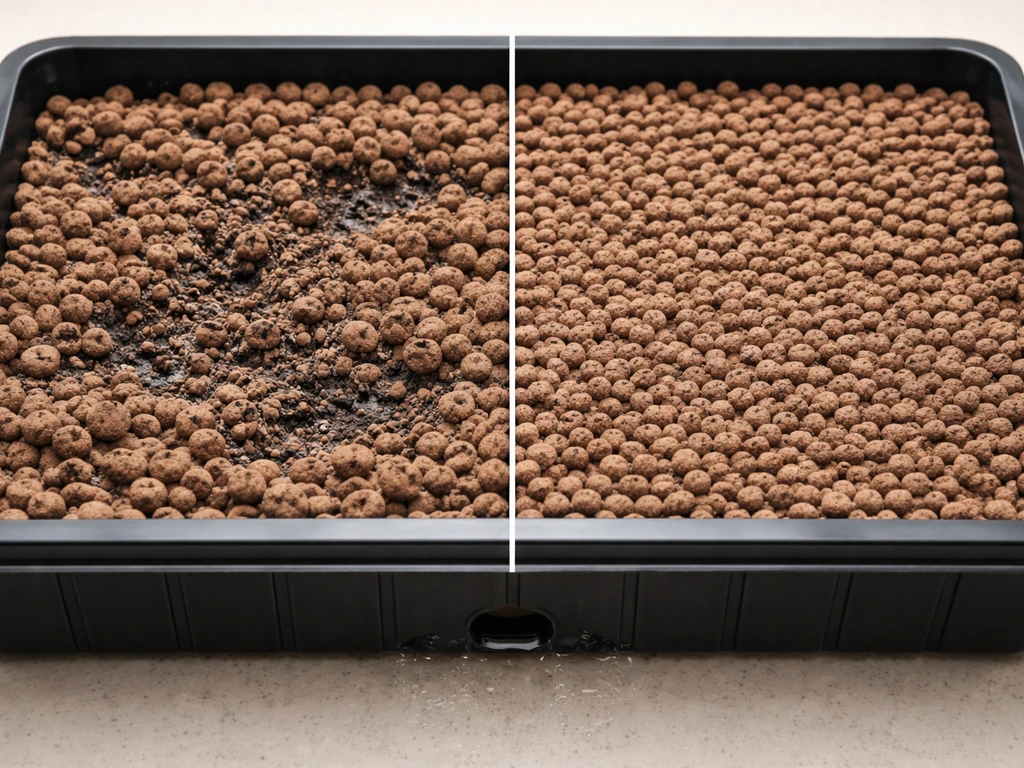
Dry spots happen when your medium isn't packed evenly or when air pockets form in the tray. With clay pebbles, give your tray a gentle shake after filling to let pebbles settle evenly. With coco, break up every clump manually and fill containers in layers, pressing lightly to avoid air pockets. Channeling happens when nutrient solution finds a path of least resistance and floods past part of your root zone. Fix it by topping up thin spots and ensuring the tray sits level. Even a 2-degree tilt will cause one side to drain before the other floods properly.
Common problems and how to fix them
Root rot and low oxygen
This is the most common failure in ebb-and-flow systems, and it's almost always caused by inadequate drainage or over-flooding. When the drain phase doesn't completely clear water from the medium, roots sit in stagnant water with no oxygen. You'll see brown, slimy roots instead of white, firm ones. Leaves may wilt even when the medium feels wet, because the roots can't uptake water without oxygen. Fix it by reducing flood frequency first, then check that your drain fitting is clear and draining quickly. Make sure your reservoir has an air stone or circulation pump running. Even though drains restore oxygen to the root zone, poor aeration in the reservoir itself limits root respiration and nutrient uptake during floods.
Algae growth
Algae in ebb-and-flow systems grow wherever light hits wet surfaces: the tray, exposed medium at the surface, drain lines, and inside the reservoir. Algae itself doesn't always kill plants, but it competes for oxygen in the root zone, clogs drain lines, and creates a breeding environment for fungus gnats and harmful bacteria. Block light from reaching the medium surface by covering your tray with a light-blocking lid, opaque covers, or by ensuring all net pots are filled to the top. Opaque reservoir lids are essential. Clean your drain lines monthly to clear algae and biofilm buildup before it blocks drainage.
Salt buildup and nutrient lockout
In ebb-and-flow systems, every flood deposits a thin layer of salts as water evaporates between cycles. Over time, especially in clay pebbles or rockwool, this creates a salt crust at the medium surface and in dry pockets. Salt buildup raises EC unpredictably and can block nutrient uptake by raising osmotic pressure around roots. Flush your medium with plain pH-adjusted water (pH 6.0) once a week or every two weeks during long runs. Check your EC at the drain after flushing. If the runoff EC is significantly higher than your nutrient solution EC, you have salt accumulation and need to flush more aggressively.
pH drift
Rockwool and new clay pebbles are the biggest offenders for pH drift early in a run. Rockwool's natural high pH keeps pushing your solution toward alkaline until the fiber is fully conditioned. Inadequately rinsed clay pebbles release clay dust that also buffers pH upward. Monitor pH daily for the first two weeks of a new run. If pH is climbing despite your adjustments, your medium prep was insufficient. For coco, unconditioned fiber steals calcium and magnesium from your solution, which can make it appear as if pH is causing deficiencies when it's actually a nutrient binding issue.
Fungus gnats
Fungus gnats are primarily a problem when organic matter is present, so they're less common in fully inert setups with clay pebbles than in coco or peat-based mixes. If you're running coco in ebb-and-flow and see fungus gnats, the dry top layer of your medium is still inviting for egg-laying even if roots deeper down are wet. Let the top inch dry out between floods. Yellow sticky traps catch adults. Beneficial nematodes or Bacillus thuringiensis (Bti) drenches can break the larval cycle in coco containers.
Medium maintenance, re-use, and when to toss it
Cleaning and sterilizing clay pebbles between runs
- Remove all root material manually. This step is tedious but necessary. Decaying roots left in the medium breed pathogens for your next crop.
- Rinse pebbles thoroughly with water until visible debris is gone.
- Soak in a warm soapy water solution for several hours to break down biofilm and organic residue.
- Follow with a sanitizing soak in a food-grade approved bleach solution (approximately 1 tablespoon of unscented bleach per gallon of water) for 30 to 60 minutes, or use a peroxyacetic acid product if you prefer a residue-free option.
- Rinse very thoroughly with clean water until no bleach smell remains.
- Soak in pH-adjusted water (pH 6.0) for 12 to 24 hours before reuse.
- Inspect for any remaining organic material or crumbling pebbles. Discard any that have broken down.
Done correctly, clay pebbles can be reused for multiple years. This makes them the most cost-effective choice over time compared to single-use media like rockwool.
Rockwool: single-use is the safe call
Technically you can try to sterilize rockwool between runs, but the fiber structure traps debris and biofilm in ways that are hard to fully clear, and the risk of carrying over root rot pathogens to your next crop is real. For most growers, the cost of replacing rockwool is low enough that disposal and fresh stock is the practical choice. Some commercial operations do reuse rockwool slabs with hydrogen peroxide sterilization, but for home growers doing a few runs per year, treat it as single-use.
Coco coir: one to two runs is the realistic limit
Coco degrades over time. The fiber breaks down, air porosity drops, and salt accumulation in the cation exchange sites becomes harder to flush out after a second run. If you run coco for a second cycle, flush heavily before restarting, check that the fiber hasn't compacted, and buffer again with calcium-magnesium before use. Coco coir buffering is needed because coco has cation exchange sites and often starts with sodium or potassium that must be displaced, typically using calcium and magnesium during preparation buffer again with calcium-magnesium before use.. After two runs, the drainage and aeration properties are compromised enough that it's worth replacing. Spent coco makes excellent soil amendment for outdoor gardens, so it doesn't go to waste.
Between-run sanitation for trays and fittings
No matter which medium you run, your tray, drain fittings, and reservoir need to be sanitized between crops. Warm soapy water scrub first, then a bleach or peroxyacetic acid rinse, then a clean water rinse. Residual biofilm in drain lines is a leading cause of algae blooms and unexpected pathogen pressure in the next run. Don't skip this step even if the last crop looked healthy. Clean equipment protects your next crop, not just the one you're finishing.
Choosing the right medium for your situation
If you're just getting started with ebb and flow and want the most forgiving, reusable option with the widest margin for error: use clay pebbles. Pre-rinse and pre-soak them, start with 2 to 3 floods per day, and adjust from there. If you're propagating seedlings or rooting clones to transplant into your tray: start in rockwool or grow plugs, then transplant into clay pebbles once roots are established. If you're an experienced grower who wants more moisture retention between floods and is comfortable monitoring EC and pH closely: coco coir with 10 to 15% perlite is a solid choice that rewards careful technique. Comparing ebb and flow to other hydroponic methods is worth doing if you're still deciding on a system. Ebb and flow sits in a productive middle ground when it comes to medium flexibility compared to deep water culture, which has its own constraints around media choice. If you're specifically comparing DWC options, the best grow medium there depends on whether you want stable roots with good oxygenation or more frequent rinsing, so it's worth checking the DWC medium guide too best grow medium for dwc.
Whichever medium you choose, the fundamentals don't change: prepare it properly before use, dial in your flood timing to match the medium's drainage rate, block light from hitting wet surfaces, and sanitize everything between runs. Get those four things right and ebb-and-flow is one of the most reliable and scalable hydroponic setups you can run.
FAQ
Can I use the same flood schedule for every medium in ebb and flow?
No. Each medium’s drainage and capillary behavior changes how fast the tray dries after the pump stops. For example, if you switch from clay pebbles to coco, you typically shorten flood frequency and reduce flood depth, then confirm by checking whether the top zone dries before the next cycle. A practical approach is to start with your previous schedule, then adjust based on (1) wilting between floods and (2) how long the tray holds visible water after shutdown.
How do I tell whether my medium is staying too wet versus plants just needing more nutrients?
Look at the timing and the root response. If wilting happens shortly after flood, and the medium feels wet or heavy even after the drain time target is reached, it’s usually oxygen deprivation (too-wet medium or inadequate drain). If leaves yellow slowly without a wet-sour smell and runoff EC follows your feed EC pattern, it’s more likely nutrition or pH. For confirmation, check root color (brown slimy versus white firm) and measure pH and EC in the drain at least once.
What’s the best way to prepare coco so it won’t mess up pH and nutrient uptake?
Conditioning is non-negotiable. Rinse thoroughly to remove dust, then pre-soak and rebuffer so calcium and magnesium are available before your first serious feeding. If you start using coco without conditioning, you can see apparent pH-driven deficiencies even when the real issue is nutrient binding. After conditioning, run a short test flood and verify pH stability over several drain cycles.
Is it okay to reuse expanded clay pebbles immediately after a harvest, or do they need curing time?
They should be fully rinsed and sterilized, then run a quick water flush before returning plants. Don’t just dump them back into nutrient solution, because residual salts and biofilm can shift runoff EC for the first few floods. A good operational detail is to start with plain pH-adjusted water during the first couple cycles and only ramp to your target EC once drain readings stop trending upward.
Why do I sometimes get dry spots even with good-looking media coverage?
Dry spots usually come from uneven packing, floating or shifting media pieces, or channeling caused by a tray tilt. Even with clay pebbles, a gentle post-fill shake to settle particles can prevent micro-gaps. Also confirm the tray is perfectly level, a small slope can cause one side to drain early and leave pockets behind.
What drain fitting size is safest for preventing incomplete drain?
Use a drain size that clears the tray within your intended drain window, typically 5 to 15 minutes after pump cutoff. If you see water still present at 20 minutes, the fitting is too small or partially restricted by debris, especially with rockwool fibers and coco particles. A simple check is to run the system empty, time the drain, and inspect the drain line for buildup before the crop is in place.
How often should I flush the medium, and do I flush differently for coco versus clay pebbles?
Flush frequency depends on salt accumulation and how stable your runoff EC stays. The baseline is a weekly or every-two-weeks plain pH 6.0 flush, but coco often needs more careful monitoring because it can retain salts in exchange sites as it ages. The key decision aid is runoff EC versus your feed EC, if runoff rises significantly, increase flush volume or frequency until it normalizes.
Does algae automatically mean my roots are unhealthy?
Not always, but algae is a proxy for light exposure and biofilm risk. If you block light properly (opaque lid, tray cover, keep medium surface covered), algae should reduce and so should drainline clogs and oxygen competition. Still, do inspect roots and measure dissolved oxygen indirectly by checking whether your drain phase truly clears, algae can worsen problems that are already present.
Can I reduce fungus gnats without changing my medium?
Yes, you can break the cycle by targeting the egg-laying surface. Even in coco, letting the top inch dry between floods makes conditions less favorable for larvae. Pair that with sticky traps for adults, and consider a targeted larvicide approach like Bti or beneficial nematodes if you’re seeing consistent adults or larvae. If you keep the tray constantly wet, treatments are less effective.
What’s the most common mistake that causes root rot in ebb and flow?
Incomplete drainage. Even if the medium looks “wet,” roots need the air refresh during the drain phase, stagnant water quickly produces brown, slimy roots. Before changing nutrients, verify drain fitting clearance, confirm the reservoir has good circulation or aeration, and adjust flood frequency downward first if the drain time target is being exceeded.
Should I choose rockwool for mature plants, or is it better to stick with clay pebbles?
Rockwool can work, but it’s higher risk because it retains water longer and is less forgiving when flood timing or drainage is slightly off. If you use rockwool for larger plants, shorten flood duration carefully, keep flood depth conservative, and monitor for persistent wetness after shutdown. For most growers, clay pebbles are the more stable long-term choice, especially in trays.