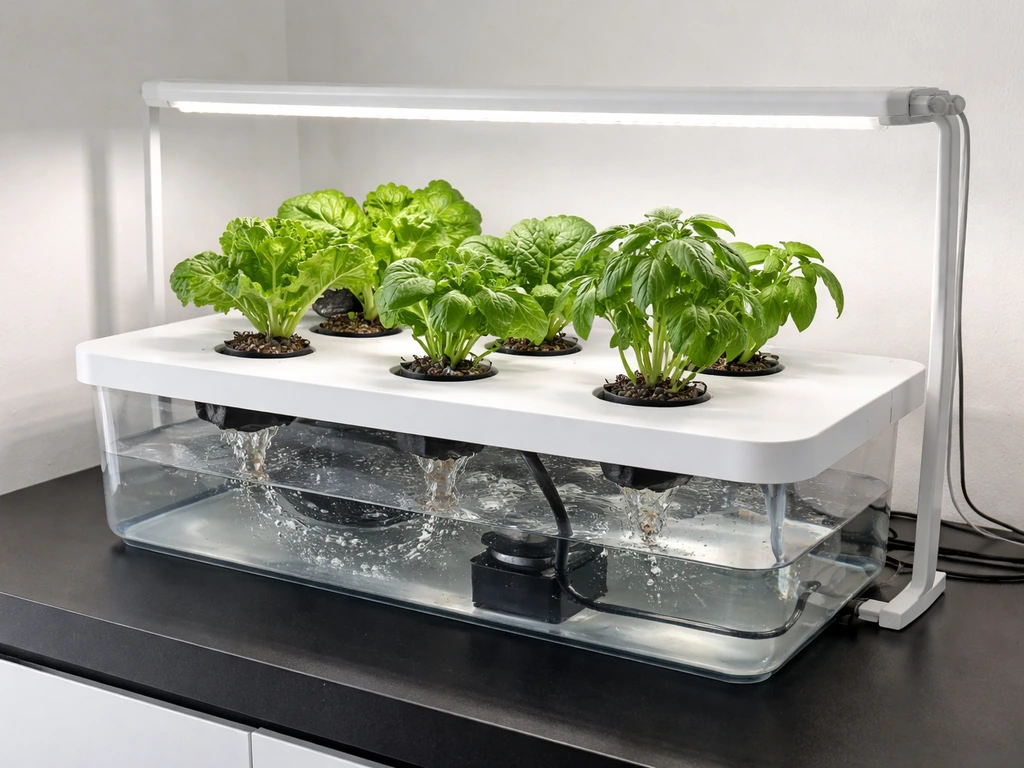
If you are trying to decide between a hydroponic vs soil grow, here is the short answer: hydroponics gives you faster growth, higher yields per square foot, and tighter control over nutrients, but it costs more upfront and punishes mistakes quickly. Soil is forgiving, cheaper to start, and produces results that many growers still swear taste better, but it is slower and harder to scale indoors. Which one is right for you depends almost entirely on your budget, your tolerance for troubleshooting, and what you are trying to grow. Let me walk you through every real factor so you can make the call with confidence.
Hydroponic vs Soil Grow: Cost, Setup, Yield, and Best Choice
Marcus Holloway
15 Apr 2026
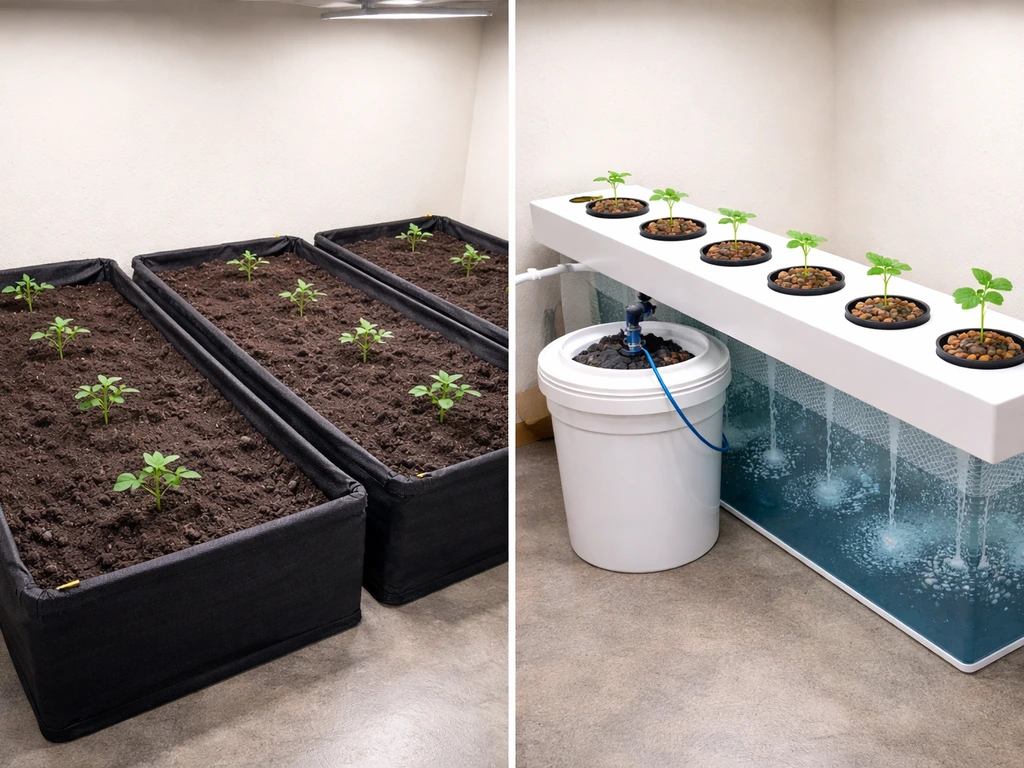
Quick side-by-side: cost, complexity, yield, and taste
| Factor | Soil Grow | Hydroponic Grow |
|---|---|---|
| Startup cost | Low ($20–$100 for basic setup) | Moderate to high ($100–$600+ depending on system type) |
| Ongoing cost | Low (soil amendments, occasional fertilizer) | Moderate (nutrients, pH/EC supplies, electricity for pumps) |
| Complexity | Low to moderate — very beginner-friendly | Moderate to high — requires active monitoring |
| Growth speed | Baseline — typical veg/flower timelines | 20–30% faster in optimized systems |
| Yield potential | Good indoors, excellent outdoors | Higher per square foot indoors |
| Flavor/quality | Often preferred for taste; rich terpene profiles possible | Comparable or higher in measurable antioxidants; some studies note higher nitrate levels |
| Error tolerance | High — soil buffers mistakes | Low — problems escalate in hours, not days |
| Water use | Higher — runoff losses, evaporation | Lower — recirculating systems reuse water |
On taste and quality: research comparing hydroponic and soil-grown lettuce under identical environmental conditions found measurable differences in texture and functional qualities, with neither system being an across-the-board winner. Hydroponic lettuce also tends to accumulate higher nitrate concentrations compared with soil-grown lettuce, which is worth knowing if you are growing for health reasons. For most home growers, flavor differences come down to genetics and how well you dial in your feed program, not the medium itself.
What you actually need to set up each system
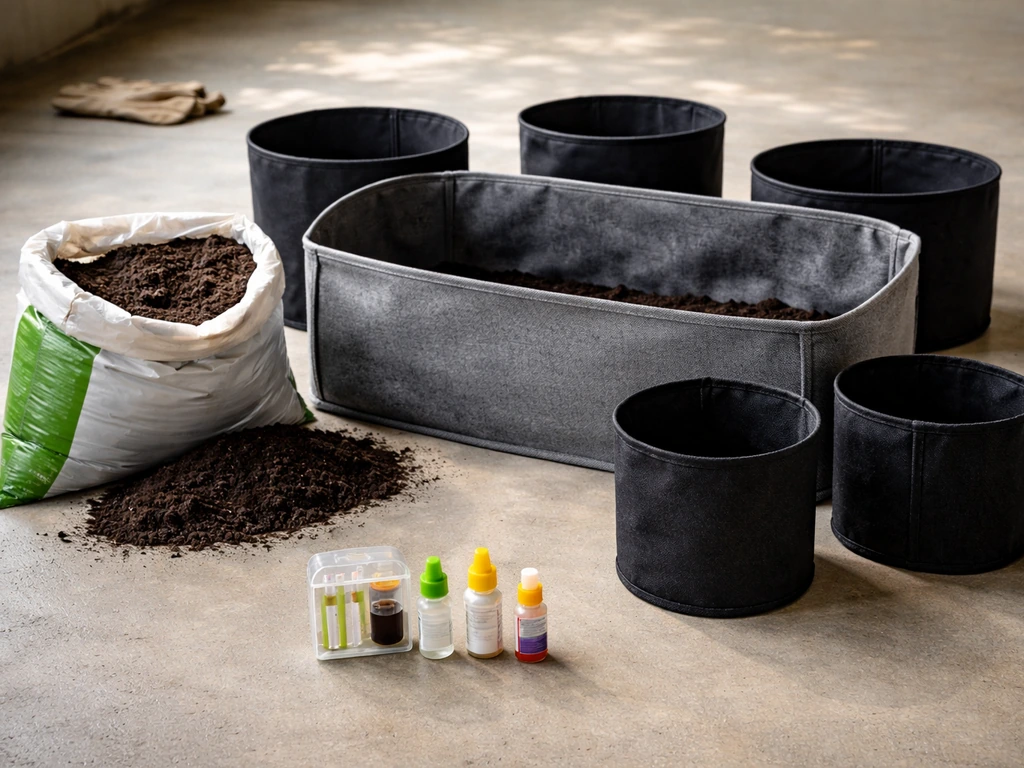
Soil grow equipment list
- Containers (fabric pots, plastic pots, or raised beds)
- Quality potting mix or amended soil (more on this below)
- Basic pH meter or test kit — a decent DIY pH meter runs around $25–$30
- Watering can or hose with adjustable pressure
- Base nutrients or slow-release amendments
- Grow light if indoor (LED, HID, or CMH)
- Fan and basic ventilation for indoor grows
Hydroponic grow equipment list
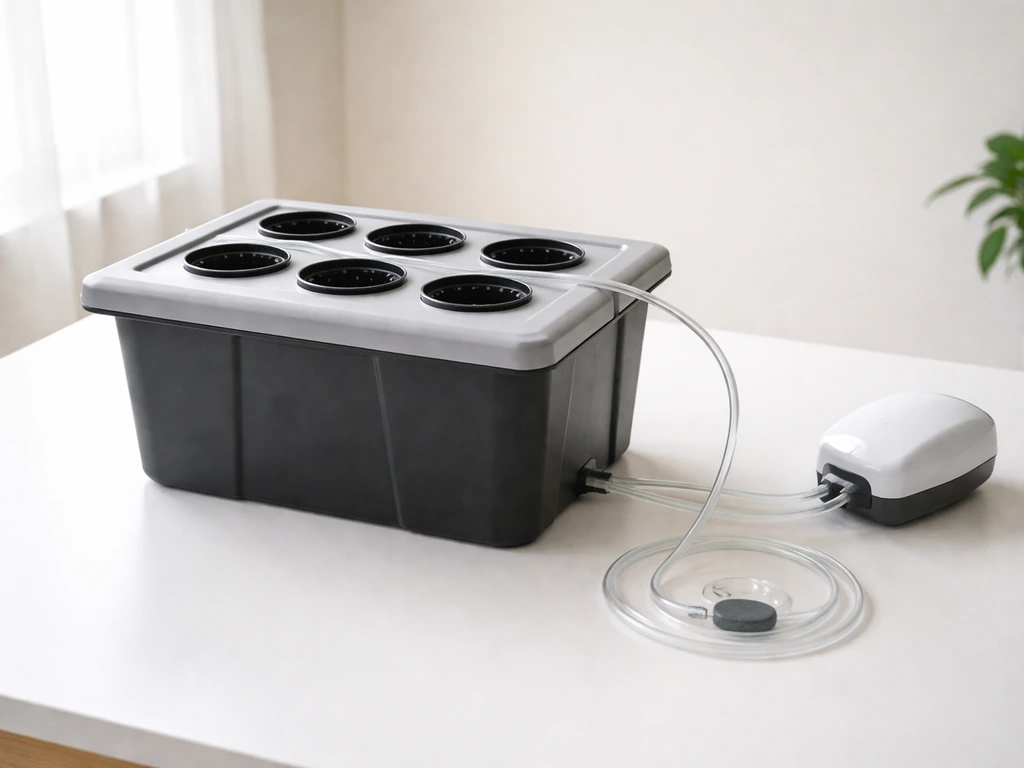
- Hydroponic system (DWC bucket, NFT channel, drip system, or RDWC — see below for system options)
- Reservoir with lid (light-tight to prevent algae)
- Air pump, air stone, and tubing (critical for root oxygenation in DWC)
- Water pump if using drip or recirculating systems
- pH meter and EC/TDS meter (both are non-negotiable)
- pH Up and pH Down solutions
- Hydroponic-specific nutrients (two-part or three-part liquid formulas)
- Inert growing media: perlite, expanded clay pellets, rockwool, or coconut fiber
- Grow light — hydro rewards high-intensity lighting
- Timer for pumps and lights
- Thermometer and humidity gauge
The hydroponic list is longer for a reason. Every piece of equipment that soil handles passively (buffering pH, holding water, slowly releasing nutrients) has to be handled by hardware and your own attention in a hydro system. If you want to see how different system types compare before committing, checking out the best hydroponics grow systems available today is a good first step before buying anything.
Nutrients and pH/EC: how feeding actually works in each system
Soil nutrient delivery
In soil, nutrients come from three sources: what is already in the mix, what microbes break down from organic amendments, and what you add through top-dressing or liquid feeds. Soil acts as a buffer, meaning a small pH or nutrient miscalculation does not immediately harm the plant. The optimum soil pH for most vegetables sits between 6.0 and 6.5, with 6.5 being the sweet spot where most nutrients are maximally available. If your soil pH drifts outside that range, nutrients lock out even if they are physically present in the root zone. For indoor container grows, salt buildup from repeated fertilizer applications is a real risk. The fix is simple: water until you get runoff from the bottom of the pot every session, which flushes accumulated salts out of the root zone before they cause tip burn and leaf margin dieback.
Hydroponic nutrient delivery
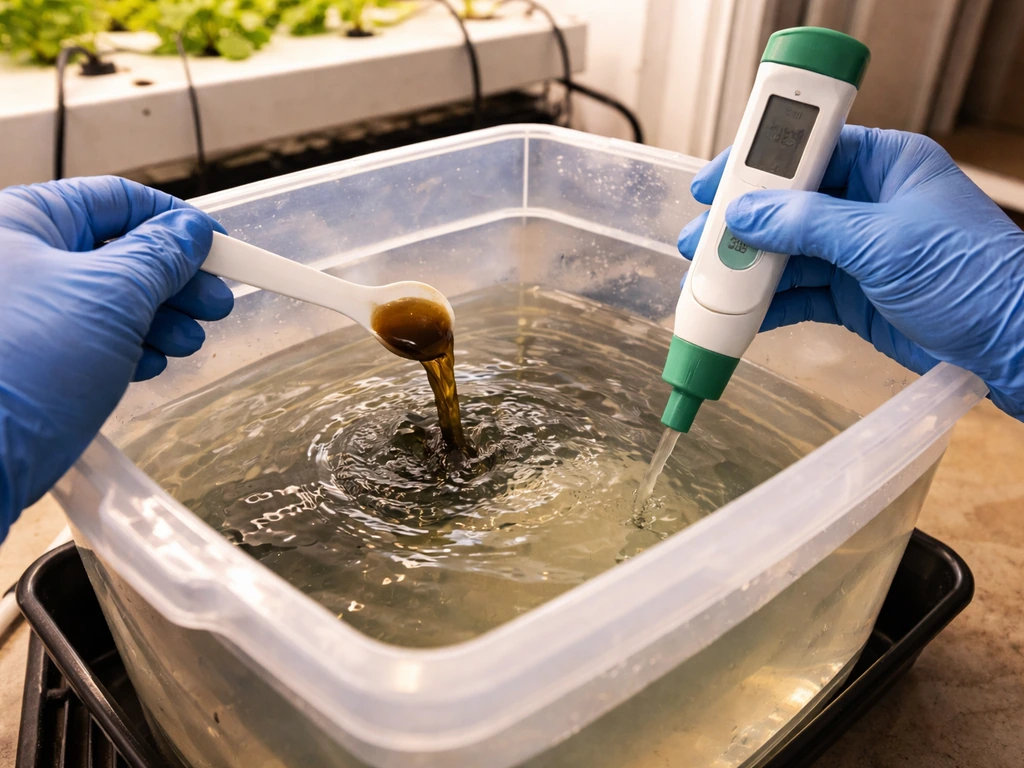
In hydroponics, you are the soil. Every mineral the plant needs comes dissolved in water, and you control the concentration. EC (electrical conductivity) is how you measure that concentration. Target EC ranges vary by crop: basil does well at EC 1.0–1.6, lettuce at EC 1.2–1.8, and tomatoes at EC 2.0–4.0. For pH, the ideal range in most hydro systems is 5.5 to 6.5, with most nutrient uptake peaking in that window. Here is the critical thing most beginners miss: EC being "on target" does not mean your nutrient balance is right. If your source water is high in calcium or bicarbonates, or your fertilizer selection does not complement the ions already in the water, individual nutrients can be out of balance even when the overall EC reads perfectly. Always test your source water quality before mixing a reservoir, not just the finished solution. When using inert media like clay pellets, rockwool, or coconut fiber, the pH and EC at the root zone will closely track your solution, which makes monitoring straightforward. For a complete breakdown of what to measure and when, a solid grow guide hydroponic will give you week-by-week targets.
Watering and daily maintenance: what you actually do each day
Soil watering rhythms
Soil growers follow a wet-dry cycle. You water thoroughly (to runoff), then wait until the top inch or two of soil dries out before watering again. The mistake almost every beginner makes is watering too often. Overwatered roots sit in saturated soil with no oxygen, which creates perfect conditions for root rot. The right frequency changes with season, plant size, container size, and ambient temperature. In summer heat, a large plant in a small pot might need water every day. In a cool grow tent in winter, every three to four days is common. Check the soil moisture before reaching for the watering can, every time.
Hydroponic reservoir management
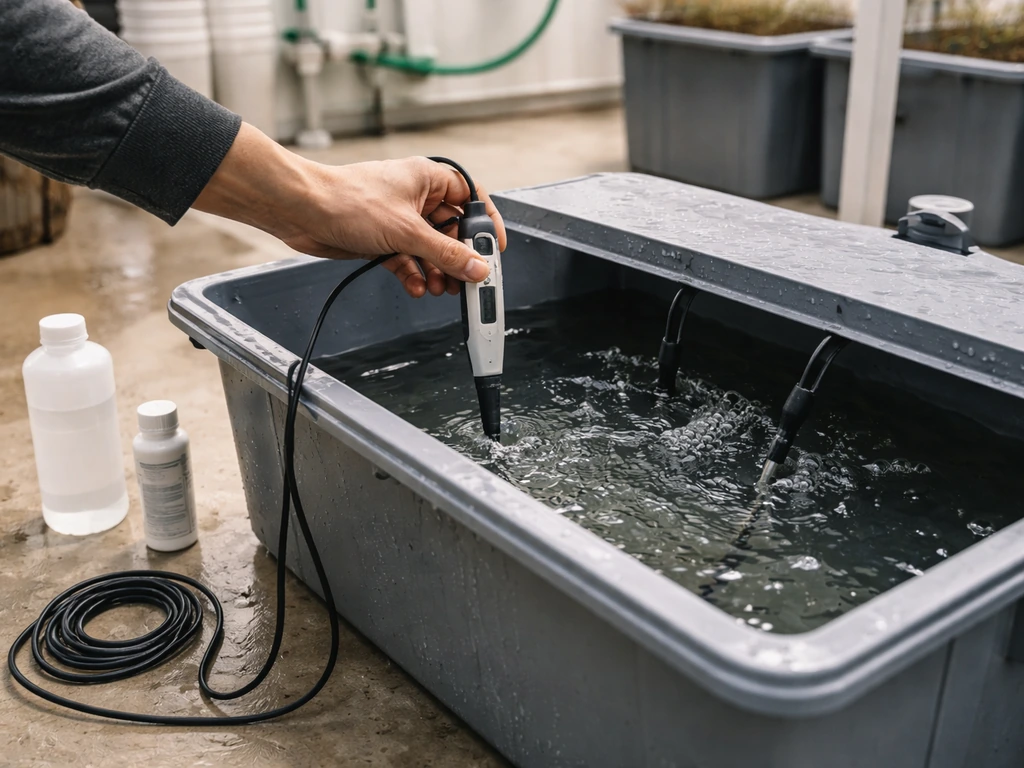
In hydroponics, daily maintenance means checking and logging pH and EC every single day during early growth, and at minimum every other day once a system is stable. pH drifts constantly as plants consume specific ions, so you will be dosing pH Up or pH Down regularly. Reservoir top-offs with plain water are needed when levels drop due to plant uptake and evaporation (and this lowers EC as the solution concentrates less), while full reservoir changes every one to two weeks prevent salt buildup and microbial contamination. This is not passive. If you travel or forget for three days, pH can swing far enough to cause a lockout. If you are just getting into this side of growing, starting with a system designed for beginners makes a real difference, hydroponics grow systems for beginners are specifically designed to reduce that daily workload.
Growth performance and the risks that can derail you
Root health and oxygenation
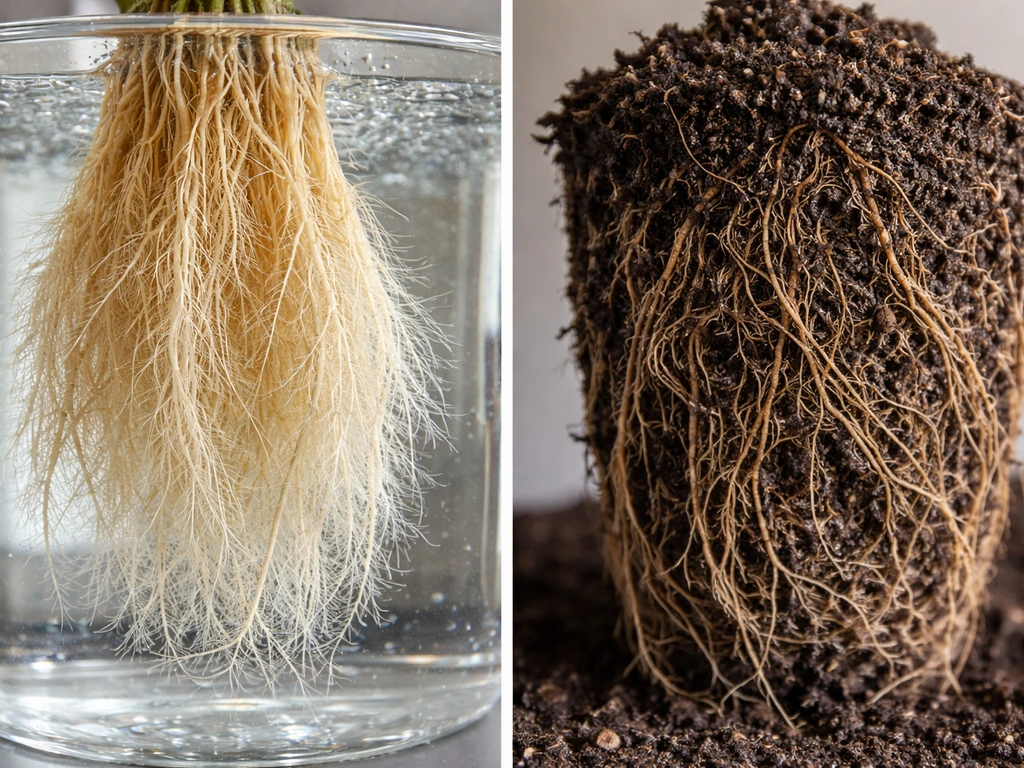
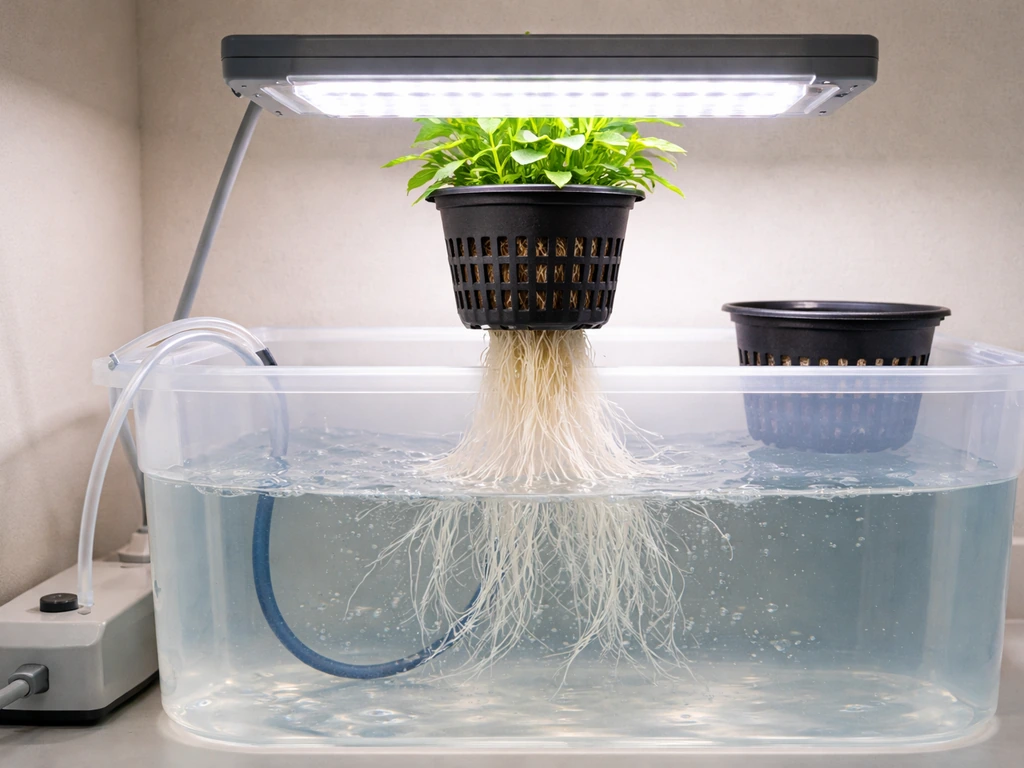
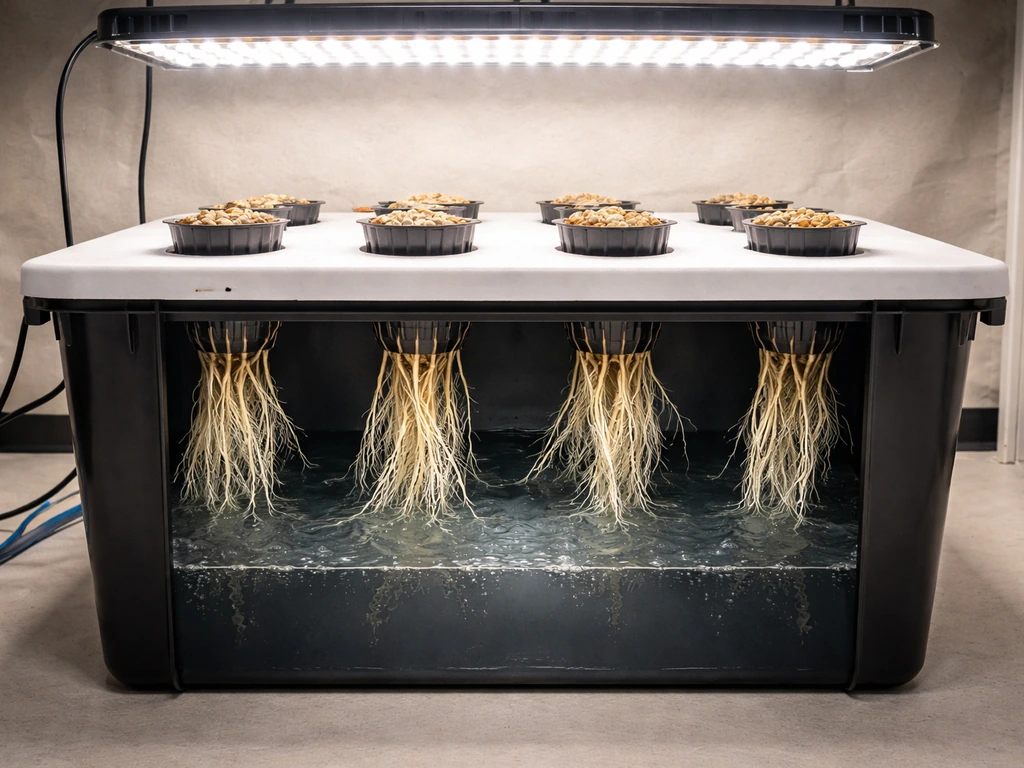
Root health is where hydroponics and soil diverge most dramatically. In a well-run DWC (deep water culture) system, roots hang directly in oxygenated, nutrient-rich water with constant airstone bubbling. Healthy hydro roots are white, bushy, and extensive. The problem is that oxygen levels drop fast if the air pump fails, water temperature climbs above 70°F (21°C), or light leaks into the reservoir and triggers algae growth. Root rot in hydroponics can kill a plant in 24 to 48 hours. In soil, root rot develops more slowly because the medium itself holds some structure around the roots. The risk is still real (especially in overwatered containers), but you typically have days to respond rather than hours.
Common failure modes by system
| Risk | Soil | Hydroponics |
|---|---|---|
| Overwatering / root rot | Very common for beginners; slow onset | Possible; fast and catastrophic in DWC |
| Nutrient burn / toxicity | Possible with over-application; salt tip burn | Easier to trigger; immediate with high EC |
| Salt buildup | Common in containers without proper runoff flushing | Managed through full reservoir changes |
| pH lockout | Gradual; soil buffers short-term swings | Fast; can lock out nutrients overnight |
| Algae / biofilm | Rare in soil | Major risk in reservoirs exposed to light |
| Pest pressure (fungus gnats, etc.) | Higher; soil surface is habitat | Lower in systems without organic media |
| Equipment failure | Not applicable | Pump failure = root death within hours |
Sanitation is a bigger part of hydroponic growing than most beginners expect. Between grows, the entire system needs to be drained, scrubbed, and disinfected. A dilute bleach solution followed by a clean water flush is the standard approach, and you need to be precise about concentration because too much chlorine can damage the system or leave residues that affect your next crop. This is not optional maintenance, biofilm and algae that build up in tubing and reservoirs carry pathogens that will attack roots in the next run.
Who each method actually works for
Soil is best for...
- Beginners who want to learn plant basics without equipment dependencies
- Outdoor growers using natural light and rain cycles
- Growers who prefer organic inputs and microbial soil ecosystems
- Anyone who travels or cannot commit to daily monitoring
- Low-budget setups where keeping startup costs under $100 matters
- Grows where flavor and terpene complexity are the primary goal
Hydroponics is best for...
- Indoor growers who want to maximize yield per square foot
- Growers focused on fast turn cycles (think multiple harvests per year)
- Anyone with limited water access — recirculating systems use significantly less water than soil
- Experienced growers comfortable with equipment and daily data logging
- Controlled environment grows where dialing in exact nutrient delivery matters
- Growers scaling up who need consistency across multiple plants
If you are specifically growing cannabis and weighing system choices for it, the dynamics above apply directly but with some crop-specific nuances around EC targets, pH windows, and late-flower flush protocols. Reviewing a resource focused on the best hydroponic grow system for weed will give you more targeted guidance on system selection for that particular crop.
Medium and substrate: what goes around the roots matters
Building a good soil mix
Not all "soil" is equal. A basic potting mix from a garden center is a starting point, not a finished growing medium. For indoor containers, you want a mix with good drainage and aeration, typically achieved by adding 20–30% perlite to a quality base soil. If you are growing organically, amendments like worm castings, compost, kelp meal, and mycorrhizal inoculants build the microbial ecosystem that slowly releases nutrients. The buffering capacity of a well-amended soil is one of its biggest practical advantages. pH swings that would lock out nutrients immediately in a hydro reservoir get moderated by the cation exchange capacity of the soil, giving you a wider margin for error. Always start by knowing your soil's baseline pH, a simple DIY test meter is enough to get you in the ballpark.
Choosing hydroponic growing media
In hydroponics, the "medium" is not feeding the plant, it is just holding the root structure in place. That is why inert media (expanded clay pellets, rockwool, perlite, coconut coir) are used. The practical consequence of using inert media is that the pH and EC you measure in your nutrient solution will closely reflect what the roots are actually experiencing, which makes monitoring accurate and adjustments reliable. Coconut coir is technically inert but buffers cations differently than rockwool or clay, it requires a calcium-magnesium boost in your nutrient program to compensate for its natural cation exchange activity. Rinse and pre-soak rockwool cubes in pH-adjusted water (around 5.5) before use, since their natural pH runs high and will throw off your solution immediately if you skip this step.
How to make your decision and actually get started
The decision framework
Run through these questions in order. Your answers will land you in the right camp without second-guessing.
- Do you have less than $150 to spend on your whole setup? Start with soil. Period.
- Are you growing outdoors? Soil is almost always the right call unless you are building a controlled greenhouse environment.
- Can you check on your plants every day without fail? If yes, hydroponics is viable. If no, stick with soil.
- Do you want to learn the fundamentals of plant nutrition before adding equipment complexity? Start with soil for one grow, then move to hydro.
- Is indoor yield and speed your primary goal? Hydroponics will serve you better once you are past the learning curve.
- Are you nervous about the tech side? Start with a simple DWC bucket kit — one reservoir, one plant, one set of variables — before scaling to any multi-site system.
Starting small: your first grow steps
For soil: grab a 3–5 gallon fabric pot, a quality aerated potting mix, pH-adjusted water (target 6.0–6.5), and a basic two-part liquid nutrient. Start feeding at quarter strength and work up. Check pH every time you water. Water to runoff every session to prevent salt accumulation. That is genuinely most of what you need to know for your first grow.
For hydroponics: start with a single 5-gallon DWC bucket setup. Mix your nutrient solution, then test and adjust pH to 5.5–6.5 before the plant ever touches it. Check pH and EC daily for the first two weeks until you understand how fast your system drifts. Keep your reservoir temperature below 68°F (20°C) to discourage root pathogens. Use a light-proof reservoir lid and cover any exposed tubing to block algae growth. If you want to go deeper on technique before buying hardware, learning how to grow hydroponics step by step will save you from the most common first-timer mistakes.
Baseline troubleshooting: what to do when things go wrong
In soil: yellow leaves almost always mean pH is off or nitrogen is low. Brown leaf tips and margins usually mean salt buildup from over-fertilizing, flush heavily with clean water and back off your feed concentration. Wilting when soil is wet means root rot; let it dry out more between waterings and consider adding more perlite to your mix next time.
In hydroponics: if plants look stressed, check pH first, always. Most hydro problems trace back to pH drift locking out nutrients even when EC looks fine. Slimy brown roots with a bad smell mean root rot, raise oxygenation immediately (more air stones, colder water), remove affected roots if possible, and do a full reservoir change with a sterile solution. If growth stalls despite correct pH and EC, check your source water, hard water with high baseline EC or ions can throw off your nutrient balance even when the finished solution tests correctly.
If you want to invest in education before spending money on equipment, picking up the best hydroponic grow book you can find will pay for itself in avoided mistakes. And when you are ready to scale beyond a single bucket, knowing which systems are worth the investment versus which are marketing-heavy underperformers will save you real money.
The bottom line
Soil is not the inferior option. It is the right option for a huge portion of home growers, especially those just getting started, growing outdoors, or prioritizing flavor and low ongoing cost. Hydroponics rewards the growers who enjoy the data side of growing, want the fastest possible results in a controlled indoor environment, and are willing to stay on top of system maintenance. Neither system is set-and-forget. Both will produce excellent results if you pay attention to the fundamentals: pH, nutrients, root health, and light. Pick the one that fits your actual lifestyle, start with a single manageable setup, and add complexity only after you have mastered the basics.
FAQ
Can I reuse a hydroponic reservoir or nutrients for multiple cycles?
Yes. Even if you follow the same EC and pH targets, hydroponic systems can require more frequent reservoir top-offs because evaporation and plant uptake steadily shift concentrations. Plan for daily checks (at least early on), and use a conductivity meter to confirm the solution stayed in range after adding top-off water.
Is it safe to just top off hydroponic solution between harvests instead of doing a full change?
You generally should not. After a crop finishes, microbes and biofilm accumulate even if the water still tests “okay.” A full drain, scrub, and disinfect cycle is recommended before starting the next run, and any leftover nutrient solution should be discarded rather than topped back up indefinitely.
Which system is more forgiving if I miss a watering or maintenance day?
In soil, you can avoid sudden problems by watering to runoff, then waiting until the top layer dries, and checking moisture before adding more water. In hydro, the bigger risk is oxygen loss or temperature spikes, so use a thermometer and airstone air flow checks (even a simple visual airflow test) to catch failures quickly.
How do I know if my pH/EC readings are trustworthy in hydroponics?
They can if the pH meter is inaccurate or you calibrate with the wrong buffers. For best results, calibrate your pH meter regularly, rinse probes between samples, and take readings from the same spot in the reservoir or runoff. Also confirm EC readings with a known standard solution if your results “never change” despite dosing.
If hydroponics has target EC ranges, why can plants still get nutrient problems?
For hydroponics, “ideal” depends on crop stage, but a common mistake is feeding to a target EC without considering how concentrated your source water already is. Test source water first, then choose a fertilizer plan that accounts for that starting mineral load so you do not overshoot the finished solution.
Do hydroponic nutrient targets change depending on the inert medium (rockwool vs coco vs clay pellets)?
Not exactly. Rockwool, clay pellets, and coconut coir behave differently around ions, so you cannot assume the same nutrient schedule will work unchanged across media. For example, coconut coir often needs additional calcium-magnesium support because of its ion exchange behavior, even when pH and EC look correct.
How do I prevent salt buildup in each system without harming plants?
Yes, but the fix is different. In soil, salt buildup shows up more slowly and you address it with periodic deep watering to runoff and reducing feed concentration. In hydro, salts accumulate in the root zone and tank faster, so reservoir swaps plus sterile cleaning between runs matter more than just occasional adjustments to EC.
Can soil-grown plants compete with hydroponic yield per square foot if I use good soil and containers?
If you use fabric pots and a high-aeration soil, soil growers can get closer to hydro-like performance, especially for leafy greens. Still, you will usually not match hydro’s nutrient delivery speed, so expect slower growth and a wider “acceptable” window for pH and feeding mistakes.
Is it possible to do truly organic hydroponic growing?
You can, but it depends on how you define “organic.” True hydroponic-style organic production is limited because the system is designed around dissolved mineral nutrients, not microbial breakdown in soil. If “organic inputs” is your goal, consider whether you want certified organic rules or just the use of compost-like feeding principles.
What should I check first when leaves discolor in soil versus hydroponics?
Many first-timer symptoms are misleading. Yellowing can be pH or nitrogen in soil, but in hydro it is often pH drift or an ion imbalance caused by source water. A useful workflow is to test source water in hydro and measure runoff pH in soil, then adjust based on what the tests actually show.
If I see root issues, what are the first actions to take in each system?
Start with temperature control and oxygen management, then move to nutrients. In hydro, root rot risk rises quickly with warm water and low aeration, so keep water temperature down and verify airflow. In soil, focus on drainage and watering intervals, since saturated roots run out of oxygen more gradually but still fail when repeatedly overwatered.
Does hydroponic vs soil change cannabis late-flower flushing decisions?
For cannabis, late-flower protocols often include managing how EC and pH are allowed to drift and whether you reduce nutrient inputs before harvest. The practical decision point is whether you want a gradual reduction or a hard cut, and you should align it with your system type (hydro changes faster, soil changes slower) and your target harvest date.