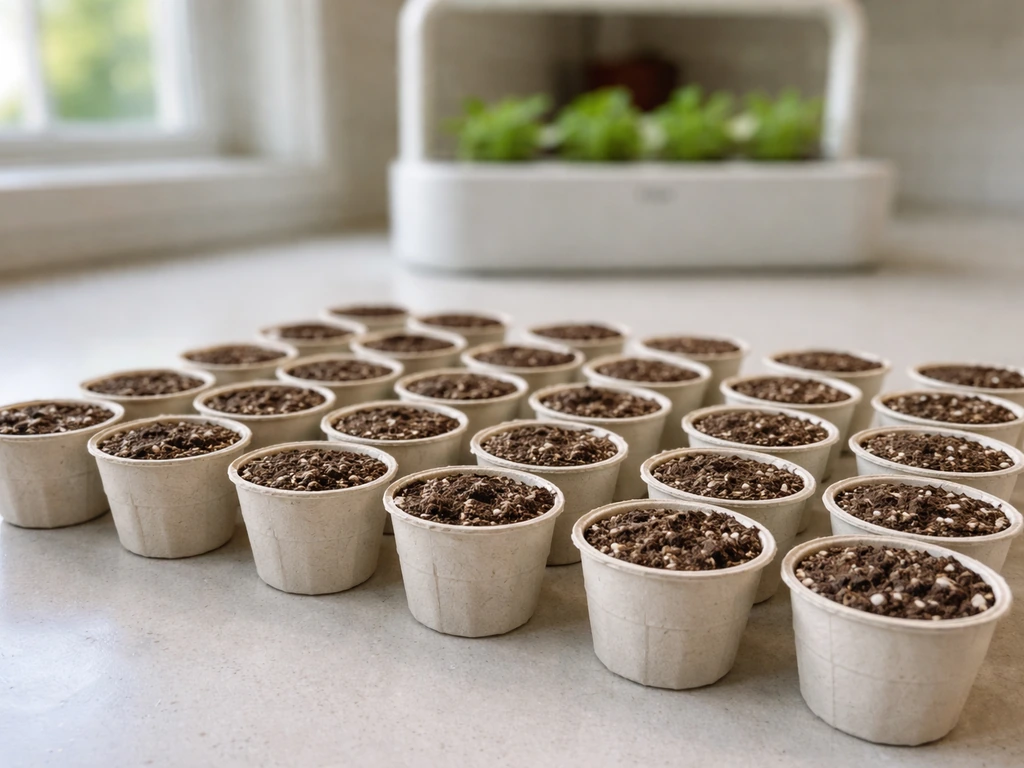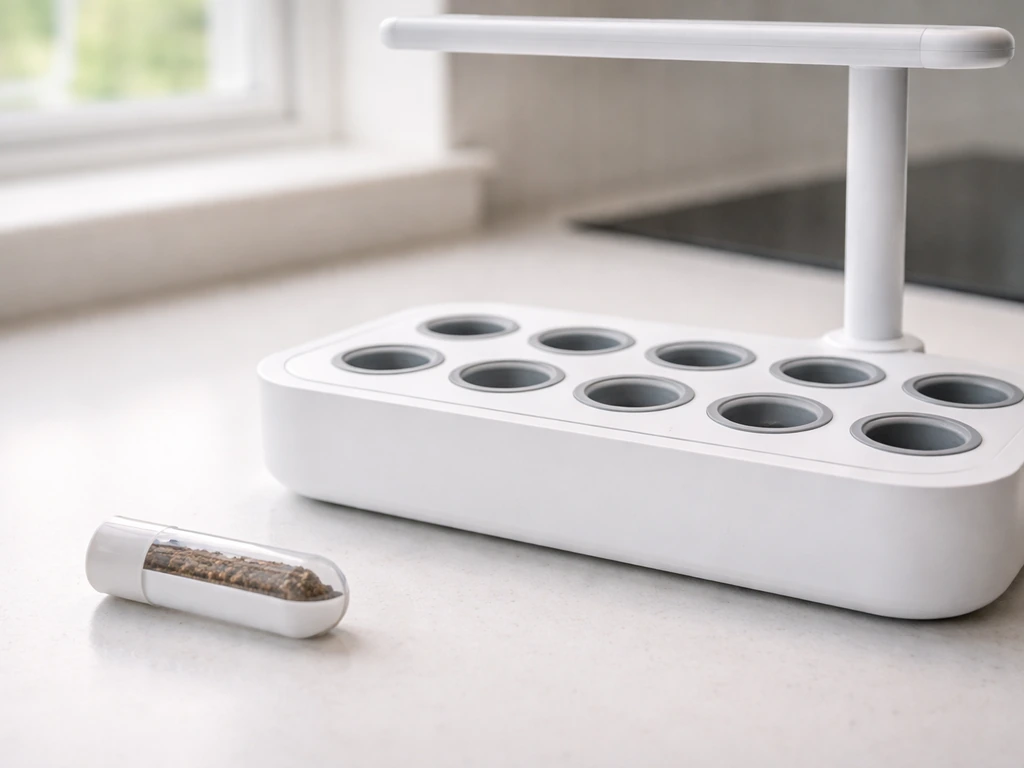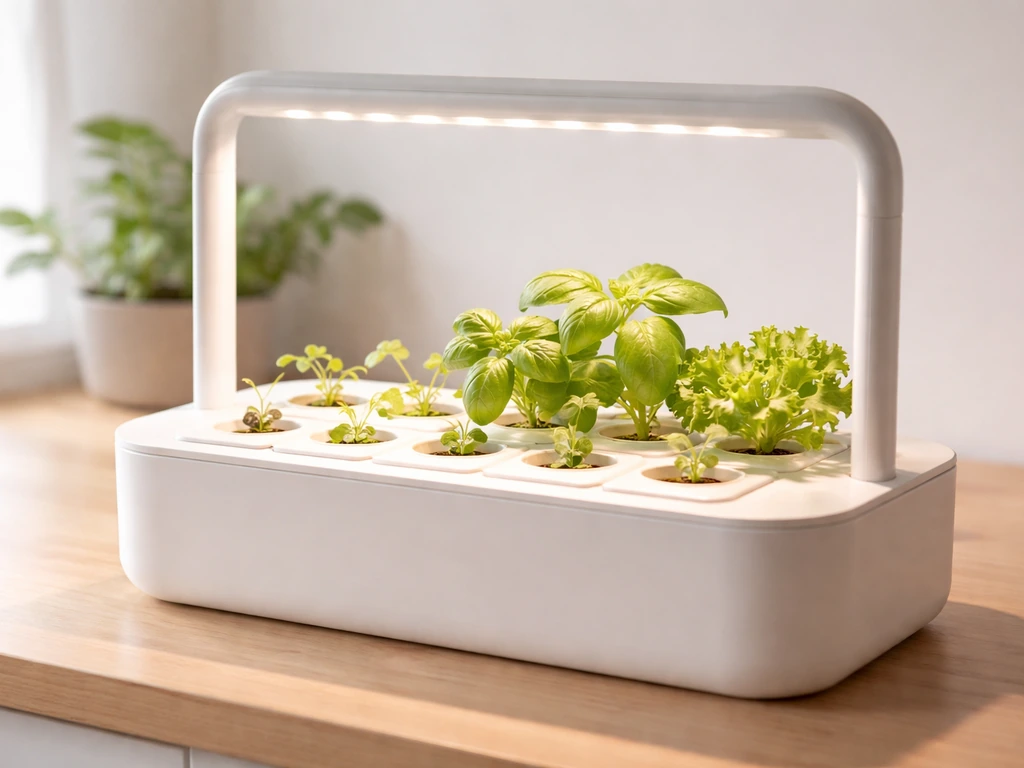
The best Aerogarden grow sponge alternatives are rockwool starter cubes (sized to fit your pod basket), coir-based propagation plugs, and oasis/foam-style horticultural plugs. If you want the best click and grow pods setup, pairing the right germination media with proper soaking and reservoir oxygen is what usually determines consistent results. All three outperform the stock peat sponge in at least one dimension, whether that's root aeration, reusability, or pH stability. Rockwool is my top pick for experienced growers who want maximum oxygen at the root zone and fast, reliable germination. Coir plugs are the easiest swap for beginners. Oasis foam plugs are the most forgiving for delicate seeds. Each needs specific prep before you drop it into your Aerogarden, and skipping that prep is where most people run into mold, rot, or failed germination.
Aerogarden Grow Sponge Alternative: Best Media and Setup

What Aerogarden grow sponges actually do (and why people replace them)
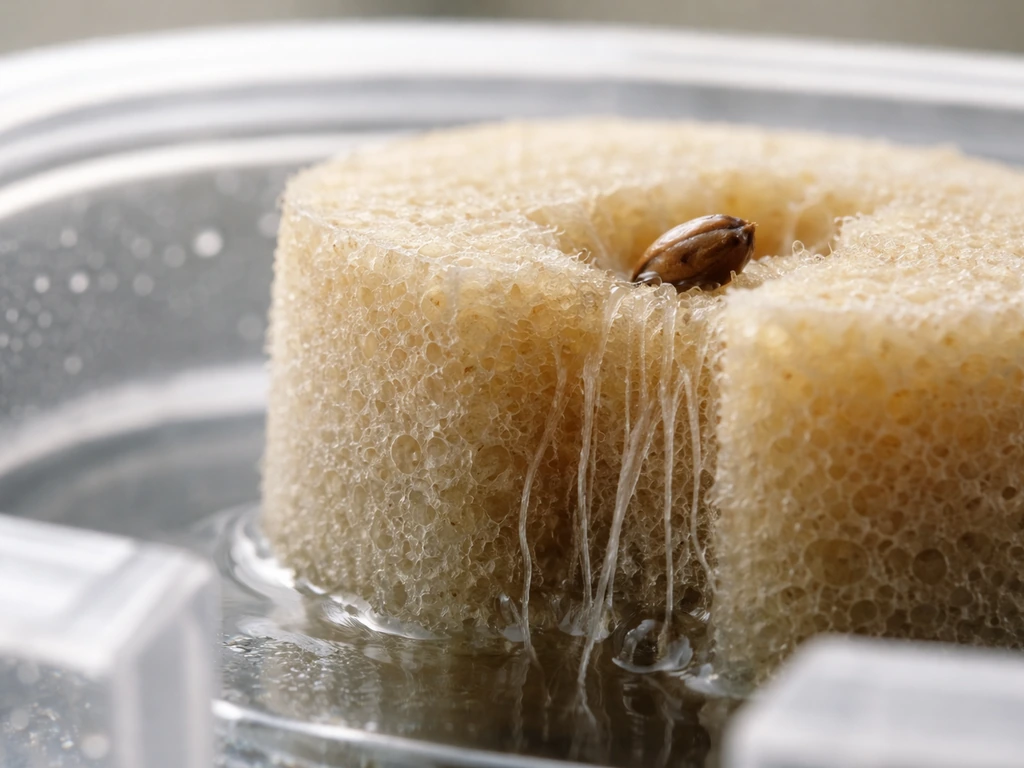
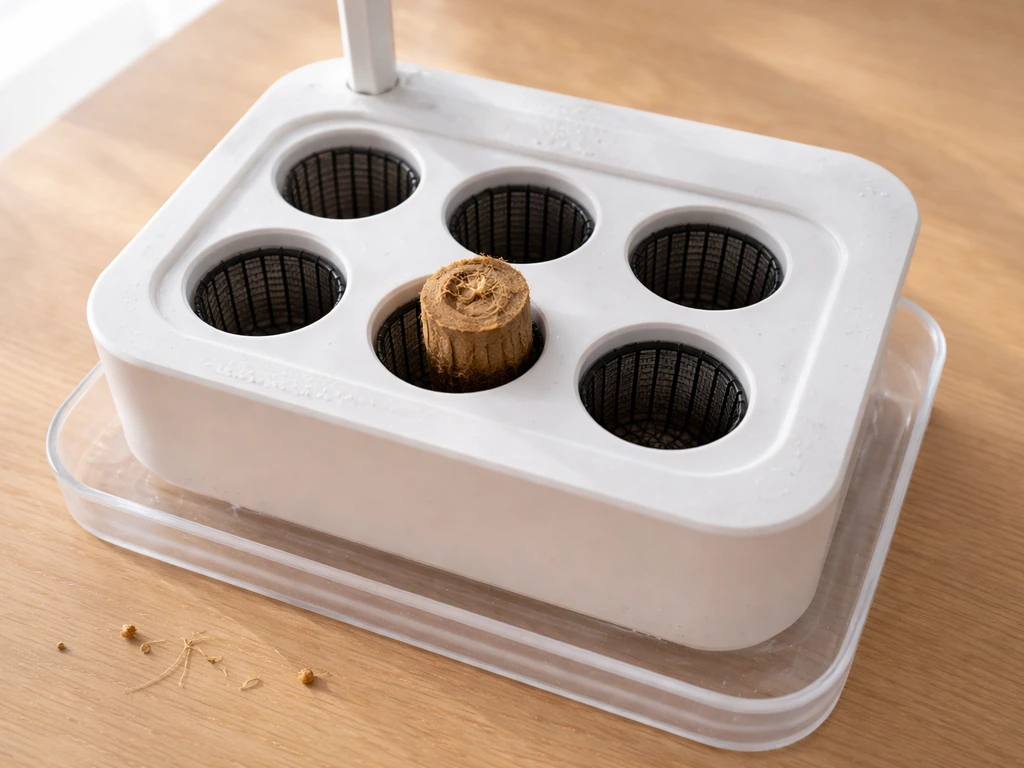
Aerogarden's stock grow sponges are made from Canadian sphagnum peat. Their job is threefold: hold the seed at the right depth, wick moisture up from the reservoir to keep the germination zone consistently damp, and allow enough airflow to prevent suffocation at the root tip. That balance between moisture retention and oxygen availability is what makes or breaks germination in any hydroponic system.
So why replace them? A few reasons come up constantly. First, cost and availability: official replacement packs are sold in 50-count bundles and can be hard to source locally if you need them today. If you are trying to buy click and grow pods today, look for current stock at major retailers, then confirm the pod size and compatibility with your model before ordering cost and availability. Second, the stock peat sponge can get waterlogged in systems with higher water levels, especially in Aerogarden models that run deeper reservoirs, and waterlogged sponges kill seeds fast. Third, peat sponges are single-use, and experienced growers who run multiple cycles a year find that wasteful. Finally, some growers just get better germination rates with specific media they already know from their broader hydroponics setup, and they want to consolidate.
Compatibility check: Aerogarden model fit, sizing, and how different media behave
Before you order anything, measure your pod basket. Aerogarden uses a standardized net pot/basket insert across most models (Harvest, Harvest Elite, Bounty, Farm, and Sprout series), but the basket diameter at the top lip is roughly 1.75 to 2 inches (about 44 to 50 mm). Most commercial 1.5-inch rockwool cubes fit snugly with a little trimming. The goal is a friction fit: tight enough that the medium doesn't wobble or sink, loose enough that roots can push down through the basket holes and into the water below.
Two things to check before you commit to an alternative medium: does it shed fibers or particles into the reservoir, and does it hold its shape when saturated? Rockwool and oasis foam score well on both. Loose coir or perlite blends can shed, which clogs pumps on Aerogarden models with circulation (the Bounty and Farm series have active pump systems). If you're on a Harvest or Sprout, shedding is less critical because those rely on passive wicking rather than a pump, but you still don't want debris settling under the baskets.
| Medium | Fits Standard Aerogarden Basket | Fiber/Particle Shedding Risk | Best For |
|---|---|---|---|
| Rockwool cube (1.5") | Yes, trim edges slightly | Very low | Fast germination, experienced growers |
| Coir propagation plug | Yes, most sizes fit directly | Low | Beginners, herb/vegetable starts |
| Oasis/foam horticultural plug | Yes, trim if needed | Very low | Delicate seeds, slow germinators |
| Peat pellet (Jiffy-7 style) | Yes, remove netting first | Medium (fine particles) | Budget-conscious growers |
| Loose perlite or coco | No, use a mesh liner | High | Not recommended for Aerogarden baskets |
Best grow sponge alternatives: what to use and when
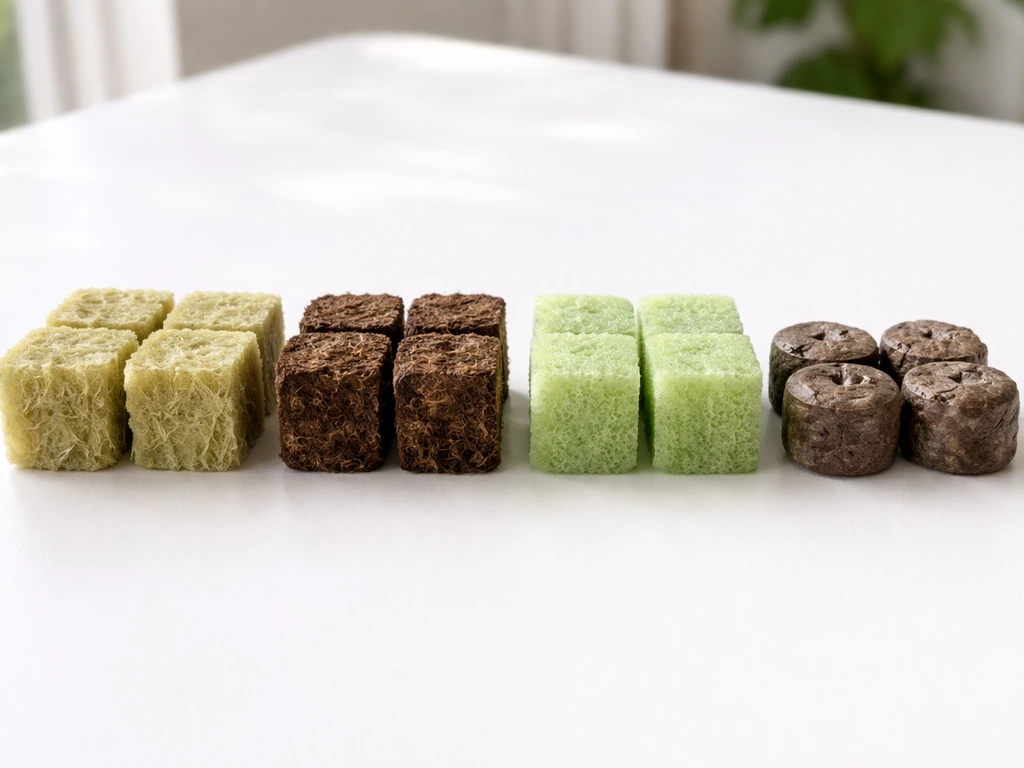
Rockwool starter cubes
Rockwool is spun basalt fiber, and it's the gold standard in hydroponic propagation for a reason. It holds about 80% water and 20% air by volume, which is almost perfectly calibrated for root-zone oxygen needs. Germination rates with rockwool in Aerogarden-style systems are consistently high, and once roots establish, they transition into the reservoir water cleanly without the slimy residue you sometimes get from peat. The main trade-off is pH: rockwool is alkaline out of the bag (pH 7 to 8), and you must pre-soak it down to pH 5.5 to 6.0 before use, or your seedlings will show early nutrient lockout even before they've grown their first true leaves.
Coir-based propagation plugs
Coir plugs (coconut fiber-based, sold under brands like Canna Coco, Rapid Rooter, and similar) are the easiest drop-in replacement. They come pre-formed to standard sizes, have a natural pH around 5.8 to 6.2, and require minimal prep. Coir has excellent capillary action, so it stays consistently moist in the Aerogarden reservoir environment without becoming waterlogged. Root development in coir plugs is typically vigorous because the fiber structure channels root tips downward rather than letting them spiral. Rapid Rooter plugs in particular are popular with Aerogarden users because they're sized close to the stock sponge and need almost no trimming.
Oasis/foam horticultural plugs
Oasis Horticubes and similar open-cell foam plugs are the softest option and the most forgiving for seeds that need high humidity around the seed coat to germinate (basil, for example, is notoriously fussy about this). Foam plugs hold moisture very evenly, don't compact, and don't shed. They're pH-neutral at around 7.0, which means a light pre-soak in pH-adjusted water is helpful but not as critical as with rockwool. The downside is that foam provides less structural support for tall plants as they mature, so if you're growing anything that gets top-heavy before the roots anchor, you may want to add a small stake or use a foam plug only for germination and transplant to a firmer medium after two weeks.
Peat pellets (expanded Jiffy-7 style)
Peat pellets are cheap and available at any garden center, which makes them appealing in a pinch. Remove the netting before fitting them into Aerogarden baskets, since the netting holds the pellet shape but can restrict root egress. Expanded peat pellets have a pH around 5.5 to 6.0, which is acceptable, but they compress and break down faster than rockwool or coir in a continuously moist hydroponic environment. Expect a shorter useful lifespan and a slightly higher chance of medium particles migrating into the reservoir after two to three weeks.
How to prep and plant in each alternative (step-by-step)
Rockwool cubes
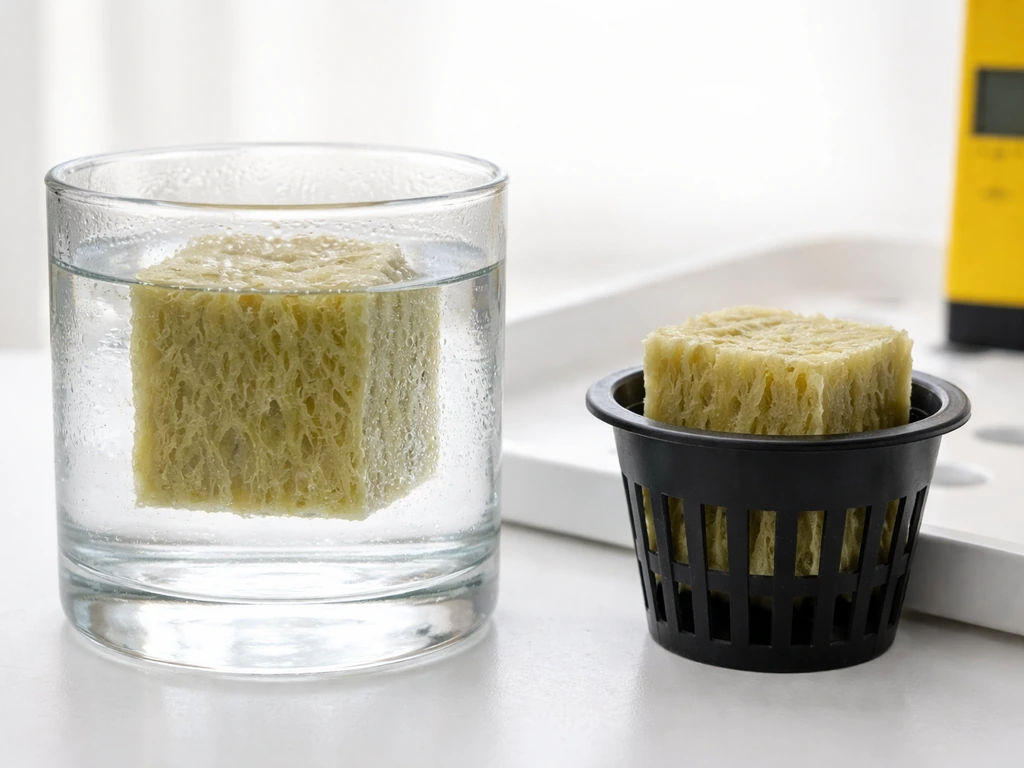
- Mix pH-adjusted water to 5.5 to 6.0 using a pH meter and pH-down solution. Don't guess on this step.
- Submerge the rockwool cube in that water for at least 1 hour. Do not squeeze it out afterward. Let it drain passively for 5 minutes.
- Use a toothpick or skewer to make a hole about 3 to 5 mm deep in the top center of the cube (seeds generally want to sit 2 to 3 times their diameter below the surface).
- Drop 1 to 2 seeds into the hole and close it lightly with a pinch of the surrounding rockwool.
- Trim the cube edges with scissors if it doesn't drop flush into your Aerogarden basket. You want it sitting about 2 to 3 mm above the basket rim so the top stays exposed to air.
- Set your Aerogarden water level so it contacts the bottom third of the basket but does not wick up into the top two-thirds of the cube. This keeps the seed zone aerated.
- Add nutrients only at quarter-strength for the first 7 to 10 days, or use plain pH-adjusted water until the seedling has two sets of true leaves.
Coir plugs (including Rapid Rooter)
- Rinse the plug under room-temperature water to flush any packing dust.
- Soak in plain water or a very dilute (quarter-strength) nutrient solution at pH 5.8 to 6.2 for 20 to 30 minutes.
- Squeeze gently to remove excess water — unlike rockwool, coir plugs benefit from a light squeeze so they're moist but not dripping.
- Place the plug in the basket. Most coir plugs have a pre-formed seed hole; if not, make one with a toothpick at 3 to 4 mm depth.
- Seed and cover the hole by pinching the coir lightly over the seed.
- Get your seeded pods into the Aerogarden the same day you plant them. Letting seeded coir plugs sit out and dry before they make contact with the reservoir will dramatically lower germination rates.
- Start nutrients at quarter-strength after the first true leaves appear.
Oasis/foam plugs
- Soak in pH-adjusted water (6.0 to 6.5) for 15 minutes. Foam saturates quickly.
- Do not squeeze. Let it drain on a clean surface for 2 to 3 minutes.
- Trim to basket diameter if needed using a sharp knife. Foam cuts cleanly without crumbling.
- Make a seed hole at 2 to 3 mm depth (foam is soft, so a toothpick works well).
- Seed and gently close the hole by pressing the foam lightly.
- Place in the basket immediately. Foam dries out faster than rockwool or coir at the surface, so don't delay.
- Keep lights at a lower intensity for the first 3 to 4 days if using an Aerogarden with adjustable light height, since foam at the surface can dry quickly under direct LED.
Peat pellets
- Expand the pellet in warm water per the package instructions, then remove the mesh netting entirely.
- Shape the expanded peat into a rough cylinder that fits your basket. It won't be as tidy as a pre-formed plug, but it doesn't need to be.
- Make a seed hole at 3 to 5 mm depth.
- Plant your seeds, press the peat lightly closed over them, and place in the basket immediately.
- Check the reservoir water level daily for the first week, since expanded peat can absorb more water than other media and affect wick behavior.
Managing nutrients, moisture, and oxygen for healthy roots
The most common mistake people make when swapping grow media is treating nutrient management the same as they would with the stock sponge. It's not. Different media have different buffering capacity and water-holding ratios, which changes how quickly nutrient concentrations build up around the root zone.
During germination (days 1 through 7), run plain pH-adjusted water or an absolute maximum of quarter-strength nutrients. Seedlings at this stage are drawing on stored energy in the seed, not on external nutrients, and high EC (electrical conductivity) in the medium will pull moisture away from the seed through osmosis and stall or kill germination. After the seedling has its first set of true leaves (not the seed leaves/cotyledons, but the next set), you can step up to half-strength for another week, then full recommended strength after that.
Water level management matters more with alternatives than with the stock sponge because the stock sponge was calibrated for Aerogarden's specific reservoir depth. With rockwool, keep the water line so it touches the bottom 25 to 30% of the cube. With coir plugs, 30 to 40% submersion is fine because coir has stronger capillary action. With foam plugs, even less submersion works because foam wicks aggressively. If you consistently see the medium staying soaking wet all the way to the surface, lower the reservoir level slightly or check whether the plug is sitting too deep in the basket.
Oxygen at the root zone is the other variable most home growers underestimate. Aerogarden's pump and spray system on the Bounty and Farm models already oxygenates the reservoir water, but roots in the medium itself still need air pockets. This is why squeezing rockwool dry (rather than letting it drain passively) kills germination: you eliminate the air pockets the medium is supposed to maintain. Let your alternative medium tell you when it needs more moisture. If you touch the surface and it feels dry 1 cm down, add a small amount of pH-adjusted water directly to the medium surface. If it feels wet to the touch at the surface after 48 hours, drop the reservoir level by 5 mm.
Troubleshooting: mold, algae, failed germination, and root rot
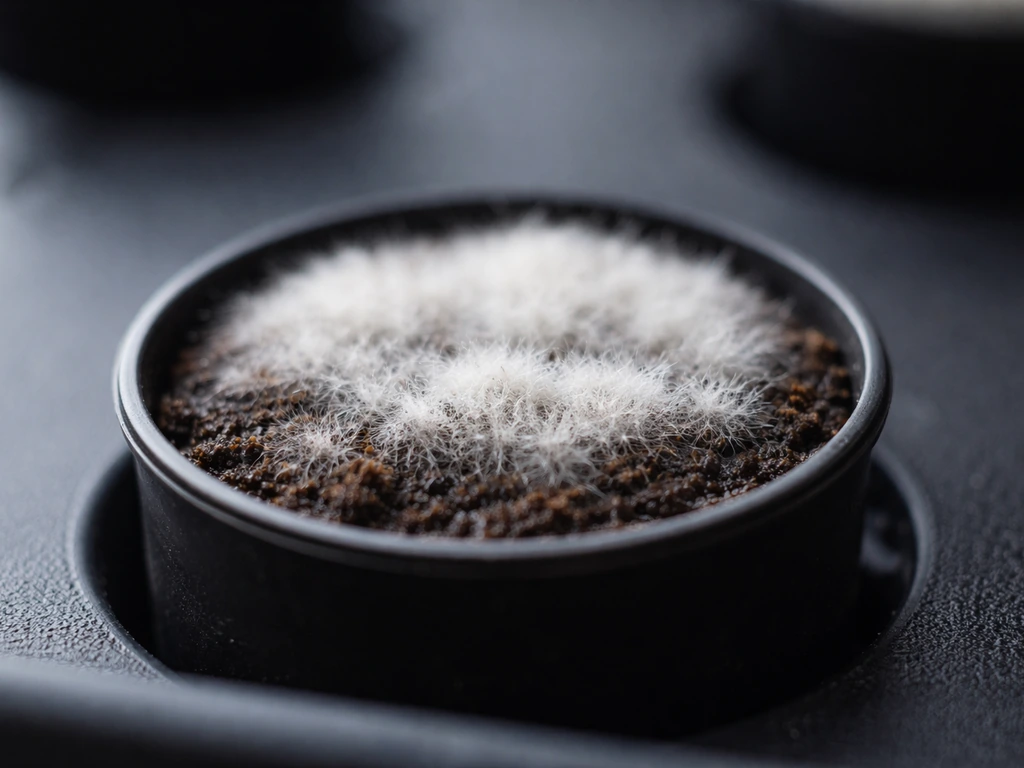
White fuzz on the surface of the medium
White fuzzy growth on the surface of grow media, including the stock Aerogarden peat sponges, is usually beneficial fungal mycelium, not harmful mold. Aerogarden's own documentation confirms this and notes that the fuzz disappears as plants grow and outcompete it. If you see it on an alternative medium, scrape or wipe it off gently and ensure the medium surface gets some airflow (avoid placing a dome over the basket unless the system is in a very dry environment). If the fuzz is gray-green rather than white, that's likely penicillium mold, which is a sign the medium is staying too wet with insufficient airflow. In that case, lower the reservoir level and increase room ventilation.
No germination after 10 to 14 days
First, check seed viability by placing a seed on a damp paper towel at room temperature for 3 to 5 days. If nothing germinates there either, the seeds are the problem. If they germinate on the paper towel, the issue is the medium environment. Most often the cause is pH being too far out of range (above 7.0 or below 5.0), the medium being waterlogged, or the seed being planted too deep. Aerogarden's own documentation notes that blank" rel="noopener noreferrer">grow domes don't improve germination in these units, so adding a dome is not the fix. If your aerogarden pods did not grow, focus on pH, water level, and planting depth before blaming the seeds. Check your pH first, then check water level.
Root rot and slimy brown roots
Root rot in Aerogarden systems is almost always caused by one of three things: reservoir temperature above 72 degrees Fahrenheit (which allows pythium and other water molds to thrive), nutrient concentration too high causing root tip burn, or zero dissolved oxygen in standing water. If you're using a Harvest or Sprout with no pump circulation, add a small aquarium air stone to the reservoir to increase dissolved oxygen. Drop nutrient concentration to half-strength and check the reservoir temperature. Healthy roots should be white or very light tan. Brown, mushy roots with a foul smell mean the problem is already established: do a full reservoir flush with plain pH-adjusted water, trim affected roots with sterile scissors, and add a beneficial bacteria product (like Hydroguard or similar) to compete with the pathogens.
Green algae in the reservoir
Algae needs two things: light and nutrients. Aerogarden's pod labels and seed pod covers exist specifically to block light from entering the reservoir through the pod holes. When using alternative media, cover any exposed basket holes or gaps between the medium and basket edge with black tape or a cut piece of foil to prevent light penetration. Keep the reservoir lid in place. If algae has already established, drain and clean the reservoir with a 3% hydrogen peroxide solution, rinse thoroughly with plain water, and refill. Algae itself doesn't kill plants directly but competes for oxygen and nutrients, and heavy algae blooms can crash dissolved oxygen overnight.
Slow or weak seedlings (leggy growth, pale color)
Leggy, pale seedlings stretching toward the light are almost always a light intensity or light distance issue, not a medium issue. Raise the Aerogarden light panel closer to the pods if the system allows it, or increase the light schedule to 18 hours on, 6 hours off during early vegetative growth. If seedlings are pale but compact, check nutrient strength and pH first, then consider whether your alternative medium's pH has drifted. Rockwool in particular can rebound toward alkalinity over time if you're not monitoring reservoir pH regularly.
Cleaning and reuse: can you sanitize and start over?
Rockwool is the only alternative medium worth seriously considering for reuse. You can sterilize rockwool cubes by soaking them in a dilute hydrogen peroxide solution (3 ml of 3% H2O2 per liter of water) for 30 minutes, then rinsing thoroughly with pH-adjusted water before re-use. The physical structure holds up for two to three cycles before it starts to break down or harbor too much residual root material to clean effectively. If you want to reuse Click and Grow pods, the main limiting factor is how quickly the media breaks down and how clean the reservoir stays between cycles. Always remove as much old root material as possible before soaking, and let the cubes dry completely in a clean space before storing.
Coir plugs and oasis foam plugs are technically cleanable but not practically reusable. Both degrade structurally after one cycle, and coir in particular harbors fine root fragments that are nearly impossible to remove fully without destroying the plug. The risk of carrying over pathogens from a failed batch outweighs the cost savings of reusing a plug that costs less than a dollar. Peat pellets are single-use only; they break apart after one cycle and cannot be cleaned. For anyone running multiple grow cycles per year, the math usually favors buying rockwool in bulk (it's available in sheets of 98 small cubes for a few dollars) rather than trying to reuse any of the softer alternatives.
When cleaning the Aerogarden system itself between cycles, remove all baskets, scrub the reservoir with a mild dilute bleach solution (1 teaspoon per gallon), rinse thoroughly, and allow to air dry before refilling. This step is more important than cleaning the medium, since the reservoir and pump (where present) are the most likely places for pathogens to persist between grows. If you've had a root rot outbreak, don't skip the reservoir sterilization step, no matter how tempting it is to just refill and replant.
If you're also exploring other pod-based countertop hydroponic systems and wondering how Aerogarden's approach compares, some of the same medium principles apply across similar systems, though pod sizing and water level management differ by brand and model. If you want a quick way to compare options for your setup, check out the best Buy Click and Grow pods for your space and growth goals. The prep and troubleshooting logic covered here transfers well to most passive-wick countertop systems, even if the specific basket dimensions need to be confirmed before ordering media.
FAQ
Can I use normal potting soil, seed-starting mix, or perlite directly in an Aerogarden basket as a sponge alternative?
Not safely. Most soil mixes and fine seed-starting media clog, shed particles, and collapse under constant moisture, which reduces oxygen and can foul the reservoir. If you want to experiment with non-peat options, stick to propagation-grade plugs like rockwool, coir plugs, or foam plugs that maintain structure and limit debris.
What water pH should I use for soaking and topping off when using rockwool, coir, or foam plugs?
Aim for pH-adjusted water, typically in the mid 5s to around 6 for germination and early rooting. Rockwool especially benefits from bringing the plug down to roughly 5.5 to 6.0 before planting, because its starting alkalinity can drift seedlings toward nutrient lockout if you skip pre-soaking.
Do I need a different nutrient schedule when using these alternative media?
Yes. The nutrient ramp in the article assumes seedlings are not immediately tolerant of stronger solutions. A practical edge case is if you see pale leaves while the medium surface stays wet, pause nutrient increases and verify reservoir pH and EC, because higher salt buildup can exacerbate oxygen stress in waterlogged or deeply seated plugs.
How can I tell whether my plug is too deep in the basket, without guessing?
Use the “surface feel plus submersion check” approach. If the plug surface stays consistently wet for more than 48 hours, reduce reservoir level slightly and confirm the plug sits so only the lower fraction of the medium is touching the water. For rockwool, keep it closer to the bottom portion (about the lower quarter to third), then adjust by small increments.
Is it okay to squeeze rockwool dry to make it fit better, like you might with peat sponges?
Avoid squeezing. Rockwool relies on internal air pockets for oxygen delivery. If you compress it or fully drain it dry, you remove those air spaces and germination can stall. Instead, trim only the outer size for fit, then soak it to the target pH before loading.
What should I do if I see white fuzz, and how do I distinguish it from harmful mold on alternative media?
White, cottony growth that remains light-colored is often benign mycelium and usually fades as seedlings grow. If the growth is gray-green, spreads rapidly, or you notice sour odor and persistent wetness, treat it as problematic mold by lowering reservoir level, improving room airflow, and gently removing surface growth so the medium can oxygenate.
Can I run a dome over alternative media to boost humidity?
Generally no for Aerogarden units. Domes can trap humidity around the basket holes and reduce airflow, which increases the chance of mold, especially once seeds sprout. If your environment is very dry, use ventilation-friendly strategies like keeping reservoir levels correct and ensuring basket holes are not sealed with non-breathing material.
Do alternative media change how much dissolved oxygen the seedlings get?
They can. Media structure affects how much air remains within the plug, while reservoir oxygen depends on model and circulation. For pump models, fine debris from some media can still reduce oxygen exchange. For non-pump setups, an air stone can help prevent oxygen crashes, particularly if the reservoir stays warm or nutrients are too strong.
Are peat pellets safe if I remove netting, and will they work as well as coir or foam?
They can work, but they break down faster in continuously wet hydroponic conditions and can release particles into the reservoir. If you try them, use minimal handling, plant shallow enough to prevent suffocation, and plan for earlier replacement compared with rockwool or coir plugs.
Can I reuse coir plugs or foam plugs after a failed germination cycle?
It’s not recommended. Coir and foam degrade structurally and can carry root fragments or pathogens that are difficult to fully remove without destroying the plug. If you had a failure due to rot or persistent mold, replacing the plugs is usually the lower-risk decision than attempting re-cleaning.
What reservoir temperature is safest to prevent root rot when using alternative media?
Keep the reservoir below about 72°F (22°C). Warmer water increases the risk of water molds like pythium and accelerates rot, regardless of whether you use peat, rockwool, coir, or foam. If your room runs hot, prioritize temperature control before changing media.
My seedlings are leggy but not pale, what’s the most likely cause?
Most often light distance or insufficient daily light duration. If seedlings are reaching upward but appear otherwise healthy, raise the light panel closer if your model allows and adjust the schedule toward longer on-time. Medium is usually a secondary factor when seedlings still show steady color.
Do I need to cover basket gaps or holes with tape when using alternative media?
Yes, especially if you see any exposed openings where light can enter. Alternative plugs can be slightly different in shape and may leave tiny gaps. Blocking light prevents algae buildup in the reservoir area and reduces competition for oxygen.
How should I store rockwool cubes after soaking, trimming, and before planting?
Store them clean and dry after you rinse to the target pH. Let them dry completely in a clean, covered space to reduce residue buildup. When you’re ready to plant, rehydrate to working moisture levels rather than using heavily dried, overly compacted cubes.