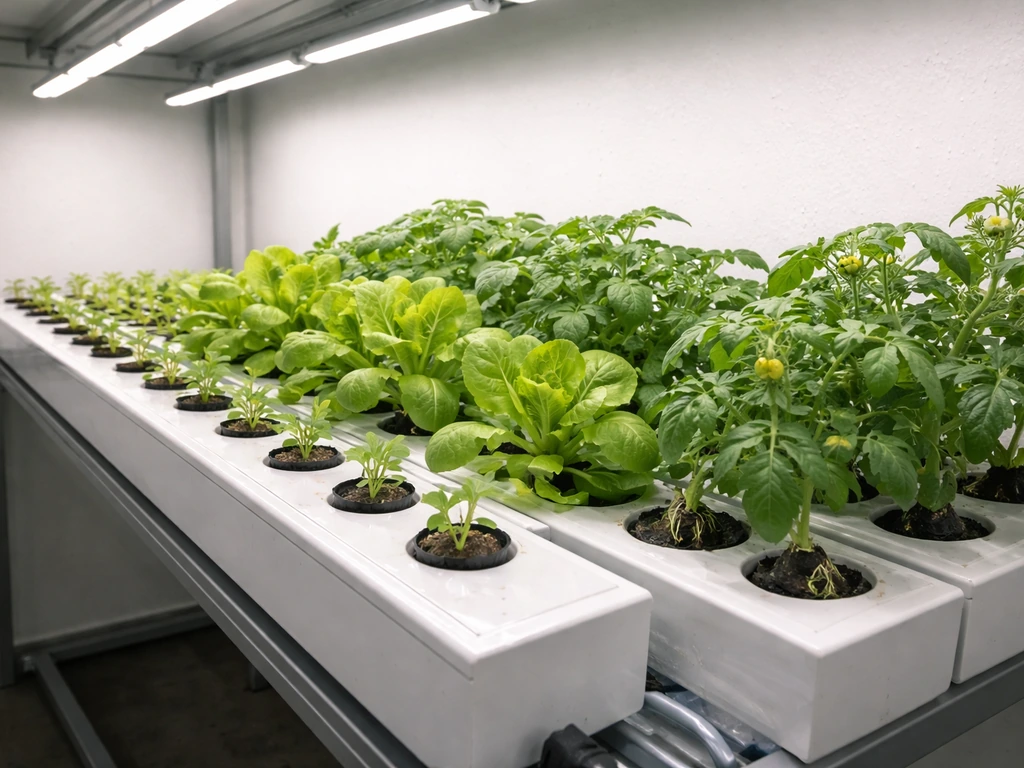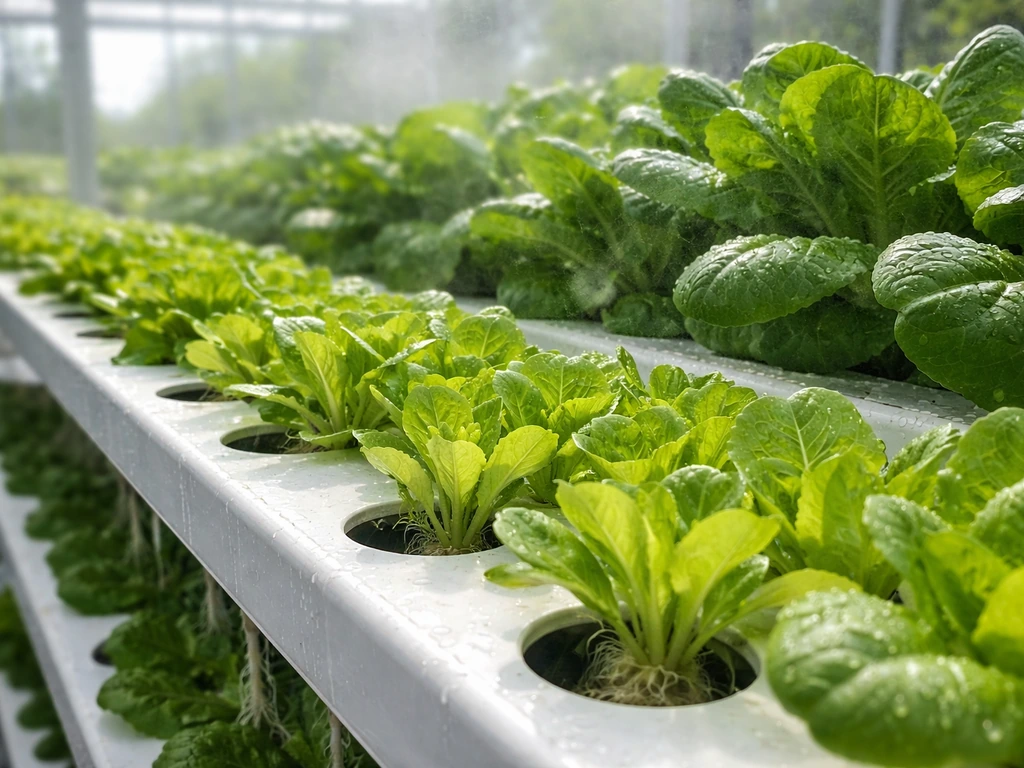
Crops grow hydroponically by getting everything they need, water, oxygen, and dissolved nutrients, delivered directly to their roots without soil acting as the middleman. Instead of roots mining the soil for minerals, you mix those minerals into water at precise concentrations, keep the solution at the right pH so the plant can actually absorb them, and deliver that solution to the root zone through one of several system designs. Hydroponic grow cycles are typically measured by crop stage, so timelines vary depending on whether you are growing from seed, transplanting, and what you are trying to harvest. The plant's biology doesn't change at all. What changes is that you take over the jobs that soil used to handle passively, and when you do it right, crops grow faster, more predictably, and in far less space than they would in the ground.
How Do Crops Grow Hydroponically A Beginner Guide

What actually changes when you ditch the soil
Soil is basically a slow-release nutrient bank combined with a water-retention system. It buffers pH swings, holds moisture between waterings, and hosts microbial life that breaks down organic matter into plant-available forms. When you remove it, you lose all of that buffering and take on direct responsibility for every input your plant receives.
The biggest practical shift is pH management. In soil, the growing medium itself absorbs and moderates pH changes over time. In hydroponics, nutrients exist as dissolved salts in water, and their availability changes sharply with pH. OSU Extension recommends keeping hydroponic nutrient solutions between about 5.0 and 6.0, with 5.5 being a common sweet spot. Outside that range, certain minerals become chemically locked up even if they're sitting right there in your reservoir. Iron, for example, becomes nearly insoluble at high pH, which is why iron deficiency symptoms show up in plants with plenty of iron in their tank.
The second major shift is that you're now managing electrical conductivity (EC), which is essentially a measurement of how much dissolved mineral salt is in your water. EC tells you the strength of your nutrient solution. pH tells you whether the plant can actually access those nutrients. Both need to stay in range simultaneously, and that's the core daily discipline of hydroponic growing.
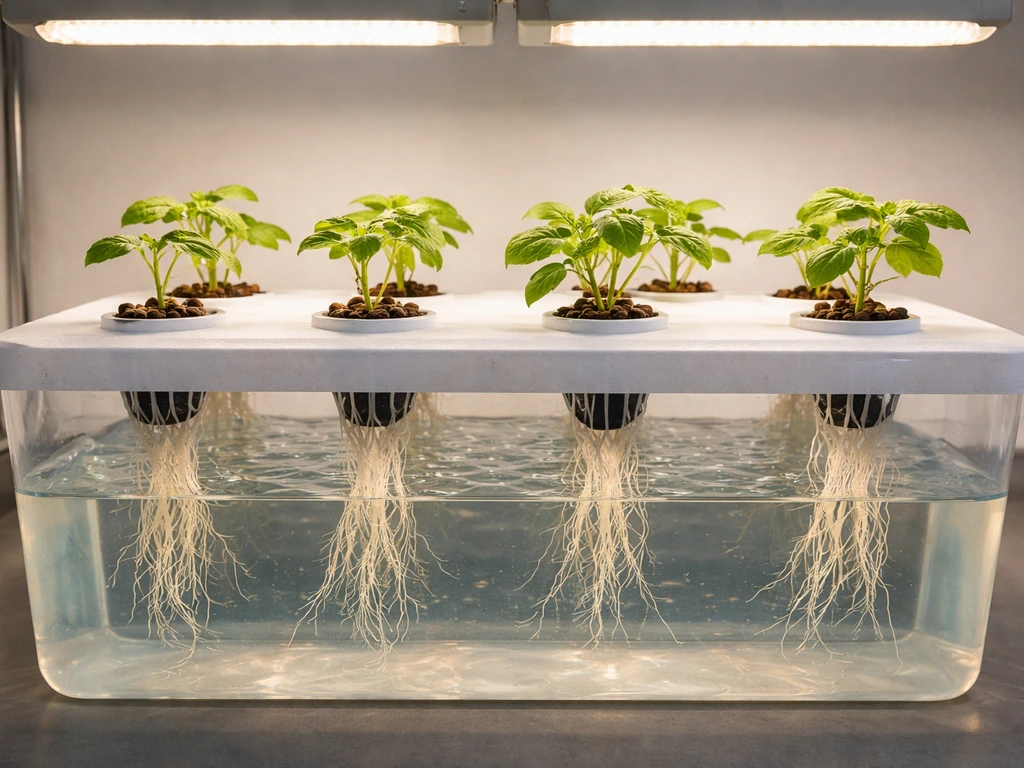
There's also the dissolved oxygen factor. Soil has air pockets that keep roots aerobic. In water-based systems, you have to actively oxygenate the solution or roots suffocate, turn anaerobic, and become a breeding ground for pathogens like Pythium. Before you even pick a system, understanding that roots need both nutrient solution and oxygen access is the most important concept to internalize.
Core hydroponic system types and when to use each
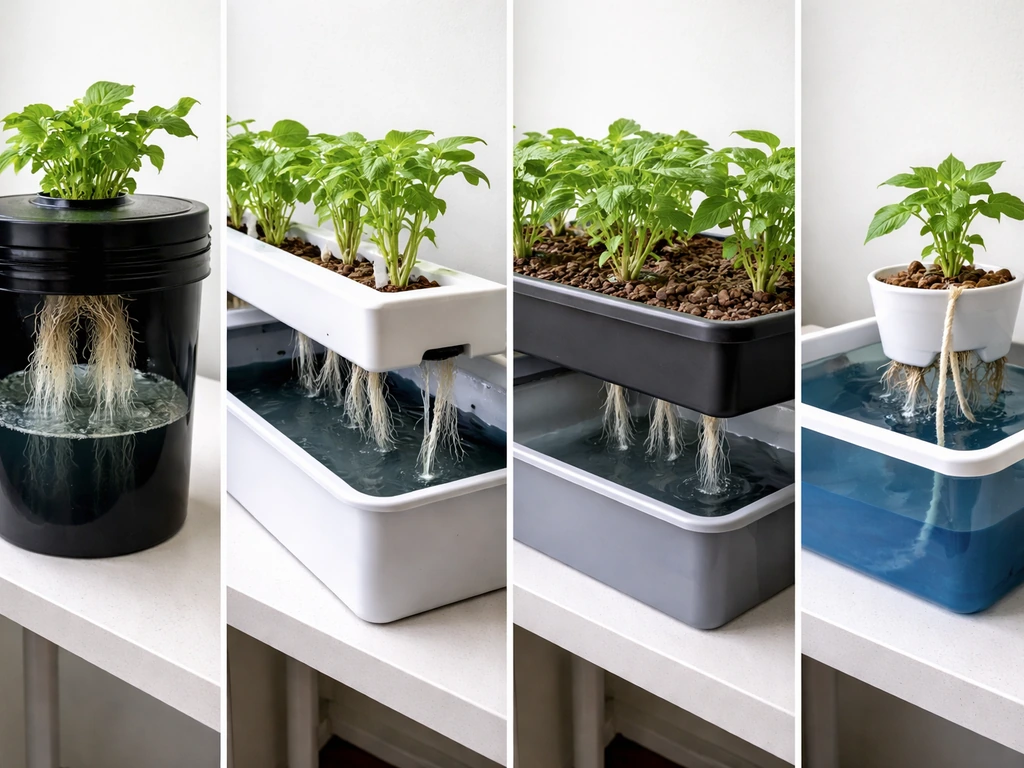
There are five main system designs used by home growers. Each handles water delivery and oxygenation differently, and the right choice depends on your crop, your budget, and how much you want to monitor things daily.
| System | How it works | Best for | Main risk |
|---|---|---|---|
| Deep Water Culture (DWC) | Roots suspended in aerated nutrient solution 24/7 | Fast-growing crops, lettuce, herbs, cannabis | Low dissolved oxygen if air pump fails or temps rise |
| Nutrient Film Technique (NFT) | Thin flowing film of solution runs continuously past bare roots in channels | Leafy greens, herbs, commercial-style setups | Zero buffering: pump failure kills crops quickly |
| Ebb & Flow (Flood and Drain) | Tray floods periodically with nutrient solution then drains back to reservoir | Versatile; works with pots and media | Timer/pump failure disrupts entire cycle at once |
| Drip System | Nutrient solution dripped onto growing medium at root zone | Larger plants, tomatoes, peppers, cucumbers | Clogged emitters; runoff management needed |
| Wick System | Passive capillary action pulls solution from reservoir via wicks | Small herbs, microgreens, beginners | Can't keep up with high-demand plants; no active oxygenation |
DWC: the most popular home system for a reason
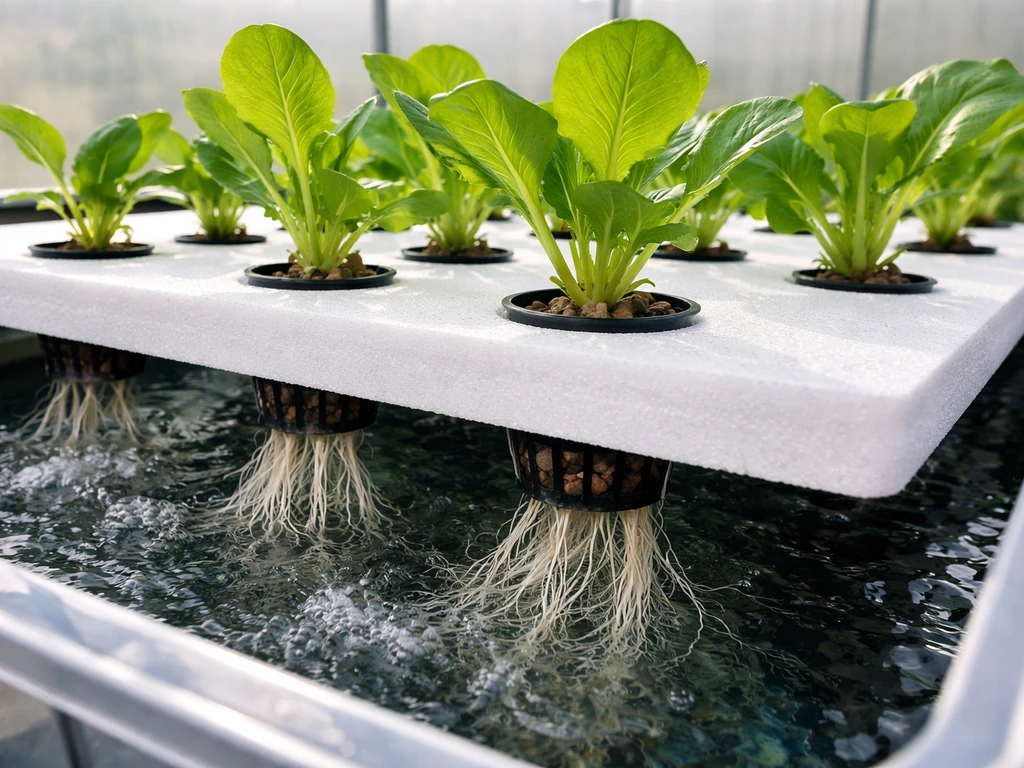
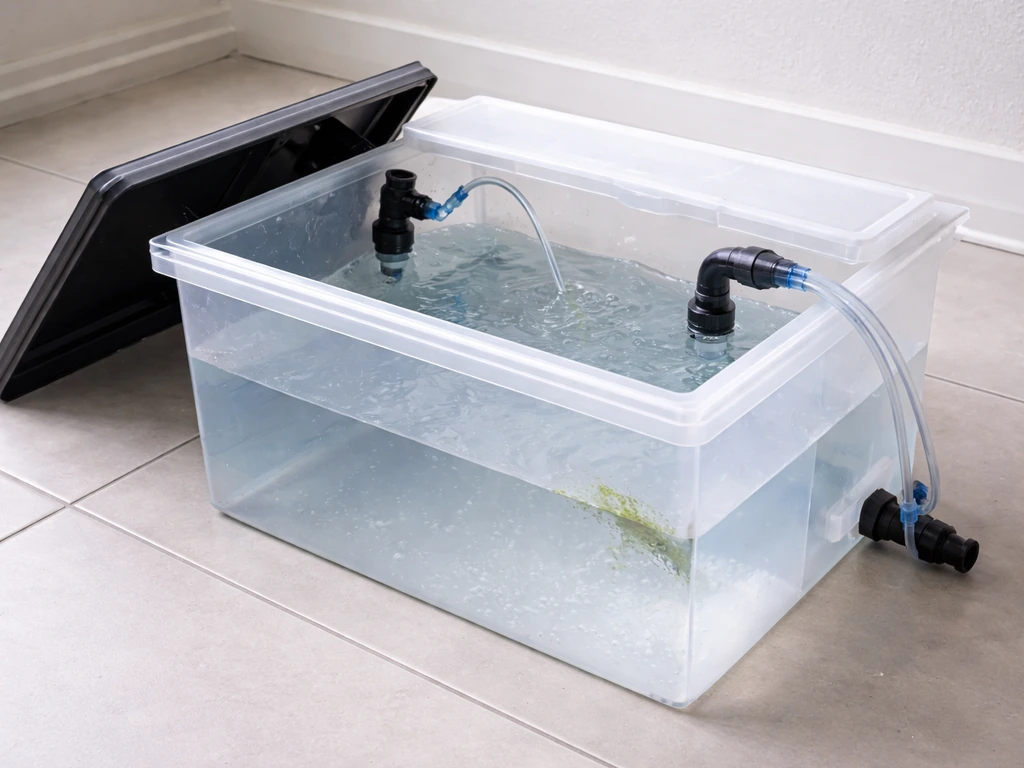
Deep Water Culture suspends plant roots directly in a reservoir of oxygenated nutrient solution around the clock. An air pump and airstone keep dissolved oxygen (DO) at or above 7 mg/L, which is the target you want to hit. It's simple to build from a tote, a lid, net cups, an air pump, and some tubing. The downside is that it's unforgiving of warm reservoir temperatures. Once your solution creeps above 70°F (21°C), dissolved oxygen drops fast and root rot risk climbs sharply. Keep your reservoir cool and your air pump running, and DWC rewards you with some of the fastest vegetative growth you'll see.
NFT: efficient but unforgiving
NFT runs a shallow, continuous stream of nutrient solution along the bottom of angled channels while the top portion of the root mass stays exposed to air. This is elegant in theory: roots get both water/nutrients and oxygen simultaneously. The problem is there's zero buffer. If the pump stops or flow gets uneven, roots can degrade within hours. It's also the system most likely to spread root-borne diseases across multiple plants since they share the same flowing solution. NFT works beautifully for lettuce and herbs when everything runs smoothly, but it demands reliable equipment and regular monitoring.
Ebb and flow: flexible but component-dependent
Ebb and flow floods a tray or grow bed with nutrient solution on a timer, then drains it back to a reservoir below. The flooding and draining action pushes fresh, oxygen-rich solution into the root zone and purges stale, oxygen-depleted air out. It works with almost any growing medium and container setup, which makes it popular for growers running multiple crop types. The vulnerability: a single timer or pump failure disrupts your entire crop simultaneously. Budget for quality timers and keep a spare pump on hand.
Wick systems: only for the smallest, slowest crops
Wick systems use capillary action to pull nutrient solution from a reservoir up through an absorbent wick into the growing medium. No electricity, no pumps, zero moving parts. They're genuinely useful for small herbs or microgreens, especially if you want a low-maintenance setup on a windowsill. But they can't deliver enough solution fast enough for anything bigger or thirstier, and scaling wick count and container size to match plant demand is a constant balancing act.
How roots absorb nutrients when there's no soil
Plant roots absorb water and minerals through osmosis and active transport. In soil, microbes convert organic matter into inorganic ions that roots can take up. In hydroponics, you skip that conversion step entirely by supplying nutrients already in their ionic, plant-ready form as dissolved mineral salts.
Nutrients are divided into macronutrients (needed in large quantities) and micronutrients (needed in trace amounts). Both groups matter and deficiencies in either will stall growth.
- Primary macronutrients: nitrogen (N), phosphorus (P), potassium (K)
- Secondary macronutrients: calcium (Ca), magnesium (Mg), sulfur (S)
- Micronutrients: iron (Fe), manganese (Mn), zinc (Zn), copper (Cu), boron (B), molybdenum (Mo), chlorine (Cl)
Most purpose-formulated hydroponic nutrient lines (two-part or three-part liquid concentrates) include all of these in one package. You mix them into your reservoir water at rates specified for each growth stage, usually a vegetative formula with higher nitrogen early on and a bloom formula with higher phosphorus and potassium once flowering starts. EC is your proxy for nutrient concentration: the higher your EC, the more dissolved salts are in the solution. Target EC ranges vary by crop and stage, but seedlings generally want lower EC (around 0.8 to 1.2 mS/cm) while mature fruiting plants can handle higher concentrations (2.0 to 3.5 mS/cm depending on the crop).
The critical thing to understand is that even a perfectly mixed nutrient solution does nothing if pH is off. At pH above 6.5, iron and other micronutrients become progressively unavailable. At pH below 5.0, you can see calcium and magnesium uptake problems. This is why getting a reliable pH and EC meter and calibrating them regularly with proper reference solutions (pH 4.0 and 7.0 buffers, EC reference at 1413 µS/cm is the most common) is non-negotiable before you start your first crop.
Setting up your system and getting a crop started
Before anything goes in the water, get your starting water tested if you're on well water, or at minimum check tap water EC. High mineral content in your source water already uses up part of your EC budget before you add a single drop of nutrients. If your tap water runs above 0.4 to 0.5 mS/cm, consider filtered or RO water for better control.
Choosing your growing medium
Common hydroponic media include rockwool, clay pebbles (hydroton/LECA), coconut coir, perlite, and vermiculite. Each has different water retention and air-to-water ratios. Rockwool is probably the most widely used propagation medium because it's sterile, holds moisture well, and transplants cleanly into any system. The catch: rockwool is naturally alkaline, with a pH between 7 and 8.5 straight out of the bag. You must condition it by soaking in pH-adjusted water (5.5 to 6.0) before use, otherwise your seedlings get hit with high-pH stress right at germination. Clay pebbles work well in DWC and ebb-and-flow systems, providing excellent drainage and root oxygen exposure with minimal buffering interference.
Germinating seeds and starting seedlings
- Soak rockwool cubes in pH 5.5 to 6.0 water for at least an hour before use
- Place one seed per cube or net cup insert, about 5mm deep
- Keep cubes moist but not waterlogged at 72 to 78°F (22 to 26°C) for germination
- Once seedlings show their first true leaves, begin introducing very dilute nutrient solution (EC around 0.6 to 0.8 mS/cm)
- When the root tip is visible through the bottom of the rockwool cube, the seedling is ready to transplant into your system
- Place the entire plug directly into your net cup or growing site — roots transfer intact and the transition is seamless
Start seeds in individual containers or cubes rather than shared trays. Roots tangle quickly, and separating them at transplant causes damage that sets plants back by days. One seedling per site from day one saves you that headache.
Mixing your first nutrient reservoir
- Fill your reservoir with water at the right volume for your system size
- Add nutrients following manufacturer rates for the current growth stage; stir thoroughly
- Check EC and adjust if needed by adding more nutrient concentrate (up) or diluting with plain water (down)
- Check pH and adjust to 5.5 to 6.0 using pH up (potassium hydroxide-based) or pH down (phosphoric acid-based) solutions
- Add small amounts, stir, re-check; pH adjusters are potent and easy to overshoot
- Confirm DO is adequate in DWC systems by running the air pump at least 30 minutes before introducing plants
Lighting, temperature, airflow, and environmental targets
Hydroponic crops respond to their environment more directly and more quickly than soil-grown plants. With no soil biology buffering stress, environmental problems show up in the plant within 24 to 48 hours. Getting the basics dialed in from the start is much easier than chasing problems after the fact.
Light intensity and photoperiod
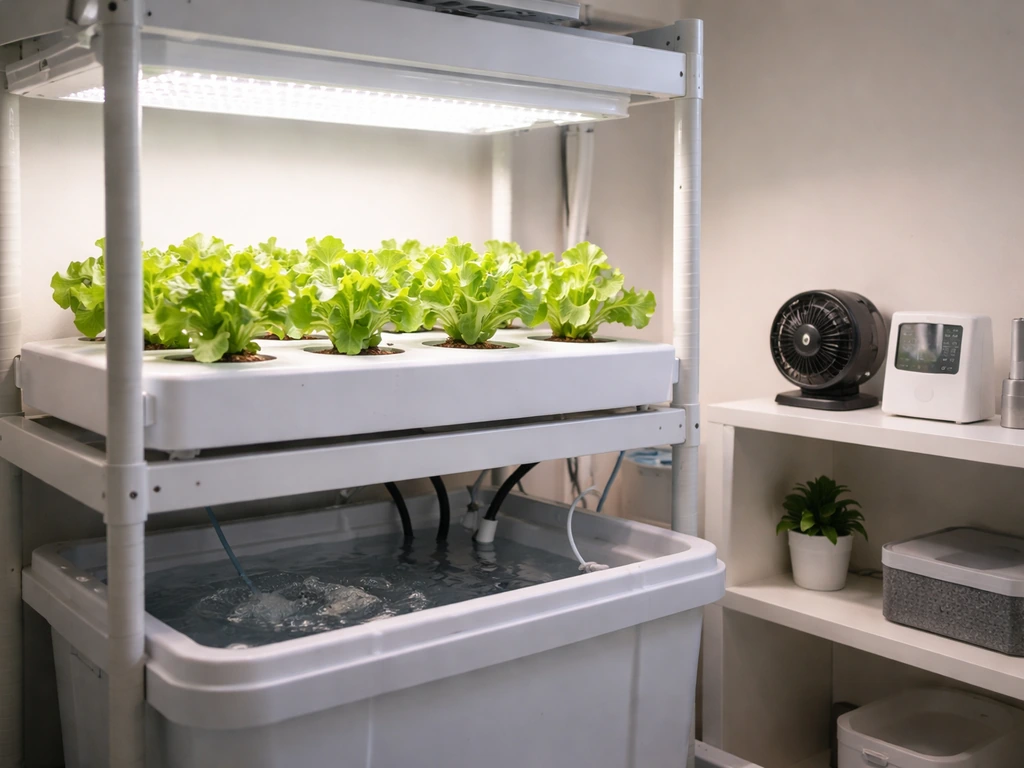
For leafy greens and herbs indoors, target a PPFD (photosynthetic photon flux density) of roughly 200 to 400 µmol/m²/s with a photoperiod of 12 to 16 hours per day. This translates to a daily light integral (DLI) of about 12 to 16 mol/m²/day for lettuce and most herbs, which is the range that produces dense, fast growth without tipburn. Fruiting crops like tomatoes and peppers need more: DLI targets of 20 to 30 mol/m²/day are common for capsicum, for instance. If your LED light doesn't list PPFD, a practical rule of thumb is roughly 20 to 40 actual watts of LED draw per square foot of canopy as a starting point. Modern quantum board LEDs at the lower end of that range outperform older-style blurple panels at the higher end, so actual wattage is less meaningful than fixture efficiency and PPFD maps.
Temperature and humidity
Keep air temperature in the 68 to 77°F (20 to 25°C) range during lights-on for most crops. Reservoir temperature is equally important: target 65 to 68°F (18 to 20°C) for the nutrient solution. Above 70°F (21°C), dissolved oxygen drops significantly and root rot risk climbs. In warm climates or during summer indoor grows, a small aquarium chiller or insulated reservoir can make the difference between healthy white roots and a brown, slimy mess. Relative humidity in the 50 to 70% range works well for vegetative growth; drop it to 40 to 50% during flowering to reduce mold risk.
Airflow and CO₂
Good airflow does three things: strengthens stems through mechanical stimulation, removes humid air to reduce disease pressure, and replenishes CO₂ at the leaf surface. An oscillating fan pointed at the canopy (not a blast directly at the plants) is the minimum. For sealed grow spaces, CO₂ supplementation at 800 to 1200 ppm can meaningfully increase growth rates at higher light intensities, but it's only worth investing in once your light, pH, EC, and temperature are already dialed in. CO₂ is the last dial to turn, not the first.
Ongoing care: keeping the crop on track
Daily and weekly monitoring routine
Check pH and EC every day for the first few weeks until you understand how your system drifts. pH drift is normal and inevitable: microbial activity, plant uptake patterns, and evaporation all pull pH in different directions. Most systems drift upward over a few days as plants consume nutrients. A quick pH check and small correction each morning keeps you in the 5.5 to 6.0 window without large swings. EC typically drops as plants consume nutrients and rises as water evaporates (leaving mineral salts behind in higher concentration). Top off with plain, pH-adjusted water when the reservoir drops, and do full nutrient changes on a schedule rather than constantly adding concentrate on top of old solution.
Reservoir changes and top-offs
A full reservoir change every 7 to 14 days is a common starting schedule for most home systems. This prevents salt buildup, removes plant root exudates that can harbor bacteria, and resets your nutrient baseline. Between changes, top off with pH-adjusted plain water to maintain volume (resist the urge to keep adding nutrients: if EC is still in range, plain water is correct). In DWC especially, falling reservoir volume means rising EC as water evaporates, so frequent small top-offs prevent nutrient concentration from creeping out of range.
Dissolved oxygen in DWC and RDWC
For DWC and recirculating DWC systems, aim for 6 to 9 ppm (mg/L) dissolved oxygen in the reservoir. The two levers you control are aeration (air pump size and airstone placement) and temperature. A single small aquarium air pump is often undersized for a 5-gallon system; use a pump rated for at least double the reservoir volume and run multiple airstones positioned to circulate the entire reservoir. If you can check DO directly with a meter, do it. If not, keeping reservoir temps below 68°F (20°C) and running aggressive aeration is your best proxy.
Pruning and training
Hydroponic plants, especially faster-growing ones, benefit from canopy management to ensure even light distribution. For leafy crops, harvest outer leaves regularly to keep the plant productive. For vining crops (cucumbers, tomatoes, indeterminate cannabis), low-stress training (LST), topping, or trellising spreads the canopy so lower sites get adequate light. Remove dead or yellowing leaves promptly since decomposing plant matter in a hydro system introduces bacteria and can cloud your reservoir.
Troubleshooting the most common hydroponic problems
Nutrient deficiencies when the tank looks fine
If your plants show yellowing, purple stems, or brown leaf edges despite having nutrients in the reservoir, the first thing to check is pH, not nutrient concentration. Nutrient lockout, where minerals are physically present but chemically unavailable due to pH being outside the absorption window, is the most common cause of deficiency symptoms in hydroponics. Check pH first. If it's outside 5.5 to 6.0, correct it and watch the plant recover before adding more nutrients. Adding more nutrients to a locked-out system just raises EC without fixing the root cause.
Root rot and brown, slimy roots
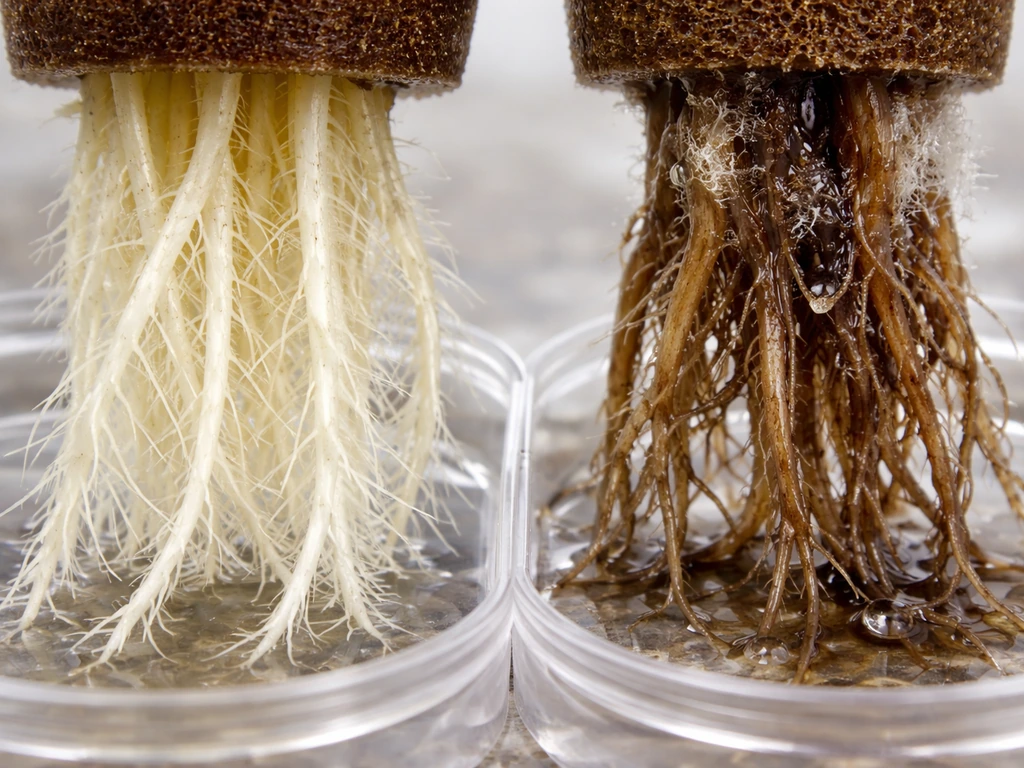
Healthy hydroponic roots are white to cream-colored and have a slightly fuzzy appearance from root hairs. Brown, slimy, or foul-smelling roots mean anaerobic conditions have set in and pathogenic organisms (often Pythium) are at work. The primary causes are low dissolved oxygen and warm reservoir temperatures. Immediate steps: lower reservoir temperature below 68°F, increase aeration aggressively, do a full reservoir change, and consider adding beneficial bacteria products (like Hydroguard/Bacillus amyloliquefaciens) to outcompete pathogens. Hydrogen peroxide treatments can kill pathogens but also kill beneficial microbes, so use carefully and follow with a reservoir change.
Algae and biofilm in the reservoir
Algae need two things: light and nutrients. Your reservoir has plenty of nutrients, so light exclusion is your main prevention tool. Cover every opening in your reservoir, wrap it in opaque material, and make sure net cup holes don't allow light to penetrate down into the solution. If algae is already established, do a full system cleanout between cycles. UMN Extension recommends a bleach solution of roughly 150 to 200 ppm (about 1 tablespoon of 5.25% to 6% unscented household bleach per gallon of water) run through the system for up to 3 hours, followed by a thorough rinse before introducing new plants. Peroxyacetic acid products are an alternative for growers who prefer to avoid chlorine.
pH drift that won't stay stable
Constant pH drift (especially upward drift) is normal to a point but becomes a problem when you're adjusting multiple times per day. Rapid upward drift usually means heavy plant nutrient uptake or CO₂ outgassing from the solution. Downward drift can indicate microbial activity or CO₂ absorption. First, make sure your pH and EC meters are calibrated correctly using fresh buffer and reference solutions (pH 4.0 and 7.0 buffers, EC at 1413 µS/cm). Stale or contaminated calibration solutions give false readings that lead to chasing numbers that don't reflect reality. Recalibrate probes every 1 to 2 weeks as a habit.
Stunted growth or slow development
If plants are alive but barely growing, work through this checklist in order: check pH (is it between 5.5 and 6.0?), check EC (is the nutrient concentration appropriate for the growth stage?), check light intensity (are you hitting adequate PPFD for the crop?), check reservoir temperature (is it above 70°F?), and check dissolved oxygen. Most stunting cases trace back to one of these five variables being out of range. The speed advantage of hydroponics is real, and if your hydroponic plants are growing at soil speed, something in the environment is limiting them. For context, well-managed hydroponic setups consistently out-pace their soil counterparts in growth rate, a point worth coming back to when comparing system performance. In practice, that faster growth rate is part of why people wonder how much faster hydroponic plants grow compared with soil out-pace their soil counterparts in growth rate.
NFT-specific: uneven growth across channels
In NFT systems, uneven growth between sites usually points to inconsistent flow rate across channels. Check that all channels have the same slope (typically 1:30 to 1:40 gradient), that the pump is delivering adequate flow to all inlets equally, and that root mass in established channels isn't blocking flow to downstream plants. Root mats can grow thick enough to redirect or block the nutrient film entirely, so periodic channel inspection is part of NFT maintenance that growers often overlook until it's too late.
The honest summary of hydroponic troubleshooting is this: most problems trace back to pH, DO, or temperature. Nail those three, calibrate your meters regularly, do consistent reservoir changes, and block light from your nutrient solution. Everything else is fine-tuning. Start simple with DWC or a basic ebb-and-flow setup, get comfortable with the daily routine, and expand from there once your baseline results are consistent.
FAQ
How do crops actually get oxygen in hydroponics if they are “in water” all the time?
In hydroponics oxygen reaches roots by dissolving into the nutrient solution (for DWC and recirculating systems) or by exposing part of the root mass to air (for NFT). In practice, oxygen delivery depends heavily on both solution temperature and aeration intensity, so growers should avoid running cold solutions with weak air, or warm solutions with strong aeration but poor circulation.
What’s the difference between pH and EC readings, and why do they sometimes move in opposite directions?
pH reflects whether nutrients are chemically available for uptake, EC reflects total dissolved salts concentration. As plants consume nutrients, EC often drops, but pH can drift upward or downward depending on which ions the roots absorb and on evaporation patterns. That’s why EC that “looks fine” can still coincide with deficiency symptoms if pH is out of the absorption window.
If my plants look deficient, should I increase nutrients right away?
Usually not. In hydroponics, the first check is pH lockout, then DO and reservoir temperature. If pH is correct and roots are healthy, you can raise EC gradually toward the target for that crop stage. Sudden nutrient increases raise EC fast and can worsen osmotic stress even if the missing element was present already.
How often do I need to do a full nutrient reservoir change?
A common home starting schedule is every 7 to 14 days, but the “right” interval depends on system type, plant biomass, and how quickly EC rises between top-offs. If you see EC climbing faster than expected, persistent odors, or root browning, shorten the interval and do a full cleanout, not just a top-off.
Can I reuse nutrient solution after topping off?
Topping off with plain, pH-adjusted water is fine, but reusing old solution indefinitely is not. Plant root exudates and salt buildup accumulate over time, which is why full changes are recommended. If you want to extend time between changes, monitor EC trends closely and be prepared to reset the system early if EC climbs or pH becomes unstable.
What causes sudden pH swings that didn’t happen before?
Sudden swings usually come from one of three issues: meter calibration problems, changes to aeration or water flow, or temperature shifts that affect gas exchange and nutrient uptake. Also check for spills or partial nutrient dosing mistakes, since concentrated two-part mixes added at the wrong time or ratio can shift both pH behavior and salt levels.
Are hydrobeds and media choices “plug and play,” or do I need to adjust how I manage water and nutrients?
You generally need to adjust water and oxygen management. Media that holds more water can slow oxygen depletion, but it can also make reservoir changes less predictable because moisture buffering changes how quickly the system concentrates. Even with the same recipe, two growers can see different EC drift rates simply because their media retains water differently.
How can I tell if algae is caused by light reaching the reservoir versus something else?
If algae appears mainly at light-exposed surfaces, it’s almost always light-driven. Algae prevention is best handled by fully blocking light from all reservoir openings and ensuring net cup holes and tubing do not leak light into the solution. If algae persists even with good coverage, check for splashes, leaks around fittings, or clear/transparent components that weren’t fully shielded.
What’s the quickest way to prevent root rot in a beginner hydro setup?
Start with reservoir temperature control and aggressive aeration. Warm water is a major trigger, and even a small temperature rise can drop dissolved oxygen quickly. For DWC, use a properly sized air pump, multiple airstones if needed, and consider insulating or chiller support in warm seasons.
Why do some seedlings stall shortly after transplant, even when pH and EC seem correct?
Transplant shock often looks like a nutrition problem but is frequently caused by root disturbance, rapid temperature changes, or unconditioned propagation media pH. If you use rockwool or similar media, conditioning it before use matters, and seedlings can also suffer if they are moved to a nutrient concentration that is too high for their stage.
What should I do if my meter readings seem “unrealistic” or inconsistent between days?
Recalibrate immediately with fresh buffer and reference solutions, then cross-check readings after cleaning probe contacts and removing any buildup on the electrodes. Stale calibration fluids and contaminated probes are a common reason for chasing phantom problems, where you keep correcting pH or EC but the plant does not respond.