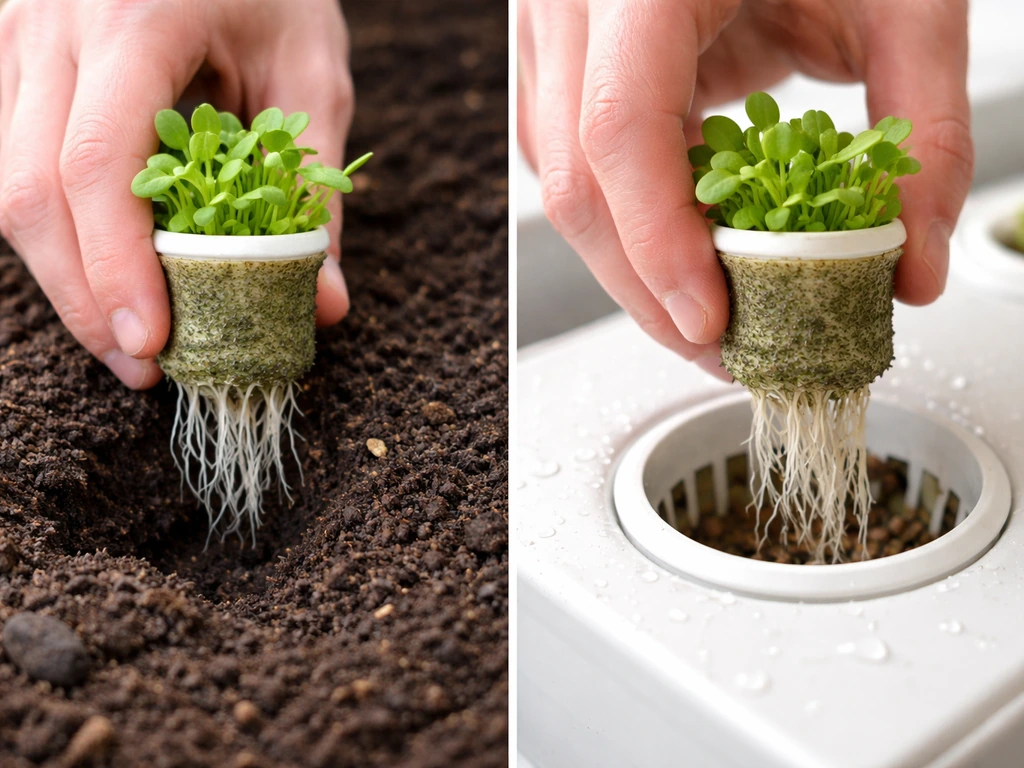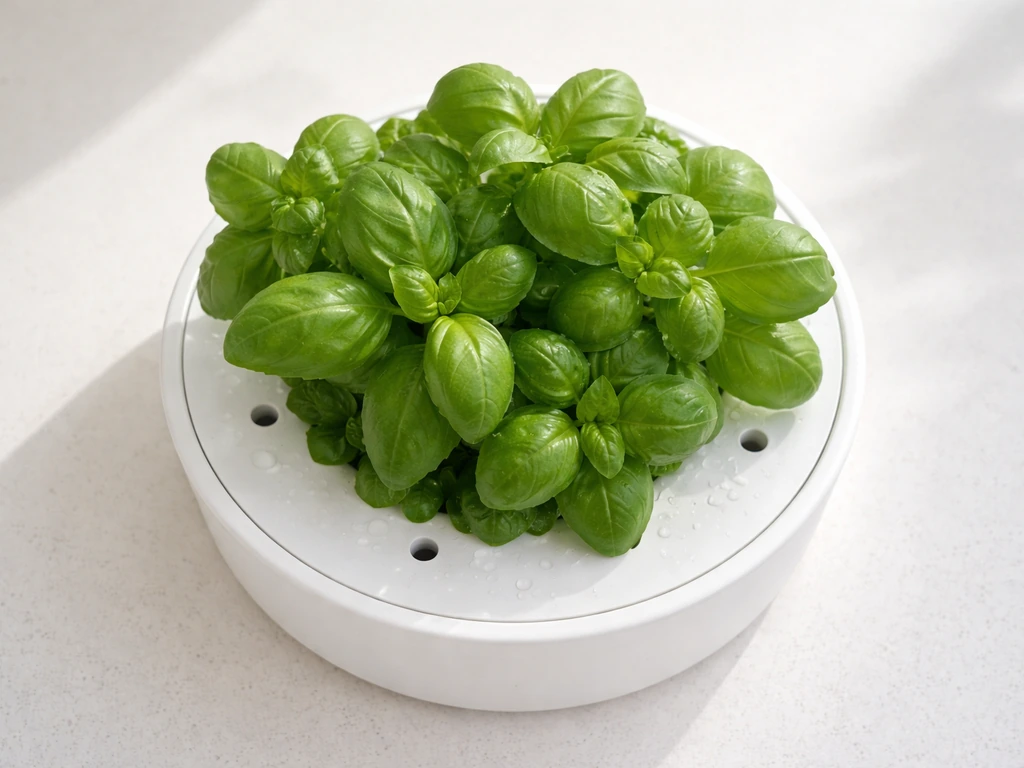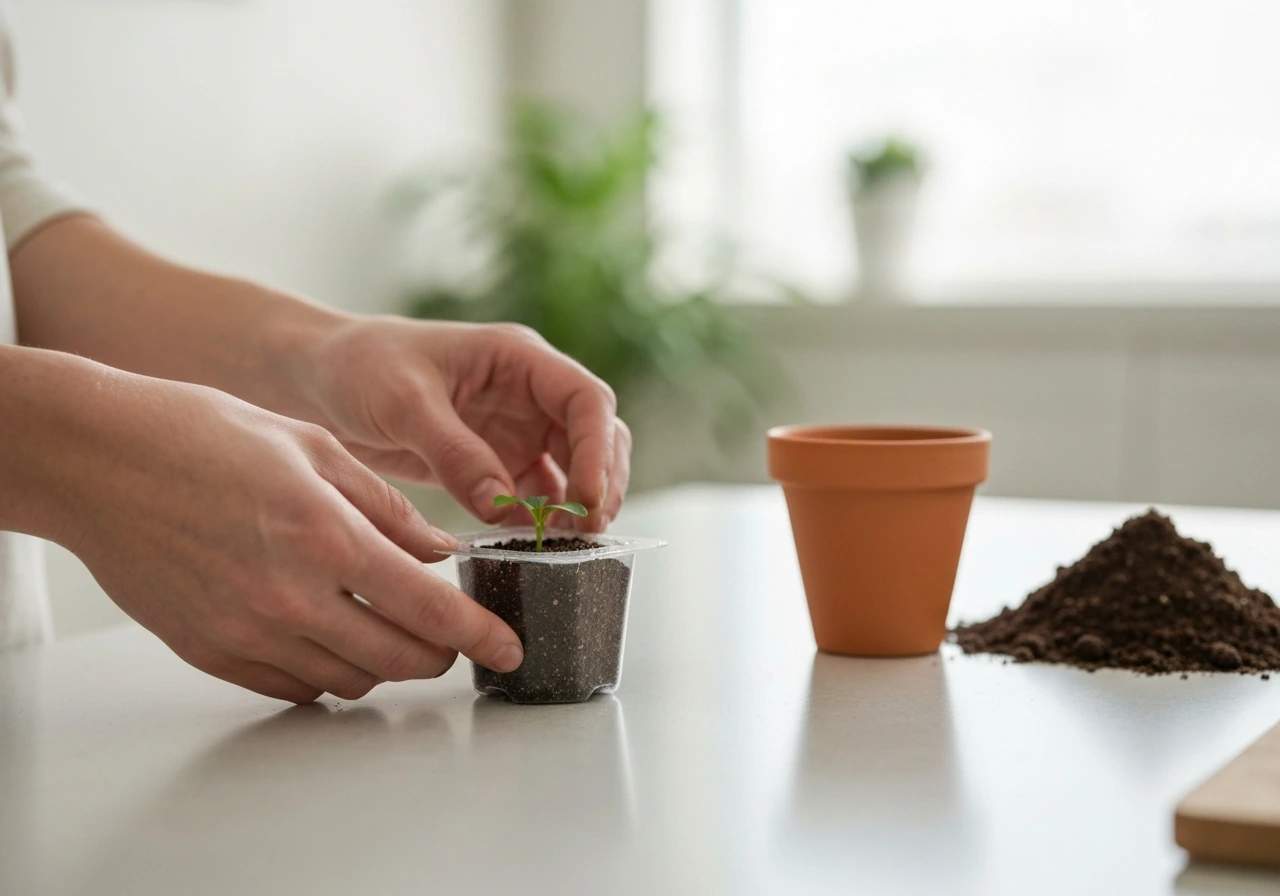
Click & Grow is not true hydroponics. It is a wick-based, soil-less growing system where pre-made plant pods contain a peat-based growing medium that stays moist through passive wicking from a water reservoir below. Roots grow into that medium, not into a free-flowing nutrient solution. That one distinction separates it from conventional hydroponics like DWC, ebb-and-flow, or NFT setups, where roots are directly bathed in or periodically flooded with nutrient-rich water.
Is Click and Grow Hydroponic? How It Works vs Real Hydroponics

Marcus Holloway
14 May 2026
What Click & Grow actually is
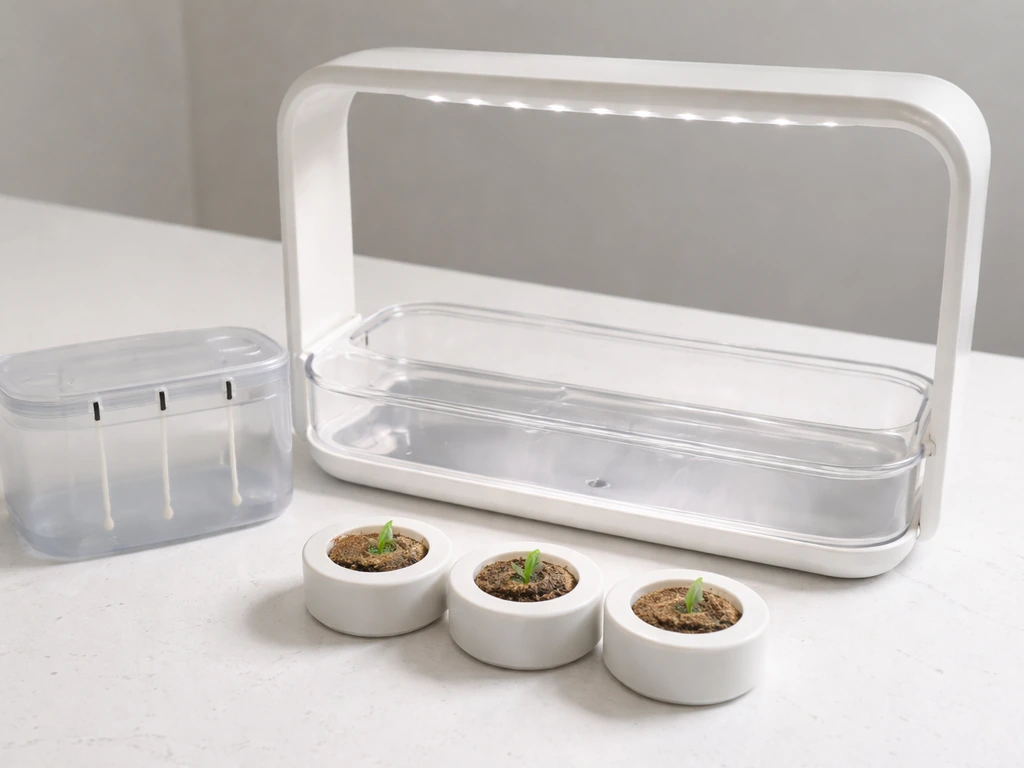
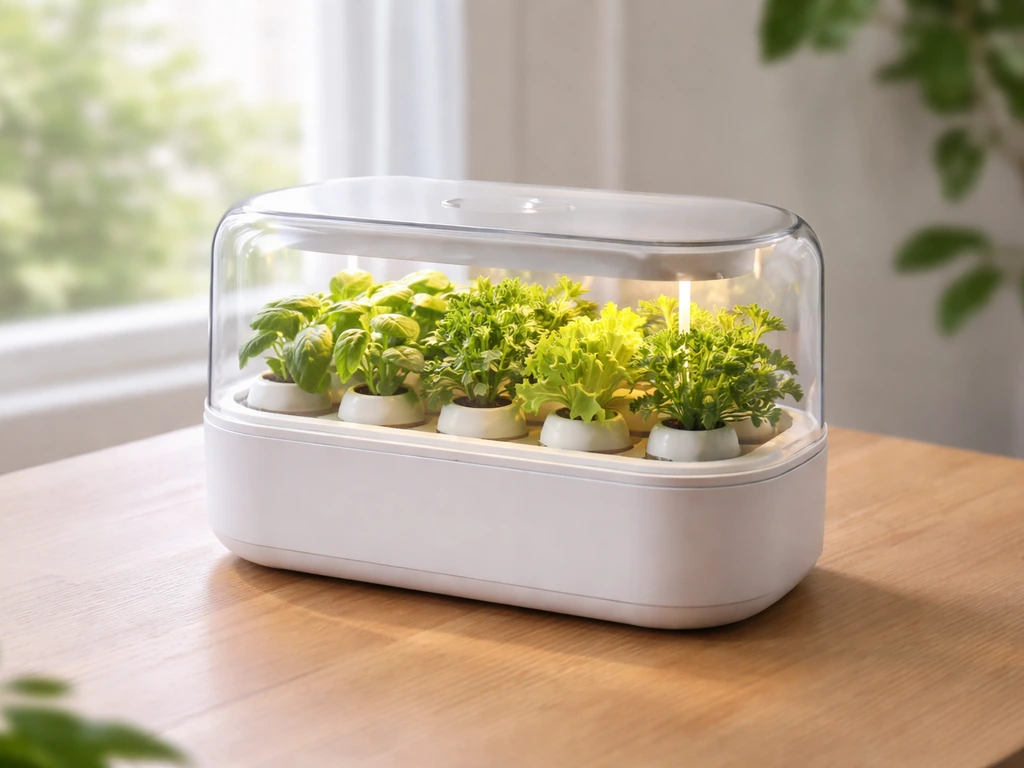
The system has three main parts: seed pods, a water reservoir (tank), and a grow chamber with a built-in LED light. The seed pods are the heart of it. Each pod is a small capsule that comes pre-loaded with seeds and a proprietary peat-based growing medium Click & Grow calls 'Smart Soil.' You drop the pod into a slot on the device, fill the tank with plain tap water, and the light handles the rest on a timer.
The connection between the water tank and each pod is handled by wicks. Click & Grow defines wicks as 'the little white sticks that transfer water from the tank to the plant pod.' Each pod sits in a holder above the tank, and the wick draws water upward by capillary action, keeping the medium moist without ever flooding it. There is no pump, no recirculating nutrient solution, and no active water movement. The water just wicks up passively when the medium dries out slightly.
The larger models, like the Click & Grow 25, add a modular tray system called Grow Flow trays. These support a continuous harvest cycle where you stagger plantings and swap trays weekly, so you're always pulling something from one slot while younger plants mature in others. Even at that scale, the core mechanism stays the same: wicks, pods, passive watering.
Is it really hydroponics?
Technically, no. True hydroponics means plant roots are supported in an inert medium (or no medium at all) and fed directly through a nutrient solution. In DWC, roots hang in oxygenated, nutrient-rich water. In ebb-and-flow, a tray floods with nutrients on a timer. In NFT, a thin film of nutrient solution constantly flows past exposed roots. The nutrients go straight to the roots with no soil chemistry acting as an intermediary.
Click & Grow works differently. The roots grow into the peat-based Smart Soil medium inside each pod. That medium holds moisture and contains a baseline level of nutrients already blended in at the factory. Water wicks up from the tank into this medium, but it is not a nutrient solution in the hydroponic sense. You are adding plain water. The nutrients in the pods are pre-measured and baked into the medium itself. Once those nutrients are depleted, the plant is done with that pod, because you cannot top up or adjust the nutrient concentration the way you would in any hydroponic system.
A closer comparison would be aeroponics or wicking hydroponics, but even those analogies stretch it. Aeroponics mists roots with nutrient solution in open air. Wicking hydroponics (the simplest true hydro method) uses a wick to draw liquid nutrient solution into a net pot or medium, but the solution itself is nutrient-charged. Click & Grow uses plain water and pre-loaded medium instead. The more accurate label is simply a self-watering, soil-less pod system.
What plants work best (and what doesn't)
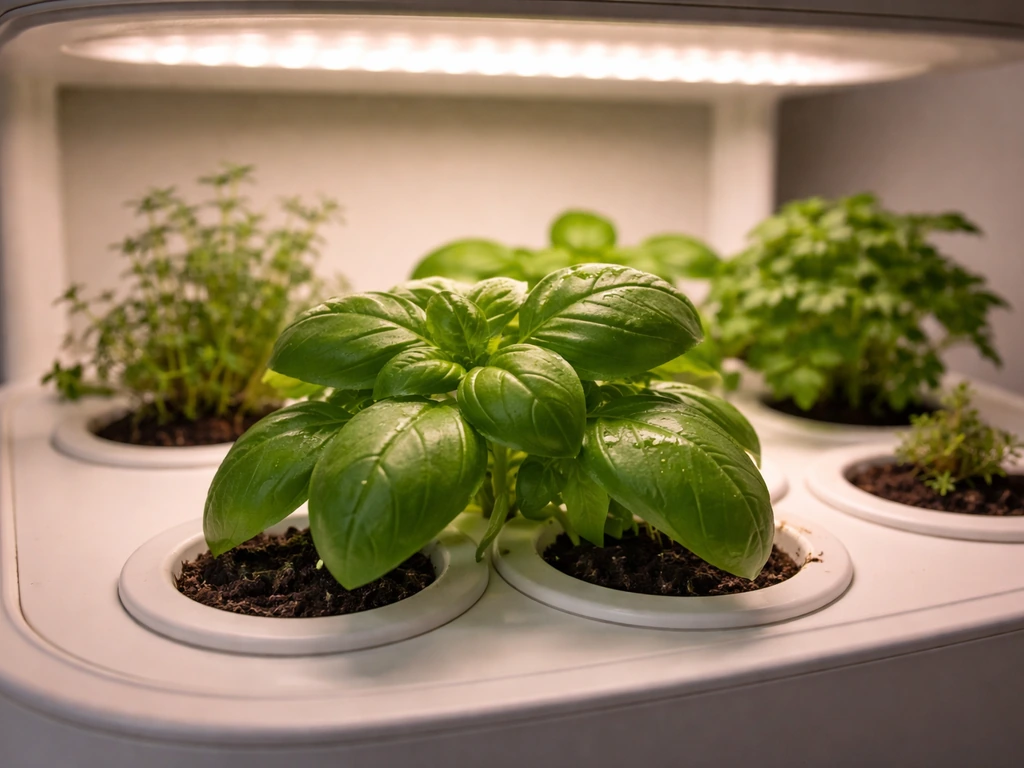
Click & Grow's pod catalog is heavy on herbs, leafy greens, and small fruiting plants, and that reflects what the system can actually support well. The pods are compact, the nutrient supply is fixed, and the grow space per plant is limited. Plants that stay small, have relatively short root systems, and don't need heavy feeding do well here.
- Basil, mint, cilantro, thyme, parsley: consistent performers, ready to harvest in 4 to 6 weeks
- Lettuce and spinach: fast germination, light feeders, great candidates for the continuous harvest strategy on the CG25
- Arugula, kale, Swiss chard: work well in the smaller 3 and 9-pod models
- Cherry tomatoes, peppers, and chili plants: possible in the larger units but expect smaller yields than a proper hydro setup would deliver
- Strawberries and mini edibles: Click & Grow sells specific pods for these and they work, with patience
Where it struggles: anything with a large root mass, long growing seasons, or high nutrient demands will hit the limits of the pod format. Indeterminate tomatoes, cucumbers, squash, large peppers, and root vegetables like carrots are either not suitable or require significant modification. The pod size physically restricts root expansion, and the fixed nutrient charge in the medium can't keep up with the demands of heavy-feeding fruiting plants over a full season.
If you're interested in using your own seeds rather than Click & Grow's branded pods, that is technically possible with empty pod cups, though the flexibility is more limited than people expect. Similarly, questions around whether you can repot plants started in Click & Grow pods into soil or a different container come up a lot, and the answer depends on the plant and how root-bound it has become by the time you move it.
Setting it up and running it day to day
First setup
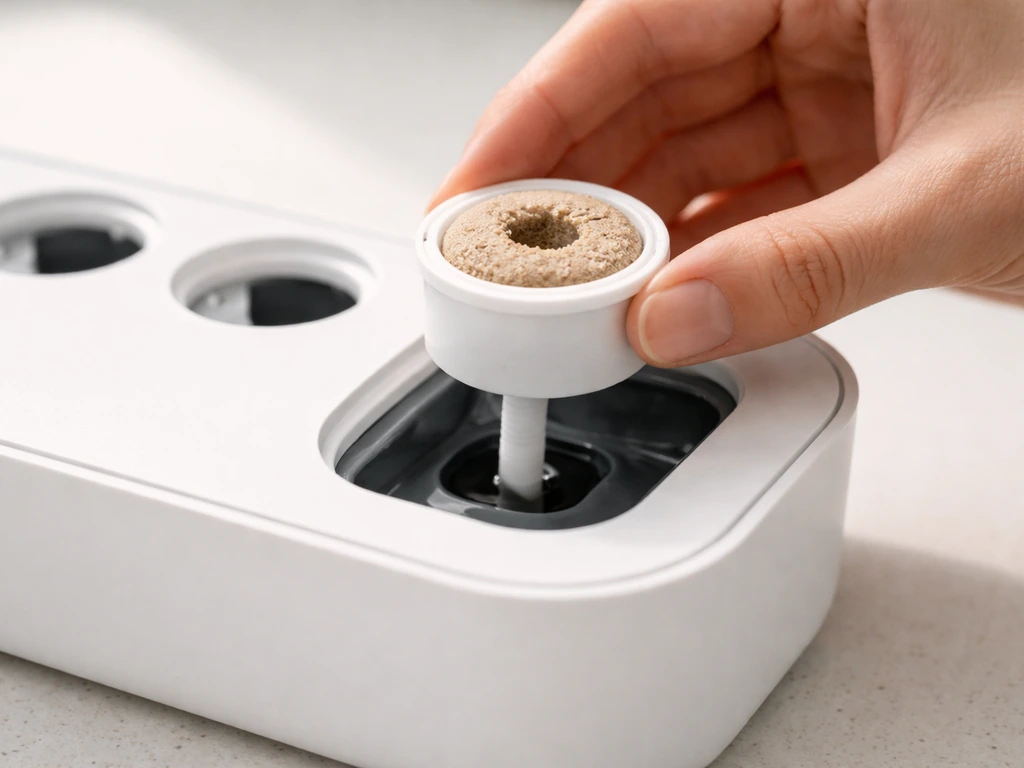
- Remove pods from packaging and peel back any foil cover on the germination opening
- Insert pods into the device slots, seating them fully so the wick makes contact with the tank float system below
- Fill the water tank to the MAX line with plain tap water (filtered is fine; distilled works but is unnecessary)
- Plug in the device. The light runs on an automatic timer, typically 16 hours on and 8 off
- Add the plastic pod dome covers that come with the unit to retain humidity during germination
- Expect germination in 3 to 14 days depending on plant species
Water refills and ongoing care
Refill the tank every 1 to 2 weeks depending on how fast plants are drinking. A single basil plant in a Smart Garden 3 can drain the tank in about a week during peak growth. Most devices have a water level indicator (a float or a visible window) so you're not guessing. Never let the tank run completely dry because the wicks can air-lock when they dry out fully, meaning they stop drawing water even after you refill. If pods feel bone dry despite a full tank, check that the wicks are seated properly (not too high, not too low) and that the pod is actually in contact with the wick.
Light placement matters more than most people realize. The LED arm on Click & Grow devices is adjustable. Keep it 2 to 4 cm above the tallest plant. As plants grow, raise it weekly. Seedlings that are too far from the light stretch (etiolate) and become weak and leggy. Once plants reach the arm's maximum height, it's usually a sign they've outgrown the space and are near the end of their productive pod life.
There is no nutrient mixing or pH management in the standard Click & Grow workflow. The nutrients are already in the pods and the pH of plain tap water is generally close enough (6.5 to 7.5) that it doesn't cause problems. This is intentional simplicity, and it genuinely works for the plant types the system is designed for.
Maintenance, troubleshooting, and where things go wrong
Common problems and fixes
| Problem | Likely cause | Fix |
|---|---|---|
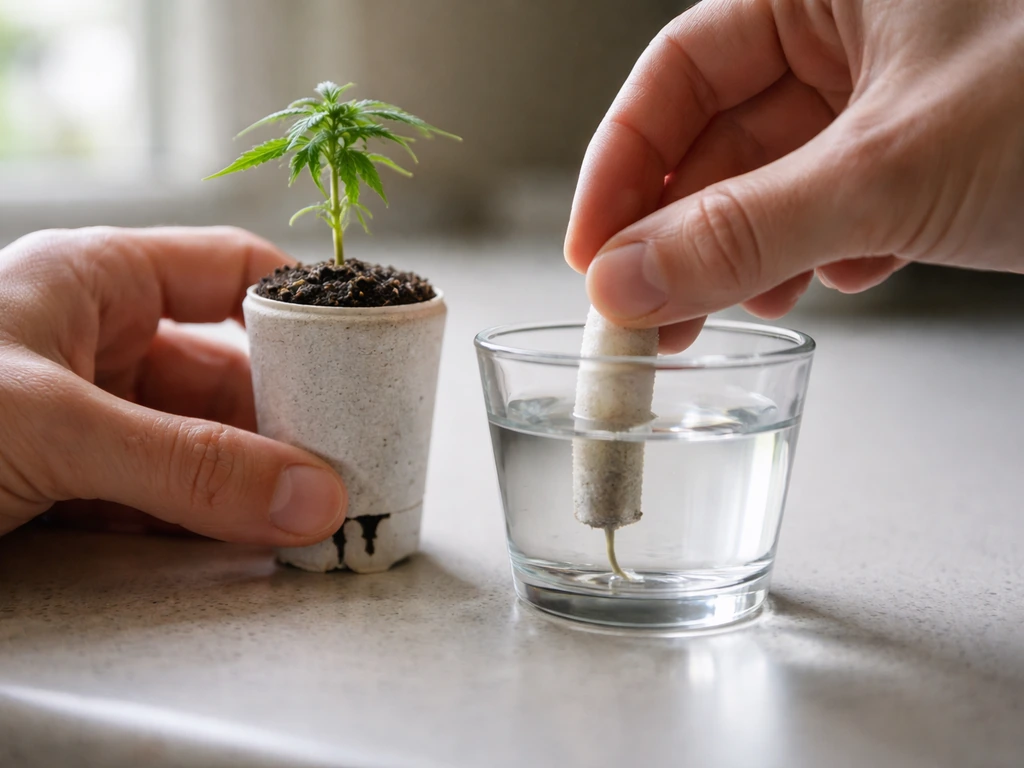
| Pods stay dry despite full tank | Wick is mispositioned or air-locked | Remove pod, re-wet the wick by dipping it in water, reseat at the correct depth |
| Seeds don't germinate after 2 weeks | Dome removed too early, pod too dry, or old/faulty pod | Check water level, replace dome, contact Click & Grow for a replacement pod |
| Plants grow leggy and pale | Light arm too far from canopy | Lower arm to 2 to 4 cm above plants, check light timer is functioning |
| Mold or algae on pod surface | Excess moisture, poor airflow, or dome left on too long | Remove dome after germination, improve room air circulation |
| Plants stop growing mid-cycle | Nutrients in pod exhausted, or rootbound | Harvest what you have and start a fresh pod; transplanting is sometimes possible but results vary |
| Water tank empties unusually fast | Evaporation in warm room or large plant demand | Refill more frequently, consider moving device away from heat sources |
The biggest maintenance task that gets skipped is cleaning between grow cycles. When you finish a pod cycle, pull the old pod out, rinse the pod holder and wick channel with clean water, and wipe down any mineral deposits in the tank. Calcium and mineral buildup from tap water will accumulate over months and eventually block wick performance. A quick soak with diluted white vinegar (about 1 part vinegar to 10 parts water) dissolves most scale. Wicks themselves are replaceable and Click & Grow sells them separately. Plan to swap them every 3 to 6 months of regular use.
Room environment matters more than the device specs imply. Click & Grow's own documentation acknowledges that ambient room conditions affect results. Ideal room temperature is 65 to 75°F (18 to 24°C). In very dry rooms (under 40% relative humidity), herbs can struggle to maintain moisture even with a full tank. In overly humid rooms, mold pressure on the pod surface increases. You don't need to buy environmental control equipment, but be aware that putting the device next to a heat vent or in a cold basement will affect results.
Click & Grow vs. DIY hydroponics: what's the same, what's different
If you've run a DWC bucket, an ebb-and-flow table, or even a simple Kratky jar, Click & Grow will feel like a toy by comparison. That's not an insult. It just serves a different purpose. Here's where the two worlds overlap and diverge:
| Feature | Click & Grow | DIY Hydroponics (DWC/NFT/Ebb-Flow) |
|---|---|---|
| Growing medium | Pre-loaded peat-based Smart Soil in pods | Inert media (rockwool, clay pebbles, coco) or bare roots |
| Nutrient delivery | Pre-loaded in pod, passive water wicking | Mixed nutrient solution, active pump or reservoir |
| Nutrient control | None (factory-set, fixed) | Full control: adjust concentration, pH, ratios |
| Water management | Refill plain water every 1 to 2 weeks | Regular reservoir top-ups, full solution changes every 1 to 2 weeks |
| pH management | Not required | Essential: target 5.5 to 6.5 for most crops |
| Light | Included LED, auto-timer, fixed spectrum | Grower-chosen: LED, HPS, CMH; customizable spectrum and cycle |
| Setup complexity | Plug and play, 5 minutes | Hours to days depending on system size |
| Plant variety | Limited to pod catalog (mostly herbs and greens) | Almost unlimited, including large fruiting plants and cannabis |
| Yield potential | Low to moderate for herbs/greens | High, especially for fruiting plants |
| Scalability | Limited (up to 25 pods on CG25) | Unlimited with additional hardware |
| Cost to start | Low ($60 to $200 for the device) | Moderate to high ($100 to $1,000+ depending on scale) |
| Best for | Beginners, kitchen herbs, low-maintenance growing | Experienced growers wanting yield, variety, and control |
The honest summary: Click & Grow shares the soil-less, indoor growing concept with hydroponics but removes every variable that makes hydroponics both powerful and demanding. You give up nutrient control, scalability, and plant variety. You gain a system that works reliably without much knowledge or effort. For someone who wants fresh basil on their counter and doesn't want to think about EC meters or reservoir changes, Click & Grow is genuinely good. For someone who wants to grow larger plants, maximize yield, or dial in a growth environment, it's a starting point at best.
Which path is right for you
If you want fresh herbs and greens at home with minimal effort: Click & Grow does exactly what it promises. If you are wondering whether you can transplant Click & Grow plants, you generally can, but you need to do it carefully because the roots are adapted to the pod’s peat-based Smart Soil medium. Buy the Smart Garden 9, stick to basil, lettuce, and herbs, follow the refill schedule, and you'll have a productive countertop garden in about 4 weeks.
If you want to grow larger plants, fruiting vegetables, or anything requiring more than the pod catalog allows: you'll quickly outgrow Click & Grow. A basic DWC or Kratky setup costs roughly the same and gives you far more flexibility in what you grow, how you feed, and how much you yield. The learning curve is steeper but the ceiling is much higher.
If you're already a hydroponic grower wondering whether Click & Grow fits into your operation: it doesn't replace a grow tent or a reservoir system. It might work as a seedling starter or a separate herb station, but the fixed-pod nutrient approach and passive watering will feel limiting compared to what you're used to. Questions like how long Click & Grow plants last or whether transplanting Click & Grow starts into a larger hydroponic system is viable are worth exploring if you want to get more mileage out of the device.
The bottom line: Click & Grow is a clever, genuinely useful beginner-friendly growing device, but calling it hydroponic is a stretch. It's a self-watering, soil-less pod system, and understanding that distinction helps you set the right expectations before you buy.
FAQ
Is Click & Grow “wick hydroponics,” or is it something else?
It’s closer to a self-watering wick system than to nutrient-film or recirculating hydroponics, but the key difference is that the wicks pull plain water into a pre-fertilized peat medium inside the pod. In true wick-style hydroponics, the wick typically feeds a nutrient-charged solution to the roots.
Can I use my own nutrients or adjust feeding in a Click & Grow pod?
Not in the standard setup. The nutrient charge is built into the pod’s Smart Soil, and the system is designed to be refilled with plain water. If you add external nutrients, you risk mismatching concentrations and you still cannot actively manage pH or EC.
Why do my pods look dry even when the tank is full?
Most often the wick is not making proper contact with the pod holder and the medium, or the wick is seated at the wrong height. Check that the wick sits where the pod’s base reliably touches it, then verify the tank level is high enough for capillary transfer to occur.
How do I prevent wick clogging and mineral scale buildup?
Use the cleaning routine after each cycle, and consider periodically flushing with clean water to reduce mineral deposits. If you have very hard tap water, vinegar soaks (about 1 part vinegar to 10 parts water) may need to be more frequent than the typical schedule, especially around the wick channel.
What happens if the water reservoir runs completely dry?
When wicks dry out fully, they can air-lock, so they may not restart water flow immediately even after refilling. To recover, re-wet the system carefully and confirm proper wick-pod contact, and plan to avoid letting the tank hit zero in the first place.
Do Click & Grow plants need any fertilizer changes over time?
No, because you can’t top up or replace the built-in nutrient charge. Once the pod’s medium is depleted, growth typically stalls and the pod is effectively finished, which is why many users replace pods on the device’s cycle schedule.
Are herbs and leafy greens the only plants that work well?
They are the best match, but small, non-fruiting or light-feeding plants generally do better than large fruiting vegetables. If you try higher-demand plants, expect slower growth, limited size from the pod constraints, and earlier depletion of the fixed nutrient supply.
Can I transplant a Click & Grow plant into soil or a larger hydroponic setup?
Usually yes, but treat it as a “reset” rather than a seamless continuation. The roots are adapted to the pod’s peat-based Smart Soil, so after transplanting, move gently, keep the new medium evenly moist at first, and be ready for a short recovery period.
What light distance should I use, and what if my plants get leggy?
Keep the LED about 2 to 4 cm above the tallest plant and raise it weekly as plants grow. Leggy, weak growth usually means the light is too far, so adjust the arm height early rather than waiting for obvious problems.
How long do Click & Grow plants last compared with real hydroponics?
They tend to be limited by the pod format and the fixed nutrient charge. Even when the plant still looks “alive,” performance usually declines once nutrients in the medium run low, so you may see shorter productive windows than in systems where you can refresh nutrients.
Is the tank refill schedule really plant-dependent?
Yes. A single plant can drain the reservoir much faster than multiple slower-growing plants, so rely on your device’s level indicator and observe consumption. Peak-drinking periods can require more frequent refills than the “every 1 to 2 weeks” general guideline.
What room conditions matter most for Click & Grow?
Relative humidity and temperature. Very dry rooms can make it harder for the medium to stay moist and reduce vigor, while very humid conditions can increase mold risk on pod surfaces. If you notice recurring surface growth, adjust placement and airflow rather than changing pods immediately.
Can I run Click & Grow next to a heater or in a basement?
It can work, but extremes reduce consistency. Heat vents and cold basements can shift temperature enough to affect growth rate and moisture balance, so use stable indoor conditions and avoid direct airflow from heaters.
Does Click & Grow work as a seedling starter for a larger hydro setup?
It can, especially for herbs and small seedlings, because you get controlled indoor germination and early growth with minimal effort. Plan to transplant at an appropriate size before root binding and nutrient depletion become limiting, since you cannot “keep feeding” the seedlings inside the pod indefinitely.