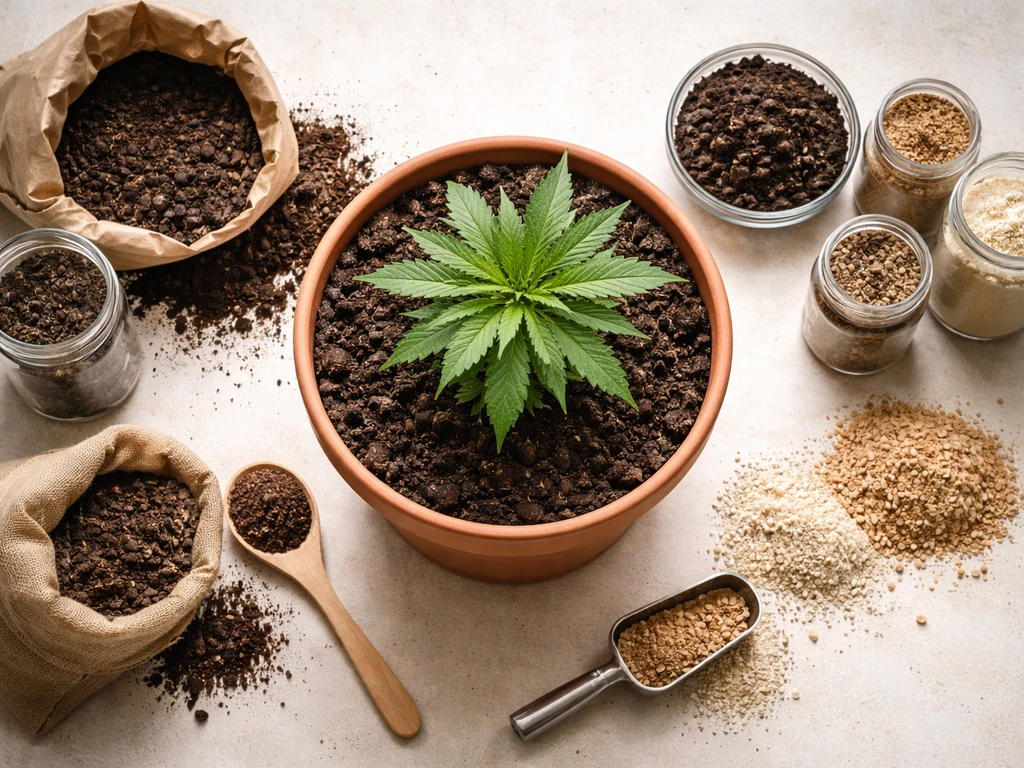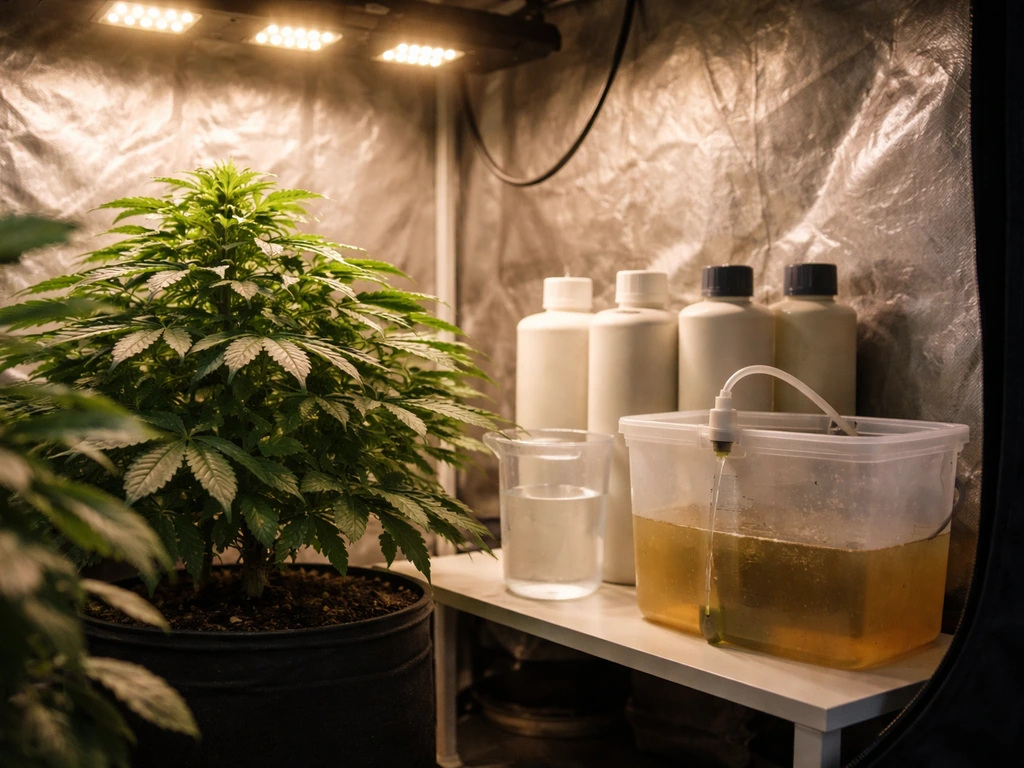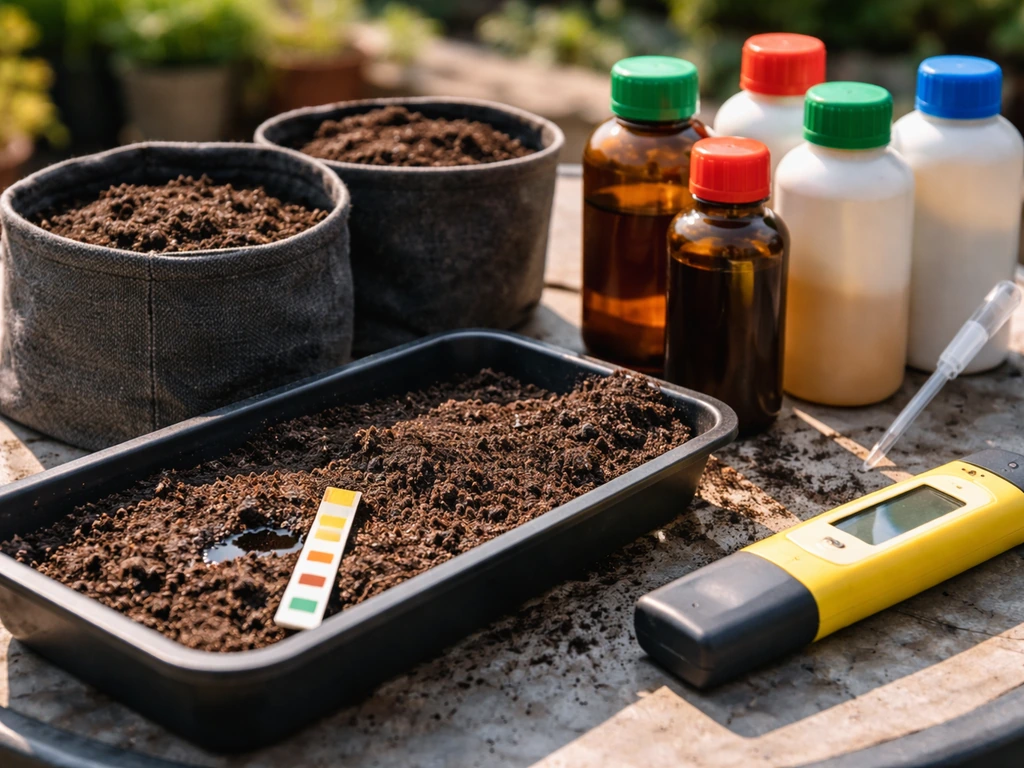
The best organic grow nutrients for most home growers are a combination of a quality worm castings or compost base, a balanced bottled organic liquid feed like General Organics BioThrive or BuildAFlower, and targeted supplements like fish hydrolysate for veg and high-phosphorus bat guano or kelp-based bloom boosters for flower. If you're in living soil, a dry amendment top-dress schedule (Down to Earth All Purpose into veg, Down to Earth Bloom into flower) with occasional compost teas gets you most of the way there with very little intervention. The right choice depends on your medium, your system, and what you're optimizing for, so this guide walks you through every piece of that decision. Once you know how nutrients vary by medium and growth stage, the next step is figuring out what nutrients does weed need to grow for your specific setup.
Best Organic Grow Nutrients Guide for Soil and Hydro Growers
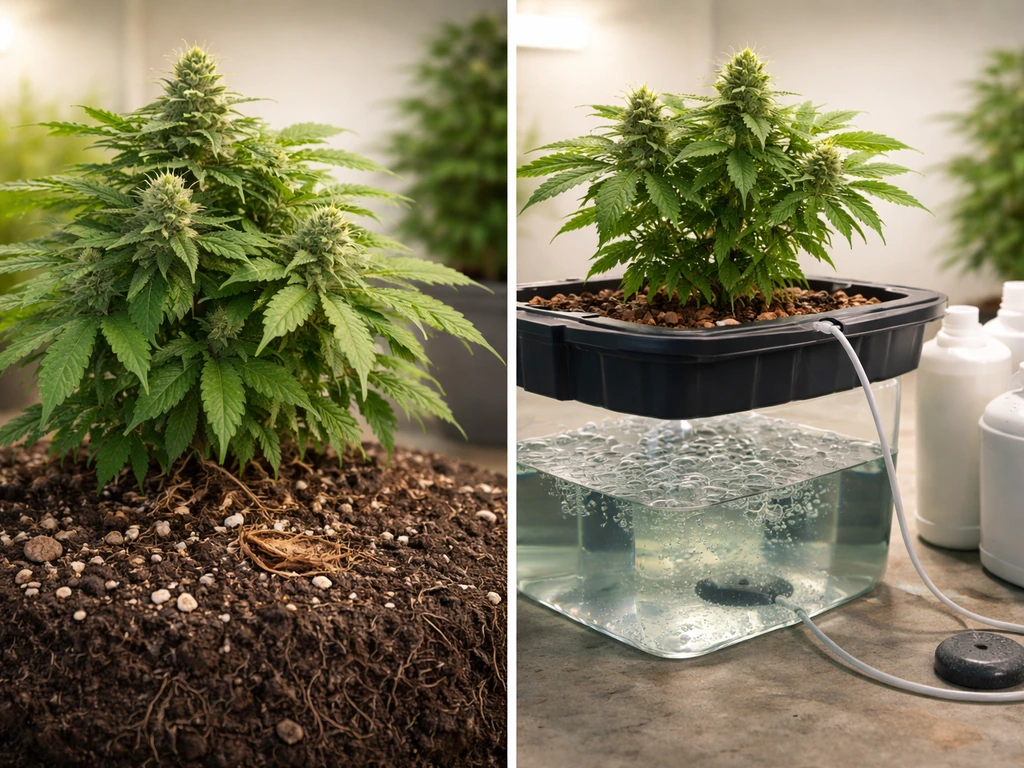
What 'organic grow nutrients' actually means (and what to watch out for)
When most growers search for organic nutrients, they're thinking about inputs derived from natural sources: fish meal, kelp, worm castings, bat guano, bone meal, humic acid, and so on. But the word 'organic' on a nutrient label doesn't automatically mean what you think it means, and it's worth understanding the labeling landscape before you buy anything.
The most reliable signal on a nutrient label is the OMRI Listed seal. OMRI (Organic Materials Review Institute) reviews products and certifies that they're allowed for use under USDA National Organic Program (NOP) regulations or Canada Organic Regime (COR) standards. That's a meaningful review process, not just marketing. However, OMRI won't list products that claim to be 'certified organic' or display the USDA Organic Seal unless the final product itself is certified to that standard. So a product can be OMRI Listed without being 'USDA Organic,' and a product labeled 'organic' may not have been reviewed by anyone meaningful.
The USDA organic framework has multiple tiers: ['100 percent organic,' 'organic' (at least 95% organic ingredients), 'made with organic \[ingredient\]' (at least 70% organic)](https://www.ams.usda.gov/rules-regulations/organic/labeling), and ingredient-level organic callouts for products below 70%. Each tier has different label rules. For nutrients, what matters practically is whether the inputs themselves are natural-source and free of synthetic chelates, synthetic pesticide residues, and prohibited substances. OMRI Listed is your easiest shortcut.
There are also two very different product categories that both get called 'organic nutrients': bottled liquid organics and dry/granular amendments. Bottled organics like fish hydrolysate or liquid kelp are pre-processed, water-soluble to varying degrees, and easier to dose precisely. Dry amendments like composted chicken manure, rock phosphate, or feather meal are slower-release, require soil biology to break down, and are largely incompatible with true hydroponic systems. Living soil growers often combine both. Neither approach is wrong, but they need different management strategies.
What 'organic' doesn't guarantee: organic nutrients can still cause toxicity if over-applied. Nitrogen toxicity from too much fish meal or blood meal is a real problem. pH lockout still happens. And some organic products, especially cheap 'natural' fish emulsions, contain high sodium levels that build up in containers over time. Always check the ingredient list, not just the marketing.
Best organic nutrients by growth stage: seedling through flower
Seedling stage (weeks 1-3)
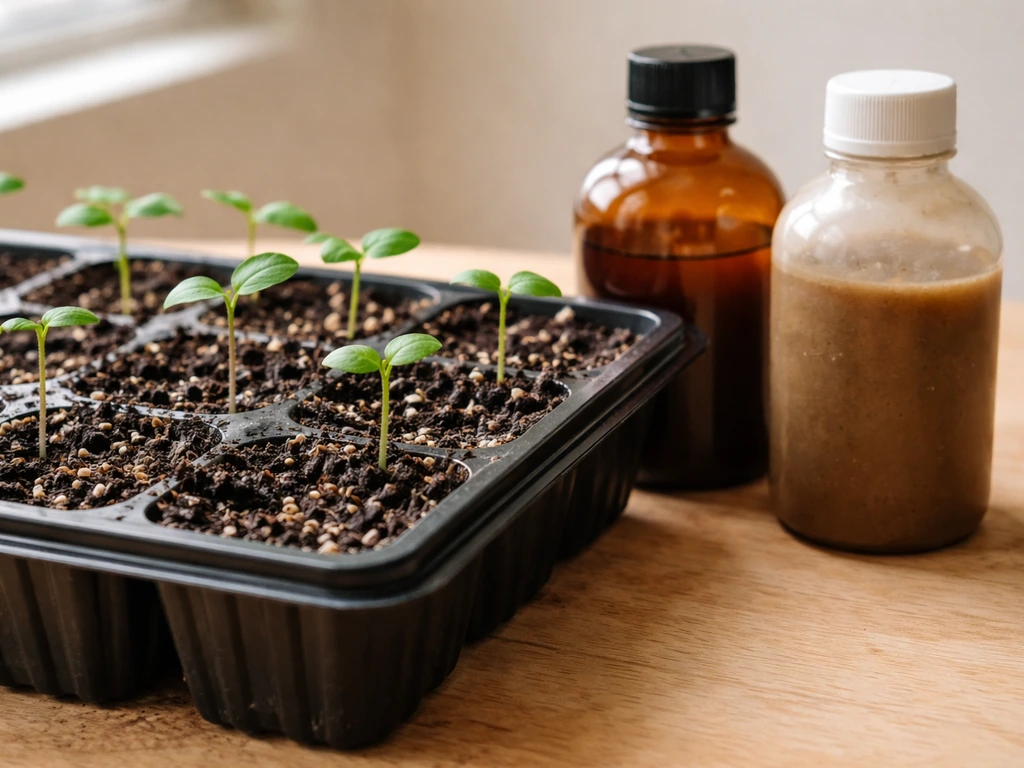
Seedlings need very little in the way of added nutrients. Their root systems are small and sensitive, and most quality starting mixes already contain enough organic matter to carry a seedling for the first two to three weeks. If you're using a neutral medium like a peat-perlite mix, a very light application of worm castings tea (one tablespoon of castings per liter of water, brewed 24-48 hours with an air stone) is enough to give seedlings a gentle biological boost without burning roots. Avoid any full-strength bottled feeds at this stage. If you see yellowing after week three, that's your signal to start a diluted veg feed at 25-50% of the label dose.
Vegetative stage (weeks 3-8 for most plants)
This is where nitrogen becomes the priority. Plants in active veg are building stems, leaves, and root mass, and organic nitrogen sources like fish hydrolysate, blood meal, and feather meal are your workhorses here. In soil, a dry amendment top-dress of Down to Earth All Purpose (4-6-2) or similar balanced blend every two to three weeks, combined with a weekly liquid fish hydrolysate feed (products like Neptune's Harvest Fish Hydrolysate 2-3-1 are widely respected), gives consistent growth without runaway nitrogen. In living soil with a healthy microbial community, you may not need any liquid feed at all during veg. Kelp meal or liquid kelp provides micronutrients and natural growth hormones (cytokinins) that support lateral branching. Humic acid products help nutrient uptake and root development throughout veg.
Transition to flower (weeks 8-10 typically)
The transition phase is where a lot of growers get it wrong. As plants flip to flowering, nitrogen demand drops and phosphorus and potassium demand rises. If you're using dry amendments, stop top-dressing your high-nitrogen veg blend and switch to a bloom-focused amendment like Down to Earth Bloom (4-8-4) or a high-phosphorus bat guano (e.g., Indonesian bat guano, around 0-12-0 to 0-13-0). Give this top-dress about a week before or at the same time as you trigger the light change, so the biology has time to begin breaking it down. For liquid organic feeds, start phasing out fish hydrolysate and introducing a bloom formula around the same time.
Flower stage (weeks 10 through harvest)
During full flower, phosphorus and potassium are the main drivers. Organic options here include high-phosphorus bat guano, rock phosphate, kelp-based bloom boosters, and blackstrap molasses (which feeds soil biology and supplies potassium, trace minerals). Products like Fox Farm Open Sesame or General Organics BioBud are solid bottled options for liquid-feeding during bloom. Stop molasses feeds in the last two weeks to avoid any residual sweetness effect on taste. Most growers also do a plain water flush or light enzymatic flush in the final one to two weeks to clear any organic residue from the root zone, though the science on flushing for quality is still debated. In living soil with well-developed biology, late-stage flushing is less critical.
Soil vs. hydroponics: using organic nutrients in each system
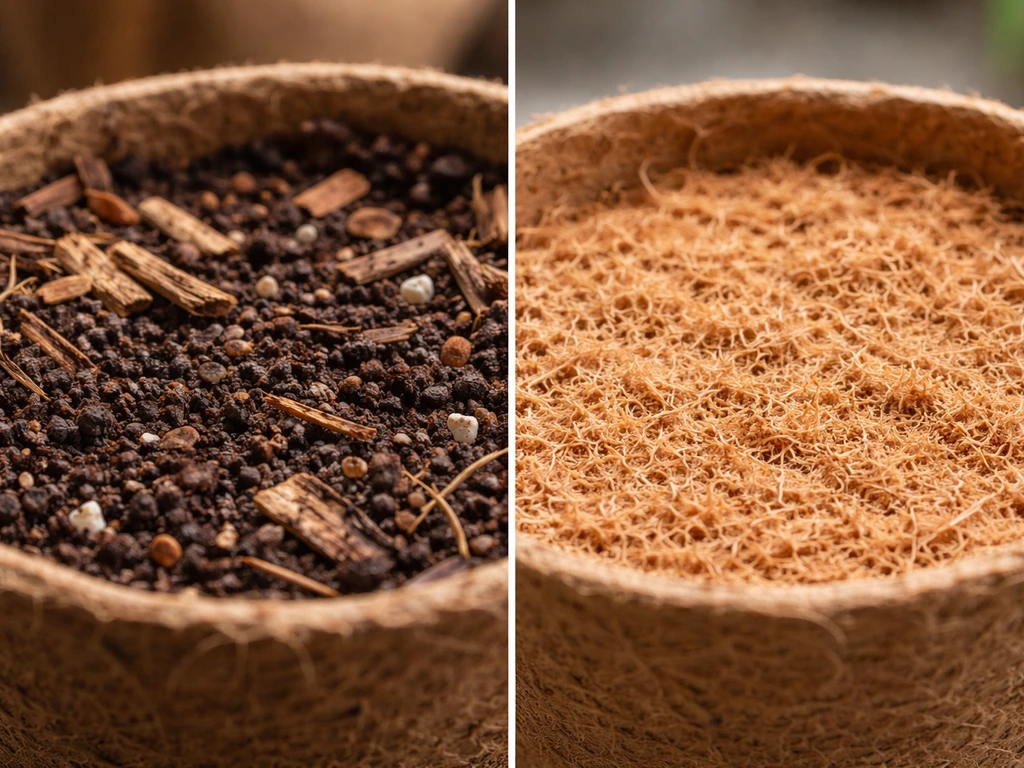
This is the most practical split you need to understand, because organic nutrients behave very differently depending on whether you have living soil biology to do the conversion work or whether you're relying on a water-based system.
In soil and living soil
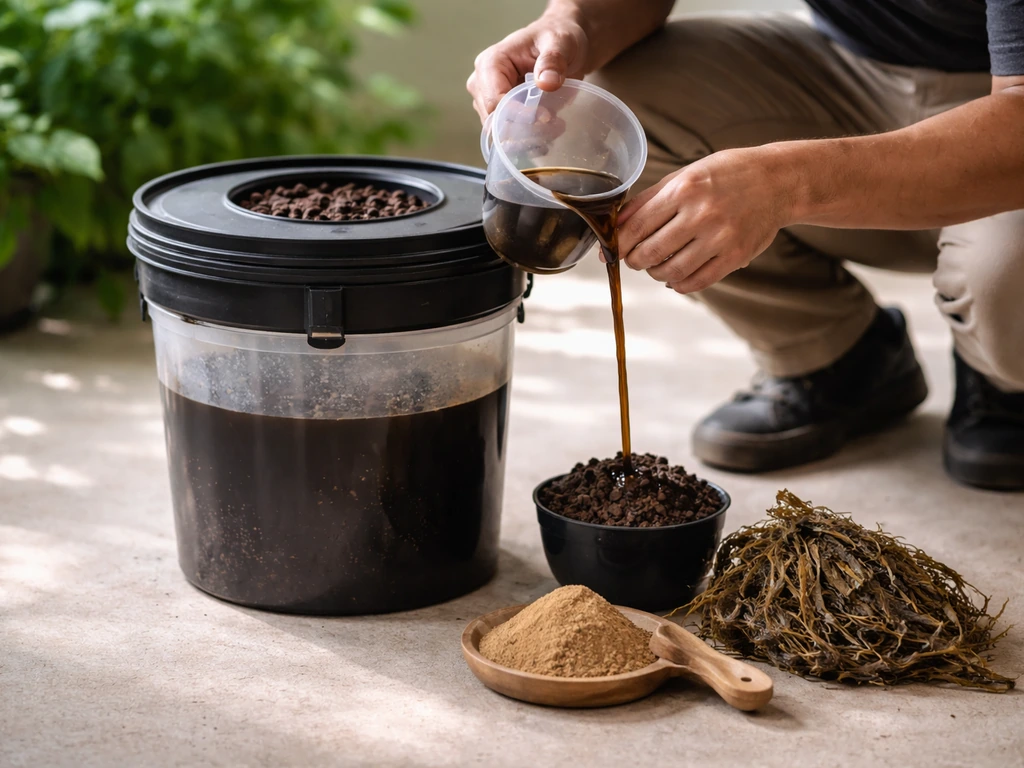
Soil is the natural home for organic nutrients. The microbial community, fungi, worms, and other organisms break down complex organic molecules into plant-available forms. This means organic inputs work best in a biologically active soil, not a sterile or inert medium. In a living soil setup, your primary strategy is building and feeding that biology: compost, worm castings, dry amendments, and compost teas do the heavy lifting, and the plants draw what they need when they need it. This is sometimes called 'feed the soil, not the plant.' Top-dressing (adding dry amendments to the soil surface every few weeks) and compost teas (aerated brews applied as a soil drench or foliar) are the main delivery methods. Bottled liquid organics can supplement when plants show deficiencies or during high-demand periods.
In coco coir and other inert media
Coco coir is biologically inert by default, which means dry amendments don't work the same way, since there's no established microbial community to break them down quickly. Most coco growers use bottled liquid organics and inoculate their coco with beneficial microbes (mycorrhizae, beneficial bacteria like Bacillus subtilis) to build some biology over time. Liquid fish hydrolysate, liquid kelp, and OMRI-listed bloom boosters work reasonably well in coco if you maintain correct pH (5.8-6.2 for coco). Coco-specific organic feeding is covered in more depth in the context of the best nutrients for coco coir, but the short version is: use liquid organics, inoculate with biologicals, and watch your pH more closely than you would in soil.
In true hydroponics (DWC, NFT, recirculating systems)
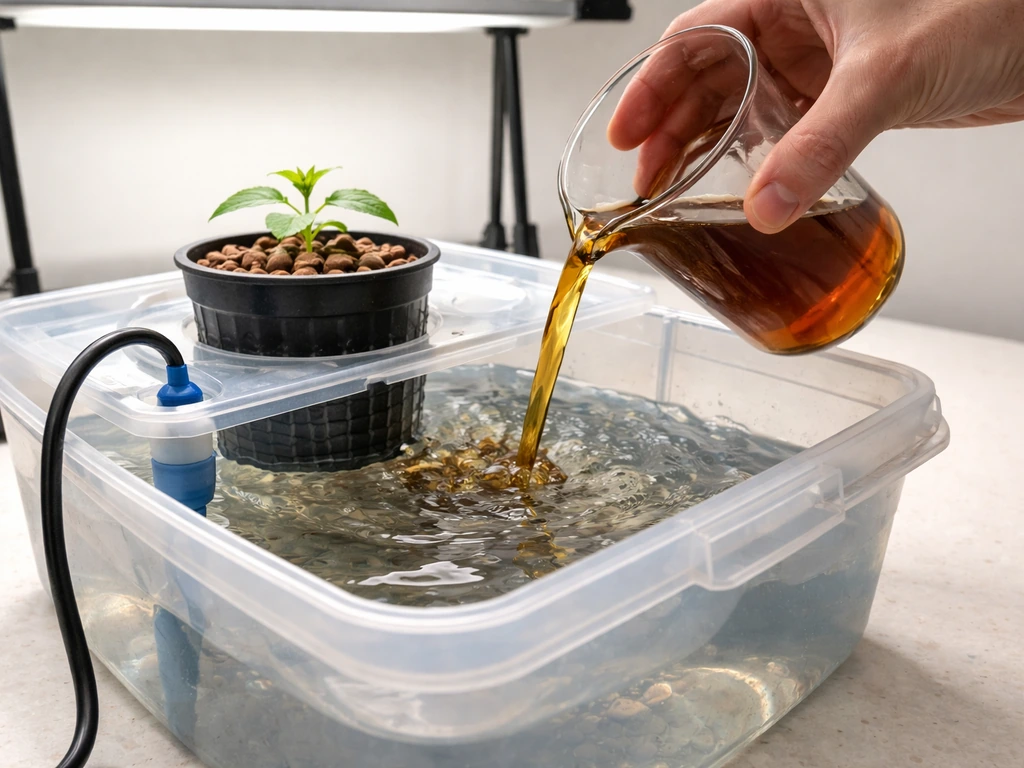
This is where organic nutrients get complicated. True hydroponic systems (deep water culture, nutrient film technique, recirculating systems) were designed for chelated synthetic nutrients that stay in solution cleanly. Organic inputs, especially fish hydrolysate and liquid guano products, introduce particulate matter and organic carbon that feeds bacterial biofilm growth in reservoirs and lines. This can clog equipment, create anaerobic zones, and crash pH rapidly. That doesn't mean you can't use organics in hydro at all, but you need to manage it carefully: use only fully clarified, water-soluble organic products (some brands like Ionic Organic or Bio-Bizz's Aqua-Flakes are designed for this), keep reservoir temps below 68°F to slow bacterial growth, change reservoir water more frequently, and run beneficial bacteria (Hydroguard/Bacillus amyloliquefaciens) to compete with harmful biofilm organisms. Many experienced hydro growers in this space treat their hydro systems as 'organic-assisted' rather than fully organic, using a base synthetic nutrient with organic supplements for flavor and biology. If you want truly organic feeding in a water-based system, a media-based recirculating setup (like flood-and-drain with hydroton or a drip system into an inert media) is more forgiving than DWC.
How to pick the right organic nutrient for your setup and goals
There's no single best organic nutrient for every grower. If you're aiming to choose the best organic nutrients for indoor soil grow results, start by matching nutrient type and dosing to your growth stage and soil biology. The right choice depends on a handful of practical variables. Work through these before you buy anything.
- Medium: Soil and living soil work with both dry amendments and liquids. Coco works best with liquid organics and biological inoculants. True hydro requires carefully selected, fully soluble organic products.
- Container size: Small containers (under 3 gallons) in organic soil can build up salts faster, so err toward lighter feeding and more frequent plain waterings. Large containers and in-ground beds buffer better and may need less frequent inputs.
- Light intensity: High-intensity setups (600W HPS, 1000W LED) drive faster metabolism and higher nutrient demand, especially in veg. Plants under lower light need less food overall. Match feed intensity to light intensity.
- Water quality: High-alkalinity tap water (above 150 ppm bicarbonates) will push soil pH up over time, which locks out micronutrients. If your tap water is hard, use a pH-down buffer (citric acid is OMRI-compatible) or filter with RO. Test your source water before dialing in your feed program.
- Goal: Maximum yield favors a more aggressive, structured feed schedule with targeted bloom boosters. Flavor and terpene quality favor lighter feeding, living soil biology, and minimal intervention especially late in flower. Faster cycles favor liquid organics over slow-release dry amendments.
- Plant type and strain: Heavy-feeding strains (many modern hybrids) can handle full-dose liquid organics. More sensitive or landrace-adjacent strains do better with lighter, soil-driven feeding. Outdoor plants in ground generally need less supplemental feeding than containerized indoor plants.
Dosing, pH, EC, and preventing lockout and toxicity
Start low and ramp up
The most common beginner mistake with organic nutrients is following the label dose from day one. Most commercial organic nutrient labels are written for mature, actively growing plants in full production. Start at 25-50% of the label recommendation during seedling and early veg, and ramp up to full dose only once the plant is established (typically after week 3-4 of veg). If you see healthy dark green growth, vigorous root development, and no tip burn, you're in the right range. If leaves are clawing downward or showing yellowed tips, back off.
pH management with organic inputs
Soil target: 6.0-7.0 pH, with 6.3-6.8 being the sweet spot for most nutrient availability. Coco target: 5.8-6.2. Hydro target: 5.5-6.5. Test your water's pH after mixing in organic nutrients, since fish hydrolysate and some liquid organics can shift pH meaningfully. For soil, test runoff pH rather than just input pH. If runoff is creeping above 7.0, apply a diluted citric acid or pH-down solution. If it's dropping below 6.0, a light garden lime top-dress (dolomite lime at around 1-2 tablespoons per gallon of soil) buffers upward. In living soil with active biology, pH tends to self-regulate more than in conventionally amended soil.
EC and PPM in organic systems
EC (electrical conductivity) measures dissolved salts in solution. With liquid organic nutrients, EC gives you a rough guide to how much dissolved material is in your feed water, though organic compounds don't conduct electricity as cleanly as synthetic salts. In soil, seedling feed water should be around 0.4-0.8 EC (200-400 PPM on the 500 scale). Veg feeds: 0.8-1.4 EC. Bloom feeds: 1.2-2.0 EC. In living soil, you often don't measure EC at all because you're feeding biology, not directly feeding the plant. In coco and hydro, EC is more important to monitor. Measure runoff EC periodically: if runoff EC is significantly higher than input EC (more than 0.5 above), there's salt buildup in the medium and you need plain water feeds to flush it down.
Reading runoff and preventing toxicity
Collect the first 10-20% of runoff after watering and test pH and EC. If runoff pH is outside your target range or EC is rising steadily week over week, adjust your inputs. For organic toxicity (most often nitrogen from over-applied fish or blood meal), the fastest correction in soil is flushing with 2-3x the container volume of plain, pH-adjusted water, then holding off on nitrogen-heavy inputs until growth color normalizes. In living soil, dilute compost tea applications can help restore microbial balance after a flush.
Troubleshooting deficiencies, excesses, and pH lockout with organic inputs
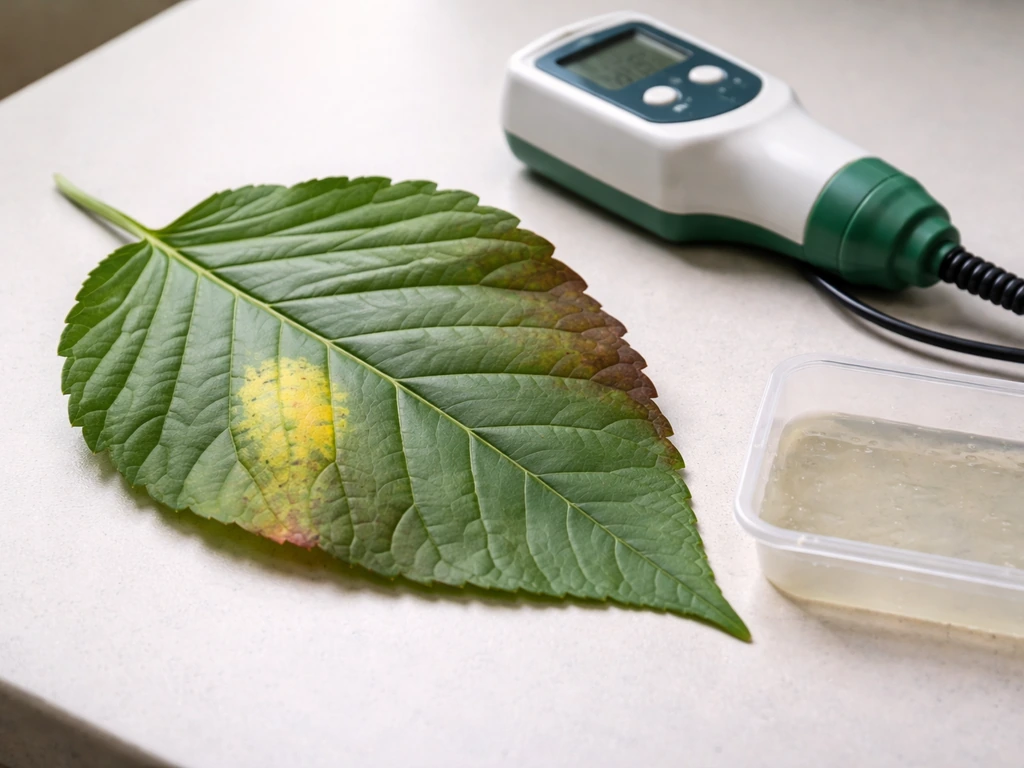
Most nutrient problems with organics come from one of three places: pH lockout, biology not activating dry amendments fast enough, or over-application of liquid organics. Here's how to diagnose and fix the most common issues.
| Symptom | Most Likely Cause | Organic Correction |
|---|---|---|
| Yellowing lower leaves, moving upward | Nitrogen deficiency | Fish hydrolysate drench, worm castings tea, blood meal top-dress (slow) |
| Dark green leaves, clawed downward | Nitrogen excess (toxicity) | Flush with plain water, withhold nitrogen inputs for 1-2 weeks |
| Purple stems, slow growth in early veg | Phosphorus deficiency or pH too low | Check and raise pH, apply bat guano or rock phosphate |
| Interveinal yellowing on new growth | Iron or manganese lockout (pH too high) | Lower pH, apply fulvic acid to aid uptake, humic acid drench |
| Brown leaf edges, curling upward | Potassium deficiency or excess | Check EC and flush if excess; apply kelp or wood ash for deficiency |
| Pale yellow new growth, stunted | pH lockout or calcium/magnesium deficiency | Check pH first; apply OMRI-listed CalMag or dolomite lime |
| White crust on soil surface | Salt buildup | Flush container, reduce feed frequency, increase plain waterings |
| Slow growth despite feeding | Low soil biology activity | Apply compost tea, add worm castings, check soil temperature (aim 65-75°F) |
One thing I want to stress: always check pH before assuming a nutrient deficiency. The majority of mid-grow deficiencies I've seen are pH-related lockout, not actual absence of nutrients. Fix the pH first, wait a few days, and see if the plant responds before adding more inputs. Adding more nutrients to a locked-out plant just makes the problem worse.
For organic systems, enzymatic products like Hygrozyme or similar cellulase-based enzyme products help break down root matter and organic buildup in the medium, which prevents anaerobic pockets and associated pH swings. These are especially useful in late flower and during any flush.
Feeding schedules: a practical week-by-week approach
What follows is a general-purpose organic feeding schedule for a containerized indoor grow in a quality amended soil mix. If you're looking for the best indoor grow nutrients, you can use this schedule as a starting point and adjust based on your growth stage and medium general-purpose organic feeding schedule. Adjust timing based on actual plant size and visual cues, not just the calendar. These are guidelines, not rules.
| Week | Stage | Feed Type | Inputs | Notes |
|---|---|---|---|---|
| 1-2 | Seedling | Plain water or very light tea | Worm castings tea at 25% strength | Most starter mixes have enough; don't push nutrients |
| 3-4 | Early veg | Liquid organic feed + biologicals | Fish hydrolysate at 50% dose, mycorrhizae inoculant, kelp extract | Begin pH/runoff monitoring |
| 5-6 | Active veg | Full liquid + dry top-dress | Fish hydrolysate at 75-100%, Down to Earth All Purpose top-dress, humic acid | Increase feeding frequency if growth is vigorous |
| 7-8 | Late veg / pre-flower | Transition blend | Reduce nitrogen, introduce bloom booster at 25%, kelp, molasses | Watch for signs of flip response; begin switching inputs |
| 9-10 | Flower transition | Bloom-focused | Bat guano tea or liquid bloom at 50%, down to Earth Bloom top-dress, kelp | Top-dress should go on 5-7 days before or at light flip |
| 11-13 | Early flower | Full bloom feed | Liquid bloom booster at full dose, molasses, kelp, CalMag if needed | Monitor for phosphorus deficiency and correct pH |
| 14-16 | Peak flower | High-P/K feed | Bloom booster, potassium sulfate or wood ash, enzymatic products | Reduce nitrogen to near zero |
| Final 1-2 weeks | Ripening/flush | Plain water or enzyme flush | Enzyme product (Hygrozyme), plain pH-adjusted water | Optional flush; most important is stopping heavy feeds |
If you're running a living soil setup, simplify this considerably: amend your soil before planting with a complete dry amendment blend (something like Craft Blend or similar all-in-one), top-dress at weeks 4 and 8 with stage-appropriate amendments, and water with plain water or compost teas the rest of the time. The biology does the heavy lifting. If you're growing in coco or running a hybrid organic-hydro approach, you'll use the liquid portion of this schedule exclusively and feed at every watering or every other watering rather than weekly.
Top organic nutrient products and how to compare them
There are dozens of organic nutrient lines on the market. Here's a realistic breakdown of the most widely used options, what they actually deliver, and where they make sense.
| Product / Brand | Best For | Format | OMRI Listed | Standout Feature | Limitation |
|---|---|---|---|---|---|
| General Organics BioThrive Grow + Bloom | Soil and coco; beginner-friendly | Liquid | Yes | Clean, consistent formula; easy to dial in | Moderate nutrient density; may need supplements in flower |
| Fox Farm Organic Trio (Grow Big, Big Bloom, Tiger Bloom) | Soil; intermediate growers | Liquid | Big Bloom yes; Grow Big/Tiger Bloom are synthetic-derived | Big Bloom is excellent as organic base; trio gives flexibility | Grow Big and Tiger Bloom are not fully organic |
| Neptune's Harvest Fish Hydrolysate 2-3-1 | Veg nitrogen source; soil and coco | Liquid | Yes | Cold-processed, full-spectrum micronutrient profile | Strong smell; not ideal for indoor use without good ventilation |
| Down to Earth All Purpose 4-6-2 | Soil veg top-dress | Dry granular | Yes | Balanced for veg; widely available | Slow release; not useful in coco or hydro |
| Down to Earth Bloom 4-8-4 | Soil bloom top-dress | Dry granular | Yes | Reliable phosphorus boost from natural sources | Same slow-release limitation as All Purpose |
| Bio-Bizz All-Mix + Bio-Grow/Bio-Bloom | Soil and coco; popular in EU/UK market | Soil + liquid | Yes (Bio-Bizz products) | Complete ecosystem approach; Bio-Heaven enzyme additive | Can be expensive; Bio-Bloom is low NPP, needs supplements |
| Roots Organics Buddha Grow + Buddha Bloom | Soil; flavor-focused growers | Liquid | Yes | Emphasis on terpene-supporting micronutrients | Pricier per-feed than competitors |
| Recharge (Real Growers) | Living soil inoculant/tea replacement | Soluble powder | Yes | Highly concentrated biology + humic; huge colony counts | Supplement, not a standalone feed; must be used fresh |
| Craft Blend (Build-A-Soil) | Living soil all-in-one amendment | Dry granular | Yes | Designed for no-till living soil; comprehensive mineral profile | Requires established biology to perform; not for sterile media |
What to actually look for when comparing brands
- OMRI Listed status: non-negotiable if you want verified organic inputs. Check the OMRI database, not just the product label.
- Ingredient transparency: good organic nutrients list actual inputs (fish meal, kelp, bat guano, etc.), not just vague 'natural organic matter' language.
- NPK numbers and their source: a 2-3-1 from fish hydrolysate feeds differently than a 2-3-1 from processed feather meal. Source matters for release rate and microbial response.
- Compatibility with your system: dry amendments are soil-only. Liquid organics vary in how cleanly they mix; some have high particulate loads that clog drip emitters.
- Smell and practicality: fish-based products smell. If you're growing indoors in a shared space, this is a real consideration. Bio-stimulant products and humic/fulvic acids are essentially odor-free.
- Cost per feed vs. cost per bottle: some concentrates look expensive but deliver more feeds per liter than cheaper, more dilute products. Calculate cost per watering, not cost per bottle.
If you want a simple starting point without overthinking it: get General Organics BioThrive Grow and Bloom (fully OMRI Listed, easy to dial in), add Neptune's Harvest Fish Hydrolysate for a nitrogen boost in veg, and supplement with a dry bat guano or Down to Earth Bloom top-dress during flower in soil. Add Recharge or a similar biological inoculant monthly. That setup covers the vast majority of home growers well, works in soil and coco, and won't break the bank. From there, you can specialize based on what your plants and your palate tell you.
If you're also exploring synthetic-assisted or fully synthetic options for comparison, or want to understand how organic strategies stack up against conventional nutrient lines, the broader context of the best cannabis grow nutrients covers that trade-off in detail. And if you're specifically running a coco setup, the coco-specific nutrient guidance is worth reading alongside this, since coco organic feeding has its own quirks around pH buffering and biological inoculation that differ from true soil.
FAQ
Can I use only compost or worm castings and skip bottled organic liquids?
Yes, but only if you treat it as an ingredient, not a full replacement. Seedlings generally do not need a full fertilizer program, so if you top-dress compost or worm castings, keep it very light and avoid adding additional fish meal or bat guano at the same time. If you later need to start feeding, switch to a gentle liquid at 25 to 50% dose rather than layering multiple amendments early.
How do I avoid double-feeding when using an all-in-one organic nutrient and an extra supplement?
For true “all-in-one” inputs, the safest approach is to top-dress in small amounts and wait to see response before adding more. In practice, many growers overdo organics because they apply both a dry balanced blend and a weekly liquid program. If you choose an all-in-one, reduce or pause extra nitrogen-heavy liquids (like fish hydrolysate) until you confirm the plant is responding.
When should I start testing runoff pH and EC, and how do I know if the readings are meaningful?
Don’t rely only on runoff numbers from the first day. Organic salts and pH shifts can show up after the medium fully wets, so test runoff after a consistent irrigation pattern, typically after you have established your watering routine. If runoff pH swings wildly early on, it can be normal, but steadily drifting EC (rising week over week) is the stronger sign of buildup.
Is it ever okay to use compost tea if it looks or smells “off”?
In most cases, cloudy or foul-smelling solutions indicate you should not use the brew. Compost teas and aerated compost brews should smell earthy, not rotten. If your tea foams excessively, has visible scum, or smells like sour sewage, skip it, because anaerobic activity can worsen root-zone problems.
Do I really need to flush with organic nutrients before harvest?
Organic residue in late flower depends on product type and application timing. A common mistake is continuing nitrogen or molasses too close to harvest, which can increase harshness and microbial activity in the medium. A practical rule is to stop molasses in the last two weeks, reduce or pause nitrogen-heavy inputs when color and pistil development are underway, and prioritize pH and EC control over “extra flushing.”
What are the signs of organic nitrogen toxicity, and what should I do first?
Yes, even in organic grows. If you see leaf clawing, excessive dark green growth with little stretch, and tip burn, reduce nitrogen inputs immediately and check pH first. The fastest fix in soil is often plain, pH-adjusted water with a larger volume pour, then holding nitrogen-heavy feeds until color normalizes.
Can I use the same dry organic top-dress routine in coco that I use in soil?
In coco, you can get away with organics, but the biggest control lever is pH stability and biological support. Make sure your coco is properly buffered or well-prepared, then use OMRI-listed liquid organics and keep frequent pH checks because fish and some liquid organics can drift pH. If you are using dry amendments in coco, expect slower results and more variability than in true living soil.
What changes if I try “fully organic” feeding in DWC or recirculating hydro?
Yes, but it changes the job you are doing. If you are running hydro and you add true organic particulates, you risk clogging and biofilm problems in reservoirs and lines. To stay safer, use clarified, water-soluble organic products, keep reservoir temperatures cooler, change water more frequently, and run beneficial bacteria to outcompete unwanted biofilm organisms.
How should I transition from veg organics to bloom organics without stalling?
The safest guideline is to start at a lower dose when transitioning, then ramp only if your plants respond. As you move from veg to bloom, stop high-nitrogen inputs at the flip, then introduce bloom-oriented nutrition at the same time as (or just before) the light change. This lets biological conversion and uptake catch up before the plant’s phosphorus and potassium demand peaks.
Are enzymatic products and foliar teas a substitute for fixing pH and nutrient strength?
Generally, spraying enzymes or compost teas can help with certain root-zone buildups, but don’t make it your default solution for leaf problems. Foliar feeding targets leaves, not blocked roots, so if the issue is pH lockout or overfeeding in the medium, enzymes alone won’t fix it. Use enzyme products as a support step after you correct pH and dosing.
If my plant has a problem, should I change nutrients immediately or troubleshoot first?
One common approach is to keep it simple and consistent rather than chasing every deficiency symptom. If the runoff pH is within range and EC is stable or rising, adjust dosing before changing product lines. If you already corrected pH and still see persistent issues for more than about a week, then consider a targeted supplement (for example, kelp-based micronutrients for general support) instead of adding multiple new nutrients at once.
How do I pick the best organic nutrients for my goal, faster growth versus best flavor?
Often you can, but the “best organic grow nutrients” choice depends on your goal. If you are optimizing for smoothness and flavor, use bloom-focused inputs earlier and avoid late molasses and heavy nitrogen. If your goal is faster growth, prioritize balanced, consistently dosed veg nutrition and ensure your medium biology is active, because organic products can lag if the soil system is not converting them yet.