Yes, you can grow an enormous variety of plants hydroponically, but not everything is worth the effort. The honest answer is that leafy greens, herbs, tomatoes, peppers, cucumbers, and cannabis all thrive in hydroponic systems. Root vegetables, large fruiting trees, and sprawling vines are technically possible but practically painful. If you want to know what you can grow hydroponically in a realistic home setup, the list is longer than most people expect, and getting started is simpler than it looks.
Can You Grow Anything Hydroponically? What Works Best at Home
Marcus Holloway
18 Apr 2026
What you can grow hydroponically (and what's not worth it)
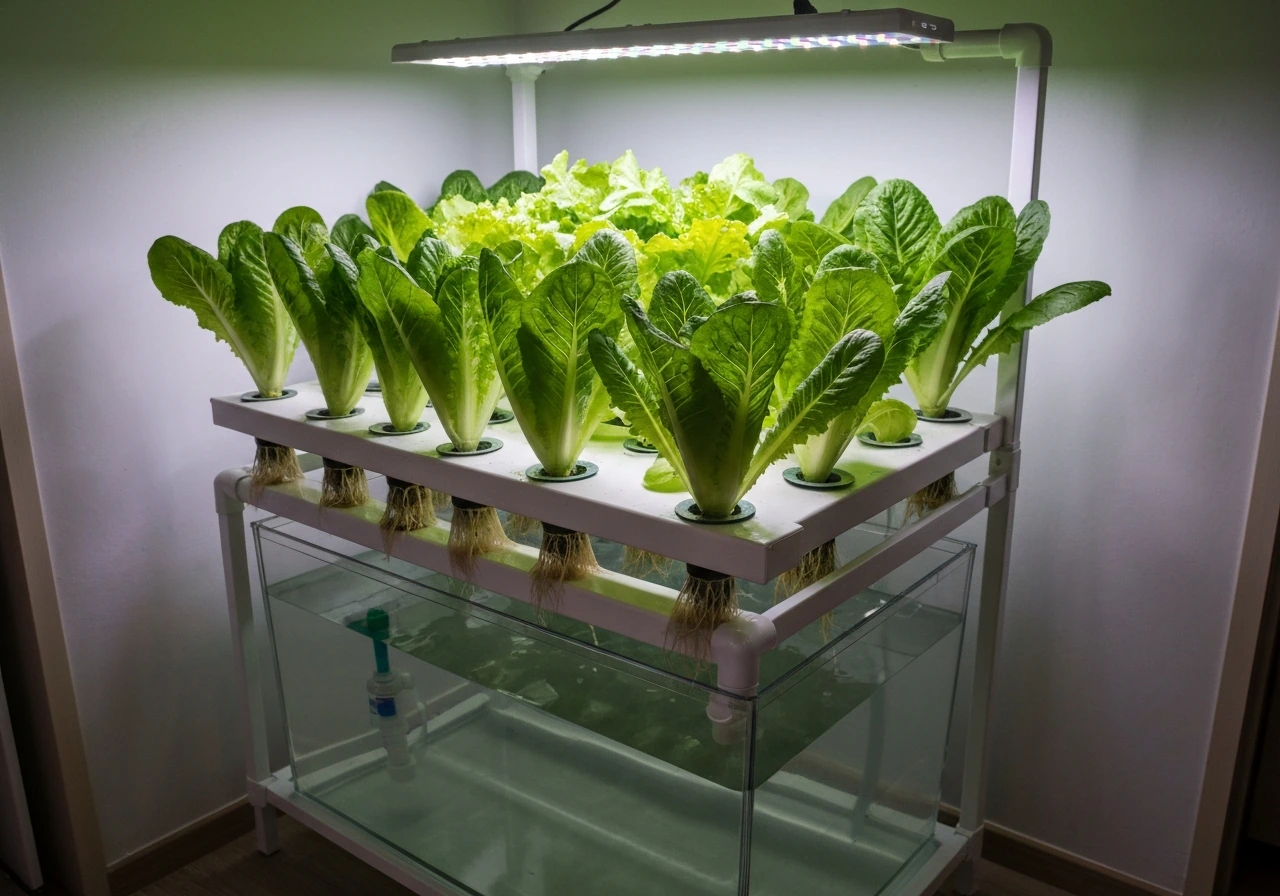
Hydroponics works for any plant that can absorb nutrients through its roots in a water-based solution. That covers most food crops you'd actually want to grow at home. The limiting factors are plant size, root structure, and how long the crop takes to produce. Fast-growing, shallow-rooted plants are the sweet spot. Long-season crops with deep root systems are where things get complicated.
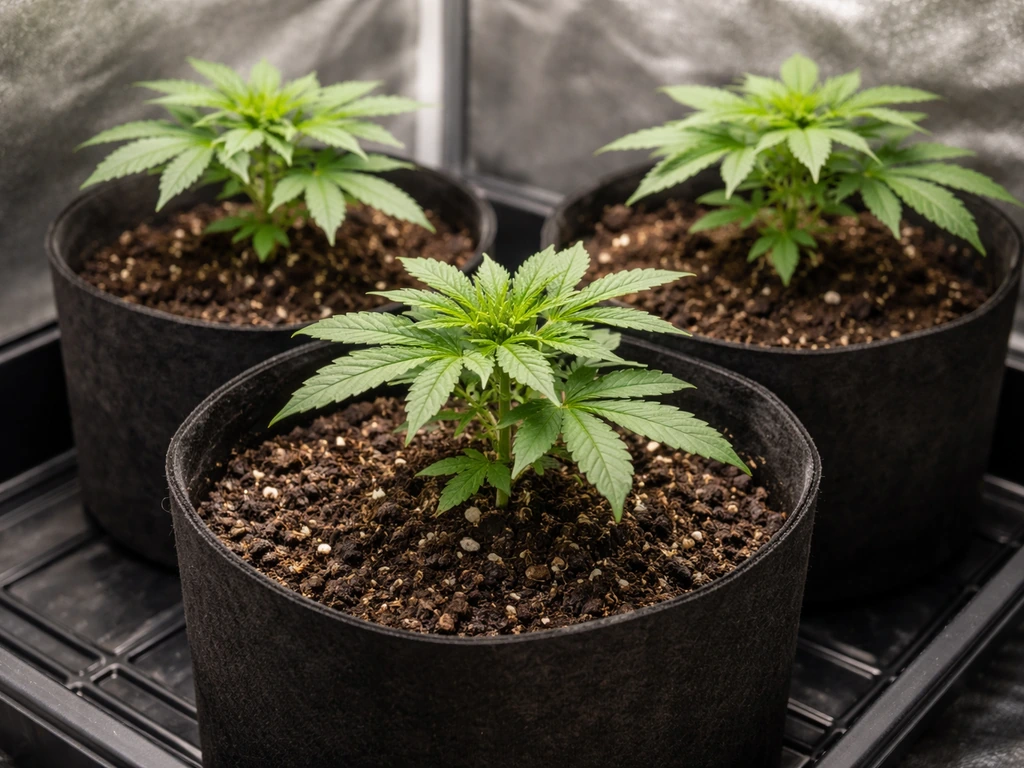
Plants that genuinely excel hydroponically include lettuce, spinach, kale, Swiss chard, basil, cilantro, mint, parsley, tomatoes, peppers, cucumbers, strawberries, and cannabis. These crops respond well to direct nutrient delivery, produce faster than soil equivalents, and fit comfortably in the container sizes most home growers work with.
Plants that are possible but not practical include carrots, beets, parsnips, and potatoes. You can technically grow them, but root vegetables need specific media support that gets messy and expensive fast. Large fruiting trees (citrus, apple, avocado) are similarly a poor fit for most home setups: their root mass and nutrient demands are enormous, and the return on investment in time and equipment cost is low. Corn is another one that sounds appealing but takes up far too much vertical and horizontal space for what you get.
- Best choices: lettuce, basil, spinach, kale, Swiss chard, mint, cilantro, parsley
- Excellent intermediate crops: tomatoes, peppers, cucumbers, strawberries, cannabis
- Possible but complicated: carrots, radishes, beets, potatoes
- Not worth it at home scale: fruit trees, corn, large squash varieties, pumpkins
Easy hydroponic vegetables to start with
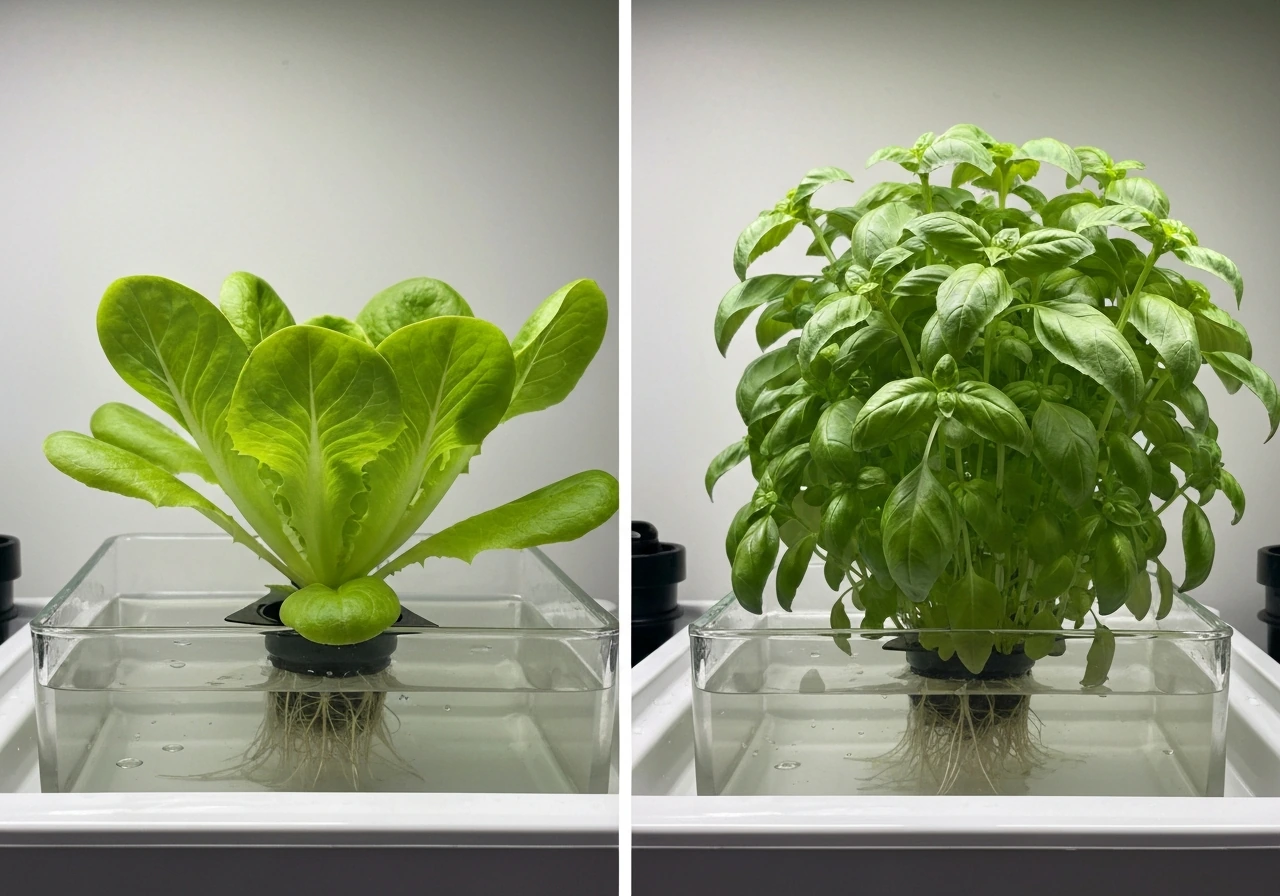
Lettuce is the undisputed beginner crop for a reason. It grows fast (harvest in 30 to 45 days), has a shallow root system, tolerates a wide pH range (5.5 to 6.5), and doesn't demand high light intensity. If you mess up your nutrient solution slightly, lettuce is forgiving enough to stay alive while you correct the problem. Spinach and kale behave similarly and give you a bigger nutritional payoff per square foot.
Basil is the herb equivalent. It grows aggressively in hydroponic systems, often producing two to three times faster than in soil. The OSU Extension's home hydroponics guidance specifically calls out tomatoes, lettuce, and basil as ideal beginner targets, and that tracks with real-world experience. Basil also acts as a useful indicator plant: if the leaves start yellowing or curling, your pH or nutrient concentration is off, and basil will show you before most other plants will.
Tomatoes and cucumbers are the next step up. They take more light (at least 14 to 16 hours under grow lights or a well-lit south-facing greenhouse), need trellising as they climb, and have higher nutrient demands than greens. But the yields are impressive and the flavor from hydroponically grown tomatoes, especially in deep water culture, is genuinely excellent. If you're setting up a more serious system, cherry tomatoes like Sweet 100 or Sungold are far easier to manage than beefsteak varieties.
Organic hydroponics: what "organic" means in practice
This is where a lot of growers hit a wall. The USDA does not certify hydroponic produce as organic under the National Organic Program in the traditional sense, but that doesn't mean you can't grow with organic principles at home. The distinction matters for how you approach your nutrient inputs.
In conventional hydroponics, you use synthetic, mineral-based nutrient salts: precise formulas of nitrogen, phosphorus, potassium, calcium, magnesium, and trace elements. In organic-style hydroponics, you substitute or supplement with inputs like fish emulsion, seaweed extract, humic acids, kelp meal teas, and compost teas. The challenge is that organic inputs are less precise and can clog drip emitters, reservoir pumps, and fine tubing. They also require beneficial microbial activity to break down into plant-available forms, and that biology takes time to establish.
The most practical approach for home growers who want cleaner inputs is a hybrid: use a base of high-quality mineral nutrients for your macros, and add organic amendments like humic acid, seaweed extract, or mycorrhizal inoculants on top. This keeps your system running cleanly while still introducing biological inputs. If you've ever wondered whether you can grow weed without adding nutrients by relying entirely on organic inputs, the honest answer is that in a pure hydro system it's very difficult to maintain adequate nutrient levels without some form of intentional feeding.
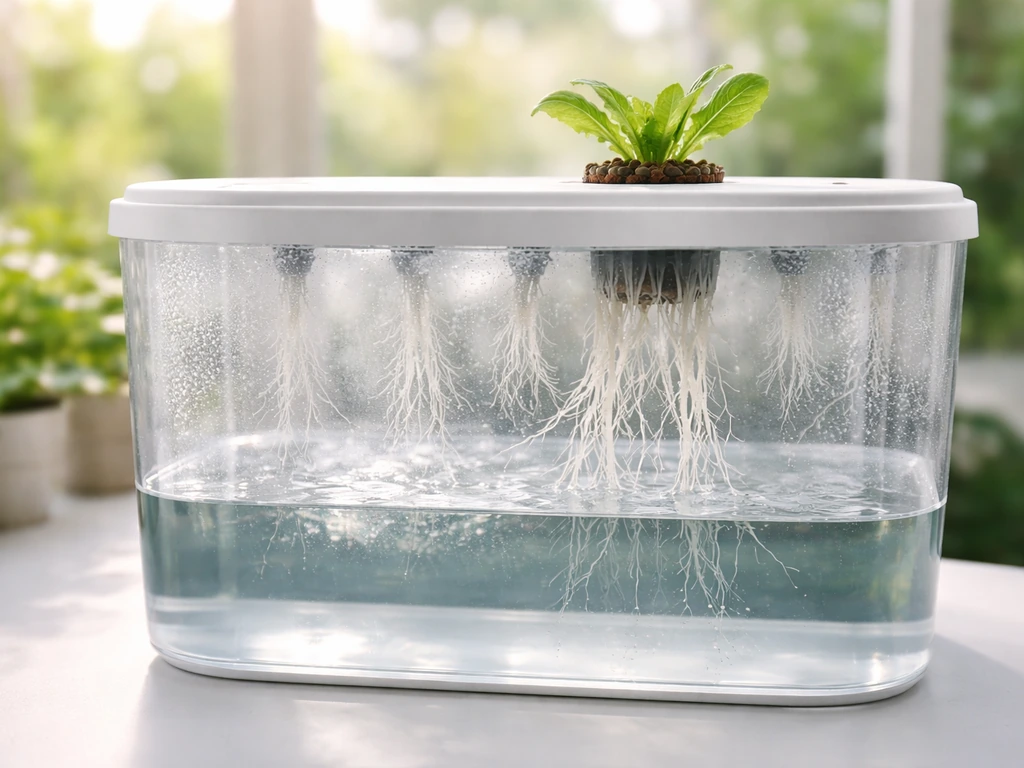
For a fully organic-leaning setup, deep water culture with a large reservoir (20+ gallons) and a robust biological community works best. The volume gives you buffering capacity for organic swings in pH and EC. Wicking systems and media-based systems (like coco coir in Dutch buckets) also work well with organic inputs because the media itself can house beneficial microbes.
Choosing the right hydroponic setup and growing method
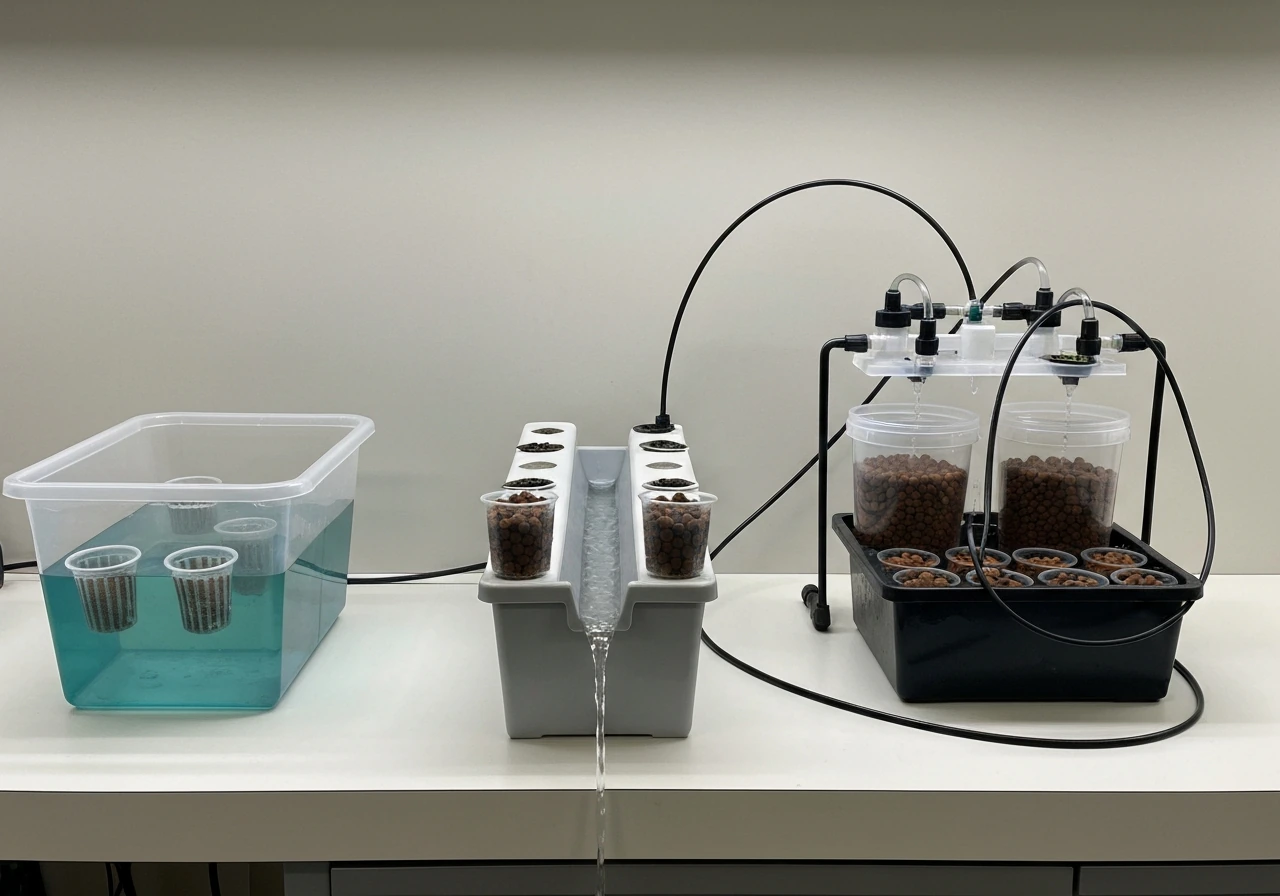
The system you choose should match the crops you want to grow, your budget, and how much maintenance you're willing to do. Here's a practical comparison of the main options:
| System | Best For | Maintenance Level | Startup Cost | Key Limitation |
|---|---|---|---|---|
| Deep Water Culture (DWC) | Lettuce, basil, tomatoes, cannabis | Low to medium | $30 to $150 DIY | Needs air pump and air stone; root disease risk if oxygen drops |
| Nutrient Film Technique (NFT) | Leafy greens, herbs | Medium | $100 to $300 | Pump failures cause rapid crop loss; not ideal for large root mass |
| Kratky (passive DWC) | Lettuce, herbs, small greens | Very low | $10 to $50 DIY | No oxygen pump; limited to smaller, faster crops |
| Ebb and Flow (Flood and Drain) | Tomatoes, peppers, cannabis | Medium | $150 to $400 | More components, more failure points |
| Drip System | Tomatoes, cucumbers, large plants | Medium to high | $100 to $500+ | Can clog; requires regular cleaning |
| Aeroponics | Fast-cycle crops, cloning, R&D | High | $300 to $1000+ | Technically demanding; nozzle clogging common |
For most beginners, a 5-gallon DWC bucket or a simple Kratky setup for greens and herbs is the right starting point. If you're growing tomatoes or peppers indoors, DWC with a properly sized reservoir (at least 5 gallons per plant) and a reliable air pump is the simplest path to a successful harvest. If you want to experiment with more advanced techniques, what you can grow with aeroponics is worth understanding before you invest in that direction, since it opens up fast-cycle cloning and root-zone research that's hard to do any other way.
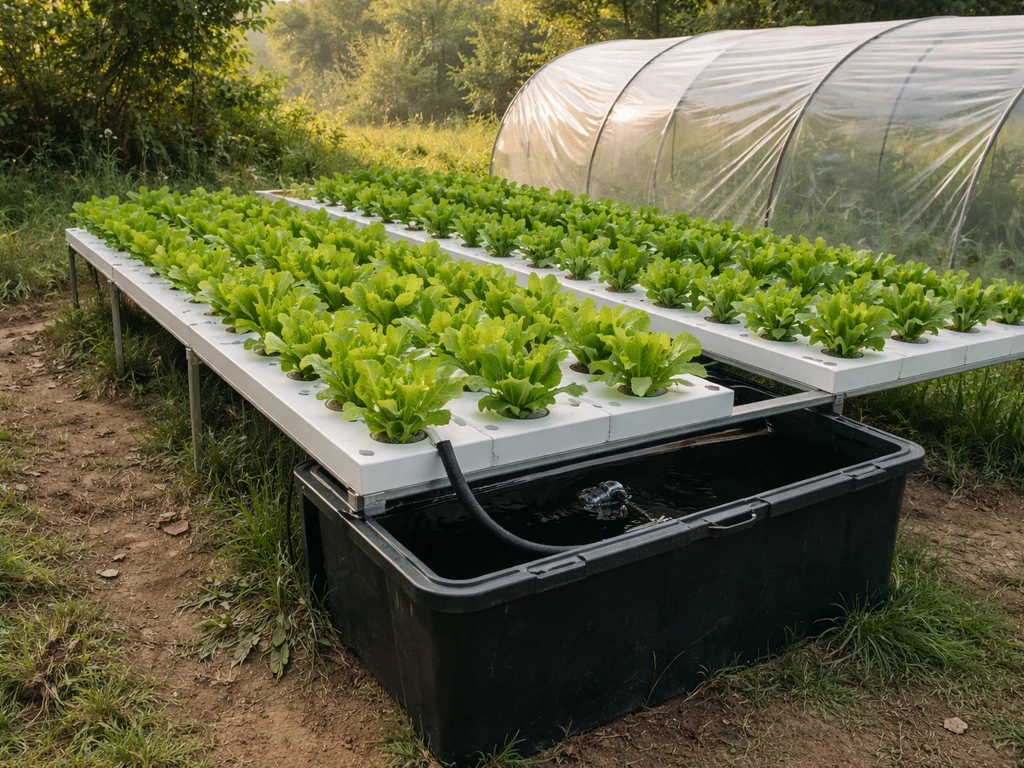
One more option worth considering is taking your system outside. Indoor setups require artificial lighting, which is your biggest ongoing cost and energy draw. If your climate cooperates, growing hydroponics outside lets you eliminate artificial lighting entirely, reduce electricity costs dramatically, and often produce larger yields thanks to the intensity of natural sunlight. The tradeoff is managing temperature swings, pests, and weather, but for warm-season crops it's absolutely viable.
Core requirements for success (light, nutrients, pH/EC, water/oxygen)
Hydroponics removes the buffer that soil provides. In soil, the growing medium itself holds nutrients, regulates pH to some extent, and supports microbial life that breaks down organic matter. In a hydro system, you are that buffer. Get any of the four core variables wrong, and your plants will tell you within 24 to 72 hours.
Light
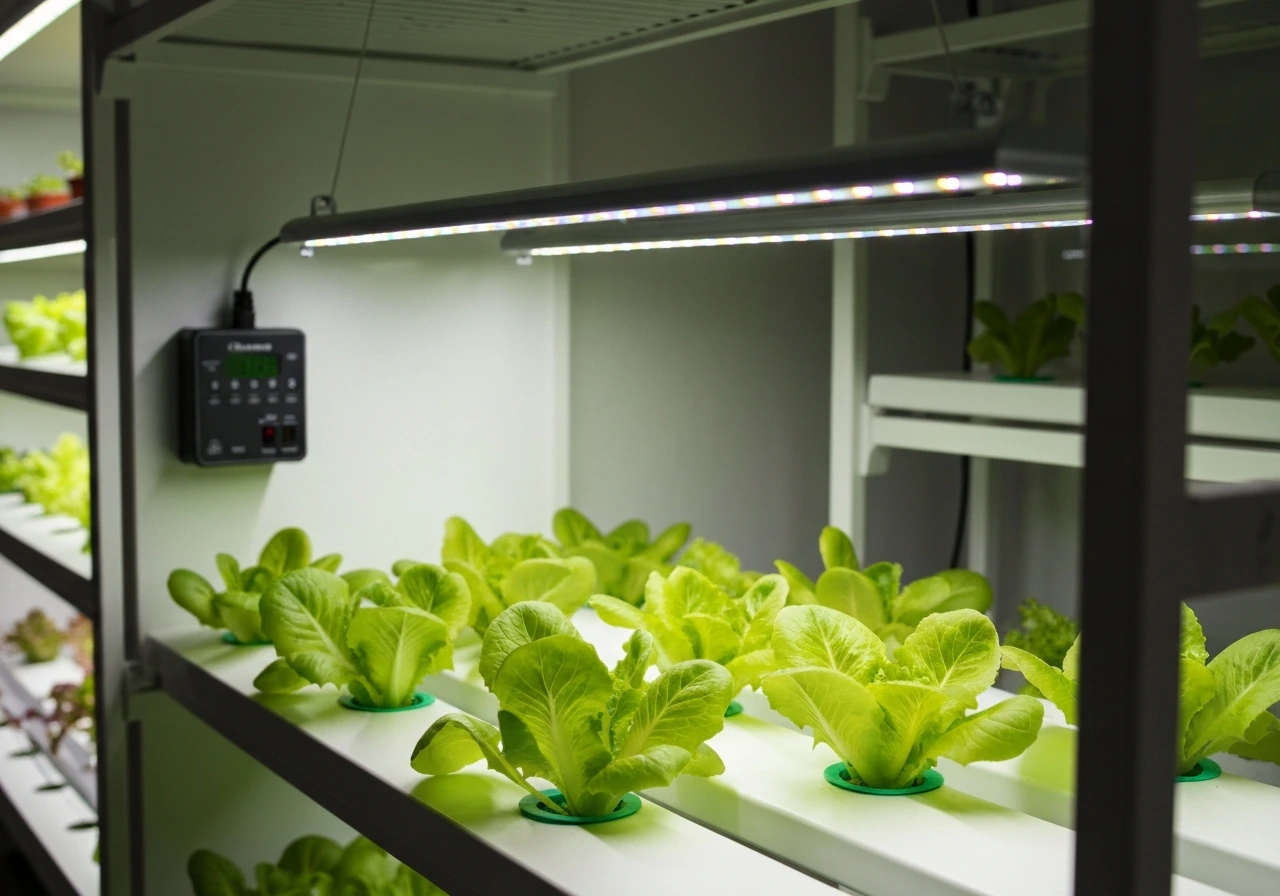
Leafy greens need 12 to 14 hours of light per day at a moderate intensity (around 200 to 400 micromoles of PAR). Fruiting plants like tomatoes and peppers want 14 to 18 hours at higher intensities (400 to 600+ micromoles). For indoor setups, full-spectrum LED grow lights are the practical choice in 2026: they run cooler than HID lights, are more energy efficient, and the quality at the $100 to $300 price range has improved dramatically. Keep lights 12 to 24 inches above the canopy depending on the light's intensity rating and always verify with the manufacturer's guidelines for your specific fixture.
Nutrients
A complete hydroponic nutrient solution contains three macronutrients (nitrogen, phosphorus, potassium), three secondary nutrients (calcium, magnesium, sulfur), and a full suite of micronutrients (iron, manganese, zinc, copper, boron, molybdenum). Most quality two-part or three-part liquid nutrient systems (like General Hydroponics Flora Series or similar) cover all of these. Avoid single-number NPK fertilizers designed for soil; they lack the secondary and micronutrient profile your plants need when roots can't pull from a living soil ecosystem. Rockwool retains significant air space, which helps promote root growth by supporting oxygen availability around roots.
pH and EC
pH is the single most common reason beginner hydroponic crops underperform. Most vegetables prefer a pH range of 5.5 to 6.5, with 5.8 to 6.2 being the sweet spot for nutrient availability. Outside this range, nutrients lock out even if they're present in the solution. Measure pH every day at the start, and every other day once you've stabilized your system. EC (electrical conductivity) tells you the total dissolved solids concentration, which is a proxy for nutrient strength. Seedlings want 0.8 to 1.2 EC. Mature fruiting plants can handle 2.0 to 3.5 EC. A basic pH and EC meter combo costs $20 to $40 and is non-negotiable.
Water quality and oxygen
Plant roots need oxygen to perform cellular respiration, the process that drives nutrient uptake at the root level. In a DWC system, this means the nutrient solution must be actively oxygenated. [Oregon State University Extension and Purdue's Master Gardener hydroponics guides both emphasize this clearly](https://extension. oregonstate.
edu/catalog/pub/em-9455-hydro-hints-deep-water-culture): air pumps and air stones are the delivery mechanism for dissolved oxygen, and without them, roots suffocate and rot in 24 to 48 hours. Use an air pump sized for at least twice your reservoir volume, and run it continuously. Also check your source water: high chlorine can harm beneficial microbes, and very hard water (high calcium and magnesium) can throw off your nutrient ratios before you even add a single drop of fertilizer.
If your tap water is above 200 ppm, consider using filtered or RO water as your base.
Step-by-step starter plan and common beginner mistakes
Here's a practical plan to get your first hydroponic system running within a week, starting from scratch:
- Choose your crop first. Start with lettuce or basil. These are fast, forgiving, and give you quick feedback on whether your system is working.
- Pick a system. For your first grow, a Kratky setup (a lidded container with net pot holes, no pump needed) or a single 5-gallon DWC bucket with an air pump is ideal. Total cost: $20 to $80.
- Set up your light. A basic full-spectrum LED panel in the $60 to $120 range is enough for a small starter setup. Set it on a timer for 14 to 16 hours on, 8 to 10 hours off.
- Mix your nutrient solution. Start at half-strength (0.8 to 1.0 EC) and adjust to full strength once plants are established. Target pH 5.8 to 6.2.
- Start seeds in rapid rooter plugs or rockwool cubes. Once roots emerge (usually 5 to 10 days), transfer to your net pots.
- Monitor daily for the first two weeks. Check pH, check EC, look at leaves for early signs of deficiency (yellowing, curling, brown tips). Adjust pH with pH Up or pH Down solutions as needed.
- Harvest lettuce at 30 to 45 days. Cut outer leaves first (cut-and-come-again method) or harvest the whole head. Replant immediately to keep the system producing.
Mistakes that kill first grows
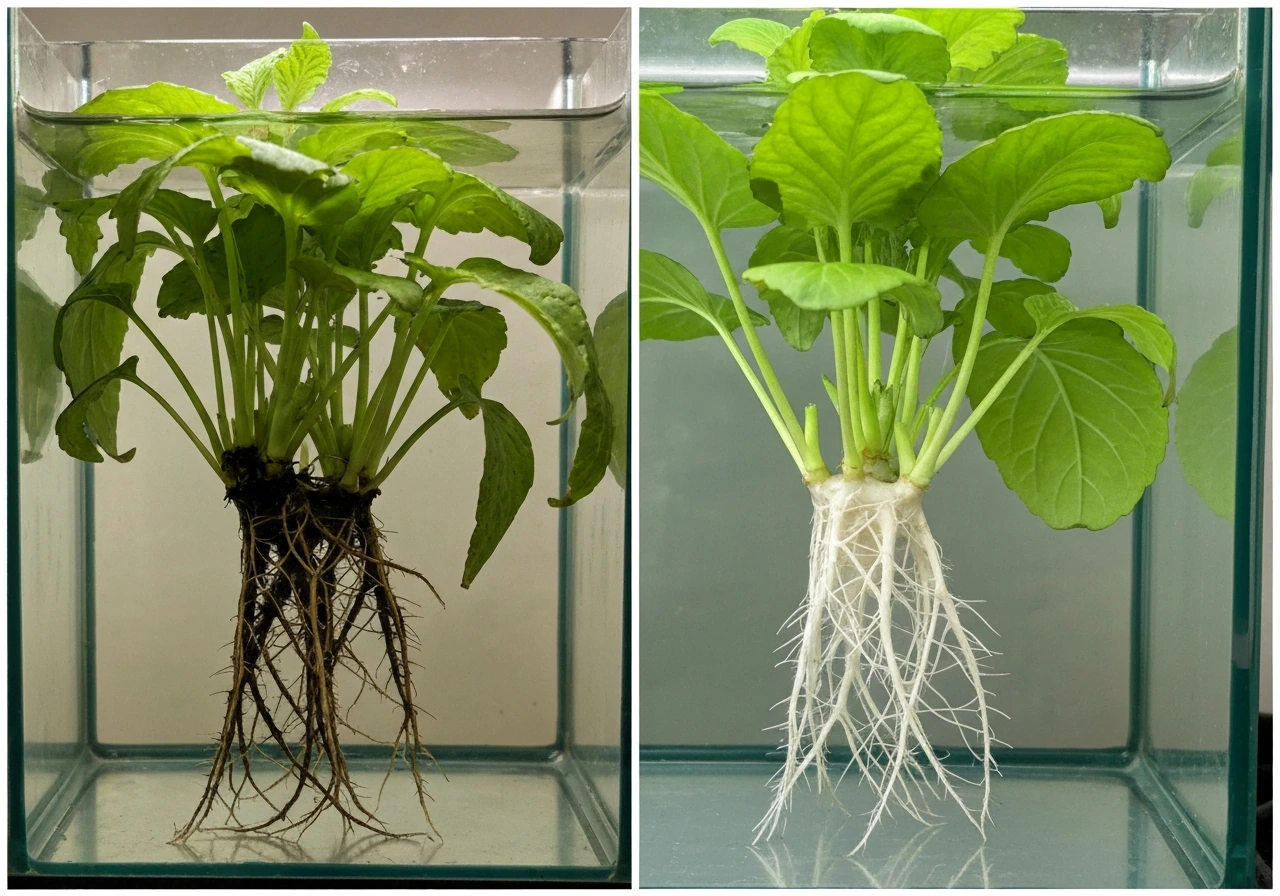
- Skipping the pH meter and guessing: pH imbalance is responsible for the majority of nutrient deficiency symptoms beginners misdiagnose as feeding problems.
- Overfeeding from day one: seedlings and young plants need low EC. Burning roots with full-strength nutrients early sets plants back weeks.
- Not enough airflow or oxygen: stagnant water grows anaerobic bacteria and root rot fast. Even a small air stone makes a significant difference.
- Choosing a difficult first crop: vine crops, root vegetables, or large fruiting plants before you understand your system's behavior is a recipe for frustration.
- Ignoring reservoir temperature: nutrient solution above 72°F (22°C) holds less dissolved oxygen and promotes pythium (root rot). Aim for 65 to 68°F (18 to 20°C) in your reservoir.
- Letting light into the reservoir: algae blooms drain oxygen and nutrients. Cover all reservoir surfaces with opaque materials or purpose-built lids.
The biggest mindset shift for new hydroponic growers is understanding that you're managing a system, not just watering plants. Once that clicks, everything from reading a pH meter to dialing in your EC targets starts to feel logical rather than overwhelming. Start small, grow something fast, and build from there. Your second grow will be dramatically better than your first, and by your third, you'll have enough data from your own setup to dial in results that soil growers would genuinely envy.
FAQ
Can you grow any plant hydroponically if you just use the right nutrients?
Not really. Hydroponics depends on root access to water-based nutrients and adequate oxygen at the root zone, so the limiting factors are plant architecture and physiology (root depth, growth habit, and how the plant handles missing soil buffering), not only nutrient recipes. If a crop needs a lot of physical volume, long season rooting, or extensive trellising, it may be technically feasible but impractical at home.
What’s the most realistic “yes, but” category for hydroponics at home?
Root vegetables are the common “yes, but.” They require consistent, well-supported media depth and often struggle to form clean, usable roots without careful spacing and structure. Even when they grow, the effort-to-yield ratio is usually worse than leafy greens or herbs.
Can you grow hydroponically without grow lights if you have a bright window?
Sometimes for greens, but it depends on intensity and hours. Lettuce and herbs can manage with moderate light, yet a window often can’t deliver the consistent intensity and photoperiod that keeps nutrient uptake and growth stable. If you try, rotate trays to reduce uneven growth and be ready to add a small LED if you see slow growth or leggy plants.
How often should I change the reservoir solution in DWC or similar systems?
Don’t rely on a calendar alone. Check pH and EC frequently, and when values drift out of your target range or you notice declining plant vigor, perform a partial or full change. Many beginners start with more frequent changes than they need, then refine by tracking how quickly their EC drops and pH swings over days.
Is hydroponics actually harder because you lose the “buffer” of soil?
It’s harder to ignore problems, yes. Without soil, pH and nutrient concentration can swing faster, so plants may show symptoms within a couple days. The practical fix is building a routine (measure early, adjust promptly, and keep aeration and temperature steady) rather than waiting to see if plants recover.
Can I make an organic-style hydroponic system without clogging pumps and lines?
Yes, but you usually need strain/filtration and the right input choices. Many unfiltered teas, pellet slurries, or compost-derived solids can clog drip or mist systems. In practice, growers who want cleaner plumbing use soluble products (like humic/seaweed extracts that are formulated for fertigation) and avoid chunky particulates, then verify compatibility with their specific equipment.
What water quality issues matter most for hydroponics?
The two biggest are chlorine/chloramine and dissolved hardness. High chlorine can disrupt biology and affect nutrient availability, and hard water can push calcium and magnesium higher than your nutrient target. If your base water runs high (for example above about 200 ppm), using filtered or RO as a starting point makes your nutrient management more predictable.
How do I know whether my problem is pH, EC, or light?
Use pattern matching plus quick checks. pH issues often appear as nutrient lockout symptoms across multiple leaves and won’t improve until pH returns to range. EC problems typically track with concentration stress (burning or stalling depending on direction). Light problems usually show as leggy growth or slow, pale development even when pH and EC are stable, so verify your light height and photoperiod before chasing nutrient changes.
Can I grow strawberries hydroponically in a small home system?
Yes, but plan for plant spacing and ongoing management. Strawberries typically need more stable conditions and room for crowns and runners than lettuce. A small DWC or media-based setup can work, but you should choose a system that lets you support the plant without crowding and maintain consistent oxygenation around roots.
What’s the easiest hydroponic “starter crop” if I want quick success and low maintenance?
Leafy greens or basil are usually the lowest-friction wins. They have shorter production times, shallower root demands, and tend to recover faster from minor parameter mistakes. If you want to level up soon after, tomatoes or cherry varieties are a more manageable step than large-fruit types because they’re easier to train and often faster to reach usable harvests.
Do I need to run the air pump 24/7 in DWC?
In most cases, yes. Roots need continuous oxygenation to prevent rot risk, especially in warm conditions. If you’re away or power reliability is questionable, add an emergency plan like a battery backup or at least a way to monitor and intervene quickly.
Can you grow cannabis hydroponically at home like other fruiting plants?
You can grow it hydroponically, but treat it as a high-sensitivity crop. In addition to pH and EC, you’ll likely manage tighter environmental targets and more frequent observations during transitions (vegetative to flowering). The main practical difference is that you’re usually making a long, parameter-sensitive production schedule rather than a short greens cycle.