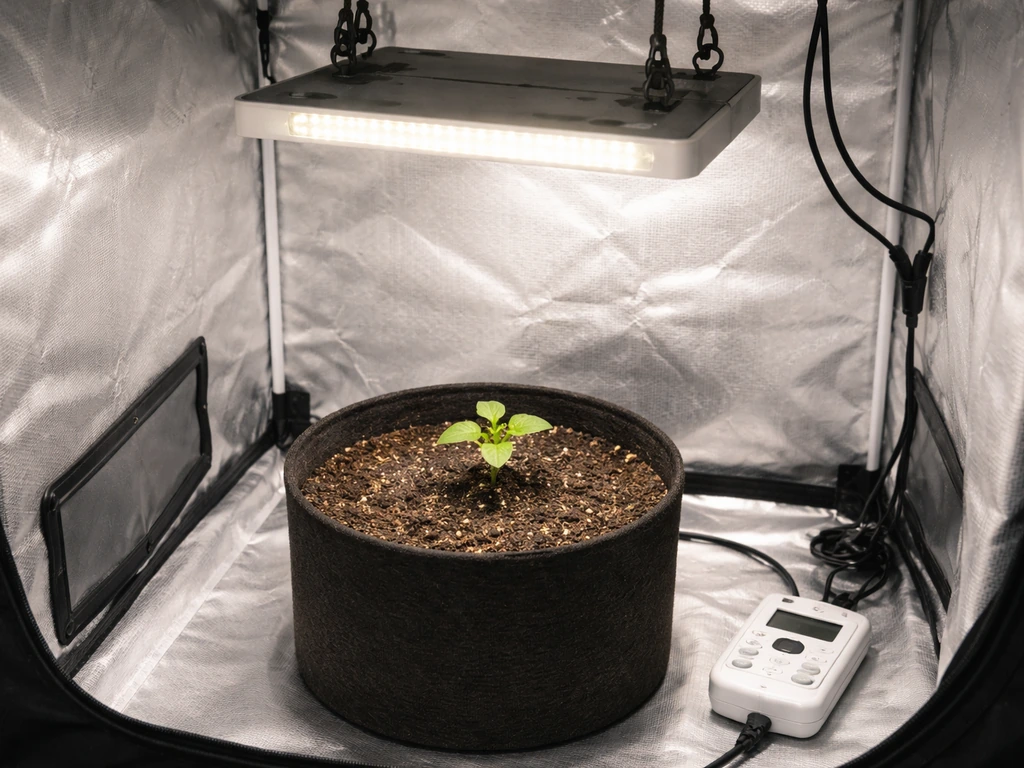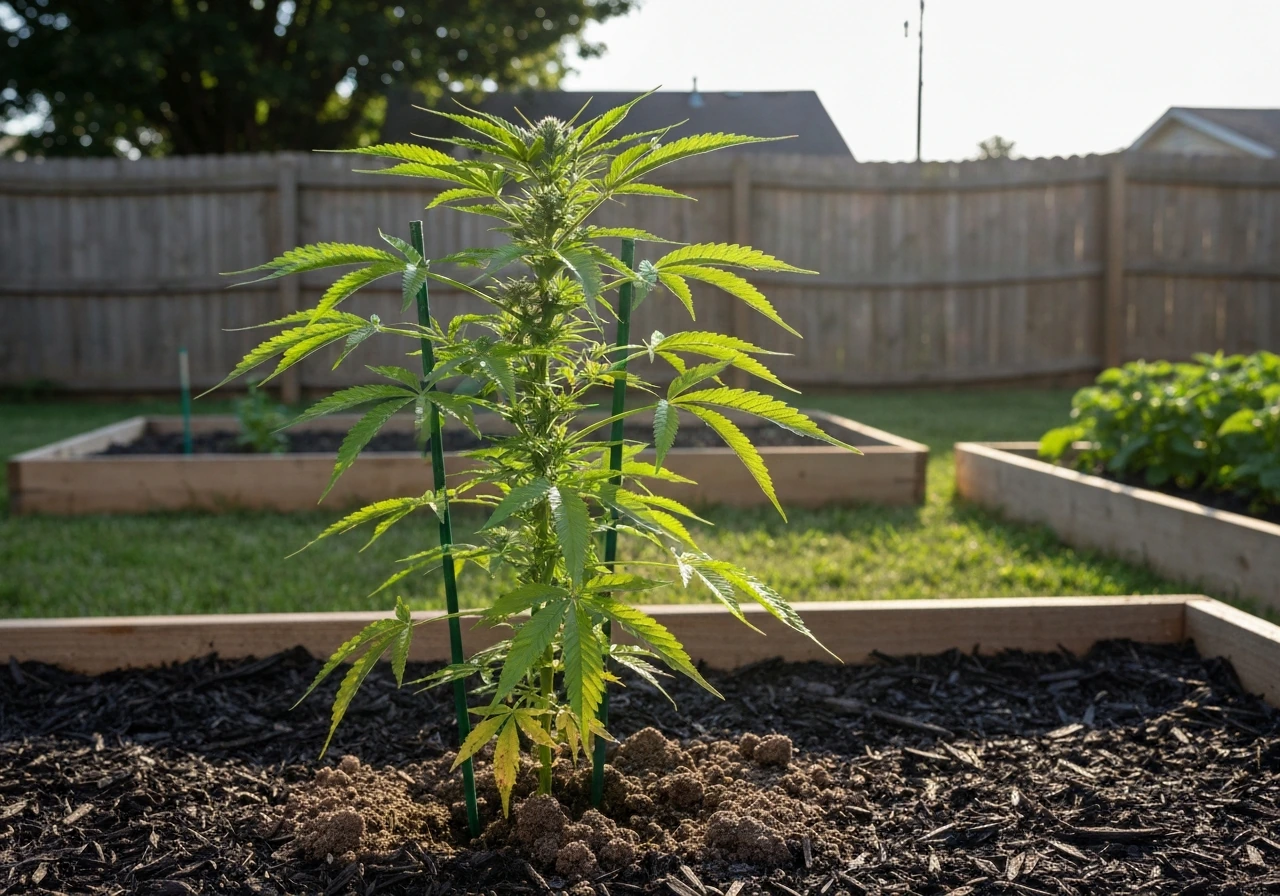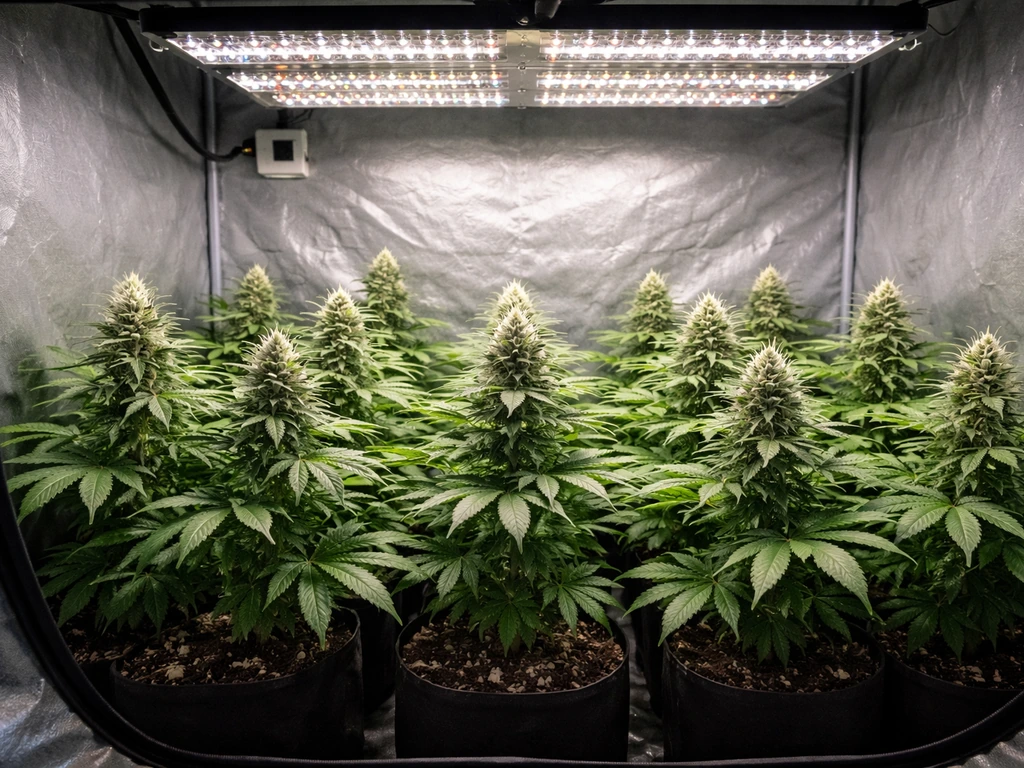
Yes, autoflowering cannabis can complete its full life cycle on a 12/12 light schedule. Because autos are genetically day-neutral, they flower based on age rather than light hours, so the 12-hour dark period won't trigger or stall flowering the way it would with a photoperiod strain. In general, autos do not always outpace photoperiods, but their day-neutral flowering schedule can make them feel faster from seed to flower do autoflowers grow faster than photoperiod.
Can You Grow Autos on 12/12? Indoors Guide
Marcus Holloway
30 Apr 2026
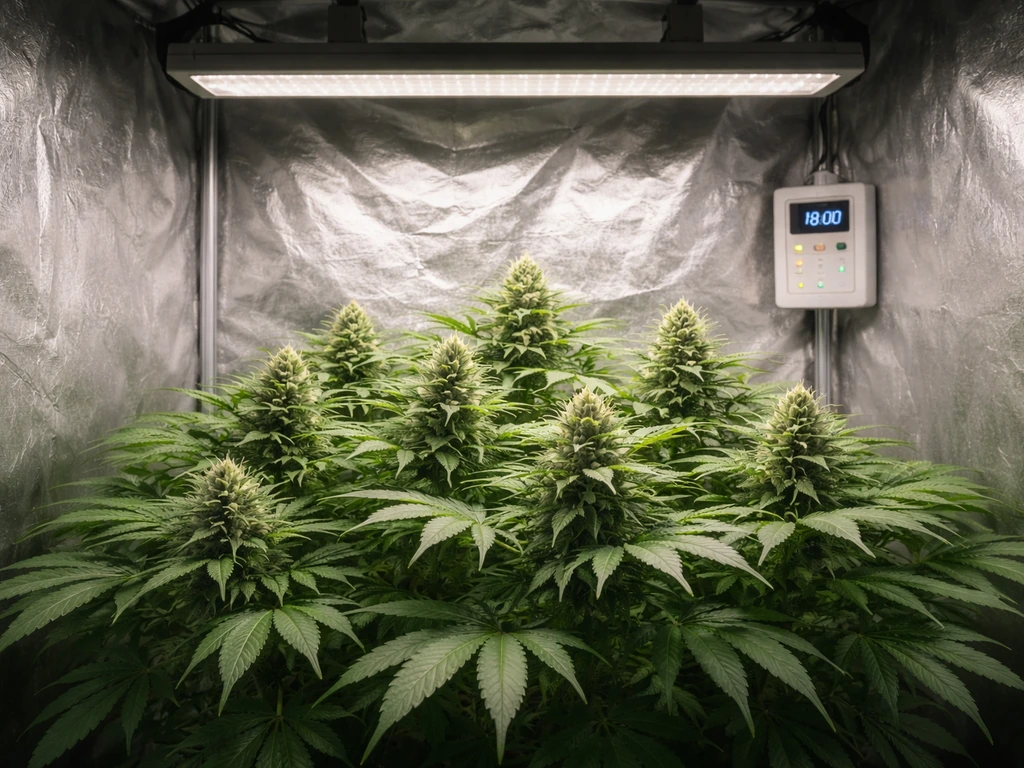
That said, 12/12 is not the ideal schedule for autos. You will see noticeably slower vegetative growth, shorter plants, and reduced yields compared to running 18/6 or 20/4. If 12/12 is what you have available, it absolutely works, but going in with calibrated expectations matters.
What 12/12 lighting actually means for autoflowers
A 12/12 schedule means your grow lights run for 12 hours, then shut off for 12 hours, cycling continuously. For photoperiod strains, that 12-hour dark period is a biological trigger: it signals short-day conditions that push the plant into flowering. This aligns with photoperiodism in which photoperiod-sensitive plants initiate flowering only under specific uninterrupted light-dark patterns, unlike day-neutral plants photoperiod strains need short-day conditions to trigger flowering. Research confirms inflorescence development in photoperiod cannabis requires at least three consecutive days of short-day exposure and that the short-day condition needs to be maintained throughout maturation to build properly condensed flower structure.
Autoflowers operate on a completely different mechanism. The autoflower trait is linked to specific genetic loci, including Autoflower1 and Early1, that make the plant day-neutral. Instead of reading the light-to-dark ratio, an auto simply tracks its own maturity. At roughly 3 to 5 weeks from germination depending on the strain, the switch to flowering happens regardless of whether the lights are on 12, 18, or 24 hours a day. That genetic independence is what makes 12/12 a viable, if not optimal, option.
Can autos actually finish on 12/12: real-world outcomes
In practice, autos grown on 12/12 do reach harvest, but the journey looks different. With only 12 hours of light, the plant has less total energy available each day for photosynthesis. Vegetative stretch is reduced, which sounds appealing for tight spaces but means less overall biomass going into flower production. Most growers running autos on 12/12 report final heights 20 to 35 percent shorter than the same strain on 18/6, and dry yield reductions of 25 to 40 percent in real grow logs. Finish times also tend to stretch slightly, typically adding 7 to 14 days to the total cycle compared to an 18/6 run of the same strain, because the plant is building mass more slowly.
The most common scenario where growers land on 12/12 for autos is running a shared tent with photoperiod plants already locked into a flowering schedule. If you drop an auto seed into that tent, it will flower on its own schedule and finish, just smaller and a bit slower than it would on its own. This is a workable strategy and it is worth noting that growing autoflowers and photoperiod strains together in the same space is a topic many growers navigate carefully, especially around light schedule conflicts.
How to set up 12/12 lighting for autos
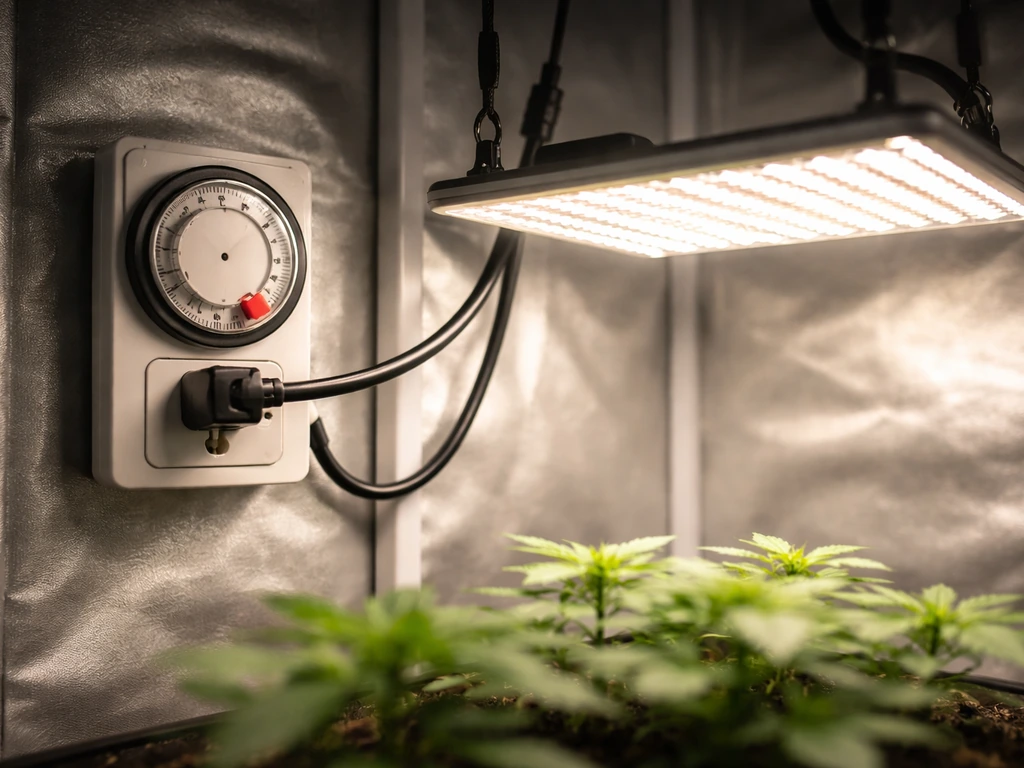
Timer setup
Use a mechanical or digital timer with at least 30-minute interval resolution. Set it to a consistent on/off window and stick with it throughout the grow. Inconsistent dark periods, even a few minutes of light leak during the off cycle, are not going to trigger herming in an auto the way they can in a photoperiod plant, but they still interrupt the rest period and waste energy. Tape any LED indicator lights on power strips and seal any gaps around tent zippers before the lights-off cycle begins. Autos are more forgiving than photoperiod strains on light interruptions, but clean, predictable cycles produce cleaner results.
Light intensity and spectrum
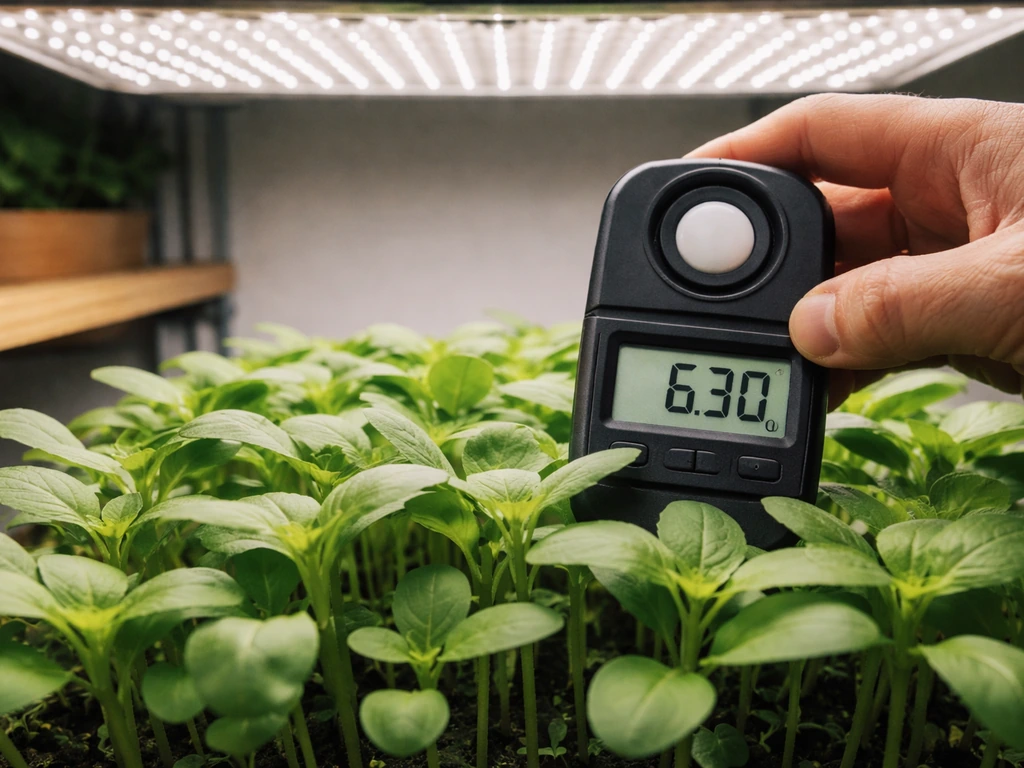
Because the plant is getting fewer total daily light hours, you want to maximize the quality of each hour. Target a photosynthetic photon flux density (PPFD) of 400 to 600 µmol/m²/s during seedling and early veg, then push to 700 to 900 µmol/m²/s through mid-veg and flowering. A cannabis lighting guide PDF like the PHOTONE PRO GUIDE includes [PPFD-by-stage tables](https://growlightmeter. com/assets/static/cannabis-lighting-guide.
pdf) (seedling, veg, and flower) intended to help growers dial in canopy photon levels more than relying on light hours alone. Running a full-spectrum LED with a strong blue component (5000 to 6500K equivalent) during veg and shifting toward warmer red spectrum (2700 to 3000K equivalent) in flower gives the plant the right signal cues even though the auto does not biologically require them.
If you are running an HID setup in a shared tent on 12/12, be aware that HPS heat load in a 12-hour cycle requires tighter climate management.
Light distance
With LED panels, start seedlings at 24 to 30 inches from the canopy and drop to 18 to 22 inches by week 2 to 3. In flower, 16 to 20 inches is usually the sweet spot for mid-power LEDs (200 to 400W draw). The shorter daily light window makes light intensity more important, not less, so do not park the fixture too high and assume the plant will compensate.
Use a PAR meter or a manufacturer's PPFD chart for your specific fixture if available. With CMH or HPS, keep a minimum of 18 inches during seedling, 14 to 16 inches in veg, and monitor leaf temperature by touching the top leaves: if they feel hot to the touch (above roughly 28°C / 82°F), raise the fixture.
What to expect: timing, height, and yield on 12/12

Here is an honest comparison of what running autos on different schedules typically produces. These are general ranges based on common auto genetics, not promises for any specific strain.
| Light Schedule | Avg. Finish Time | Typical Height | Relative Yield |
|---|---|---|---|
| 24/0 | 65 to 75 days | 50 to 80 cm | Baseline minus 5 to 10% (some stress) |
| 20/4 | 65 to 75 days | 55 to 90 cm | Near maximum |
| 18/6 | 68 to 80 days | 50 to 85 cm | Maximum for most strains |
| 16/8 | 70 to 85 days | 45 to 75 cm | 10 to 20% below 18/6 |
| 12/12 | 75 to 95 days | 35 to 60 cm | 25 to 40% below 18/6 |
The key takeaway is that 12/12 is viable but represents a real cost in size and output. If maximizing yield per plant matters to you, 18/6 is the standard recommendation and 20/4 often edges it out. The 12/12 scenario makes sense when tent space or equipment constraints make it the only practical option, not as a performance strategy.
Best practices if you are running autos on 12/12
Choose the right strains and seed batches
Not all autoflower genetics perform equally under light restriction. Look for strains specifically bred for efficiency and resin density over raw size: compact fast-finishing autos from breeders with stated finish times under 70 days are your best bet. These genetics tend to pack cannabinoid and terpene development into a shorter production window, which matters when you have fewer daily light hours to work with. Avoid sativa-dominant autos with long flowering windows when running 12/12, as the yield penalty compounds with longer finish times. Check seed batch reviews for real grower reports on 12/12 or low-light conditions if available.
Environmental targets that offset the light deficit
When light hours are reduced, dialing in every other environmental variable becomes more important. Hit these targets consistently and the plant will use its available light hours far more efficiently:
- Temperature: 22 to 26°C (72 to 79°F) during lights-on, drop 4 to 6°C at lights-off to encourage resin production
- Relative humidity: 60 to 70% during seedling and veg, drop to 40 to 50% in flowering to reduce mold risk and improve trichome density
- CO2: ambient room air (400 to 500 ppm) is fine without supplementation; if you do supplement, 800 to 1000 ppm during lights-on helps offset reduced photon availability
- Airflow: gentle oscillating fan prevents hot spots and strengthens stems; exhaust should cycle air every 1 to 3 minutes
- Root zone temperature: 18 to 22°C (65 to 72°F) in soil; slightly cooler in hydro reservoir, around 18 to 20°C (65 to 68°F)
Nutrient and watering approach in soil vs. hydro
In soil, a 12/12 auto consumes nutrients more slowly due to reduced metabolic rate from less light. In other words, you cannot grow autoflowers without nutrients and still expect healthy growth or reliable flowering. Feed at slightly lower EC than label recommendations during veg, around 0. 8 to 1.
2 EC, and only step up to 1. 5 to 2. 0 EC in peak flower. Water less frequently than you would on 18/6 since the soil dries out slower with less transpiration during the longer dark period.
Let the top 2 to 3 cm of soil dry before watering and lift the pot to check weight. Overwatering is the most common nutrient problem on 12/12 because many growers use the same watering schedule they would on an 18-hour cycle.
In hydroponics, reduced light hours mean reduced transpiration and slower nutrient uptake. Keep reservoir EC on the lower end of the strain's recommended range during the first three weeks: 0.8 to 1.2 EC. pH management stays the same as any other hydro run, targeting 5.5 to 6.2. Monitor roots closely because the slower growth rate can sometimes let pathogens establish before the plant's immune response catches up. Adding a beneficial microbe product to the reservoir (if using an organic-compatible system) helps keep roots healthy through slower growth phases. Autoflowers grown hydroponically already respond well to these principles regardless of light schedule, and the same logic applies on 12/12.
Common mistakes and how to troubleshoot them
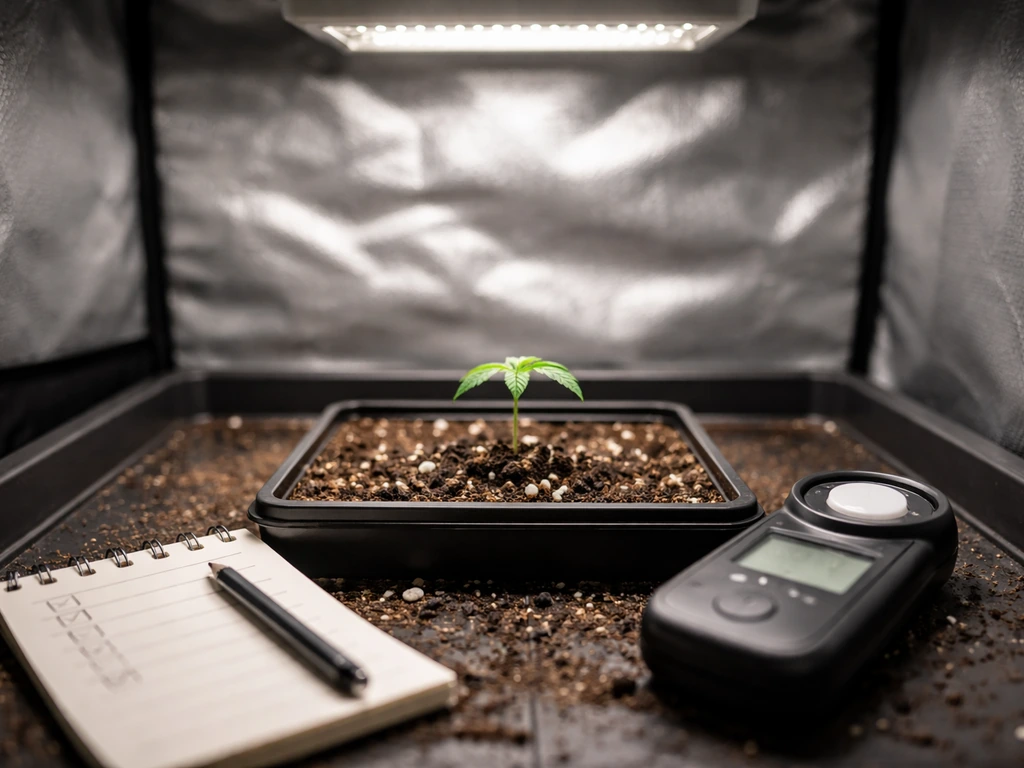
Slow vegetative growth in the first two weeks
If your auto seedling looks like it is barely moving in the first two weeks on 12/12, check light intensity first. With only 12 hours available, seedlings need the full PPFD they would normally get, around 400 to 500 µmol/m²/s. Many growers dim their fixtures during seedling on 18/6 to avoid light stress, then carry that habit into a 12/12 run where the plant actually needs all the photons it can get from day one. Raise intensity (not duration) and watch for a response within 5 to 7 days.
Delayed or weak flowering
True autoflowers should show preflowers by week 3 to 5 regardless of light schedule. If your plant hits week 6 with no signs of flowering, question the seed source. Some so-called auto seeds are actually photoperiod or heavily ruderalis-crossed genetics with inconsistent autoflower expression. A true day-neutral auto will not wait for 12/12 to initiate flowering, it will flower on its own timeline. If you suspect a weak or non-auto genetic, you are already on the correct schedule to push it, so stay the course and watch for pistils.
Nutrient lockout and overfeeding
Yellowing leaves starting from the bottom during late veg on 12/12 is almost always nitrogen deficiency from underfeeding, not a pH problem. But if you see clawing (leaf tips curling down), dark green waxy leaves, or burnt tips across multiple nodes, you are overfeeding for the light level. The plant simply cannot process nutrients as fast on 12 hours of light. Flush with plain pH-adjusted water (6.0 to 6.5 in soil, 5.8 in hydro), wait until recovery shows in new growth (5 to 7 days), then reintroduce nutrients at 50 to 75% of your previous dose.
Light stress and overlap at the seedling stage
Dropping a freshly germinated seedling into a tent already running 12/12 means it never gets the extended light period that accelerates early root and stem development. The seedling stage (days 1 to 14) is where the light deficit hurts most. If your setup allows it, start the seedling under a separate CFL or LED at 18 to 20 hours for the first 10 to 14 days, then transfer to the 12/12 tent. Even two weeks of higher light hours at the start can meaningfully improve final plant size and make the 12/12 transition smoother.
Hermaphrodite concerns and stress management
Autos are generally less prone to stress-induced hermaphroditism than photoperiod strains because the flowering trigger is not light-dependent. However, chronic stress from heat, overwatering, root problems, or light interruptions during flower can still push any cannabis plant toward producing pollen sacs. On 12/12, watch for nanners (small banana-shaped pollen structures emerging from calyxes) starting around week 6 to 7. If you find them, remove them with sterile tweezers immediately and address whatever stressor caused them. Consistent temps, stable watering, and clean dark periods are your best prevention. The light schedule itself, as long as it is consistent, is rarely the direct cause of herming in genuine autos.
Your next steps for running autos on 12/12 today
If you are ready to test 12/12 with autos right now, here is a practical starting sequence:
- Set your timer to a consistent 12-on/12-off cycle and seal any light leaks in your tent or grow space before you start
- Choose a compact, fast-finishing auto strain (sub-70-day breeders) to minimize the yield penalty from reduced light hours
- If possible, give seedlings 18 hours of light for the first 10 to 14 days before moving them into the 12/12 space
- Set your fixture to deliver 400 to 500 µmol/m²/s at the canopy from day one, no dimming during seedling on 12/12
- Dial in temperature (22 to 26°C lights-on, 18 to 22°C lights-off) and humidity (60 to 70% veg, 40 to 50% flower) before the first seed goes in
- Feed and water conservatively: reduce EC by 20 to 30% from your normal auto schedule and extend watering intervals to account for slower transpiration
- Check for flowering signs by week 4 to 5; if none appear by week 6 to 7, suspect genetics rather than the light schedule
- Monitor weekly for nutrient stress, root health (especially in hydro), and any signs of hermaphroditism starting in mid-flower
Growing autos on 12/12 is not the path to maximum yields, but it is a completely legitimate approach when your setup demands it. If you are wondering, “should i grow autoflowers,” this is one option to consider when you have limited lighting control a completely legitimate approach. Understand the trade-offs, compensate with tight environmental control and the right genetics, and you will harvest usable, quality flowers.
If you are curious whether autos get bigger outside instead, the same light-availability rules generally apply, though outdoor conditions can change what “more light” means in practice do autoflowers grow bigger outside. The light schedule is one variable among many, and on an auto, it is far less critical than it would be on a photoperiod plant.
FAQ
If I accidentally leave my lights on longer or cut them short during a 12/12 cycle, will my auto stop flowering?
Yes, a true autoflower will still flower under 12/12 even if it is not on a consistent schedule for the entire grow, but expect more variability in growth rate. If you must adjust, do it early, and avoid changing the on/off window after preflowers form (around weeks 3 to 5), since that is when the plant is committing more resources to flowering development.
Can I compensate for the lower light hours on 12/12 by increasing nutrients or raising the photoperiod?
Most growers should not try to “fix” slow growth on 12/12 by extending light hours. Instead, prioritize increasing light intensity within safe canopy distance and keeping temperature stable. If you already have strong LEDs, a better adjustment is ensuring the seedlings are getting the full PPFD they need from day one, not dimming early and then hoping the plant catches up.
What’s the most common mistake when feeding autos on 12/12?
You can reduce the risk of underfeeding by checking for early signs of nutrient lockout and correcting frequency, not just EC. On 12/12, the topsoil can stay wet longer, so overwatering can mimic nutrient problems (yellowing, droop) while roots struggle. Use the “top 2 to 3 cm dry” rule (soil) and only then feed, rather than feeding on a calendar.
My auto is late, could the 12/12 light schedule be why, or is it likely bad genetics?
If you do not see preflowers by about week 5, do not assume the light schedule is wrong. First confirm genetics from the seed source, then verify that light intensity is adequate and stable, since dim fixtures are a common reason plants appear stuck. If the strain is truly auto, it should show preflowers regardless of 12/12.
Does ambient light during the off period matter for autos on 12/12?
A “24/7” 12/12 style mistake is leaving ambient light on in the room during the dark cycle, for example, LEDs from equipment or door/window light. Even though autos are more forgiving than photoperiods, stray light can reduce rest quality and waste energy. A practical check is to confirm the tent is genuinely dark during lights-off by using your phone camera flash test, you should not see a visible glow inside the canopy area.
Can I start with lower intensity on 12/12 and then ramp up later like I would on 18/6?
Yes, but it should be done with care because a large jump in light intensity can cause leaf curl or slowed growth. If you must raise intensity, do it gradually across several days and keep an eye on leaf temperature and clawing. The safest approach is to maintain the 12/12 schedule and only change fixture distance or power once you can confirm the PPFD target at canopy.
If 12/12 reduces yield per plant, should I increase the number of plants?
In general, keep expectable outcomes in mind: shorter plants and lower yields are common on 12/12. If you are trying to maximize total yield per tent, you may need more plants or more canopy coverage to offset reduced biomass per plant, but that increases competition for light and airflow. The better decision aid is to choose between “fewer bigger plants” (usually 18/6) and “more smaller plants” (sometimes 12/12 with tight spacing and strong ventilation).
Will autos on 12/12 be okay in a tent where photoperiod plants are flowering on a different schedule?
Yes, for a shared tent, the main decision is whether you can keep the auto from sitting in very low light during the photoperiod plants’ night. If the photoperiod plants require a strict off window, 12/12 is the compromise schedule, but ensure the auto still gets adequate PPFD during the 12-hour “lights on” window. If you can split areas, even a small separation or shelf helps prevent the auto from being shaded.
How do I know when to harvest an auto grown on 12/12 if it finishes later than the breeder says?
It can be difficult to generalize because finishing behavior varies by genetics, but on 12/12 you should expect some lengthening beyond the label finish time. A practical way to avoid harvesting too early is to use trichome and pistil maturity checks rather than counting days only, then plan for a slightly extended window when you schedule your next run.