If you're growing in Schedule 1 (the game) and staring at the store shelf trying to pick between PGR, Speed-Grow, and fertilizer, here's the short version: PGR slows or controls how fast your plant grows, Speed-Grow is a growth-accelerating additive aimed at pushing size and speed, and fertilizer is your baseline nutrition. They do fundamentally different jobs, and stacking them without a plan is the fastest way to stunt your plants or waste your money. Pick the one that matches your actual goal, then integrate it into your feeding schedule properly.
Schedule 1 PGR vs Speed-Grow vs fertilizer: best use guide

Marcus Holloway
28 May 2026
What 'Schedule 1 PGR' actually means
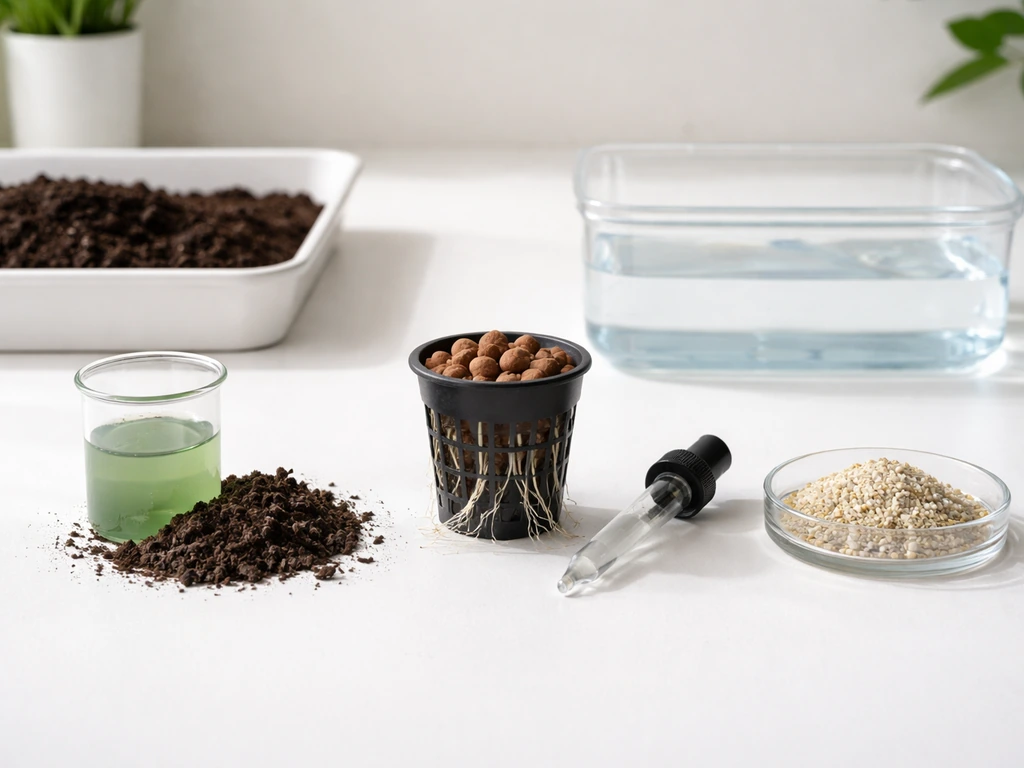
The term 'PGR' stands for plant growth regulator. Under U.S. federal law (7 USC § 136(v)), a plant regulator is legally defined as any substance intended to accelerate or retard the rate of growth or maturation of a plant through physiological action. Critically, the definition specifically excludes substances intended purely as plant nutrients. That distinction matters because a PGR is not fertilizer. It doesn't feed your plant. It changes how your plant behaves at a hormonal or enzymatic level.
In the context of the game Schedule 1, 'PGR' refers to a purchasable in-game additive product that acts as a plant growth regulator for your crops. The real-world analog would be products like trinexapac-ethyl-based formulations (such as Syngenta's Palisade XT), which are emulsifiable concentrate PGRs used in commercial agriculture for growth management. Real PGRs work by interfering with gibberellin biosynthesis, which is the hormone pathway responsible for stem elongation. The result is a more compact plant with controlled internode spacing. That can be exactly what you want in some situations (tight canopy management, controlled plant height) and completely counterproductive in others (when you want maximum vegetative growth and yield size).
In-game, the PGR product mirrors this logic. You use it when you want to regulate how your plants develop, not when you just want to grow them bigger and faster. If your goal is speed and size, you're looking at the wrong product.
Safety, legality, and handling: what you need to know before touching a PGR

This applies both to real-world growers and anyone researching these products for actual use. Real PGRs are classified as pesticides under FIFRA (the Federal Insecticide, Fungicide, and Rodenticide Act) because their mode of action alters plant physiology. That means they are EPA-regulated, label-restricted products. Using a PGR-type product in any way that isn't consistent with its label is illegal in the United States, full stop.
The EPA has also issued draft guidance specifically clarifying how plant biostimulant and growth-promoting products get classified. EPA’s draft guidance explains how it identifies which plant biostimulant or growth-promoting products fall under the FIFRA “plant regulator” (pesticide) pathway based on label growth claims blank" rel="noopener noreferrer">draft guidance specifically clarifying how plant biostimulant and growth-promoting products get classified. If a product's label makes any claim about accelerating, retarding, or altering plant growth through physiological action, it may fall under the FIFRA plant regulator pathway regardless of how it's marketed. Some products sold as 'biostimulants' or 'growth enhancers' in garden shops are walking a regulatory gray line.
For real-world handling, the EPA and product manufacturers are consistent on this: always read the full label before mixing or applying, use the required personal protective equipment (gloves, eye protection, and sometimes a respirator depending on the formulation), store products in original sealed containers away from food and children, and follow label-required restricted entry intervals before re-entering treated growing spaces. For blank" rel="noopener noreferrer">safe storage and disposal, the EPA consumer guidance emphasizes following the pesticide label instructions and not using the product if the contents or age are unclear. If you have an unlabeled or old PGR product, the EPA guidance is clear: do not use it. Proper disposal through a local hazardous waste program is the right call.
PGR vs Speed-Grow vs fertilizer: how they actually differ
These three product types are not interchangeable, and confusing them leads to real problems. Here's a direct side-by-side breakdown.
| Product Type | Primary Function | Mechanism | When to Use | What It Won't Do |
|---|---|---|---|---|
| PGR (Plant Growth Regulator) | Control growth rate and plant structure | Alters plant hormone pathways (e.g., gibberellin suppression) | When you want compact, controlled growth or to slow elongation | Will not feed the plant or accelerate overall yield size |
| Speed-Grow | Accelerate vegetative growth and development speed | Usually contains rooting hormones, cytokinins, or biostimulants that push cell division | When you want faster canopy fill, bigger plants, or quicker transitions | Does not replace core nutrition; plant still needs macro and micronutrients |
| Fertilizer / Nutrients | Provide macro and micronutrients for growth, flowering, and health | Direct nutritional input (N-P-K plus trace minerals) | Every grow, from seedling to harvest, as a baseline | Will not regulate plant structure, speed up development without nutrients, or correct hormonal imbalances |
The clearest way to think about it: fertilizer is your plant's food, Speed-Grow is a stimulant that tells the plant to grow faster, and PGR is a controller that tells the plant to slow down or compact itself. Using a PGR when your plant is already struggling nutritionally will make things significantly worse. Using Speed-Grow without adequate fertilizer behind it is like pressing the gas pedal with an empty tank.
Picking the right product for soil vs hydroponics
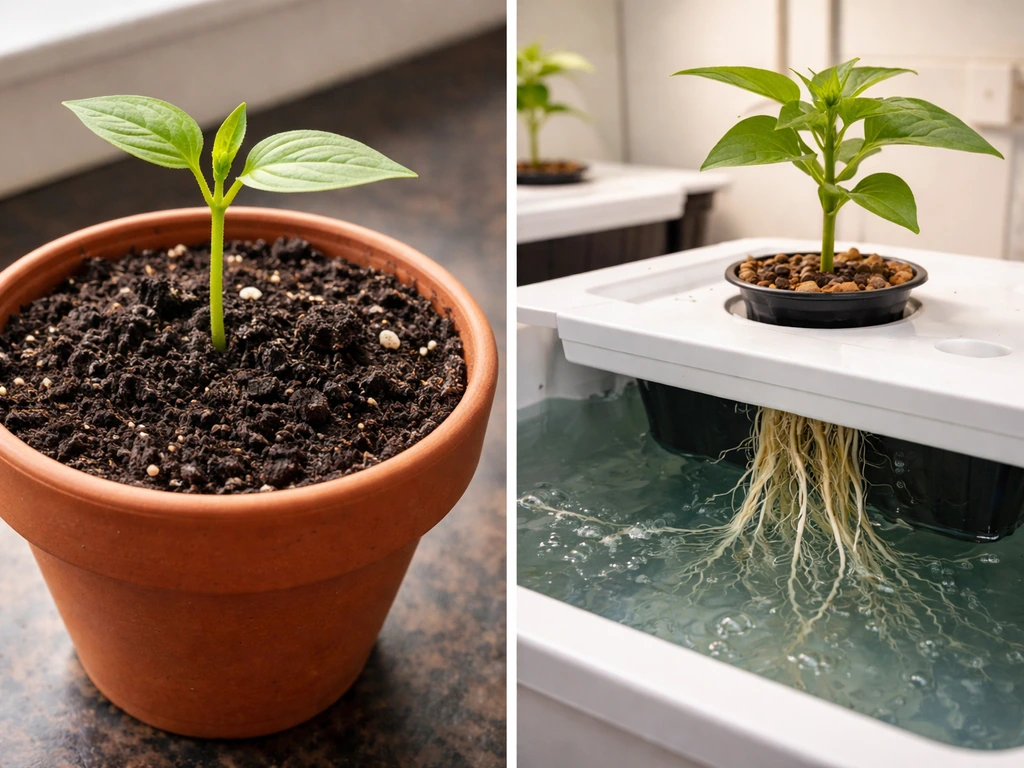
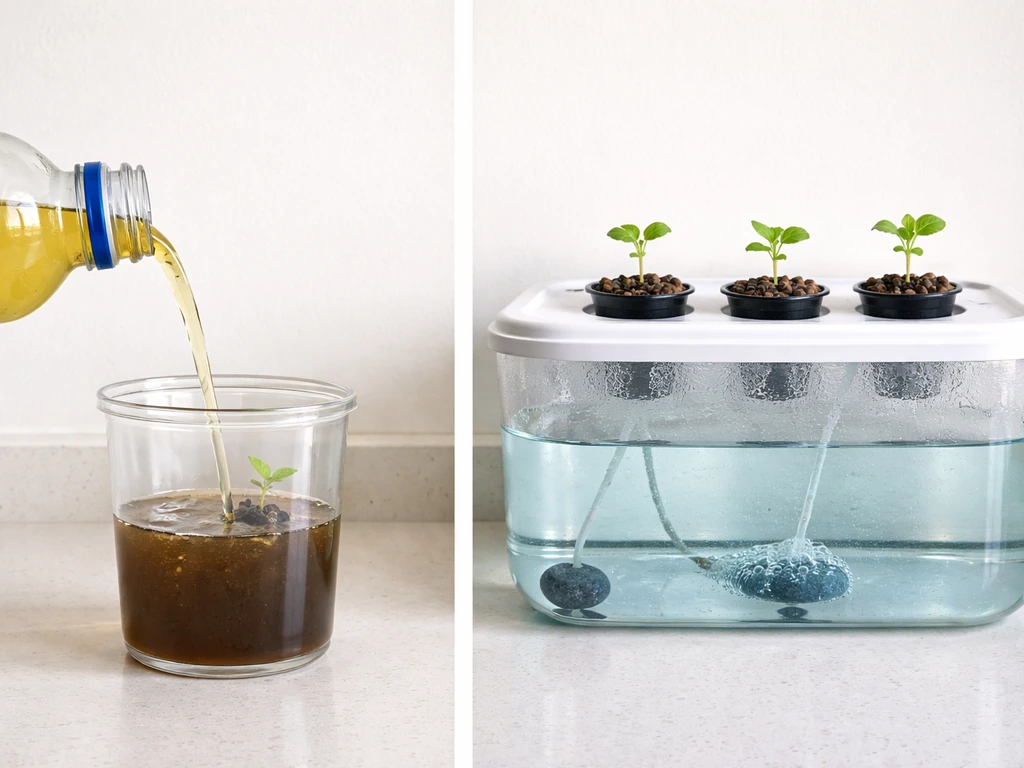
Your growing medium changes which product makes the most sense and how you apply it. In soil grows, the medium provides some buffering. Organic matter and microbial activity can partially offset minor dosing errors, and nutrient availability is slower and more forgiving. In hydroponics, there's no buffer. Whatever you put in the reservoir is what the roots get, immediately, at the concentration you mixed it.
Soil growers
If you're growing in soil and your primary goal is maximizing plant size and yield, start with a solid NPK fertilizer program and skip the PGR entirely. PGRs in soil can be hard to flush out if you overdose, because the medium holds them. Speed-Grow type additives can work well in soil during the vegetative stage to push canopy development, but always reduce your base fertilizer slightly when adding a biostimulant or growth accelerator so you're not overloading the root zone. A good rule of thumb: if Speed-Grow pushes your total EC up, dial back your base nutrient concentration to compensate.
Hydroponic growers
Hydroponics gives you precise control but zero forgiveness. PGRs in a hydro reservoir need very careful dosing because root uptake is direct and fast. If you're experimenting with a PGR in hydroponics, start at the lowest recommended dose, monitor plant response over 48-72 hours before adjusting, and keep a separate reservoir batch ready so you can dilute quickly if you see negative symptoms. Speed-Grow products generally integrate more smoothly into hydro feeding programs because they function similarly to root-stimulating additives many hydro growers already use. Check that your Speed-Grow additive is compatible with your reservoir's pH range (typically 5.5-6.5 for most hydro setups) and that it doesn't precipitate with your base nutrients.
How to integrate these into your feeding schedule
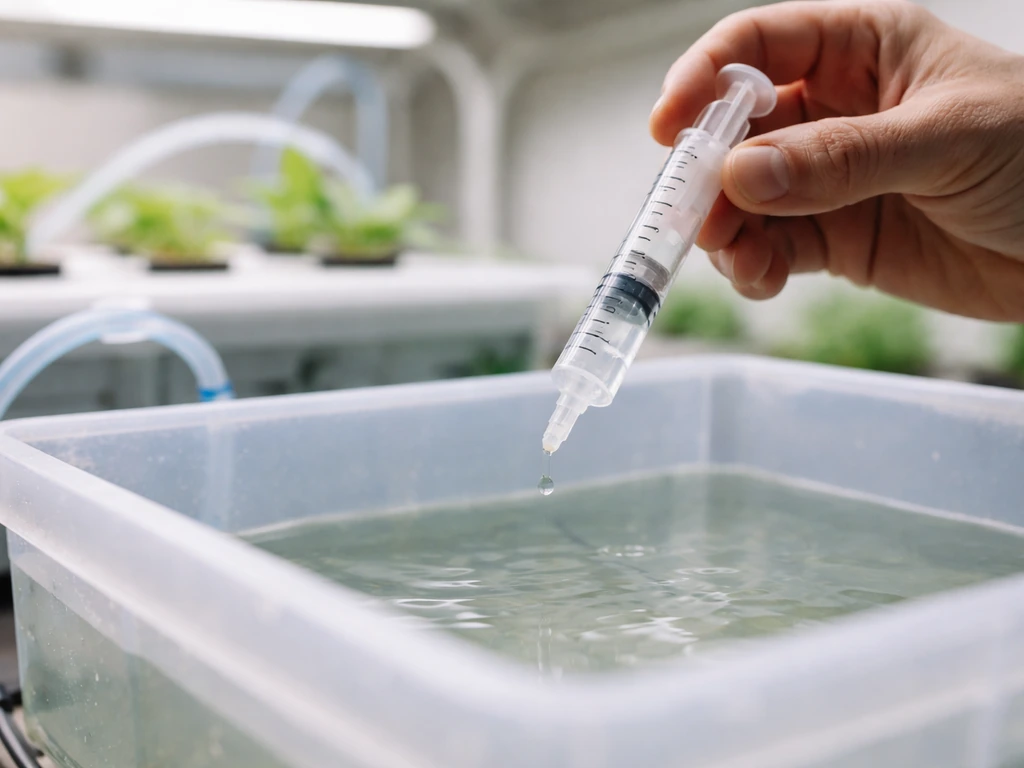
Timing matters as much as dosing. Here's how to think about each product by growth stage. If you want the schedule 1 best way to grow plants, align PGR, Speed-Grow, and fertilizer to your growth stage your feeding schedule.
- Seedling stage: Use only a diluted base fertilizer (25-50% of full strength). No PGRs, no Speed-Grow. The root system is too young to handle anything aggressive.
- Early vegetative stage (weeks 1-2 of veg): This is where Speed-Grow fits best if you're using it. Apply at the lower end of the recommended dose alongside your base nutrients. Watch EC: your combined EC from base nutrients plus Speed-Grow should stay within the range appropriate for the growth stage (typically 0.8-1.4 mS/cm for veg in most setups).
- Mid-to-late vegetative stage: If using a PGR for canopy control (e.g., you want to prevent stretching or keep height in check), this is the right application window. Apply once, monitor response for 5-7 days before reapplying. Reduce Speed-Grow if you're also running it, since PGR and growth accelerator are working at cross-purposes.
- Transition to flower: Stop PGR application at least 1-2 weeks before flipping to flower or initiating the reproductive stage. Residual PGR activity during early flower can reduce bud site development. Continue base fertilizer, transitioning N-P-K ratios toward a bloom formula.
- Flower/fruiting stage: This is fertilizer territory. Focus on your bloom nutrients, adjust pH and EC to your target range, and avoid PGR or Speed-Grow entirely unless you have a very specific, label-supported reason.
On dosing: always follow the product label as your ceiling. For PGRs especially, more is not better. The physiological effects are dose-dependent, and the gap between 'effective' and 'damaging' can be narrow. For Speed-Grow and biostimulants, the margin is more forgiving, but starting at half dose and scaling up over two feeding cycles is a safer approach than hitting full dose on day one.
Recognizing problems early and fixing them
Whether you're over- or under-applying, your plant will tell you. Knowing the signs early saves the grow.
Signs of PGR over-application
- Severely stunted internodes and very tight, compressed leaf spacing beyond what's desired
- Leaf cupping, curling, or unusual leaf texture (stiff, waxy, or abnormally dark green)
- Dramatically slowed growth that doesn't recover over 7-10 days
- In severe cases, yellowing at new growth tips as the plant's hormonal balance is disrupted
If you see these signs: stop PGR application immediately. In hydroponics, flush the reservoir with plain pH-balanced water for 24-48 hours, then reintroduce base nutrients at half strength. In soil, water heavily with plain pH-adjusted water to leach the medium (3x the pot volume is a common guideline), then resume a light base fertilizer program. Give the plant 1-2 weeks to recover before evaluating whether to continue the grow.
Signs of Speed-Grow over-application
- Rapid but weak, stretched growth with thin stems that can't support themselves
- Light green or yellowing new leaves (possible nitrogen dilution effect from too-fast cell division without adequate nutrition)
- Leaf tip burn if the additive has pushed total EC too high
Fix: reduce or eliminate the Speed-Grow dose and ensure your base fertilizer is providing adequate NPK. The plant grew faster than its nutrition could support, so boosting your nitrogen slightly while pulling back the accelerant usually corrects this within a week.
Signs of under-application (or wrong product choice)
- Slow, weak growth despite adequate light and correct pH: this usually means a nutritional deficiency, not a PGR problem. Switch your focus entirely to fertilizer diagnosis.
- Plants that won't compact despite a PGR application: you may be underdosing, or your plant's genetics are resistant to that PGR class. Revisit dosing within label limits before assuming the product isn't working.
- No speed improvement from Speed-Grow: check that your base nutrition, pH, light intensity, and environment are all optimized first. No growth accelerant compensates for a root-bound plant, incorrect pH, or light deficiency.
Your decision framework and first steps
Before buying or applying anything, answer these two questions: What is your actual goal, and what is your growing medium? Your goal and medium together determine the right product.
| Your Goal | Your Medium | Best Starting Point |
|---|---|---|
| Maximize plant size and yield | Soil or hydro | Solid NPK fertilizer program, add Speed-Grow in early veg if needed |
| Control plant height and structure | Soil or hydro | Base fertilizer first, add PGR in mid-veg within label guidelines |
| Faster canopy fill, quicker transition | Hydroponics | Speed-Grow additive alongside base nutrients, monitor EC closely |
| Plants look sick or stunted | Soil or hydro | Fix nutrition and pH first. Do not add PGR or Speed-Grow until the plant is healthy |
For anyone comparing these options in the context of Schedule 1 growing mechanics, the same logic applies in-game: use PGR when you want to regulate and control plant behavior, use Speed-Grow when you want faster and bigger growth, and always make sure your plants have baseline fertilizer nutrition before adding anything else on top. For throw-and-grow setups, choosing the best fertilizer for throw and grow helps you keep growth steady while you add other inputs fertilizer nutrition.
If you're interested in going deeper on in-game grow optimization, the best way to grow plants in Schedule 1 and what fertilizers work best for throw-and-grow setups are both worth reading alongside this guide. If you're specifically aiming to maximize clover results, the best throw and grow clover techniques are a good next read.
If you want the in-game shortcut, review the schedule 1 best way to grow plants approach and fertilizer picks for throw-and-grow setups best way to grow plants in Schedule 1. You can also grow plants with Gatorade, but treat it like a fertilizer-adjacent nutrient mix rather than a plant growth regulator can you grow plants with gatorade.
Do this first: a quick-start checklist
- Identify your goal: growth control (PGR), growth acceleration (Speed-Grow), or baseline nutrition (fertilizer).
- Check your current plant health. If anything looks off, diagnose and fix nutrition and pH before adding any regulator or additive.
- Confirm your growing medium (soil or hydro) and adjust application expectations accordingly.
- Read the full product label for whatever you're using before mixing anything.
- Start at the lowest effective dose and observe your plant's response for at least 48-72 hours before increasing.
- Track your EC and pH with every feeding so you catch dosing problems before they compound.
- Schedule a plain-water flush or feed-free day between cycles if you're combining multiple additives with your base nutrients.
FAQ
Can I use Schedule 1 PGR and Speed-Grow together to get maximum size?
Don’t. Even if the products sound similar on the label, PGRs and fertilizer have different purposes, and mixing them to “cover all bases” is one of the fastest ways to induce stress. If your goal is larger plants, build the fertilizer program first, then add a growth accelerator only if you can keep your nutrient and EC targets stable.
What’s the safest way to compare PGR vs Speed-Grow without confusing the results?
In hydroponics, keep them separate in time for at least the first trial. Run a baseline feed (fertilizer only) for several days, then introduce Speed-Grow or a PGR at the lowest label rate. This makes it obvious which input is causing changes, and it avoids misdiagnosing symptoms that look similar (chlorosis, slowed growth, tip burn).
If it’s sold as a biostimulant, is it still okay to treat it like fertilizer?
Yes, and it’s a common mistake: if your product is marketed as a “biostimulant” or “growth enhancer,” it may still fall under a plant regulator classification if it claims to physiologically alter growth. Before purchase, scan for explicit claims about retarding, accelerating, or changing growth structure, and treat any such claim as label-restricted and regulated behavior.
How do I confirm Speed-Grow won’t precipitate or conflict with my hydroponic nutrients?
If the label doesn’t clearly state compatibility with your hydro nutrient system, assume you need to test. Mixing unknowns can cause precipitation or uneven dosing, especially when pH drifts. Do a small jar test with the same water, same pH adjustment method, and the same order of addition you’ll use in the reservoir.
Is half dose always enough when starting Speed-Grow in hydro?
Not automatically. “Half dose” is the safer starting point, but you still need to confirm your pH and EC remain in range after dosing. For accelerators, watch EC creep, because pushing total salts can create nutrient burn that looks like a dosing error for the additive itself.
What do over-dosing symptoms from PGR look like compared with fertilizer issues?
Watch for symptoms that point to hormonal control, not nutrient deficiency. PGR overuse often shows up as overly tight growth, reduced internode extension, or “stalled” development even when nutrition looks adequate. If you see that pattern, stop the PGR and don’t immediately replace it with more fertilizer, instead do the flush and recovery steps described in the guide.
If I see damage, should I correct it differently in soil versus hydroponics?
Don’t. In hydro, the quick way to stabilize after negative signs is a controlled reservoir flush and short recovery window, then restart at reduced strength. In soil, leaching can be slower and more variable by pot size and medium mix, so leach volume and timing matter. If you’re consistently needing to flush often, it usually means your base feeding is off or the additive rate is too aggressive.
When can I reintroduce the additive after flushing or recovery?
Reapply only after the plant shows recovery cues, not just because time passed. A practical check is new growth resuming normally and older leaves stopping the specific progression you observed (for example, halted yellowing or reduced spotting). For PGRs, if you reintroduce, go to a lower effective frequency, not a higher dose.
What’s the best way to adjust my fertilizer when I add Speed-Grow (EC-wise)?
Yes, if you’re measuring correctly. The guide’s EC idea is directionally helpful, but your “dial back” should be based on your actual baseline EC and the amount added by the accelerator. If you don’t have a working EC meter or you don’t log what changed each feeding, you’ll likely overcorrect and swing between deficiency and burn.
Can PGR help when my plants are stunted or struggling nutritionally?
Compatibility depends on growth stage and your “ceiling.” PGRs are about controlling morphology, so they can be helpful for height management but not for fixing weak nutrition or poor rooting. If the plant is underfed or stressed, treat fertilizer and environment first, then decide whether a regulator is even appropriate.