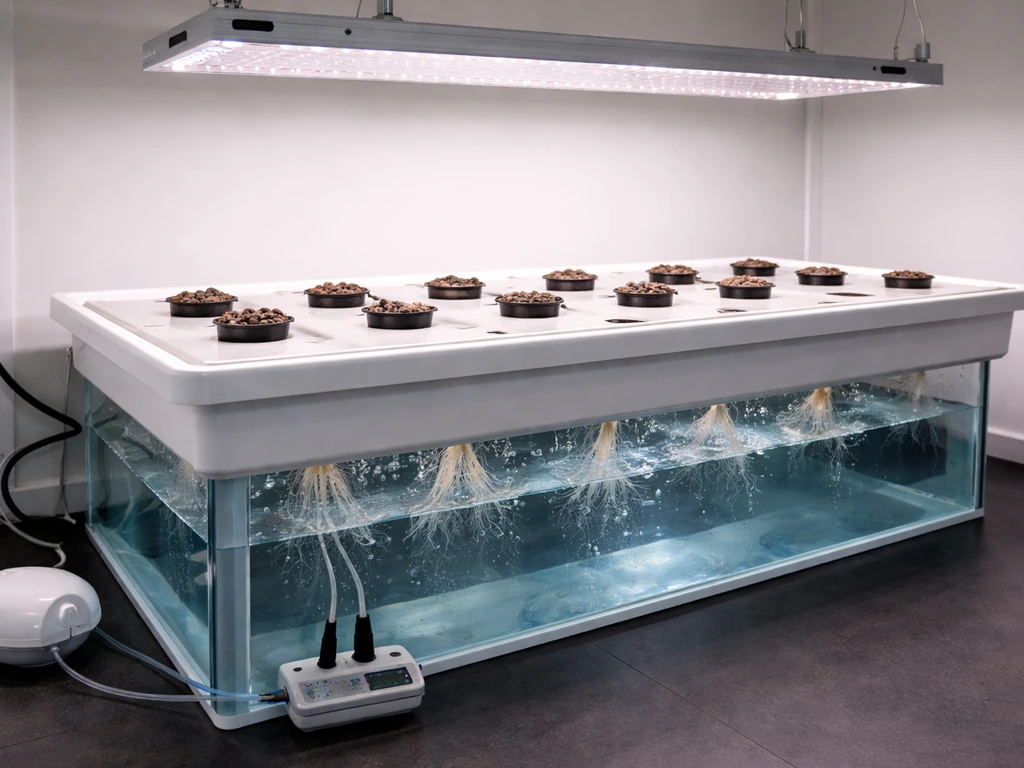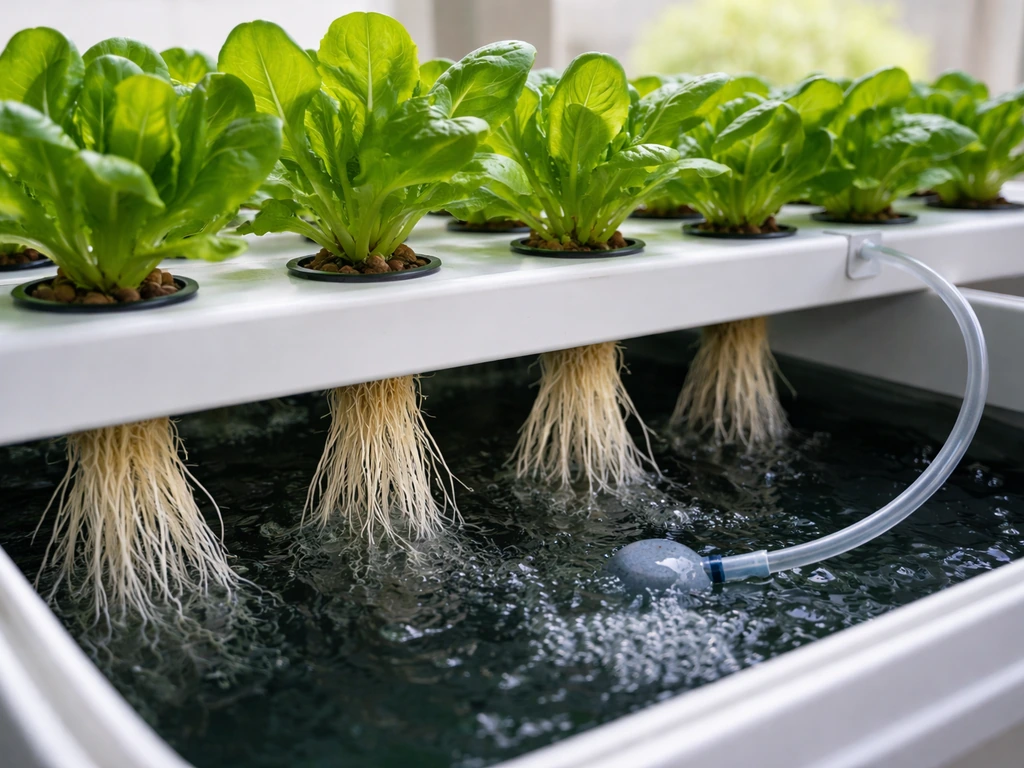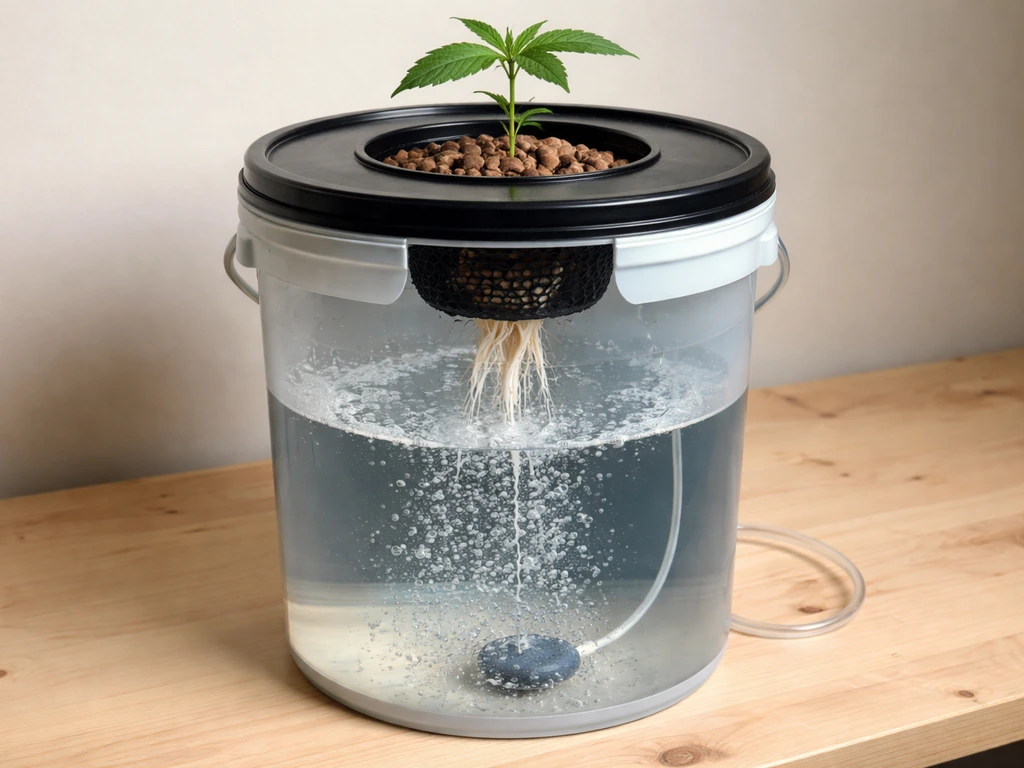
If you want a better hydro grow in Cardiff, the fastest upgrade you can make today is switching to Deep Water Culture (DWC) with a properly calibrated pH pen, a quality air pump, and a three-part nutrient system. Keep your pH between 5.5 and 6.5, your EC matched to your crop and growth stage, and your water temperature below 22°C. That single combination solves the majority of problems that stall home hydro grows, and it works whether you're on a budget setup in a spare room in Roath or running a more serious operation anywhere across South Wales.
Better Grow Hydro Cardiff: Setup and Fixes for Today

Marcus Holloway
1 May 2026
What 'better' actually means in hydroponics
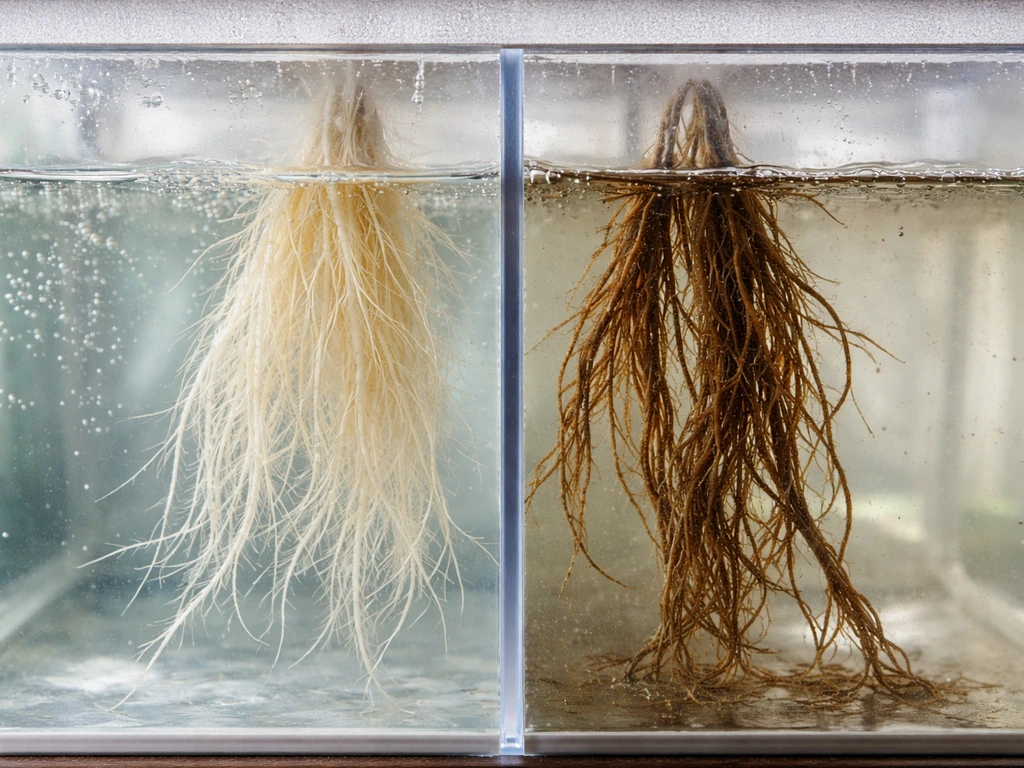
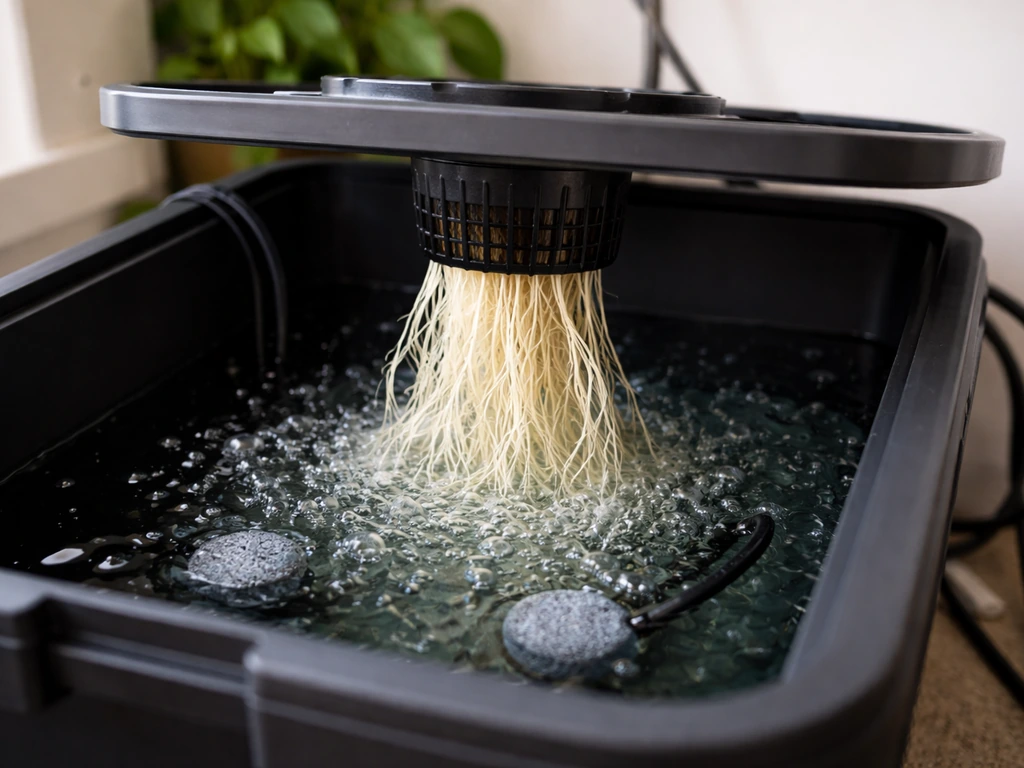
When growers say they want 'better' results, they usually mean one of three things: faster growth, healthier plants, or higher yields. In hydroponics, those outcomes are almost always tied to the same root causes. Plants in hydro don't have soil buffering to fall back on, so any imbalance in pH, nutrients, oxygen, or temperature shows up quickly and directly in the plant. 'Better' in practical terms means getting those variables dialled in and keeping them stable week over week.
Speed comes from giving roots uninterrupted access to oxygen and nutrients. Health comes from pH stability, which controls which nutrients are actually available to roots regardless of what's in the reservoir. Yield comes from combining adequate light intensity with the right EC (electrical conductivity) for the growth stage. Fix those three things and you're already ahead of most home growers.
Pick the right system before buying anything else
There are four main hydroponic system types you'll see stocked at UK grow shops and online suppliers: Deep Water Culture (DWC), Nutrient Film Technique (NFT), Ebb and Flow (Flood and Drain), and Drip irrigation. Each has a different learning curve and failure mode.
| System | How it works | Best for | Main risk |
|---|---|---|---|
| DWC | Roots suspended in oxygenated nutrient solution in a reservoir | Beginners, leafy greens, fast growth | Water temperature and aeration failure |
| Ebb & Flow | Tray floods on a timer then drains back to reservoir | Intermediate growers, scalable setups | Timer failure, overflood, pH drift between cycles |
| NFT | Thin film of nutrient solution flows continuously over roots in a channel | Experienced growers, commercial-style setups | Pump failure causes rapid root dry-out |
| Drip | Nutrient solution drips onto medium around the base of each plant | Beginners to advanced, flexible medium choice | Clogging, uneven distribution, runoff management |
For most beginners in Cardiff setting up for the first time, DWC is the recommendation. It's simple, cheap to start, and gives you direct visibility of your roots and reservoir at all times. Ebb and Flow is a solid step up once you're comfortable: it re-oxygenates roots during drain cycles and handles a wider range of plant sizes and media, but the timer dependency means one power cut or scheduling mistake can set you back. NFT looks elegant but punishes any pump failure almost immediately. Start with DWC, learn the fundamentals, then scale if you want.
Equipment checklist and how to set it up
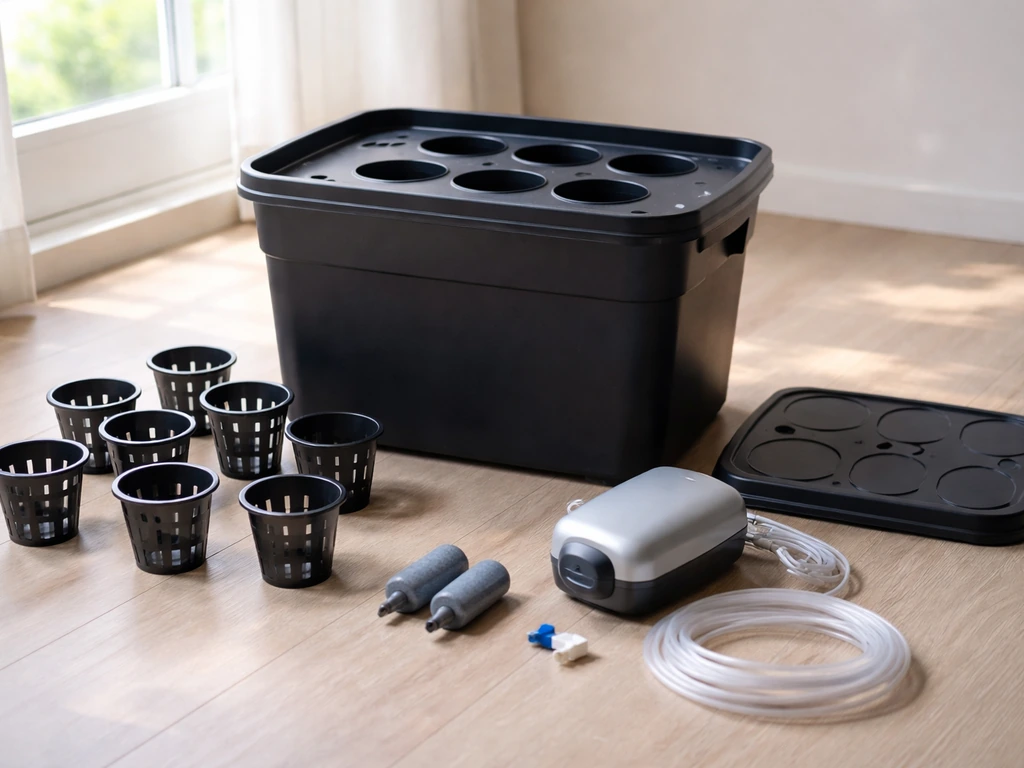
Here's everything you actually need for a functional beginner DWC setup. Prices vary by brand, but this covers the essential categories in order of priority.
Core equipment list
- Reservoir: a lightproof container sized to your plant count (at least 10–15 litres per plant in DWC)
- Air pump and air stones: sized for your reservoir volume; aim for dissolved oxygen above 6 ppm, ideally 7–10 ppm
- pH pen or meter: calibrated with fresh pH 4 and pH 7 solutions (two-point calibration)
- EC/TDS meter: for tracking nutrient concentration in solution
- Net pots and hydro growing medium (clay pebbles or rockwool cubes)
- LED grow light: target 200–400 µmol/m²/s PPFD at canopy; roughly 20–40 actual watts per square foot depending on crop
- Grow tent: 60x60cm is workable for a 2–4 plant starter; 120x120cm gives you proper room
- Inline fan and carbon filter: sized to your tent volume, ideally turning over air every 1–3 minutes
- Digital timer: for lighting and (in ebb and flow) pump cycles
- Thermometer and hygrometer: to track both air and water temperature
- pH up and pH down solutions
- Three-part or two-part hydroponic nutrient solution
Lighting and airflow details
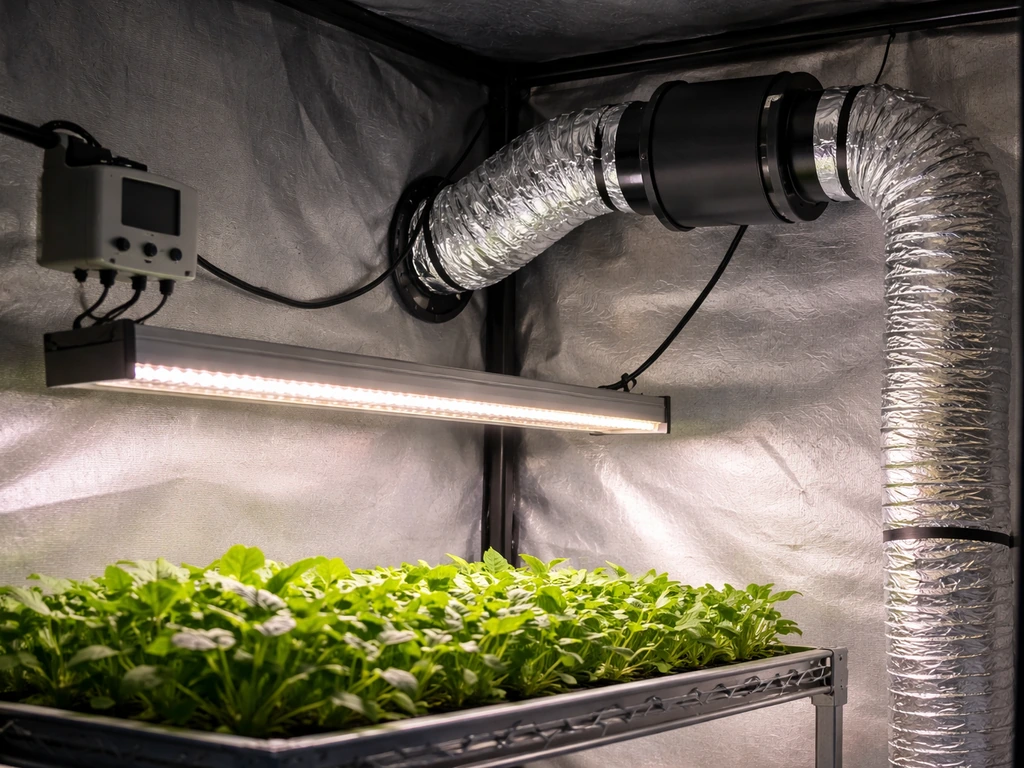
For leafy greens and most home crops, target a Daily Light Integral (DLI) of around 12–17 mol per square metre per day. In practice, a quality LED running 16 hours a day at the right PPFD level will hit this. Avoid cheap blurple LEDs with no PPFD data: look for a manufacturer that publishes actual photon output numbers. For ventilation, your fan should exchange the full tent volume every 1–3 minutes. A carbon filter on the exhaust handles odour and is a sensible addition for any indoor UK setup.
Electrical safety in a UK setup
Running pumps, lights, and fans in a space that involves water means electrical safety is not optional. UK HSE guidance is clear: use a Residual Current Device (RCD) on any circuit running electrically powered equipment near water, and never bypass it. A plug-in RCD adapter costs under £15 and could prevent a serious accident. Keep all connections above water level where possible, and inspect cables regularly. If you're using multiple extension leads in a tent, consolidate onto a single quality surge-protected board with an RCD rather than daisy-chaining.
Nutrients and water management
This is where most hydro grows either succeed or fail. Getting your pH and EC stable is the single highest-leverage thing you can do for plant health. That focus on quality-grow-hydroponics fundamentals is what keeps plants thriving week after week pH and EC stable.
pH targets and why they matter
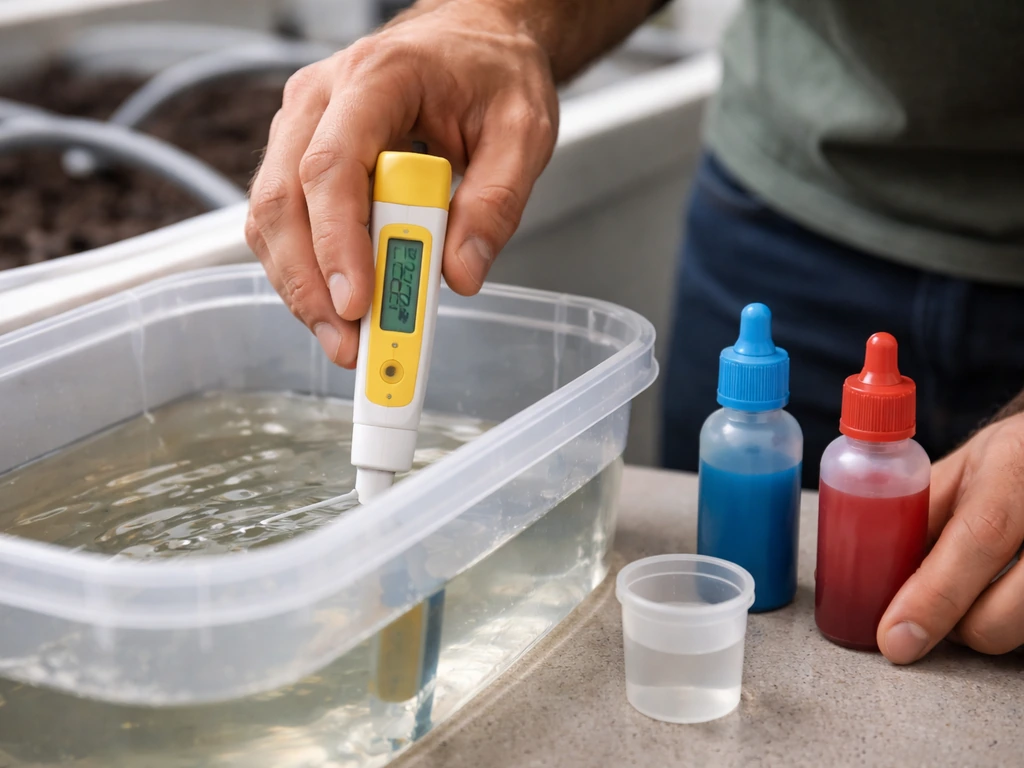
Keep your reservoir pH between 5.5 and 6.5. Within that range, the full spectrum of nutrients remains available to roots. Outside it, even a perfectly mixed nutrient solution can become chemically locked out. Calibrate your pH pen using two-point calibration: place the probe in fresh pH 7 solution first, confirm, then move to fresh pH 4 solution. Use fresh calibration solutions, not ones that have been sitting open for months. Recalibrate weekly if you're measuring daily.
EC and feeding by growth stage
EC measures the total dissolved salts in your solution, which is a proxy for nutrient concentration. There's no single right number: it depends on your crop and the stage of growth. For seedlings and early veg, aim for lower EC (around 0. 8–1.
2 mS/cm for leafy greens). As plants mature and demands increase, EC rises accordingly. If your EC is creeping up over time, it usually means plants are drinking more water than nutrients: top up with plain pH-adjusted water. If your plants are drinking more water than nutrients, water what you want to grow by topping up with plain pH-adjusted water and rechecking EC soon after.
If EC is falling faster than expected, plants may be consuming nutrients heavily: add a diluted nutrient top-up.
Water temperature and dissolved oxygen
Keep your reservoir water below 22°C. Warmer water holds less dissolved oxygen, and dissolved oxygen below 6 ppm is where root health starts to deteriorate. Keeping your water and dissolved oxygen in the right zone is good to grow water in Deep Water Culture. In a Cardiff summer this can be harder than it sounds, especially in south-facing rooms. A simple aquarium thermometer gives you daily data. If temperatures climb, consider wrapping your reservoir in reflective material to reduce heat gain, or use a small aquarium chiller if budget allows.
Mixing nutrients and water change schedule
Always start with your water before adding nutrients. For UK tap water, check your starting EC before adding anything since Cardiff's mains water often has a baseline EC worth accounting for. Add nutrients in the order specified by your brand (usually grow, bloom, micro if using a three-part system), then adjust pH last. Do a full reservoir change every 7–14 days for DWC, not just topping up. Stale solution accumulates salt imbalances that a top-up alone won't correct.
Common hydro problems and how to fix them fast
Because hydro has no soil buffer, problems escalate faster than in soil grows. If you specifically want a better grow, focusing on stable pH and EC will usually get you there faster than changing hardware. Here's what goes wrong most often and what to do about it.
| Problem | Likely cause | Fix |
|---|---|---|
| pH drift (rising or falling) | Microbial activity, nutrient uptake imbalance, top-ups with uncorrected water | Check and adjust pH daily; use pH-adjusted water for all top-ups; full reservoir change if severe |
| Algae growth | Light leaking into reservoir | Make reservoir fully lightproof; cover any clear tubing; remove algae physically and do a reservoir flush |
| Brown/slimy roots | Root rot from warm water, low oxygen, or pathogen | Drop water temp below 22°C; increase aeration; consider beneficial bacteria additive; full reservoir clean |
| Slow or stunted growth | pH lockout, low EC for stage, insufficient light or oxygen | Check pH first, then EC, then light PPFD; add air stones if DO is low |
| Nutrient deficiency symptoms | pH out of range locking out specific nutrients | Correct pH to 5.5–6.5; recovery signs typically visible within 12–24 hours on new growth |
| Clogging (in drip or NFT) | Salt buildup, root matter in lines | Flush lines with plain pH-adjusted water; clean emitters; consider a drip line filter |
| Overfeeding (tip burn, crisping) | EC too high for growth stage | Dilute reservoir with plain water; do a full change if severe; lower base EC for seedlings and early veg |
The troubleshooting priority order is always: pH first, then EC, then temperature and oxygen, then light. Most visible symptoms that look like nutrient deficiencies are actually pH lockout. Fix pH, wait 12–24 hours, and check whether new growth looks healthier before assuming you need to add more nutrients.
Sourcing supplies in and around Cardiff
Cardiff has a reasonable local grow shop scene for South Wales, and UK online delivery options are strong enough that you're rarely more than 1–2 working days from any piece of equipment. If you also want a better hydro grow in Pasadena, focus on the same stable pH and EC fundamentals and choose the right system for your setup better grow hydro pasadena. The question is usually what to buy locally versus what to order online.
What to buy locally first
Local grow shops are best for anything you need immediately: pH and EC meters, calibration solutions, pH up and down, nutrients (since carrying liquids through courier is expensive and risky), and clay pebbles or rockwool. You can also get hands-on advice from staff who know what other local growers are using, which is genuinely useful for Cardiff-specific water quality questions. Ask what the local tap water EC and pH typically runs, since this affects how you mix nutrients.
What to order online
Grow tents, LED lights, inline fans, and reservoirs are almost always cheaper online. UK hydro suppliers like HydroEarth, Dr Greens, GroWell, and Canterbury Hydroponics all stock comprehensive ranges covering lighting, ventilation, nutrients, and pH/EC tools, with UK-wide delivery. For branded items like Bluelab meters or specific nutrient lines, online pricing is usually significantly better than local retail. If you're budget-limited, prioritise the pH pen and nutrients locally on day one, then order the rest online while your seedlings establish.
Budget priority order
- pH pen and calibration solutions (non-negotiable; everything else depends on accurate pH)
- EC/TDS meter
- Air pump and air stones (if using DWC)
- Nutrients: a two-part or three-part system from a reputable UK brand
- pH up and pH down
- Lightproof reservoir or a converted container
- LED grow light
- Grow tent and inline fan
- Timer for lights (and pump if using ebb and flow)
Legal and compliance notes for UK indoor growers
Growing legal plants indoors in the UK (vegetables, herbs, salad leaves) is completely fine and unrestricted. The equipment itself, grow tents, LED lights, nutrients, pH meters, is sold openly and legally throughout the UK. The key compliance points are electrical safety (RCD use, no overloaded circuits) and ensuring your setup doesn't create fire risk through heat buildup. Use the RCD, keep cables tidy, don't overload sockets, and you're well within normal home use guidelines. Cardiff's rental market is worth thinking about too: if you're renting, a grow tent and normal home equipment causes no structural or legal issues, but check your tenancy agreement if you plan anything more permanent.
Weekly grow routine and how to keep optimising
Consistency beats intensity in hydroponics. A simple weekly routine done reliably will outperform an elaborate system maintained erratically. Here's what the week should look like.
Daily checks (5 minutes)
- Check and log pH: adjust if outside 5.5–6.5
- Check reservoir water level: top up with pH-adjusted plain water if low
- Visual check on plants: leaf colour, root colour if visible, any wilting or unusual symptoms
- Check water temperature: alert if above 22°C
Weekly tasks (30–45 minutes)
- Log EC reading and compare to previous week: adjust feeding up or down as needed
- Full reservoir change every 7–14 days: clean reservoir, replace with fresh nutrient solution mixed in correct order
- Recalibrate pH pen using fresh calibration solutions
- Check and clean air stones: replace if flow is noticeably reduced
- Inspect roots: healthy roots are white or cream; brown slimy roots signal root rot
- Check fan, filter, and ventilation: ensure airflow is consistent and tent seals are intact
- Review light timer: confirm schedule matches photoperiod target for your crop
Optimisation upgrades as you go
Once you've completed your first full grow cycle with stable pH and EC, the next upgrades worth considering are: a dedicated water chiller if summer temperatures push your reservoir above 22°C, a digital pH controller for automated dosing if drift is a constant issue, and a PPFD meter app (using a quantum sensor attachment for your phone) to verify your actual canopy light levels rather than guessing from wattage. These aren't required from day one, but they close the gap between a functional grow and a genuinely optimised one.
Your minimum viable setup for this week
If you want to start improving your hydro grow in Cardiff right now, here's the minimum viable path: get a pH pen and calibration solutions today (local shop or next-day delivery), check and correct your reservoir pH to between 5. If you're specifically targeting quality grow hydroponics in Kansas City, the same basics of stable pH, correct EC, and adequate aeration apply hydro grow in Cardiff. 5 and 6.
5, verify your EC is in range for your current growth stage, and confirm your water temperature is under 22°C with adequate aeration. If you're still using a budget blurple LED with no PPFD data, replacing it with a properly specced LED is the next biggest single upgrade. Beyond that, run the weekly routine consistently for four weeks before making any other changes.
Data over four weeks tells you far more than any single reading, and it removes the guesswork that causes most Cardiff growers (and growers everywhere) to chase problems rather than prevent them.
If you're also comparing approaches used by growers in other UK and US cities, the same core principles apply regardless of location: stable pH, correct EC, adequate dissolved oxygen, and good light intensity are universal. Using those basics is good to grow hydroponics successfully, even if you're still improving your setup week by week stable pH, correct EC, adequate dissolved oxygen, and good light intensity.
The Cardiff-specific considerations come down to local water quality, sourcing convenience, and making sure your electrical setup is properly protected. The Drinking Water Inspectorate (DWI) provides official background on water hardness and hard water in England and Wales [local water quality](https://www. dwi. gov.
uk/consumers/learn-more-about-your-water/water-hardness-hard-water/). Get those right and your grow will consistently outperform what most people achieve with the same equipment.
FAQ
Do I really need a pH pen if I’m careful with pH up and down?
A pen is the key point, because “careful” still misses drift caused by nutrient chemistry and plant uptake. If you can’t measure daily, at least measure morning and evening, and replace calibration solution accessibly so you can do accurate two-point calibration.
What’s the safest way to calibrate a pH pen for hydro, especially in Cardiff water?
Use two-point fresh solutions, pH 7 first then pH 4, rinse the probe with distilled or RO water between points, and let the readings stabilise before you accept them. If you haven’t calibrated within a week, treat the pen as unreliable and verify with a new bottle of pH 4 solution.
Should I adjust pH before or after adding nutrients?
Add nutrients first, then adjust pH last. If you set pH then add nutrients, the solution typically shifts again, and you can end up chasing the number while nutrient availability is inconsistent for the roots.
How do I tell if my issue is pH lockout versus a true nutrient deficiency?
Check for the newest growth after you correct pH, wait about 12 to 24 hours, and see if symptoms change. True deficiencies usually show more consistent patterning across leaves over several days, while lockout often improves quickly once pH is back in range.
My EC keeps rising even though I top up with plain water, what should I check first?
First confirm you are topping up with pH-adjusted water, not untreated water. Then check evaporation, reservoir leaks, and whether you are accidentally adding nutrient concentrate during “corrections.” Rising EC with no nutrient addition often indicates you are concentrating salts as water volume drops.
What EC should I use for seedlings, and does it change by crop?
Start lower for seedlings, roughly 0.8 to 1.2 mS/cm for many leafy greens, then increase as demand rises. Crops differ, so use growth stage as the base rule, and only adjust gradually, because sudden EC jumps are more stressful in DWC than in soil.
What’s the best way to manage water temperature in a south-facing Cardiff room?
Use daily readings from a thermometer and treat 22°C as your ceiling target. If you can’t keep it down with reflective wrapping, move the reservoir location, shade the tent, and consider a small chiller once you see repeated spikes, rather than reacting to one hot day.
Why is dissolved oxygen so important in DWC, and how can I spot oxygen problems early?
Low dissolved oxygen harms root hair function and slows nutrient uptake, symptoms often appear as dull or browning roots before leaves look severely bad. If temperature is stable but roots decline, check aeration performance (air stone condition, pump output, and airflow obstruction), not just the pH and EC.
How often should I change the reservoir in DWC?
Do a full reservoir change every 7 to 14 days, top-ups are not a substitute. Top-ups correct volume, but they do not remove salt accumulation that can shift ionic balance and push EC and pH behaviour away from what you calibrated.
Can I run DWC with one timer, or will power cuts ruin my grow?
DWC is more forgiving than systems that depend on timed cycling, because roots stay wet and oxygenated continuously if aeration is steady. Still, plan for outages by using a reliable air pump setup, keeping cords protected, and avoiding daisy-chained extension leads that can fail under load.
Is a carbon filter mandatory in Cardiff for indoor DWC?
Not mandatory for every grow, but if you need odour control or live in a shared or sensitive indoor space, a carbon filter on exhaust is a practical addition. If you notice smell leaking, check that your fan actually pulls air through the filter first, before assuming you need a larger carbon unit.
Do I need a PPFD meter, or is LED wattage enough?
Wattage alone is not enough, because different LEDs produce very different photon output and canopy coverage. If you don’t buy a PPFD meter, use manufacturer PPFD data if available, and avoid LEDs that only list “brightness” without photon measurements.
What should my weekly routine include beyond checking pH and EC?
Include checking reservoir water temperature, confirming air stone airflow, inspecting for salt build-up on the reservoir and tubing, and recording trends (pH drift rate, EC drift rate). Trend logging over several weeks helps you adjust without guessing, especially in Cardiff’s seasonal temperature swings.
Should I start with RO water in Cardiff or use tap water?
You can start with tap water, but you should measure starting EC and baseline pH so you know what the nutrients are building on. In some homes, tap water EC is high enough that starting with RO makes tuning easier, but you still need to adjust pH after mixing.
What electrical safety mistakes are most common with hydro tents?
The biggest issues are running equipment near water without RCD protection and overloading extension leads or power strips. Use an RCD on circuits powering pumps and fans, keep connections above water level, and avoid daisy-chaining extension leads inside the tent.