Yes, hydroponics is genuinely worth it for home growing in 2026, but only if you go in with realistic expectations. You will grow faster, blank" rel="noopener noreferrer">use up to 90% less water than soil, and produce year-round indoors regardless of season. That water efficiency depends on keeping your reservoir chemistry stable and dialing in pH and EC so the system can reliably feed what you grow 90% less water. The tradeoff is that you are now responsible for everything the soil used to buffer for you: pH, nutrient concentration, oxygen, and temperature. Get those four things right and hydroponics is hard to beat. Get them wrong and you will lose a crop faster than you ever would in soil. This guide walks you through the whole picture: whether it is the right choice for you, which system to start with, what plants to grow first, and how to dial in nutrients and pH from day one.
Good to Grow Hydroponics? Setup Guide, Tips, and Troubleshooting

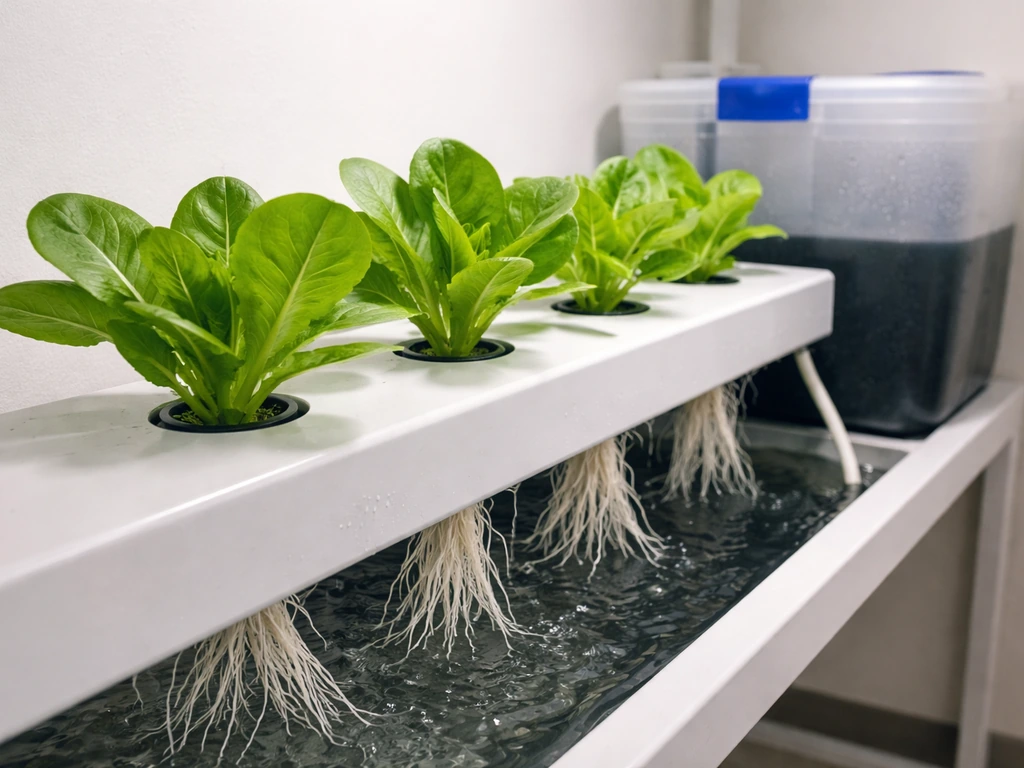
Is hydroponics actually a good idea for home growing?
Oklahoma State Extension puts it plainly: you should have a genuine, worthwhile reason to choose hydroponics over soil. It is not automatically superior. It is a different tool, and it performs best in specific situations. So here is where hydroponics genuinely wins at the home scale.
- Speed: plants grown hydroponically typically reach harvest 30–50% faster than their soil-grown counterparts because nutrients are delivered directly to the root zone with no searching required.
- Year-round growing: you are completely decoupled from seasons. A spare room, a closet, or a garage corner becomes a functional garden in any month.
- Water efficiency: closed hydroponic systems can use up to 90% less water than traditional irrigation because the solution recirculates and evaporation is minimized.
- Space efficiency: vertical NFT channels and compact DWC buckets let you grow more plants per square foot than most container-soil setups.
- Reduced soil-borne disease risk: without soil, you eliminate a large category of fungal pathogens, nematodes, and soil-dwelling pests. Pests and diseases can still occur, but the vector list is shorter.
- Environmental control: you decide every input. That precision is an advantage once you understand what the plant needs at each stage.
Where hydroponics loses is in forgiveness. Soil acts as a buffer. Its organic matter, cation exchange capacity, and microbial life smooth out pH swings, hold nutrients between waterings, and tolerate beginner mistakes for days or weeks. Hydroponics has no such safety net. A pH swing that would barely register in a living soil can lock out nutrients within 24 hours in a reservoir. That is not a reason to avoid hydroponics, but it is why monitoring is non-negotiable. University of New Hampshire Extension frames hydroponic success around five pillars: water, nutrients, light, CO2, and oxygen. Every one of those has to be actively managed, not assumed.
Hydroponics vs soil: honest pros, cons, and who should choose which
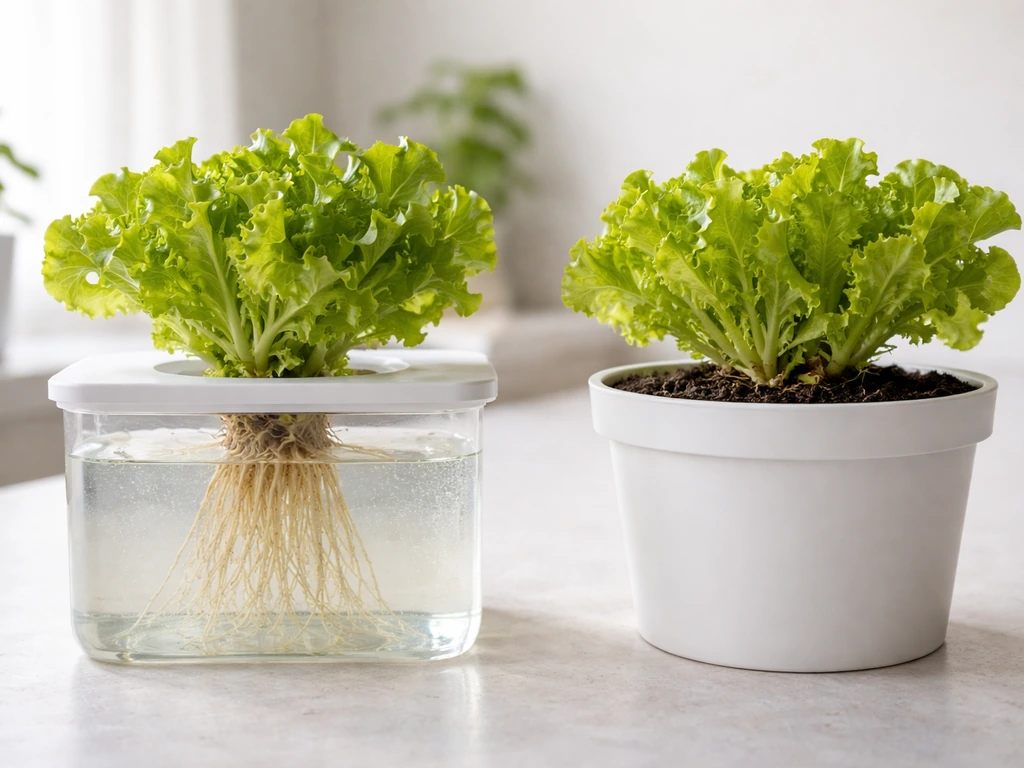
This is the decision most people rush past. Both methods can produce excellent results. The right choice depends on your situation, not on which method is objectively better.
| Factor | Hydroponics | Soil |
|---|---|---|
| Startup cost | $150–$250 for a basic DWC kit plus nutrients | $30–$80 for containers, soil, and basic nutrients |
| Monthly operating cost | ~$15–$25 (nutrients, electricity for pump/air) | ~$5–$15 (water, occasional amendments) |
| Learning curve | Steeper: pH, EC, and oxygen management required | Gentler: soil buffers most beginner mistakes |
| Growth speed | 30–50% faster in most crops | Standard pace, varies by soil quality |
| Water use | Up to 90% less in a closed system | Higher, especially in containers outdoors |
| Maintenance frequency | Daily checks on pH, EC, and reservoir level | Water every few days; less constant monitoring |
| Pest/disease risk | Fewer soil-borne issues; algae and root rot are specific risks | Broader pest and disease exposure via soil vectors |
| Scalability | Easy to expand modular systems | Needs more physical space for more plants |
| Best for | Indoor growers, limited space, year-round goals | Outdoor growers, beginners, lower-budget starts |
My honest recommendation: if you are brand new to growing anything, start with soil in a fabric pot for one crop cycle. You will learn how plants behave under stress, what nutrient deficiency looks like, and how to read your plants without also troubleshooting a pump or pH meter at the same time. Then move to hydroponics. If you already have some growing experience, or if you specifically need year-round indoor production, jump straight to hydro and commit to learning the monitoring routine. That said, many growers run both in parallel, using soil for slower ornamental or outdoor crops and hydroponics for leafy greens and fast-cycling indoor plants.
Pick the right system type (and what equipment you actually need)
There are half a dozen hydroponic system types, but for a home grower in 2026 you realistically need to evaluate three: deep water culture (DWC), nutrient film technique (NFT), and drip systems. The others (aeroponics, ebb and flow, wick) either require more precision equipment or suit very specific use cases. Here is how the main three compare.
Deep water culture (DWC)
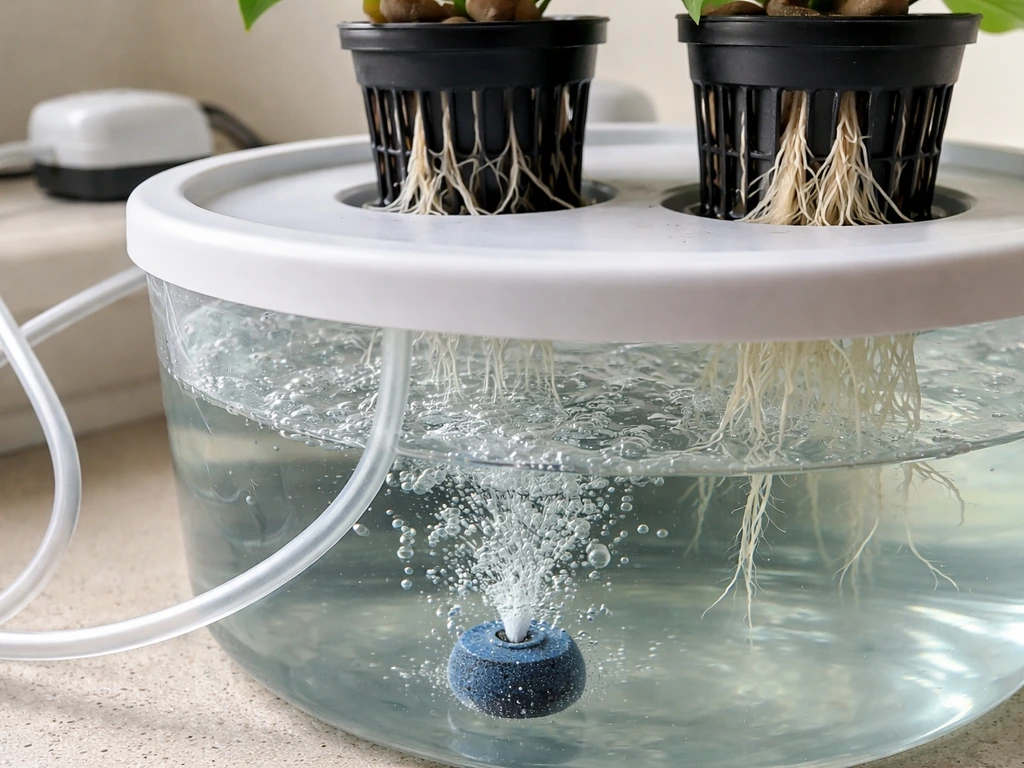
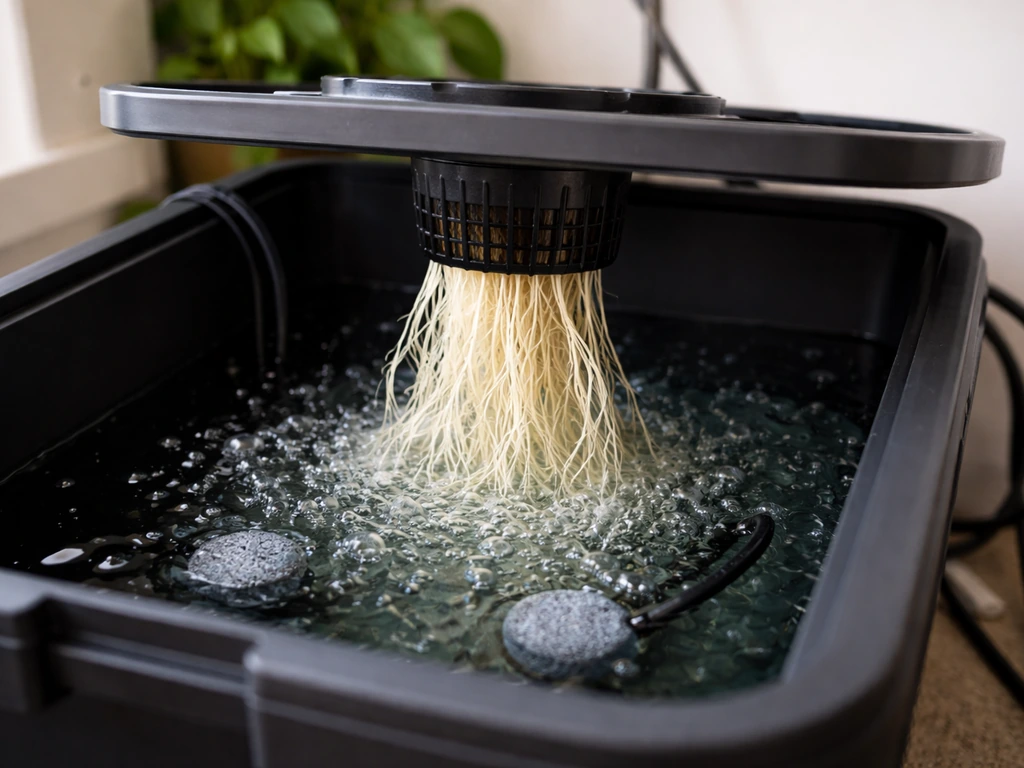
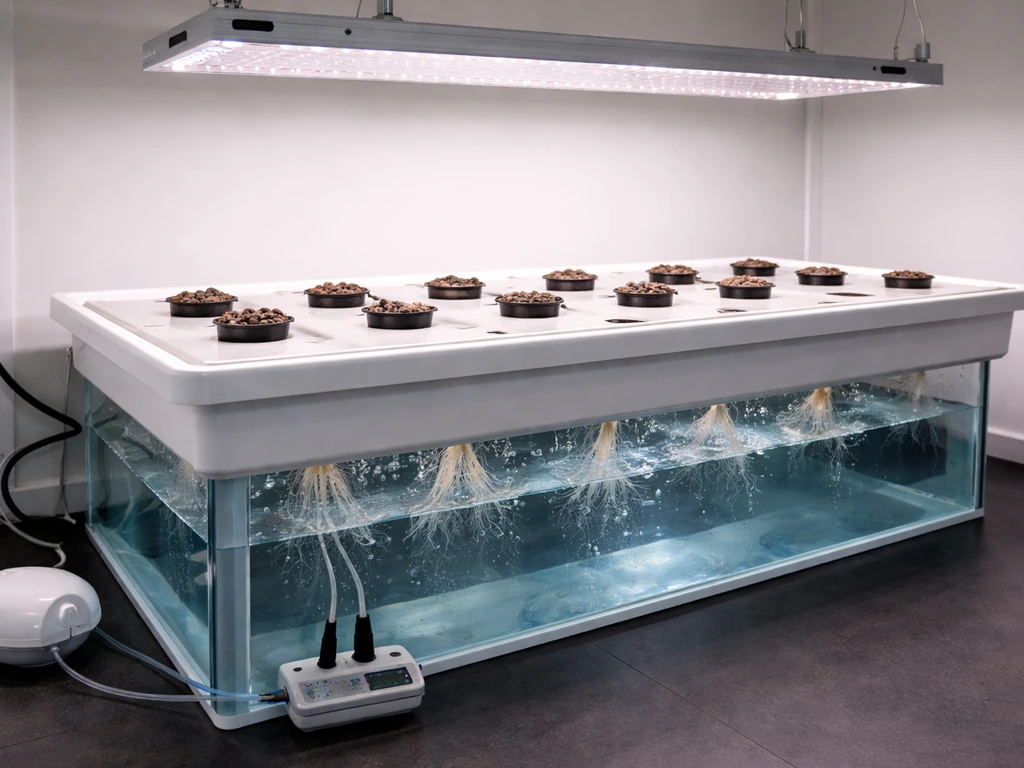
DWC suspends plant roots directly in a reservoir of oxygenated, nutrient-rich water. An air pump and airstone keep dissolved oxygen (DO) levels high, which is what prevents root rot in a system where roots are submerged 24/7. This is the most beginner-friendly recirculating system because it has the fewest moving parts. A basic DWC setup for 4–6 plants costs roughly $150–$250 in kit form and about $15–$25 per month to operate. Cornell University's home hydroponics guide specifically recommends DWC as a starting point for leafy greens. Target lettuce in DWC: pH 5.6–6.0, EC 1.1–1.4 dS/m.
Nutrient film technique (NFT)
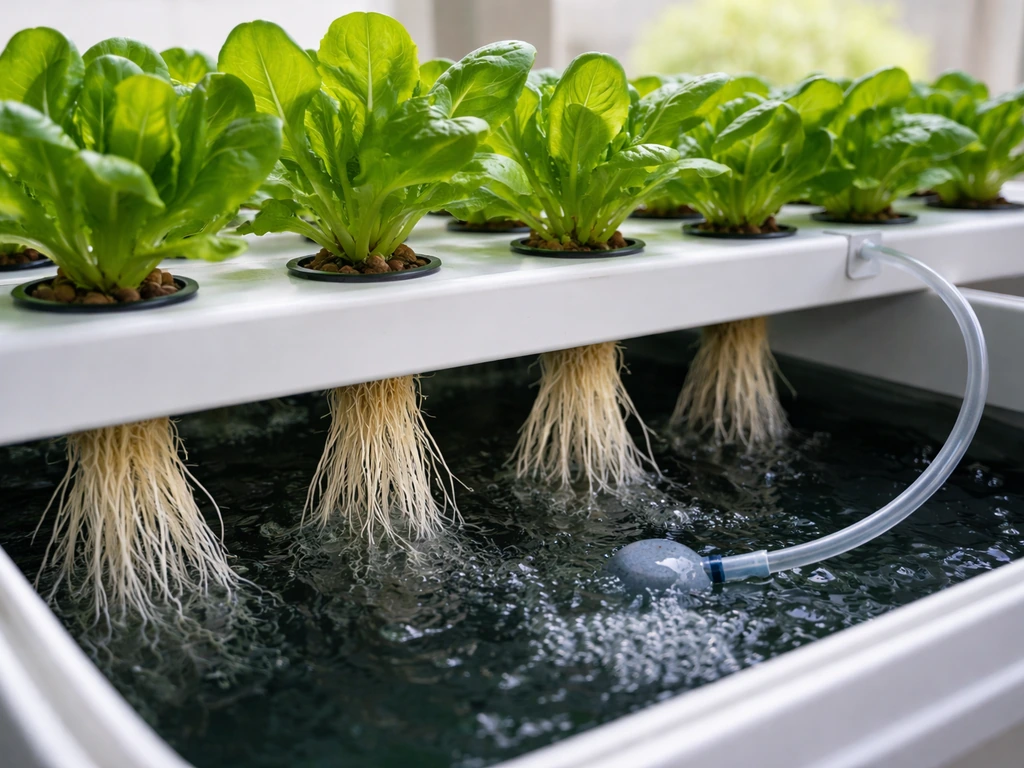
NFT runs a thin, continuous film of nutrient solution along the bottom of angled channels. Roots grow along the channel floor, with the upper portion exposed to air for oxygen uptake. It is excellent for lettuce, herbs, and other fast-cycling leafy crops. The channels act as highways for the solution, and many growers add an airstone to the reservoir to keep the solution oxygenated and well mixed. NFT is slightly more technical than DWC because channel slope (usually 1:30 to 1:40) and flow rate matter, but it scales beautifully for vertical wall setups.
Drip systems
Drip systems deliver nutrient solution directly to the base of each plant through small emitters on a timer. They pair well with a growing medium (rockwool, coco coir, or perlite) and are the most flexible option for larger or fruiting plants like tomatoes and peppers that need more root support. Drip systems can be recirculating (solution returns to the reservoir) or run-to-waste (excess drains away). Recirculating saves resources but requires more attention to EC drift. Run-to-waste is simpler but uses more solution.
Core equipment list
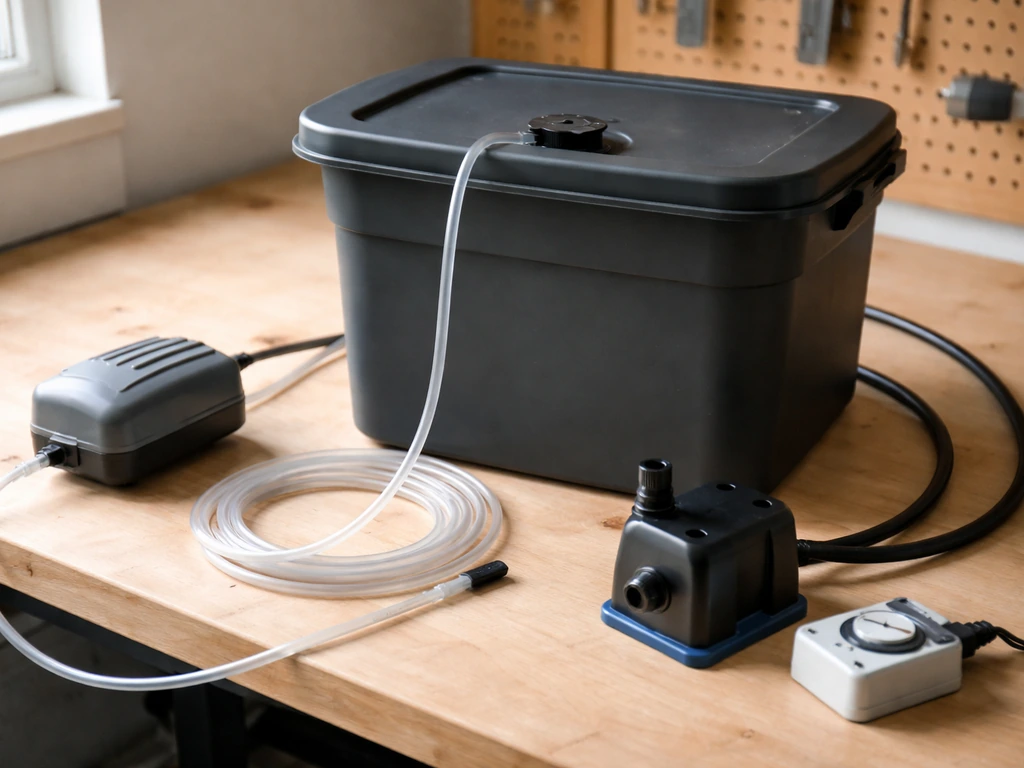
- Reservoir or system container (food-grade, opaque to block light and prevent algae)
- Air pump with airstone and tubing (for DWC and NFT reservoirs)
- Water pump (for NFT and drip systems)
- Net pots (2-inch for seedlings, 3–4-inch for most crops)
- Growing medium: rockwool cubes for germination, then expanded clay pebbles (hydroton), perlite, or coco coir depending on system type
- pH meter (digital; calibrate weekly) and pH Up/Down solutions
- EC/TDS meter to monitor nutrient concentration
- Hydroponic-specific nutrient solution (two- or three-part liquid is easiest for beginners)
- Thermometer for both air and reservoir temperature
- Timer for pumps and lights
- LED grow light (if indoors): full-spectrum, sized to your canopy area
Plants that do best in hydroponics (and good first choices)
Not every plant is equally well-suited to hydroponics. Crops with shallow, fibrous root systems and fast growth cycles are the easiest wins. Crops with deep taproots, bulbing requirements, or very long grow cycles are harder to manage in most home systems.
Cornell's home hydroponics guide is built entirely around leafy greens, and that is deliberate. Lettuce, spinach, kale, arugula, Swiss chard, and most culinary herbs (basil, cilantro, mint, parsley) are forgiving, fast-cycling, and give you quick feedback. A lettuce crop can go from seedling to harvest in 4–6 weeks in a well-managed DWC or NFT system. That fast cycle means you iterate quickly, fix mistakes, and build confidence before moving to more demanding crops.
Once you have a few leafy green runs under your belt, fruiting crops are the logical next step. Tomatoes (especially determinate or dwarf varieties), peppers, cucumbers, and strawberries all perform very well in recirculating drip or DWC systems. They require higher EC targets and more structural support (trellising) than leafy greens, but the yield per square foot indoors can be remarkable. Drip Canopy’s beginner guide provides commonly cited crop starting targets, including lettuce managed around pH 5.5, 6.5 with EC roughly 0.8, 1.2 mS/cm and higher EC ranges for fruiting crops like tomatoes and peppers. Avoid root vegetables like carrots and radishes in most standard setups, and be cautious with large vining plants in small systems as they can overwhelm a reservoir's nutrient demand.
| Crop | Best System | pH Target | EC Target (mS/cm) | Weeks to Harvest |
|---|---|---|---|---|
| Lettuce | DWC, NFT | 5.6–6.2 | 0.8–1.4 | 4–6 |
| Basil / Herbs | DWC, NFT | 5.5–6.5 | 1.0–1.6 | 3–5 |
| Spinach / Kale | DWC, NFT, Drip | 6.0–7.0 | 1.8–2.3 | 5–7 |
| Tomatoes | Drip, DWC | 5.8–6.3 | 2.0–3.5 | 10–16 |
| Peppers | Drip | 5.8–6.3 | 2.0–3.0 | 12–16 |
| Cucumbers | Drip, DWC | 5.8–6.0 | 1.7–2.5 | 8–12 |
| Strawberries | NFT, DWC | 5.5–6.5 | 1.0–1.4 | 8–12 |
Nutrients, pH, and EC: how to get it right fast
This is where most beginners either succeed or fail in their first month. None of it is complicated once you understand what you are actually measuring and why it matters.
pH: the gatekeeper of nutrient availability
pH controls whether your plants can actually absorb the nutrients you are adding. Even a perfect nutrient solution becomes mostly useless if pH is wrong. For most hydroponic crops, keep reservoir pH between 5.5 and 6.5. OSU Extension recommends a target of around 5.5 with an acceptable range of 5.0–6.0 for most crops. Virginia Tech suggests pH around 6.5 for mature leafy greens, and UNH Extension says home growers can work comfortably in the 5.5–7.0 range. In practice, I aim for 5.8–6.2 as a sweet spot that keeps all major nutrients accessible. Measure pH every day when you are starting out, and every other day once you have a stable reservoir. Use a digital pH meter, not test strips. Strips are too imprecise when you are targeting a narrow range. Calibrate your meter with fresh calibration solution at least once a week.
pH will drift. It always does. If it climbs, your plants are consuming nutrients and the reservoir is becoming more alkaline. High source-water alkalinity is a common culprit and will push pH up steadily regardless of what you add. Use pH Down (phosphoric acid) to bring it back into range. If pH drops below 5.5, use pH Up (potassium hydroxide or potassium carbonate). Never add large doses at once. Adjust in small increments, wait 15–20 minutes, and recheck.
EC: reading how much food is in the water
Electrical conductivity (EC) is the most reliable way to measure total dissolved nutrient salts in your solution. A higher EC means a more concentrated solution. An EC meter does not tell you which nutrients are present, only how much dissolved material is there in total. Think of it as a rough food-density gauge. OSU Extension recommends an EC range of 1.5–3.0 dS/m (which is equivalent to mS/cm) for most hydroponic crops. Virginia Tech reports that seedlings do better at lower concentrations around 1.3 mS/cm, ramping up to 2.0–2.5 mS/cm as plants mature. Tomatoes and peppers at peak production often run at 2.5–3.5 mS/cm. Start low and build up as your plants grow.
EC rising over time usually means your plants are drinking more water than nutrients, so the solution is becoming more concentrated. Top off with plain pH-adjusted water (not fresh nutrient mix) to bring EC back down. EC dropping means the opposite: nutrients are being consumed faster than water. Mix a fresh, full-strength solution to bring concentration back up. Before you mix your first batch of nutrient solution, measure the EC of your plain source water. This is your baseline. Some tap water already has 0.3–0.5 mS/cm of dissolved minerals, which counts toward your target. Reverse osmosis (RO) water starts at near zero and gives you the cleanest baseline.
Mixing nutrient solution
Use a hydroponic-specific fertilizer, not a general-purpose garden fertilizer. Two- and three-part liquid nutrient systems (a grow formula, a bloom formula, and often a micro/calmag component) are the easiest starting point because the ratios are designed to work together. Mix nutrients into water before adjusting pH because adding pH-adjusting chemicals to plain water first and then adding nutrients will change the pH again. Always mix into water, never combine concentrated nutrient solutions directly. Follow manufacturer ratios, measure EC after mixing to confirm you hit your target range, then adjust pH to your crop's target range.
Water setup, growing medium, and root-zone management
The root zone is where everything either works or falls apart. Roots need three things simultaneously: nutrients, moisture, and oxygen. In soil, air pockets and drainage provide oxygen naturally. In hydroponics, you engineer that oxygen delivery yourself.
Dissolved oxygen and temperature
Virginia Tech recommends maintaining dissolved oxygen (DO) at 7–10 ppm for optimal growth. As reservoir temperature climbs, DO drops. At 70°F (21°C), water holds oxygen relatively well. Above 75°F (24°C), DO drops sharply and root rot risk rises fast. Keep your reservoir between 65–70°F (18–21°C). If your grow room runs warm in summer, consider a small aquarium chiller or insulating the reservoir. An air pump with an airstone running 24/7 is not optional in DWC. In NFT, the exposed root mat gets oxygen from air contact, but the reservoir still benefits from aeration.
Growing media choices
In hydroponics, the medium does one primary job: anchor the plant and support the root structure. It does not feed the plant. That job belongs entirely to the nutrient solution. University of Nevada Reno Extension notes that media choice depends on availability, cost, system type, and whether you even need a medium at all. Some systems like DWC and NFT run with bare roots, with no medium beyond what fills the net pot to hold the seedling initially.
| Medium | Best For | Pros | Cons |
|---|---|---|---|
| Expanded clay pebbles (hydroton) | DWC, drip, NFT | Reusable, great drainage and airflow, inert | Must rinse thoroughly before use; can be pricey |
| Rockwool | Germination, drip | Excellent water retention, great for seedlings | Dispose after use; needs pH adjustment before use |
| Coco coir | Drip systems | Organic, good water retention and drainage, sustainable | Can hold calcium/magnesium if not buffered first |
| Perlite | Drip, mix-ins | Excellent aeration, cheap, widely available | Lightweight and floats; best mixed with coco or used in drip |
| No medium (bare root) | DWC, NFT | Lowest cost, simplest setup | Less physical support; transplanting is harder |
Algae prevention
Algae needs two things: light and nutrients. Your reservoir has nutrients, so you must eliminate light exposure. Use opaque (black or dark-colored) reservoirs and cover all openings with light-blocking material around net pot holes. Even small light leaks into a warm reservoir will produce green slime within days. If algae does establish, it competes with your plants for oxygen at night, clogs irrigation emitters, and can harbor pathogens. Drain the system, scrub with a diluted hydrogen peroxide solution (3%), rinse thoroughly, and restart with a completely light-proofed reservoir.
Troubleshooting common problems
Most hydroponic failures come from a small number of root causes. Here is how to identify and fix the most common ones.
Nutrient deficiencies and toxicities
Yellowing leaves, purple stems, and brown leaf edges are usually nutrient problems, but the fix is almost never just adding more nutrients. The most common cause of deficiency symptoms in hydroponics is a pH problem, not a missing nutrient. Phosphorus locks out below pH 5.0 and above 7.0. Iron and manganese lock out above 6.5. Calcium and magnesium lock out below 5.5. Check and correct pH first, then reassess after 24–48 hours. If pH is fine and EC is in range, consider your nutrient ratio. Leafy greens want more nitrogen; fruiting crops need more phosphorus and potassium during flower and fruit set. Using a dedicated bloom formula in the right growth stage solves most ratio problems.
pH swings and drift
pH will drift daily in an active system. Upward drift is most common and is usually driven by plant uptake of acidic nutrients (ammonium, phosphates) and high-alkalinity source water. Downward drift happens when plants take up more cations than anions or when the reservoir is running hot. If you are correcting pH by more than 0.5 units every day, something bigger is wrong: check source water alkalinity, confirm you are using the right nutrient formula for your crop stage, and verify temperature. Large, frequent pH corrections create a roller coaster for your plants that is worse than a slightly off-target but stable pH.
Root rot
Healthy roots are white and firm. Brown, slimy, or foul-smelling roots mean rot is starting. The cause is almost always low dissolved oxygen combined with warm reservoir temperature. The fix has two parts: first, reduce reservoir temperature below 70°F, and second, increase aeration with a stronger air pump or additional airstones. Beneficial bacteria additives (products containing Bacillus subtilis or Trichoderma) can help suppress the pathogens that cause rot and are worth adding proactively in warm grow spaces. Hydrogen peroxide (food grade, 3% solution added at about 3 ml per gallon) can help reset a lightly infected reservoir, but it also kills your beneficial microbes, so it is a last resort in inoculated systems.
EC rising or falling unexpectedly
If EC is rising without you adding nutrients, your plants are consuming water faster than nutrients (evaporation or high transpiration). Top off with plain, pH-adjusted water only. If EC is dropping, plants are eating more nutrients than water. Mix a fresh batch of nutrient solution at the target EC and add it to bring concentration back up. In either case, do a full reservoir change every 7–14 days regardless of EC readings to prevent salt buildup and solution imbalance.
Common problem quick-reference
| Symptom | Likely Cause | Fix |
|---|---|---|
| Yellow lower leaves | Nitrogen deficiency or high pH locking out nutrients | Check pH (target 5.8–6.2), increase N in nutrient mix |
| Brown leaf edges/tips | Nutrient toxicity (EC too high) or potassium excess | Flush, reduce EC to lower end of target range |
| Purple stems | Phosphorus deficiency, often pH too low | Raise pH above 5.5, check phosphorus ratio |
| Brown, slimy roots | Root rot: low DO, high reservoir temp | Cool reservoir below 70°F, increase aeration |
| Green slime in reservoir | Algae: light leak into nutrient solution | Block all light from reservoir, clean with H2O2 |
| Wilting despite wet roots | Root rot or low oxygen (roots can't uptake water) | Aerate more aggressively, check for rot |
| pH rising daily | High-alkalinity source water or plant uptake patterns | Use pH Down, consider RO water or acid-treated source |
| Slow growth despite correct pH/EC | Low DO, poor light, or root zone too cold | Raise DO to 7–10 ppm, check light intensity and root temp |
A first-grow checklist and your next steps to start today
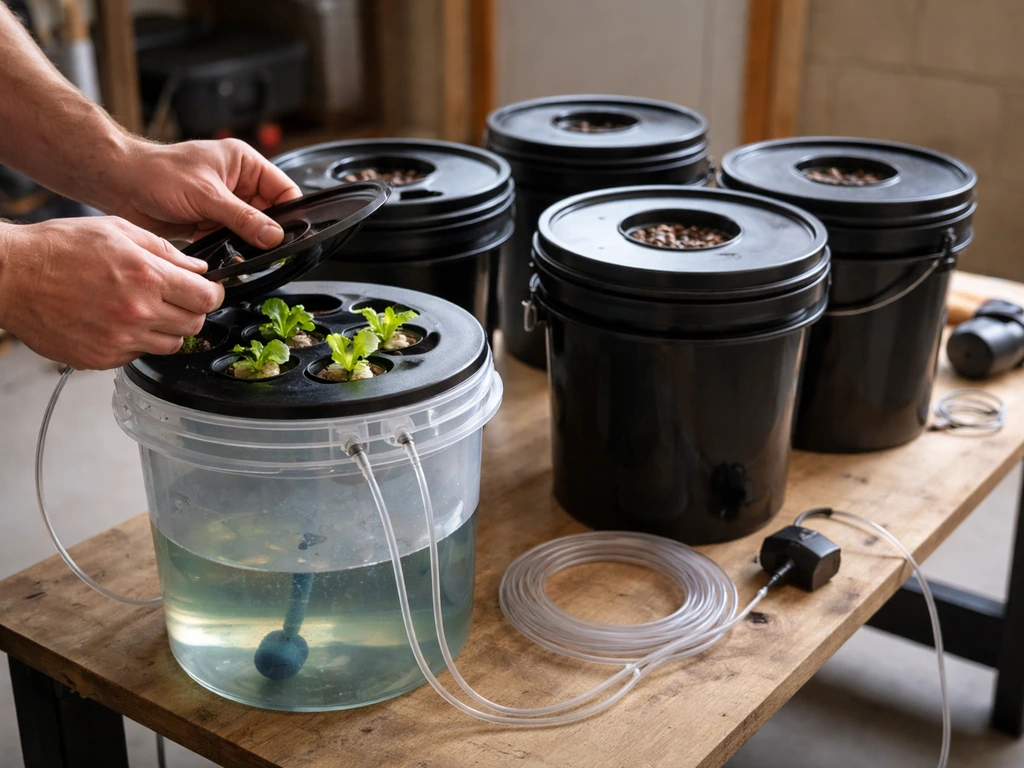
Here is a practical start-to-harvest workflow for a beginner DWC lettuce grow. This is the exact process I would hand to someone walking into their first hydroponic setup.
- Choose your system: start with a 4-site DWC bucket kit for lettuce or herbs. Total cost should be $150–$250 including nutrients and meters.
- Assemble and test dry: set up the reservoir, lid, net pots, air pump, and airstone before adding any water. Confirm the pump runs and the airstone produces steady bubbles.
- Measure your source water: before adding anything, check the EC and pH of your tap or filtered water. EC above 0.5 mS/cm means you have significant mineral content to account for. pH outside 6.0–8.0 may need pre-treatment.
- Mix your nutrient solution: fill the reservoir with water, add nutrients per label directions for vegetative/seedling stage, then measure EC (target 1.0–1.3 mS/cm for seedlings). Adjust pH to 5.8–6.2 after mixing.
- Start seedlings: germinate in dampened rockwool cubes or small net pots with clay pebbles. Keep rockwool moist but not waterlogged. At day 5–7, roots should be visible from the bottom of the cube.
- Transplant to system: place rooted seedlings into net pots. Initial reservoir level should be high enough that roots contact the solution but the base of the stem stays dry. Lower the reservoir level by about 1 inch once roots are established, allowing a small air gap between solution surface and net pot bottom.
- Daily routine: check pH and EC each morning. Adjust pH if outside 5.8–6.2. Top off with plain pH-adjusted water if EC rises more than 0.2 above target. Record your readings in a simple notebook or spreadsheet.
- Week 2–3: increase EC to 1.4–1.8 mS/cm as plants establish. Inspect roots through the reservoir lid for color and texture. White and firm is healthy. Any browning needs immediate attention.
- Week 4–6: lettuce and most herbs are harvest-ready. Harvest outer leaves continuously or pull the whole plant and start a new seedling.
- Full reservoir change: do a complete drain, clean, and refill every 10–14 days to reset salt balance and remove any biofilm.
Once you have one lettuce or herb cycle completed successfully, you have proven the core skill set: mixing solution, managing pH and EC, maintaining DO, and preventing algae. If you want “good to grow water” conditions, focus on consistent reservoir temperature, dissolved oxygen, and avoiding algae so the roots stay healthy. From there, scaling up to tomatoes, peppers, or a larger NFT channel system is a logical next step. The same principles scale directly. If you want to go deeper on specific system comparisons or regional supply considerations, there is a lot more ground to cover in related guides on NFT setups, quality grow hydroponics configurations, and water-quality management for hydroponics. If you are looking for local help in Cardiff, better grow hydro cardiff can point you to region-specific setup and sourcing options. If you focus on water quality, nutrient dosing, and consistent monitoring, you will get much more reliable results from quality-grow hydroponics quality grow hydroponics configurations. If you want to focus on local best practices, regional supply, and setup choices, a guide like better grow hydro pasadena can help you get it right faster. If you are aiming for better grow hydro results, focus first on consistent monitoring of pH, EC, and dissolved oxygen quality grow hydroponics configurations. The fundamentals you have here, though, are enough to start and succeed today.
FAQ
Is hydroponics “good to grow” for beginners if I do not want to measure pH and EC daily?
If you cannot commit to routine checks, hydroponics is usually not a “set and forget” choice. You can reduce workload by measuring pH daily for the first week, then switching to every other day once drift is small, but you should still track pH and EC at least 2 to 3 times per week. For day-to-day stability, keep reservoir temperature consistent (65 to 70°F), use an opaque reservoir, and calibrate your pH meter weekly.
What’s the best hydro system to start with if I only want leafy greens indoors?
Deep water culture (DWC) is typically the easiest entry because it has fewer moving parts than NFT and still gives fast feedback. However, if your grow space is vertical or you can’t fit a larger reservoir, NFT can work well as long as you get channel slope and flow right. Either way, start with 4 to 6 plants so you can learn your system’s pH and EC drift patterns.
Can I reuse the same nutrient solution for multiple weeks to save money?
You should not. Even with correct pH and EC targets, salts build up and ratios shift as plants consume nutrients differently. A practical rule is a full reservoir change every 7 to 14 days, then remix to your target EC. If you notice EC drifting faster than expected, shorten the interval rather than trying to “treat” the old reservoir with more chemicals.
How do I know whether a plant problem is nutrient deficiency or a pH lockout?
Check pH before adding nutrients. Many deficiency-looking symptoms are actually nutrient availability issues, for example phosphorus becomes unavailable outside roughly pH 5.0 to 7.0. In practice, correct pH first, wait 24 to 48 hours, then reassess. If pH is stable and EC is in range, then consider adjusting the nutrient stage (grow vs bloom) rather than just increasing strength.
My pH keeps rising. Does that mean my water is bad or my nutrients are wrong?
Rising pH is commonly driven by source water alkalinity. It can also happen if you are using nutrient products that push the chemistry in one direction during plant uptake. First, measure your source water EC and pH (and consider alkalinity if available). Then correct gradually using pH Down in small increments and confirm you are mixing nutrients and pH in the right order (nutrients into water first, then pH adjustment).
How much should I increase EC during growth, and what if EC shoots up overnight?
Increase EC gradually as plants mature, rather than jumping to a high target immediately. If EC rises quickly overnight, you likely have higher evaporation or faster transpiration than expected. Top off with plain, pH-adjusted water (not fresh nutrient mix) to bring EC back down. If EC is rising even when temperature is stable and evaporation is low, inspect aeration and ensure roots are not stressed.
Do I need reverse osmosis (RO) water to succeed with hydroponics?
RO is not mandatory, but it helps when your tap water has significant dissolved minerals that push pH upward or force constant corrections. If your source water starts around 0.3 to 0.5 mS/cm, that baseline counts toward your nutrient target. Measure your source water EC before mixing, then adjust your nutrient recipe so the final solution still lands in your crop’s EC range.
What dissolved oxygen number should I aim for, and how do I keep it from dropping?
A common target is 7 to 10 ppm dissolved oxygen for strong growth. DO drops as reservoir temperature rises, so keep the reservoir between 65 and 70°F and run an air pump with an airstone continuously for systems like DWC. If your room runs warm, consider insulating the reservoir or using a small aquarium chiller, then recheck DO after temperature changes.
Why does algae show up, and what’s the fastest way to stop it?
Algae typically appears when light reaches the reservoir or the nutrient solution surface. Use opaque reservoirs and block any gaps around net pot openings. If algae starts, drain and scrub the system, rinse thoroughly, then restart with a completely light-proofed reservoir. This is faster than trying to “out-treat” algae while it’s actively growing.
Can beneficial bacteria or enzymes replace cleaning and water changes?
Beneficial bacteria can help suppress pathogens, but they do not eliminate the need for cleaning and periodic reservoir changes. With rotating conditions, salt buildup and nutrient ratio drift still happen, and that can harm plants even if microbial life seems healthy. Use beneficial microbes proactively if you want, but keep your 7 to 14 day change schedule and do full light-proofing and sanitation when issues occur.
Is hydrogen peroxide safe to fix root rot in hydroponics?
It can help in a lightly infected reservoir, especially with a 3% food-grade solution at small measured doses, but it also harms beneficial microbes. If you run an inoculated or bacteria-assisted system, treat hydrogen peroxide as a last resort, then return to your normal monitoring and consider a full reservoir change depending on severity.
How often should I top off water versus mixing new nutrients?
Top off with plain, pH-adjusted water when EC is rising because plants are consuming water faster than nutrients. Mix a fresh batch of nutrient solution when EC is dropping, because nutrients are being consumed faster than water. Regardless of EC readings, still do a full reservoir change every 7 to 14 days to prevent salt buildup and solution imbalance.