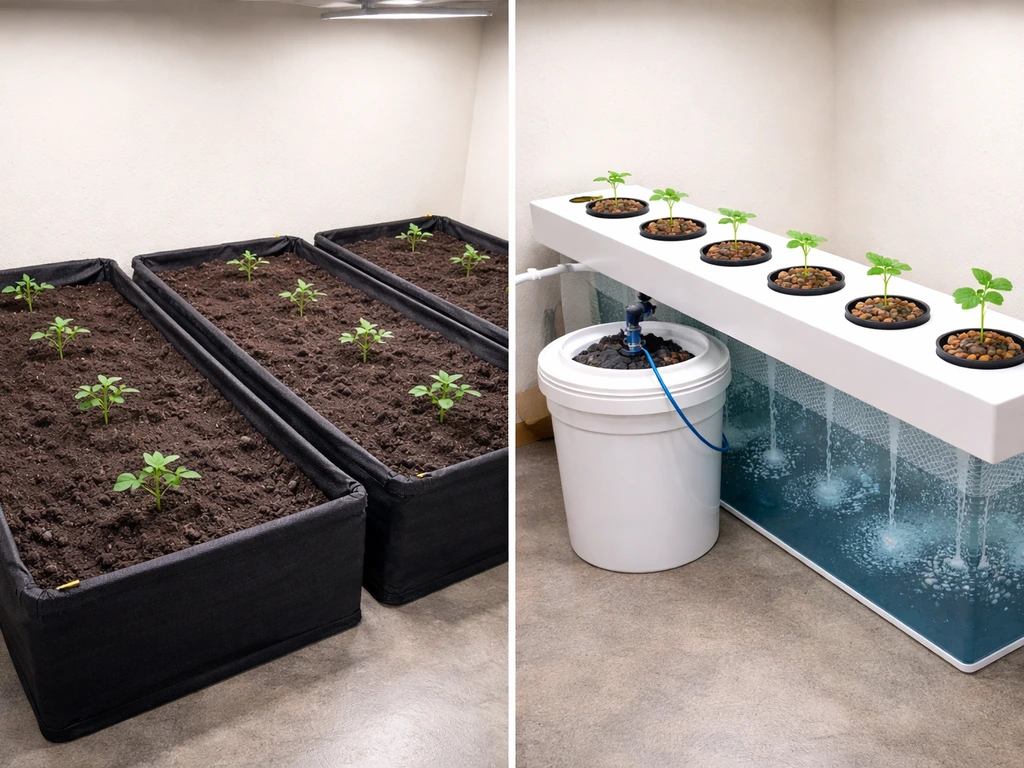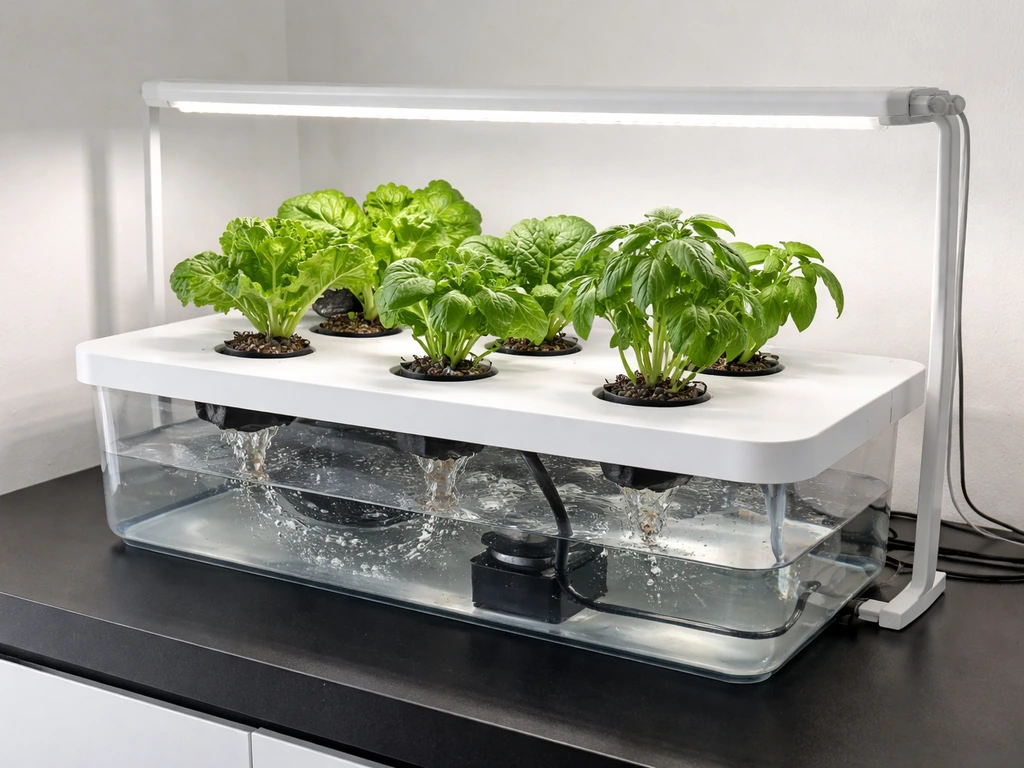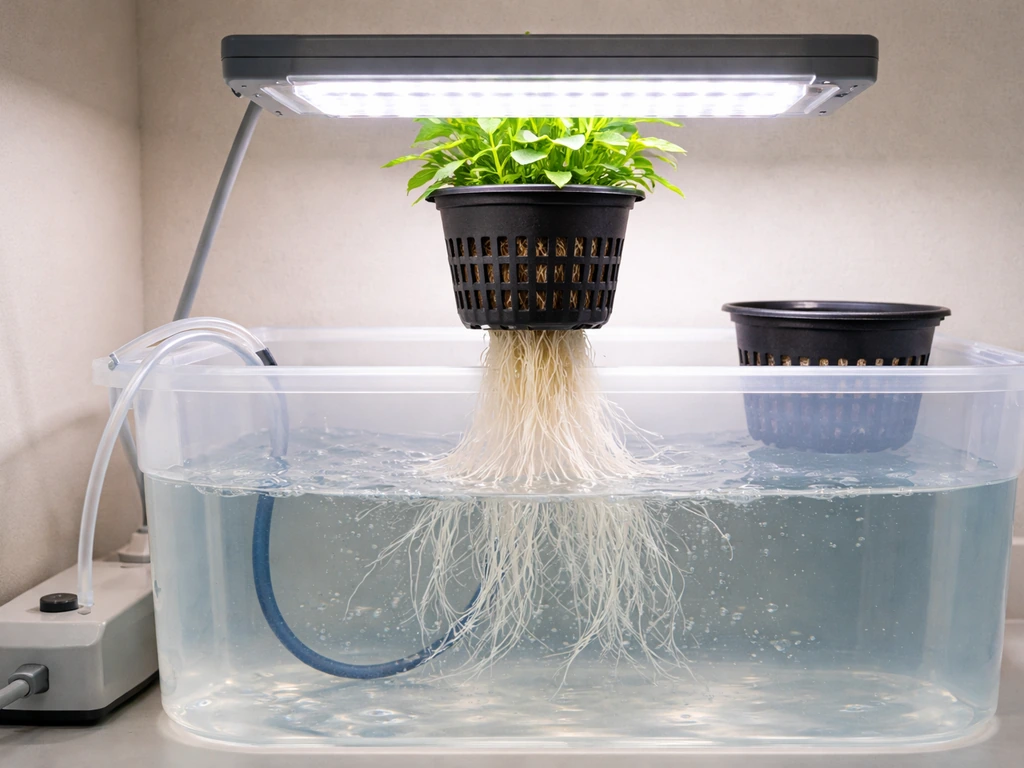
The best hydroponic grow book for you depends on two things: your experience level and the crop you want to grow. If you are starting from scratch with no hydro background, you need a book that walks you through system types, nutrient mixing, and basic measurements before anything else. If you already run a system and are troubleshooting pH swings or nutrient lockout, you need something with deeper chemistry, EC/PPM tables, and crop-specific schedules. There is no single best book for everyone, but there is a clear best book for your situation, and this guide will help you figure out which one that is.
Best Hydroponic Grow Book: How to Choose and Use It
Marcus Holloway
24 Apr 2026
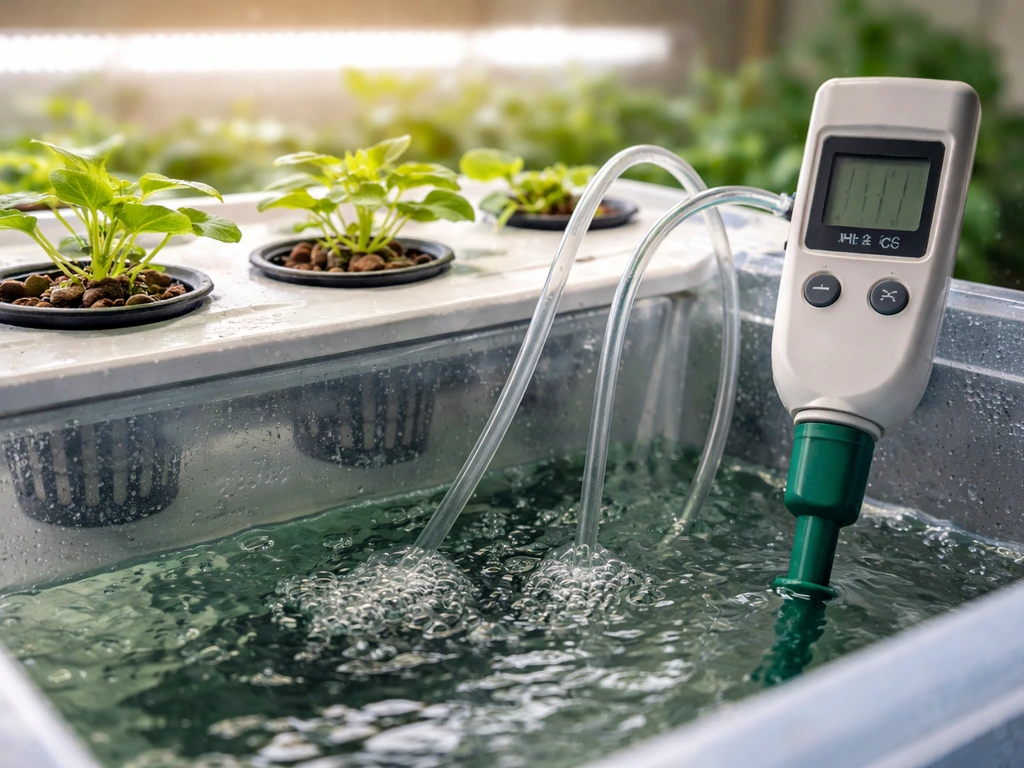
What 'best hydroponic grow book' actually means for your goals

When most growers search for the best hydroponic grow book, they are really searching for one of three different things without realizing it. The first is a system-building guide: they want to know which system to build, what equipment to buy, and how to run their first crop without killing it. The second is a nutrient and science reference: they want formulas, pH/EC targets, deficiency charts, and the reasoning behind them. The third is a crop-specific playbook: they want week-by-week guidance for tomatoes, lettuce, cannabis, or herbs, not generic hydro theory. Most books lean heavily into one of these, so buying the wrong one means you get a reference that does not match your actual problem.
It is also worth recognizing how hydroponic learning differs from soil growing. In soil, the medium buffers pH and holds nutrients in ways that forgive beginner mistakes. Hydroponics removes that buffer. Every problem shows up faster, pH drifts daily, and dissolved oxygen levels directly determine whether roots thrive or rot. A good hydro grow book accounts for that speed and teaches you how to measure and respond, not just what to plant. If you have spent time comparing hydroponic vs soil grows, you will already appreciate why measurement depth in a book matters so much more in hydroponics.
Match the right book to your experience level and crop
Beginner growers need books that start with system selection and do not assume prior knowledge of nutrient chemistry. Tyler Baras's 'DIY Hydroponic Gardens' fits this well because it covers multiple system types, including deep water culture (DWC), drip towers, and aeroponic towers, with a clear focus on building inexpensive setups at home. It includes troubleshooting sections and even addresses dissolved oxygen management, which is often skipped in introductory guides but is one of the first real problems beginners face.
Intermediate and experienced growers who want comprehensive crop-by-crop guidance and nutrient formulation depth should look at Howard M. Resh's 'Hydroponics for the Home Grower.' Resh covers nutrient solutions and formulations in detail, explains cultural techniques like training and pruning, and addresses pest and disease control specific to hydroponic environments. He also covers seeding, transplanting, and crop change timing, which is exactly what you need when you are managing continuous production of tomatoes, peppers, cucumbers, eggplant, lettuce, arugula, bok choy, and herbs year-round.
| Your situation | Recommended book type | Key focus areas |
|---|---|---|
| Complete beginner, first system | DIY build-focused guide (e.g., Tyler Baras) | System types, equipment list, troubleshooting basics, dissolved oxygen |
| Home grower, year-round food crops | Comprehensive crop guide (e.g., Howard Resh) | Nutrient formulations, crop selection, seeding/transplanting, pest control |
| Intermediate, nutrient/pH problems | Nutrient chemistry reference | EC/PPM targets, pH buffering, deficiency identification, water quality |
| Experienced, specific system (DWC, NFT, aeroponics) | System-specific advanced guide | Root zone management, flow rates, reservoir temps, crop scheduling |
Hydroponic system types and what book coverage to expect
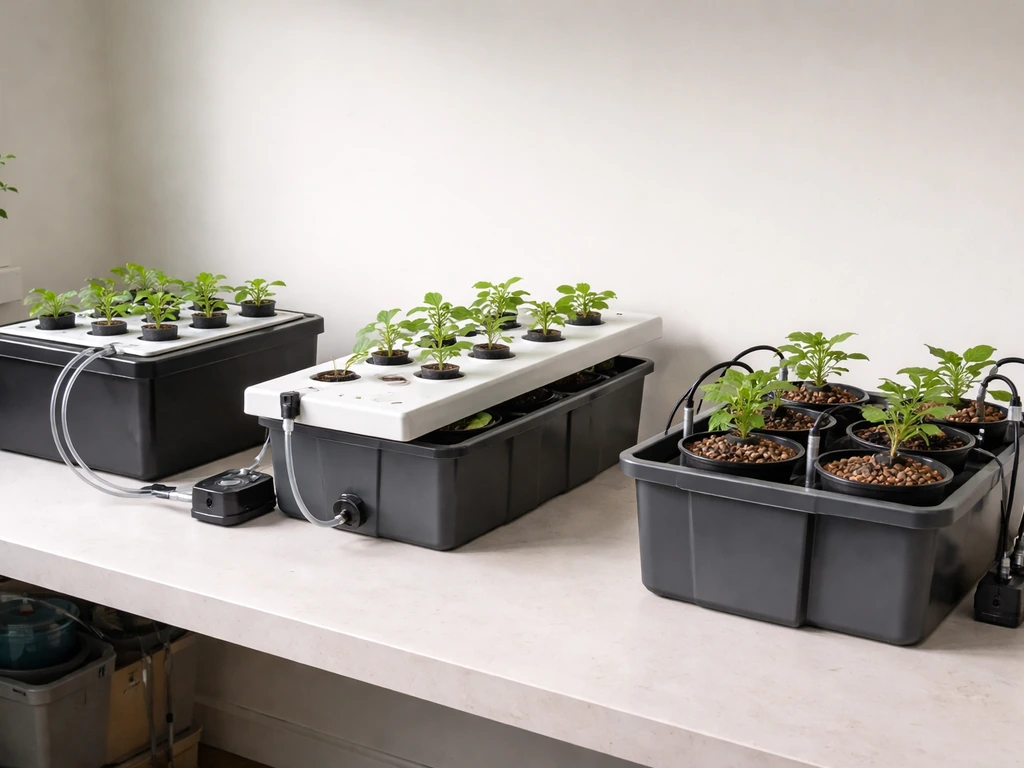
Not every hydro book covers every system. Some focus almost entirely on DWC and NFT, which are the most beginner-accessible, while others go deeper into ebb-and-flow, drip, and aeroponics. Before buying, check the table of contents for coverage of the specific system you plan to run. Here is what you should expect each system type to require from a book:
- Deep Water Culture (DWC): Reservoir sizing, air pump and airstone placement, dissolved oxygen targets, water temperature (aim for 65-72°F/18-22°C), reservoir change schedules, and root health monitoring.
- Nutrient Film Technique (NFT): Channel slope (typically 1:30 to 1:40), flow rate (1-2 liters per minute), pump timing, root mat management, and what to do when the film dries out.
- Ebb and Flow (Flood and Drain): Flood duration, drain speed, timer setup, medium selection (hydroton, rockwool), and how root zone moisture affects nutrient uptake between flood cycles.
- Drip Systems: Emitter placement, dripper flow rate, runoff management, substrate flushing schedules, and preventing salt buildup in the medium.
- Aeroponics: Nozzle type and spray interval (high-pressure vs. low-pressure), root chamber humidity, cycle timers (typically 30 seconds on / 5 minutes off for low-pressure), and bacterial biofilm prevention.
- Kratky (passive DWC): Air gap management as roots grow, no pump needed, suitable for lettuce and herbs but limited for larger fruiting crops.
Tyler Baras's DIY guide explicitly covers DWC, drip towers, and aeroponic towers, making it one of the more system-diverse beginner books available. If you are comparing hydroponic grow systems and trying to decide which one to build first, having a book that covers at least three system types gives you the flexibility to pivot without buying a second reference.
Nutrients, pH/EC targets, and how deep a good book should go
This is where most beginner hydro books fall short. They tell you to 'follow the nutrient label' but do not explain what EC means, why pH drifts, or how to read a deficiency by looking at your plant. A genuinely useful hydroponic grow book should give you the following specific information, not just general advice.
- pH targets by crop: Leafy greens and herbs typically thrive at pH 5.5-6.5. Fruiting crops like tomatoes and peppers prefer 5.8-6.3. Cannabis generally performs best at 5.8-6.2 in hydro.
- EC/PPM ranges by growth stage: Seedlings typically need 0.8-1.2 EC. Vegetative growth runs 1.2-2.0 EC. Fruiting or flowering stages often push 2.0-3.0 EC depending on the crop.
- Nutrient formulation basics: The book should explain macronutrient ratios (N-P-K) and at least touch on secondary nutrients (calcium, magnesium, sulfur) and micronutrients (iron, manganese, zinc), because calcium and magnesium deficiencies are among the most common problems in recirculating systems.
- Water temperature and dissolved oxygen: Reservoir temperature directly affects dissolved oxygen levels. Water at 68°F (20°C) holds roughly 9.1 mg/L of dissolved oxygen. As temperature rises toward 77°F (25°C), that drops to about 8.3 mg/L, and root rot risk increases significantly.
- Measuring tools required: A reliable book recommends a calibrated pH meter, a separate EC/TDS meter, and explains how to calibrate both. The DIY Hydroponic Gardens index references DLI (daily light integral) meters, which shows the kind of measurement culture a well-rounded book builds in its readers.
- Troubleshooting by symptom: Yellowing lower leaves (nitrogen deficiency or root zone issue), purple stems (phosphorus deficiency or cold temps), brown leaf edges (calcium or potassium issue, or high EC burn), stunted growth (low dissolved oxygen, root rot, or pH lock).
Howard Resh's work addresses nutrient formulations in the kind of detail that lets you mix your own solutions from raw salts if you want to, which is a significant step up from books that just tell you to buy a premixed two-part nutrient. Even if you never mix from raw salts, understanding what goes into a formula helps you diagnose lockout and adjust ratios when a crop shows stress.
Grow setup essentials every good hydro book should teach
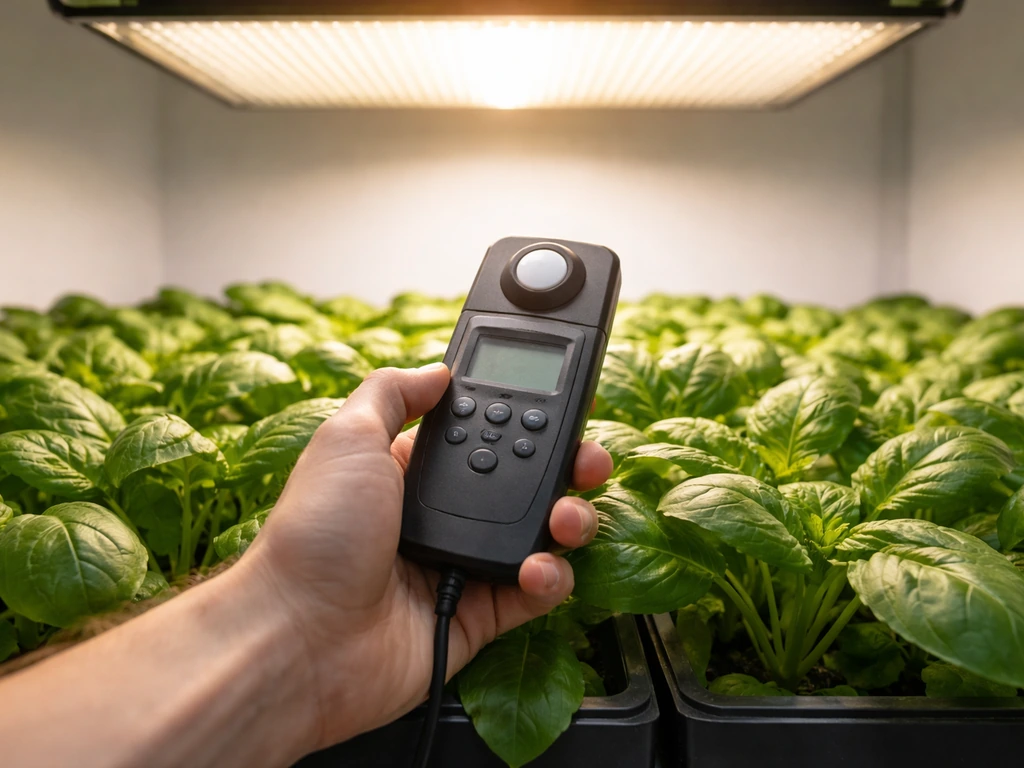
Beyond the nutrient and system coverage, a book needs to walk you through the physical grow environment. This is often where beginners spend money in the wrong places because they focus on the system and ignore lighting, temperature management, and airflow until plants show problems.
Lighting
A good book explains light in terms of DLI (daily light integral, measured in mol/m²/day) rather than just wattage. For hydroponic lettuce, ScienceDirect Topics summarizes literature-based DLI recommendations of roughly 14, 17 mol/m²/day blank" rel="noopener noreferrer">DLI (daily light integral, measured in mol/m²/day). blank" rel="noopener noreferrer">Lettuce and herbs need roughly 12-17 mol/m²/day. Tomatoes and fruiting crops need 20-30 mol/m²/day. Cannabis in flower typically needs 40+ mol/m²/day. Understanding DLI lets you calculate whether your LED panel or T5 is actually delivering what your crop needs, rather than guessing based on manufacturer claims. The book should also explain PPFD (photosynthetic photon flux density) and light distance, since hanging an LED too close causes bleaching and too far causes stretching.
Temperature and VPD
Most indoor hydro growers aim for 70-80°F (21-27°C) during lights-on and a 5-10°F drop during lights-off for fruiting crops. The book should introduce vapor pressure deficit (VPD), which is the relationship between air temperature and humidity that drives transpiration and nutrient uptake. Low VPD (high humidity, 70%+ RH) slows transpiration and can cause tip burn in lettuce and powdery mildew in flowering crops. A target VPD of 0.8-1.2 kPa works well for most vegetative growth, rising to 1.0-1.5 kPa during flowering.
Airflow and CO2
Air circulation prevents hot spots, reduces humidity near the canopy, and strengthens stems. The book should recommend at least one oscillating fan per grow space and explain the importance of exhausting heat from the grow area at a rate that maintains target temperature. CO2 enrichment (1000-1500 PPM) is worth covering for sealed indoor grows, especially for fruiting crops, but should be framed as an intermediate-to-advanced topic, not a beginner necessity.
Planting workflow: seeds, transplanting, and scheduling
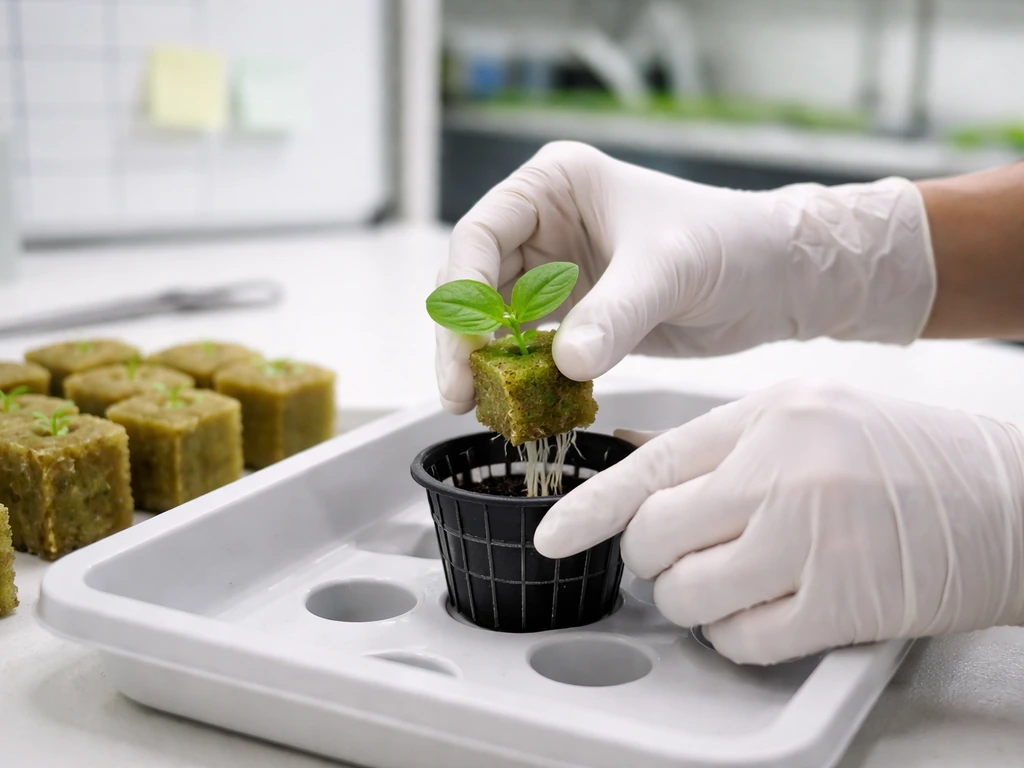
One of the most practical things a good hydro book teaches is the actual workflow from seed to harvest, not just the theory. Resh specifically covers seeding, transplanting, training techniques, and crop change timing in his home grower guide, which is the kind of operational detail that separates a truly useful reference from one that just explains principles.
- Seed starting in hydro: Most systems start seeds in rockwool cubes (soak at pH 5.5 before use), rapid rooter plugs, or oasis cubes. Keep humidity high (70-80% RH) and temps at 70-78°F until germination, typically 3-7 days for most vegetables and herbs.
- Seedling stage (days 1-14): Keep nutrient solution at low EC (0.8-1.0) and pH 5.8-6.2. Roots should reach the solution or the bottom of the propagation tray by day 10-14 before transplanting.
- Transplanting: Move seedlings into the main system when root tips are visible outside the plug (at least 1-2 cm of root showing). Avoid exposing roots to light during the move. Handle gently to prevent root zone shock.
- Vegetative growth (weeks 2-5 depending on crop): Raise EC to 1.2-2.0. Check pH daily and adjust. Monitor reservoir level and top off with pH-corrected plain water between full reservoir changes.
- Transition to flowering/fruiting: For fruiting crops, adjust nutrient ratios to reduce nitrogen and increase phosphorus and potassium. EC can rise to 2.0-3.0 for heavy fruiting crops.
- Harvest and crop change: Plan crop rotation so you are not leaving a system empty for long. Resh covers crop change timing, which means draining and cleaning the reservoir and system components between cycles to prevent pathogen buildup.
- Scheduling tip: Work backwards from desired harvest date. Lettuce takes 28-45 days from transplant. Tomatoes take 60-80 days from transplant to first harvest in hydro. Peppers are similar. Herbs like basil can be harvested continuously starting around day 30.
Quick comparisons and a checklist for choosing your book
| Book focus type | Best for | Covers nutrients deeply? | System variety | Crop specificity | Troubleshooting depth |
|---|---|---|---|---|---|
| DIY build guide (e.g., Baras) | Beginners building first system | Basic EC/pH intro | High (DWC, drip, aeroponics) | Low to moderate (leafy greens, herbs) | Good (dissolved oxygen, algae, cleaning) |
| Comprehensive crop guide (e.g., Resh) | Intermediate home growers, food crops | High (formulations, ratios) | Moderate | High (tomatoes, peppers, lettuce, herbs) | Good (pest, disease, training) |
| Advanced nutrient chemistry reference | Experienced growers optimizing yields | Very high (raw salts, mixing) | Low (assumes you know systems) | Varies | High (deficiency ID, water chemistry) |
| System-specific guide (NFT, DWC only) | Growers committed to one system type | Moderate | Low (one or two systems) | Moderate | Moderate to high within that system |
Before buying any hydroponic grow book, run through this checklist:
- Does the table of contents list the specific system you plan to run (DWC, NFT, drip, ebb-and-flow, aeroponics)?
- Does it include actual pH and EC/PPM target ranges, not just general advice to 'follow the label'?
- Does it cover your specific crop category (leafy greens, fruiting vegetables, herbs, or cannabis)?
- Does it include a troubleshooting section with identifiable symptoms (leaf discoloration, root color, growth rate problems)?
- Does it explain dissolved oxygen management or at minimum air pump and airstone sizing?
- Does it walk through the seeding-to-harvest workflow rather than just explaining system components?
- Does it address lighting in measurable terms (PPFD, DLI, or at least lux with conversion guidance)?
- Is there a nutrient schedule or at least a growth-stage framework for adjusting EC over the crop cycle?
How to start today: your first build and first crop steps
Once you have the right book in hand, here is the actual read-this-do-this pathway to get your first hydro crop started without wasting weeks on theory before you touch a plant. If you want a practical start, learn how to grow hydroponics step by step with your first system, light, and nutrient setup.
- Read the system overview chapter first. Choose one system based on your budget and space, not the most impressive one. DWC is the lowest-cost entry point. A 5-gallon bucket, an air pump, an airstone, and a net pot lid is a functional system for under $30.
- Buy your measurement tools before anything else. A calibrated pH meter (not strips, which are too imprecise for hydro), an EC/TDS meter, and a thermometer for reservoir temperature. These are non-negotiable. You cannot troubleshoot without them.
- Mix your first nutrient solution at half strength and check pH and EC before adding any plants. Target pH 5.8-6.2 and EC around 0.8-1.0 for seedlings. Adjust pH using phosphoric acid (pH down) or potassium hydroxide (pH up).
- Start seeds in rockwool cubes (pre-soaked at pH 5.5) or rapid rooters. Keep them in a humidity dome at 72-76°F until roots emerge, usually 4-7 days for lettuce and herbs, 5-10 days for tomatoes and peppers.
- Cross-check your book's targets against real measurements every day for the first two weeks. Write down pH, EC, and reservoir temp each morning. This builds your baseline and helps you spot drift patterns early.
- When roots reach the solution, transplant into your main system. Check that the reservoir temp is below 72°F. If it is running warm, add a small aquarium water chiller or move the reservoir to a cooler location, because warm water is the fastest path to root rot in DWC.
- Follow the book's EC ramp-up schedule as the plant grows. Increase EC by 0.2-0.3 increments, not all at once. Watch the plant for signs of stress (tip burn, wilting between checks, yellowing) before increasing further.
- Plan your first harvest date on a calendar from day one. Lettuce from seed to harvest in hydro takes 35-50 days total. Use this date to work backwards and start your next batch of seeds 2-3 weeks before harvest so you have a continuous supply.
If you find the book you chose does not cover enough detail on a specific topic, like nutrient chemistry or your specific system type, that is normal. If the book you chose does not cover enough detail, a grow guide hydroponic resource can be a related option for the missing system or nutrient steps. Most experienced growers end up with two or three references they cross-check depending on the problem. Start with the broadest practical guide that matches your current skill level and crop, then layer in specialty references as your questions get more specific. The goal right now is a living plant in a functioning system, measured correctly, within the next two to three weeks. Everything else builds from there.
For growers who are still deciding whether hydroponics or soil is the right direction entirely, the nutrient and measurement principles in a good hydro book are genuinely useful background even for soil growers, especially around pH, EC, and deficiency identification. If you are ready to choose a system, focus on the best hydroponics grow systems that match your skill level and crop needs hydroponics or soil. If you are growing weed, prioritize a system that supports steady nutrient delivery, stable pH, and easy root oxygenation so plants stay consistent through veg and flower best hydroponic grow system for weed. The two methods share more diagnostic logic than most guides acknowledge, and understanding both gives you better options when one setup is not working the way you expected.
FAQ
How do I tell if a hydroponic grow book matches my first 2 to 3 weeks, not just long-term theory?
If you want the fastest learning curve, pick a book whose first half matches what you will do in your first 2 to 3 weeks (system setup, nutrient mixing, and daily measurements), not a book that jumps straight into advanced topics like ppm formulation or CO2 control. A good sign is whether it includes a first-week checklist (what to measure, when, and what readings mean) and troubleshooting flowcharts you can use while your plants are still alive.
What should I look for regarding pH and EC explanations to avoid common mix-ups?
Don’t rely on “EC = pH” misconceptions. Most books that are truly useful will separate the two concepts, explain why EC reflects nutrient concentration (and temperature corrections), and show how pH can drift due to alkalinity, dosing method, and aeration patterns. If the book only says “keep pH stable” without giving likely causes and exact response steps, it will slow you down later.
I’m growing a short-cycle crop, how should I adjust what “best book” means for that timeline?
For autoflower or short-cycle crops, choose a book that addresses how to handle rapid growth changes (nutrient ramp timing, light intensity ramping, and root oxygen consistency). Many generic books use slow photoperiod examples and you can end up overfeeding or over-lighting too early. A practical clue is whether the book discusses staged EC or DLI adjustments over short windows.
What if my readings conflict, does the book need measurement-calibration guidance?
If your book recommends nutrient targets but doesn’t explain how to measure and calibrate your tools, treat that as a gap. Look for instructions on calibrating EC/PPM meters and pH probes, and whether it tells you what to do when readings disagree (for example, rinsing technique, checking probe age, or verifying solution temperature). Poor measurement practices can mimic nutrient lockout and cause unnecessary changes.
Should I prioritize a book’s chemistry depth if I’m using premixed nutrients?
You’ll save money by matching the book to your nutrient strategy. If you plan to use premixed two-part nutrients, focus on books that explain adjustment logic and diagnosis (how to correct imbalance) rather than heavy chemistry. If you plan to formulate from salts, prioritize books that break down nutrient roles, common deficiencies, and how to calculate ratios for your water source.
Do I need a book that specifically covers dissolved oxygen, or is general hydroponics enough?
Yes, but only if it’s system-appropriate and realistic for your environment. For instance, DWC and NFT can respond faster to dissolved oxygen changes, so oxygen-focused guidance matters. If the book suggests oxygen management in a vague way, or it gives one-size-fits-all DO targets without mentioning temperature and air stone sizing, it may not prevent root issues in your specific setup.
How can a hydroponic grow book help me diagnose problems without guessing?
Look for “measurement-to-action” tables, not just deficiency images. The best books tell you how to differentiate nutrient issues from pH drift, water hardness effects, overwatering equivalents in hydro, and environmental stress (light, VPD, airflow). If the book only shows what leaves look like, you will waste time swapping nutrients instead of fixing the underlying driver.
When should CO2 enrichment be considered, and what should a good book say about it?
In sealed or semi-sealed setups, the key is how the book frames CO2. Prefer books that treat CO2 as an enhancer that requires stable light, airflow, and temperature control, and it should warn about risky levels and diminishing returns when plants are limited by other factors. If CO2 is presented as a simple “always use” fix, it’s usually not the best learning resource.
I want continuous production. What scheduling details should the book include?
Before buying, confirm the crop scheduling matches your growth method (seedling vs transplant, continuous harvest vs batch). A good book will include crop change timing, harvest-to-replant workflow, and how nutrient and light goals shift between stages. If it only gives broad season advice, it may not help for year-round indoor production.
What workflow details matter most when transitioning from seed or clone to a hydro system?
A solid workflow book should include practical steps like how to start seeds or clones for hydro, when to transfer to the system, and how to transition light intensity and nutrient strength gradually. Avoid books that start “mix nutrient to X EC” immediately without a stage-based ramp, because seedlings and new roots often need gentler changes to prevent shock.