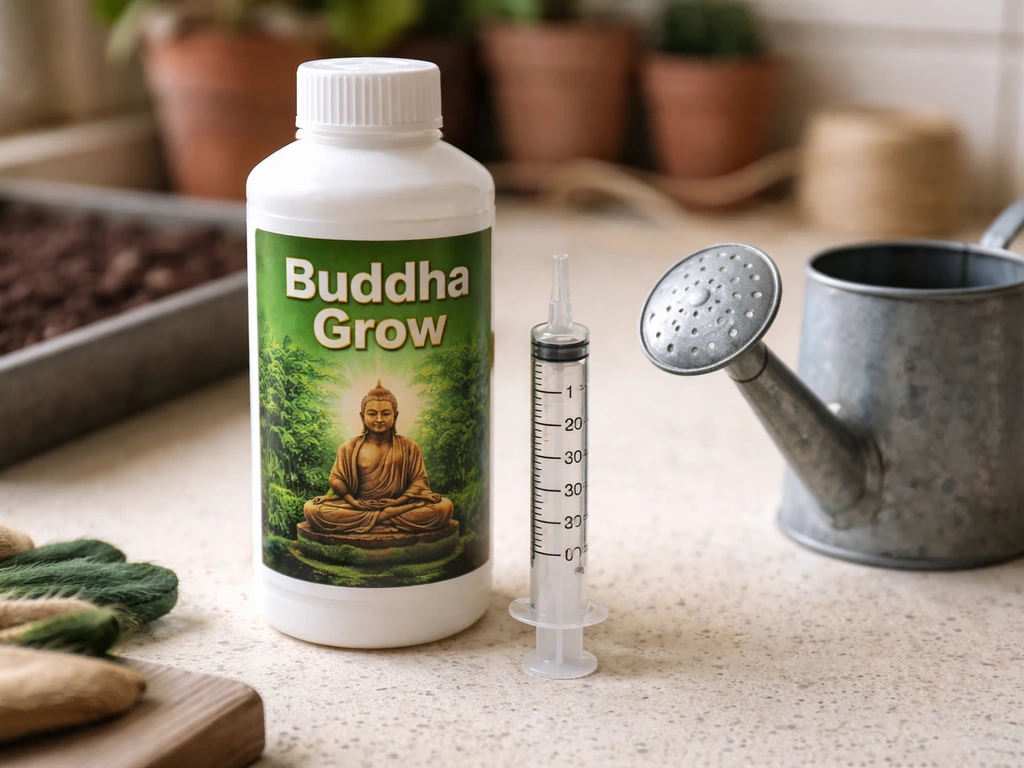
blank" rel="noopener noreferrer">Roots Organics Buddha Grow is a liquid organic vegetative nutrient with an NPK of 2-0.25-2, built around bat guano, worm castings, kelp extract, soy protein, molasses, and yucca extract. You use it during the vegetative phase in soil or soilless/hydroponic setups, dosed at 2-4 ml per gallon of water, fed every watering or every other watering depending on how hard your plants are pushing. Start low, watch your plants, and scale up only if they ask for more.
How to Use Roots Organics Buddha Grow: Step-by-Step

Marcus Holloway
17 May 2026
What Buddha Grow does and when to use it
Buddha Grow is a one-part liquid nutrient designed specifically for the vegetative growth window. The 2-0.25-2 NPK ratio gives you balanced nitrogen and potassium with almost no phosphorus, which is exactly what plants need when they are building stems, roots, and leaf mass before flowering begins. The organic inputs do double duty: bat guano and worm castings feed beneficial soil biology as well as the plant directly, while kelp extract supplies natural growth hormones (cytokinins and auxins) that support cell division and root development. Molasses feeds soil microbes, and yucca extract acts as a natural wetting agent to improve nutrient uptake and water penetration into your medium.
You start using Buddha Grow after your seedlings have developed their first two to three sets of true leaves and are clearly in active vegetative growth. In a typical indoor cycle that is usually around week 2 to week 3 from germination. You continue feeding it through the entire veg phase and stop when you flip to 12/12 light or when your outdoor plants begin showing pre-flowers. Do not carry it into mid-to-late flower. At that point your plant wants phosphorus and potassium, not nitrogen-heavy growth nutrients.
Before you start: check your water, pH, and setup
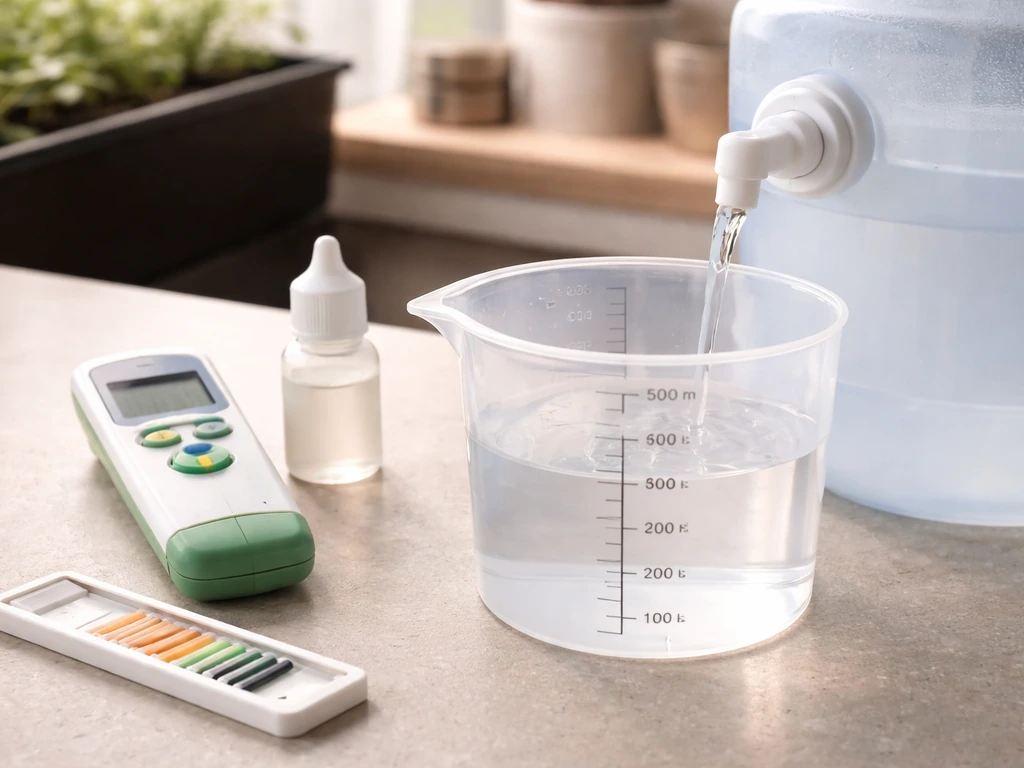
Buddha Grow's own pH sits between 2.8 and 3.9 right out of the bottle, which is very acidic. That is not a problem because you are always diluting it into a full gallon or more of water, but it does mean that adding Buddha Grow will pull your solution pH down. You need to measure and adjust pH after mixing, not before. Get your pH pen calibrated before your first feed and keep calibration solution on hand.
For soil and soilless (coco, peat-based mixes), target a final solution pH of 6.0 to 6.5. For hydroponic systems, aim for 5.8 to 6.2. Outside those windows, nutrient lockout starts happening even if the nutrient is present in the solution. If you are using a hydroponic system, also check your EC (electrical conductivity) before and after mixing. A healthy veg-phase EC for a young plant in hydro is typically 0.8 to 1.4 mS/cm. Larger, more established plants can handle 1.4 to 2.0 mS/cm.
Also check your starting water. If your tap water is above 300 ppm (EC around 0.6), you already have dissolved minerals competing for uptake. Hard water growers should consider using a partial RO or filtered water blend to keep baseline EC low enough to give Buddha Grow room to work without pushing total EC too high.
How to mix and dose Buddha Grow: beginner-friendly steps
The manufacturer's standard dose is in the 2-4 ml per gallon range. For a first-time use or young plants just entering veg, start at 2 ml per gallon. If you are wondering how to start, this dose is a safe baseline for beginning eminent grow main-style veg feeding start at 2 ml per gallon. For established veg plants in weeks 4 to 8, you can move toward 3-4 ml per gallon if plants are healthy and showing no signs of stress. Always err on the lower end with organics because the microbial breakdown process means nutrients become available gradually, and you have less ability to flush them out quickly compared to synthetic nutrients.
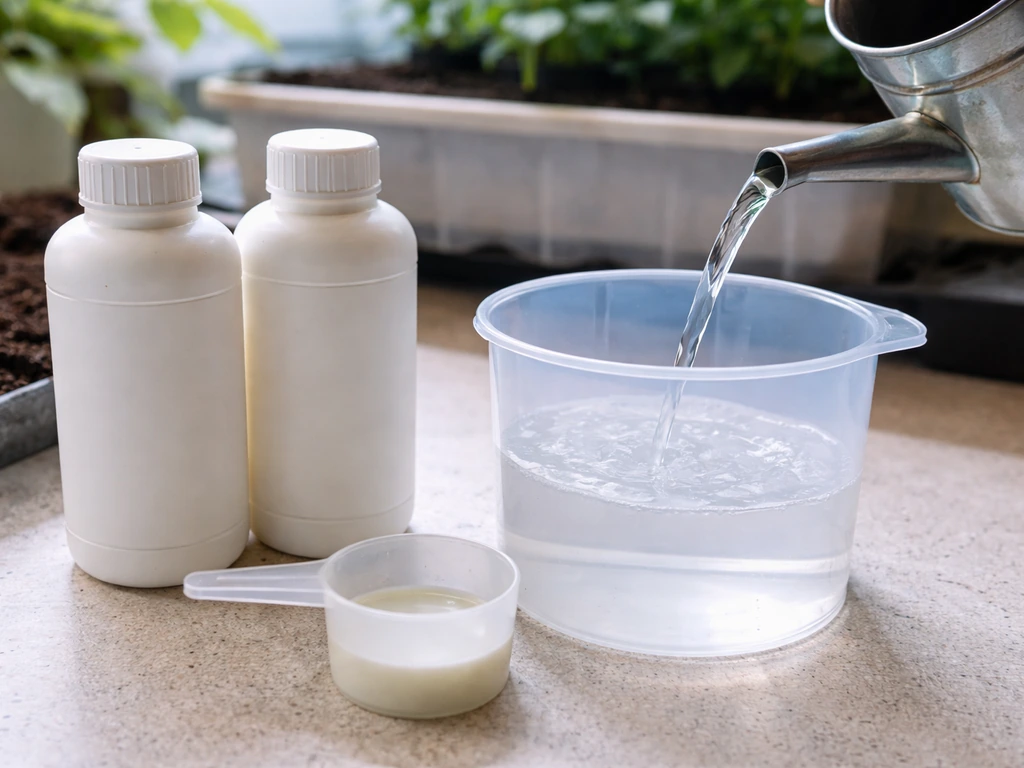
- Fill your watering can or reservoir with the full volume of room-temperature water first.
- Shake the Buddha Grow bottle well before measuring, since organic particulates settle.
- Measure your dose (start at 2 ml per gallon) and add it to the water.
- If you are adding other nutrients, add them one at a time in order (see the pairing section below), stirring between each addition.
- Let the solution sit for 1 to 2 minutes, then stir or agitate again.
- Measure pH and adjust to your target range (6.0-6.5 for soil/soilless, 5.8-6.2 for hydro).
- For hydro, also measure EC and confirm it is within your target range before feeding.
Never mix concentrated nutrients together directly before adding them to water. Always dilute into water first to prevent nutrient precipitation and reaction between concentrates.
Feeding schedule and how it differs between soil and hydroponics
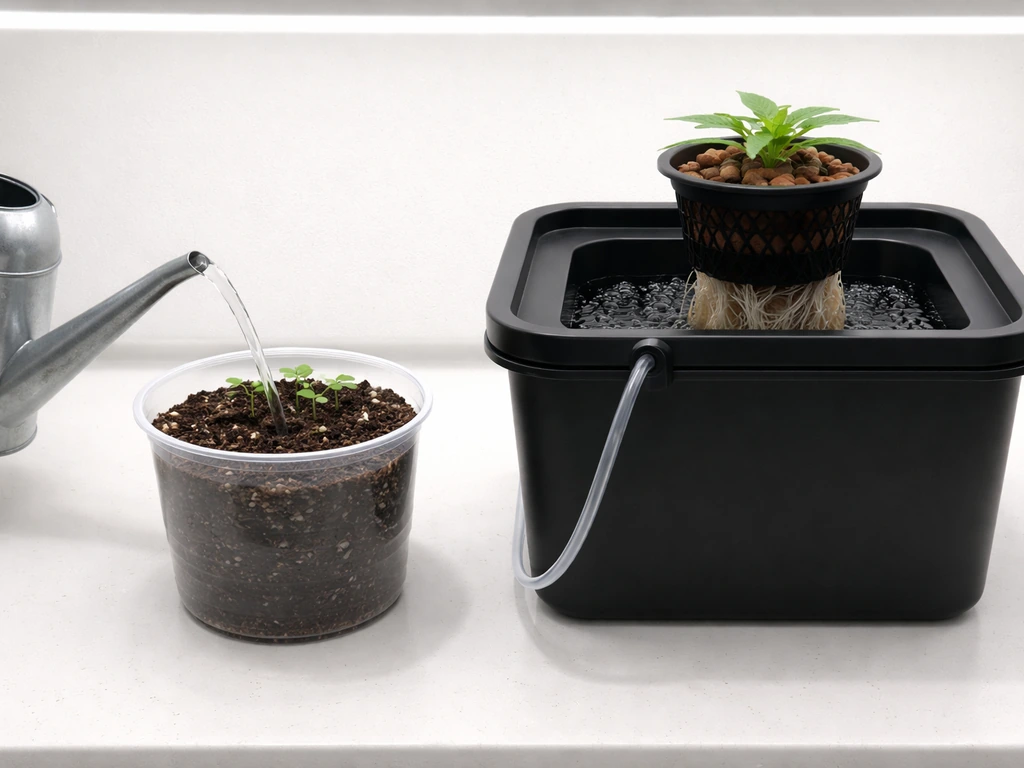
Soil and soilless (coco, peat mixes)
In soil, feed with Buddha Grow every other watering during early veg (weeks 2-4), and every watering during peak veg growth (weeks 4 through flip). Between nutrient feedings, water with plain pH-adjusted water to prevent salt and mineral accumulation in the root zone. Because Buddha Grow relies partly on soil biology to make nutrients available, feeding every watering is acceptable once the microbial life in your soil is active. Lift your pot and water only when it feels light, which prevents overwatering-related issues that organics can sometimes compound.
Hydroponics and recirculating systems
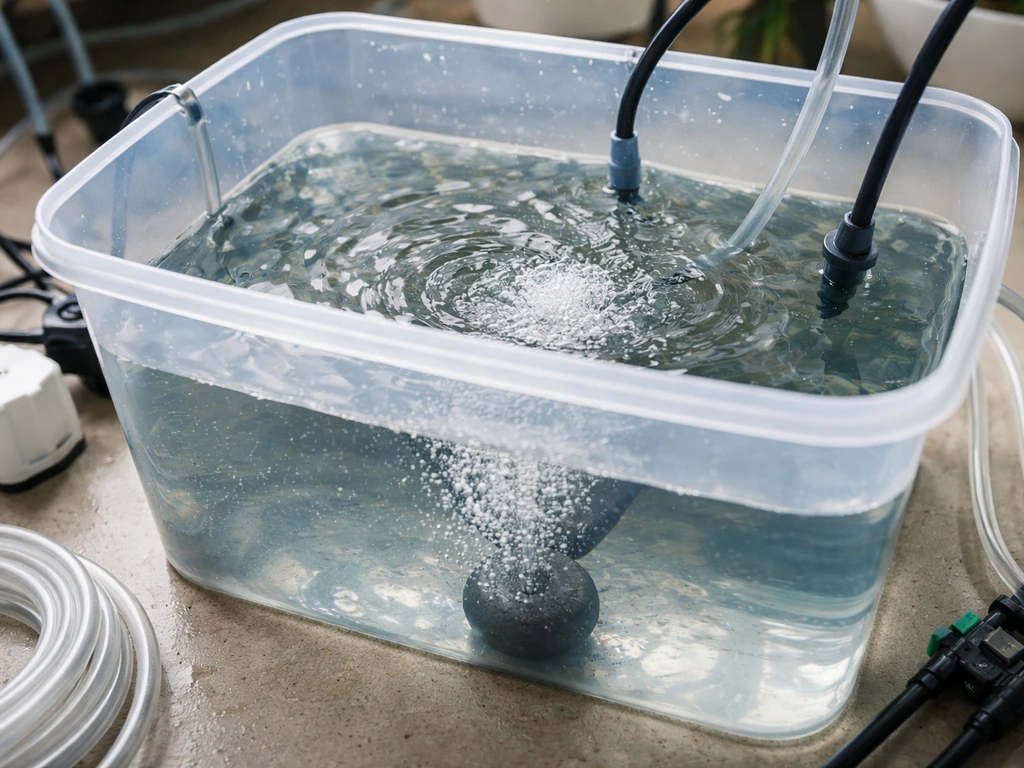
Buddha Grow works in hydroponic systems, but you need to be more careful about a few things. If you want to use power grow foliar fertilizer instead, follow its label directions for dilution and apply it as a foliar spray rather than mixing it into your reservoir or soil feed Buddha Grow works in hydroponic systems. First, the organic particulates (worm castings, guano solids) can settle in reservoirs and potentially clog drip emitters or pumps over time.
If you are also using Dr. Earth Pump and Grow, follow the bottle instructions for mixing and dosing so it works with your hydro or reservoir setup without clogging issues how to use dr earth pump and grow. Agitate your reservoir daily and inspect lines every few days. Second, organic nutrients in a hydro reservoir can encourage microbial and algae growth, especially if light leaks into your reservoir.
Keep your reservoir lightproof and aim to change it out every 7 days in recirculating systems. For deep water culture (DWC) or NFT, a reservoir change weekly is not optional with organic inputs.
In hydro, run Buddha Grow continuously in your reservoir at the appropriate EC level rather than alternating with plain water the way you might in soil. Top off with plain pH-adjusted water between reservoir changes to compensate for plant uptake and evaporation, and do a full reservoir change weekly.
| Parameter | Soil / Soilless | Hydroponics |
|---|---|---|
| Starting dose | 2 ml/gal | 2 ml/gal |
| Peak veg dose | 3-4 ml/gal | 2-3 ml/gal |
| Target pH | 6.0-6.5 | 5.8-6.2 |
| Target EC (veg) | N/A (use as directed) | 0.8-1.4 mS/cm (young), 1.4-2.0 mS/cm (established) |
| Feed frequency | Every watering or every other watering | Continuous in reservoir, changed weekly |
| Plain water days | Yes, between feedings | Top-off only, no alternating |
| Reservoir life | N/A | 7 days max |
How to pair Buddha Grow with your overall nutrient plan
Buddha Grow is designed as a one-part veg nutrient, but most growers pair it with a few other products to fill gaps. The 2-0.25-2 NPK is light on phosphorus, which is fine in veg but means you should have a bloom-phase nutrient ready for transition. Within the Roots Organics line, Buddha Grow pairs naturally with their Roots Organics Buddha Bloom for the flowering phase, and many growers also add a dedicated root-stimulator or mycorrhizal inoculant during early veg to get root systems established faster.
Common additions that complement Buddha Grow without overlapping its role include: a silica supplement (added first to water before any other nutrients), a CalMag product if you are in coco or using RO water, and a microbial booster or compost tea to amplify the organic biology. If you are already using a complex multi-part system like the pH Perfect Grow, Micro, and Bloom approach, be careful about double-dosing nitrogen.
The P-Perfect Grow Micro and Bloom approach can also affect how you dial in your veg nutrient strength to avoid overfeeding pH Perfect Grow, Micro, and Bloom. Buddha Grow's nitrogen comes from organic sources that release gradually, so stacking it with a high-nitrogen synthetic veg nutrient can push plants into overfeeding territory. Keep it simple: Buddha Grow plus a CalMag (if needed), silica, and a microbial product is a solid and clean veg stack.
Stop Buddha Grow when you transition to flower. At that point switch to a bloom-phase nutrient with higher phosphorus and potassium. Do not taper Buddha Grow slowly unless plants show deficiency signs during the transition. A clean cutoff at flip works well with organic products because residual organic nitrogen in the soil continues to release for a week or two after you stop feeding.
Common problems from using Buddha Grow wrong and how to fix them
Nutrient burn (tips curling, yellowing, brown tips)
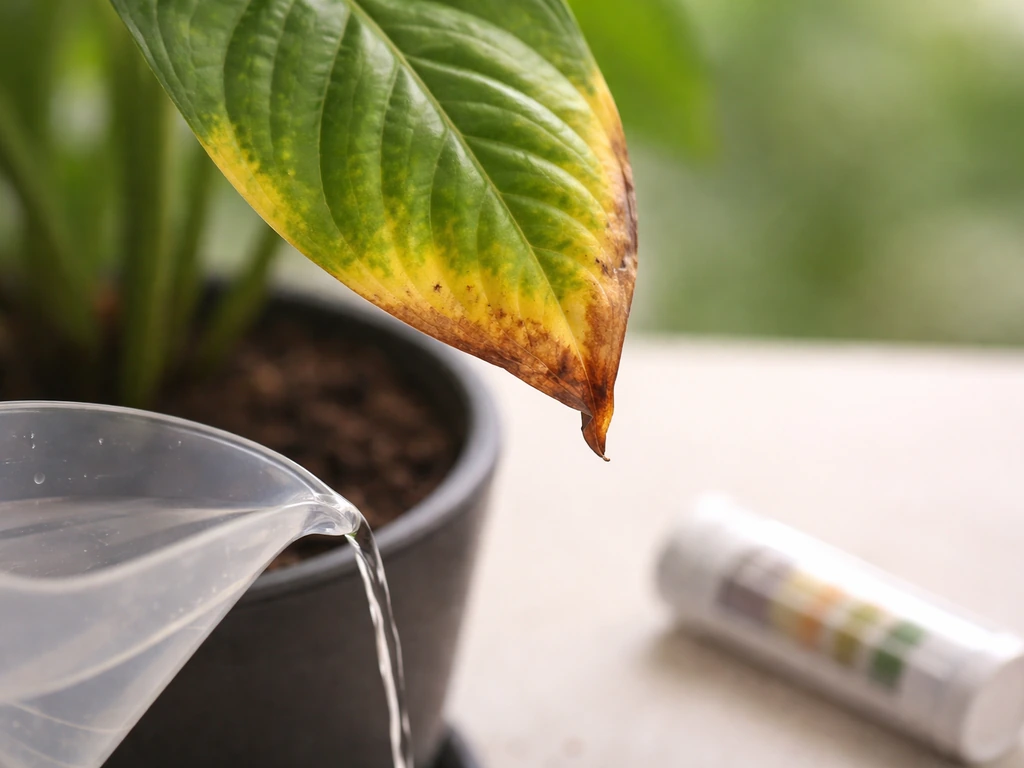
If leaf tips are browning or curling under, you are almost certainly overfeeding. Organic nutrients like Buddha Grow cause burn less dramatically than synthetics, but it still happens, especially in small containers or when you are feeding every watering from the start. Drop your dose back to 1-2 ml per gallon, flush with plain pH-adjusted water once if symptoms are severe, and go back to every-other-watering feeding. Do not flush multiple times in a row with organics because you can strip out the beneficial microbial life that makes organic feeding work.
Slow growth and pale leaves
Pale, light green leaves with slow growth usually signal underfed plants or a pH problem preventing nutrient uptake. First, check your runoff pH. If it is drifting above 7.0 in soil, nutrients are locking out at the root zone. Flush with pH 6.2 water until runoff comes back into the 6.0-6.5 range, then resume feeding at full dose. If pH is fine, increase your Buddha Grow dose by 0.5-1 ml per gallon and watch for improvement within 5 to 7 days.
Algae, odor, or sludge in hydro reservoirs
Organic nutrients in hydro are a food source for algae and bacteria. If your reservoir is developing a smell or you see green sludge, your light seal is probably failing or you are going longer than 7 days between changes. Lighten up your reservoir with a proper lid or light-blocking wrap, change it every 5 to 7 days, and run your air pump continuously to keep dissolved oxygen high. Some growers add beneficial bacteria products like Hydroguard to keep the reservoir biology balanced and competitive against harmful organisms.
pH drift in reservoir
Because Buddha Grow is acidic out of the bottle and organic matter continues to break down in your reservoir, pH drift is common in hydro setups. Check reservoir pH every 24 hours and adjust as needed. If pH is swinging more than 0.5 units per day, your reservoir is probably running too warm (above 70 degrees F) or has too much organic load. Keep reservoir temperature at 65-68 degrees F and do not overdose Buddha Grow thinking more is better.
Your first-time plan: a simple start-to-finish schedule
Here is a straightforward week-by-week plan you can follow today, whether you are growing in soil or a simple hydro setup. Adjust dosing up or down based on what your plants show you, but treat this as your baseline.
| Week | Stage | Buddha Grow Dose | Notes |
|---|---|---|---|
| Week 1-2 | Seedling / early roots | None | Plants do not need supplemental nutrients yet. Water only. |
| Week 2-3 | First true leaves / early veg | 1-2 ml/gal | Every other watering. Check runoff pH. |
| Week 3-5 | Active veg growth | 2-3 ml/gal | Every watering in soil. Every day in hydro reservoir. |
| Week 5-8 | Peak veg / plant training | 3-4 ml/gal | Scale up only if plants look healthy and hungry. Watch tips. |
| Flip week | Transition to flower | Stop Buddha Grow | Switch to bloom-phase nutrient. Residual organic N will carry plants for 1-2 weeks. |
| Week 1-2 flower | Early flower | None | Bloom nutrients take over. Monitor for any N deficiency and adjust bloom product if needed. |
Track your feeds in a simple notebook or phone note: date, dose, pH in, pH of runoff, and any plant observations. After two or three feeding cycles you will have a clear picture of how your specific plants respond to Buddha Grow in your specific environment, which makes dialing in your next grow much faster. This kind of tracking is especially useful when you are comparing approaches, like whether to run Buddha Grow as a standalone veg product or alongside a more comprehensive multi-part nutrient system.
If you want to keep things simple for your first run: start at 2 ml per gallon in week 2-3, feed every other watering, keep pH at 6. If you are trying to learn how to use easy grow fertilizer, focus first on measuring your water and pH, then start with a low dose and scale up based on plant response.
If you are looking for a way to increase growth like with Grow More 30-10-10, follow the label rates and match it to the plant’s growth stage the same way you dial in a nutrient like Buddha Grow how to use grow more 30 10 10. 0-6. 5 in soil, check the tips once a week, and stop at flip. That single approach will get most home growers through a clean vegetative phase without drama.
Once you have one grow under your belt with Buddha Grow, you can start layering in additional products and dialing your EC targets more precisely. If you are specifically looking into how to micro grow, the same careful dosing, pH checks, and small-container adjustments can help you avoid issues while building fast, healthy vegetative growth.
FAQ
Can I keep using Buddha Grow a little into early bloom to make the transition smoother?
No, it is not ideal. Buddha Grow is for the vegetative window and is intentionally low in phosphorus, so using it during bloom can slow flower development and leave plants short on what they need after the flip. Instead, switch fully at flip to a bloom nutrient and only keep any residual organics from the soil, you do not continue feeding Buddha Grow into mid flower.
What if my plants seem to need more than 4 ml per gallon?
Do not exceed the manufacturer’s range just because plants look hungry. If you run 4 ml/gal and still see fast pale growth, first confirm pH and EC are in range, then increase only by small steps (about 0.5 ml/gal) and reassess after 5 to 7 days. Overdosing organics can still cause tip burn, and it also increases reservoir pH drift risk in hydro.
Should I pH the water before I mix Buddha Grow, or after?
In general, start at 2 ml/gal and add it after you have pH adjusted your water to your target starting point. Because Buddha Grow is acidic, it will pull the final solution pH downward, so the decision aid is: measure after mixing, then adjust using your pH up/down products to bring the final nutrient solution into the correct range (soil 6.0 to 6.5, hydro 5.8 to 6.2).
My tips are browning, do I flush again and again with organic nutrients?
If you are seeing brown, curling, or crispy tips, reduce dose and frequency before doing repeated flushes. For organics, a one-time flush is the right first step if symptoms are severe, then resume at 1 to 2 ml/gal and go back to every-other-watering. Multiple flushes in a row can remove beneficial microbial life that helps nutrient availability.
When is the earliest safe time to start Buddha Grow?
For first-time users, that rule of thumb is about timing and plant readiness, not just calendar weeks. If seedlings have fewer than two to three sets of true leaves, or growth is still clearly stalled, wait, then start feeding at 2 ml/gal once they are actively vegetative. The risk with early feeding is that small root systems cannot handle nutrient strength or pH swings yet.
Can I run Buddha Grow in hydro without checking pH every day if I set it once?
Yes, but only as a nutrient source, not as a stand-in for pH management. In hydro, Buddha Grow requires reservoir pH checks on a regular cadence (at least daily) and reservoir changes weekly, because organic load changes water chemistry. Plan to adjust based on actual readings rather than trusting a single mix day measurement.
My hydro reservoir smells bad and looks slimy, is it because of too much nutrient?
If you see green sludge, smell issues, or algae buildup, treat it as a light and biology problem, not a dosing problem. Use a lightproof reservoir setup, keep air running for dissolved oxygen, and shorten reservoir change intervals (about 5 to 7 days). Adding too much nutrient to compensate usually worsens algae and pH drift.
My hydro pH swings a lot, what should I adjust first?
You usually cannot fix swings by dialing the bottle dose. In hydro, pH swinging more than about 0.5 units per day typically means temperature is high (above about 70 F) or the organic load is too heavy. Lower temperature to roughly 65 to 68 F, avoid overdosing, and do not increase strength in an attempt to stabilize pH.
Do I need to add CalMag every time with Buddha Grow?
CalMag is situational. If you use RO water or coco, plants commonly need extra calcium and magnesium, but you should only add it when you see a deficiency pattern or when your water test indicates low Ca and Mg. Otherwise, start with Buddha Grow, then add CalMag only if your readings or plant symptoms justify it.
How do I know whether to feed every watering or every other watering in soil?
In soil, treat watering rhythm as part of nutrient delivery. Early veg works best with every-other-watering feeding, then you can move toward every watering only after you confirm the soil microbiology is active (plants respond, and the pot weight method shows appropriate dryness between cycles). If you keep it wet nonstop, salts and organics can accumulate and create lockout or overfeeding symptoms.
My runoff pH is off, should I change the nutrient dose or just flush and correct pH?
Do a single, controlled pH-target correction based on runoff readings rather than guessing. If runoff pH drifts above 7.0 in soil, nutrients are likely becoming unavailable, so flush with pH-corrected water until runoff returns to your range, then resume feeding at the previous dose and reassess leaf response over the next week.
When I add silica or other supplements, what order should I mix them in?
Silica is usually best added first because it can react with other dissolved inputs if combined incorrectly. The practical approach is: add silica to water, then add Buddha Grow, then check final pH after everything is mixed. If you add multiple products, mix in the correct order and always dilute concentrates into water rather than pouring concentrates together.