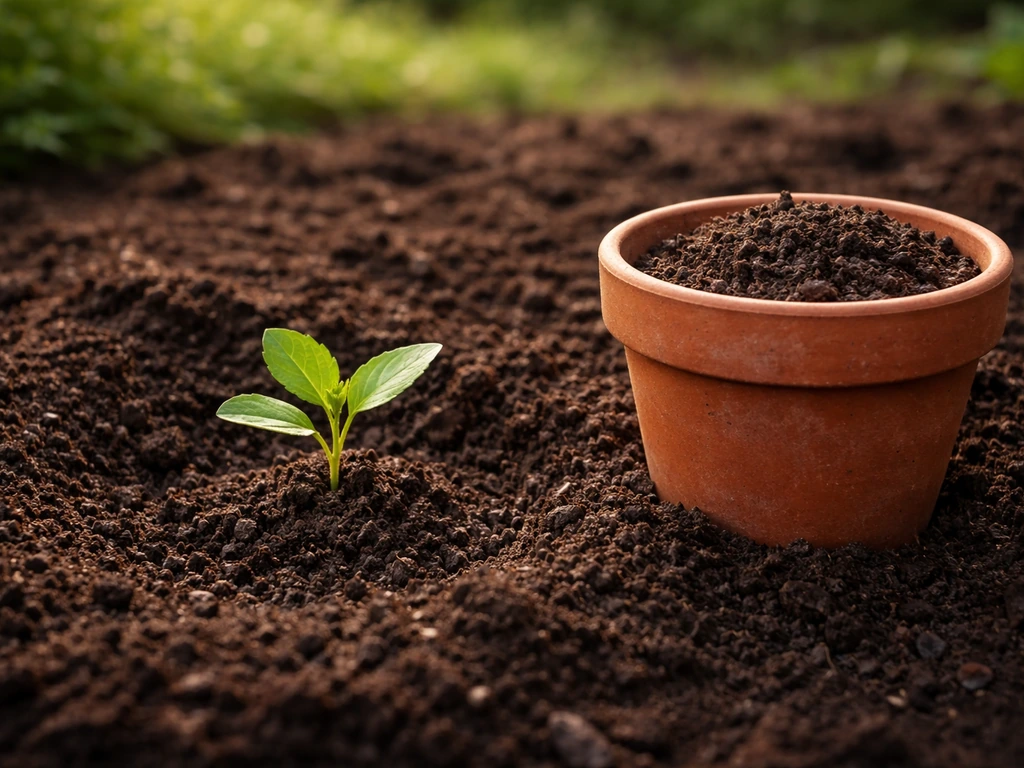
Earth Grow Mulch (most commonly sold as Earthgro by Scotts) is a shredded wood mulch made from forest products. It's designed to go on top of your soil as a surface layer, typically 3 inches deep, where it blocks weed growth, holds moisture, moderates soil temperature, and slowly breaks down to feed the soil food web. It is not a growing medium, not a soil amendment you mix in, and not something that belongs inside a hydroponic reservoir or system. Used correctly on outdoor beds, raised beds, or container tops, it's a solid, budget-friendly mulch. Used incorrectly, it creates moisture problems, nitrogen deficiencies, and pest headaches.
What Is Earth Grow Mulch and How to Use It

Marcus Holloway
2 May 2026
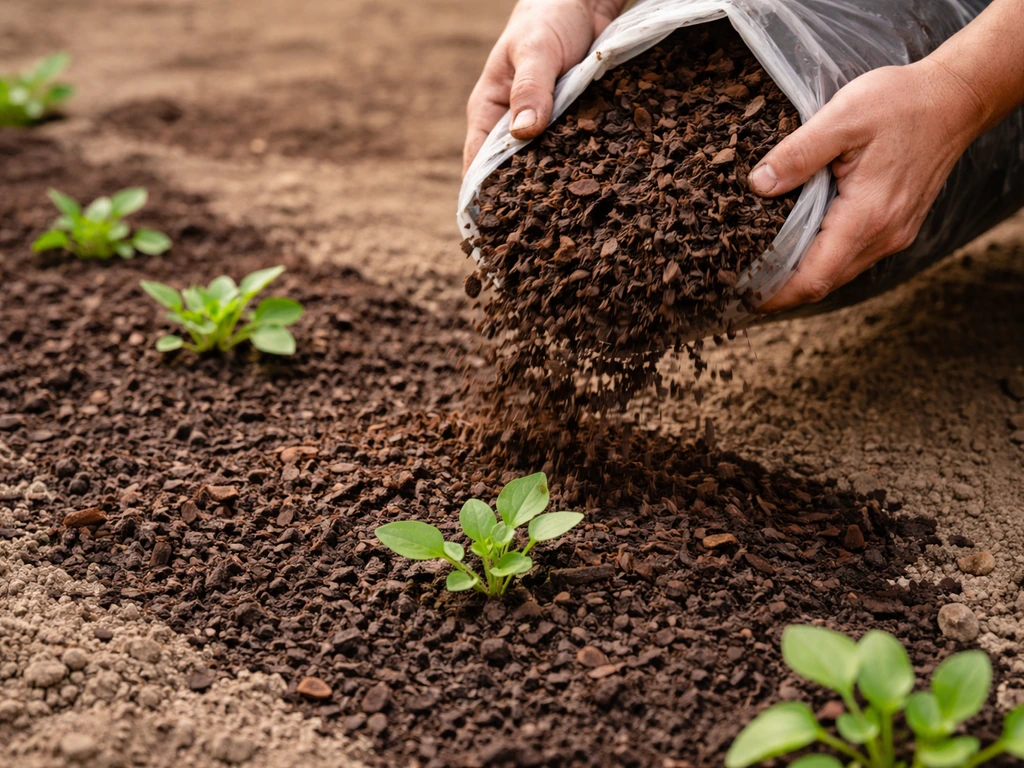
What Earth Grow Mulch actually is and what it's made from
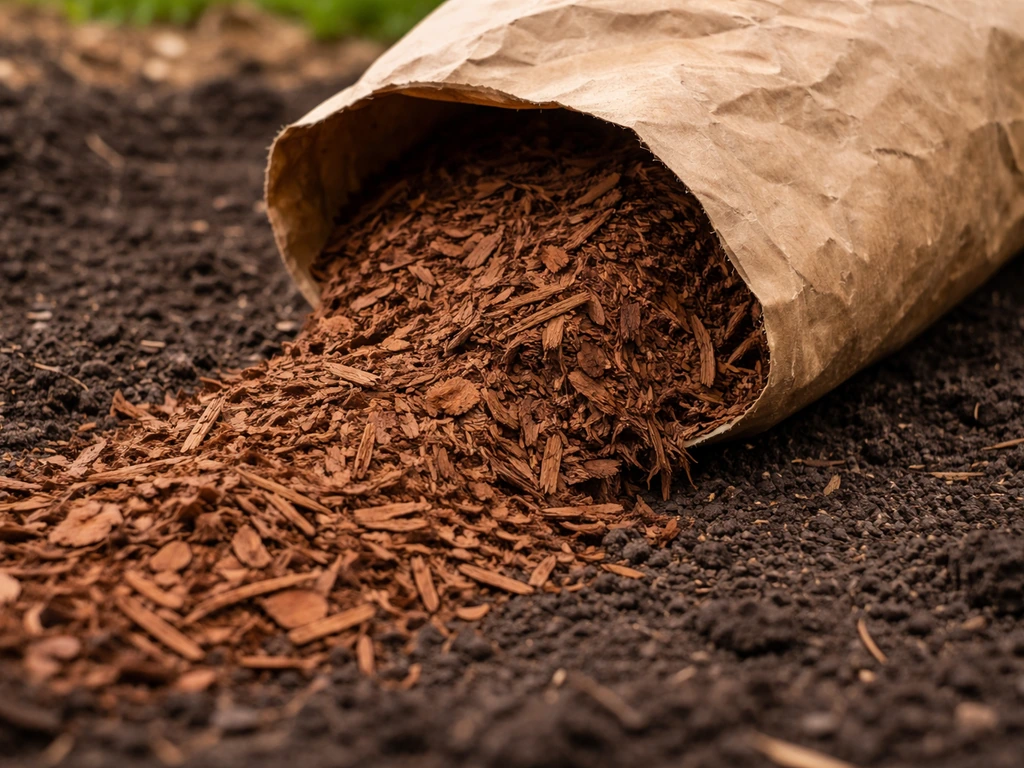
Earthgro by Scotts is a bagged, shredded wood mulch sold through major retailers like Home Depot. The product is categorized as a growing media by its own Safety Data Sheet, issued by Hyponex Corporation (a Scotts subsidiary), and described on Scotts' product pages simply as being "made from forest products." That phrase means it's wood-based: shredded bark, wood fiber, or a blend of forest byproducts processed to a consistent texture. Depending on the variety (brown, red, black), the wood is often dyed to hold color longer. The SDS notes an earthy odor, which is normal for fresh shredded wood products.
What it is not: it's not a compost, not a fertilizer, not a potting soil, and not a soilless growing medium in the hydroponic sense. It's a surface mulch. The core job of any mulch is passive: sit on top of the soil and create a protective, insulating barrier between the soil surface and the outside environment.
How to apply it in soil gardening
The official application depth from Scotts is 3 inches. That depth is not arbitrary. At 2 inches or less, light still reaches weed seeds and moisture evaporates faster. At 3 inches, you get meaningful weed suppression (blocking sunlight access to germinating seeds), better moisture retention, and enough insulating mass to buffer soil temperature swings. At 4 or more inches, you start creating oxygen and drainage problems, especially around plant crowns and woody stems.
Placement: where to put it and what to keep it away from
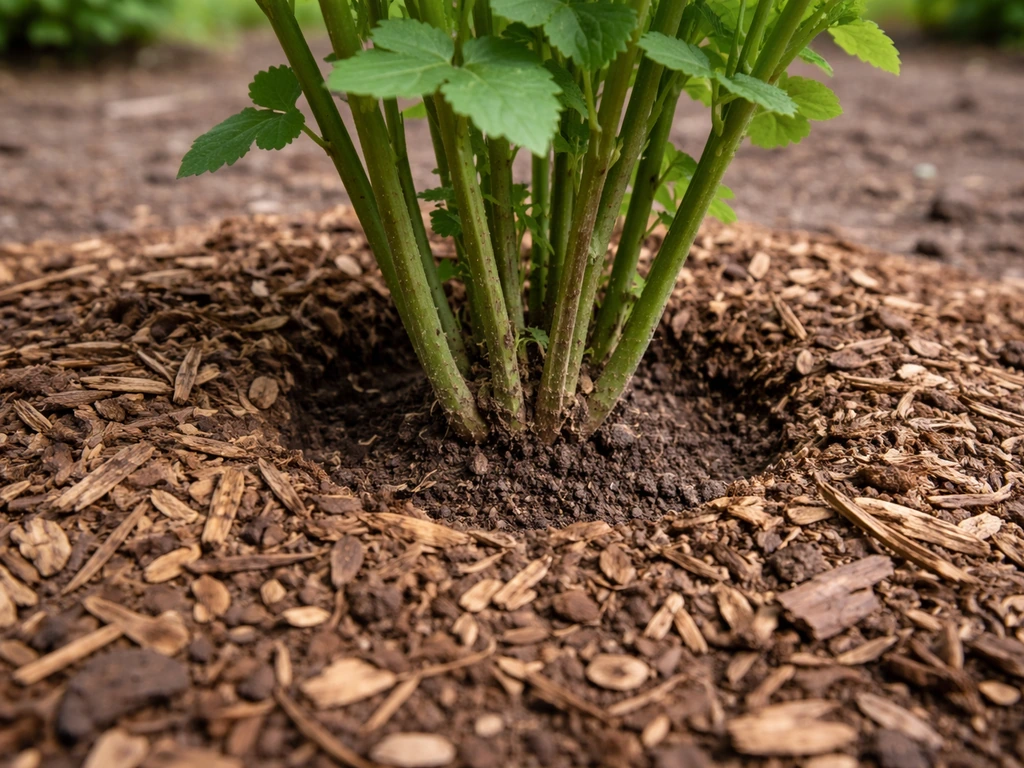
Never pile mulch against the crown of a plant. Virginia Tech Extension is direct on this: keep mulch at least 1 inch away from the crown when applying in spring, after new shoots have started emerging.
Virginia Cooperative Extension also recommends applying a mulch layer around plants extending outward from the plant’s crown, typically with about a 1- to 2-inch layer for smaller annuals and perennials, while keeping mulch off the crown itself [keep mulch at least 1 inch away from the crown](https://www. pubs. ext. vt.
edu/SPES/spes-661/spes-661. html). For trees and shrubs, Colorado State University Extension recommends keeping mulch back at least 6 inches from the trunk. The risk is not theoretical.
Mulch pressed against stems and crowns traps moisture, reduces airflow, and creates conditions for crown rot and disease. Pull it back, leave breathing room, and let it radiate outward from there.
- Apply in spring after new growth starts, not while plants are still dormant and cold soil is trapping moisture
- Spread evenly at 3 inches deep across the bed or around individual plants
- Keep it at least 1 inch from plant crowns and stems, 6 inches from tree trunks
- After application, keep the mulch dry for 24 hours so it sets without clumping or washing
- Rake or turn the top 1 inch every 3 to 4 months to prevent matting, maintain airflow, and deter surface weed establishment
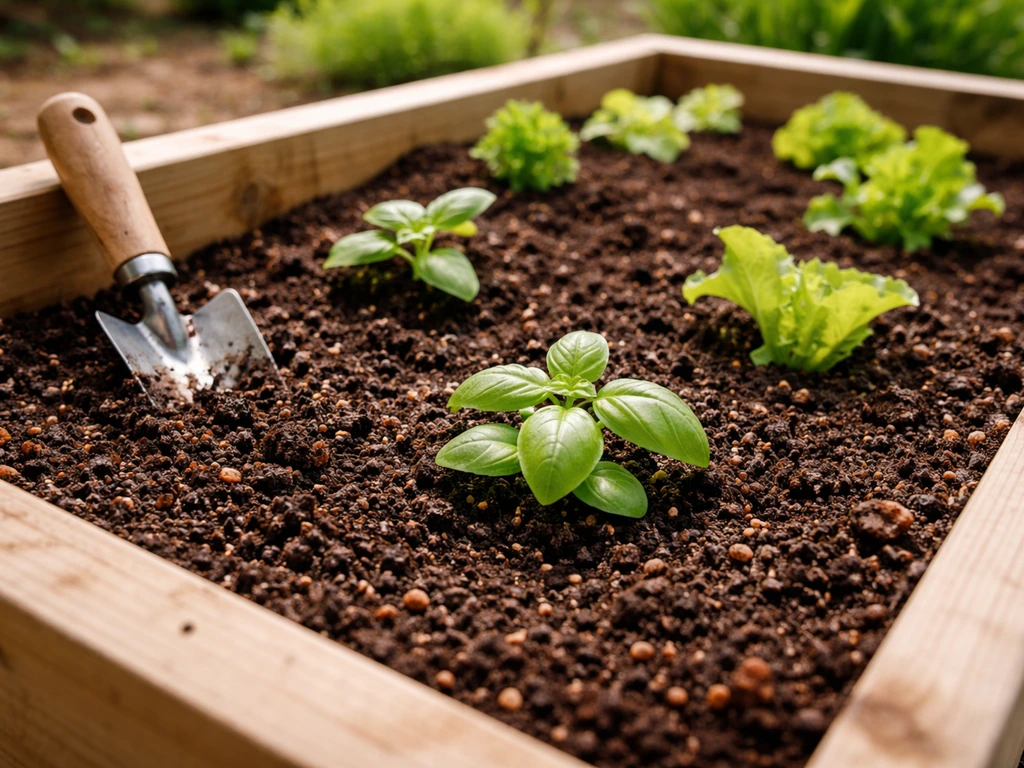
For vegetable beds and herb gardens specifically, apply mulch between plant rows and around stems, not on top of seedling trays or directly over seeds trying to germinate. Mulch is a barrier. That's great for keeping weeds out, but it also slows germination of desirable seeds if placed on top of them.
Using Earth Grow Mulch in potting and hydroponic-adjacent setups
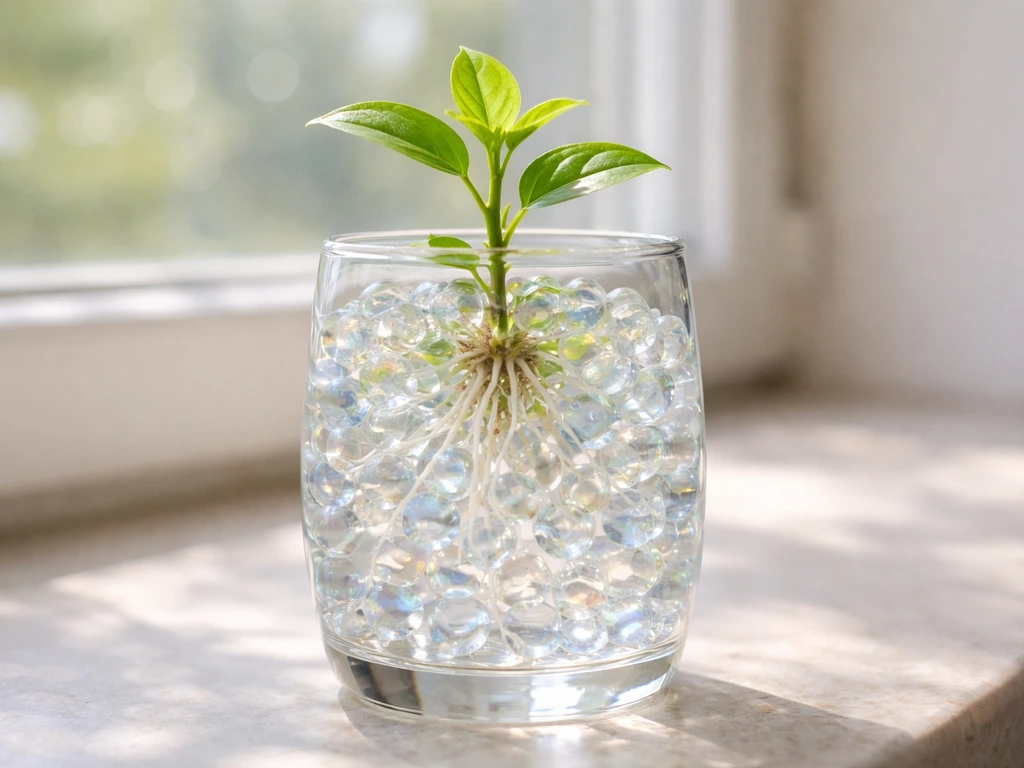
Here's where I want to be straightforward with you, especially if you're running any kind of controlled indoor grow. Shredded wood mulch has almost no useful role inside a hydroponic system. You generally cannot grow plants in orbeez the same way you use soil or mulch, because orbeez mainly holds water rather than supporting roots and nutrients can you grow plants in orbeez.
If you are deciding between hydro vs soil grow approaches for indoor and outdoor setups, focus on whether your roots need a true growing medium or just surface weed and moisture control. Oklahoma State University Extension makes this clear: soilless growing media needs to deliver oxygen, water, nutrients, and root support in a predictable, controllable way. Shredded wood mulch doesn't meet that standard.
It holds inconsistent moisture, can introduce unknown dyes or chemical residues into your reservoir, and breaks down at an unpredictable rate. If you're growing in a DWC bucket, NFT channel, or flood-and-drain setup, leave the mulch out of the equation entirely.
Where it can make sense near hydroponic or container setups
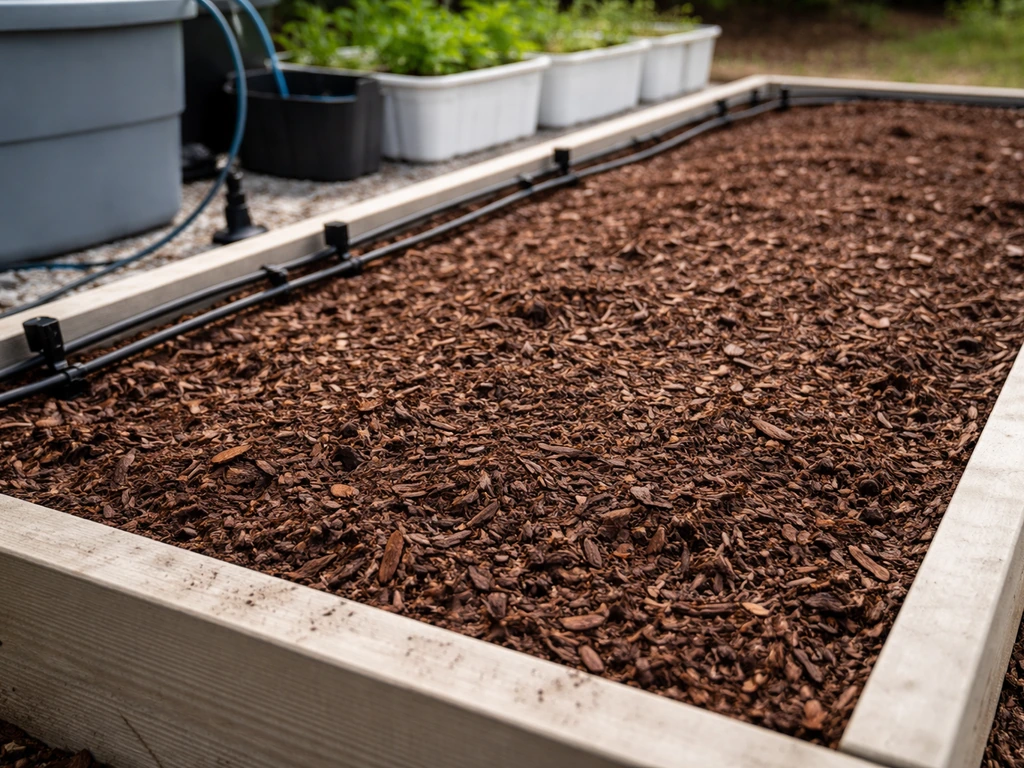
If you're growing in large outdoor containers or raised beds that are adjacent to a hydroponic operation, Earth Grow Mulch can still earn its place as a surface top-dress on the soil around containers or on pathways to reduce dust, mud, and ambient weed pressure. In container grows using a soil-based medium, a thin 1 to 1. 5 inch layer on the soil surface can help slow moisture evaporation between waterings.
Keep it thin in containers since drainage and airflow matter more in a confined pot than in an open garden bed. If you're doing a hybrid setup with a pot-and-soil grow alongside a hydro system, the mulch stays on the pot's soil surface only, never near the hydro reservoir or water lines.
What it actually does for your plants (honest expectations)
Mulch does four things well when applied correctly. It slows soil moisture evaporation, which means less frequent watering in summer heat. It buffers soil temperature, keeping roots cooler when surface temps spike and slightly warmer during cool nights. It suppresses weed germination by blocking light from reaching the soil surface. Used as a soil surface top-dress, grow max top soil benefits from reduced weed pressure and steadier moisture, which supports healthier plant growth suppresses weed germination. And as it breaks down slowly over months and seasons, it adds organic matter to the soil, feeding microbial activity and improving soil structure over time.
What it doesn't do: it doesn't fertilize your plants, it doesn't correct pH, it doesn't replace compost or a good topsoil, and it's not a substitute for a well-structured growing medium. It also doesn't last forever. Natural wood mulch breaks down and needs to be replenished, typically once a year or when you notice the layer has compressed below 2 inches.
Common problems and how to fix them
Mold and fungal growth on the mulch surface
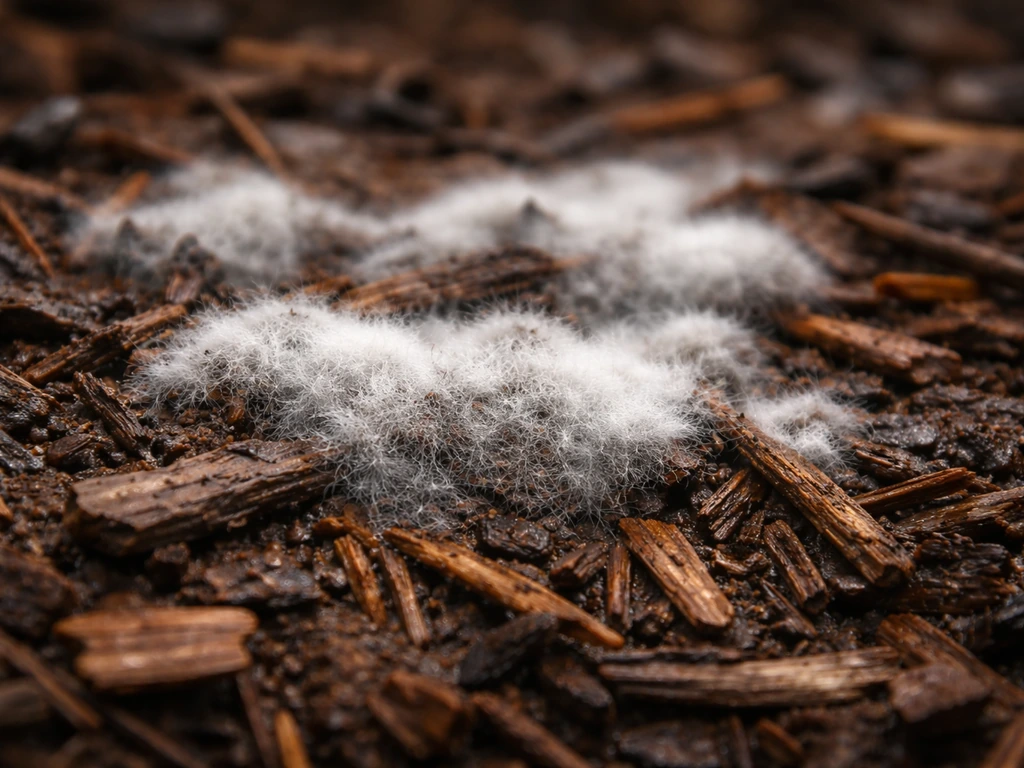
White or gray mold on the surface of wood mulch is common and mostly harmless. It's saprophytic fungi doing exactly what they're supposed to do: decomposing organic material. The bigger issue is when the mulch layer stays consistently wet and dense, which creates anaerobic conditions. Rake and turn the top inch every few months as Scotts recommends, improve airflow around the bed, and make sure water isn't pooling under the mulch layer. If the smell goes from earthy to sour or ammonia-like, the mulch is compacting and going anaerobic. Rake it out, let it dry, and reapply thinner.
Fungus gnats
Iowa State University Extension reports that fungus gnats are unlikely to breed directly in wood chip or compost mulch, but moist, fungusy-smelling organic material does attract them. If you're seeing gnat pressure around mulched containers, the actual breeding site is usually the moist soil underneath, not the mulch itself. The fix is letting the top layer dry out between waterings, avoiding overwatering, and pulling mulch back slightly from container rims to improve surface airflow. The University of Connecticut IPM program emphasizes reducing excess moisture and puddles as the primary gnat management step.
Nitrogen tie-up
This one matters if you're mixing mulch into your soil rather than using it as a surface layer, which you should never do. Oregon State University Extension explains that wood chips can tie up nitrogen, particularly when mixed into the soil profile, because soil microbes consume nitrogen to break down carbon-rich wood material. The University of Saskatchewan confirms this and is direct: do not mix wood chips or bark into soil.
As a surface mulch only, this risk is minimal because decomposition happens at the mulch-soil interface, not throughout the root zone. If you notice plants showing nitrogen deficiency symptoms (pale yellowing starting at older lower leaves) after mulching, check whether mulch has been incorporated into the soil, reduce the mulch depth, or top-dress with a nitrogen source.
Over-mulching and compaction
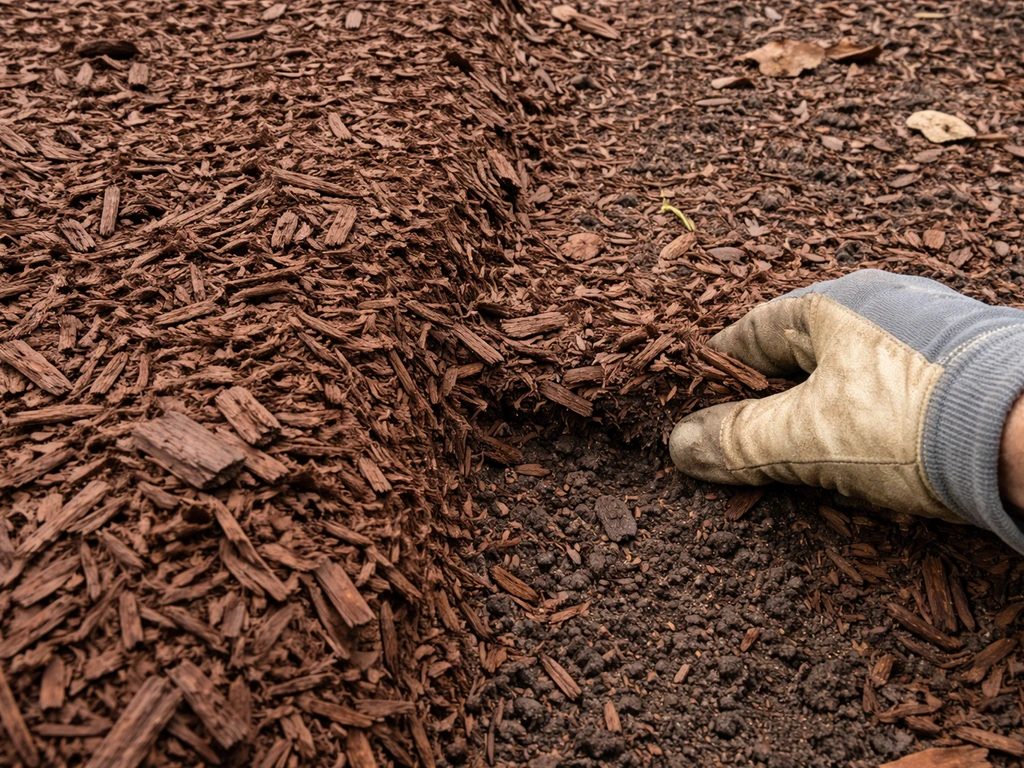
Piling mulch deeper than 3 to 4 inches is one of the most common mistakes. Too much mulch blocks water infiltration, suffocates roots, and creates a thick mat that surface-roots grow into instead of down into the soil. If your mulch has compressed and you're not sure of the current depth, probe it with a pencil or stick. If it's over 4 inches, rake some off before adding new material. The goal is maintaining 2 to 3 inches consistently, not building up layers over years without removing old material.
How to pick a quality product and store it right
When buying any bagged wood mulch, look at the texture and smell before you commit. A good shredded wood mulch should smell earthy, not sour, not chemically sharp. Earthgro's SDS specifically lists earthy odor as the expected smell. Earthgro's SDS specifically notes an earthy odor as the expected smell Earthgro's SDS specifically lists earthy odor as the expected smell.. If a bag smells strongly of ammonia or chemicals, skip it. For dyed mulches like red or black Earthgro varieties, the dye should be relatively even across the product, not patchy or concentrated in blobs, which can indicate inconsistent processing.
Check that the bag is intact and hasn't been sitting exposed to rain or standing water at the retailer. Wet mulch stored in sealed bags starts to ferment, which creates an anaerobic, sour-smelling product that can be harmful to young plants when first applied. It will usually off-gas and recover if you spread it out to dry first, but it's worth knowing what you're buying.
For storage, follow the guidance from the Earthgro SDS: store in the original container, keep the bag sealed or tightly closed, place it in a dry, cool, well-ventilated area, and keep it out of direct sunlight. Heat and sunlight degrade the dye faster and can accelerate fermentation in sealed bags. Stored correctly, an unopened bag of wood mulch holds its quality for at least one season. Partially used bags should be resealed tightly and stored off the ground.
When to skip Earth Grow Mulch and use something else
Earth Grow Mulch is convenient and widely available, but it's not always the best tool for the job. If what you mean by “regular dirt” is soil, you can grow plants in it, but Earth Grow Mulch should only be used as a surface layer, not mixed into the growing medium. Here's how it compares to common alternatives:
| Mulch Type | Best Use Case | Key Advantage | Watch Out For |
|---|---|---|---|
| Earthgro Shredded Wood | Ornamental beds, garden borders, paths | Weed suppression, moisture retention, low cost | Nitrogen tie-up if mixed in, dye runoff, slow to break down |
| Compost | Vegetable beds, around heavy feeders | Adds nutrients and soil biology as it breaks down | Less weed suppression, needs replenishing more often |
| Straw | Vegetable gardens, seedling protection | Lightweight, improves soil fast, great for veggie rows | Can introduce weed seeds if not certified weed-free |
| Coco Coir (as mulch/top dress) | Containers, indoor grows, hydro-adjacent | Sterile, pH-neutral, great for containers and top-dressing | Needs wetting agent, less long-term soil-building effect |
| Wood Chips (coarse) | Trees, shrubs, orchard understory | Long-lasting, excellent moisture buffer, great for soil fungi | Too coarse for veggies, not suited to annual beds |
| Living Mulch (clover, thyme) | Raised beds, companion planting setups | Actively fixes nitrogen, supports pollinators, looks great | Requires management so it doesn't compete with main crops |
For container-based plant growing or any indoor setup, coco coir is a better top-dressing choice than shredded wood mulch because it's sterile, pH-neutral, and won't introduce unknown organic material near a controlled root zone. If you're already thinking about how soil medium compares to other growing methods, that question connects directly to the broader hydro vs soil conversation that comes up often for growers managing multiple setups. Compost is the right choice when your main goal is soil improvement and feeding heavy feeders rather than weed control. Straw is the go-to for vegetable rows in outdoor beds where you want fast organic matter and don't care about aesthetics.
The honest bottom line: Earth Grow Mulch earns its place in garden beds and landscape borders where the priority is weed control and moisture retention with minimal maintenance. For vegetable gardens with heavy feeder crops, mix in compost underneath and use mulch on top. For containers and indoor setups, use coco or leave the top-dressing out altogether. Always apply at 3 inches, keep it off crowns and trunks, rake it every few months, and replenish when the layer drops below 2 inches.
FAQ
Can I use Earth Grow Mulch right after planting, or should I wait?
It’s best to apply after seeds have germinated or after seedlings have established enough to handle a surface barrier. If you mulch immediately over seedbeds, the light-blocking effect can slow or prevent germination. For transplants, keep mulch pulled back from stems, then water normally so the mulch acts as a moisture buffer rather than a wet blanket.
What soil should I put Earth Grow Mulch on, bare soil or existing weeds?
Use it on soil that’s already prepared and cleared. Earth Grow Mulch suppresses new weed growth, but it won’t reliably smother established weeds with strong root systems. For thick existing weeds, remove them first, then top-dress to the 3-inch depth to prevent new germination.
How do I tell if my mulch layer is too thick without measuring every bag?
At a glance, compressed layers are often the clue. If the top looks like a dense mat or you cannot probe to about 3 inches easily, it may be overbuilt. Use a pencil or stick to check depth, then rake off excess if you’re above 4 inches. A target of 2 to 3 inches consistently is the workable range.
Is it safe for edible plants, like herbs and lettuce?
Generally yes when used as a surface mulch and kept away from the crown. The main caution is moisture management, because consistently wet mulch around plant bases increases disease risk. If you see persistent dampness or sour odor, thin the layer and improve airflow rather than adding more mulch.
Why is my mulch smelling sour or ammonia-like?
That smell usually indicates the mulch is staying too wet and compacted, creating anaerobic conditions. Fix it by raking and turning the top inch, letting it dry, and then reapplying a thinner layer. Don’t ignore it, because this condition can reduce oxygen at the soil surface and worsen plant stress.
Does dyed Earthgro mulch (red, black, brown) affect soil or plants?
Dye is usually intended to maintain color, not to fertilize or change planting performance, but it can vary by batch and processing. To minimize any risk, apply at the recommended surface depth and avoid mixing it into the soil. If you notice heavy dye blobs or strong chemical odor in a bag, don’t use that product.
How often should I replenish it, and do I need to remove old mulch first?
Replenish when the effective thickness drops below about 2 inches. You usually don’t need to remove everything, but if the old layer has become compacted, keep it from exceeding about 3 to 4 inches total. Rake and thin the top before adding fresh material so you’re not layering over a dense mat.
Can I mix Earth Grow Mulch into the soil to save time?
Avoid mixing. Wood-based mulch can tie up nitrogen when incorporated because microbes break down carbon-rich material. Keep it as a surface top-dress only. If you already mixed it and see nitrogen deficiency symptoms, reduce any remaining incorporated material and consider a nitrogen source appropriate for your crop.
What’s the best way to prevent fungus gnats around mulched containers?
Treat it as an excess-moisture problem, not a mulch-only problem. Let the top layer dry between waterings, avoid pooling, and improve airflow by pulling mulch slightly back from container rims. If gnats persist, check the moist soil underneath, since that’s often where breeding is actually happening.
Can I use it in a raised bed where I also water heavily or use drip irrigation?
Yes, but manage moisture so water doesn’t stay trapped under the mulch. With drip, verify that emitters aren’t saturating the same area repeatedly, and keep mulch depth near the target (about 3 inches). If parts of the bed stay damp and dense, thin the mulch or rake periodically to restore airflow.
Is there any situation where Earth Grow Mulch could be used near a hydroponic system?
Only as a separate surface top-dress on soil in nearby containers or pathways, not inside or around the hydro reservoir and water lines. If you’re running DWC, NFT, or flood-and-drain, keep shredded wood mulch out entirely because it doesn’t function as a predictable growing medium and may introduce decomposition-related variables.
What should I do if mulch accidentally gets piled against a trunk or crown?
Remove or pull it back. Mulch pressed against plant tissue reduces airflow and can trap moisture, increasing crown rot and disease risk. For trees and shrubs, maintain extra clearance from the trunk, then reapply at the correct depth radiating outward.