Multi grow fertiliser works exactly as the name suggests: it is a grow-phase nutrient formula designed to push vegetative development, typically with a higher nitrogen ratio relative to phosphorus and potassium. You use it from seedling establishment through the end of the vegetative stage, then switch to a bloom or flower formula once your plants start forming buds or fruit.
Multi Grow Fertiliser How to Use: Soil and Hydroponics Guide

Marcus Holloway
20 Apr 2026
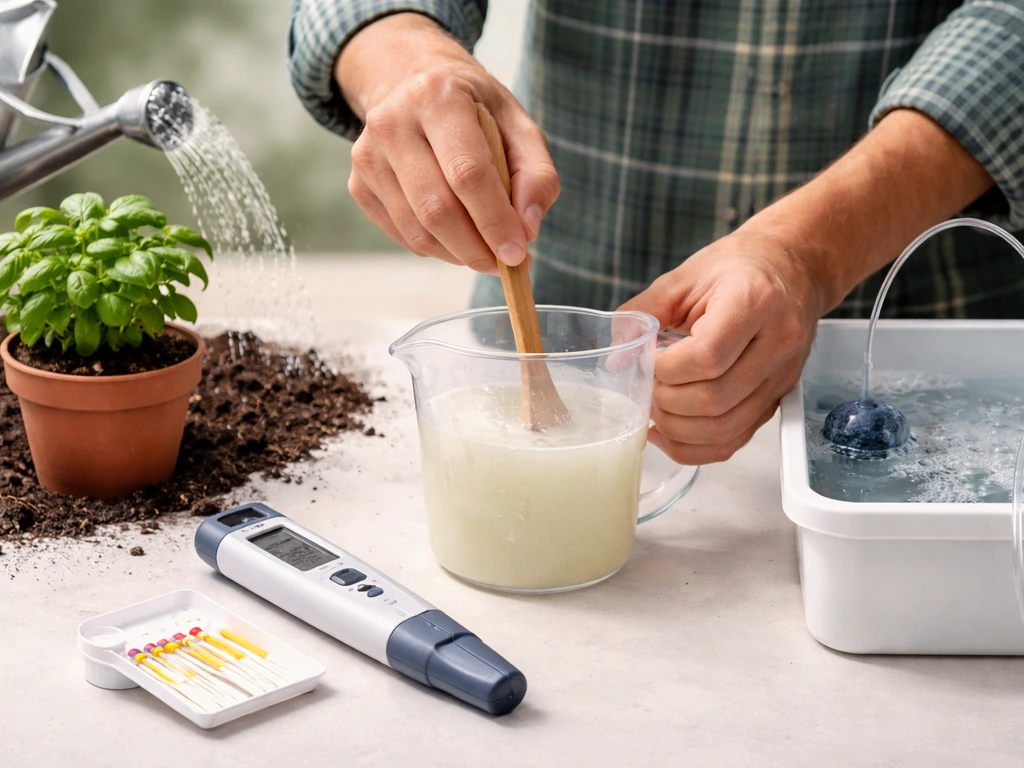
The practical answer to how to use it is: read your specific label first, mix at the lowest recommended dilution, check your pH and EC/ppm before feeding, and then dial up gradually based on how your plants respond. Liquid plant food is often the best way to deliver a grow formula consistently, as long as you follow the label dilution and test EC and pH before feeding grow best liquid plant food.
Everything below walks you through exactly that process, whether you are growing in soil or a hydroponic system. For foliar feeding, choose the best grow foliar fertilizer formulated for vegetative growth and follow the label for dilution and application timing.
What multi grow fertiliser actually is and when to use it
The term 'multi grow' appears as a product name across several nutrient brands, so it does not refer to a single formula. What these products share is a vegetative-stage nitrogen bias. A typical grow fertiliser NPK might look like 3-1-2, 7-4-5, or even something closer to a balanced 20-20-20 for general-purpose lines. The key point is that nitrogen drives leaf, stem, and root mass, so whatever ratio your product carries, the nitrogen number is usually the highest or most prominent during the grow phase.
You use a grow formula from about week two after germination (once the seedling has its first true leaves) right through the last week of vegetative growth. When you flip to 12/12 light for photoperiod plants, or when an autoflower begins showing pistils, you transition to a bloom formula. If you are comparing products, you will also see separate bloom options like Fox Farm Big Bloom, which are formulated for flowering rather than vegetative growth.
Some growers blend the two for a week or two during the transition, which is a sensible approach if your bloom formula drops nitrogen sharply. If you are comparing grow-specific products against broader options like an all-purpose balanced feed, the grow formula will generally produce tighter internodal spacing and denser foliage during veg.
Read your label before you mix anything
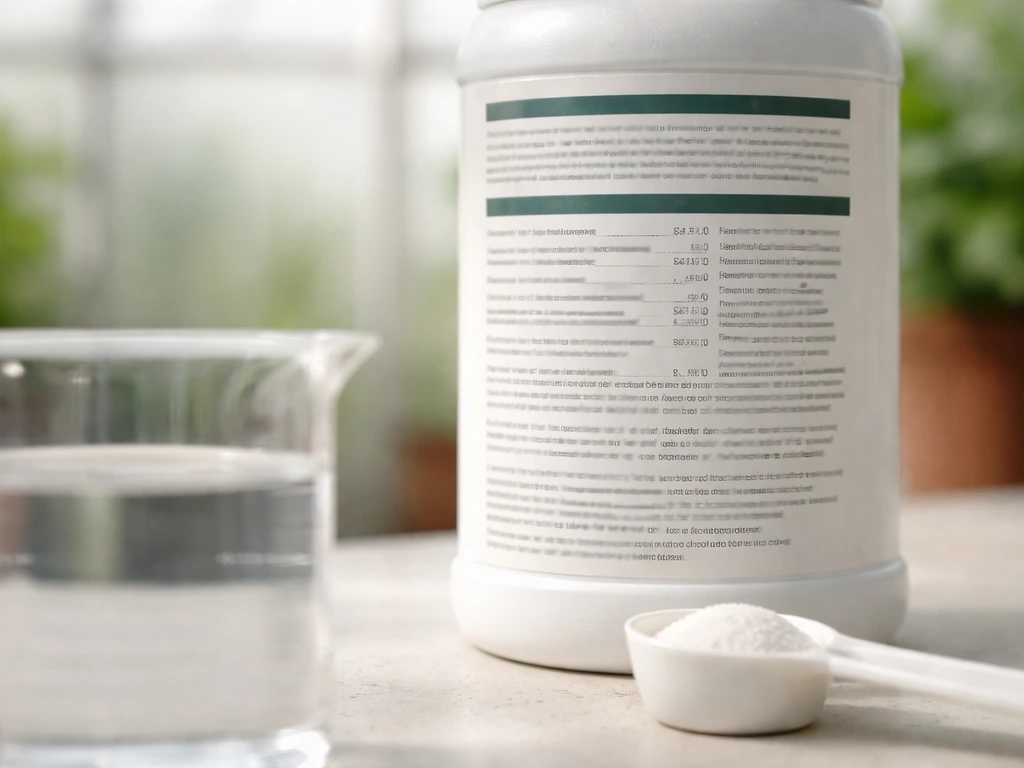
This is the most important step and the one most growers skip. Every multi grow product has a different concentration, dilution rate, and recommended EC or ppm target. Before you touch a measuring cup, find these four things on your label or the brand's feed chart:
- NPK ratio: tells you the nitrogen, phosphorus, and potassium percentages and whether secondary nutrients like calcium and magnesium are included.
- Dilution rate: given as millilitres per litre (ml/L) or teaspoons per gallon. This is the starting point for your mix.
- Target EC or ppm: some labels express this as mS/cm (EC) and others as ppm. If only one is shown, you can convert — 1.0 mS/cm is roughly 500 ppm on a 500-scale meter or 700 ppm on a 700-scale meter.
- pH recommendation: most grow fertilisers lower pH when dissolved, so the label will usually tell you to adjust after mixing.
If your label gives a range like 2–4 ml/L, always start at 2 ml/L for the first feed and only move up if plants show no signs of stress and EC readings are within target. Newer growers consistently overfeed by jumping straight to the maximum rate, and that is how you get nutrient burn in week three of veg.
How to calculate your dose from any label
The label method works regardless of brand. Take the low end of the stated dilution rate and multiply by your total water volume. If your label says 3 ml/L and you are mixing 10 litres, that is 30 ml of concentrate. Mix into the water (not the other way around), stir, let it sit for two minutes, then test EC and pH before applying. If the EC comes out higher than the label target, add plain water to dilute. If it is lower, add a small amount more concentrate. This sounds obvious but it saves a lot of guesswork when you are using tap water with existing mineral content.
Mixing and feeding in soil
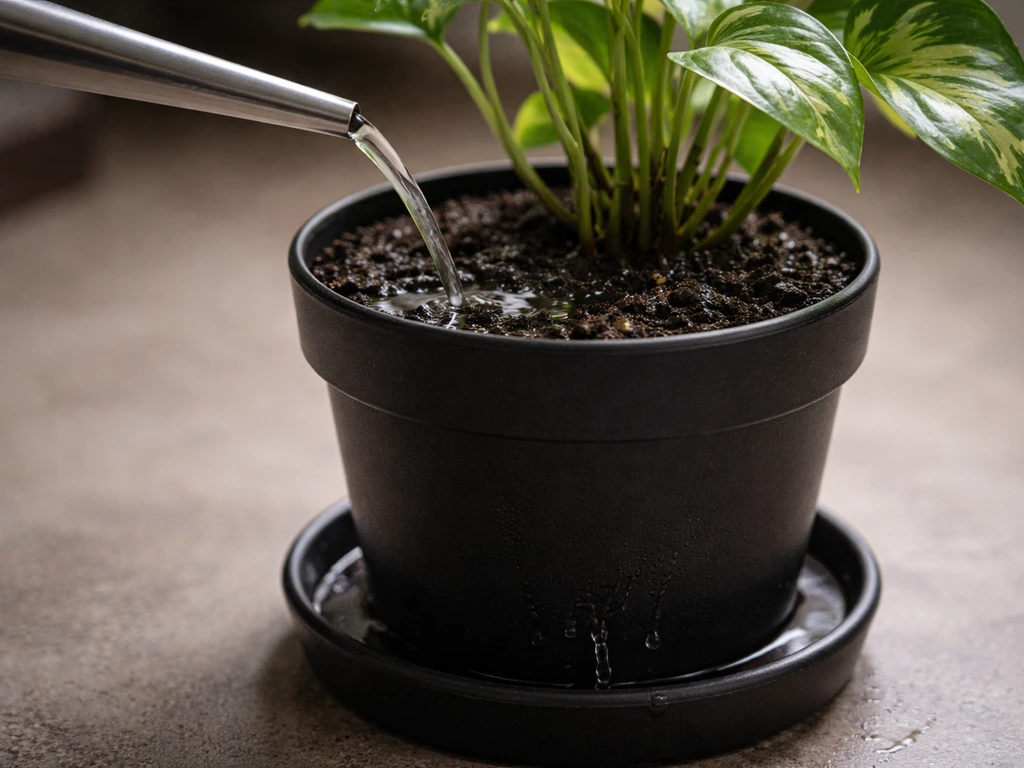
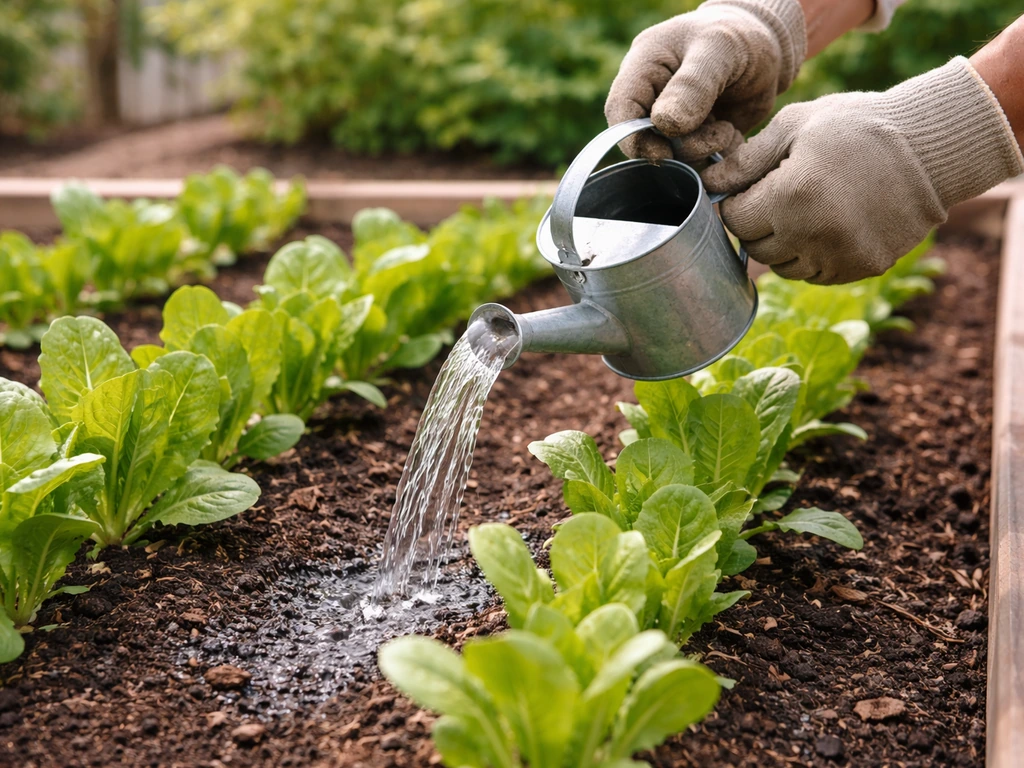
In soil, you apply dissolved fertiliser as a root drench during a normal watering. The general rule is to feed every second or third watering rather than every time you water. Soil holds nutrients in its cation exchange capacity, so you do not need to supply them constantly. A typical soil schedule looks like: water plain (slightly acidic, pH 6.0–6.8), then water with nutrients, then plain again. Repeat through veg.
Apply enough solution to get 10–20% runoff from the bottom of the container. That runoff volume matters because it prevents salt buildup in the root zone and also gives you something to measure. Collect a small amount of runoff in a clean container and test its EC and pH. Runoff EC significantly higher than your input solution (say, more than 0.5 mS/cm above) tells you salts are accumulating and you should water plain more frequently or do a flush.
For target strength in soil during veg, stay in the range of 1.2–1.8 mS/cm (roughly 600–900 ppm on a 500-scale meter) for established plants. Seedlings and early transplants should be closer to 0.4–0.8 mS/cm. Soil buffers nutrient availability more than hydro does, so you have more margin for error, but you also have less real-time feedback, which is why monitoring runoff matters.
Soil pH targets and feeding frequency by stage
| Growth Stage | Feed Frequency | Target Input EC (mS/cm) | Target Input pH |
|---|---|---|---|
| Seedling (weeks 1–2) | Plain water only or very dilute | 0.2–0.4 | 6.2–6.5 |
| Early veg (weeks 3–4) | Every 3rd watering | 0.8–1.2 | 6.0–6.5 |
| Mid veg (weeks 5–8) | Every 2nd watering | 1.2–1.8 | 6.0–6.5 |
| Late veg / transition | Every 2nd watering, blend in bloom formula | 1.4–2.0 | 6.0–6.5 |
| Flush week (pre-harvest or reset) | Plain water only | 0.0–0.2 (tap baseline) | 6.0–6.5 |
Using multi grow fertiliser in hydroponics
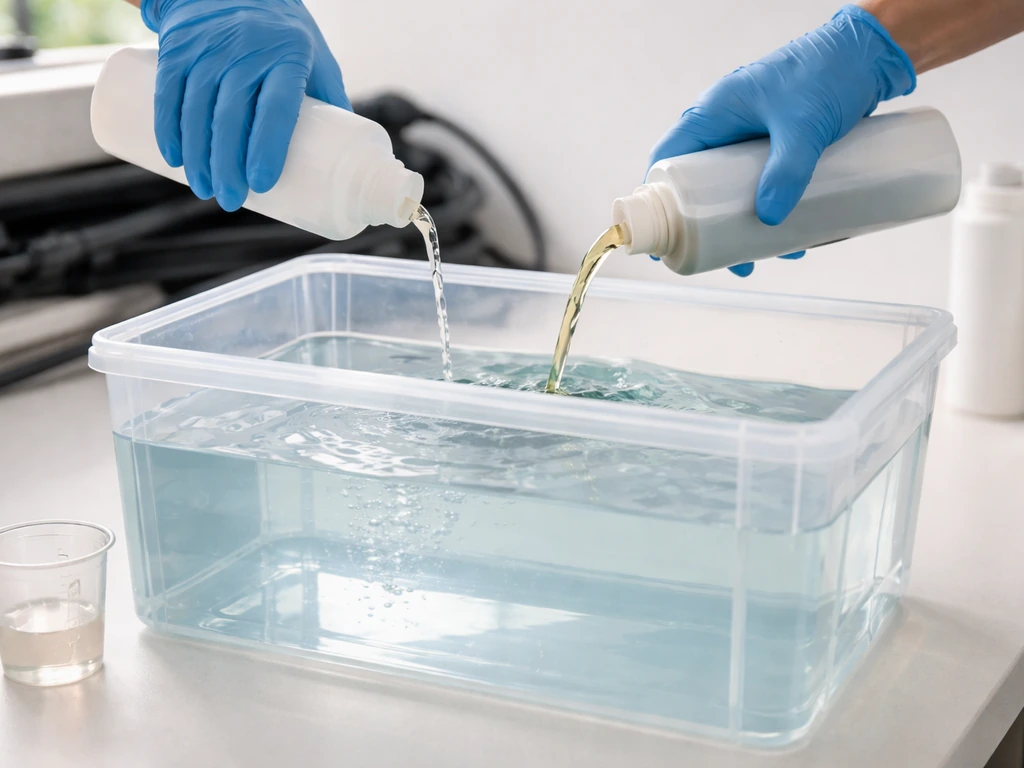
In hydro, your fertiliser goes directly into the reservoir and the roots sit in or are regularly bathed by that solution, so precision matters far more than in soil. The target pH window for most hydroponic crops is 5. 5–6. 5, with many growers targeting the middle of that range at around 5.
In hydroponics, choosing a liquid plant food for your grow phase can make it easier to hit consistent pH and EC targets grow best liquid plant food. 8–6. 0 for the vegetative stage. blank" rel="noopener noreferrer">General Hydroponics recommends keeping nutrient solution between 800 and 1500 ppm for most crops unless you have specific guidance for your plant.
General Hydroponics publishes an official Maxi Series basic feed chart that lists EC ranges by growth stage (in mS/cm) along with corresponding ppm ranges on a 500 scale General Hydroponics recommends keeping nutrient solution between 800 and 1500 ppm. In EC terms, that is roughly 1.
3–1. 6 mS/cm during the grow phase, rising to 2. 1–2. 5 mS/cm during later bloom weeks.
Mix your reservoir like this: start with plain water, add any pH-down or pH-up adjusters only after you have added nutrients (nutrients themselves shift pH), then test EC, then test and adjust pH. The order matters because adding pH adjusters to plain water and then adding nutrients will push pH off target again. Always test after nutrients are fully dissolved.
One thing that catches new hydro growers off guard is how quickly reservoir EC changes after plants start feeding. As plants consume water, the solution becomes more concentrated. As they consume nutrients, it becomes weaker. You cannot assume the reservoir is the same strength as when you mixed it. Check EC and pH every 24–48 hours during veg, and top off with plain water (not nutrient solution) when the level drops, then recheck EC and pH after topping off. Do a full reservoir change every 7–10 days to prevent salt accumulation and pH drift.
Hydro EC targets by stage
| Growth Stage | Target EC (mS/cm) | Approx. ppm (500 scale) | Reservoir Change Interval |
|---|---|---|---|
| Seedling / clone | 0.6–0.8 | 300–400 | Every 5–7 days |
| Early veg | 1.0–1.3 | 500–650 | Every 7 days |
| Mid to late veg | 1.3–1.6 | 650–800 | Every 7–10 days |
| Transition (flip to bloom) | 1.6–2.0 | 800–1000 | Every 7 days |
| Early bloom (switch formula) | 1.8–2.2 | 900–1100 | Every 7 days |
| Late bloom | 2.1–2.5 | 1050–1250 | Every 7 days |
For coco coir, treat it essentially like hydro in terms of pH target (5.8–6.2) and feeding frequency, but you can apply nutrients at every watering since coco does not buffer like soil. Keep EC in the same grow-phase bands as hydro and monitor runoff EC just as you would with a soil container.
pH and EC: how to measure and adjust properly
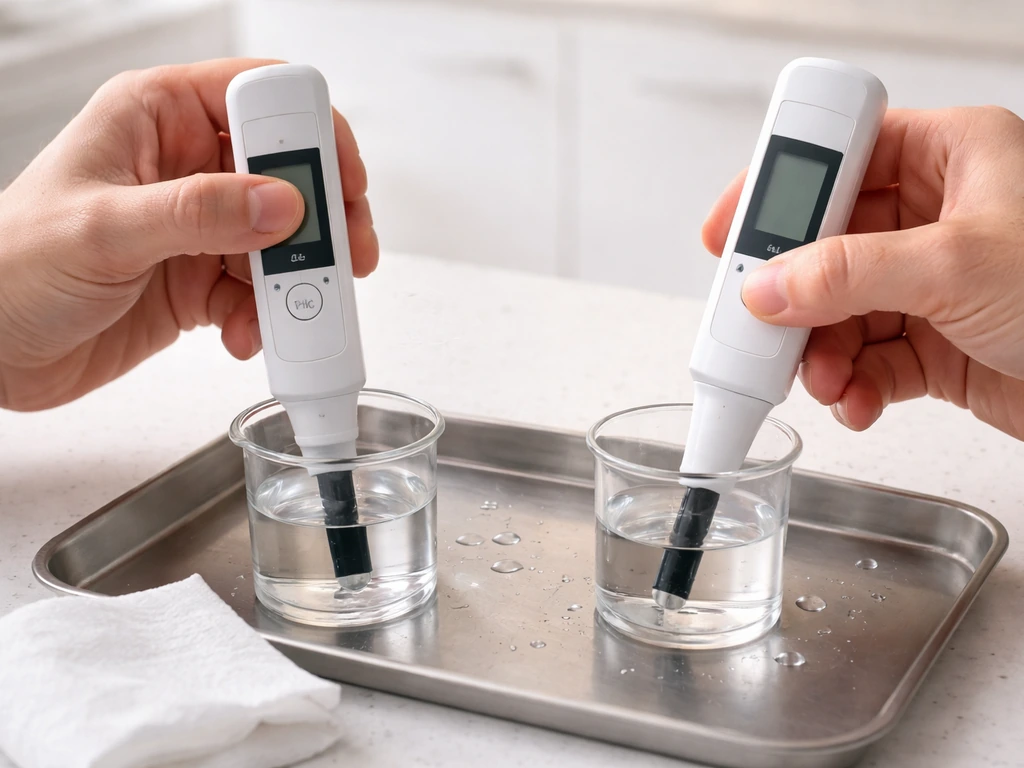
You need two tools: a pH meter and an EC or TDS meter. A combo meter like the Bluelab Combo Meter Plus reads both pH and conductivity (displayed as EC in mS/cm, CF, or ppm in 500 or 700 scale) along with temperature, which is genuinely useful because EC readings shift with water temperature. Do not use cheap aquarium strips for anything except a rough sanity check. A digital pen meter in the $30–80 range is sufficient for most home growers.
Calibration is non-negotiable if you want accurate readings. For pH meters, rinse the probe, place it in a pH 7.0 buffer solution, and follow your meter's calibration workflow to match the reading to the known value. Two-point calibration (using both pH 4.0 and pH 7.0 buffers) is more accurate than single-point. For EC meters, Bluelab's guidance uses a standard calibration solution of 2.77 mS/cm and calibrates to the corresponding reference value shown in the meter's documentation. Calibrate pH probes at least weekly during an active grow. EC probes are more stable but calibrate them at the start of each new grow cycle.
To adjust pH down (most common need after adding fertiliser), use phosphoric acid-based pH-down product. General Hydroponics’ pH Down guidance describes its pH-down as food-grade phosphoric acid and says to mix nutrients into fresh water first, then add the pH adjuster in small amounts as needed phosphoric acid-based pH-down product. Add it in small increments, stir, wait a minute, and retest.
To raise pH, use potassium hydroxide-based pH-up. One thing worth knowing: if your tap water has high alkalinity or bicarbonate content, pH will drift back upward over 12–24 hours even after you adjust it. This is a water chemistry issue, not a meter problem. If you see this consistently, either use reverse osmosis water or account for the drift by targeting the low end of your pH range when you mix.
Common mistakes and how to fix them
Nutrient burn
Burn shows as brown, crispy leaf tips, usually starting on the oldest or outermost leaves. It means EC is too high. In soil, flush with 2–3 times the container volume of plain pH-adjusted water, then resume feeding at half your previous rate. In hydro, dilute the reservoir with plain water until EC drops to the lower end of the target range. Give plants two to three days to recover before assessing further.
Nutrient deficiency
Yellow lower leaves during veg usually mean nitrogen deficiency, which in soil is often a feeding frequency issue rather than a dilution issue. In hydro it often means EC has dropped because plants have been feeding heavily and you have been topping off with plain water without tracking concentration. Check EC first before assuming you need more fertiliser. Sometimes the reservoir just needs a partial change and fresh nutrient mix.
Nutrient lockout
Lockout happens when pH is outside the usable range and nutrients become chemically unavailable even if they are present in the water. In soil, this commonly presents as general yellowing or interveinal chlorosis despite feeding regularly. Check runoff pH: if it is above 7.0 or below 5.5 in soil, nutrients are locking out. Flush with pH-correct water (6.0–6.5 for soil) until runoff stabilises, then resume feeding at a moderate rate. In hydro, if reservoir pH has drifted above 6.5 for an extended period, iron and manganese become unavailable and you will see newer growth showing yellow between green veins. Correct pH and do a reservoir change.
When and how to flush
Flushing means running plain, pH-adjusted water through your growing medium to clear accumulated salts. In soil, use two to three times the container volume: a 10-litre pot gets 20–30 litres of plain water, flushed through slowly. In coco, flush more aggressively and resume nutrient feeding at the next watering since coco holds almost no reserves. In hydro, a flush means draining the reservoir completely, rinsing the reservoir and any media with plain water, and starting fresh. Reserve full flushes for when runoff EC is persistently 1.0 mS/cm or more above your input EC, or when you have a confirmed pH lockout situation. Do not flush as a routine every week; it strips nutrients unnecessarily.
A simple feeding plan to start with today
If you are mixing your first batch of multi grow fertiliser right now, here is exactly what to do. This approach works regardless of which brand you have, as long as you substitute your label's actual dilution rate.
- Fill your watering container or reservoir with plain water and note the baseline EC of your water (most tap water reads 0.1–0.5 mS/cm).
- Add your multi grow concentrate at the lowest rate on the label. If the label says 2–5 ml/L, use 2 ml/L.
- Stir well and let sit for two minutes.
- Test EC. Your final EC should be around 0.8–1.2 mS/cm for early veg (adjusting for your tap baseline).
- Test pH. Adjust to 6.0–6.5 for soil/coco or 5.8–6.0 for hydro using pH-down or pH-up in small drops.
- Apply to plants. In soil, water until 10–20% runoff. In hydro, fill reservoir to operating level.
- Check runoff EC and pH (soil) or reservoir EC and pH after 24 hours (hydro).
- Log what you mixed, the final EC and pH, and the date. This record is how you get consistent results.
For the first two weeks on a new product, feed once, observe for three to four days, and only increase the dilution rate if plants look healthy and EC readings are holding stable. If you want to grow fast with liquid fertilizer, start at the lowest label dilution, watch plant response closely, and step up only when EC stays within target grow fast liquid fertilizer how to use.
A common approach is to increase nitrogen steadily when your plants enter stronger veg growth, while still using the label to dial in the exact 20-20-20 dose for your water volume For the first two weeks. Watch for the first signs of tip burn (EC too high), yellowing lower leaves (nitrogen low or pH off), or any unusual leaf curl.
Adjust one variable at a time: if you change both the dilution rate and the pH in the same session and something goes wrong, you will not know which change caused it.
What to track going forward
- Date and volume of each feeding
- Dilution rate used (ml/L or tsp/gal)
- Input EC and pH (before applying)
- Runoff EC and pH, or reservoir EC and pH 24 hours after mixing
- Any visible symptoms and which leaves they appear on
- Any adjustments made and the result
A simple notebook or spreadsheet works fine. After two or three weeks you will have a clear picture of how your specific plants respond to your specific product at your specific dilution, and you can make informed decisions about stepping up nutrient strength as you move through veg and eventually into the transition to flowering.
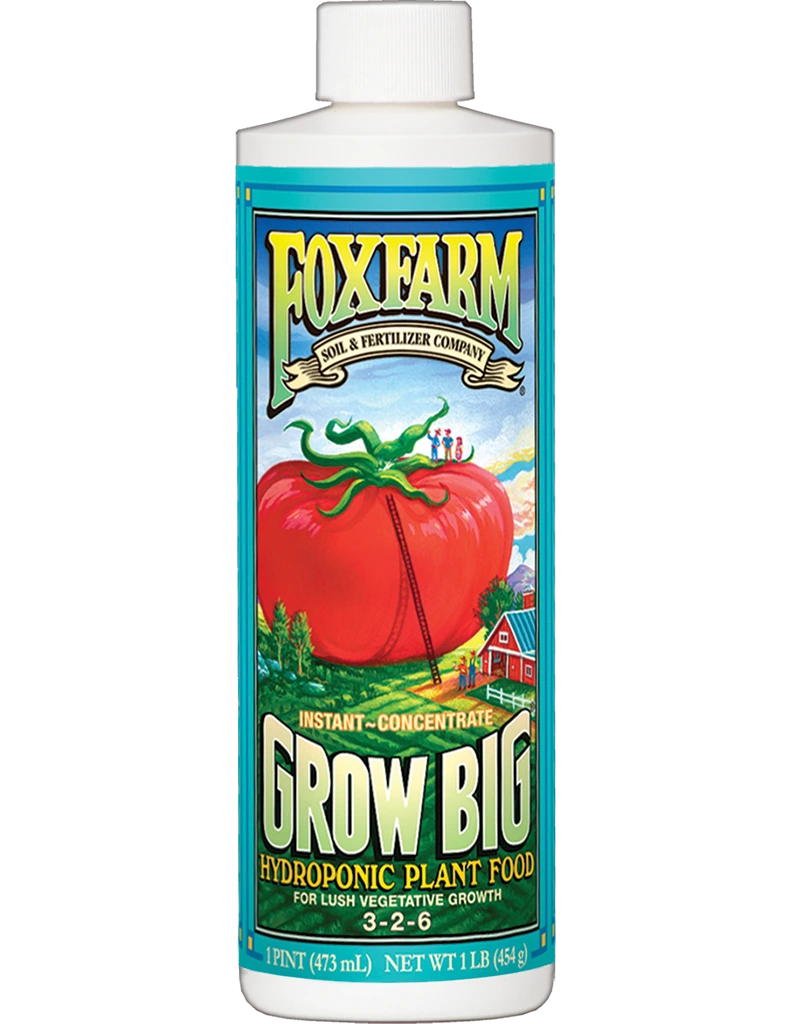
If you are curious how multi grow compares against broader all-purpose approaches or how to adapt a full three-part grow-micro-bloom style schedule, those are worth exploring as your confidence builds with the basics above. For a practical comparison, see how FoxFarm Grow Big differs from Big Bloom and when each one makes sense in the grow versus bloom stages FoxFarm Grow Big vs Big Bloom.
If you are curious whether Fox Farm Big Bloom is good for weed in the same way as a grow-focused multi grow approach, it is worth comparing how each product is meant for vegetative versus flowering stages multi grow compares against broader all-purpose approaches. If you want to follow a full grow-micro-bloom routine, the grow phase details above make it easier to dial in each part correctly.
FAQ
Can I use multi grow fertiliser for the entire plant life cycle, or do I really have to switch to bloom nutrients?
You generally should switch. Multi grow is formulated for vegetative nitrogen emphasis, so keeping it through flowering often causes weak bud development and can worsen salt and mineral balance issues. If your plant is not showing buds yet, stay on the grow label, but when buds or fruit start forming, follow the label’s transition instructions or switch to a bloom formula rather than guessing.
What EC or ppm target should I choose if my meter shows different scales (500 vs 700) and my label uses mS/cm?
Use mS/cm as the anchor if possible, since it is directly comparable across meters. If your label lists an mS/cm target, match that to your meter’s mS/cm reading. If your label uses ppm and your meter is on a different scale, convert using the ratio your meter uses (often 500 or 700), but do not mix conversions between brands or meters without checking the manual’s conversion rule.
Is it better to start multi grow fertiliser at the lowest dilution and slowly increase, or can I start at a mid value?
Starting at the lowest recommended dilution is the safer default, especially for new products or soft-tap water. Starting at a mid value increases the chance of early tip burn and makes it harder to identify whether later issues are from concentration, pH drift, or water chemistry. Once your plants are stable for at least a few feed cycles, you can step up gradually.
How do I know whether problems are caused by fertilizer strength versus pH when leaves look off?
Check EC first for overfeeding or underfeeding signs, then verify pH. In most cases, tip burn and brown crispy edges point to EC being high, while yellowing that appears after pH has drifted is more consistent with lockout. If possible, test both input solution and runoff (soil) or reservoir (hydro) pH and EC, then adjust only one variable at a time to diagnose correctly.
For hydro, should I top off the reservoir with plain water or nutrient solution when the level drops?
Use plain water for topping off, then recheck EC and pH after topping. Nutrients accumulate as plants take up water, so adding full-strength nutrient solution can overshoot concentration quickly. After topping, adjust pH if needed, and consider a partial or full reservoir change if EC keeps climbing despite watering corrections.
Can I reuse leftover nutrient solution from a previous batch to save time or reduce cost?
It is not recommended. Even if EC looks similar, pH drift and ion imbalance can accumulate, especially in hydro and coco. Better practice is to discard old solution, clean the reservoir, refill with fresh water, then mix to the label dilution and re-test EC and pH before feeding.
What water should I use if my tap water has high alkalinity and keeps pushing pH upward?
If your pH rebounds upward within 12 to 24 hours, high alkalinity is likely. Options include using reverse osmosis (RO) water, blending RO with tap to target a workable baseline, or mixing to the low end of the pH range so the rebound lands within target. Keep in mind you may still need to re-adjust after nutrient addition, then re-check over the next day.
Does multi grow fertiliser work the same way in coco coir as in soil?
No. Coco behaves more like hydro than soil in terms of nutrient availability, so you typically feed more frequently and rely less on the medium buffering nutrients. Many growers can feed at every watering in coco, but you still need runoff monitoring where possible and you must keep pH within the coco range to prevent deficiencies.
How much runoff should I collect in soil to test accurately, and what if I get too little runoff?
Aim for enough runoff to collect a small sample you can test reliably, commonly around a few tablespoons to a measurable cup. If you get minimal runoff, try slower watering through the pot so the solution actually moves through the root zone. Interpreting EC from tiny or inconsistent runoff samples can be misleading, and poor drainage can hide salt buildup.
If my soil runoff EC is higher than my input EC, do I flush immediately every time?
Not necessarily. If runoff is only slightly higher and pH is stable, you can adjust by watering plain more frequently or slightly reducing feed strength next cycle. Reserve full flushes for persistent high runoff relative to input (for example, around 1.0 mS/cm or more above) or when you confirm a lockout through runoff pH and visible symptoms.
What pH range should I use for mixing, and should I adjust pH before or after adding the nutrients?
Mix nutrients into water first, then adjust pH after nutrients are fully dissolved. Adjusting pH on plain water and then adding fertilizer often results in drift because many nutrients are pH-active. After you adjust, let the solution sit briefly, then re-test EC and pH before feeding.
How can I reduce nutrient burn risk during the first week on multi grow fertiliser?
Use the lowest label dilution, feed once, then observe for three to four days before increasing. Also avoid changing pH and dilution at the same time, because it becomes impossible to pinpoint the cause of tip burn. If you notice early scorching on the outer or oldest leaves, lower EC by diluting with plain water (hydro) or water plain more frequently (soil) before escalating again.
Do I need to calibrate meters every time I use them?
Calibration frequency depends on the meter type, but do not skip it. Calibrate pH probes regularly during an active grow, often at least weekly, and calibrate EC probes at the start of a new cycle if they drift less. Even with stable readings, verify your calibration solutions are fresh and that the probe is rinsed and stored properly between uses.