Advanced Nutrients Grow Micro Bloom (officially called pH Perfect® Grow, Micro, Bloom) is a 3-part base nutrient system. You use all three bottles together: Grow and Micro during vegetative growth, then all three (Grow, Micro, and Bloom) once flowering starts. The standard dose is 16 mL per gallon of each part, mixed into your water one bottle at a time. Yes, you can use it in soil, but it's worth knowing upfront that Advanced Nutrients designed it primarily for hydroponic systems, so you'll need to stay on top of your pH and EC even though the pH Perfect technology gives you a buffer.
How to Use Advanced Nutrients Grow Micro Bloom in Soil

Marcus Holloway
24 Apr 2026

What Grow Micro Bloom is and when to use it
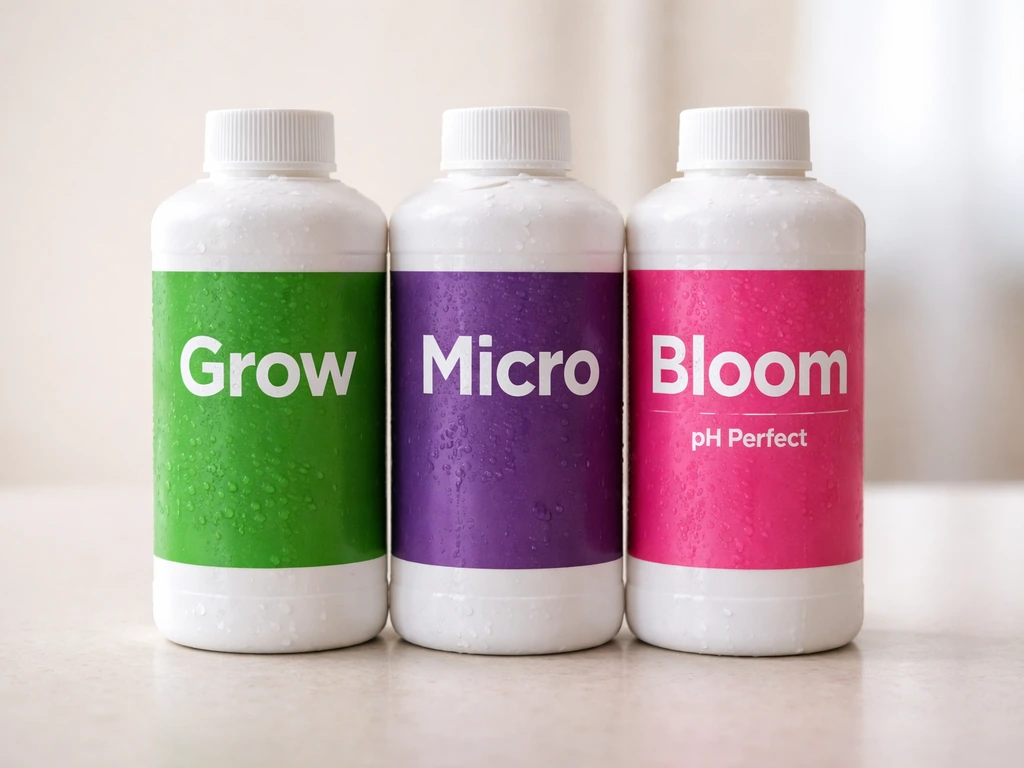
pH Perfect® Grow, Micro, Bloom is Advanced Nutrients' flagship 3-part base nutrient line. When growers search for 'grow micro bloom' or 'micro bloom,' they're almost always referring to this trio. Each bottle handles a different nutritional role: Grow delivers higher nitrogen for leafy vegetative growth, Micro provides micronutrients and calcium that support the plant throughout its entire life, and Bloom supplies the phosphorus and potassium your plant needs to produce dense flowers. None of them work in isolation. You always mix all three parts together into your feed water, adjusting which ratios dominate depending on what stage your plant is in.
The 'pH Perfect' in the name refers to Advanced Nutrients' buffer technology that keeps your nutrient solution stable across pH fluctuations. In theory, this means less manual pH adjustment. In practice, it's a real advantage in hydro systems where pH swings constantly. In soil, it still helps, but it doesn't eliminate the need to check your runoff pH, which I'll get into in the troubleshooting section.
It's also worth knowing that Advanced Nutrients makes a few different 3-part lines, and they're easy to confuse. Jungle Juice Grow, Micro, Bloom is the 'old school' version that does NOT have pH Perfect technology and requires manual pH balancing. Sensi Terra is their soil-specific line. If you're using pH Perfect Grow Micro Bloom in soil, you're using a hydro-optimized product in a different medium than it was engineered for, which is fine with some adjustments. Just make sure you're following the right feeding chart row when you reference official schedules.
Using Grow Micro Bloom in soil: is it okay and how does it work
You can absolutely use pH Perfect Grow Micro Bloom in soil, and plenty of growers do it successfully. The main thing to understand is that the product was designed for continuous liquid-feed hydroponic systems like deep water culture, aeroponics, NFT, drip systems, and flood-and-drain setups. In those systems, roots are getting a fresh nutrient solution constantly, and pH stability is critical because there's no soil buffer to fall back on.
In soil, you're working with a medium that already has some buffering capacity and potentially pre-loaded nutrients depending on what mix you're using. That means a couple of adjustments make sense. First, start at a lower dose than the full 16 mL/gallon if your soil is pre-amended or you're early in your grow. Second, don't feed every single watering.
A common rhythm in soil is to alternate between a nutrient feed and a plain water flush, which prevents salt buildup. Third, always check your runoff EC and pH. The pH Perfect tech buffers your solution going in, but as salts accumulate in soil, your runoff pH can still drift outside the ideal range of around 6. 3 for soil, which is the sweet spot for nutrient availability.
If you're committed to growing in soil long-term and want a base nutrient line that was purpose-built for it, Advanced Nutrients' Sensi Terra is their soil-specific recommendation. But if you already have Grow Micro Bloom on your shelf, you're not going to hurt your plants by using it in soil as long as you manage your pH and don't overdo the dose. For the best results, use grow best liquid plant food alongside proper dosing and monitoring so your plants get the right nutrition at each stage.
How to mix and dose it correctly
The manufacturer's standard dose is 16 mL per gallon for each of the three parts: Grow, Micro, and Bloom. So for a 5-gallon reservoir or feeding bucket, that's 80 mL of each. For multi-part base fertilisers like Grow Micro Bloom, the key is dosing each bottle correctly and mixing them in the right order before feeding multi grow fertiliser how to use.
For multi-part base fertilisers like Grow Micro Bloom, the key is dosing each bottle correctly and mixing them in the right order before feeding multi grow fertiliser how to use. For soil growers who want to start conservative, especially in pre-amended mixes, cutting that to 8 mL per gallon (half strength) for the first couple of weeks is smart.
To pick the best grow foliar fertilizer, match the product to your stage and target problem, then apply it at the right dilution and timing.
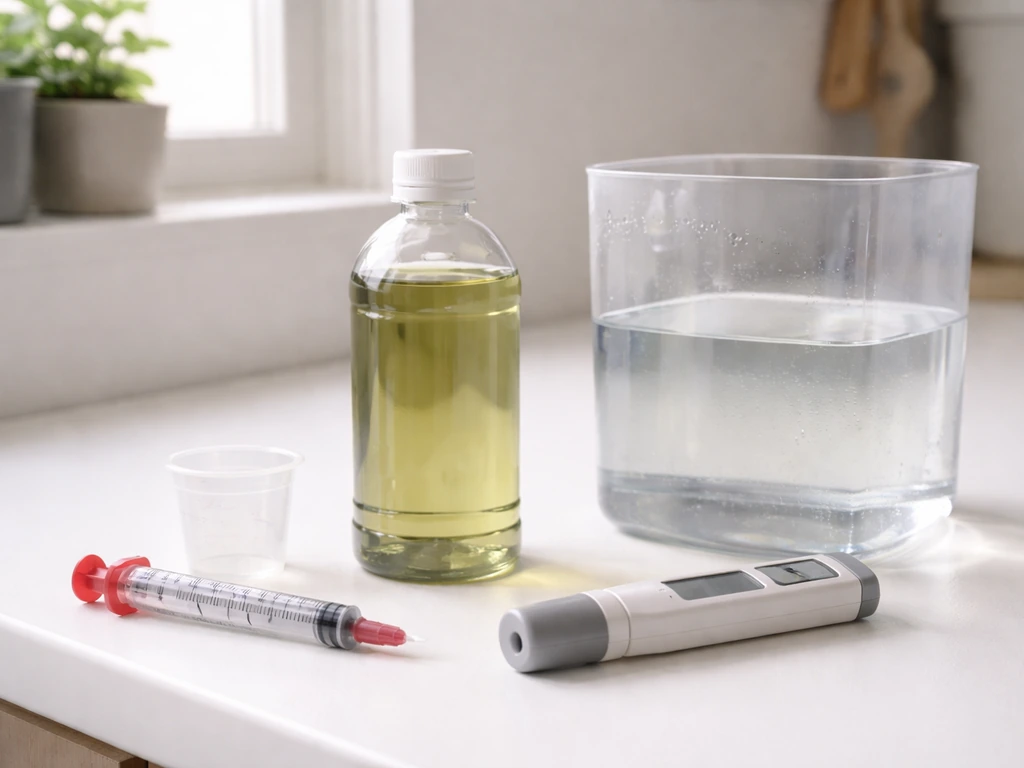
If you don't have a syringe or measuring cup in mL, Advanced Nutrients provides these conversions: 1 teaspoon equals 5 mL and 1 tablespoon equals 15 mL. So 16 mL is just over 3 teaspoons, or roughly 1 tablespoon plus 1 teaspoon per gallon. Use a proper measuring syringe though. Eyeballing fertilizer doses leads to the exact problems described in the troubleshooting section below. If you also want the specific 20-20-20 fertilizer use steps, match them to the same growth stage and dosage approach to avoid overfeeding follows the right feeding chart row.
Mixing order matters
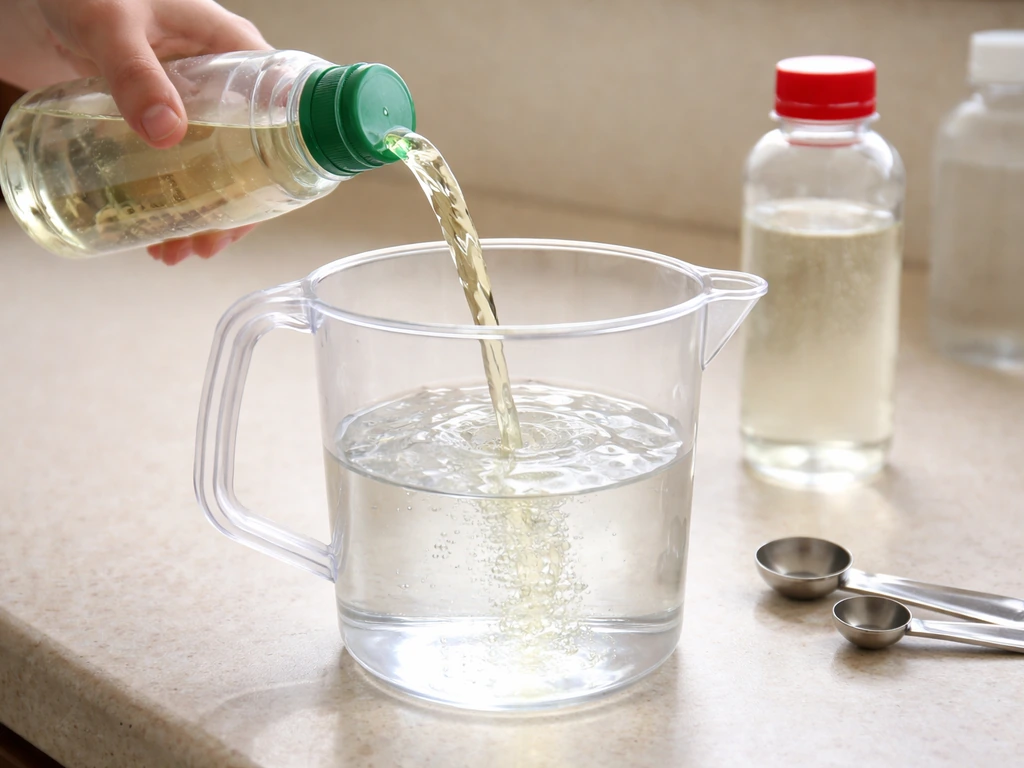
Always shake each bottle before pouring. Advanced Nutrients specifically notes this ensures you're getting a consistent blend from the bottle, not just the liquid that has separated to the top. Then add each part to your water separately, stirring or mixing thoroughly between each addition. Never mix concentrates together directly in their bottles or combine two parts before diluting in water first. The correct order is: start with your water, add Micro first, mix, then add Grow, mix, then add Bloom, mix. Micro goes first because it contains calcium, and adding it last with already-mixed nutrients can cause precipitation and lock out key elements before they ever reach your roots.
| Water Volume | Each Part at Full Dose (16 mL/gal) | Each Part at Half Dose (8 mL/gal) | Approx. Teaspoons at Full Dose |
|---|---|---|---|
| 1 gallon | 16 mL | 8 mL | ~3.2 tsp |
| 2 gallons | 32 mL | 16 mL | ~6.4 tsp |
| 5 gallons | 80 mL | 40 mL | ~16 tsp (about 5 tbsp) |
| 10 gallons | 160 mL | 80 mL | ~32 tsp (about 10.5 tbsp) |
Feeding schedule: when to start, how often, and when to stop
For seedlings and fresh clones, hold off on full-strength base nutrients for at least the first week. The official chart notes that the Week 1 rate can be repeated for seedlings and clones in a 'pre-veg' stage, which gives young plants time to establish roots before you hit them with a full dose. A half-strength mix at week one is a reasonable call in soil specifically.
Vegetative stage (weeks 1 to 4)
During veg, use Grow and Micro as your primary base drivers. Bloom can be introduced at low levels during late veg if you want to prime the plant, but many growers hold it until the flip. The official schedule runs veg for approximately 4 weeks, with a note that for longer vegetative periods, you can repeat the week 4 rate as needed. In soil, feed every other watering rather than every watering to prevent salt buildup. That typically means feeding twice per week if you're watering frequently, or once per week if your pots are holding moisture longer.
Flowering stage (weeks 1 through flush)
Once you flip to 12/12 or once flowering begins in autoflowers, bring in all three parts: Grow, Micro, and Bloom. To compare alternatives, it helps to look at how fox farm grow big vs big bloom changes the nutrient approach during vegetative and flowering stages Grow Micro Bloom.
If you are specifically wondering about using Fox Farm Grow Big hydro nutrients in soil, the main idea is to manage dose and test pH and runoff EC so you do not run into salt or lockout issues Fox Farm Grow Big hydro in soil.
If you're comparing options like Fox Farm Grow Big for weed in soil, focus on dose, pH, and runoff EC so you avoid salt buildup and nutrient lockout Fox Farm Grow Big hydro nutrients in soil. During the bulk of flowering, Bloom becomes the dominant driver and Grow tapers off in some advanced programs, but at a flat 16 mL/gal each, the trio runs together through the flowering weeks shown in the official schedule.
The flowering phase runs approximately 7 weeks in the standard chart, though your specific strain's flower time will dictate the real endpoint.
The flush period
The Advanced Nutrients feeding chart explicitly includes a nutrient-free flush period at the end of the bloom cycle. For soil grows, this typically means the final 1 to 2 weeks before harvest, where you water with plain pH-adjusted water only. This clears residual salts from the medium and improves the final product. In soil, a simple plain-water flush for the last week or two is sufficient for most growers. Watch your trichomes rather than just counting weeks to decide when you're actually at the finish line.
Quick-reference schedule overview

| Stage | Duration | Parts to Use | Dose (per gallon each) | Feed Frequency in Soil |
|---|---|---|---|---|
| Seedling / Clone (pre-veg) | Week 1 | Grow + Micro | 8 mL (half strength) | Every other watering |
| Vegetative | Weeks 2–4 (extend if needed) | Grow + Micro | 16 mL | Every other watering |
| Early Flower | Flower weeks 1–3 | Grow + Micro + Bloom | 16 mL each | Every other watering |
| Peak / Late Flower | Flower weeks 4–7+ | Grow + Micro + Bloom | 16 mL each | Every other watering |
| Flush | Final 1–2 weeks | None (plain water) | N/A | Water only |
Troubleshooting common problems in soil
Most problems with Grow Micro Bloom in soil fall into a few categories: overfeeding, underfeeding, pH-related lockout, and incomplete mixing. Here's how to identify each one and what to actually do about it.
Tip burn and overfeeding
If you're seeing brown, crispy tips on your leaves, that's almost always a sign you're feeding too hot. In the official feeding chart, Advanced Nutrients explicitly states that if tip burn symptoms appear, reduce your base nutrient strength by 25%. So if you're running 16 mL/gal, drop to 12 mL/gal and see if new growth comes in clean over the next week. In soil, tip burn can also come from salt accumulation in the medium even if your current mix is correct. Flush with plain, pH-adjusted water (targeting 6.2 to 6.5 runoff for soil), let the medium dry down properly, then resume feeding at the reduced rate.
Yellowing, pale leaves, and underfeeding
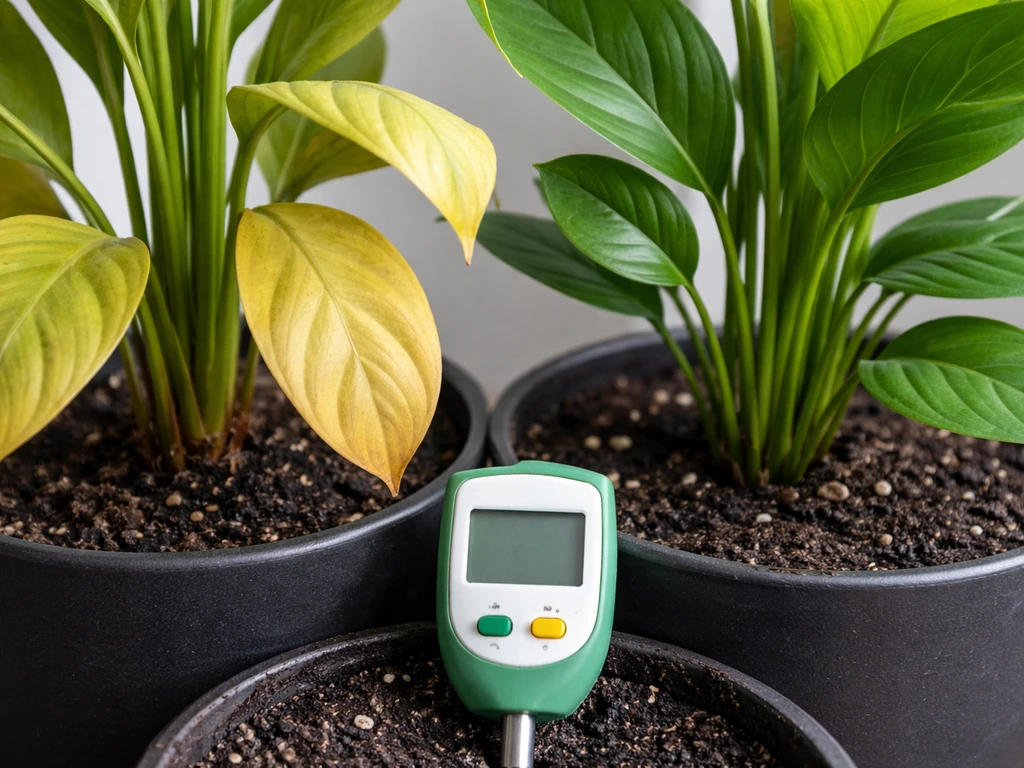
General yellowing that starts on older, lower leaves and works upward usually points to nitrogen deficiency, which in this context often means you're underdosing Grow, feeding too infrequently, or using a heavily flushed medium that's been stripped of nutrients. If your plants look light green and slow, check your EC first. In soil, you want your runoff EC somewhere in the range of 1.2 to 2.0 mS/cm during vegetative growth. If it's lower than that, step up your dose by 2 to 4 mL/gal per part and see how the plant responds over 5 to 7 days. Don't chase yellowing by jumping straight to maximum dose, especially in soil where nutrients can accumulate between feeds.
Nutrient lockout and pH problems
Lockout is when nutrients are present in the medium but the plant can't absorb them because pH is outside the optimal range. In soil, you want your root zone pH sitting around 6. Advanced Nutrients describes pH Perfect’s target “sweet spot” as 5. 5 to 6.
3 pH, often holding around 5. 6 root zone pH sitting around 6.
3, give or take about 0. 3 either way. pH Perfect technology stabilizes your nutrient solution going in, but it doesn't control what happens inside your soil as organic matter breaks down and salts accumulate. Always check your runoff pH, not just your input pH.
If your runoff is drifting below 6. 0 or above 7. 0, your plants will show symptoms that look like deficiencies even though nutrients are physically present.
To fix lockout in soil: flush the pot with 2 to 3 times its volume in pH-adjusted plain water (targeting 6.3 to 6.5), let it drain completely, let the medium dry back to about 50% moisture, then resume feeding at half strength. Test your runoff pH again after the next feed. If it's still way off, you may have a chronic salt buildup issue and need a proper flush product or a complete medium change.
Incomplete mixing and inconsistent results
If your plants look inconsistent, some showing excess and some showing deficiency at the same dose, the problem is often in how you're mixing. Always shake the bottle before measuring. Always add each part separately to your full volume of water and mix thoroughly between each addition. Follow the Micro-first order. Don't pre-mix concentrates outside the reservoir. EC/PPM that reads different from what you'd expect for a given dose is a clear sign something wasn't mixed properly. A basic digital EC/TDS meter is an essential tool here, especially in soil where you don't have the visual feedback that a hydro reservoir gives you.
Switching from another nutrient line
If you're coming from a single-bottle fertilizer or a simpler 2-part system and switching to Grow Micro Bloom, the three-bottle format and the need to dose each part separately trips a lot of people up. The official chart is also packed with add-ons like B-52 and Big Bud that are supplements, not base nutrients. Ignore the add-ons at first. Just run the trio at the correct base dose, get your pH and EC dialed, and add supplements one at a time once you're confident the base program is working. Starting with too many inputs at once makes it impossible to diagnose which product is causing a problem if something goes wrong.
FAQ
Can I mix Advanced Nutrients Grow, Micro, Bloom concentrates together in the same bottle first to save time?
No. Keep each concentrate in its own bottle, measure each one, then add them separately into your prepared water with thorough mixing between additions. Pre-mixing concentrates or combining two parts too soon can increase the chance of precipitation (especially because Micro contains calcium), which can lead to nutrient lockout and confusing deficiency symptoms.
What EC and pH should I aim for if I am using Grow Micro Bloom in soil but want a hydro-style monitoring approach?
Use runoff testing as your main reference. For soil, aim for root-zone pH around 6.3 (roughly 6.0 to 6.6), and target runoff EC that lands in the vegetative range described in the article (about 1.2 to 2.0 mS/cm). If your input EC looks right but runoff EC is much higher or lower, it usually indicates salt buildup, underfeeding frequency, or a mixing/dilution error.
How do I properly take a runoff sample so my pH and EC readings are meaningful?
Collect runoff after a normal, full watering, not a light drip. Let excess drain until you have a stable stream, then test that runoff. If you test runoff after barely wetting the pot, readings can be misleading because the salts and buffering effects are not fully represented across the whole root ball.
If my runoff pH is off but my plants do not show obvious deficiency, should I flush right away?
Not necessarily. First, confirm the reading (repeat the measurement and check that pH meter probes are calibrated). If runoff is slightly drifting but new growth looks healthy and EC is in range, you can often correct by adjusting feed strength and maintaining your watering cadence. Flush urgently when runoff pH is far outside the usable range and symptoms start appearing or worsening.
How much should I reduce the dose if I notice tip burn in soil using Grow Micro Bloom?
The article notes a 25% reduction as the starting response. In practice, that means dropping each base part proportionally (for example from 16 mL/gal down to about 12 mL/gal per bottle), then monitor new growth for about a week. If the burn is from salt buildup rather than true overfeeding, a plain-water flush (with pH-adjusted water) plus reduced feeding usually works better than only lowering strength.
Do I need to feed Grow Micro Bloom every watering in soil?
Usually no. The article recommends alternating nutrient water and plain pH-adjusted water to prevent salt accumulation. If your medium stays wet longer (larger pots, dense soil mixes), you will generally need even more spacing between feeds. If you feed every watering, even at a correct EC, salt can still rise and create pH and lockout problems.
I’m using pre-amended soil. Should I still start at half strength, and for how long?
Yes, starting lower is the safer move in pre-amended mixes because the soil may already have nutrients. The article suggests cutting the base dose to about half strength for the first couple of weeks. If you see stable growth and runoff EC stays reasonable, you can extend that conservative period, then gradually step up based on EC and runoff behavior rather than a fixed calendar.
When should Bloom start in soil if I want to be conservative with phosphorus and potassium?
The article explains that you can introduce Bloom at low levels late in veg, or wait until the flip. If you are trying to avoid oversupply, start by keeping Bloom minimal during late veg and rely mainly on Grow and Micro until flowering begins. Then bring in the full trio according to the flowering stage schedule.
How do I know whether my yellowing is nitrogen deficiency or something else when using this 3-part system?
Check EC and placement of symptoms. The article links progressive yellowing on older, lower leaves to nitrogen deficiency, but it also warns that underfeeding or feeding too infrequently can mimic deficiency. If EC is below target (in the vegetative range given), step the dose up gradually instead of changing only one bottle. If EC is already high, yellowing may point to pH lockout or salt-related stress rather than simple underfeeding.
What is the fastest way to troubleshoot if I get inconsistent growth, some plants too hot and others too pale at the same recipe?
Treat mixing and measurement first. Shake every bottle before measuring, add Micro then Grow then Bloom into your water with mixing between each addition, and confirm your actual EC/PPM matches what you expect for your chosen dose. Inconsistent results at the same rate often come from uneven dilution, incorrect dosing, or stale or poorly mixed stock solutions.
How should I flush at the end, and do I still need to pH-adjust the water during the flush?
For soil, the article describes a plain-water flush during the final 1 to 2 weeks. You should still pH-adjust the water so it does not drive the medium far outside the soil sweet spot, which helps you remove salts without creating new pH-related stress. If runoff remains very salty, extend flush by another week and recheck runoff EC.
Should I add supplements like B-52 or Big Bud while I am still dialing in Grow Micro Bloom?
Delay supplements until the base program is stable. The article recommends ignoring add-ons at first because the trio is the foundation for diagnosis. Once runoff pH and EC are behaving and plants are responding normally, you can add supplements one at a time so you can identify which input is responsible if problems return.