The best liquid plant food for your grow is whichever formula matches your plants' current growth stage and your growing medium, mixed at the right dilution, and dialed in with pH and EC measurements so your roots can actually absorb what you're feeding. That means there is no single universal answer, but there is a clear decision process you can run through today and start feeding confidently by tonight.
Grow Best Liquid Plant Food: How to Choose and Apply It

Marcus Holloway
23 Apr 2026
What 'best' liquid plant food actually means for your plants
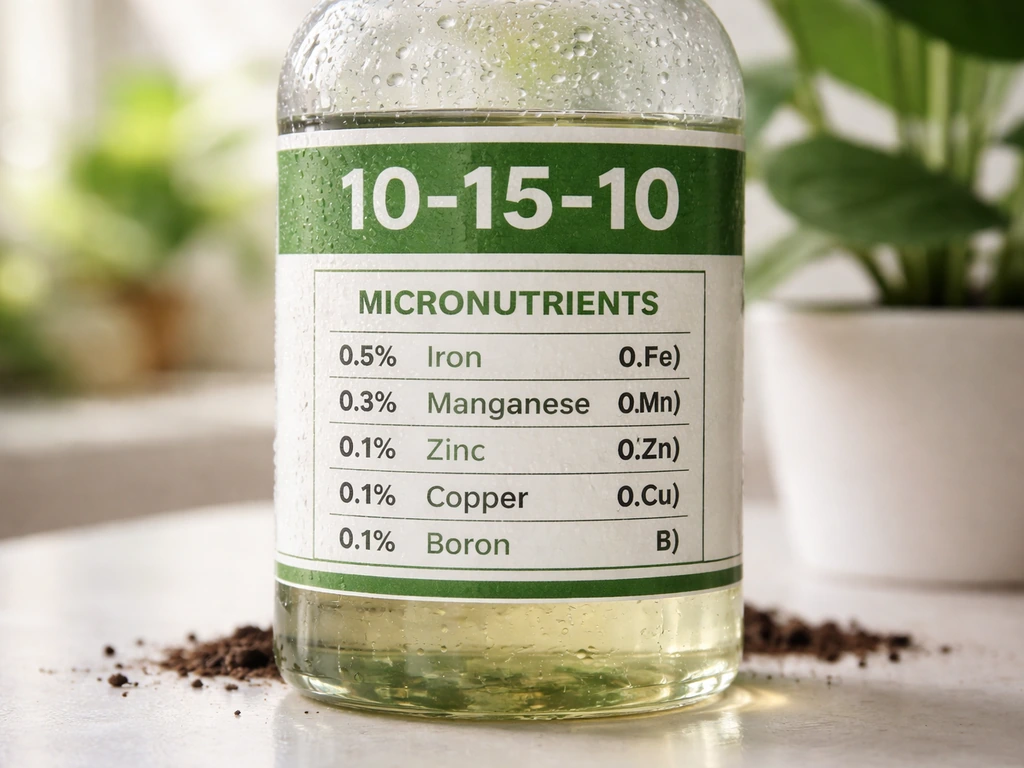
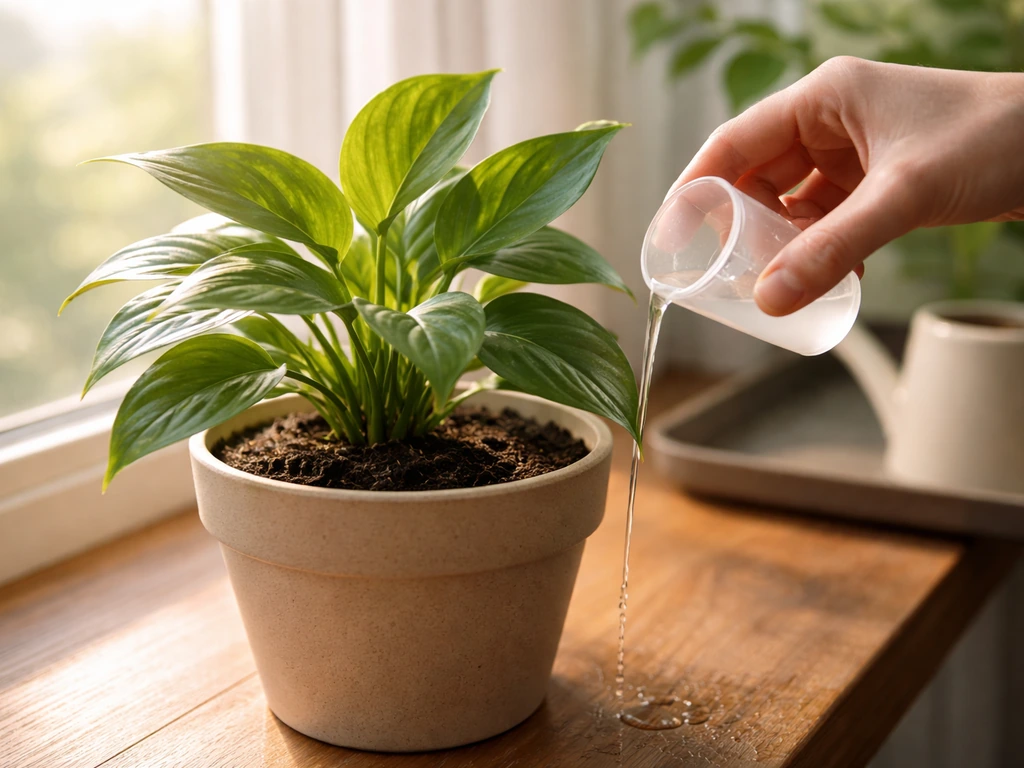
When growers search for the best liquid plant food, they usually mean one thing: what will make my plants grow faster and healthier right now? The honest answer is that 'best' is entirely relative to stage and medium. A nitrogen-heavy vegetative formula is exactly what your plant needs during weeks two through five of veg, and exactly the wrong thing once pre-flowers appear. Nitrogen drives overall shoot and leaf growth, phosphorus supports flower and fruiting capability along with tissue strength, and potassium works alongside both to keep the plant running efficiently. Flooding a plant in bloom with a high-N veg formula is one of the most common reasons experienced-looking grows produce disappointing harvests.
Beyond NPK ratios, the best formula is also the one you can measure and repeat. A product that delivers consistent, predictable EC (electrical conductivity) readings lets you build a reliable feeding schedule. One that requires you to guess whether the plants got enough this week is going to cause problems. Look for products that publish stage-based feeding charts with specific ml-per-gallon dosages and target EC or ppm ranges for veg versus bloom. Companies like General Hydroponics publish aggressive, medium, and light feeding intensities by week, which is exactly the kind of framework that removes guesswork. That level of transparency in a product is, practically speaking, part of what makes it 'best.'
Organic versus synthetic is a real trade-off worth naming. Synthetic liquid nutrients (mineral salts dissolved in water) are immediately plant-available, give you precise control over EC/TDS, and work well in both soil and hydro. Organic liquids (fish emulsion, kelp, worm casting extracts) tend to be slower-releasing, often smell worse, and can clog hydro system lines, but they build soil biology and are more forgiving of slight overfeeding because uptake is mediated by microbes rather than direct root contact. For hydro, stick with synthetic or specifically labeled hydro-compatible organics. For soil, either works, but organics pair better with living soil or amended media.
Choosing the right liquid fertilizer for soil vs hydro
This is the single most important decision you make before opening a bottle. Liquid fertilizers formulated for hydroponics contain all essential macro and micronutrients in soluble form because the plant has no soil biology to fall back on. Soil formulas often omit or reduce certain elements (like calcium and magnesium) because they assume the growing medium contributes some baseline nutrition. Using a soil formula in a hydro system is a reliable way to create deficiencies in exactly the elements that got left out.
| Feature | Soil Liquid Feed | Hydro Liquid Feed |
|---|---|---|
| Nutrient completeness | Partial (relies on soil buffer) | Complete (all elements included) |
| Organic compatibility | High (works with living soil) | Low (can clog lines, disrupt DO) |
| pH target range | 6.0–7.0 | 5.5–6.5 (often tighter: 5.5–6.0) |
| EC/TDS control | Less critical (soil buffers) | Critical (measure every feed) |
| Flush requirement | Periodic (every 4–6 weeks) | Continuous reservoir management |
| Mixing complexity | Simple (dilute and water) | Multi-part A+B or 3-part systems |
For hydroponics, the most practical systems use either a two-part A+B formula or a three-part grow/micro/bloom system. The reason for separate parts is chemistry: calcium and sulfate will precipitate out of solution if concentrated together before dilution, which is exactly why products like General Hydroponics FloraPro keep nitrogen, calcium, and microelements in Part A, while phosphorus, potassium, magnesium, and sulfur go in Part B. Always add each part separately to your reservoir water, not together in concentrate form.
For soil grows, an all-in-one balanced liquid like a 20-20-20 formula works well during vegetative growth when you want even development across roots, shoots, and early structural tissue. If you are using a 20-20-20 formula, the key is to dilute it to a lighter starting EC, feed according to your grow medium, and then dial the dose based on runoff EC and pH. As plants transition to flower or fruit, shift to a lower-nitrogen, higher-phosphorus formula. A bloom-focused liquid (something in the range of 5-20-20 to 5-30-25) supports bud development without pushing excess leafy growth. If you are comparing Fox Farm grow formulas, that same shift is what drives the difference between Grow Big and Big Bloom for their stage-specific results Fox Farm grow big vs big bloom. Using a multi-part system where you adjust the ratio of grow-to-bloom nutrients across the schedule gives you the most control. A multi-part system lets you adjust grow-to-bloom ratios over time, which is the easiest way to dial in how to use multi grow fertiliser correctly.
How to mix, dilute, and feed correctly
Mixing order matters more than most growers realize
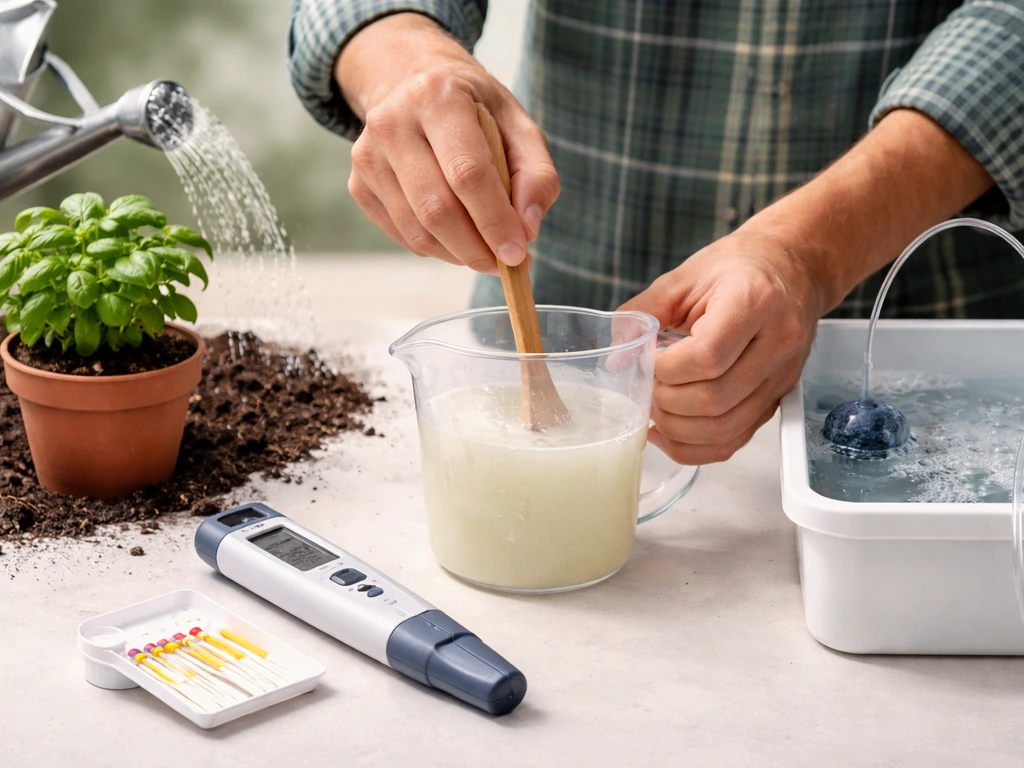
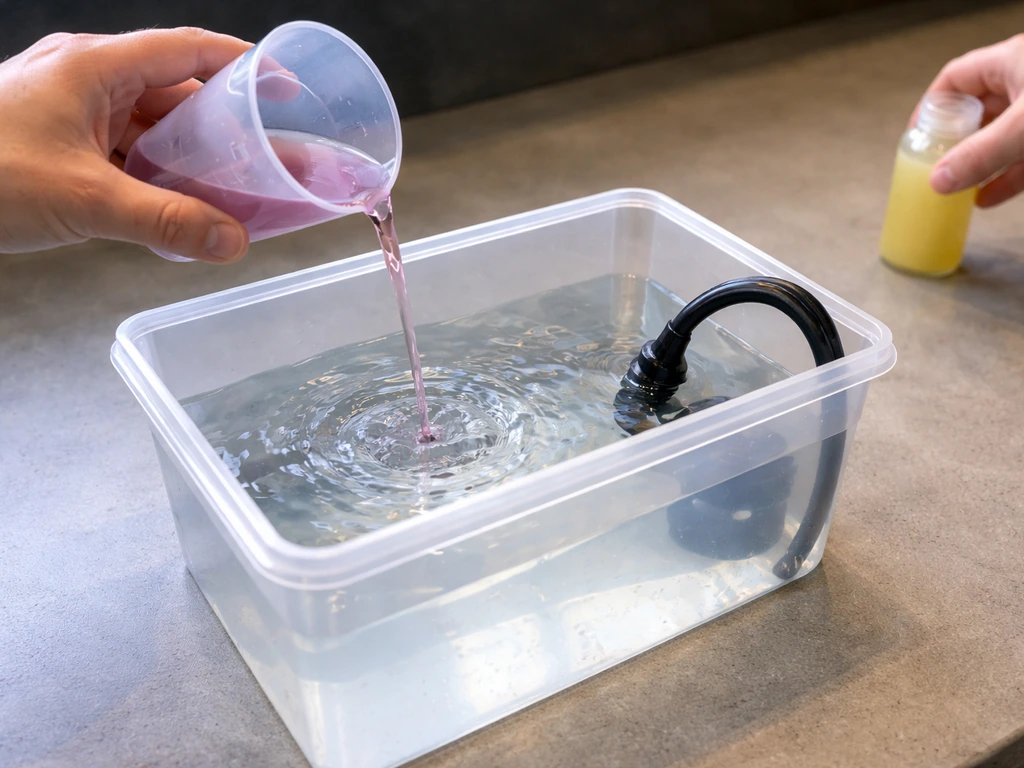
Start with your reservoir or mixing container filled with clean water. Add each nutrient part separately, stirring or circulating between additions. If you're using a three-part system (micro, grow, bloom), the standard order is micro first, then grow, then bloom. This prevents calcium-sulfate and calcium-phosphate precipitation that happens when you mix concentrates directly. After mixing all nutrients, let the solution circulate for a few minutes, then check EC. Only after you've confirmed EC do you adjust pH. General Hydroponics specifically advises mixing nutrients first and then pH-adjusting based on what you observe, not the other way around. Adding pH-down to water before nutrients changes the buffering behavior and can give you inaccurate final readings.
Dilution ratios and feeding frequency
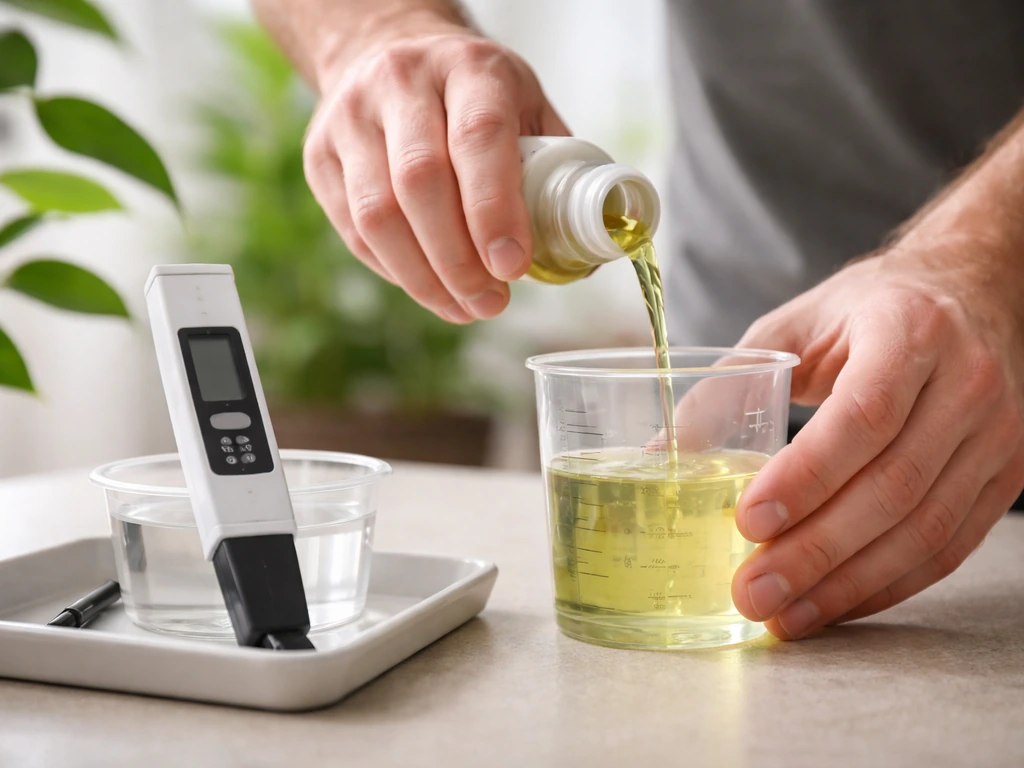
A common mistake is treating the label dose as a starting point and then eyeballing up from there. Instead, start at 50-75% of the recommended label dose, measure EC, compare to your target range for the stage, and then decide whether to go stronger. If you want the best results, focus on how to use liquid fertilizer correctly for your stage by mixing, diluting, and adjusting EC and pH grow fast liquid fertilizer how to use. For most vegetative cannabis or flowering plants, you're targeting roughly 1.2–2.0 mS/cm EC (roughly 600–1,000 ppm on a 0.5 conversion scale). Early seedlings stay lower (0.5–0.8 mS/cm). Peak flowering can push 2.0–2.5 mS/cm with strains that handle heavy feeding. Products that publish these numbers by week (like the Flying Skull or General Hydroponics feed chart formats) give you a verified framework instead of guessing.
Feeding frequency depends on your medium. In hydro, the nutrient solution is always present, so you're managing reservoir EC rather than scheduling feedings. In coco coir, feed to run-off every single watering, daily or twice-daily at peak growth. In peat-based potting mix, feed every second or third watering (alternating with plain pH-adjusted water). In heavily amended living soil, you may not need to liquid-feed at all until mid-cycle. Outdoor container plants in summer heat often need feeding every 5–7 days simply because they're drinking more water and the medium dries faster, diluting whatever residual nutrients remain.
- Fill reservoir or mixing container with clean water first
- Add Part A (or micro) and stir/circulate before adding the next part
- Add Part B (or grow, then bloom) with stirring between each
- Let solution mix for 2–3 minutes, then check EC/TDS
- Compare EC reading to your stage target (see ranges above)
- Adjust pH to target range (5.5–6.5 hydro, 6.0–7.0 soil)
- Confirm final pH and EC before feeding or filling reservoir
Dialing it in with pH, EC, TDS, and water quality
This section is where most problems either get prevented or get missed. pH is the gating factor for nutrient uptake. Even a perfectly mixed, full-spectrum nutrient solution becomes partially unavailable to plant roots if pH is off. The University of Missouri Extension confirms that pH outside the required range can prevent plants from using nutrients regardless of how much is in solution. For hydroponics, target 5.5–6.5, with many crops doing best in the 5.5–6.0 window. For soil, you have slightly more room: 6.0–7.0 covers most crops, with 6.3–6.8 being the sweet spot for most flowering plants.
EC (electrical conductivity) and TDS (total dissolved solids) measure how concentrated your nutrient solution is. They are not the same thing, but TDS is calculated from EC using a conversion factor (0.5 or 0.7 are the two most common). Check which conversion your meter uses. A reading of 1.4 mS/cm on a 0.5-factor meter equals 700 ppm TDS. Most general-purpose meters display either one or both. Get in the habit of recording your EC every time you mix a new batch and every time you check runoff. Rising runoff EC in a soil container is an early warning of salt accumulation before visible burn appears.
Water quality is the variable most growers ignore until they have a problem. Hard tap water (above 200–300 ppm baseline) eats into your available nutrient ppm budget before you add anything. Very soft water or RO (reverse osmosis) water, on the other hand, gives you a clean starting point but may need a small Cal-Mag supplement to compensate for missing baseline minerals. For hydro systems using deep water culture (DWC) or similar submersed-root methods, dissolved oxygen should stay above 6 ppm for healthy root function. Keep reservoir temps between 65–72°F (18–22°C) to support oxygen retention, since warmer water holds less DO and promotes pathogen growth.
Recognizing nutrient deficiency vs overfeeding
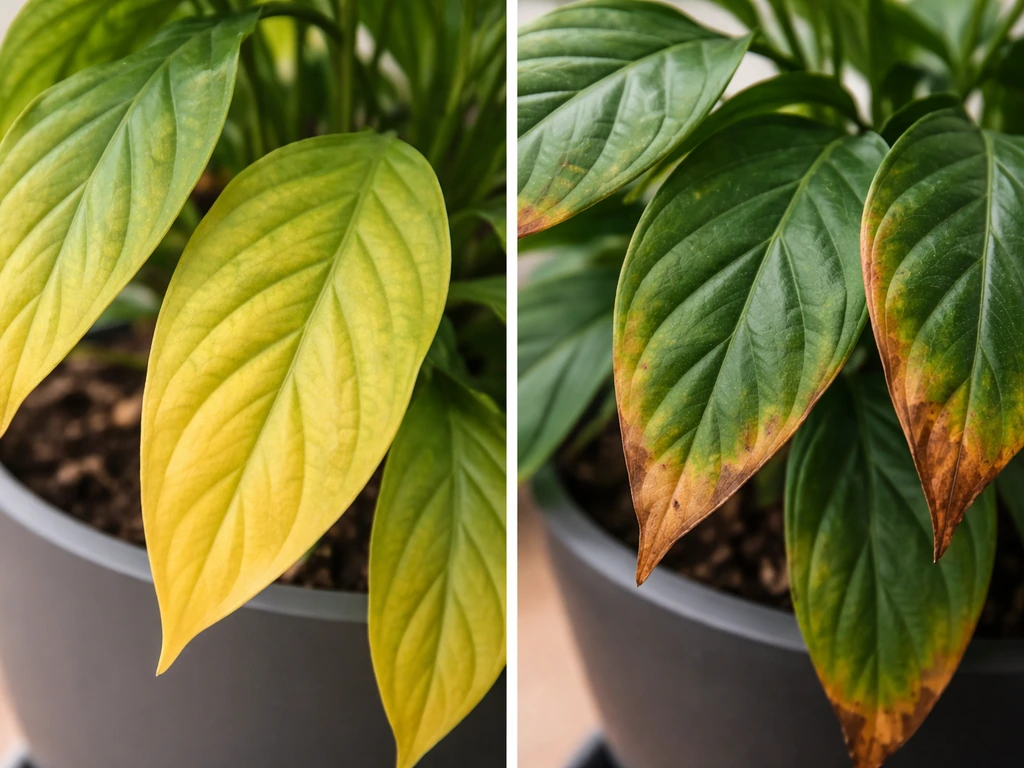
The symptoms look different but beginners often confuse them, and acting on the wrong diagnosis makes the problem worse. Deficiencies typically show as yellowing, color loss, or abnormal leaf patterns that move in a predictable direction: mobile nutrients (nitrogen, phosphorus, potassium, magnesium) show deficiency on older lower leaves first, because the plant cannibalizes those reserves and moves them upward. MSU Extension publication 4449-9 notes that nutrient deficiency and toxicity symptoms follow recognizable patterns, and symptom location can help indicate whether a nutrient is mobile or immobile in the plant blank" rel="noopener noreferrer">symptom location can indicate whether a nutrient is mobile or immobile. Immobile nutrients (calcium, iron, manganese, zinc) show deficiency in new growth at the top of the plant first. MSU Extension describes classic margin-burning and spotting patterns tied to specific elements, which makes the location and pattern on the leaf your first diagnostic clue. MU Extension’s plant nutrition resource notes that nutrient deficiency symptom patterns and water, soil, and root-zone limitations can influence nutrient availability and how plants respond blank" rel="noopener noreferrer">root-zone limitations can affect nutrient availability and plant response.
Overfeeding looks like nutrient burn: tips of leaves curl or turn brown (tip burn), leaves claw downward, and the plant can look dark green before it starts declining. EC or TDS runoff coming out significantly higher than what went in is a reliable confirmation of salt accumulation. In hydro, a reservoir EC that keeps climbing even after you refresh with clean solution suggests the plant is drinking more water than nutrients and concentrating the solution. The fix is to top off with plain pH-adjusted water rather than fresh nutrient mix until EC drops to your target range.
Here is the critical thing UC IPM research makes clear: many apparent deficiency symptoms are caused by root health problems or adverse growing conditions, not an actual shortage of that nutrient in the solution. If your pH has been drifting, if your medium is waterlogged, or if roots are damaged, the plant will show what looks like deficiency no matter how much you've been feeding. Confirm with measurements before you dose more nutrients. Testing runoff pH and EC, checking your reservoir, and ruling out root issues first will save you from the over-correction spiral that kills more plants than the original problem.
| Symptom | Likely Cause | First Step |
|---|---|---|
| Yellowing on older/lower leaves | N, Mg, or K deficiency (mobile) | Check pH, then increase those elements if pH is correct |
| Yellowing or spotting on new growth | Ca, Fe, or Mn deficiency (immobile) | Check pH first—these lock out above 6.5 in hydro |
| Leaf tip burn, dark green color | Nutrient overfeeding / salt buildup | Check EC runoff, flush with plain pH water |
| General pale/slow growth, no specific pattern | pH drift, root stress, or low EC | Measure pH and EC of solution and runoff |
| Brown spots + clawing leaves | Multiple salt toxicity or pH crash | Flush, reset reservoir, check water source EC |
| Wilting despite moist soil/solution | Root rot or oxygen deficiency | Check DO and root zone temp, treat for pythium |
Troubleshooting by grow type: soil salt buildup vs hydro root and lockout issues
Soil: salt accumulation and how to flush it out
In soil and soilless media like coco, every watering that does not produce runoff adds a small amount of undrained nutrient salt to the root zone. Over weeks, this accumulates to levels that interfere with root function even when your input solution looks perfect. The solution is deliberate leaching: running enough water through the container to export accumulated salts with the drainage. Utah State University Extension confirms that adequate leaching is the primary management tool for salinity in container and field conditions. A leaching fraction of 15–20% means running 15–20% more water through the container than it can hold, so that drain water flushes salts out with it.
In practical container growing terms, this means watering to 10–20% runoff every feeding rather than watering to saturation with no drainage. Check the EC of your runoff every few weeks. If runoff EC is more than 0.5–1.0 mS/cm higher than your input solution, you have salt buildup. Run a plain-water flush (2–3x the container volume at correct pH) until runoff EC drops close to your input EC, then resume feeding at a reduced dose. A periodic full flush every 4–6 weeks is good preventive maintenance regardless of symptoms.
Hydro: nutrient lockout and root zone issues
In hydro systems, pH drift is the number one cause of apparent deficiencies. pH naturally rises over time in most systems as plants absorb acidic ions, so a reservoir you set to 5.8 on Monday may be at 6.8 by Thursday if you're not checking daily. Most growers check and adjust pH every 24–48 hours in active systems. A pH that drifts above 6.5 in hydro starts locking out iron and manganese, producing that yellowing-in-new-growth pattern that looks like a deficiency but is really just pH drift.
Salt and EC buildup in hydro reservoirs happen when plants drink more water than nutrients, concentrating the solution. Fix this by topping off with plain pH-adjusted water. Full reservoir changes every 7–14 days prevent compound salt accumulation and keep the solution fresh. If you see brown, slimy, or smell-off roots, address dissolved oxygen immediately: drop reservoir temp, add an air stone, or add a hydrogen peroxide treatment to reset the root zone. Roots in a well-oxygenated reservoir (above 6 ppm DO) are dramatically more resistant to pathogen pressure than roots sitting in warm, stagnant solution.
Precipitation in the reservoir, meaning clumps or cloudiness forming in your mixed solution, is usually a mixing-order problem. Calcium and sulfate or calcium and phosphate reacting in high concentration before they're properly diluted produces insoluble compounds that plants cannot absorb. If you see this, drain the reservoir, clean it, and re-mix following correct addition order: fill with water first, add Part A fully, then add Part B.
Quick start plan, feeding schedule, and final checklist
Here is a practical starting framework you can run with today. This covers the first eight weeks of a typical annual plant cycle from seedling through mid-flower. Adjust the numbers upward or downward based on what your plants are showing and what your meter confirms.
| Stage | Weeks | EC Target (mS/cm) | pH Target | Feed Frequency (soil) | Notes |
|---|---|---|---|---|---|
| Seedling | 1–2 | 0.4–0.8 | 6.0–6.5 | Every 3–4 days | Use plain water or very dilute feed, no full-strength nutrients |
| Early veg | 3–4 | 0.8–1.4 | 6.0–6.8 | Every 2–3 days | High-N liquid, increase dose gradually |
| Peak veg | 5–6 | 1.4–2.0 | 6.0–6.8 | Every other watering | Watch for tip burn; back off if runoff EC climbs |
| Transition/pre-flower | 7–8 | 1.6–2.0 | 5.8–6.5 | Every other watering | Shift to bloom formula, reduce N ratio |
| Full flower/fruit | 9–12+ | 1.8–2.4 | 5.8–6.5 | Every other watering | High-P/K formula; add Cal-Mag if needed |
| Late flush (optional) | Final 1–2 wks | 0.0–0.4 | 6.0–6.5 | Every watering | Plain water to clear residual salts before harvest |
For hydro, compress the EC ranges slightly downward at each stage compared to soil (roots have no buffer), check pH daily, change your reservoir every 7–14 days, and keep reservoir temps below 72°F. For soil, target 15–20% runoff at each watering and check runoff EC monthly. If you're starting with a foliar spray approach to supplement a root feed (which works well for fast-acting corrections of mobile deficiencies), apply at half the label rate in early morning or evening to avoid leaf burn under lights or direct sun. For the best grow foliar fertilizer, choose a formula that matches your growth stage and apply it at the right dilution to avoid leaf burn.
Your start-today checklist
- Identify your growth stage (seedling / veg / transition / flower) before choosing a formula
- Match your product to your medium: hydro-specific formula for hydro, soil or universal for containers
- Start at 50–75% of label dose and measure EC before feeding, not after
- Mix order: water first, then nutrients A before B, then pH-adjust last
- Target pH 5.5–6.5 for hydro and 6.0–7.0 for soil before every feeding
- Record EC at input and runoff every session to catch salt buildup early
- Shift from high-N to high-P/K formula when flowering or fruiting begins
- Top off hydro reservoirs with plain pH water when EC climbs above target, not more nutrients
- Flush soil containers with plain water to 20% runoff every 4–6 weeks
- If symptoms appear, measure pH and EC first before adding anything—rule out root stress before dosing
If you are comparing specific products for your setup, the considerations above map directly onto the decisions involved with systems like Fox Farm Grow Big (soil vs hydro versions use different formulas), the Advanced Nutrients Grow-Micro-Bloom three-part system, or balanced all-purpose options used in broader fertilizer programs. If you are choosing between Fox Farm Grow Big and Fox Farm Big Bloom, the same stage and medium logic (and EC targets for veg versus bloom) will tell you which one to use Fox Farm Grow Big vs Big Bloom. Each product has its own recommended mixing ratios, target EC ranges, and compatibility notes, and the framework here helps you evaluate any of them against your actual grow conditions rather than relying on marketing claims alone. If you are comparing Fox Farm Grow Big vs Big Bloom, remember that stage and medium still determine what is “good for weed,” not the brand name alone, and you should match the formula to your current veg or bloom needs.
FAQ
Can I use the same grow best liquid plant food in both soil and hydro?
Yes, but only if the product is designed for that medium and you manage the missing “baseline” nutrition. Use hydro-labeled nutrients in hydro systems, because soil formulas often rely on calcium and magnesium that your medium provides. If you accidentally use a soil formula in hydro, expect likely deficiencies and adjust with a compatible complete nutrient, not just extra nitrogen.
What should I do if my pH drifts and I notice it late?
If you miss a pH check, do not “chase” pH by dumping lots of pH-down or pH-up into the concentrate. Measure pH in the mixed reservoir, adjust in small increments, circulate for 5 to 10 minutes, then re-check. Also confirm EC, because salts can shift buffering and mask how far pH really moved.
Why do A+B or multi-part nutrients sometimes “clump” or stop working?
Two-part and three-part products usually need separate additions because calcium reacts with sulfate or phosphate at higher concentration, forming insoluble precipitates. Add Part A (often includes calcium) first, mix, then Part B, and if three-part, micro first, then grow, then bloom. Never combine parts in a small bottle before adding to water.
Is it okay to start at the exact label dose of a grow best liquid plant food?
Don’t rely on the label for dose if your plants are in a different medium or under different light intensity. A safer approach is to start at 50 to 75% of label strength, aim for your stage target EC range, and adjust gradually over 24 to 48 hours. If runoff EC keeps rising while plant symptoms worsen, you are accumulating salts, not feeding better.
Should I measure runoff EC and pH when I use liquid fertilizer in soil?
You generally should. Even in soil, runoff pH and EC tell you what the root zone is actually receiving, not just what you mixed. Measure runoff less frequently than in hydro, but when troubleshooting yellowing, burning, or slow growth, check runoff EC first to rule out salt buildup and then pH to confirm uptake is possible.
Can I use grow best liquid plant food as a foliar spray instead of a root feed?
A foliar spray is best for fast correction of mobile deficiencies or for stress recovery, but it is not a replacement for root feeding in most grow cycles. Use half the label rate, spray in low light conditions, and avoid spraying when temperatures are high or leaves are already wet. Always test on a small section first if you are switching to a new formula.
Why do ppm numbers not match between different growers or meters?
Not in the same way. If your meter uses a 0.5 conversion, 1.4 mS/cm corresponds to about 700 ppm; a 0.7 meter would read higher ppm for the same EC. When comparing products or following a chart, match the EC target (mS/cm) or confirm the exact conversion factor on your device.
How do I adjust feeding frequency if I move from soil to coco coir?
Yes, especially in coco and other soilless media. Coco often benefits from more frequent feeding and usually expects a steady nutrient supply, while dry-watering patterns or too much plain-water fraction can lead to swings in uptake. If you reduce dosing, do it slowly and confirm with runoff EC and plant response.
What does it mean when reservoir EC keeps increasing in hydro?
In hydro, rising reservoir EC with climbing runoff EC often indicates plants are consuming water but not nutrients, concentrating the solution. Top off with plain, pH-adjusted water to bring EC back down before adding more fertilizer. If EC keeps rising even after top-offs, check for root stress, blocked lines, or poor reservoir circulation.
Should I adjust pH before or after adding nutrients to the tank?
Measure pH after mixing and circulation, and only then adjust pH to your target. If you pH-correct the water before adding nutrients, the final pH can land differently due to nutrient buffering. A practical workflow is mix nutrients to the right EC first, circulate briefly, then adjust pH and re-check.
How can I tell nutrient deficiency from pH or root-health problems?
Start by confirming the “direction” and location of symptoms. Old leaves yellowing usually points to mobile nutrients being pulled from the plant, while new growth yellowing often points to immobile nutrients, typically caused by root issues or pH drift. If patterns look like deficiency but your pH and root zone conditions are off, fix the conditions first rather than increasing the nutrient dose immediately.
How do I recover if I think I overfed my plants with liquid fertilizer?
If you are getting nutrient burn, reduce dose and correct the underlying cause, not just flush blindly. Check your input EC, compare it to runoff EC, verify pH, then decide between a partial water top-off or a larger flush. For containers, a runoff goal around 10 to 20% helps export salts, while too little drainage makes buildup more likely.
Can I use organic liquid fertilizers in a hydroponic system?
Sometimes, but only if the label indicates compatibility. Many “organic liquid” products are not designed for hydro lines and may clog systems or create inconsistency in EC. In hydro, use nutrients specifically labeled hydro-compatible, and if switching, ramp up dosing gradually while monitoring root smell, oxygen levels, and reservoir clarity.