The best grow foliar fertilizer for most home cultivators is a diluted, chelated micronutrient blend (think iron, manganese, zinc, copper, and boron) combined with a small nitrogen boost, mixed to roughly 25-50% of the label's recommended soil rate and sprayed during lights-off or early morning before temperatures climb past 75°F. Products like General Hydroponics CALiMAGic, Botanicare CNS17 foliar formulas, and dedicated micronutrient sprays from Advanced Nutrients fit this role well. If you're already running a solid root-feeding program, whether soil or hydro, foliar is a precision tool for correcting visible deficiencies fast, not a replacement for what goes into your roots.
Best Grow Foliar Fertilizer Guide: How to Choose and Use

Marcus Holloway
23 Apr 2026

What foliar fertilizer actually does (and when it's worth it)

Leaves can absorb nutrients through their stomata (the small pores on the underside of the leaf) and directly through the waxy cuticle layer. The catch is that this pathway is slow and limited compared to root uptake. University research is pretty consistent on this: root feeding is the primary and most efficient route for macronutrients like nitrogen, phosphorus, and potassium. Foliar feeding genuinely shines for micronutrients like iron, zinc, manganese, and boron, where tiny amounts sprayed directly on the leaf can correct a deficiency faster than waiting for adjusted root feeding to catch up.
So when is it actually worth doing? Here are the situations where I've seen foliar feeding pay off versus when it's just extra work:
- Visible iron deficiency (interveinal chlorosis on new growth) that hasn't responded to a pH adjustment within a week
- Zinc or manganese deficiency showing mid-canopy, especially in late veg or early flower
- Plants under transplant stress or root zone disruption where root uptake is temporarily compromised
- A quick nitrogen hit during a prolonged wet period when soil feeding is on hold
- Seedling stage where root zones are tiny and plants need support before the root system is established
- Late veg push to thicken canopy before flipping to flower
What foliar fertilizer is not good for: replacing your base nutrient program, adding large amounts of phosphorus or potassium (macros absorb poorly through leaves), or solving pH-related lockout without also fixing the root zone pH. If you are specifically wondering is fox farm grow big good for weed, treat it as a stage-specific NPK/micronutrient option to compare against your foliar needs rather than a direct substitute for deficiency-focused leaf sprays. If your pH is off and your roots are locked out, spraying the leaves is a band-aid, not a fix.
Choosing the best grow foliar fertilizer: what to look for
The ingredient list tells you everything. For a foliar product to actually work, the nutrients need to be in a form the leaf can absorb. Chelated micronutrients (where the mineral is bound to an organic molecule like EDTA or DTPA) move through the cuticle far more readily than raw sulfate or oxide forms. The HS1208 UF/IFAS EDIS PDF provides additional tables and figures on how chelated fertilizers behave with soil pH, along with supporting material for chelate selection guidance Chelated micronutrients. When you're reading labels, look for these markers:
- Chelated iron (Fe-EDTA or Fe-DTPA) rather than iron sulfate
- Chelated zinc, manganese, and copper
- Nitrogen in urea or amino acid form, which penetrates leaf tissue more easily than nitrate forms
- Boron (often as boric acid or sodium borate) for cell wall development and flower set
- Molybdenum and calcium if the formula targets late veg to early flower
- A low salt index overall, since high-salt sprays are the primary cause of leaf burn
For the grow (vegetative) phase specifically, you want a foliar product with a nitrogen-forward profile, something in the range of 4-2-2 or 6-3-3 NPK, with a full micronutrient panel. During veg, plants are building leaf mass and stem structure, so the nitrogen boost from a foliar spray during this stage gives you a visible response within 3-5 days. Products built around amino acid nitrogen are my preference here because they double as a mild biostimulant, improving stress tolerance alongside nutrient delivery.
If you're running Advanced Nutrients' Grow, Micro, Bloom as your root base, their Revive product works well as a targeted foliar for iron and calcium correction. For a more complete micronutrient spray, look at Heavy 16's Foliar, Aptus Fasilitor, or the General Hydroponics line. When choosing a product, it also helps to compare formulas like Fox Farm Grow Big versus Big Bloom so you pick the right nutrient profile for the stage you are in micronutrient spray. Budget-conscious growers can also make a solid DIY foliar by diluting a complete liquid fertilizer (like a balanced grow formula) to a quarter-strength and adding a few drops of chelated iron and a surfactant.
How to use foliar feed correctly
Mixing rates and dilution

This is where most people mess up. Whatever the label says for soil or hydro application, cut it to 25-50% when using it as a foliar spray.
So even if a product like Fox Farm Grow Big Hydro is marketed for hydro, you still should treat it as a foliar at a reduced rate and only use it to correct specific needs, not as a full soil nutrient replacement Whatever the label says for soil or hydro application, cut it to 25-50% when using it as a foliar spray. .
If you want fast results with liquid fertilizer, follow the label’s dilution guidelines, keep the foliar solution in the safe ppm range, and spray at lights-off so the nutrients absorb before heat and evaporation fast liquid fertilizer how to use. For multi grow fertiliser, always follow the label’s dilution and then spray within the safe ppm range so you do not scorch the leaves. Leaves are far more sensitive to concentrated salts than roots.
A solution that measures 1,200 ppm in your reservoir is comfortable for roots but will cause tip burn and brown spotting on leaves within hours. For foliar use, target 300-600 ppm (EC 0. 6-1. 2) as a general safe range for established plants in veg.
For seedlings, stay even lower, 150-300 ppm. For micronutrient-only sprays, follow the label closely since these products are already formulated for foliar and tend to be pre-diluted.
pH your foliar solution the same way you would a reservoir feed. Aim for pH 5.8-6.2 for most foliar sprays. This range keeps chelates stable and maximizes absorption through the cuticle. Going above 6.5 or below 5.5 causes the chelates to break down and the nutrients to precipitate, meaning they sit on the leaf surface and do nothing except potentially cause burns.
Timing: when to spray
For indoor grows, spray at lights-off or in the last 30 minutes before lights go off. This gives the solution time to absorb before the lights heat the leaf surface and evaporate everything. Never spray during peak light intensity when the canopy is hot. For outdoor grows, spray in the early morning (just after sunrise) or evening (1-2 hours before dark). Avoid midday spraying entirely, the combination of direct sun and water droplets on the leaf surface creates a lens effect that concentrates heat and almost guarantees burning.
Frequency and coverage
In veg, one to two foliar applications per week is a reasonable maximum. In early flower (weeks 1-3), you can continue if you're targeting a specific deficiency, but cut back to once a week. After week 3 of flower, I stop all foliar feeding. Spraying dense canopies in mid to late flower raises humidity in the bud sites and increases mold risk.
Coverage matters too: you want the undersides of leaves hit, not just the tops. Stomata density is highest on the underside, so if you're only spraying the upper surface you're leaving most of the absorption potential on the table. Use a fine mist setting on your sprayer, not a coarse stream, and work from the bottom of the canopy upward.
Foliar vs. soil/hydro nutrients: avoiding overdosing and lockout
Here's the biggest practical issue with foliar feeding in a home grow: most growers are already running full nutrient programs through the root zone. Adding foliar on top without accounting for it leads to nutrient accumulation, especially with micronutrients like iron and zinc, which can become toxic at relatively low levels. On the day you foliar feed, reduce your root-zone feeding slightly or skip it entirely for that watering. Think of foliar as a supplement to, not an addition on top of, your existing program.
In hydro setups (DWC, coco, NFT), the integration calculus is a bit different. Your reservoir is already delivering precisely dosed nutrients to roots around the clock. Foliar feeding in hydro should be reserved almost exclusively for deficiency correction, not routine supplementation. If you see an iron deficiency in a DWC setup, check your reservoir pH first (iron locks out above pH 6.5 in hydro), adjust that, and if the deficiency persists after 3-4 days, then add a chelated iron foliar spray. Don't reach for the spray bottle as the first response.
For soil growers, especially those running living soil or organic media where nutrient release timing is less predictable, foliar feeding is a more useful tool. A quick nitrogen foliar in week 2-3 of veg while your organic amendments are still ramping up can bridge the gap. Just keep your foliar ppm low and your pH dialed in, and you won't upset the microbial ecosystem in the root zone.
Best options by grow stage and plant type
| Stage | Target Nutrients | Recommended Products | Max Concentration (PPM) | Frequency |
|---|---|---|---|---|
| Seedling (weeks 1-3) | N, Fe, Zn (micro-focused) | Diluted CalMag, micronutrient spray at 1/4 strength | 150-300 | Once per week max |
| Veg (weeks 2-8) | N, Mg, Fe, Mn, Zn | Grow-stage liquid fertilizer (25-50% rate), chelated micro blend | 300-600 | 1-2x per week |
| Early Flower (weeks 1-3) | Ca, Mg, B, Zn | CalMag foliar, dedicated micro spray | 300-500 | Once per week |
| Mid-Late Flower (weeks 4+) | Avoid foliar feeding | Root feed only | N/A | Stop foliar entirely |
| Soil grow (all stages) | As above, adjust for organic N delay | Amino acid-based N foliar, chelated micros | 300-500 | Match stage above |
| Hydro grow (all stages) | Deficiency correction only | Chelated iron, CalMag foliar as targeted fix | 250-400 | Only when deficiency confirmed |
For cannabis and other high-demand plants specifically, veg-stage foliar feeding with an amino acid nitrogen source gives a noticeable push in node stacking and leaf size when used correctly. Plants grown in coco tend to show micronutrient deficiencies more readily than those in soil, so a weekly chelated micro spray in weeks 3-6 of veg is often worth building into your routine. For vegetable growers running tomatoes, peppers, or leafy greens, the same logic applies: foliar during active vegetative growth, stop at fruit set.
Common mistakes and how to troubleshoot them
Leaf burn and brown spots
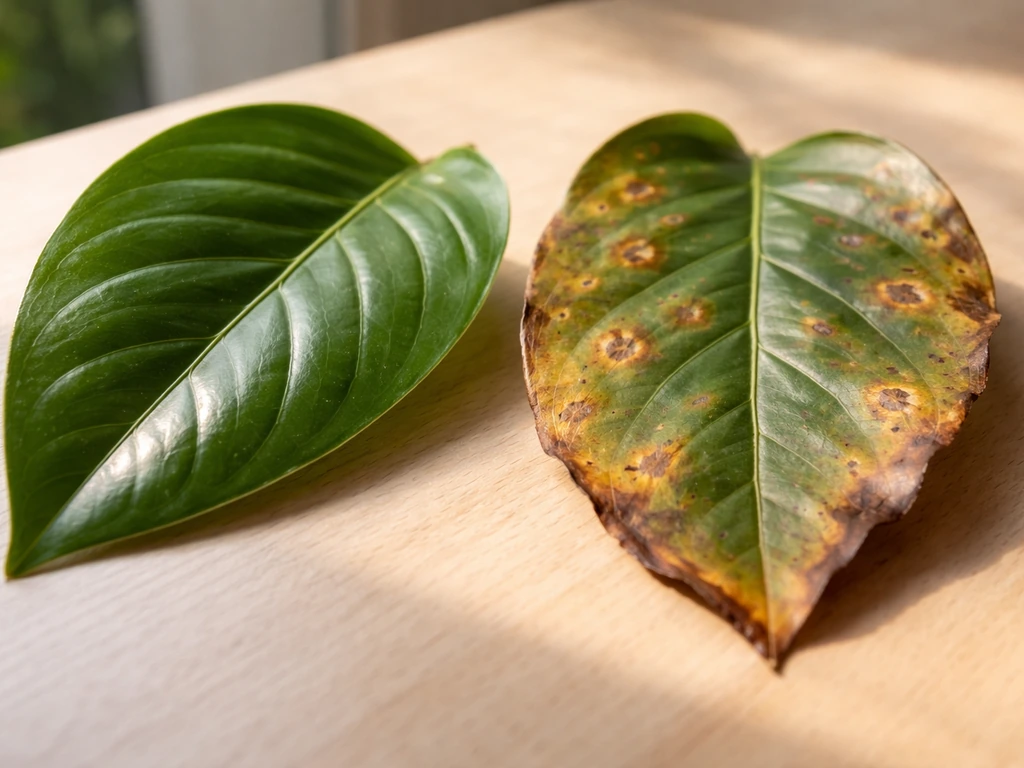
The most common foliar mistake is spraying too concentrated a solution or spraying during high light or high heat. If you see small tan or brown circular spots a day after spraying, that's salt burn from concentrated droplets drying on the leaf. The fix is simple: lower your concentration, switch to spraying at lights-off, and add a wetting agent. If the burn shows along leaf edges (tip burn), you're still running too hot on concentration. Drop to 25% of the soil rate and see if it resolves over the next spray cycle.
No visible response after spraying
If you're spraying and seeing zero improvement in a deficiency, check three things in this order: first, is your spray pH in range (5.8-6.2)? Out-of-range pH is the number one reason chelates stop working. Second, are you hitting the undersides of the leaves? If not, absorption is minimal. Third, is the product you're using a chelated form? Sulfate-based micronutrients have poor foliar absorption and are better suited for soil drench applications.
Compatibility issues and mixing problems
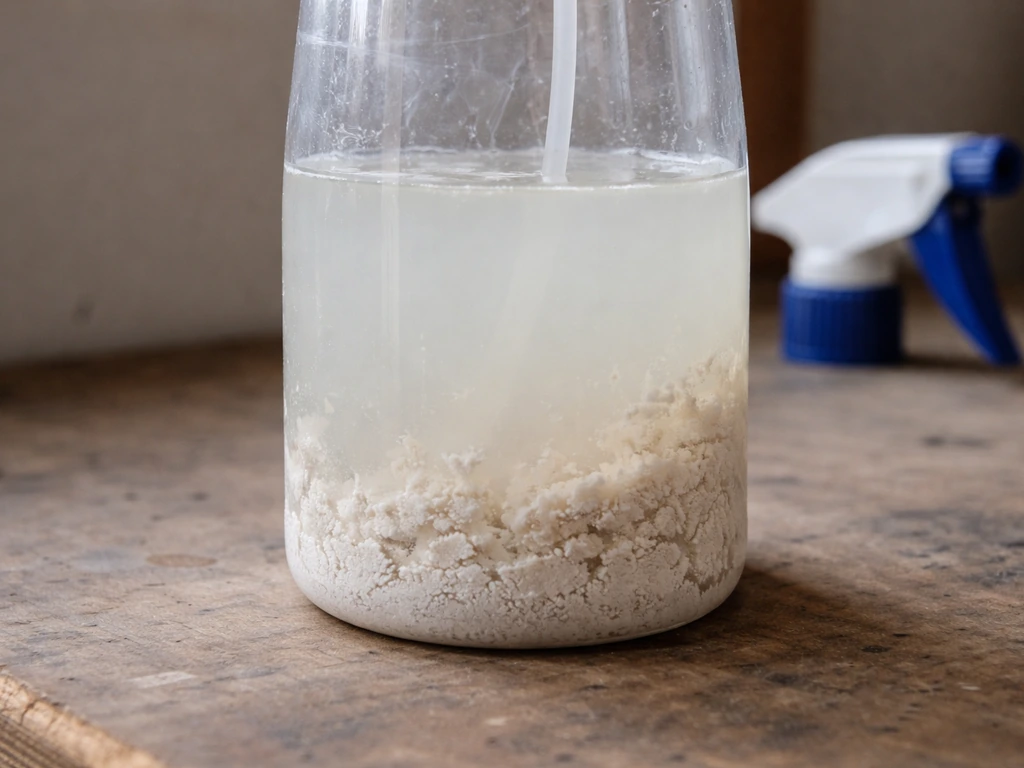
Don't mix a foliar spray with calcium and phosphorus in the same solution. They precipitate together almost immediately, forming a white sludge that clogs sprayer nozzles and delivers nothing useful. If you need both, do separate sprays on different days. Also avoid mixing any foliar nutrient with a neem oil or sulfur-based pesticide spray. The combination can cause severe leaf burn and chemical reactions on the leaf surface. Keep your pest sprays and nutrient sprays on separate schedules, ideally 48 hours apart.
Slow growth that isn't a foliar problem
If you're reaching for foliar because your plants look stunted or pale and growth is slow, stop and diagnose the root zone first. Check root health, pH at the root zone, water temperature in hydro, and whether your base nutrient program is actually hitting the ppm targets for that growth stage. Foliar is a supplement and a deficiency corrector, not a substitute for a dialed-in root program. Adding more foliar spray on top of an underlying root problem delays your fix and can compound it.
Alternatives, add-ons, and organic vs. synthetic
Sticker/spreader agents
A surfactant or wetting agent is genuinely useful in foliar applications. Leaves are naturally hydrophobic, meaning water (and your nutrient solution) beads up and rolls off rather than spreading into a thin film across the surface. Adding a few drops of a plant-safe surfactant like Yucca extract, silica-based wetting agents, or commercial products like Spray-N-Grow Spreader Sticker to your foliar mix increases the contact area dramatically. More contact area equals more absorption. Use 1-2 ml per liter of spray solution as a starting point.
Chelators for micronutrient delivery
Chelated micronutrient products deserve a separate call-out. If you're dealing with a stubborn iron deficiency that pH adjustment hasn't fully resolved, a dedicated chelated iron product like Sequestrene 138 (Fe-EDDHA) or a broad chelated micro blend is far more effective than trying to solve it through a general-purpose foliar. These products bind iron in a form that stays stable across a wider pH range (Fe-EDDHA is effective up to pH 9, which makes it useful even in high-pH situations) and absorbs readily through the leaf.
Organic vs. synthetic foliar fertilizers
Organic foliar options include fish hydrolysate, seaweed/kelp extracts, and amino acid-based sprays. Fish hydrolysate (not fish emulsion, which is processed and stripped of amino acids) delivers nitrogen, micronutrients, and naturally occurring growth hormones in a form that absorbs well through the leaf. Kelp extracts like Maxicrop or Kelpman provide cytokinins and trace minerals that genuinely improve stress tolerance and node development.
The trade-off with organic foliar products is smell (fish hydrolysate in an indoor tent is memorable) and slightly slower visual response compared to chelated synthetic sprays. Synthetic foliar products like Miracle-Gro Liquid, diluted Advanced Nutrients, or specialty products like Aptus Fasilitor tend to show faster, more predictable responses and are easier to pH and measure precisely.
If you are trying to dial in a grow schedule, look for a liquid plant food option labeled for foliar use so you get the right balance of nutrients grow best liquid plant food. For most home growers, a hybrid approach works best: kelp or amino acid spray weekly in veg, chelated synthetic micro spray when a specific deficiency shows up.
Micronutrient-only products worth keeping on hand
- General Hydroponics CALiMAGic: reliable calcium and magnesium foliar, especially useful in coco and hydro where Ca and Mg run lean
- Botanicare Liquid Karma: amino acid and organic acid blend that doubles as a foliar biostimulant during early veg
- Heavy 16 Foliar: balanced micronutrient spray with a low salt index and pH-stable chelates, good for weekly veg use
- Aptus Fasilitor: silica and micronutrient blend that improves structural rigidity and stress response, spray-safe in veg
- Sequestrene 138 (Fe-EDDHA): high-performance chelated iron for stubborn iron deficiency, particularly in high-pH situations
- Yucca extract (as a standalone wetting agent): add to any foliar mix at 1-2 ml/L to improve coverage and absorption
If you're already working with a structured multi-part nutrient system like Advanced Nutrients Grow, Micro, Bloom or running a balanced liquid fertilizer like a 20-20-20 general formula at the root zone, your foliar program should be narrow and targeted rather than trying to replicate your root feed in spray form. Keep the foliar focused on what it actually does well: fast micronutrient correction, stress support, and a nitrogen top-up during high-demand veg phases. That combination, applied at the right time, right dilution, and right stage, is where foliar fertilizing earns its place in a serious grow operation.
FAQ
How do I calculate dilution for the best grow foliar fertilizer if the label only gives soil or hydro rates?
Use the soil or hydro rate as the starting point, then cut it to about 25% to 50% for foliar, and verify with a meter if possible (target roughly 300 to 600 ppm for established plants, 150 to 300 ppm for seedlings). If you cannot measure ppm/EC, err toward the lower end (around 25%) because leaf burn risk rises fast with extra salt concentration.
What surfactant should I use with foliar fertilizer, and how much is safe?
Start with a plant-safe wetting agent such as yucca extract or a commercial spreader-sticker designed for foliar. A practical starting rate is 1 to 2 ml per liter of spray solution, then adjust based on beading. Avoid dish soap or unknown kitchen additives because they can damage leaf tissue and mess with pH and chelate stability.
Can I spray foliar fertilizer directly after mixing nutrients, or should I let it sit first?
Mix, then spray promptly. Many foliar mixes rely on chelates that are sensitive to pH drift and precipitation over time, especially if the solution warms up. If you notice sediment or cloudiness after mixing, discard and remake rather than trying to “shake it in,” since it often means clogged nozzles and reduced uptake.
Why do I still see deficiency symptoms after using foliar fertilizer correctly?
The most common causes are (1) pH is out of the chelate stability window, (2) you missed the underside of the leaves where stomata density is highest, or (3) the deficiency is actually root-zone related (wrong reservoir/root pH, weak base feeding, or root stress). If pH is in range and coverage is good, give it a short window (often 3 to 4 days) before changing products, and reassess the root zone at the same time.
Is it ever better to foliar feed nitrogen, or should I always adjust the root nutrient program?
Foliar nitrogen can work well for fast, temporary improvement in veg, but it is a supplement, not a replacement. If your base program is under-delivering nitrogen or the root zone is oxygen-starved, foliar may mask the issue briefly and slow the real fix. Use foliar nitrogen only when root feeding targets are already close and you are correcting a specific growth-phase need.
What ppm or EC should I target for the best grow foliar fertilizer on seedlings versus mature plants?
For established plants, a general safe target is about 300 to 600 ppm (EC roughly 0.6 to 1.2). For seedlings, go lower, around 150 to 300 ppm, because their leaf surfaces are more easily scorched by concentrated salts. If you are using a micronutrient-only foliar product already formulated for leaves, follow the label and still consider testing a small batch to ensure it does not exceed your usual foliar EC.
Can I foliar feed in flower, and when should I stop?
If you are correcting a specific deficiency, you can continue cautiously into early flower (roughly weeks 1 to 3), then reduce frequency. After about week 3, most growers stop foliar because dense canopies increase humidity in bud sites and can raise mold risk. If you do spray late, keep it minimal, apply when humidity is lowest, and prioritize airflow.
What’s the difference between “chelated micronutrient foliar” and non-chelated forms for leaf feeding?
Chelated forms bind the metal in a way that stays more available across typical foliar pH, and they penetrate the leaf cuticle more readily. Non-chelated micronutrients often precipitate or do not cross the cuticle as effectively, which makes them far more useful as soil or reservoir amendments than as foliar sprays. When buying, look for chelation terms like EDTA or DTPA for broader compatibility at foliar pH.
My leaves have white residue after spraying. Is that a problem?
White residue often comes from dried salts or precipitation after water evaporates, usually from high concentration, poor wetting, or pH drift. If it’s accompanied by tan or brown spots the next day, treat it as salt burn: reduce concentration next time and spray at lights-off or cooler conditions. If residue is only cosmetic and leaves look fine, confirm your pH and consider a wetting agent for more even coverage.
Can I mix foliar fertilizer with pest sprays like neem oil or sulfur?
Do not combine foliar nutrients with neem oil or sulfur-based pesticides in the same bottle. These mixes can trigger severe burn or unwanted chemical reactions on the leaf surface. Instead, schedule them separately, ideally with at least 48 hours between nutrient spraying and pesticide spraying, and apply foliar first if you need to correct a deficiency.
How should I handle hydroponics if my iron deficiency shows up despite correct reservoir feeding?
First, confirm reservoir pH, since iron often locks out above about pH 6.5 in hydro. Only after 3 to 4 days of properly corrected reservoir conditions should you consider a chelated iron foliar to bridge the gap. Foliar should be a targeted correction, not your routine nutrient strategy in hydro, because roots already get precisely dosed nutrients.
What should I do if my foliar spray causes tip burn or edge spotting?
Treat it as a concentration or timing issue. Drop to about 25% of the original soil/hydro label rate next time, ensure lights-off or pre-lights-off application, and use a finer mist so droplets dry more evenly rather than leaving heavy wet spots. If symptoms persist after adjusting, recheck pH and confirm you are not mixing incompatible nutrients.