Use Floranova Grow every watering session during the vegetative phase in hydro or soilless systems, and every other watering in soil, at a dose of 1 to 3 teaspoons (roughly 5 to 15 ml) per gallon of water. If you want a quick rule of thumb for the Floranova Grow dosage rate, use 1 to 3 teaspoons per gallon and adjust based on your growth stage.
How Often to Use Floranova Grow: Soil Schedule + How To
Marcus Holloway
28 May 2026
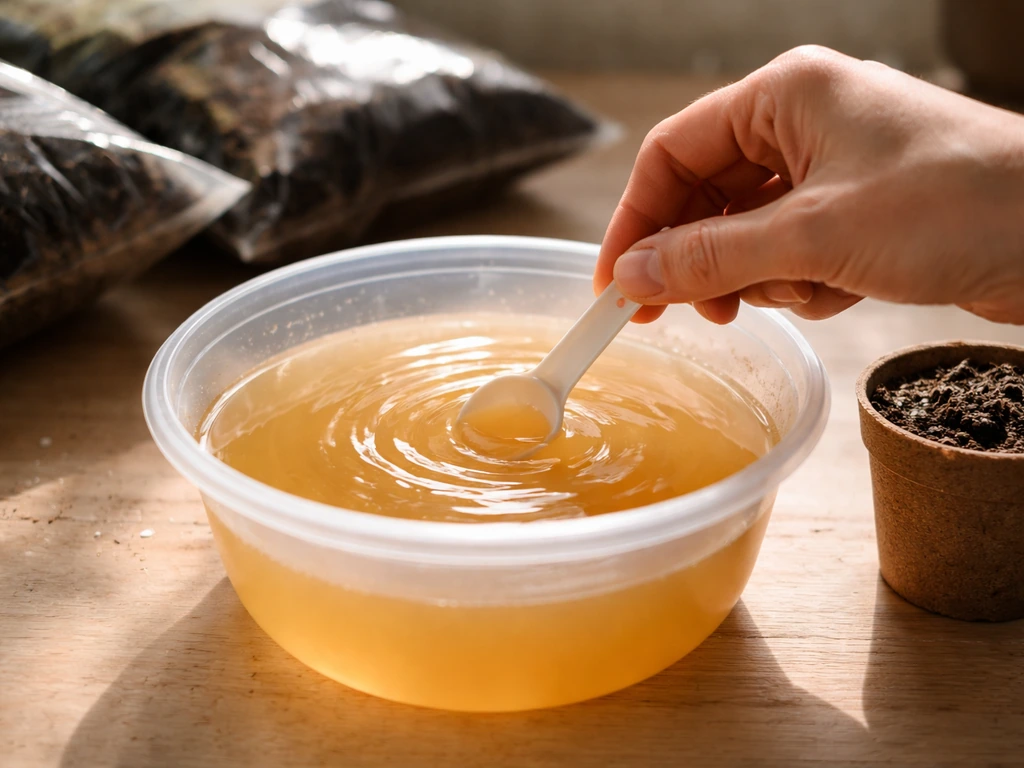
Start light at around 1 tsp/gal during early veg, ramp up to 2 to 3 tsp/gal as plants fill out, and drop back to a lower rate once you flip to flower and transition to Floranova Bloom. That's the core answer. Everything below is the detail that will stop you from burning your plants or starving them.
What Floranova Grow actually is (and where it fits in your garden)
Floranova Grow is a one-part, liquid concentrate nutrient from General Hydroponics designed specifically for the vegetative and structural growth phase of a plant's life. It pairs with Floranova Bloom as a two-bottle system: Grow handles everything from seedling through late veg, and Bloom takes over at flower. The fact that it's a one-part system matters because there's no separate cal-mag, micro, or macro bottle to juggle. The formula includes a built-in micronutrient package plus 3 to 5% organic substances, giving it a hybrid mineral-organic profile that makes it a bit more forgiving than purely synthetic options.
The label explicitly lists three use contexts: hydroponics, soilless mixtures (coco, rockwool, perlite), and potted plants or garden soil on a continuous liquid feed program. That last category is important. In soil, you're not amending the medium itself with Floranova Grow, you're delivering it dissolved in water at every feeding. It works the same way in all three environments, just at different frequencies and rates depending on how fast your medium dries out and how much nutrient buffer the substrate already holds. Soil holds more than coco, coco holds more than a recirculating hydro setup, and your feeding cadence adjusts accordingly.
Mixing and dosing basics before you feed
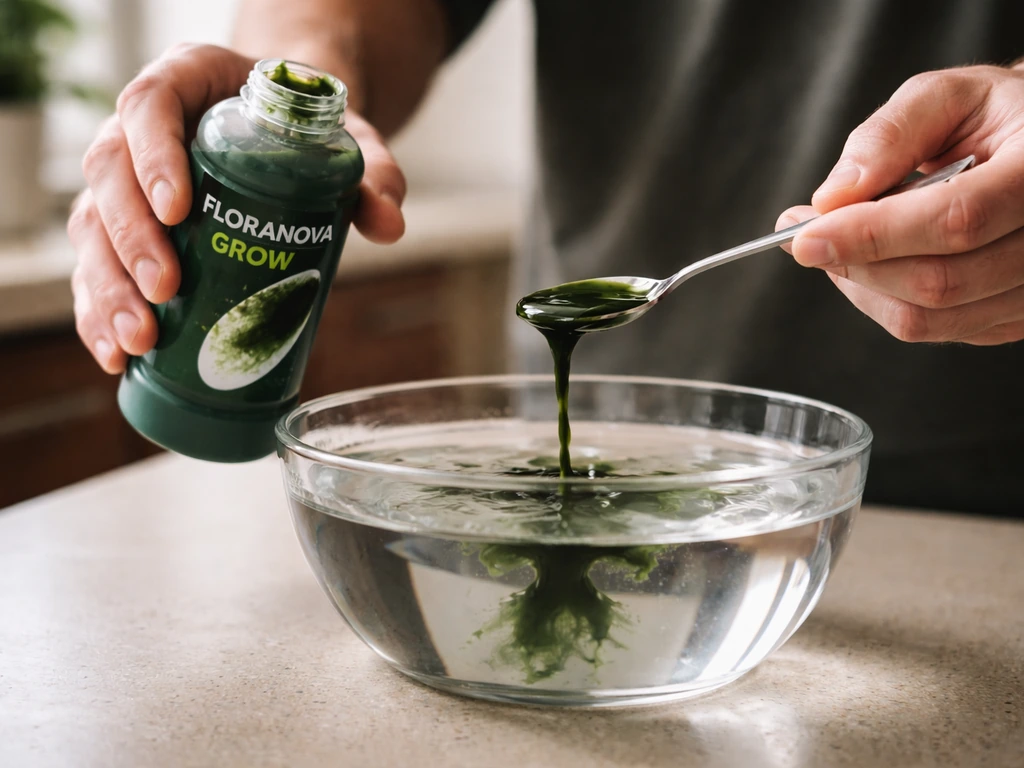
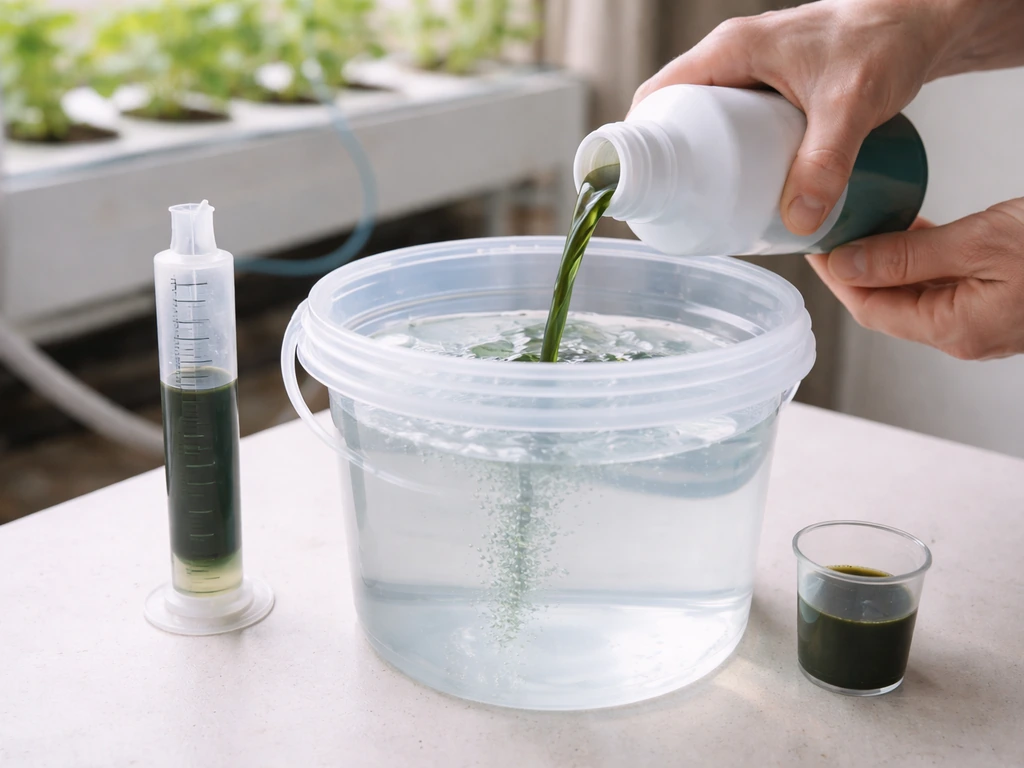
Floranova Grow is thick and tends to settle, so the first step every single time is to shake or stir the bottle well before measuring. Skip this and you'll get inconsistent nutrient ratios in your mix. Once shaken, measure your dose into room-temperature water, not the other way around. Always add nutrients to water to avoid concentrated pockets sitting at the bottom of your reservoir or watering can.
The label-based dose range for soil and structural growth is 1 to 3 teaspoons per gallon (approximately 5 to 15 ml/gal). General Hydroponics' official feed charts break this down further with ml/gal values across different intensity levels.
On a light schedule you're looking at roughly 2. 5 to 3. 6 ml/gal; a moderate schedule sits around 5 to 6 ml/gal; a heavy push can reach 7. 5 ml/gal or higher depending on the chart.
For most home growers in soil, staying in the 5 to 10 ml/gal range (about 1 to 2 tsp) is the practical sweet spot. If you've looked into floranova grow dosage or how much floranova grow per gallon specifically, those specific numbers are worth cross-referencing with the official GH feed charts for your chosen system intensity.
If you want a quick starting point for terra grow dosage, follow the same tsp-per-gallon range and adjust based on your grow stage and intensity.
After mixing, always check and adjust your pH. Target 5.8 to 6.2 for hydro and soilless media, and 6.0 to 6.8 for soil. Floranova Grow is nutrient-dense and will shift your water's pH, so this step isn't optional. Getting pH wrong is the most common reason a grower thinks they're overfeeding or underfeeding when the actual issue is lockout.
How often to feed Floranova Grow across the grow cycle
The official GH feed charts are structured as week-by-week programs, not as a single static concentration. That's the key thing to understand. Your feeding frequency and dose both change as the plant moves through its growth stages. Here's how it breaks down in practice:
| Growth Stage | Frequency (Hydro/Soilless) | Frequency (Soil) | Dose Range |
|---|---|---|---|
| Seedling (weeks 1-2) | Every watering, very light | Every other watering | ~1 tsp/gal (5 ml/gal) |
| Early veg (weeks 2-4) | Every watering | Every other watering | 1-1.5 tsp/gal (5-8 ml/gal) |
| Mid-to-late veg (weeks 4-8+) | Every watering | Every 1-2 waterings | 1.5-3 tsp/gal (8-15 ml/gal) |
| Transition to flower (1-2 weeks) | Every watering, tapering | Every other watering, tapering | 1-1.5 tsp/gal (5-8 ml/gal) |
| Full flower | Switch to Floranova Bloom | Switch to Floranova Bloom | Floranova Bloom rates |
In hydro recirculating setups, General Hydroponics recommends refreshing your entire nutrient solution every 7 to 10 days rather than just topping off indefinitely. Top off with plain, pH-adjusted water daily as the reservoir drops, but do a full drain-and-remix at least weekly. This prevents salt accumulation and nutrient ratio drift over time. For deep water culture or NFT, this is non-negotiable.
The label also references a 'every week or two' cadence for nutrient solution management in continuous liquid feed programs, which aligns with the 7 to 10 day refresh window. If you're hand-watering coco or soilless mix, you can feed every watering since those media have very little buffer. If you're running a recirculating system, the 7 to 10 day full refresh is your rhythm.
Using Floranova Grow in soil: schedule and method
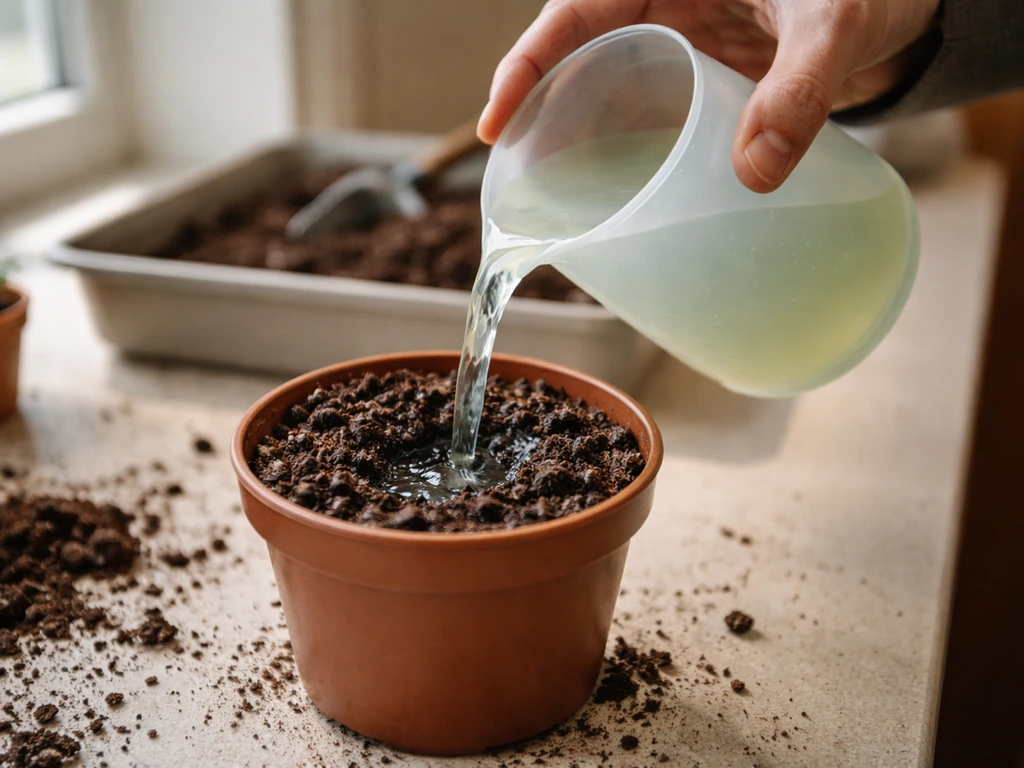
Soil is different from hydro because the substrate itself holds nutrients and has a native microbial ecosystem. Feeding Floranova Grow at full strength every single watering in soil is the fastest way to salt buildup and lockout. The practical rhythm that works is feeding every other watering: one watering with nutrient solution, the next with plain pH-adjusted water. If you want to compare, a valerian grow best approach can help you tune your schedule and expectations for a specific plant. This gives the root zone time to process what's already there and prevents salt concentration from climbing.
Here's how to execute a soil feeding with Floranova Grow step by step:
- Shake the Floranova Grow bottle well for at least 15 to 20 seconds.
- Fill your watering container with the correct volume of room-temperature water.
- Measure your dose (start at 1 tsp/gal in early veg, move to 2-3 tsp/gal by mid-veg) and add it to the water.
- Stir thoroughly for at least 30 seconds until the concentrate is fully dissolved.
- Check pH and adjust to 6.0 to 6.8 for soil.
- Water slowly and evenly across the entire soil surface, not just at the stem.
- Water until you get 10 to 20% runoff out the bottom of the pot. This prevents salt buildup.
- Let the soil dry down partially before the next watering, then alternate: plain water next, nutrient feed the one after.
Runoff collection and periodic flushing matter in soil. Every 3 to 4 weeks, do a plain water flush using roughly twice the pot volume in water. This clears accumulated salts and resets the medium without fully stripping it. You don't need a dedicated flushing agent for this, though some growers use enzymes. A good plain-water flush is often enough. After flushing, wait for the medium to partially dry before resuming your feeding schedule.
If you're running a soil mix that's already pre-loaded with nutrients (like many commercial 'hot' mixes), hold off on Floranova Grow for the first 2 to 3 weeks and let plants feed off what's in the soil. Introduce the nutrient at roughly half dose once you start seeing the soil color lighten or growth slow. Pre-amended soil combined with full-strength Floranova Grow from week one is a common beginner mistake.
What goes wrong: overfeeding and underfeeding signs
Knowing what nutrient problems look like lets you course-correct before real damage happens. Here are the main things to watch for:
Signs you're feeding too much
- Burnt or brown leaf tips, starting at the very ends and moving inward as it worsens
- Leaves turning unusually dark green or developing a slightly waxy, over-saturated look
- Leaf clawing (tips curling down), which often indicates nitrogen toxicity from too-high doses
- Slowed growth despite healthy light and environment, because excess nutrients disrupt water uptake at the root
- White crusty salt deposits visible on the soil surface or around the pot drainage holes
If you see burnt tips, don't panic. Nutrient burn is caused by too-high nutrient levels at the roots, and it commonly shows up as burnt or brown leaf tips along with slowed growth. First, rule out light stress by checking canopy distance. If light is fine, reduce your Floranova Grow dose by 25 to 50% at the next feeding and flush the medium with plain pH-adjusted water. In soil, one or two plain-water waterings in a row is usually enough to pull the excess back down. Check your runoff EC (electrical conductivity) if you have a meter: if it's climbing higher than your input solution, salts are building up and a flush is needed.
Signs you're not feeding enough
- Yellowing that starts at the lower, older leaves and moves upward (classic nitrogen deficiency pattern)
- Pale or lime-green coloring across new growth rather than healthy medium green
- Slow, stunted vegetative growth with small internodal spacing that doesn't improve with more light
- Thin stems and generally fragile-looking structure despite adequate conditions
Underfeeding in soil is less common than overfeeding but does happen, especially if you're using a very inert or depleted medium or doing too many plain-water waterings in a row. If plants look pale and growth has stalled, bump your dose up by 0.5 tsp/gal at the next feeding and watch for a response over 3 to 5 days. Don't chase a deficiency by doubling the dose in one shot; incremental increases are always safer.
One thing that mimics both overfeeding and underfeeding is pH being out of range. Before changing your dose up or down, always verify your input and runoff pH. Lockout caused by pH imbalance will look exactly like a deficiency even when your nutrient levels are correct. This is worth repeating because it's the single most common misdiagnosis in soil growing.
A simple feeding plan you can start today
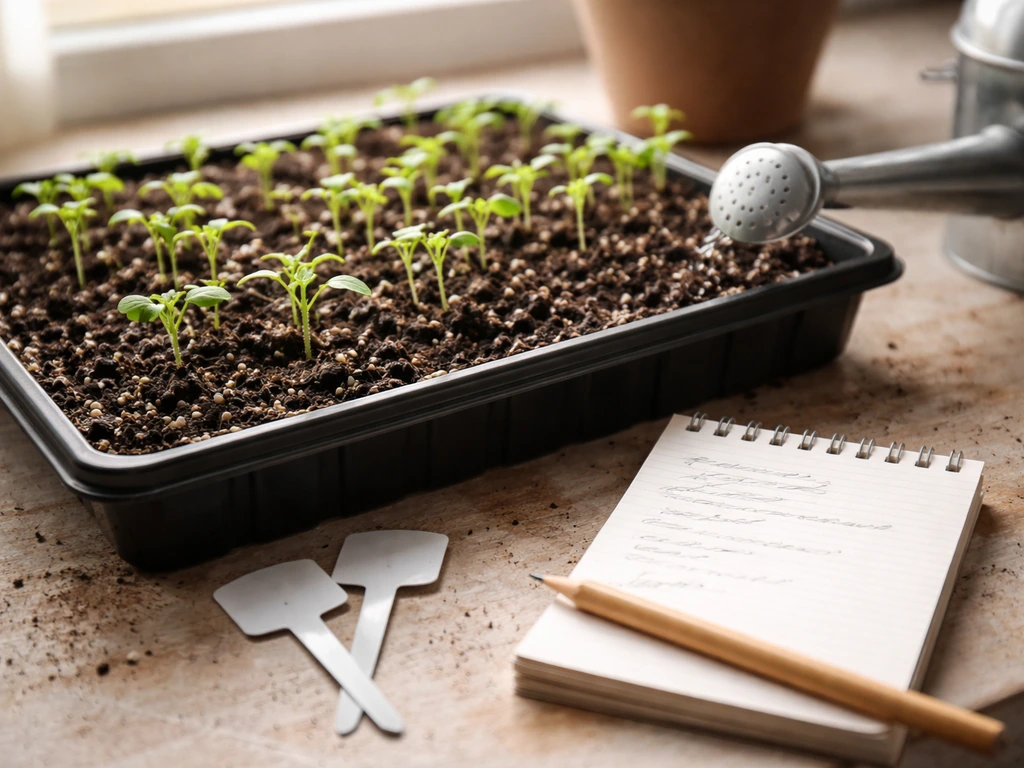
Here's a straightforward feeding rhythm you can implement right now regardless of where you are in the grow cycle. If you're wondering what to grow with these nutrient targets, start by choosing fast-growing plants that match your grow space and timeline, then dial the dose using the same schedule approach. Adjust the dose based on where your plants are in veg.
- Week 1 to 2 (seedling): Water only, no Floranova Grow. Let the seedling establish roots before introducing nutrients.
- Week 2 to 4 (early veg): Introduce Floranova Grow at 1 tsp/gal (5 ml/gal). Feed every other watering in soil; every watering in hydro/coco. Check and adjust pH each time.
- Week 4 to 8 (mid-to-late veg): Increase dose to 2 tsp/gal (10 ml/gal) and monitor plant response. In soil, continue the feed/water/feed/water rotation. Flush with plain water every 3 to 4 weeks.
- Week 6 to 8 or when ready to flip: Taper back down to 1 tsp/gal as you approach the transition. Introduce Floranova Bloom at the flip. You can overlap them briefly at low doses during the first week of transition.
- Every session: Shake bottle, measure dose, add to water, stir, check pH, water to runoff (soil), log what you fed and when.
That log is more useful than it sounds. Even a basic notes app entry of 'Day 22, 2 tsp/gal, pH 6.3, plants look healthy' gives you a reference to look back at when something goes sideways. Most feeding problems are diagnosable in hindsight if you have records, and almost impossible to diagnose without them.
If you want to dial things in further, the official General Hydroponics FloraNova weekly feed chart is the best reference for matching dose to grow week and system intensity. It's structured as a stage-by-stage program rather than a single number, which is why it's more useful than the label alone. Pair that chart with the basics above and you'll have a feeding routine that's repeatable, adjustable, and built around what your plants are actually telling you.
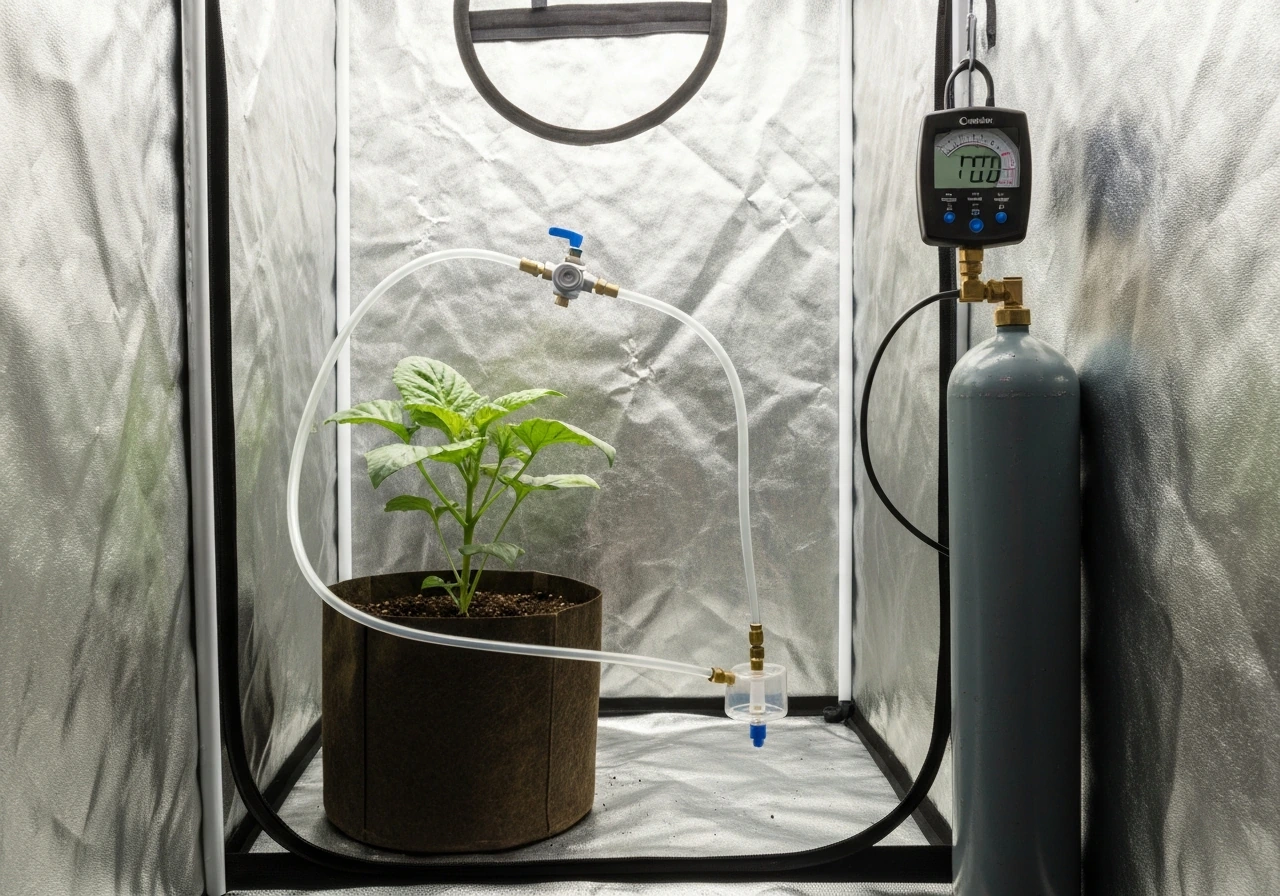
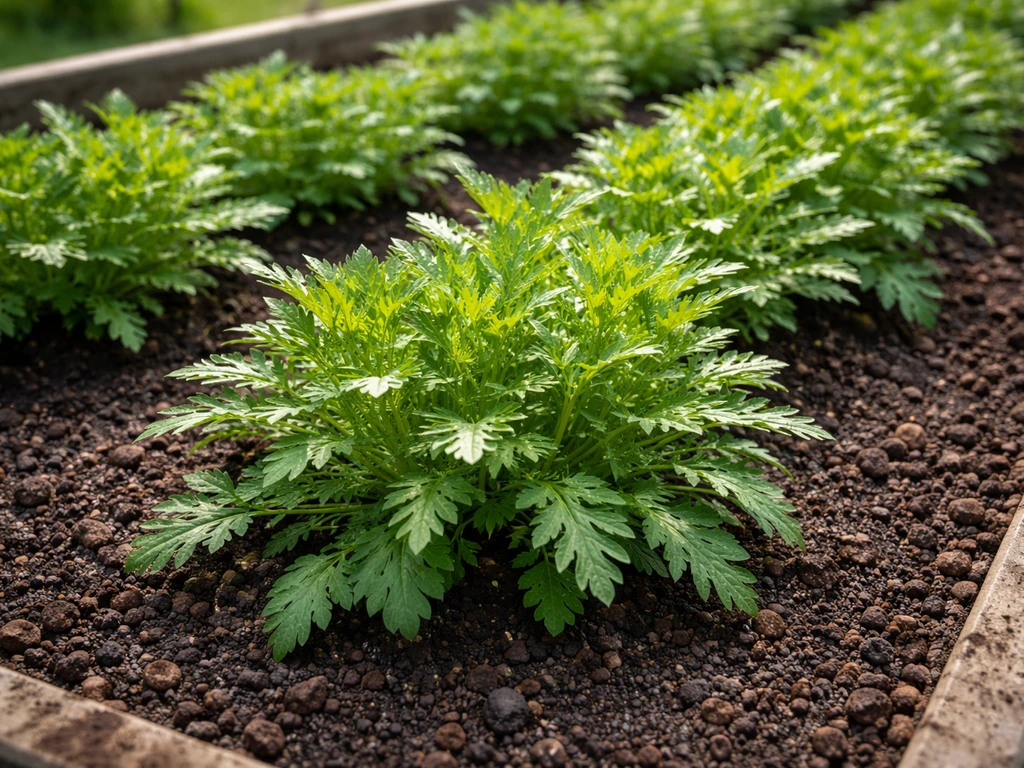
If you are looking for alternatives, you can also consider using CO2-focused growth strategies and matching plant nutrition to your chosen media and lighting. If you are also growing herbs, plan your nutrient changes carefully because valerian plants have different needs than typical hydro or garden crops feeding routine.
FAQ
If I just transplanted into a new medium, should I still feed Floranova Grow every time or slow down?
In veg, you can usually keep the same “every watering in hydro” rule, but reduce the dose to the low end (about 1 tsp/gal) for the first 3 to 5 days after transplanting, then return to your normal rate. Watch new growth, if it stays dark green and not clawing or canoeing, you can step back up.
Can I mix Floranova Grow with other nutrients, or should I only use Grow?
For soil, the article’s “every other watering” assumes you are using Floranova Grow as your main feed. If you are also adding other nutrients (like a separate cal-mag or a bloom booster), overlap can over-concentrate. In that case, start by using a lower Floranova Grow dose and stop any separate product that duplicates the same minerals.
What should I do if my mixed nutrient solution sits for a while before I use it?
No, because Floranova Grow is mixed into water, then pH adjusted. If you already have a reservoir made and it sits a long time, dissolved salts can drift and your pH can change, so you should recheck pH before each refresh cycle (at least at the start of the week). If pH has moved more than about 0.2 to 0.3, remix with fresh water.
What’s the best fix if I’ve been feeding Floranova Grow every watering in soil and think I’m overdoing it?
Yes, but do it in small steps. If you’re currently feeding every watering in soil by mistake and plants are showing stress, switch to “every other watering” immediately and hold the next dose to about 1.5 to 2 tsp/gal. Then reassess after 3 to 5 days, especially by checking runoff EC trends if you have a meter.
My pots dry out faster than usual, can I adjust the “every other watering” soil schedule?
A good practice is to base your schedule on how fast your medium dries and on runoff consistency, not the calendar alone. In soil, if you regularly water daily because the pot dries quickly, you may need to do “partial nutrient feed” (for example, nutrient at half dose on the nutrient watering) rather than switching to full-dose every watering.
How can I tell whether salts are accumulating if my plants look okay so far?
If runoff looks much higher than your input, salts are building even if plants look fine for now. Aim to compare runoff EC to your mixed-solution EC. If runoff is climbing each time, shorten the interval to plain-water waterings and increase the next 3 to 4 week flush to restore the root zone.
What if I accidentally started Floranova Grow at full strength in a pre-fertilized pot?
Yes, preloaded “hot” soil should generally delay nutrient start. A safer approach is to start Floranova Grow at half dose for 1 to 2 weeks (around 0.5 to 1.5 tsp/gal depending on your target), then increase only if growth is steady and leaf color is normal.
If I see nutrient deficiency or burn, should I change the Floranova Grow dose or pH first?
The quickest decision aid is: adjust pH first, then adjust dose. If leaves look like nutrient issues but your measured pH is out of the target range, don’t change dose immediately. Recheck both your input and runoff pH after correction, then wait 24 to 72 hours before changing nutrient strength.
What are common measuring mistakes that make Floranova Grow too strong or too weak?
If you want to keep dosing consistent, measure by volume (ml) after shaking, and use the same water temperature if possible (room temperature helps mixing). Also confirm you’re using teaspoons per gallon, not per liter, since that conversion mistake can make the solution several times stronger than intended.
How should I handle the switch from Floranova Grow to Bloom without shocking the plants?
When you transition to flower and switch from Grow to Bloom, stop increasing Grow at the point you see the first real flower set. Continue plain pH-adjusted water for a watering or two during the switch if you see any salt buildup, then start Bloom on the standard flower schedule for your system.
What should I track in my notes to make future feeding corrections easier?
You can use a simple log to decide whether to hold or adjust. Record day, medium (soil or coco), dose (tsp/gal), input pH, and runoff pH (if you measure). If pH is drifting or runoff EC trends upward, change the schedule (more plain-water and a flush) before increasing nutrient strength.