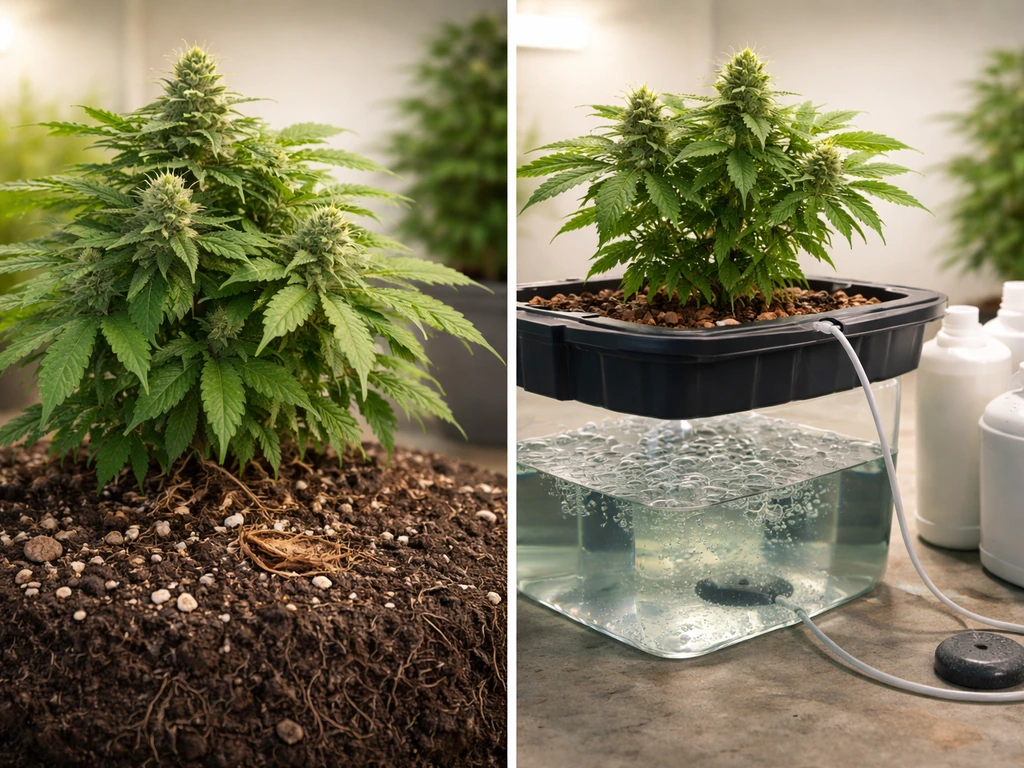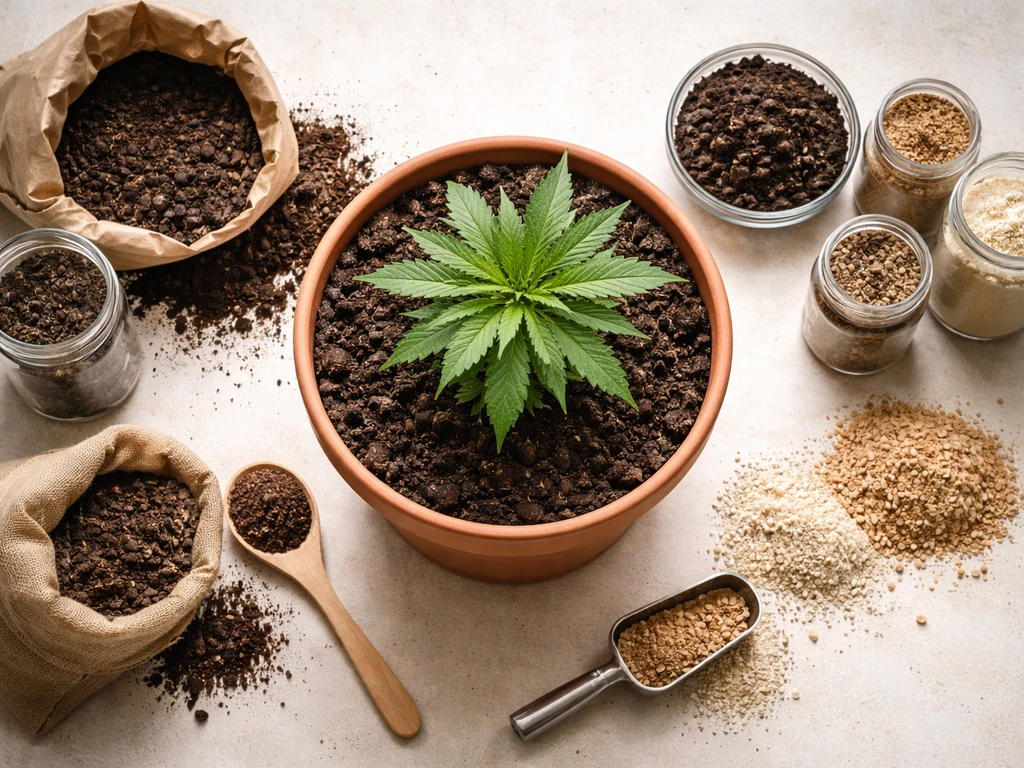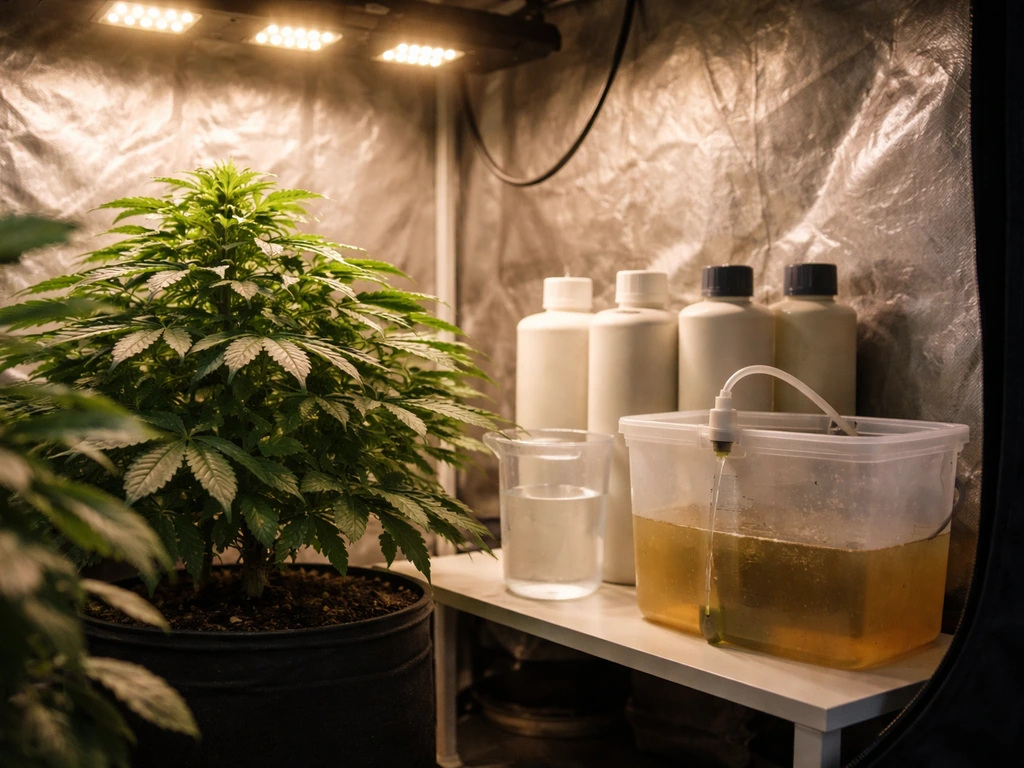
The best cannabis grow nutrients for your setup depend on three things: your medium (soil, coco, or hydro), your feeding style (bottled salts, multi-part systems, or organics), and your growth stage. There is no single universal "best" product, but there are clear winners for each approach, and once you understand the fundamentals of what cannabis actually needs at each stage, picking a nutrient line and dialing it in becomes straightforward. This guide walks you through exactly that, from the basics of N-P-K to stage-by-stage EC targets, medium-specific schedules, and fast troubleshooting for the most common problems.
Best Cannabis Grow Nutrients Guide: Pick, Mix, and Dial In

Marcus Holloway
19 May 2026
What "best" actually means for cannabis nutrients
"Best cannabis grow nutrients" means different things depending on where you are in the grow and what you are growing in. A two-part salt-based system that works brilliantly in a deep water culture reservoir can cause all kinds of grief in a living soil pot. A compost tea that feeds a photoperiod indica beautifully over 12 weeks might not provide enough soluble nitrogen fast enough for a fast-finishing autoflower in coco. So before you commit to any nutrient line, you need to nail down your medium, your feeding method, and your strain type.
Growth stage matters just as much as medium. Cannabis has three nutritional phases that require meaningfully different inputs: the seedling/early rooting stage (low everything, no salt burn tolerance), the vegetative stage (nitrogen-dominant, building structure), and the flowering stage (phosphorus and potassium rise, nitrogen tapers, calcium and magnesium stay critical throughout). Autoflowers compress this timeline, so you are making smaller adjustments more quickly. Photoperiods give you more room to correct mistakes. Any nutrient system worth using will have a published feed chart that maps these stages clearly.
Nutrient ingredient basics: what's actually in the bottle
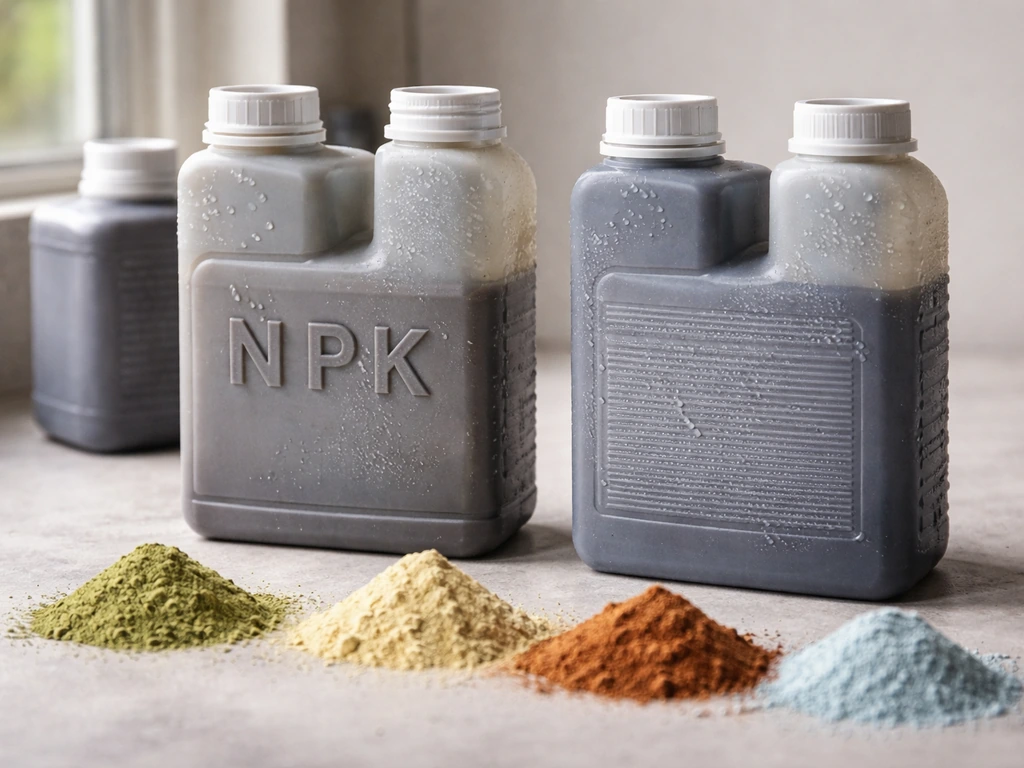
Macronutrients: N-P-K
Nitrogen (N), phosphorus (P), and potassium (K) are the primary macronutrients listed on every nutrient label in that order. Nitrogen drives vegetative growth and chlorophyll production. Phosphorus supports root development and, critically, flower and seed production. Potassium regulates water movement, enzyme activity, and overall plant vigor. You will typically see a high N ratio in veg nutrients (something like 3-1-2) and a low N, high P-K ratio in bloom nutrients (something like 1-3-2). Secondary macronutrients, calcium (Ca) and magnesium (Mg), are often sold separately as a cal-mag supplement and are especially critical in coco and hydro grows where the medium provides no buffering.
Micronutrients and trace elements
Iron, manganese, zinc, copper, boron, molybdenum, and chlorine are the key micronutrients. They are needed in tiny amounts but deficiencies show up fast, typically as interveinal chlorosis (yellowing between leaf veins) or odd spotting patterns. Most complete nutrient lines include micronutrients in the formula, but in heavily recirculating hydro systems, specific micros can get locked out or depleted unevenly over time. This is one reason experienced hydro growers change their reservoir on a schedule rather than just topping off indefinitely.
Salt-based vs. organic nutrition
Synthetic salt-based nutrients (like General Hydroponics FloraSeries or Advanced Nutrients Sensi) dissolve fully in water and are immediately plant-available. You have precise control over EC and ratios, which is why they dominate hydro and coco grows. Organic nutrients work through microbial breakdown in the medium, which means they are slower to act but naturally buffered, making them much more forgiving in living soil.
If you are growing in indoor soil, the best organic nutrients focus on balanced N-P-K plus helpful microbial inputs that can slowly mineralize in your potting mix best organic nutrients for indoor soil grow. Compost teas, dry amendments, and organic liquid concentrates fall into this category. For beginners in soil, organics are genuinely easier because the biology handles a lot of the regulation. For hydro or coco, stick with water-soluble salts.
Running organic teas through a hydro reservoir is a fast track to clogged drippers and root zone issues.
pH and EC: the two numbers that run your grow
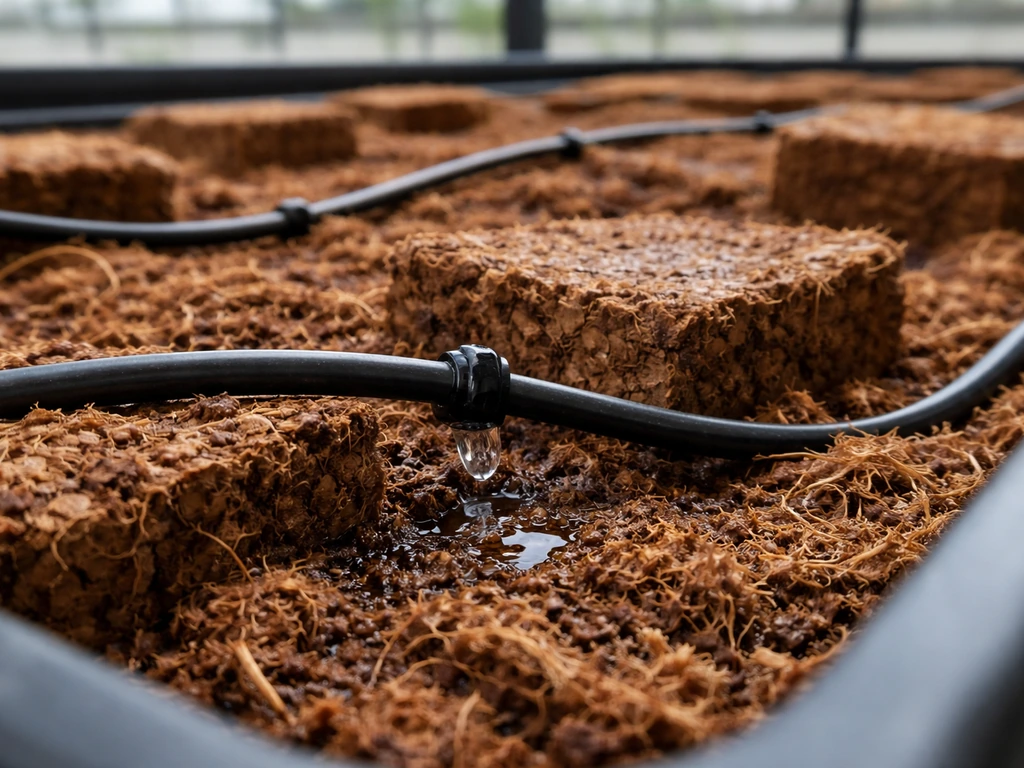
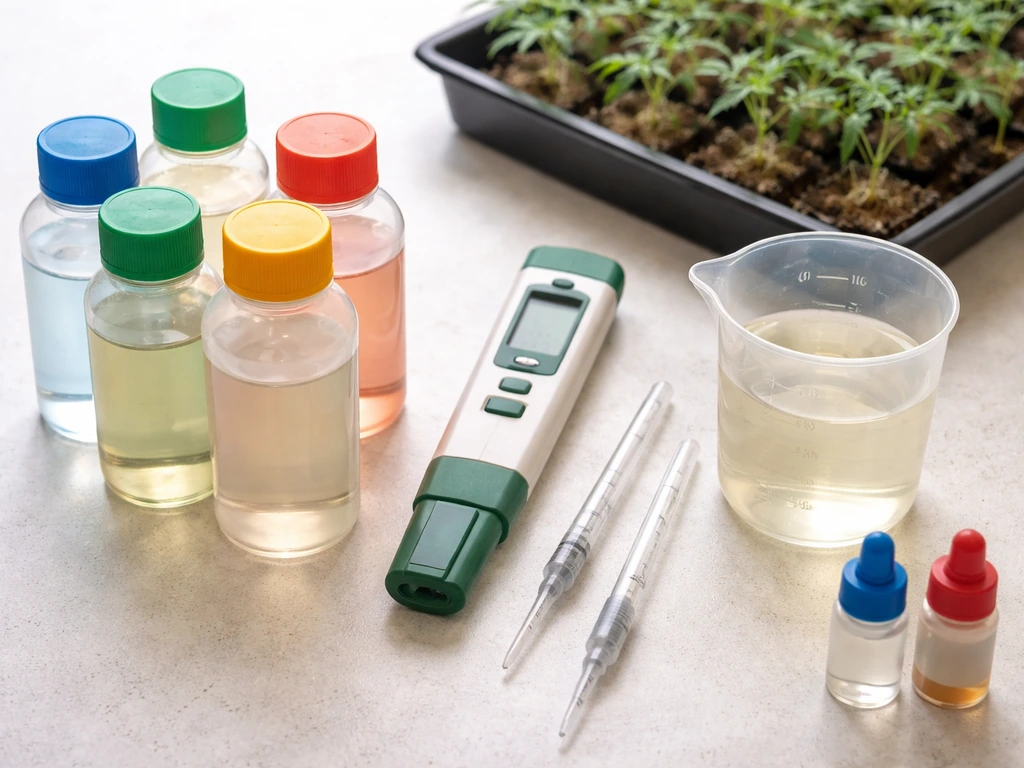
pH determines whether the nutrients you are adding are actually available for uptake. Cannabis has a specific pH window for each medium, and running outside that window causes lockout even when nutrients are physically present in the solution. EC (electrical conductivity, measured in mS/cm) tells you the total dissolved salt concentration in your solution, which is a proxy for nutrient strength. PPM (parts per million) is the same concept expressed differently; multiply EC by 500 or 700 depending on your meter's conversion factor. As OSU Extension research on hydroponics confirms, maintaining pH and EC within target ranges is the single most impactful thing you can do for nutrient availability and uptake.
| Medium | Target pH Range | Seedling EC | Veg EC | Flower EC |
|---|---|---|---|---|
| Soil | 6.0–7.0 | 0.4–0.8 | 1.2–1.8 | 1.8–2.4 |
| Coco Coir | 5.8–6.2 | 0.4–0.8 | 1.2–1.6 | 1.6–2.2 |
| Hydroponics (DWC/NFT/Ebb-Flow) | 5.5–6.1 | 0.6–0.8 | 1.3–1.7 | 1.7–2.5 |
Top nutrient lines and how to pick the right one
There are dozens of nutrient brands competing for your attention, but the ones that consistently deliver real-world results come down to a short list. Here is how the most popular lines compare and when each makes sense.
| Nutrient Line | Best For | System Complexity | pH Management | Cost Per Crop | Notes |
|---|---|---|---|---|---|
| General Hydroponics FloraSeries | Hydro, coco, soil | 3-part (Flora Gro/Micro/Bloom) | Manual pH adjustment required | Low-moderate | Industry standard, excellent feed charts, works across all media |
| Advanced Nutrients pH Perfect Sensi | Hydro, coco | 2-part base + additives | Auto pH-balancing in range | Moderate-high | Great for beginners who want one less variable; coco-specific Sensi Coco line available |
| Canna (Canna Coco, Terra, Aqua) | Coco, soil, recirculating hydro | 2-part base + additives | Manual pH adjustment required | Moderate | Coco-specific formula widely trusted; media-matched lines reduce guesswork |
| Fox Farm Trio (Grow Big, Big Bloom, Tiger Bloom) | Soil primarily | 3-part system | Manual pH adjustment required | Low-moderate | Beginner-friendly, widely available, works well in amended soil |
| Athena (Blended, Pro, Stack) | Commercial/pro hydro and coco | 1-2 part blended or pro system | Manual pH adjustment required | Moderate | Growing rapidly in popularity; clean formulas, easy mixing |
| BuildASoil / Down to Earth (dry amendments) | Living soil, outdoor | Top-dress/water-only | Buffered by biology | Very low per crop | Best for growers who want to avoid liquid feeding entirely |
If you are new to growing and using soil, start with Fox Farm Trio or a single-brand organic system. If you are running coco or hydro, General Hydroponics FloraSeries gives you excellent stage control and detailed feed charts at a low cost per crop. Advanced Nutrients pH Perfect is worth the premium if managing pH manually feels overwhelming, since it auto-buffers in the 5.5–6.5 range. Canna Coco is the go-to for recirculating coco systems. For serious indoor soil grows, the topic of organic nutrient lines is worth its own deep dive. There are also strong regional options for UK growers, including Plagron and Shogun, which are worth exploring if you are in that market.
Soil vs. coco vs. hydro: nutrient strategies that actually work
Soil
Soil is the most forgiving medium because it buffers both pH and nutrients. A quality pre-amended soil like Fox Farm Ocean Forest or similar carries a seedling for 3–4 weeks without any added nutrients at all. The best grow nutrients depend on how long your initial soil mix can carry the seedlings without extra feeding. Once you start feeding, keep EC lower than you would in coco or hydro (start around 1.
0–1. 2 in veg) and maintain pH between 6. 0 and 7. 0.
Water to runoff periodically to prevent salt buildup, and check runoff EC as a signal of what is happening in the root zone. In soil, organic inputs (compost teas, dry top-dresses) work because the microbiology is present to process them. In the UK, many growers fine-tune soil feeding with lower EC pre-made nutrient mixes and balanced compost teas based on plant response best nutrients for soil grow uk.
Coco coir
Coco is technically a hydroponic medium in the sense that it holds almost no nutrients of its own and has a strong cation exchange capacity that pulls calcium and magnesium out of your solution. Before you use any coco, pre-buffer it by soaking it in a calcium-magnesium solution targeting around 150–250 ppm Ca/Mg at pH 5. 8–6. 2 for 8–24 hours.
This step is non-negotiable; skipping it causes cal-mag deficiencies in the first two weeks of the grow. Feed pH should stay in the 5. 8–6. 2 range.
Coco performs best with frequent watering (daily or multiple times daily in larger containers) with some runoff each time. For the best nutrients for coco coir grow, keep feeding pH locked to the coco window and match EC to your plant stage so the nutrients stay available for uptake. Because there is no soil buffer, your EC and pH inputs have a direct, fast effect on the plant.
Hydroponics (DWC, NFT, ebb-and-flow)
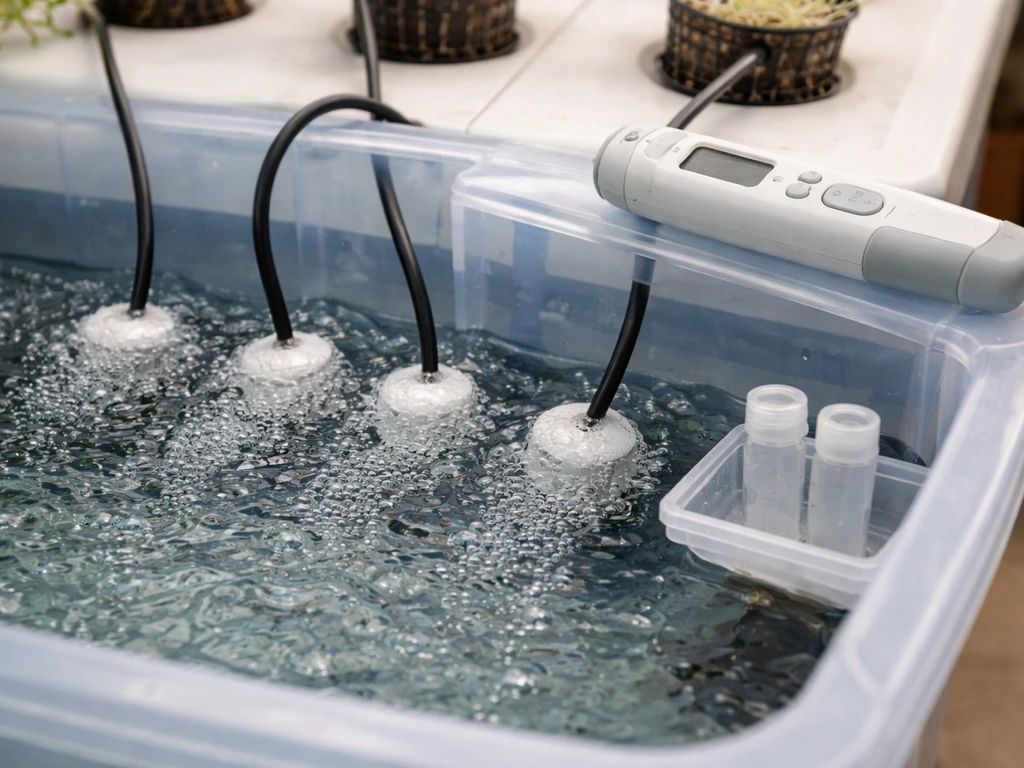
In a true hydro system, the nutrient solution in the reservoir is what the roots are living in, so precision matters more than in any other medium. Maintain reservoir pH at 5. 5–6. 1 and check it at least once daily in recirculating systems, because pH drifts as plants consume nutrients differentially.
Change your reservoir partially or fully on a 7–10 day schedule rather than topping off indefinitely, since specific nutrient ratios shift as plants uptake selectively. Use an EC meter to verify concentration after every top-off. Run water-soluble, fully dissolvable salt-based nutrients only. The GH FloraSeries weekly feed chart is one of the most referenced in the industry for good reason: it gives you clear EC targets at every stage from seedling (0.
6–0. 8 mS/cm) through peak flower (up to 2. 0–2. 5 mS/cm) and back down toward harvest.
Feed charts by growth stage: real numbers to work from
These targets are starting points calibrated against published manufacturer data and real-grow experience. Always adjust based on how your plants respond, not just what the chart says. A plant showing minor tip burn needs less feed. A plant showing pale lower leaves mid-veg probably needs more nitrogen.
Seedling and early rooting stage (weeks 1–2)
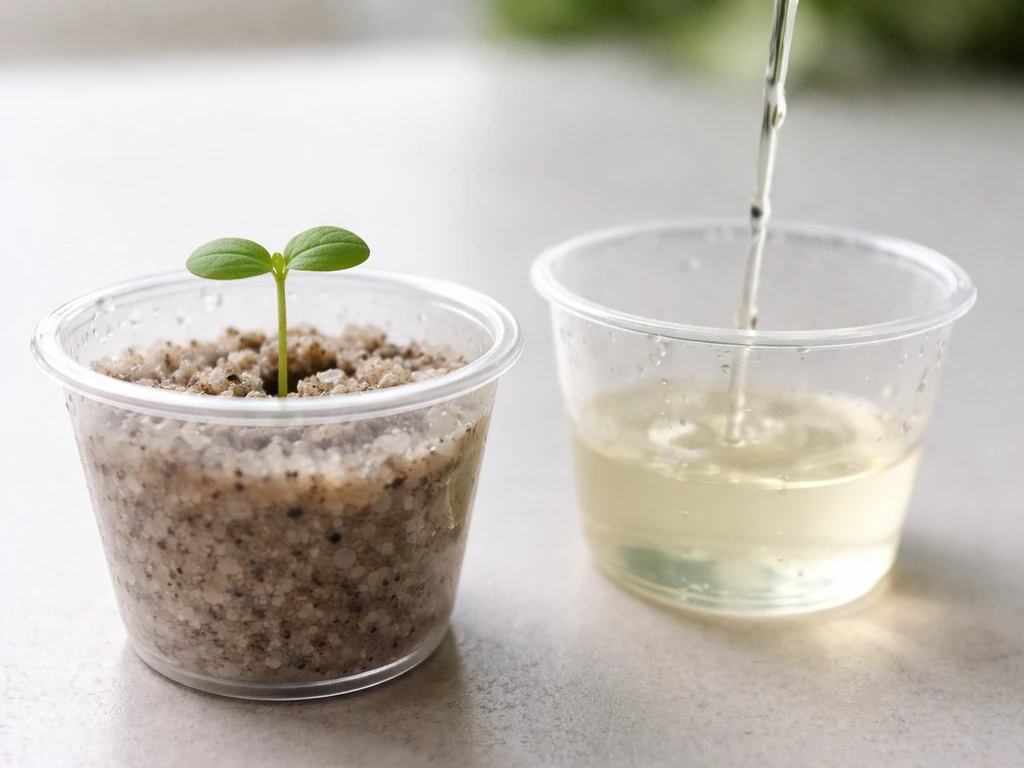
- EC target: 0.4–0.8 mS/cm (very light; seedlings are extremely salt-sensitive)
- pH: 6.0–6.5 in soil, 5.8–6.1 in coco/hydro
- Nutrients: plain pH-adjusted water or very diluted seedling formula (25% of veg dose)
- No heavy additives, no bloom boosters, no silica at full dose at this stage
- Water only when the medium is partially dry; overwatering kills more seedlings than underfeeding
Vegetative stage (weeks 3–8 for photoperiods, weeks 2–4 for autos)
- Early veg EC: 1.2–1.4 mS/cm (soil), 1.2–1.4 mS/cm (coco/hydro)
- Late veg EC: 1.4–1.8 mS/cm (soil), 1.4–1.6 mS/cm (coco/hydro)
- pH: 6.0–7.0 soil, 5.8–6.1 coco, 5.5–6.1 hydro
- Prioritize nitrogen (N-heavy formula), with cal-mag supplement in coco and hydro at 150–200 ppm
- Example GH FloraSeries early veg dose (per gallon): FloraGro 2.5 ml, FloraMicro 1.25 ml, FloraBloom 0.5 ml, adjust to hit target EC
- Feed to 10–15% runoff in coco; in hydro, confirm EC after mixing before introducing to reservoir
Early to mid flower (weeks 1–4 of 12/12 or bloom trigger)
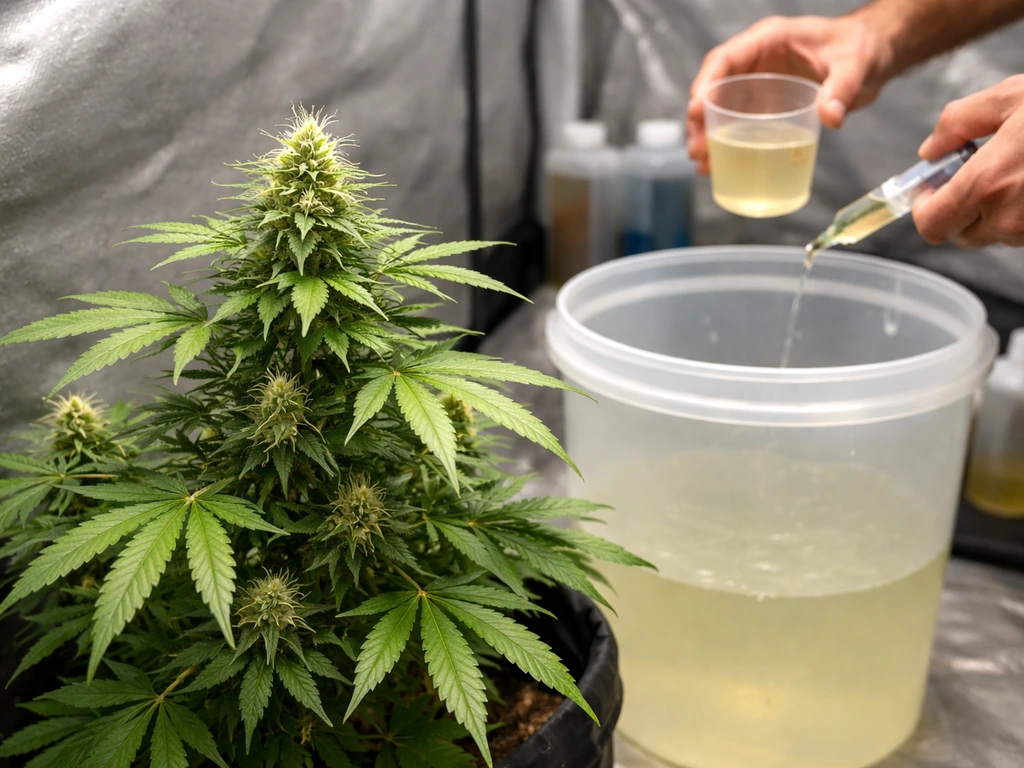
- EC target: 1.7–2.1 mS/cm across media (dial down slightly in coco vs. hydro)
- Transition from N-dominant to balanced or P-K-dominant formula
- Introduce bloom boosters (P-K additives) if using; keep cal-mag running at same rate
- Week 2–3 of flower is the stretch phase: nitrogen can remain slightly elevated until stretch slows
- Watch pistils and resin development as visual cues; heavy resin production starting means P-K is being used
- Advanced Nutrients recommends 1200–1400 ppm range for soil, peat, and coco at peak flower
Mid to late flower and pre-harvest (weeks 5 through final week)
- Mid flower EC: 2.0–2.5 mS/cm (hydro peak), 1.8–2.2 mS/cm (coco), 1.8–2.4 mS/cm (soil)
- Drop EC back to 1.3–1.6 mS/cm in the final 1–2 weeks as the plant enters senescence (natural fade)
- Cut nitrogen to near zero in final 2 weeks; most plants show natural yellowing (the fade) which is normal
- Flush debate: in coco and hydro, running plain pH-adjusted water for the final 7–14 days is common practice; in well-amended living soil it is largely unnecessary
- Stop all additives except plain water or a light flush solution in final week
- Trichome color (clear to cloudy to amber under a loupe) is your harvest trigger, not the calendar
Common mistakes and how to troubleshoot them fast
Nutrient lockout

Lockout happens when nutrients are present in the medium but the plant cannot absorb them, usually because pH is outside the uptake window. The symptoms look identical to deficiencies, which is why the first step in any troubleshooting session is to check and correct your pH, not add more nutrients. If your runoff pH is significantly different from your feed pH (more than 0.5 units), you have a pH problem in the root zone. Fix it by flushing with pH-corrected water at your target pH and then resume feeding at a slightly lower EC.
Deficiency vs. toxicity: telling them apart
Deficiencies typically show up as yellowing (nitrogen), interveinal chlorosis (iron, magnesium), or browning edges and tips (potassium, calcium). They usually start on older lower leaves for mobile nutrients (N, P, K, Mg) or on new growth for immobile nutrients (Ca, Fe, Mn). Toxicities show up as tip burn, dark green or clawing leaves (nitrogen toxicity), or strange spotting and leaf curl. The most common toxicity among home growers is nitrogen burn from overfeeding: the tips turn yellow and crispy first, then the issue progresses inward if uncorrected. Reduce EC by 20–30% and check runoff values before reintroducing nutrients at the corrected rate.
pH drift in hydro
In a recirculating hydro system, pH naturally drifts up as plants consume acidic anions (nitrate, phosphate) and up or down depending on which nutrients are being depleted. A pH that rises consistently over 24 hours is normal during active veg growth. A sudden large swing or pH that crashes downward can indicate root zone issues or microbial activity. Check pH daily, correct with pH Up or pH Down in small increments, and do not chase extreme swings with large corrections: you will overshoot and stress the root zone. If drift is severe and consistent, a partial reservoir change (30–50%) and fresh mix usually resets stability faster than chasing it with pH adjusters.
Overfeeding and EC creep
EC creep happens in soil and coco when you feed without enough runoff or when you consistently feed at higher EC than the plant is consuming. Salt builds up in the root zone, raises effective EC above what you are measuring in the feed solution, and causes lockout symptoms. The fix is a thorough flush: run 2–3 times the pot volume in pH-corrected water and collect runoff EC readings as you go. When runoff EC drops to near your target feed EC, you have cleared the buildup. Then resume feeding at a lower concentration and water to runoff every session.
Quick deficiency reference
| Nutrient | Deficiency Signs | Toxicity Signs | First Step to Fix |
|---|---|---|---|
| Nitrogen (N) | Yellowing from lower/older leaves upward | Dark green leaves, clawing, tip burn | Adjust EC up/down; check pH first |
| Phosphorus (P) | Purple stems, dark leaves, slow growth | Rare; can lock out zinc/iron | Confirm pH is in range; adjust feed ratio |
| Potassium (K) | Brown leaf edges, especially on older growth | Blocks Ca and Mg uptake | Check pH; increase K in bloom formula |
| Calcium (Ca) | Brown spots on new growth, curled tips | Blocks K and Mg | Add cal-mag; check pH 6.2–7.0 in soil |
| Magnesium (Mg) | Interveinal chlorosis on older leaves | Rare | Foliar or root dose of Epsom salt / cal-mag |
| Iron (Fe) | Interveinal chlorosis on NEW growth | Rare | Lower pH slightly; pH >7.0 locks out iron fast |
How to dial in your nutrients fast
Most growers who struggle with nutrients are either skipping measurements entirely or measuring inconsistently. Here is the workflow I follow from day one of a grow, and it removes almost all guesswork.
- Get a decent pH and EC pen and calibrate both before every grow cycle. A $30 bluelab or Apera pH pen calibrated with fresh solution is far more reliable than a cheap combo meter used out of the box.
- Mix nutrients in the correct order to prevent precipitation. The Advanced Nutrients Sensi Coco chart recommends: silica first (if using), then cal-mag, then additives, then your base nutrients, then pH adjust, then beneficial microorganisms last if any. Always add each component to water, never mix concentrates together directly.
- Check EC immediately after mixing. If it reads higher than your target, dilute with plain water. If lower, add more base at ratio. Do not chase with individual parts unless you have a specific reason.
- Adjust pH after all nutrients are added, since adding nutrients changes pH. Use pH Down (phosphoric acid) or pH Up (potassium hydroxide) in small drops; stir and recheck.
- Water to runoff (10–15% of volume) in every coco and soil feeding session. Collect a small sample of runoff and check its EC and pH. Runoff EC significantly higher than your feed EC means salt buildup. Runoff pH significantly different from your feed means root zone drift.
- Log your data. Even a simple notebook entry of date, feed EC, feed pH, runoff EC, runoff pH, and plant observations will show you trends before they become problems.
- Use a free online nutrient calculator or the manufacturer's feed chart as your starting point, then adjust by 10–20% increments based on plant response, not by guessing.
- Reassess at every stage transition (end of seedling, start of stretch, start of peak flower, final 2 weeks). Do not just keep feeding the same solution across stages.
Safety, legality, and storing your nutrients properly
Handling and PPE
Concentrated nutrient solutions, pH adjusters, and cleaning products used in grow spaces are chemicals that deserve basic respect. pH Down (phosphoric or sulfuric acid) and pH Up (potassium hydroxide) can cause skin and eye irritation and should be handled with nitrile gloves and safety glasses. When mixing concentrated nutrients, work in a ventilated space.
Oregon OSHA's guidance for cannabis growers specifically highlights the importance of PPE hazard assessments covering chemical toxicity, proper handling, fire safety for flammable liquids, and spill response, which applies directly to grow room operations. Read the Safety Data Sheet (SDS) for any product you use regularly; most manufacturers include them on their websites.
OSHA's Hazard Communication standards require that hazard information be accessible for any chemical in a workspace, including a home grow operation.
Storage
- Store liquid nutrients in a cool, dark location away from direct sunlight; heat degrades organic additives and can cause salt precipitation in concentrates
- Keep pH Up and pH Down stored separately and away from each other and from flammable materials; they are corrosive in concentrated form
- Never store mixed nutrient solution for more than 24–48 hours in warm conditions; it can go anaerobic and develop microbial issues, especially if it contains organic additives
- Label all containers clearly, especially if you decant from larger jugs into smaller mixing containers
- Keep all nutrients out of reach of children and pets
Legal context for home growers
The nutrients themselves are legal to purchase and use anywhere. The legality of cultivating cannabis varies significantly by country, state, and municipality. In many US states where home cultivation is legal, regulations typically limit plant counts (commonly 6 plants per adult, or 3–6 mature per household depending on jurisdiction). Check your local laws before starting a grow, and comply with any licensing or registration requirements that apply in your area. Growing within legal limits does not change how you use nutrients, but it does determine the scale of operation you can run without legal risk.
Disposal
Spent nutrient solution from reservoirs or flush runoff should not be dumped in large quantities into municipal drains, particularly if it contains high salt concentrations or organic matter. Dilute heavily before disposal, or use it on non-edible outdoor plants where legal and appropriate. Check local water authority guidelines for nutrient solution disposal if you are running a larger operation.
FAQ
How long should I wait after adjusting EC or pH before changing anything else?
For hydro and recirculating coco, base your changes on both pH and EC trends, change one variable at a time (usually EC first), and wait 12 to 24 hours to confirm the plant responds. If you change pH and EC on the same day, you will not know which correction actually fixed (or worsened) lockout symptoms.
What do different runoff EC readings in soil or coco mean?
If your runoff EC is consistently higher than your feed EC, it usually points to salt buildup or insufficient leaching (too little runoff, oversized container, or feeding too frequently). If runoff EC is consistently lower, you may be underfeeding or the plant is consuming faster than you are replenishing salts, so verify that your feed chart stage and water volume are aligned.
Why does nutrient performance change when my water temperature changes?
Do not rely on “new” water temperature alone. If your reservoir or mix is cold, nutrient uptake can slow down and pH drift can become more erratic. Aim for stable room and reservoir temperatures, and always recheck pH after major temperature changes (like moving indoors or after lights-on/off shifts).
If I forgot to pre-buffer coco, can I fix it later?
Pre-buffering coco is necessary because coco’s cation exchange draws Ca and Mg early. If you skip it, the problem often looks like a deficiency for both nutrients, but even after correcting with cal-mag you may see delayed recovery. In that case, reduce EC by about 10 to 20% for a few days while you re-stabilize calcium and magnesium availability.
Should I worry about chlorine levels if my water source is chlorinated?
Chlorine is one micronutrient on paper, but in practice most growers should focus on disinfecting and dechlorinating water rather than adding micronutrients blindly. If your municipal water is chlorinated, let it sit or use an appropriate dechlorination step, then start with your normal nutrient program and watch for unexpected spotting.
What is the correct way to mix two-part bottled nutrients to avoid precipitation?
When you mix two-part products, follow the order and add slowly to reduce precipitation risk (especially with calcium and phosphates). A common mistake is adding all bottles at once or swapping order between products. Use your specific label sequence and mix thoroughly before adding pH corrections.
My plant looks deficient but EC is not low, what should I check first?
If your plants show deficiency symptoms while your EC is already high, treat it as likely lockout rather than underfeeding. First confirm pH in the feed solution and in runoff (or reservoir), then correct back into the medium’s window and only reduce EC moderately. Adding more nutrients during lockout can worsen toxicity because salts accumulate.
What should I do if my reservoir pH keeps drifting no matter how often I adjust it?
If pH keeps drifting in one direction, look for depletion imbalance or reservoir biology. In true hydro, severe, persistent drift is more reliably fixed by a partial reservoir change (30 to 50%) and a fresh mix than by repeated aggressive pH corrections. After the change, recheck pH and EC at the same time each day to see if stability improves.
Why do organic nutrients seem to hit later than bottled salts, and how do I avoid overdoing it?
For organics in soil, top-dressing and teas can cause “slow burn” if you add too much too early, especially once the soil warms. Start lower than you think you need, keep notes on timing and symptoms, and expect changes to show over several days, not hours, because microbial processing drives availability.
How do I tell nutrient deficiency from root health problems?
If you are seeing widespread yellowing in the middle of the plant at the same time, that can be more than nitrogen, it can be general root stress (overwatering, poor drainage, or oxygen issues) plus nutrient availability problems. Before changing nutrient ratios, verify drainage, root color, and oxygenation in hydro, and check pH stability first.
What measurement habits make nutrient troubleshooting more accurate?
A good target is to measure consistently from the same part of the system: feed solution before application, runoff from the root zone (not just a surface dribble), and reservoir pH/EC at a consistent time daily. Using different collection timing, like measuring runoff right after a drip starts, can distort what the plant is actually experiencing.
How can I reduce how often I have to adjust nutrients without harming plants?
Chemically, salt-based programs often require tighter monitoring, but you can still reduce workload by using a pH-stabilizing approach (like automating or carefully maintaining dosing) and by scheduling reservoir changes rather than topping off indefinitely. In soil, the most effective simplification is using a pre-amended mix long enough that you delay nutrient starts until the plant actually needs them.