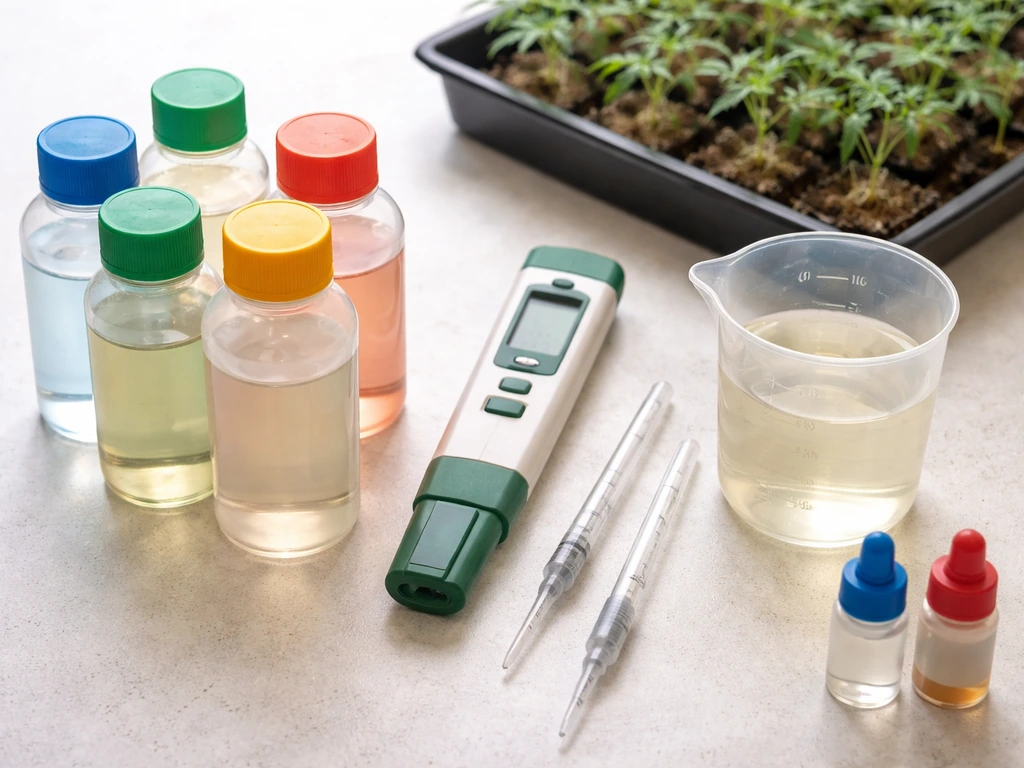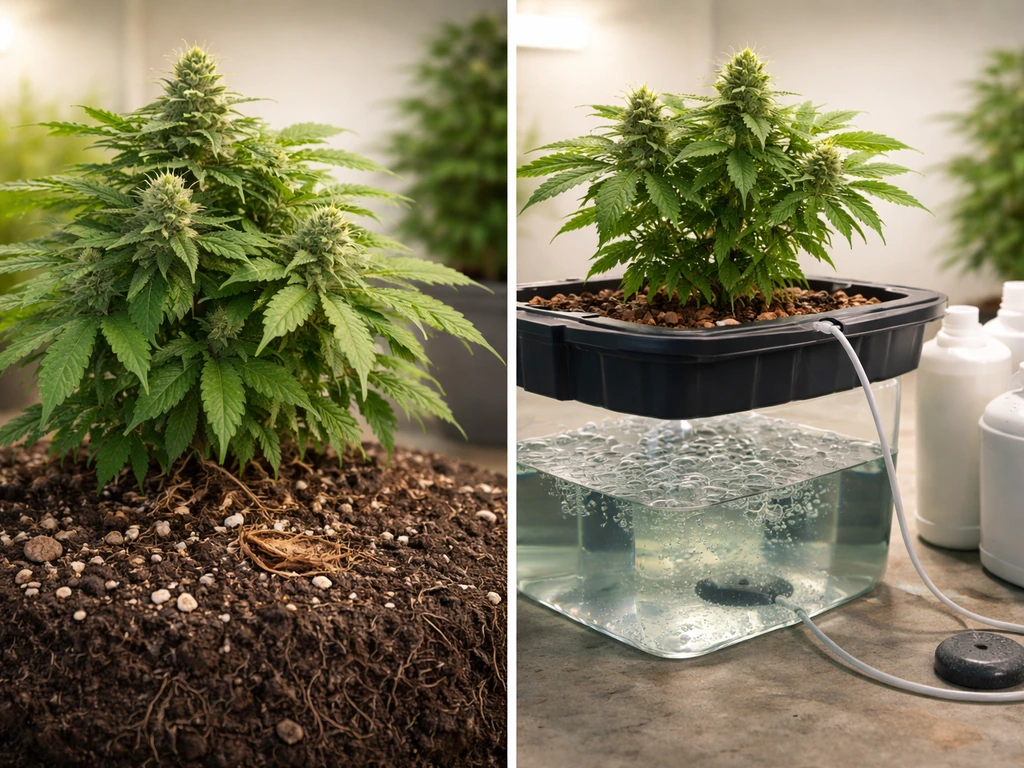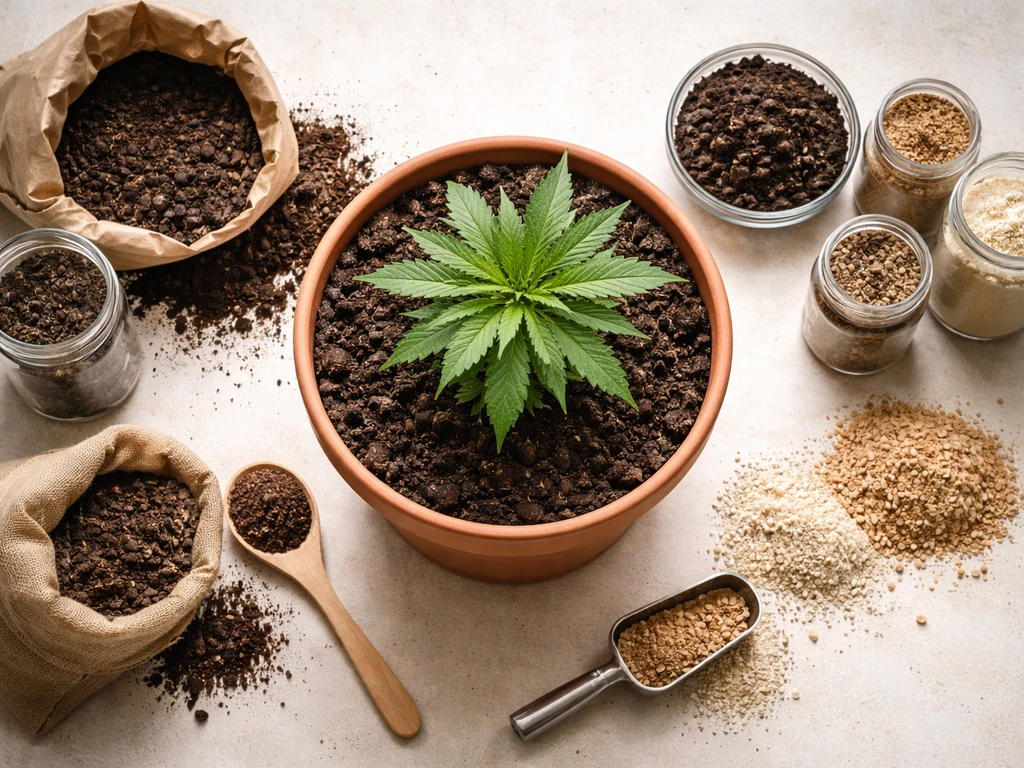
The best nutrients for coco coir are a dedicated coco-specific two-part base (like CANNA Coco A+B or Plagron Cocos A+B), a quality CalMag supplement, and pH correction tools to keep your solution between 5.5 and 6.2. That combination covers coco's biggest quirk: unlike soil, coco provides zero nutrients of its own and actively swaps ions in its root zone, meaning calcium and magnesium get robbed unless you stay on top of both buffering and feeding from day one.
Best Nutrients for Coco Coir Grow: Dosing, pH, EC Guide

Marcus Holloway
29 May 2026
Why coco coir needs different nutrient management
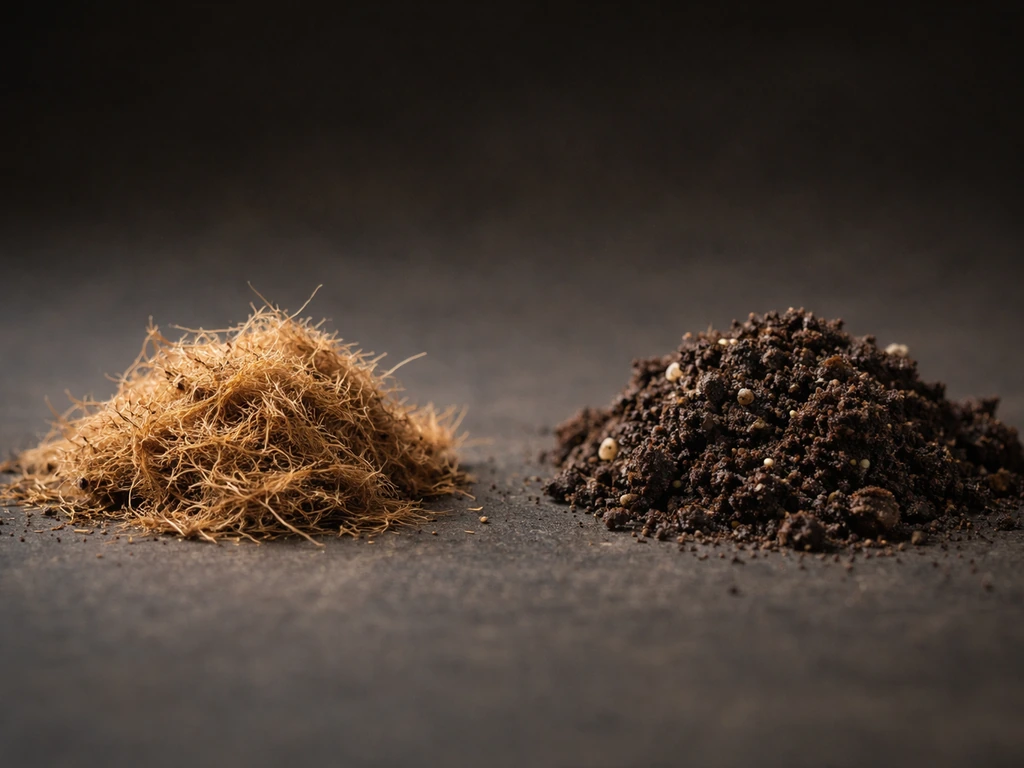
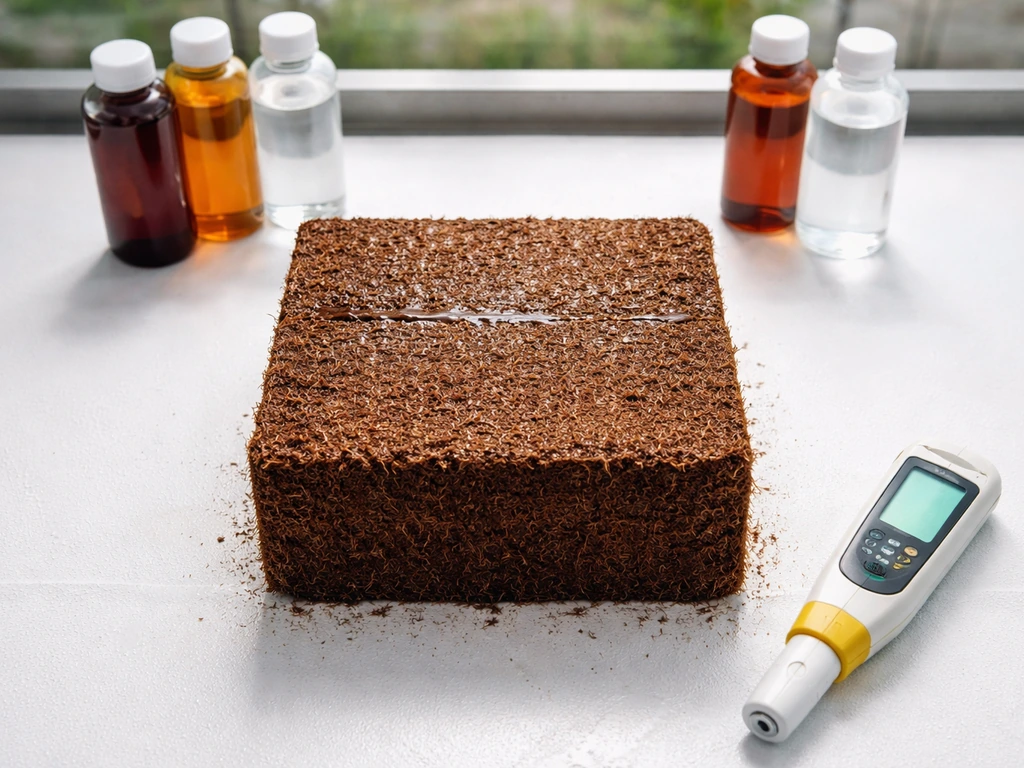
Coco coir looks inert, but it behaves more like an active ion exchanger than a passive medium. It has a high cation exchange capacity (CEC), which means it grabs positively charged ions from your nutrient solution and releases others in return. Raw or poorly prepared coco releases sodium and potassium while binding calcium and magnesium. The plant then shows Ca/Mg deficiency symptoms even though you fed it, which is one of the most frustrating problems in coco and almost always traces back to this chemistry, not a bad nutrient product.
Compare that to soil: a living soil holds a nutrient buffer, releases minerals slowly, and has microbial activity to fill in gaps. Coco has almost none of that. Every nutrient the plant gets has to come from you, every single irrigation. There is no reservoir of stored minerals to bail you out if you skip a feed or dilute too far. That is why coco growers run nutrients with every watering rather than plain-water days, and why pH and EC discipline matters so much more than it does in soil.
The fix for the ion-swap problem is buffering coco before you plant. Buffering means saturating the cation exchange sites with calcium (typically using calcium nitrate) so there are no hungry exchange sites left to steal Ca/Mg from your feed. A practical ratio is roughly 2 g of calcium and 0.5 g of magnesium per 100 g of dry coco. Many commercial coco products come pre-buffered, which is worth the extra cost because it removes a major variable from your first few weeks. If you are buying unbuffered coco, do not assume a plain water rinse is enough. A water rinse washes out loose salts but does not condition the exchange sites.
Choosing the best nutrient components for coco
Base nutrients: macros and the two-part system
A two-part base nutrient designed specifically for coco is the most reliable starting point. Products like CANNA Coco A+B and Plagron Cocos A+B are formulated with the ion-exchange behavior of coco in mind. They contain elevated calcium and adjusted potassium levels compared to standard hydro nutrients. CANNA's recommended dilution is 40 ml of Part A and 40 ml of Part B per 10 liters (a 1:25 ratio), which gives you a working EC before any additives.
General-purpose hydroponic base nutrients can work in coco, but you will spend more time correcting Ca/Mg and potassium imbalances than you would with a coco-specific formula. Using the right nutrients for indoor coco is all about matching a coco-specific base and the correct CalMag and pH/EC targets to your water and grow stage coco-specific formula.
If you want to compare your base nutrient options at a glance, here is how the common coco-focused systems stack up:
| Nutrient Line | Format | pH Range Recommended | Notes |
|---|---|---|---|
| CANNA Coco A+B | Two-part liquid | 5.5–6.2 | Industry standard for coco; wide availability; requires soft/hard water version selection |
| Plagron Cocos A+B | Two-part liquid | 5.5–6.5 | Slightly wider pH window; good published feed schedule with EC by week |
| Atami Bcuzz Coco | Two-part liquid | 5.5–6.0 | Detailed starter dosing tables; EC range 1.2–2.8 across stages |
| General Hydroponics Flora Series | Three-part liquid | 5.5–6.2 | Not coco-specific; flexible but requires more CalMag supplementation |
| Hesi Coco | Two-part liquid | 5.5–6.5 | Budget-friendly; popular in EU markets; includes some CalMag in formula |
Calcium and magnesium: the non-negotiable coco additive
Even with a coco-specific base nutrient, most growers need a dedicated CalMag supplement, especially in the first few weeks after transplant and in soft-water areas. Calcium competes with sodium and potassium for exchange sites in the root zone, so keeping calcium elevated in your feed helps crowd out the salts that coco naturally releases. Magnesium is the central atom in chlorophyll, so deficiency shows up fast as interveinal yellowing. A product like CANNA CalMag Agent works well here. The workflow for soft water is to start by building your solution EC to around 0.4 using CalMag before adding your base nutrients, which stabilizes pH and improves water hardness before the main feed is mixed.
Micronutrients and optional additives
Most coco-specific two-part bases include a micronutrient package covering iron, manganese, zinc, copper, boron, and molybdenum. Where growers run into micronutrient problems in coco, pH is almost always the cause rather than a missing element. Drip Canopy notes that iron, manganese, and zinc become unavailable above pH around 6. 5, which is why pH matters for micronutrient availability in coco [pH is almost always the cause rather than a missing element](https://dripcanopy.
com/hydroponic-ph-and-ec-guide-for-beginners). Iron, manganese, and zinc become unavailable above pH 6. 5, so keeping your solution in the 5. 5–6.
2 window handles most micro lockout issues without adding separate chelated micro products. If you are running a general hydro base not formulated for coco, adding a chelated micro supplement is worth considering. Silica products are popular in coco grows for stem strength and stress tolerance but should be added to plain water first and before any other nutrients, since silica raises pH sharply.
pH and EC targets for coco (and how to maintain them)
The consensus pH target for coco is 5.5–6.2, with a sweet spot around 5.8–6.0 for everyday feeding. Some brands like Plagron give a slightly wider range of 5.5–6.5, but staying below 6.5 is important because micronutrient availability drops sharply above that point. If you want one number to aim for as a beginner, shoot for 5.9. You will hit the nutrient availability window for both macros and micros, and minor day-to-day drift in either direction stays within a safe range.
EC targets vary more by growth stage, but here are the practical ranges used by the main coco brands: Atami's Bcuzz Coco guide uses 1.2–2.8 mS/cm across the full grow. CANNA's A+B directions list 0.8–1.8 mS/cm for the base nutrient alone, with total solution EC (including water EC) typically running 1.2–2.3 mS/cm. Plagron's coco schedule starts at EC 1.3 in week 1 and steps up weekly, reaching around 2.5 by week 6 onward. A general working guide by stage is: seedlings 0.8–1.2, early veg 1.2–1.6, peak veg and early flower 1.6–2.2, and peak flower 2.0–2.5, tapering off in the final flush window.
For pH correction, phosphoric acid-based pH Down (such as the General Hydroponics version) is the standard for lowering solution pH in coco. Potassium hydroxide-based pH Up handles the other direction. Always adjust pH after mixing all nutrients, never before, because each nutrient component shifts pH differently and you will chase a number that changes once you add your feed. Monitor runoff pH and EC every few waterings: if runoff EC is climbing well above your input EC, salts are building up in the medium and a flush or lower-EC feed is needed.
Feeding schedule by growth stage
Coco rewards a methodical stage-by-stage approach more than almost any other medium because there is no nutrient reserve to cover mistakes. If you want the best organic nutrients for indoor soil grow, start with nutrients that match your medium and watch how they affect your pH and EC over time. Here is a practical week-by-week framework based on the Plagron and Atami published schedules, adapted for cannabis cultivation:
| Stage | Weeks (Approx.) | Target EC (mS/cm) | Target pH | Key Focus |
|---|---|---|---|---|
| Seedling/Cloning | Weeks 1–2 | 0.8–1.2 | 5.8–6.0 | Very low nutrient load; CalMag included; no heavy base feed yet |
| Early Veg | Weeks 3–4 | 1.2–1.6 | 5.8–6.0 | Ramp up base nutrients; maintain Ca/Mg; establish root zone |
| Peak Veg | Weeks 5–6 | 1.6–2.0 | 5.8–6.2 | High nitrogen phase; monitor runoff EC; increase frequency |
| Transition/Pre-flower | Week 7 | 1.8–2.1 | 5.8–6.2 | Shift N:P:K toward bloom; reduce nitrogen; keep CalMag |
| Early Flower | Weeks 8–9 | 2.0–2.3 | 5.8–6.2 | Switch to bloom base; phosphorus and potassium drive; maintain Ca |
| Peak Flower | Weeks 10–12 | 2.2–2.5 | 5.8–6.2 | Highest EC window; watch for salt buildup in runoff |
| Late Flower/Flush | Final 1–2 weeks | 0.5–1.0 or plain water | 6.0 | Drop EC sharply; flush to clear salt accumulation before harvest |
In a drain-to-waste coco setup, feed with nutrients every single irrigation. There is no benefit to plain-water days in coco the way there is in soil because coco holds almost no nutrient reserve. Aim for 10–20% runoff with each feeding to prevent salt accumulation. In a recirculating setup, top up your reservoir with fresh mixed nutrient solution to maintain target EC and pH, and do a full reservoir change every 7–10 days to avoid ion imbalances building up.
Mixing, dilution, and water quality setup steps
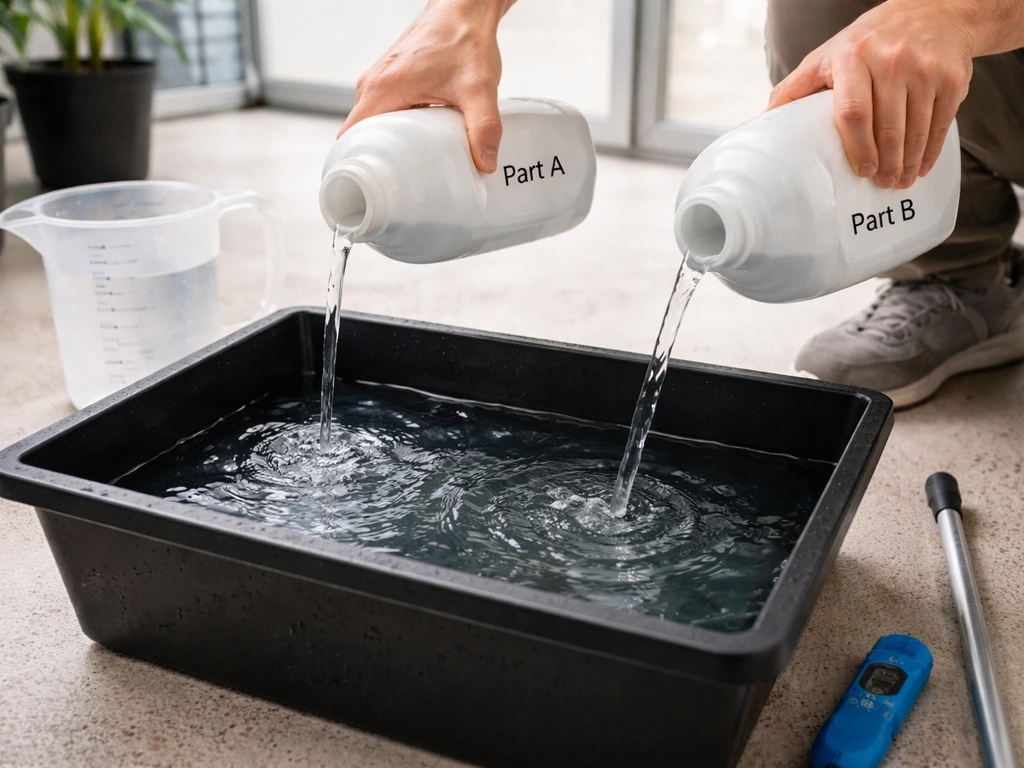
Mixing order matters more in coco than most growers expect. Adding concentrated Part A and Part B together before diluting causes precipitation reactions that lock out calcium and phosphate before the solution even hits your plant. Follow this sequence every time:
- Start with your full volume of plain water in the reservoir or mixing container
- If using silica, add it first and stir well (silica raises pH sharply, so add it before everything else)
- Add CalMag supplement and stir
- Add Part A of your base nutrient and stir thoroughly before adding Part B
- Add Part B and stir
- Add any bloom boosters, enzymes, or other additives
- Check and record EC
- Adjust pH to your target range (5.5–6.2) using pH Down or pH Up
- Check pH again after 5 minutes, as it can drift slightly after mixing
Water quality is a real variable that beginners underestimate. Tap water in most regions runs pH 7. 0–8. 0 and EC 0.
2–0. 6 mS/cm. Always subtract your tap water's baseline EC from your target EC before calculating how much nutrient to add. If your tap water reads 0.
4 mS/cm and you want a total solution EC of 1. 8, you only need to add nutrients to bring it up by 1. 4. Hard water (above 300 ppm / 0.
6 EC) already contains calcium and magnesium, so you can reduce or skip CalMag. Soft water below 150 ppm may need CalMag added at the start of every mix. In soft-water areas, CANNA recommends building EC to 0. 4 with CalMag Agent before adding anything else, which acts as a pH buffer and prevents pH swings during the rest of the mix.
Common coco nutrient problems and how to fix them fast
The vast majority of nutrient problems in coco come down to three things: pH out of range, calcium and magnesium deficiency, and salt buildup from overfeeding or insufficient runoff. Here is how to identify and fix each one quickly:
| Problem | What You See | Most Likely Cause | Fix |
|---|---|---|---|
| Ca deficiency | Brown spots, curled new growth, tip burn | Unbuffered coco binding Ca; pH too high; soft water | Add CalMag; check and drop pH to 5.8; verify coco was buffered |
| Mg deficiency | Interveinal yellowing on older leaves | Low Mg in base feed; pH drift above 6.5 | Add CalMag; lower pH to 5.8–6.0 |
| Iron/micro lockout | Yellowing between veins on new growth | pH above 6.5; micronutrients unavailable | Lower pH to 5.5–6.0; flush if salt buildup is suspected |
| Nutrient lockout (general) | Widespread yellowing despite feeding | pH out of range OR high runoff EC from salt buildup | Check runoff EC and pH; flush with plain water or low-EC solution; re-feed at correct pH |
| Nitrogen toxicity | Dark green, clawed leaves, excessive vegetative growth | EC too high; overfeeding in early stages | Reduce EC by 0.3–0.5; allow a flush run; check runoff |
| Salt buildup/over-EC | Browning leaf tips across canopy; sluggish growth | Insufficient runoff; no flush; too-high input EC | Flush until runoff EC matches or is close to input EC; add 20% runoff to each feed going forward |
The most important diagnostic tool you have is a cheap EC and pH meter used on your runoff. If runoff EC is significantly higher than your input EC, salts are accumulating and a flush is due before you see visible symptoms. Do not wait for yellowing to start checking runoff. A quick check every three to four feedings takes less than two minutes and catches problems before they set back your grow by weeks.
One more thing worth emphasizing: pH is the number one reason growers see yellowing or deficiency-like symptoms in coco even when they are feeding correctly. Before blaming a nutrient brand or your dosing, check your solution pH and your runoff pH. A pH reading above 6.5 will lock out iron, manganese, and zinc regardless of how much you have in the bottle. Fix the pH first, then reassess the plant over 48–72 hours.
Quick start: how to choose your nutrients and dial in fast
If you are starting from scratch and want the simplest path to a reliable coco setup, here is a practical buying and dialing-in plan: For help choosing the best nutrients for soil-grown cannabis in the UK, match N-P-K and secondary nutrients to your plant stage and test your soil regularly best nutrients for soil grow UK.
- Buy pre-buffered coco coir: it removes the biggest early-grow variable and is worth the small premium over raw coco bricks
- Choose a two-part coco-specific base nutrient: CANNA Coco A+B is the most widely documented and beginner-friendly; Plagron Cocos A+B or Atami Bcuzz Coco are strong alternatives with published weekly EC schedules to follow
- Add a CalMag supplement to your cart regardless of your water hardness: you will almost certainly use it
- Pick up a reliable digital pH and EC/PPM meter before your first feed — these are non-negotiable tools in coco
- Get pH Down (phosphoric acid based) and pH Up: you will use pH Down far more often
- Start at 50–75% of the manufacturer's recommended dose for the first two weeks, then scale up based on plant response and runoff EC readings
- Record your input EC, input pH, runoff EC, and runoff pH for each feeding in a simple spreadsheet or notebook: patterns emerge within 2–3 weeks and make adjustments straightforward
- Set a weekly check-in: compare runoff EC to input EC, look at leaf color on new vs. old growth, and adjust dose or pH before problems become severe
For growers running drain-to-waste (the most common coco setup), the above routine is enough to dial in most strains within two to three weeks. Recirculating systems need more frequent EC and pH checks on the reservoir since ion ratios shift as plants uptake different elements at different rates. A full reservoir change every seven to ten days prevents imbalance buildup in recirculating setups.
If you have already covered coco nutrients and want to go deeper on the broader question of what cannabis plants need across all growing media, the topics of best cannabis grow nutrients and best indoor grow nutrients cover general nutrient line comparisons and indoor-specific feeding strategies that apply whether you are in coco, soil, or another hydroponic medium.
Cannabis also needs the right balance of macronutrients like nitrogen and potassium, plus calcium, magnesium, and micros to support healthy growth what cannabis plants need across all growing media. For soil-specific growing, best organic nutrients for indoor soil grow and best nutrients for soil grow UK explore organic and regional options that take a very different approach to feeding.
If you are switching from coco to soil, the best nutrients for soil grow UK focus more on organic matter and long-term soil health than on weekly ion-by-ion feeding. For a complete, coco-ready list, check the best indoor grow nutrients that match your medium, water quality, and stage. If you are switching to an organic approach, use the best organic grow nutrients and adjust your plan to match coco's nutrient and pH demands best organic nutrients.
FAQ
Should I use coco-specific nutrients if my coco is already pre-buffered by the manufacturer?
Yes, because pre-buffered coco only solves the exchange site calcium and magnesium deficit, it does not provide macros, micros, or a complete micronutrient balance over time. You still need a coco two-part base plus pH and EC control, and you may still need CalMag depending on how soft your water is.
How do I know if I need CalMag, or if my water is already hard enough?
Use your water’s EC or ppm baseline and compare it to your target. If your tap water EC is high enough that your mixed nutrient solution already contains adequate calcium and magnesium, you can reduce CalMag or skip it. If you are unsure, start with the small CalMag approach (only in week 1 to 2) and confirm by checking runoff EC trends and leaf symptoms after 48 to 72 hours.
What’s the safest way to correct pH if my readings are drifting upward after mixing?
Adjust pH after you mix everything, then recheck 10 to 20 minutes later. If pH climbs, it usually means something in your mix (often alkalinity, hardness, or an additive) is continuing to affect chemistry. The practical fix is to re-adjust to the target window using pH Down, and then keep an eye on runoff pH because it tells you what the root zone is actually experiencing.
Can I use plain water days during coco flush or to “give roots a break”?
In drain-to-waste coco, plain water days often increase the risk of salt cycling and nutrient uptake imbalance because coco has little buffering capacity. If you want to reduce nutrients, it’s better to lower EC with a weak nutrient mix rather than switching to fully plain water, especially outside of the final flush window.
If runoff EC is higher than my input EC, do I always need a full flush?
Not necessarily. First check how high runoff is and whether runoff pH is in range. If runoff EC is only slightly above input and pH is stable, a lower-EC feed for the next irrigation or two may be enough. A real flush becomes more urgent if runoff EC keeps climbing over multiple waterings, or if leaf symptoms appear and recovery stalls.
Is it okay to switch from drain-to-waste feeding to recirculating later in the grow?
It can work, but expect a transition period. Recirculating setups require reservoir monitoring because ion ratios shift as plants uptake elements differently. Plan for more frequent EC and pH checks initially, and do not rely on the same runoff-based assumptions you use in drain-to-waste.
What mixing order mistakes most commonly cause nutrient lockout in coco?
The biggest one is combining concentrated parts (especially Part A and Part B) too close together or too concentrated before dilution. Another common mistake is adding silica after other nutrients, since it can raise pH and disrupt availability. Always dilute each component into water first, follow the recommended order, and only then fine-tune pH.
Do I need chelated micro nutrients if my base is coco-specific?
Usually no, if your coco two-part already includes a micronutrient package and you keep pH within the 5.5 to 6.2 range. Chelated micros become more relevant when using a general hydro base not formulated for coco, or if you cannot consistently hold pH below about 6.5.
How should I interpret leaf yellowing in coco, could it be pH or nutrient shortage?
Start with pH and runoff measurements before guessing. If pH is above range, iron, manganese, and zinc can become unavailable even with correct dosing, causing deficiency-like yellowing. If pH is stable and runoff EC is not excessive, then deficiency or imbalance becomes more likely. Look for magnesium-like patterns (interveinal yellowing) especially early after transplant if CalMag is borderline.
What target EC reading should I trust, input EC or runoff EC?
Input EC helps you dose consistently, but runoff EC is your best “reality check” for salt buildup. Use runoff EC trends over time. If runoff EC repeatedly rises relative to input, salts are accumulating and your next irrigation strategy should reduce EC and/or increase runoff percentage.
When should I test my runoff, and how often is enough?
Every three to four feedings is typically sufficient for many growers, but increase frequency if you see rapid drift in pH or EC, or after changing nutrient strength or CalMag. If you are dialing in a new setup, test more often in the first week because that’s when exchange site behavior is stabilizing.