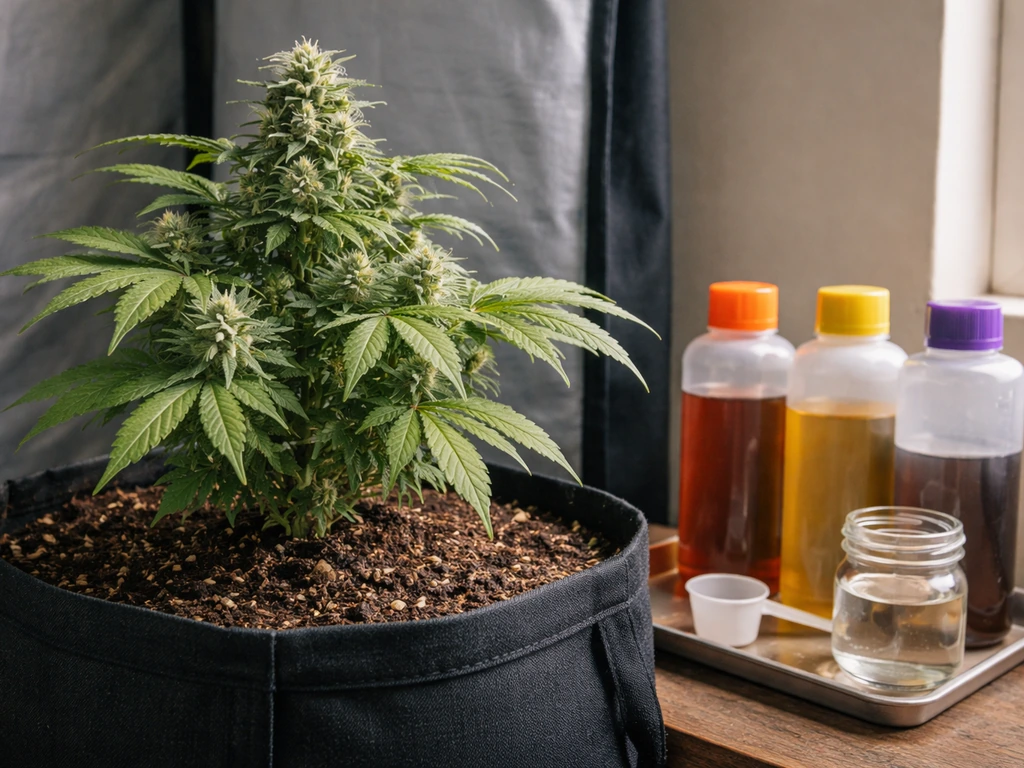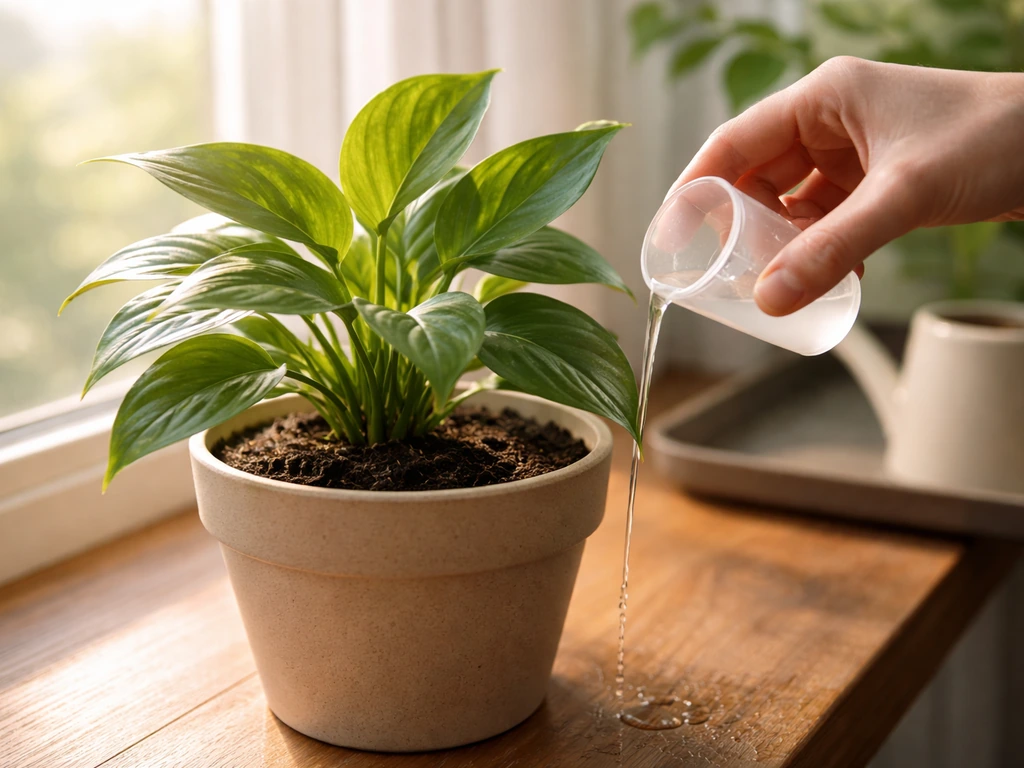
Yes, FoxFarm Grow Big is genuinely good for cannabis, especially during the vegetative stage. It delivers a nitrogen-forward 6-4-4 N-P-K formula that pushes leafy, vigorous growth exactly when your plants need to build structure before flowering. That said, it works best when you respect the dose, watch your pH, and understand that the soil version and the hydro version are not interchangeable products.
Is Fox Farm Grow Big Good for Weed? How to Use It Safely
Marcus Holloway
17 May 2026
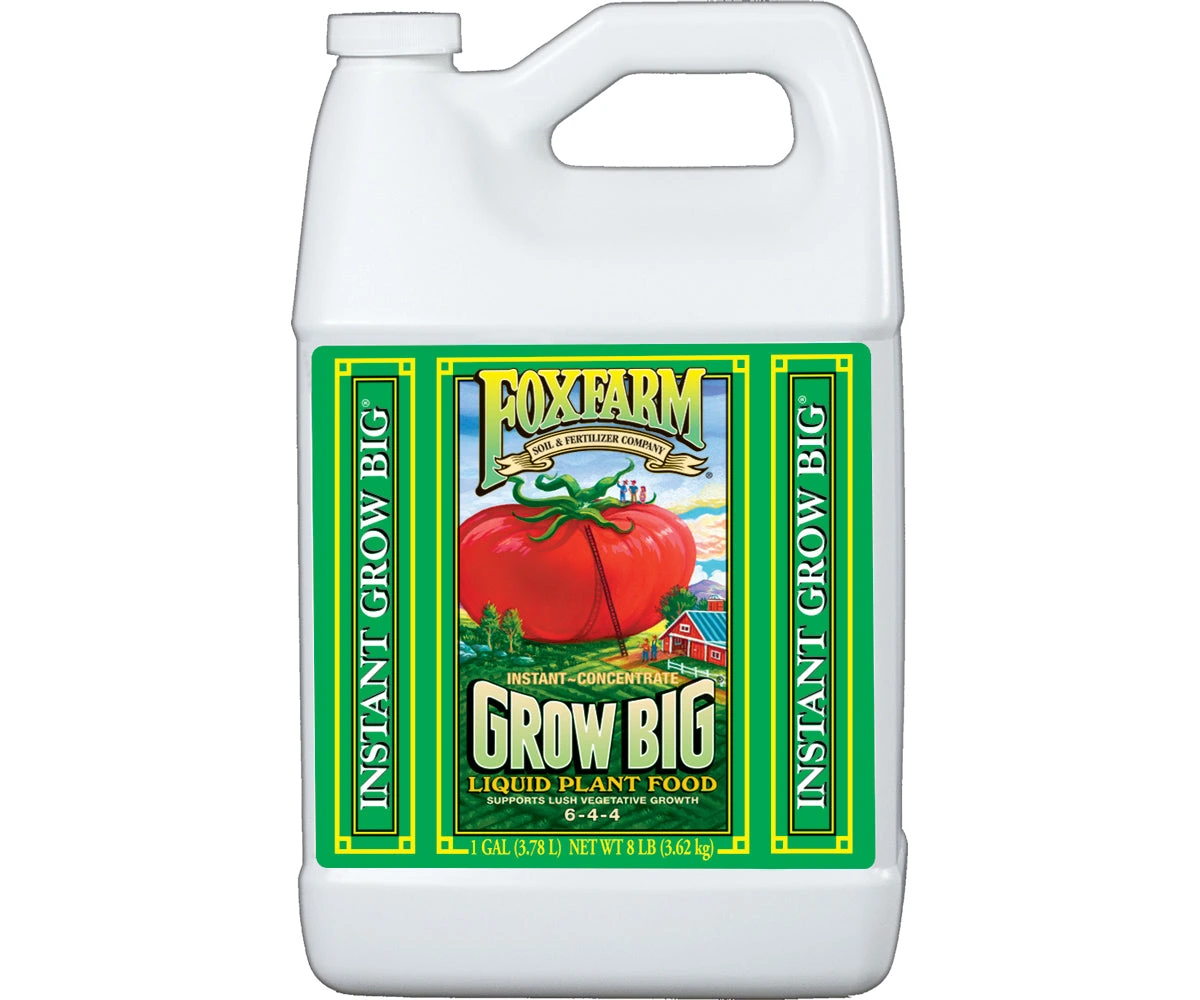
What FoxFarm Grow Big actually is
FoxFarm Grow Big (soil version) is a 6-4-4 N-P-K liquid concentrate. That ratio means it is heavier on nitrogen than phosphorus or potassium, which is exactly what you want when a cannabis plant is putting on leaves, stems, and branches. The nutrient sources are a practical mix: ammonium nitrate and ammonium phosphate handle the macro side, while earthworm castings and Norwegian kelp bring in organic compounds and trace growth stimulants. It also includes EDTA-chelated micronutrients like iron, manganese, zinc, and copper, plus boron and magnesium salts. In plain terms, it is a well-rounded liquid veg fertilizer with a light organic touch, not a stripped-down synthetic feed.
There is also a completely separate product called Grow Big Hydro, formulated specifically for reservoir-based systems. FoxFarm is clear that these are different formulations and the soil version should not be used in hydro systems because it can cause pH instability. Keep them separate in your mind from the start.
Is it good for weed? Here is the honest answer
For vegetative cannabis growth, Grow Big performs reliably. Plants typically show dark green, healthy leaf color within a week of starting a proper feed, internodal spacing tightens up, and stems thicken noticeably. The earthworm castings and kelp meal do contribute to microbial activity in living soils, which is a bonus if you are running an organic-leaning setup. You are not getting hype here, this is a product that has been used by home growers for years with consistent veg results.
Where Grow Big falls short is if you try to run it too heavy into flowering. Cannabis plants shift their nutrient demand dramatically once they flip to flower: they want less nitrogen and more phosphorus and potassium. If you keep pouring Grow Big into late bloom, you risk nitrogen toxicity, which shows up as dark clawed leaves, slowed bud development, and harshness in the final product. Use it during veg, taper it off around the transition week, and swap to a bloom-focused feed once buds are setting. That is the honest limitation and it is a predictable, manageable one.
How to mix and apply Grow Big for cannabis
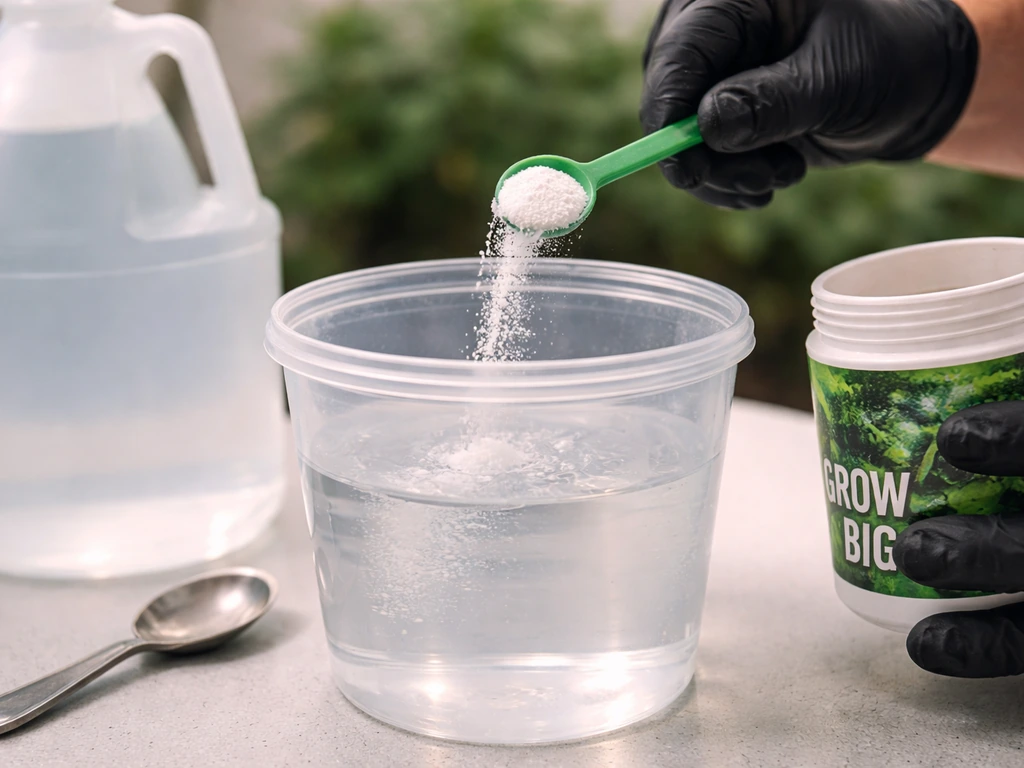
Soil application
For soil grows, start at a conservative rate of 2 teaspoons (roughly 10 mL) per gallon of water during early veg, then work up to 3 teaspoons per gallon once your plant is actively growing and showing no signs of burn.
If you are using 20-20-20 fertilizer instead, you can follow the same basic approach: start at a low rate, mix into water first, and keep your pH in range so the nitrogen, phosphorus, and potassium stay available grow more fertilizer 20-20-20 how to use. Always mix your concentrate into water first, never the other way around, and always pH your solution after mixing, targeting 6. 0 to 6. 8 for soil.
Feed every other watering rather than every watering, especially in nutrient-rich potting mixes that already carry a baseline charge. Letting the soil dry slightly between feeds also prevents salt buildup at the root zone.
Hydroponic and soilless application
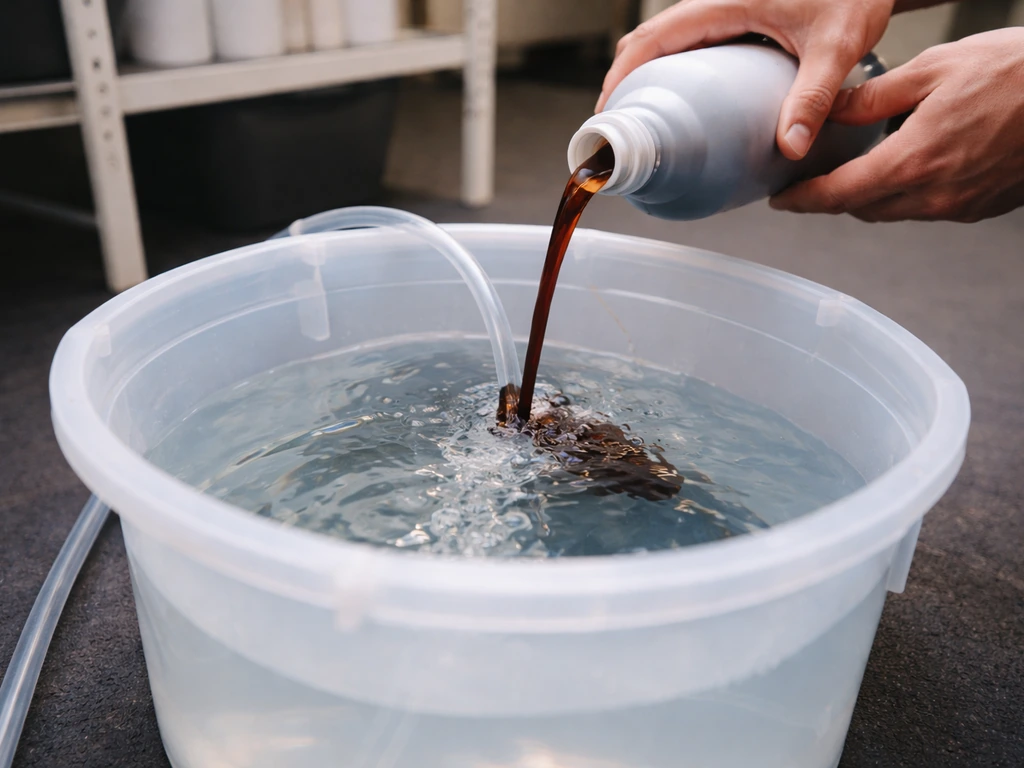
If you are running hydroponics, use Grow Big Hydro, not the soil formula. FoxFarm's own guidance calls for 2 teaspoons (10 mL) per gallon of reservoir water with each reservoir change. Maintain your reservoir pH between 5. 8 and 6.
3, which is the range FoxFarm specifies for best results with their hydro line. Check EC after mixing to confirm you are in the right concentration range for your plant's current stage, typically 0.
8 to 1. 4 mS/cm in early veg, stepping up to 1. 4 to 2. 0 mS/cm as the plant matures.
One note FoxFarm makes in their FAQ: if you only have Grow Big Hydro and want to use it in soil, mix it at 1. 5 times the recommended rate to account for the difference in how soil buffers nutrients.
Which grow stages and mediums pair best with Grow Big
| Stage / Medium | Use Grow Big? | Notes |
|---|---|---|
| Seedling (week 1-2) | No | Too strong for seedlings; plain water or very dilute feed only |
| Early veg (week 3-5) | Yes, half dose | Start at 1-2 tsp/gal, watch for response before increasing |
| Full veg (week 6+) | Yes, full dose | 2-3 tsp/gal in soil; 2 tsp/gal in hydro |
| Transition (flip week) | Taper off | Reduce nitrogen, begin introducing bloom nutrients |
| Early flower (weeks 1-3) | Very low or skip | Small amount may help stretch, but bloom feed should dominate |
| Mid to late flower | No | Stop Grow Big; high nitrogen harms bud development |
| Soil (buffered mix) | Yes, conservatively | Rich soils already carry nutrients; start low to avoid lockout |
| Coco coir / soilless | Yes | Treat closer to hydro; pH 5.8-6.3, feed every watering at lower EC |
| Hydro (DWC, NFT, etc.) | Grow Big Hydro only | Use dedicated hydro formula; soil formula causes pH issues |
How much to feed and how to avoid the common mistakes
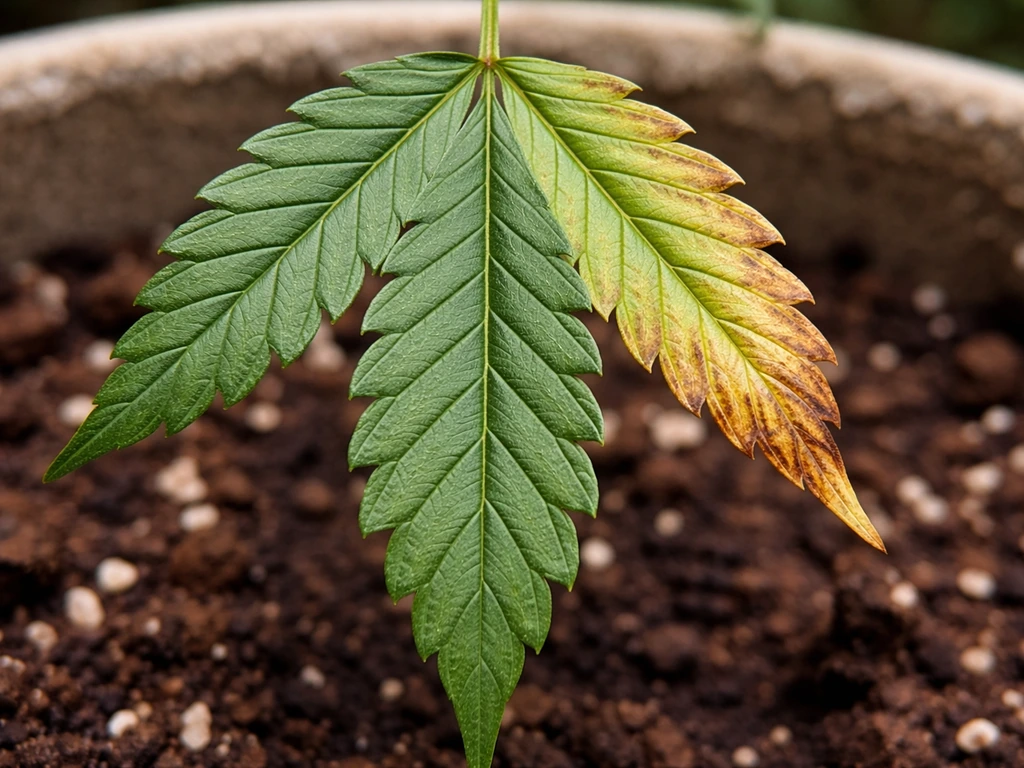
The most common mistake with Grow Big is treating the label rate as the starting point instead of the ceiling. Cannabis in a pre-amended soil mix can easily get nutrient burn at full label dose, especially in the first few weeks of veg. Start at half the recommended rate and only scale up if your plant looks hungry: pale leaves, slow growth, yellowing on older foliage. Dark green, shiny, slightly clawing leaves mean you are at or past the limit.
Salt buildup is the second big issue with any concentrated liquid fertilizer. If you are feeding Grow Big every watering without flushing, mineral salts accumulate at the root zone and lock out calcium, magnesium, and other nutrients even when they are present in your solution. Flush your soil with plain pH-adjusted water every two to three weeks, or when your runoff EC climbs more than 0.5 to 1.0 above your input EC. For hydro growers, this means doing full reservoir changes on schedule rather than just topping off.
pH management is non-negotiable. If your solution is drifting outside 6.0 to 6.8 in soil or 5.8 to 6.3 in hydro, your plant literally cannot absorb nutrients properly regardless of how much Grow Big is in the water. Always pH after mixing, not before, because adding concentrated nutrients changes the pH of your water. Pick up a decent digital pH meter and calibrate it every few weeks.
- Overfeeding symptoms: dark green clawing leaves, burnt leaf tips, slowed growth despite feeding
- Underfeeding symptoms: yellowing from the bottom up, pale new growth, weak internode spacing
- Nutrient lockout signs: deficiency symptoms despite correct feeding, high runoff EC, pH drift
- Salt buildup: white crust on soil surface or container edges, crispy lower leaves
- pH target: 6.0-6.8 for soil, 5.8-6.3 for hydro and coco
Building a full feeding program around Grow Big
Grow Big is designed to be part of FoxFarm's soil trio alongside Big Bloom (a liquid organic bloom fertilizer) and Tiger Bloom (a high-phosphorus bloom feed). Big Bloom is safe to use from early veg all the way through harvest because it is low-concentration and organic, and it pairs well with Grow Big during the veg stage without pushing nutrients over the top. Tiger Bloom is what you transition to once flowering starts in earnest, and Grow Big gets phased out at the same time.
If you want to supplement beyond the FoxFarm trio, calcium-magnesium supplements (Cal-Mag) are the most common and useful addition, especially in coco or RO-water grows where these elements are naturally low. Grow Big does not supply enough calcium or magnesium on its own to fully cover cannabis in those setups.
Avoid stacking Grow Big with other high-nitrogen products at the same time: if you are also using a nitrogen-rich compost tea or another veg fertilizer, you are doubling up on nitrogen and the risk of toxicity climbs fast. The comparison between Grow Big and Big Bloom is worth understanding in detail if you are building out a full FoxFarm program, since they serve different roles at different stages.
If you are building that full feeding program, it can also help to compare FoxFarm options with grow best liquid plant food so you can match the right nutrients to veg timing and stage needs. If you are comparing fox farm grow big vs big bloom, Grow Big is the nitrogen-heavy veg option, while Big Bloom is the low-concentration organic bloom support used later Grow Big and Big Bloom.
For growers who prefer non-FoxFarm supplements, Grow Big stacks reasonably well with most pH-stable liquid feeds as long as you are mixing each one into water individually and checking the final EC before applying. Products like Advanced Nutrients' Grow-Micro-Bloom line take a different approach by bundling everything into one multi-part system, which removes some of the guesswork around compatibility but gives you less control over individual ratios. Products like Advanced Nutrients' Grow-Micro-Bloom line can be helpful if you want an integrated multi-part system for your feeding schedule.
When Grow Big is working and when to switch
You will know Grow Big is doing its job when your plant is adding new nodes every few days, leaves are deep green without yellowing or burn at the tips, stems are firm and thick, and the overall plant looks vigorous rather than stretched or pale. That is the target state through veg, and if you are hitting it, stick with the program.
If you are not seeing that response after two to three feedings, first check your pH and EC before blaming the fertilizer. Most underperformance with Grow Big traces back to pH being off, overwatering, or a locked-out root zone rather than the product itself. Flush, reset your pH, and try again before switching products.
There are a few situations where a switch genuinely makes sense. If your soil is already heavily amended (like Fox Farm Ocean Forest or a living soil blend), you may not need Grow Big at all for the first several weeks because the soil is already feeding the plant. If you are growing in pure coco or DWC and want tighter EC control, a purpose-built hydroponic nutrient line may give you more precision than the soil formula provides. And once your plants are showing pre-flowers and the stretch is underway, it is time to drop Grow Big and bring Tiger Bloom to the front of your feeding rotation.
If you are weighing Grow Big against other liquid veg fertilizers, the main differentiator is its organic ingredient additions (the kelp and worm castings) that most synthetic-only lines skip. Whether those matter for your grow depends on your medium and philosophy. For a straight-up synthetic hydro run, a purpose-built hydro formula will give you cleaner results. For soil or coco with a light organic approach, Grow Big is a solid, proven choice. Foliar feeding can also complement your liquid schedule, and the best grow foliar fertilizer helps deliver nutrients through the leaves.
FAQ
Can I use FoxFarm Grow Big on cannabis clones, or is it only for larger plants?
You can use it on clones, but start lower than early-veg seedlings because clones often have weaker root systems. Begin around half of the early-veg dose, feed every other watering, and stop increasing if you see tip burn, canoeing leaves, or dark, clawed growth.
What signs mean Grow Big is “working” versus nutrients are actually too strong?
Working fertilizer shows steady new growth with dark green leaves that do not taco or claw, and no burning at the edges. Too-strong feeding often looks like dark, thick leaves with clawing, slowed growth despite dark color, and leaf edge burn, especially in the first third of veg.
Is it safe to mix Grow Big with other FoxFarm bottles in the same water jug?
Mixing in the same jug can be risky because multiple concentrates can shift pH and raise EC unpredictably. If you want to combine FoxFarm products, mix each one separately into the water, then check the final pH and EC before feeding.
How should I adjust Grow Big if my water is very hard or has high alkalinity?
High alkalinity makes it harder to hold the correct pH range. Plan on using pH down frequently, and consider reverse osmosis or blended water if you cannot stabilize soil pH in the 6.0 to 6.8 window. If pH bounces up after mixing, do not keep adding fertilizer to “correct” growth issues.
Should I flush after I stop using Grow Big before switching to bloom nutrients?
Usually you do not need a full flush right away. Instead, taper Grow Big down during the transition week, then rely on the bloom feed once buds set, while maintaining pH and EC. If you previously overfed and runoff EC stayed high, then a periodic flush can help reset the root zone before the switch.
Can Grow Big cause nutrient lockout, and how do I tell lockout from deficiency?
Yes, lockout often comes from salt buildup or pH drifting out of range. If leaves show widespread yellowing while EC is high or runoff pH is far off, that points toward lockout. If EC is low and pH is within range, deficiency is more likely.
How do I measure and manage salt buildup if I cannot get runoff or measure EC easily?
If you cannot collect runoff, reduce frequency first, then reduce dose. Going from feed-every-watering to feed-every-other-watering is the biggest lever. For measuring EC without runoff, use consistent container volume and weigh pots before watering to avoid repeated saturation that concentrates salts near roots.
What’s the risk of using the hydro version in soil (or the soil version in hydro) even at a “lower” dose?
Using the wrong formulation can still cause pH instability, which then affects nutrient availability regardless of dose. Lowering it may reduce burns, but it does not fix the underlying mismatch in chemistry and buffering behavior, so symptoms can still appear later.
How do I know whether my medium needs Grow Big at all, versus being fed by the soil already?
If you are using a pre-amended mix with active compost or nutrient charge, plants may look fine with little or no added veg fertilizer for the first several weeks. In that case, your best indicator is leaf health and growth rate, start with a lower rate, and only increase if the plant shows clear hunger signs rather than “dark green” alone.
Can Grow Big be used as a foliar spray, or is it only for soil/hydro feeding?
Grow Big is primarily a root-feed product. If you foliar feed, keep it very dilute and spot test because concentrates meant for soil can burn leaf tissue. Use leaf-feeding only as a supplement, not a replacement, and always ensure your spray mixture is pH-balanced.
What should I do if new growth is dark green but the plant is still stretching or not getting stocky?
Dark green with weak structure usually means something else is limiting growth, most commonly pH problems, low light intensity, or overwatering that keeps roots from taking up nutrients. Confirm pH and EC first, then check watering timing and light distance before increasing Grow Big.
Is Cal-Mag still necessary if Grow Big already includes magnesium?
Even with magnesium present, many coco and RO-water setups still require added calcium because Grow Big does not supply enough calcium for those systems across the whole cycle. If you see calcium-related symptoms (distorted new growth, blocked tips, or brittle weak tissue), add Cal-Mag and re-check EC so you do not overshoot the nutrient range.