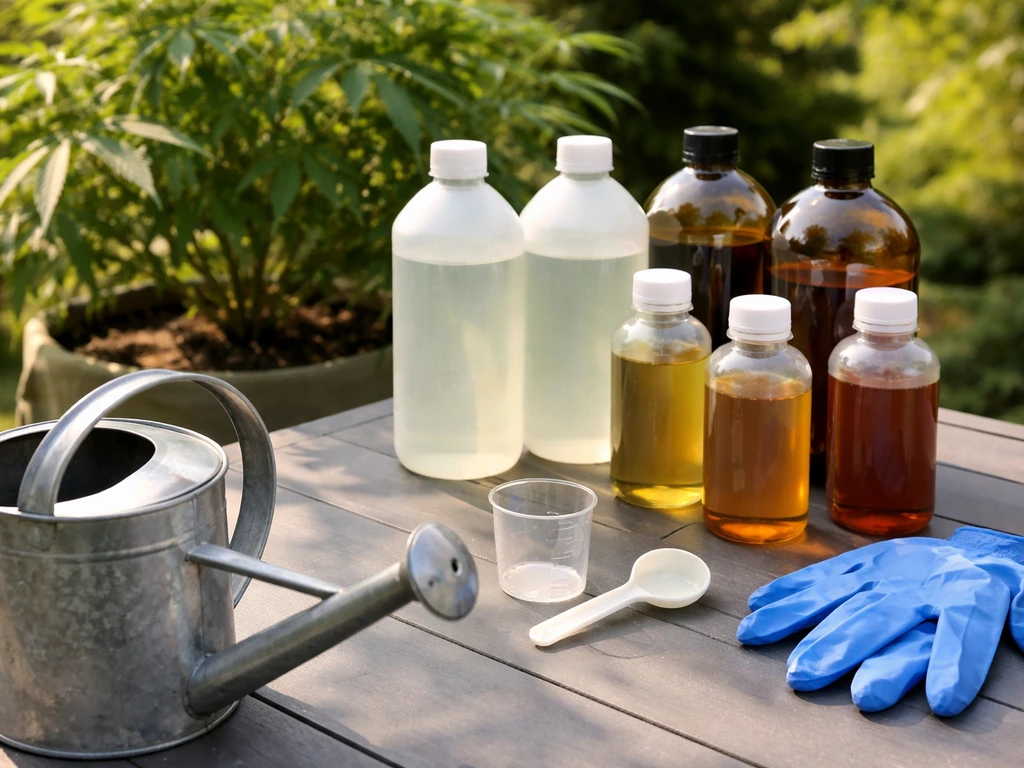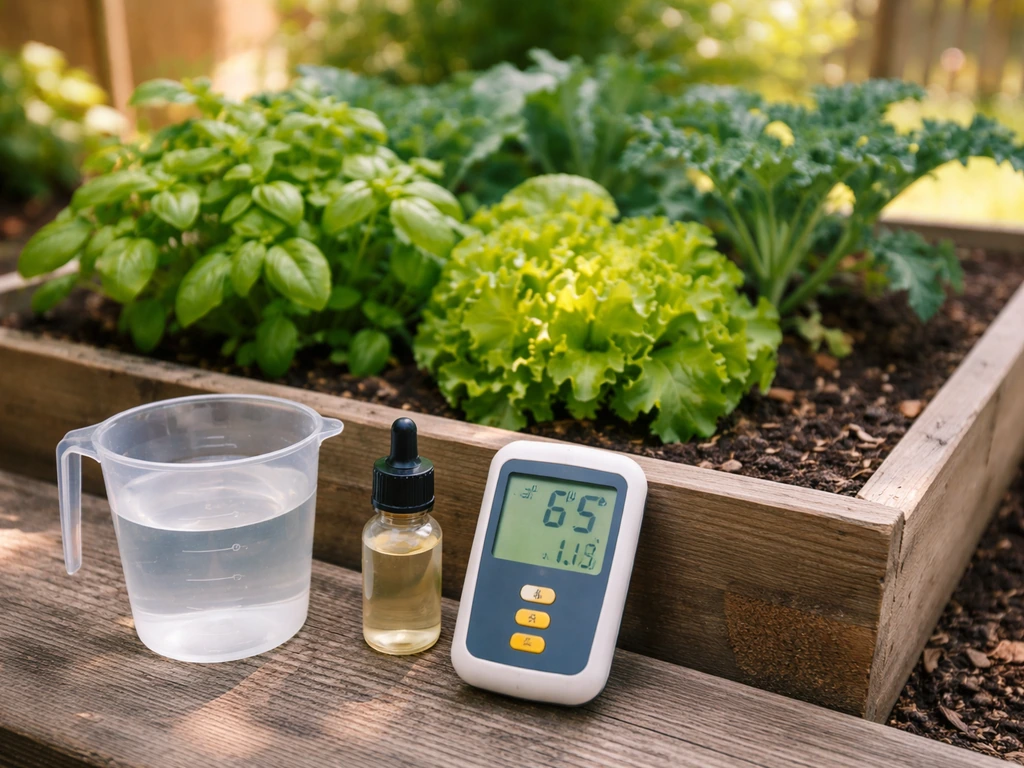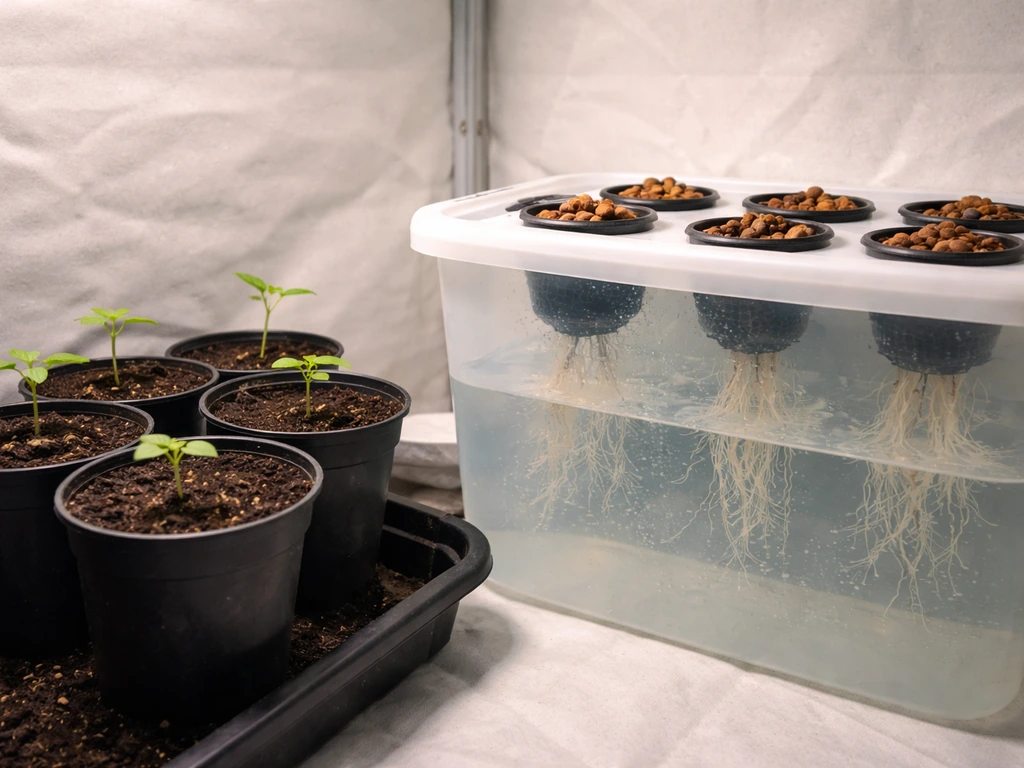
During flowering, your plants need less nitrogen and a lot more phosphorus and potassium. For outdoor soil grows, aim for a nutrient solution with a roughly 1:3:2 N-P-K ratio during peak bloom, feed at pH 6.0–6.5, and target an EC of around 1.6–2.2 mS/cm (roughly 800–1100 PPM) at the height of flower. blank" rel="noopener noreferrer">Start tapering nitrogen in week one of flower, push P and K hard from weeks 2–6, then ease the EC back down and begin flushing in the final 1–2 weeks before harvest. That's the core of it. Everything below helps you dial it in for your specific setup, cultivar, and outdoor conditions.
Flowering Stage Best Nutrients for Outdoor Grow Guide

Marcus Holloway
21 May 2026
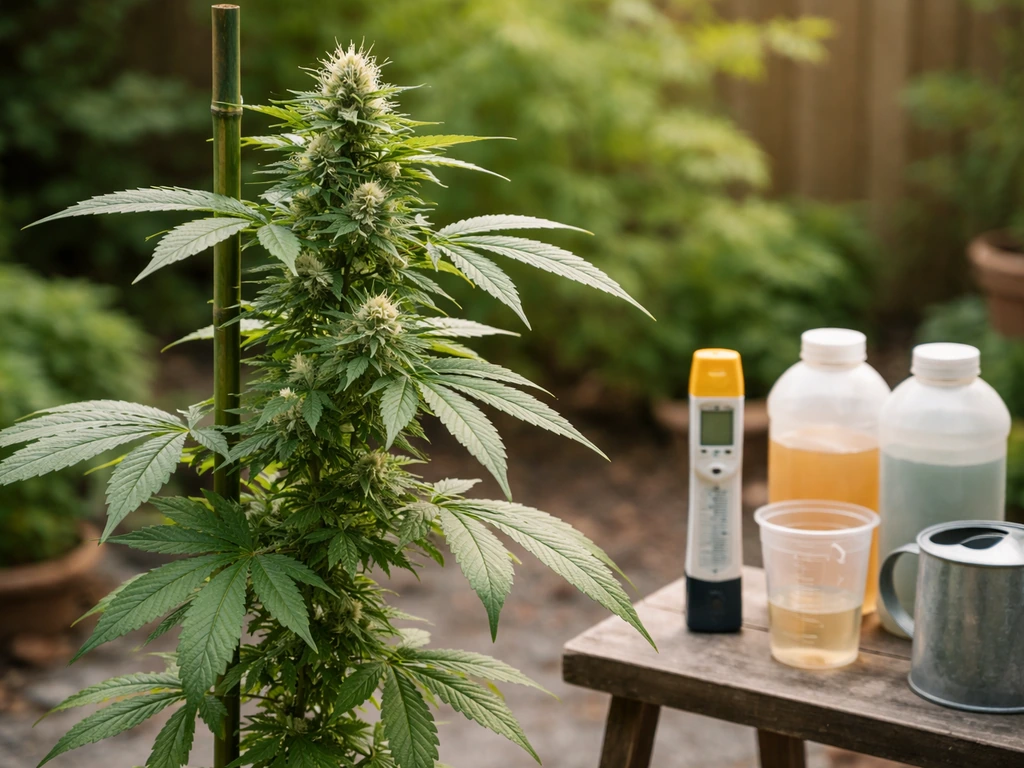
What flowering actually looks like week by week (and why nutrients shift)
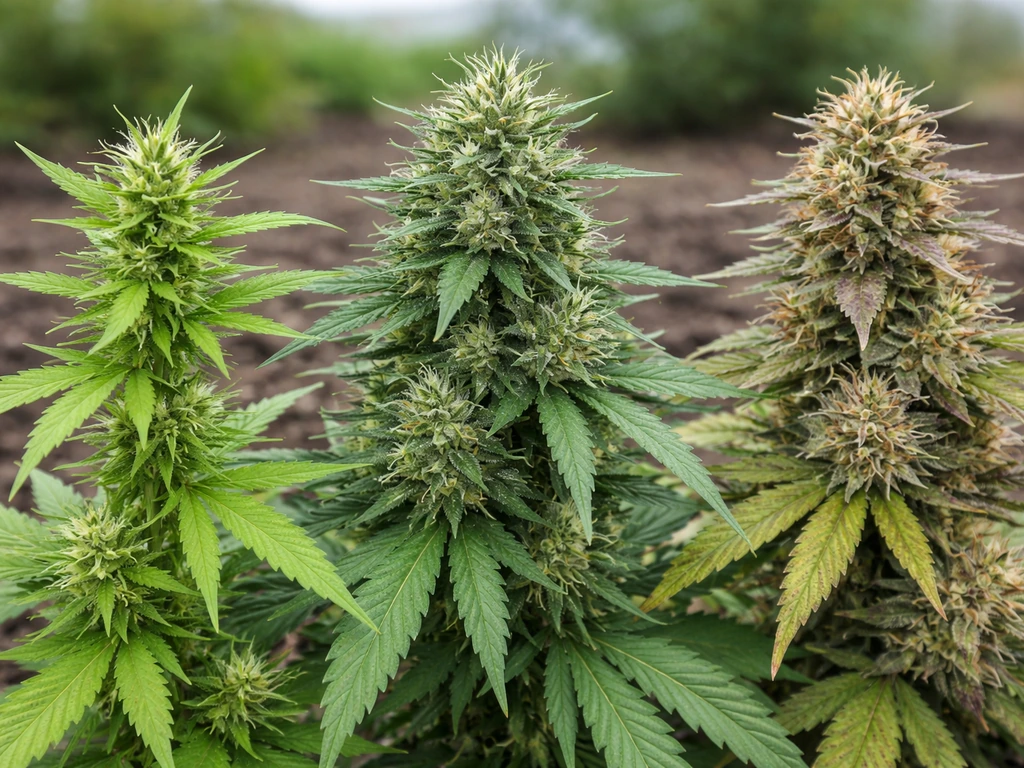
Outdoor photoperiod plants flip into flower when days shorten naturally, usually late July through August in the Northern Hemisphere. From that point, total flowering time runs anywhere from 6 to 12 weeks depending on cultivar. Indicas tend to finish faster (6–8 weeks), while sativas and sativa-dominant hybrids can stretch to 10–12 weeks. Autoflowers follow their own internal clock, but the nutrient principles below still apply once pistils appear.
Think of outdoor flowering in three phases, not just one long stretch. Each phase has a different nutrient demand, and failing to shift your feeding along with the plant is one of the most common reasons outdoor growers end up with airy buds or late-stage deficiencies.
| Phase | Approximate Timing | What the Plant Is Doing | Nutrient Priority |
|---|---|---|---|
| Early Flower / Transition | Weeks 1–2 of flower | Stretch, pre-flower sites forming, rapid cell division | Taper N, begin introducing P/K bloom formula |
| Mid Flower / Peak Bloom | Weeks 3–6 of flower | Stretch stops, buds fatten, heaviest nutrient demand | High P/K, low N, full micronutrient support |
| Late Flower / Ripening | Weeks 7–harvest | Trichome maturation, resin production, cooling temps outdoors | Reduce EC, taper all nutrients, begin flush prep |
Around week 4–5, most plants stop stretching and focus entirely on bud development. That's your mid-flower window, the point where feeding mistakes show up fastest. If you're still feeding a high-nitrogen veg formula at week 5, you'll start to see dark, clawing leaves, nitrogen toxicity, and buds that don't bulk up properly because the plant is prioritizing foliage instead.
Nutrient targets: the P/K push, nitrogen taper, and micros that actually matter
Here are real target numbers to work with. During the flowering period in a well-managed system, you're generally aiming for nitrogen around 100–110 PPM, phosphorus around 70 PPM, and potassium at roughly 200 PPM. That potassium number is notably high compared to veg, and that's intentional. Potassium drives cell structure, water regulation, and resin production. Phosphorus fuels the energy transfer involved in bud formation (ATP synthesis). Nitrogen doesn't disappear entirely, but it drops significantly compared to vegetative feeding.
At flower initiation, you want to cut your nitrogen fertilization sharply and push P and K up. If you're transitioning from a 3-1-2 veg ratio, move toward something closer to 1-3-2 for early bloom, then hold there or lean even heavier on potassium through peak bloom. Don't go to zero nitrogen early on, the stretch phase still needs some N for tissue growth, but don't hesitate to drop it hard by week 3.
Micronutrients you can't afford to ignore
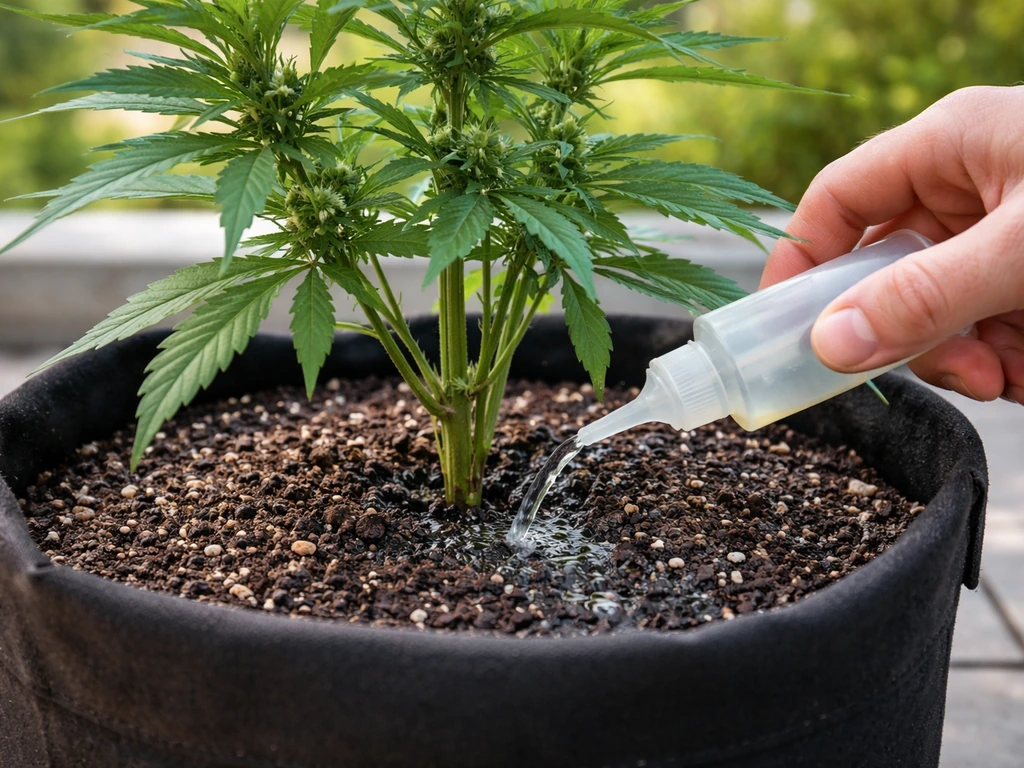
Calcium and magnesium are the two you'll need to supplement most often in outdoor soil, especially after heavy rain leaches them out or if you're in a container. Cal-Mag products (typically around 2-0-0 with added Mg and Ca) are worth adding at a low dose throughout flowering, roughly 1–2 ml/gallon unless your soil is already heavily amended. Magnesium shows up as interveinal yellowing on older leaves, often mistaken for other deficiencies. Iron deficiency is also surprisingly common in outdoor and field-grown plants, showing as yellowing on new growth. Don't overcorrect magnesium without confirming, excess Mg is hard to visually diagnose and can compete with calcium uptake.
- Calcium (Ca): structural cell support, prevents blossom/tip issues; often depleted by heavy rain outdoors
- Magnesium (Mg): chlorophyll production; mobile nutrient, deficiency appears on lower/older leaves first
- Sulfur (S): enzyme function and terpene production; often present in base nutrients but worth checking
- Iron (Fe): very common deficiency in outdoor grows, especially alkaline soils; shows as yellowing new growth
- Zinc (Zn), Manganese (Mn), Boron (B), Copper (Cu): needed in trace amounts; a quality base nutrient covers these
If you're using a quality 3-part base nutrient system or a well-amended living soil, most of the trace minerals are handled. The ones to actively manage are calcium, magnesium, and iron, because outdoor conditions (rainfall, pH swings, temperature) push these out of availability faster than anything else.
Outdoor soil vs. outdoor hydroponics: feeding them differently
Outdoor soil and outdoor hydro (or coco) are genuinely different feeding environments. Soil gives you a buffer, a well-amended bed or container mix holds nutrients, moderates pH swings, and lets you get away with less-than-perfect feeding. Coco and hydro systems have almost none of that buffer, which means more precision is required but also more control. Choosing the best fertilizer for outdoor grow starts with matching your plant's N-P-K needs to your setup, whether you're in soil or coco/hydro.
| Factor | Outdoor Soil | Outdoor Coco / Hydro |
|---|---|---|
| pH target (inflow) | 6.0–6.5 | 5.8–6.2 |
| EC during peak bloom | 1.6–2.0 mS/cm | 1.8–2.2 mS/cm |
| Feeding frequency | Every 2–3 days or with watering events | Daily to every other day (coco); reservoir changes weekly for recirculating hydro |
| Rain impact | High — dilutes nutrients, can lower pH, leaches Ca/Mg | Lower — use covered reservoirs; monitor inflow quality carefully |
| Salt buildup risk | Moderate — managed by drainage and rain events | Higher — must manage runoff EC and flush regularly |
| Micronutrient management | Soil buffers many micros; cal-mag often still needed | Full micronutrient supplementation required in every feeding |
| Recommended base nutrient type | Organic or mineral slow-release plus liquid bloom booster | Mineral/synthetic liquid nutrient system (3-part or dedicated bloom formula) |
Outdoor soil: working with the weather
The biggest outdoor-specific challenge in soil is rain. A heavy rainfall event dilutes your nutrient solution in the root zone, can temporarily drop pH, and leaches calcium and magnesium out of the container or bed faster than other nutrients. After any significant rain (more than half an inch), check your runoff pH and EC. If EC drops well below your target, consider a light feeding at 50–75% of your normal dose to top up. If pH has swung, correct it before your next full feeding. For in-ground grows in good native soil, you often need far less supplemental feeding than container growers, let the soil tell you what it needs through leaf observation and runoff data.
Outdoor coco and hydro: precision in the open air
Coco doesn't buffer pH the way soil does, so you need to dial your inflow solution into the 5.8–6.2 range consistently. During bloom in a coco system, target EC of 1.8–2.0 at peak flower (weeks 4–6) and always water to runoff, aiming for about 10–20% drainage per feeding. That runoff fraction is how you control salt accumulation in the root zone. If your inflow EC is, say, 1.8 and your runoff EC climbs above 2.3–2.5, you're building up salts and need to either increase the flush fraction or reduce feeding strength. For outdoor coco, cover your reservoirs when rain is expected to prevent dilution and contamination.
Outdoor flowering feeding schedule: week by week
These ranges are starting points. Your specific cultivar, soil type, container size, and local weather will shift things slightly. Use this as a framework, then adjust based on what your plants and your runoff are telling you.
| Phase | Weeks of Flower | Target EC (mS/cm) | Approx PPM | pH (Soil) | pH (Coco/Hydro) | N-P-K Focus | Feeding Frequency (Outdoor) |
|---|---|---|---|---|---|---|---|
| Transition / Early Bloom | 1–2 | 1.2–1.6 | 600–800 | 6.0–6.5 | 5.8–6.2 | Taper N, introduce bloom ratio | Every 2–3 days or as soil dries |
| Peak Bloom | 3–6 | 1.6–2.2 | 800–1100 | 6.0–6.5 | 5.8–6.2 | Low N, high P/K | Every 2–3 days (soil); daily (coco) |
| Late Bloom / Ripening | 7–harvest -2 | 1.2–1.6 | 600–800 | 6.0–6.5 | 5.8–6.2 | Minimal N, moderate P/K | Every 3 days or taper further |
| Pre-Harvest Flush | Final 1–2 weeks | 0.0–0.4 | 0–200 | 6.0–6.5 | 5.8–6.2 | Plain water or near-plain | Water only; ensure runoff EC drops below 1.0 |
For liquid nutrient products, always start at the lower end of the manufacturer's recommended dose (50–75%) and work up. Most nutrient burn outdoors comes from growers following label directions exactly in hot weather, when plants are drinking fast but nutrient uptake can't always keep pace. In heat above 85°F (30°C), scale back feeding strength by about 25% and prioritize plain water days to prevent salt concentration at the root zone.
A note on feeding frequency: outdoor plants in the ground or large containers (20+ gallons) generally need less frequent feeding than smaller pots because soil moisture cycles are slower. A plant in a 5-gallon pot may need feeding every 2 days during peak bloom in summer heat. The same plant in a 25-gallon fabric pot might only need feeding every 4–5 days. Let the weight of the container or the dryness of the top inch of soil guide you, not just the calendar.
Bloom boosters and additives: what's worth buying and what isn't
The nutrient additive market is full of products promising bigger, denser buds. Some of them genuinely help. Most are marketing dressed up in plant science language. Here's an honest breakdown of the categories that come up most often.
PK boosters (like PK 13/14 and similar)
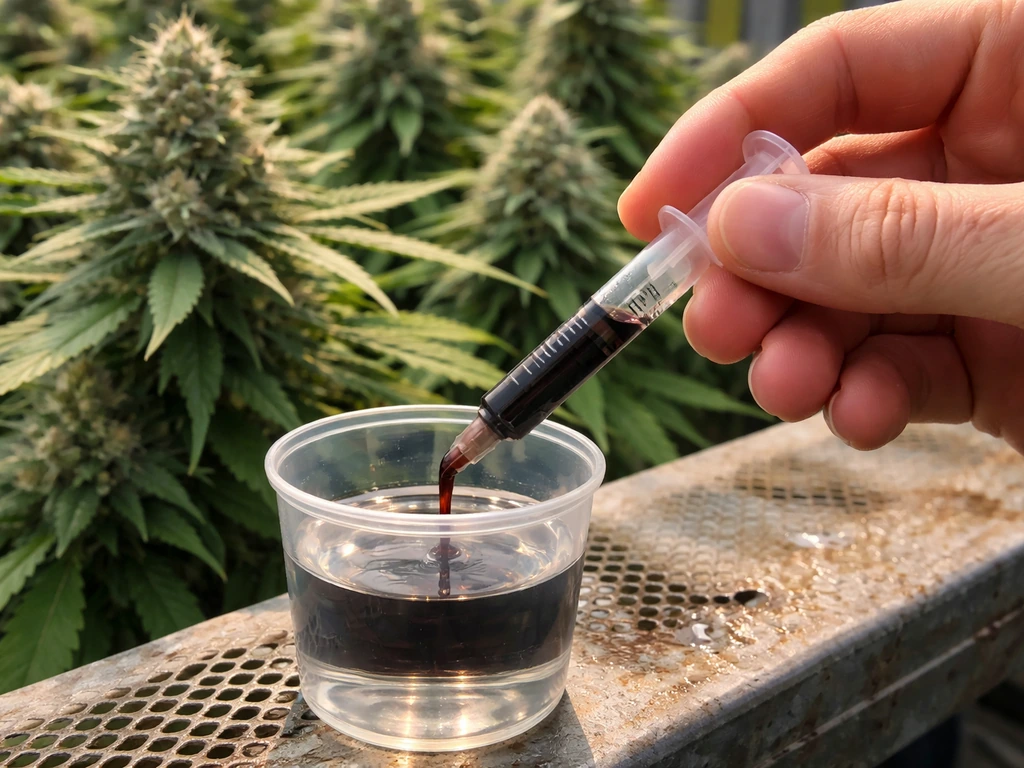
These high-phosphorus/potassium additives are designed to be used during the peak bud swell phase, typically weeks 4–6 of flower. They can help if your base nutrient formula doesn't already supply enough P and K at that stage. But there's an important caution: phosphorus locks out below a pH of about 5.5, and excessive P can compete with other nutrients. If your base bloom formula already delivers 70+ PPM phosphorus at the recommended dose, adding a PK booster on top may cause more problems than it solves. Use them selectively, at half the recommended dose to start, and only if bud development seems stalled or slow despite correct pH.
Cal-Mag supplements
These are genuinely useful outdoors. Outdoor growers lose calcium and magnesium to rain leaching, especially in containers. A standard Cal-Mag product added at 1–2 ml/gallon to your regular feed water throughout flowering is solid insurance, especially if you're in a region with naturally soft or low-mineral water. Don't overdo it, excess calcium can antagonize potassium uptake.
Silica
Silica (silicon) strengthens cell walls, increases heat and drought tolerance, and may help bud structure. For outdoor grows exposed to wind, temperature swings, and pest pressure, silica is one of the more practical additives. Use it throughout veg and into early-to-mid flower. Drop it in late flower as you taper other nutrients. Keep in mind: silica raises pH dramatically, so always add it to your water first and adjust pH after adding everything else.
Bloom enzyme products and microbial additives
For outdoor soil growers, mycorrhizal inoculants and beneficial bacteria products can genuinely improve nutrient uptake and root health, especially if applied early in the season. By the time you're deep in flowering, the microbial ecosystem in your soil should already be established. Adding them in week 6 of flower is largely a waste of money. If you're interested in this category, apply it at transplant or very early in veg, not at bloom.
Flushing agents and clearing solutions
Products marketed to speed up flushing or clear salts have mixed evidence behind them. For outdoor grows in healthy soil, plain pH-adjusted water in the final 1–2 weeks is usually sufficient. The goal of the pre-harvest flush is to reduce the available nutrient salt concentration in the root zone. Your runoff EC during flush should be under 1.0 mS/cm (under 700 PPM) before harvest. If it's not getting there with plain water, those commercial clearing solutions may give you an extra bump, but they're not a substitute for proper runoff management throughout the grow.
When things go wrong: diagnosing nutrient problems in bloom
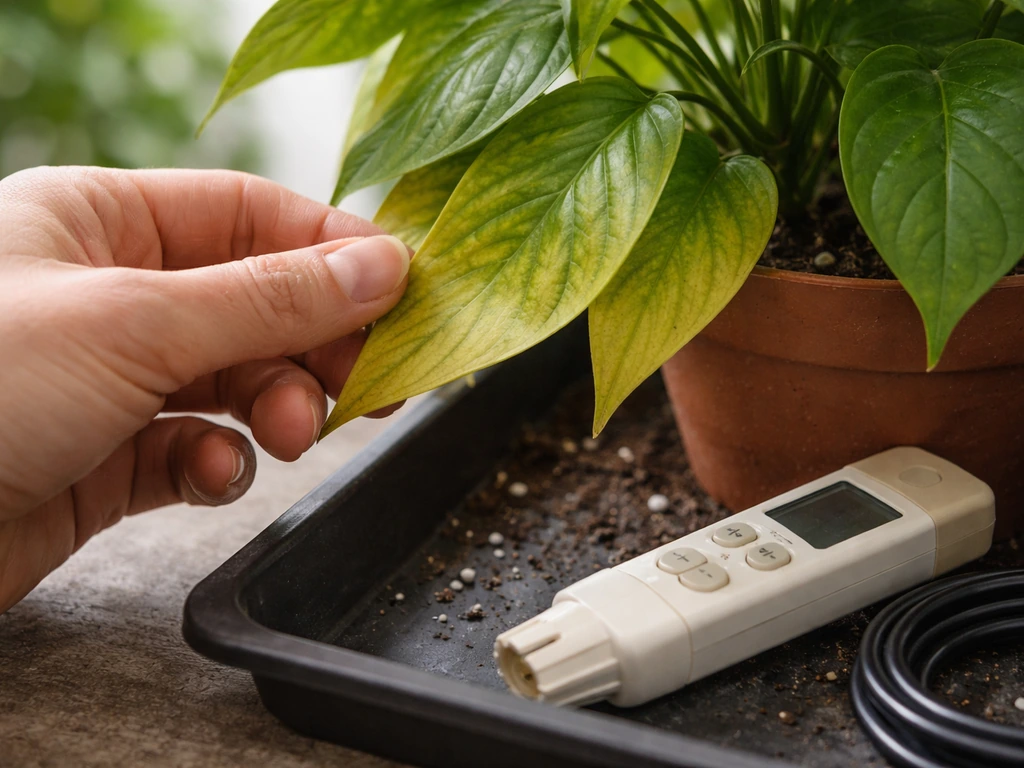
Most nutrient problems during flowering aren't actually about having the wrong nutrient formula. They're about pH being out of range and locking nutrients out. Before you reach for a different bottle, check your root-zone pH. If it's drifted outside the optimal window, you'll see deficiency symptoms even if your nutrient solution is perfect.
Deficiency symptoms and what they usually mean
| Symptom | Likely Cause | First Fix |
|---|---|---|
| Yellowing lower/older leaves, spreads upward | Nitrogen deficiency (or late-season N taper — may be normal) | Check if intentional taper; if too early, add small N dose |
| Interveinal yellowing on older leaves, veins stay green | Magnesium deficiency | Add Cal-Mag at 2–3 ml/gallon; check pH is not too low |
| Yellowing on new/young growth, veins stay green | Iron deficiency (most common), or manganese | Check and correct pH (iron locks out above 7.0 and below 5.5); add chelated iron if needed |
| Brown/burnt leaf tips, curling down | Nutrient toxicity or salt buildup (too-high EC) | Flush with plain water; reduce feeding strength by 25–30% |
| Purple/red stems and fan leaves | Phosphorus deficiency, or cold temps outdoors (can mimic) | Check temps first; if warm, check pH and supplement P |
| Broad yellowing with necrotic patches on older leaves | Potassium deficiency | Increase K in feeding formula; verify pH in range |
| Mottled, patchy discoloration across multiple age groups of leaves | Nutrient lockout (pH off) | Correct pH first; flush if EC is also high; recheck after 48 hours |
Salt buildup and runoff problems
Salt buildup is the most common hidden problem in outdoor container grows. It happens gradually when your leaching fraction is too low, meaning you're watering without producing enough runoff to flush excess salts out. The practical rule: if your runoff EC is more than 0.5–0.7 mS/cm higher than your inflow EC, you have salt accumulation happening. Either water with more volume to push more through (targeting 10–20% runoff), reduce your feeding strength, or do a plain-water flush day. If runoff EC is dramatically higher (2x or more than inflow), do a full flush before resuming feeding.
For in-ground outdoor grows, salt buildup is much less of a concern because rain and natural soil drainage tend to manage it. But in containers, especially fabric pots in hot, dry climates where you're watering frequently, it can sneak up fast. Check runoff EC weekly during peak bloom as a minimum.
Nitrogen toxicity in flower
This is more common than most growers expect, especially people transitioning from a great veg run where they were feeding heavily. Signs are dark, almost blue-green leaves, tips that claw downward, and slow bud development. If you see this in weeks 2–4 of flower, cut your nitrogen-containing nutrients significantly and shift to a bloom-only formula. Don't feed at full strength again until the plant has lightened up. One plain-water day between feedings can also help dilute excess nitrogen in the root zone.
Your monitoring checklist for the rest of flowering
Staying ahead of problems outdoors is mostly about consistent, quick checks rather than complex analysis. Here's the routine that covers the essentials without taking over your day.
- Check input pH before every feeding. Target 6.0–6.5 for soil, 5.8–6.2 for coco/hydro. Adjust with pH Up or Down before adding nutrients, and re-check after mixing.
- Measure runoff EC weekly. Compare it to your inflow EC. A difference of more than +0.5–0.7 mS/cm means salts are accumulating — flush or reduce feed strength.
- Check runoff pH if plants show deficiency symptoms. Even if your input pH is correct, the root zone can drift, especially after rain events that lower pH or in aging soil media.
- After rain, water with a half-strength nutrient solution rather than plain water to replace leached calcium and magnesium.
- Observe leaves at least 3 times per week during peak bloom (weeks 3–6). Look at both old growth (lower leaves) and new growth (tops). Deficiencies appear in different locations depending on nutrient mobility.
- In heat above 85°F (30°C), reduce EC by 20–25% and increase plain water frequency to prevent concentration of salts at roots.
- Begin taper at week 7+ (or 1–2 weeks before your target harvest window). Reduce EC to 1.2–1.6 mS/cm, then drop to near-plain water in the final 7–14 days.
- Check final flush runoff EC before harvest. It should read below 1.0 mS/cm (under 700 PPM) for a clean finish.
- Use a magnifier or loupe on trichomes weekly from week 6 onward to time your flush and harvest accurately — nutrient decisions in late flower depend on how close you actually are to maturity, not just the calendar week.
If you want to go deeper on the specific products best suited to each phase, the feeding schedule topic covers brand-by-brand comparisons and dose-by-dose weekly breakdowns worth checking alongside this guide. If you want a week-by-week feeding schedule for outdoor grows, follow the best-nutrients guidance to dial in strength and timing feeding schedule topic. If you're growing indoors, the best fertilizer for indoor grow depends on your lights, medium, and whether you're using hydro or soil. For growers still setting up their foundational nutrient program before flower begins, looking into what makes a strong general outdoor nutrient base will save you a lot of mid-bloom adjusting. If you are looking for community-tested guidance, threads about the best nutrients for outdoor grow can help you compare what works for different setups best nutrients for outdoor grow reddit. Choosing the best seeds for outdoor grow and matching them with a strong outdoor nutrient base helps you hit the right balance during flowering strong general outdoor nutrient base. The principles here apply whether you're in a 5-gallon pot on a balcony or running a full outdoor bed, scale the doses, not the logic. If you want to dial in good nutrients for outdoor grow from day one, start by matching your N-P-K targets to your flower phase and your pH range.
FAQ
How do I know if my outdoor flowering plants are underfed in P and K versus just pH-locked nutrients?
Use runoff pH and EC as your first decision tool. If pH is outside the 6.0 to 6.5 (soil) or 5.8 to 6.2 (coco) targets and you see deficiency-like symptoms, assume lockout first, correct pH, and only then adjust nutrient strength. If pH is in range and runoff EC is low compared to your inflow, that points more toward underfeeding than lockout.
Should I change nutrient targets if my plants are stretching longer than expected?
Yes, a longer stretch usually means the plant is still relying on early-bloom N to support tissue growth. Instead of forcing the nitrogen drop on a strict calendar, check leaf color and bud formation. If leaves are still very dark and clawing, you likely still need less N. If growth is vigorous and leaves look healthy but buds are slow to form, keep the N reduced but do not remove it entirely until stretch settles.
What if I’m growing in-ground soil and I can’t easily measure runoff EC, how do I avoid overfertilizing during flower?
Rely on observation plus conservative dosing. Start at the low end of the bottle rate, reduce feeding strength in hot weather, and watch for salt-related signs like early leaf burn or persistent tip stress. If you get heavy rain, wait for new growth to stabilize before increasing feeding, because rainfall can both dilute nutrients and rapidly change mineral availability.
Can I use the same flowering nutrients for both soil and coco on the same farm?
Not reliably. Coco typically needs consistent inflow pH and a tighter EC strategy with watering to runoff and a drainage fraction, while soil buffers more and often tolerates small pH swings. If you mix systems, keep the medium in mind when choosing your inflow pH targets and whether you can practically measure runoff EC.
How much drainage (runoff) is enough in outdoor coco without wasting water?
Aim for about 10 to 20 percent runoff during peak bloom, then adjust based on runoff EC. If runoff EC keeps climbing above your inflow by about 0.5 to 0.7 mS/cm, you need more flush fraction or lower feed strength. If runoff EC stays close to inflow, you can hold the lower end of the drainage range to reduce water use.
What should I do after a big rain if my EC drops and pH shifts?
After significant rainfall, immediately check runoff pH and EC if you can. If EC is far below your target, top up with a lighter feed at roughly 50 to 75 percent strength rather than jumping straight back to full dose. If pH has drifted, correct it before the next full feeding to prevent nutrient lockout even if EC looks acceptable.
Is it okay to completely stop feeding in the last week or two for outdoor grows?
Usually you want plain water feeding, not necessarily zero water. The goal is to reduce available nutrient salts, and your runoff EC should be under about 1.0 mS/cm before harvest. If runoff EC is still high on plain water, extend flushing for another cycle rather than assuming the product you stopped is the reason EC is falling.
How often should I check EC, especially in outdoor containers during peak flower?
Check at least weekly during peak bloom, and increase frequency after weather changes like heat spikes, very dry spells, or days with heavy rain followed by hot sun. Salt buildup can advance quickly in small or frequently watered containers, so a single missed week can mean the root zone gets saltier than you intended.
What are common mistakes that cause nitrogen toxicity in weeks 2 to 4 of flowering?
The most common mistake is feeding a veg-like or high-nitrogen formula too far into early flower. Another is not tapering nitrogen soon enough after plants flip, then trying to “fix” the symptom with stronger bloom products. If you see dark, almost blue-green leaves, clawing tips, and delayed bud bulk, cut nitrogen-containing feeds immediately and consider a plain-water day between feedings.
Should I add Cal-Mag every time I feed, or only when I see deficiency?
For many outdoor setups, adding it at low dose consistently throughout flowering is simpler than waiting for visible symptoms, especially in containers or soft water regions. However, avoid guessing with high doses, because excess calcium can reduce potassium uptake. If you already have heavily amended soil and leaves are healthy, you may need little or none beyond what’s already present.
When is iron supplementation actually worth considering?
Iron deficiency is most likely when new growth is yellow while older leaves remain darker, and your pH is within range enough that iron should be available. If pH is off, correct pH first, since the same yellowing pattern can be a lockout rather than a shortage. Only add iron after pH has been verified, then observe if new growth improves after the next cycle.
Do beneficial bacteria or mycorrhizae help if I add them late, during mid-flower?
They’re usually low value once you are deep into flowering because the microbial community should have time to colonize roots early. If you want the benefits, apply at transplant or early veg. If you missed that window, focus late-flower effort on correct pH, salt management, and calcium and iron availability instead.
How do I decide whether to use a PK booster in peak bud swell?
Use it only if your base bloom feed already provides adequate phosphorus, and your symptoms are not clearly pH or salt-related. If your runoff pH is correct and you can’t get bud development moving despite being at your target bloom EC, you can try a PK booster at about half the recommended dose. If phosphorus is already high in your current plan, adding more can create new deficiencies by competing with other nutrients.
Does silica affect my pH management during outdoor flowering?
Yes, it can raise pH significantly, so you must add it to your water first and then adjust pH afterward before feeding. If you routinely measure inflow pH, treat silica as part of your “recipe” and re-check pH each time you change dose or include another additive.
What runoff EC gap indicates I should flush immediately, not just reduce strength?
If runoff EC is only slightly higher than inflow, you can fix it by increasing flush fraction or reducing feeding strength. If runoff EC is dramatically higher, around 2 times inflow EC, plan a full flush before returning to feeding. The idea is to reset salt concentration rather than slowly chase it.