Yes, you can grow grains hydroponically, but the answer splits into two very different paths. The first, sprouting grains for edible shoots like wheatgrass or barley greens, is fast, beginner-friendly, and genuinely productive in a basic tray setup. The second, growing grain crops all the way to harvestable kernels, is technically possible but demands serious space, controlled lighting, and a long grow cycle that makes it impractical for most home setups. Knowing which path you're actually on before you start is the most important thing I can tell you.
Can You Grow Grains Hydroponically? Step-by-Step Guide

Marcus Holloway
18 May 2026
Which grains actually work hydroponically
For sprouting and short green shoots, wheat, barley, oats, rye, and buckwheat are all excellent candidates. They germinate fast, produce dense root mats, and thrive in simple tray systems. Wheatgrass and barley fodder are the most documented, with peer-reviewed research confirming optimal grow parameters for both. Corn is a poor choice for sprouts and an extremely poor choice for full grain production in hydro. Rice is technically feasible in a deep-water culture setup but has very specific humidity requirements that make it awkward indoors.
For full kernel harvest, wheat is the most realistic target if you're committed to trying it. Researchers have run recirculating hydroponic systems growing wheat cultivars through full grain formation, monitoring pH, EC, and dissolved oxygen throughout the 180-day cycle. Barley is a close second. Both are short-season grain crops with manageable height compared to corn or sorghum. Everything else, including oats and rye, is theoretically doable but not well-documented enough to give you reliable targets.
Choosing your crop: sprouts vs. full grain
The choice between sprouting and full grain production isn't just about preference. It determines your system, your timeline, your budget, and your realistic chance of success. Here's how they compare side by side.
| Factor | Sprouting / Shoots | Full Grain Harvest |
|---|---|---|
| Best crops | Wheat, barley, oats, rye, buckwheat | Wheat, barley |
| Time to harvest | 7 to 14 days | 60 to 180+ days |
| System complexity | Low (trays, basic DWC) | High (recirculating, NFT) |
| Space needed | Counter or small rack | Full grow tent or room |
| Lighting requirement | Low to moderate | Full-spectrum, high intensity |
| Beginner friendly | Yes | No |
| Yield value | Nutritious greens, fodder | Actual edible grain kernels |
| Main failure points | Mold, poor drainage | Pollination, light stress, EC drift |
My honest recommendation: if you're a home grower looking for results this week, go the sprout route with wheat or barley. You'll get something useful and edible in under two weeks. If you're experimenting with full grain production, treat it as a project with a six-month runway and document everything, because you'll be troubleshooting as you go.
Systems and setup that actually work for grain hydroponics
Tray systems for sprouting
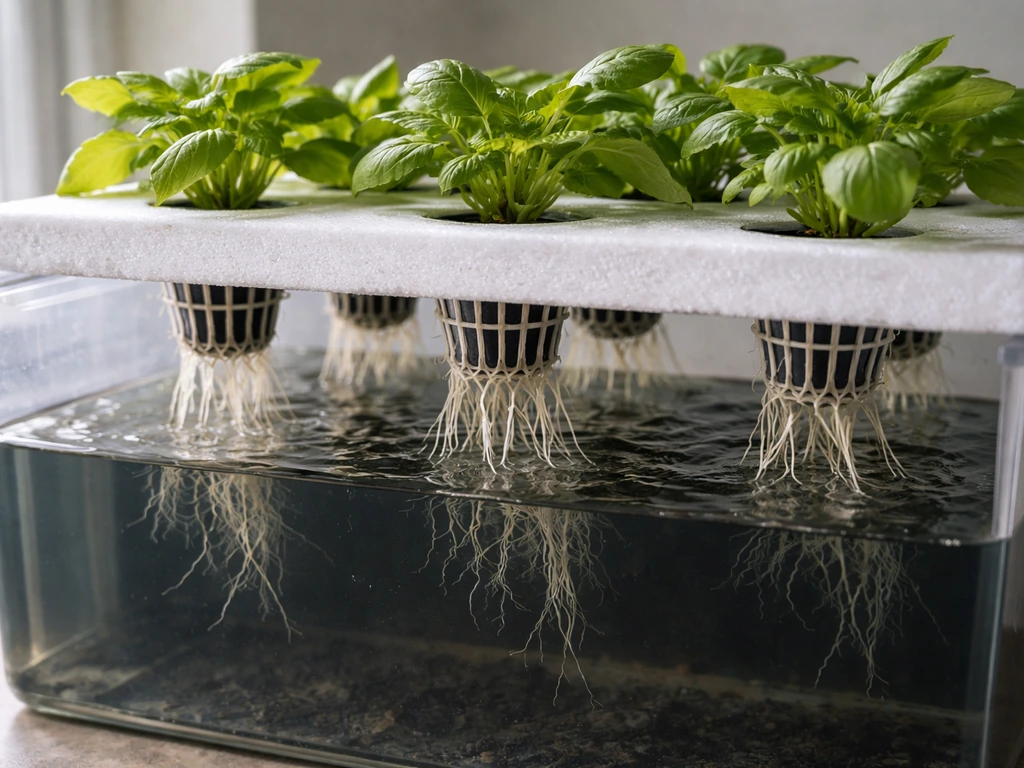
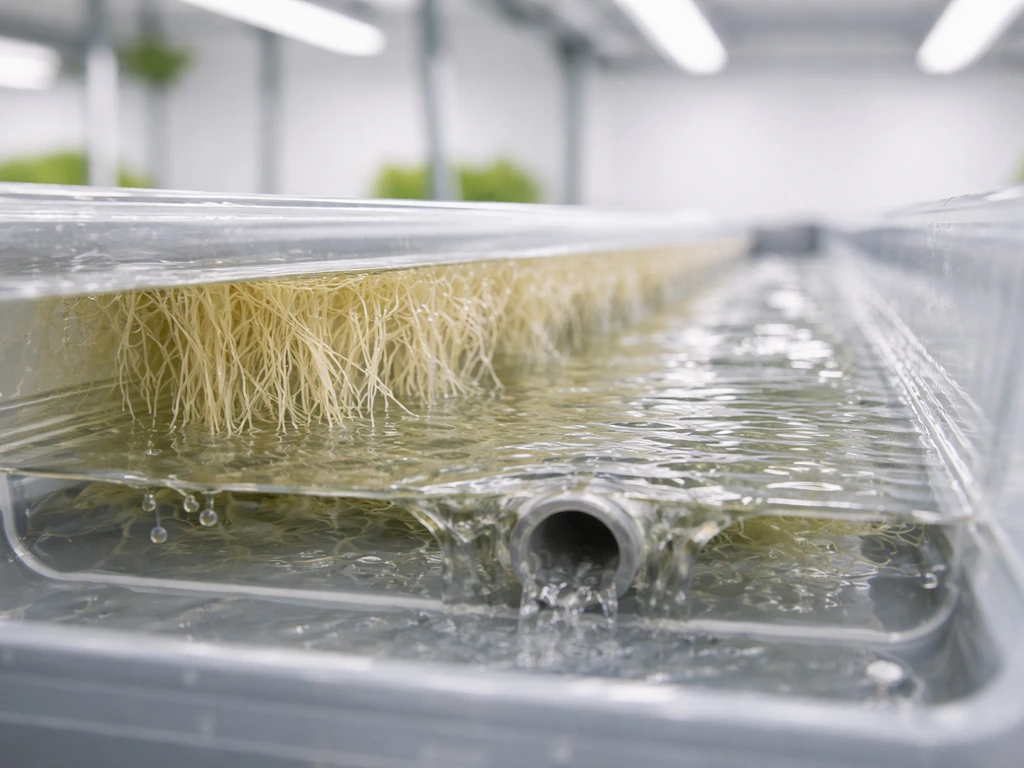
For wheatgrass and barley greens, a basic tray system is all you need. Use shallow, food-grade trays (1020 seedling trays work great) either with drainage holes or without, depending on your preference for flood-and-drain versus passive moisture. Some growers run a DWC-style approach where the bottom of the tray sits just above a shallow reservoir, wicking moisture up through the seed mass. Others use the simpler approach of twice-daily misting or bottom watering. Either works. The key is that you never want standing water sitting against the seed mass for extended periods, or you're inviting mold.
NFT and recirculating systems for full grain production
If you're attempting full grain production, you need a recirculating system that can maintain stable nutrient solution parameters over months, not days. Nutrient film technique (NFT) can work for early vegetative stages, but grain crops develop substantial root masses and tassel structure that make standard NFT channels impractical as the plant matures. A better approach for full grain is a deep recirculating bed or modified DWC container where roots can spread and the solution is actively oxygenated. Researchers running wheat to full kernel formation in controlled hydroponic systems used recirculating setups with continuous monitoring of pH, EC, and dissolved oxygen. That level of control is the baseline you're working toward.
For a home setup, a rack system with tray-based sprouting at the top and a small recirculating reservoir below is the most space-efficient approach for the sprout path. For full grain, dedicate a grow tent of at least 4x4 feet per small batch, set up a recirculating reservoir with a quality air stone and pump, and plan your support system for stalks that will reach 2 to 4 feet tall.
Seed prep and germination step by step
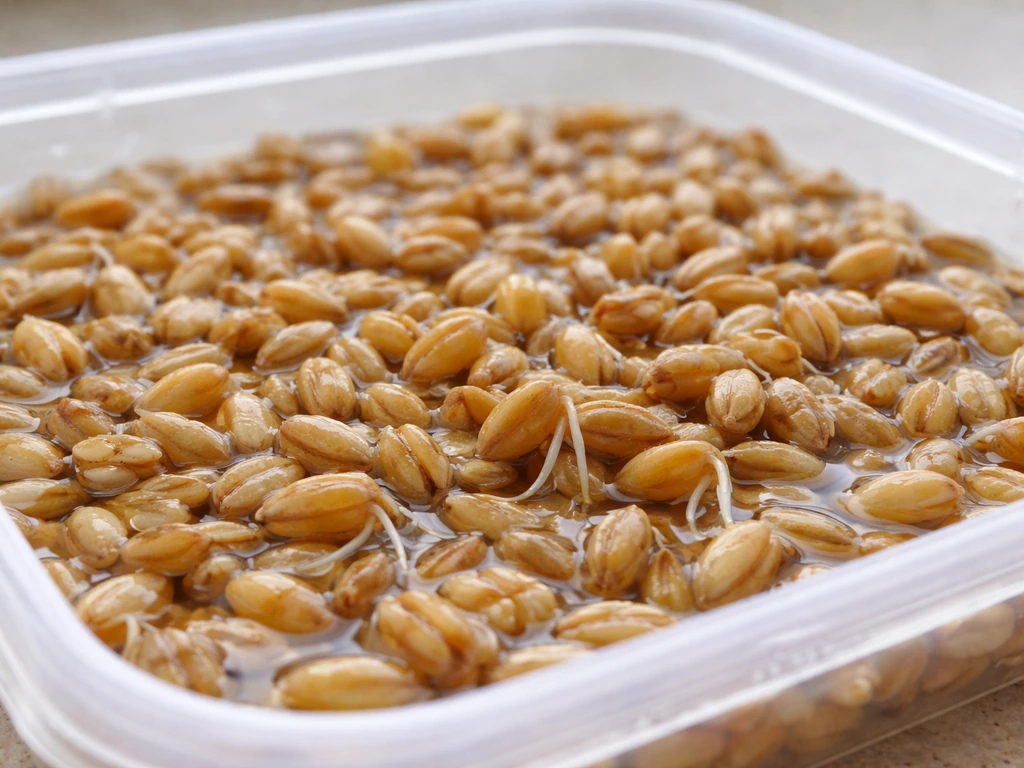
- Source quality, untreated grain seed. Agricultural seed is often treated with fungicide coatings that are unsafe to eat and will interfere with germination. Look for seed labeled 'sprouting grade' or food-grade from a reputable supplier.
- Rinse seeds thoroughly under cool running water to remove dust, debris, and any surface residue.
- Soak seeds in cool water, around 60 to 70°F (15 to 21°C), for 8 to 12 hours. This is the standard approach used by experienced sprouters and it kick-starts the germination process reliably.
- Drain completely after soaking. Spread seeds in a single, dense layer across your tray. For wheatgrass trays, a depth of about one seed layer is correct; for fodder systems, you can go slightly deeper.
- Keep seeds moist but not flooded for the first 24 to 48 hours. You should see tiny root tips (radicles) emerging within 24 hours under warm conditions.
- Once roots are 1/4 inch or longer, you can introduce your nutrient solution. Before that, plain water is fine since the seed itself contains enough stored energy for initial germination.
- For full grain production, transplant individual seedlings into your recirculating system once they have a developed root mass and first true leaves, usually around day 7 to 10.
Growing medium options
For sprout trays, you often don't need a medium at all. Seeds germinate on bare tray surfaces with moisture. If you want support and slightly better moisture retention, a thin layer of coco coir or a hemp grow mat works well. Hemp mats are popular for microgreens and wheatgrass because they hold moisture evenly, drain well, and don't compact. Hemp can also be grown in hydroponics, but it typically needs a suitable growing medium and careful moisture management. For full grain seedlings being moved into a recirculating system, rockwool cubes or hydroton (expanded clay pebbles) in net pots provide adequate root anchorage and good oxygen exposure.
Nutrition and pH/EC management
Grain crops are heavy feeders once they move past the seedling stage, but during sprouting they need very little added nutrition. During sprouting, you typically do not need to add much fertilizer because the seed already provides what the plant requires at first very little added nutrition. For wheatgrass and barley greens harvested within 7 to 10 days, you can get away with plain water or a very dilute nutrient solution. The seed contains enough stored energy to produce the shoot you're after. If you want slightly more robust color and flavor, use a quarter-strength general hydroponic nutrient solution with EC around 0.8 to 1.2 mS/cm.
For full grain production, treat it more like a cereal crop nutrition program. Start with EC around 1.2 to 1.6 mS/cm during vegetative growth, then bump to 1.8 to 2.2 mS/cm during heading and grain fill. Your nutrient mix should include good levels of nitrogen (higher during veg), phosphorus and potassium (prioritized during grain fill), and micronutrients including calcium, magnesium, sulfur, iron, and manganese. A standard three-part hydroponic nutrient formula designed for fruiting or flowering crops works better during grain fill than a veg-only formula.
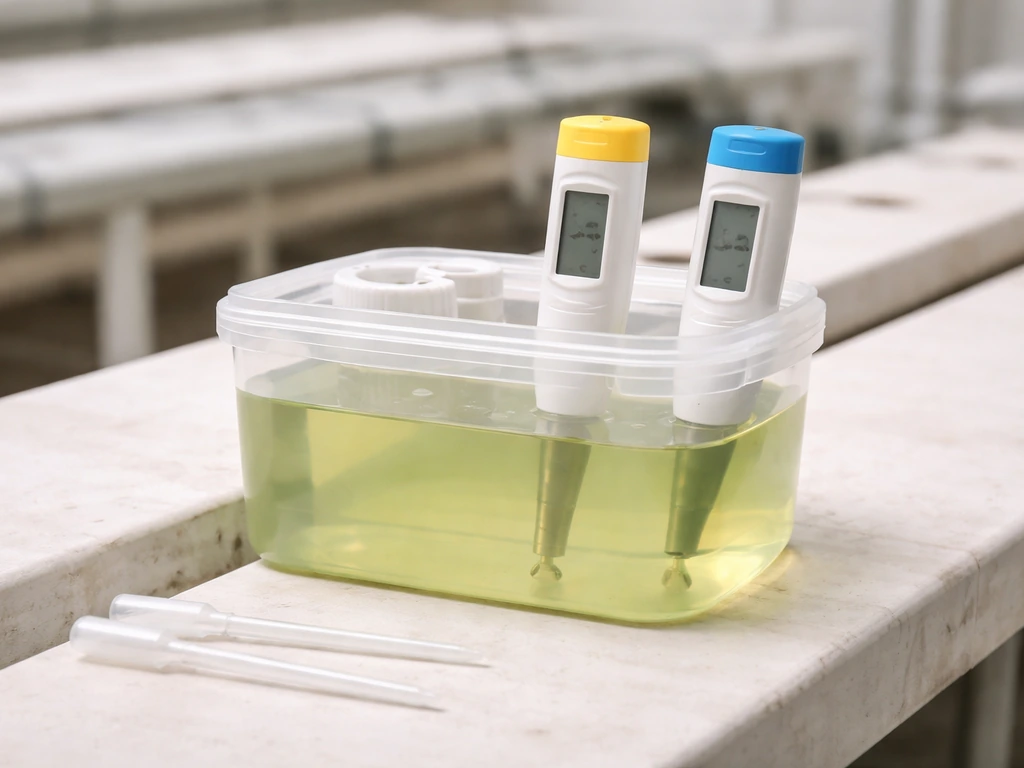
pH management is non-negotiable in any hydroponic system because you don't have soil to buffer fluctuations. Grains do best with pH maintained between 5.8 and 6.5. For sprouting trays checked daily, adjust if pH drifts outside this range. For recirculating systems targeting full grain production, check pH and EC two to three times per day, which is the standard practice documented in NFT management guides. Also monitor dissolved oxygen in your reservoir. Roots need oxygenated solution. A well-maintained air stone in your reservoir should keep DO above 6 mg/L. At or below 4 mg/L you're heading toward root stress and rot.
| Stage | EC Target (mS/cm) | pH Range | Key Nutrients |
|---|---|---|---|
| Sprouting (days 1-7) | 0 to 0.8 | 5.8 to 6.5 | None to minimal; seed-stored energy |
| Seedling / early veg | 1.2 to 1.6 | 5.8 to 6.5 | Balanced N-P-K, Ca, Mg |
| Vegetative / tillering | 1.6 to 1.8 | 5.8 to 6.5 | Higher N, full micronutrients |
| Heading / grain fill | 1.8 to 2.2 | 6.0 to 6.5 | Higher P-K, lower N, Ca, Mg, Fe |
Light, temperature, and spacing
For sprouting and wheatgrass trays, light requirements are modest. A simple T5 fluorescent or LED panel providing around 2,000 to 5,000 lux is enough for the first 7 to 14 days of growth. Wheatgrass doesn't need intense light to produce nutritious shoots. Keep your grow area between 65 and 75°F (18 to 24°C). Lower temperatures slow germination and invite mold on damp seed masses. Higher temperatures speed drying and can stress the young shoots.
For hydroponic barley fodder specifically, peer-reviewed research found that light intensity meaningfully affects both growth rate and nutritional value of the harvested greens. That study maintained grow temperatures at 25°C (77°F) during light periods and 22°C (72°F) during dark periods. A 16-hour light and 8-hour dark photoperiod is a solid starting point for most grain greens.
For full grain production, you're looking at a very different lighting requirement. Wheat and barley are long-day plants that initiate heading when day length exceeds roughly 14 hours. Indoors, you'll need to manipulate photoperiod intentionally. During vegetative growth, run 18 hours of light. Transition to 14 to 16 hours to trigger heading. Use high-output full-spectrum LED panels capable of delivering at least 400 to 600 micromoles of PAR at canopy level. Don't skimp on light intensity here, grain fill is photosynthesis-intensive and light is often the limiting factor in indoor production.
Spacing matters more than people expect. For sprouting trays, dense seeding (about 1 to 2 oz of seed per 10x20 inch tray) is standard. For full grain production in a recirculating system, give each plant 4 to 6 inches of spacing in all directions minimum, and plan for significant vertical clearance. Wheat can reach 3 to 4 feet. Good airflow between plants is critical both for reducing disease pressure and for pollination, since wheat is wind-pollinated and needs air movement to set grain.
Knowing when to harvest
Harvesting shoots and sprouts
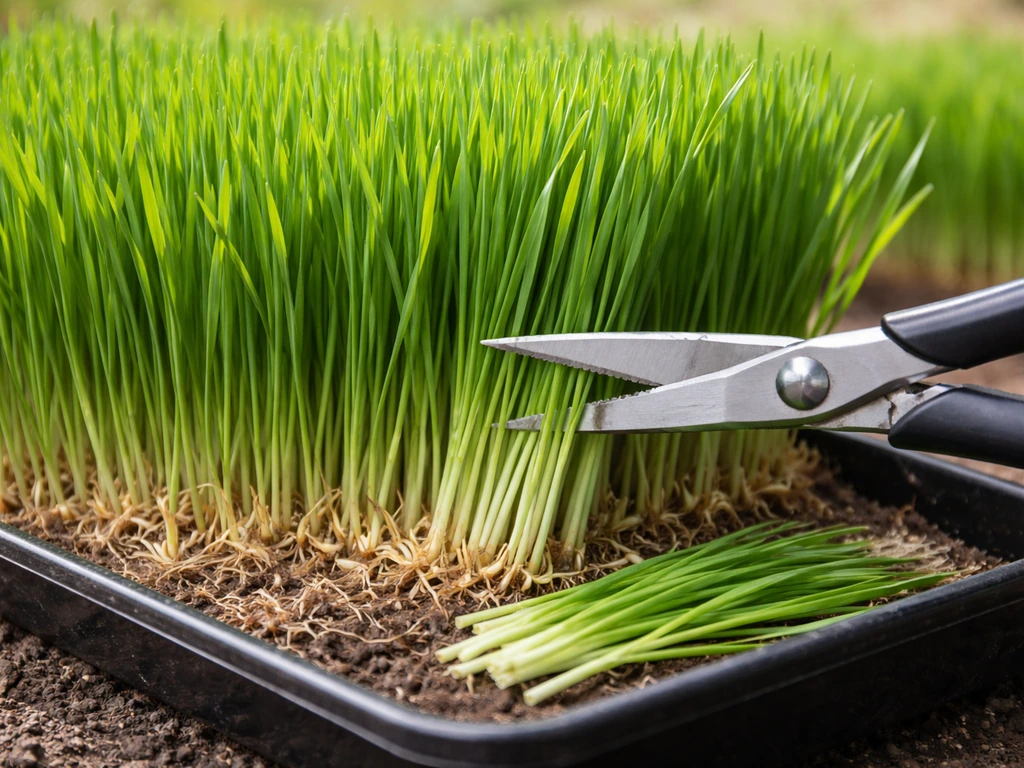
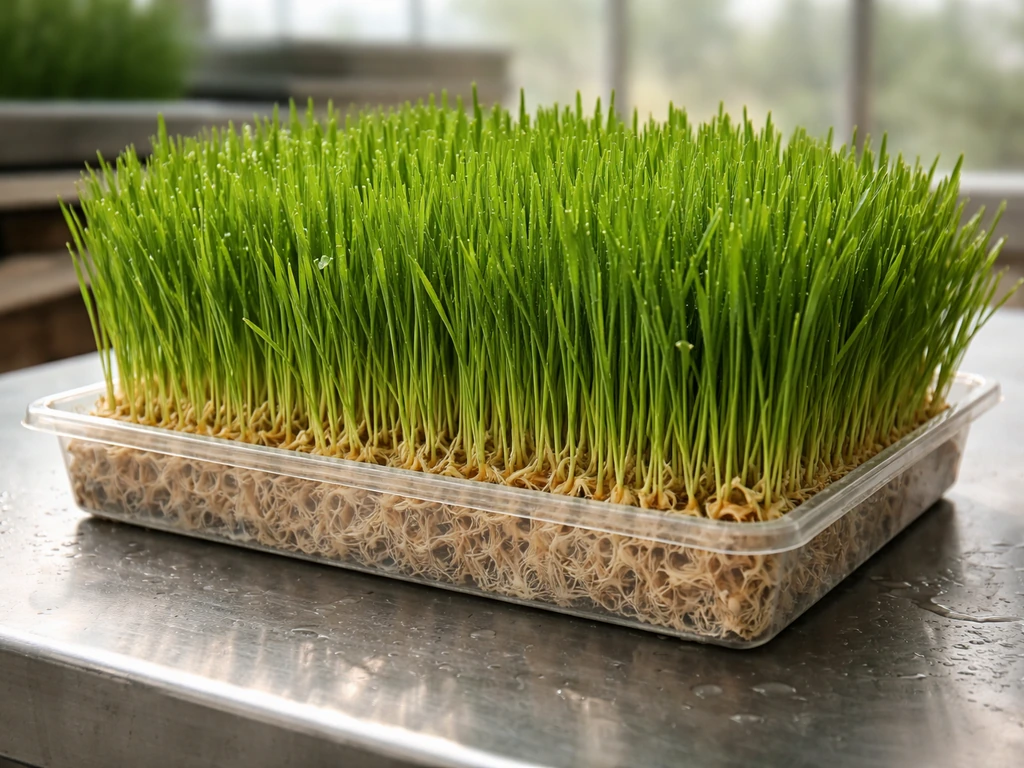
For wheatgrass and barley greens, success looks like a dense mat of bright green shoots reaching 6 to 8 inches tall. Harvest by cutting just above the seed/root mass with clean scissors. The best flavor and nutritional density is just before the shoot starts to split into a second leaf, which typically happens between day 7 and day 10. Research on hydroponic barley fodder specifically documents harvest on day 5 of light cultivation (seven days after seed germination) as the standard commercial harvest point. Don't wait for yellowing or browning. If you see that, you've gone too long or have a stress problem.
Harvesting full grain
Full grain harvest is more like harvesting a field crop. Wheat kernels are mature when the plant has senesced (turned golden), the heads droop with kernel weight, and the kernels are hard and resist thumbnail pressure. Test a few kernels by biting down. Mature grain is firm and starchy, not doughy. In a controlled indoor hydro environment, you can expect the full cycle to take 90 to 180 days depending on cultivar and conditions. At harvest, cut heads, let them dry further in a well-ventilated space, then thresh and winnow as you would with field-grown grain.
Troubleshooting the most common failures
Root rot and oxygen problems
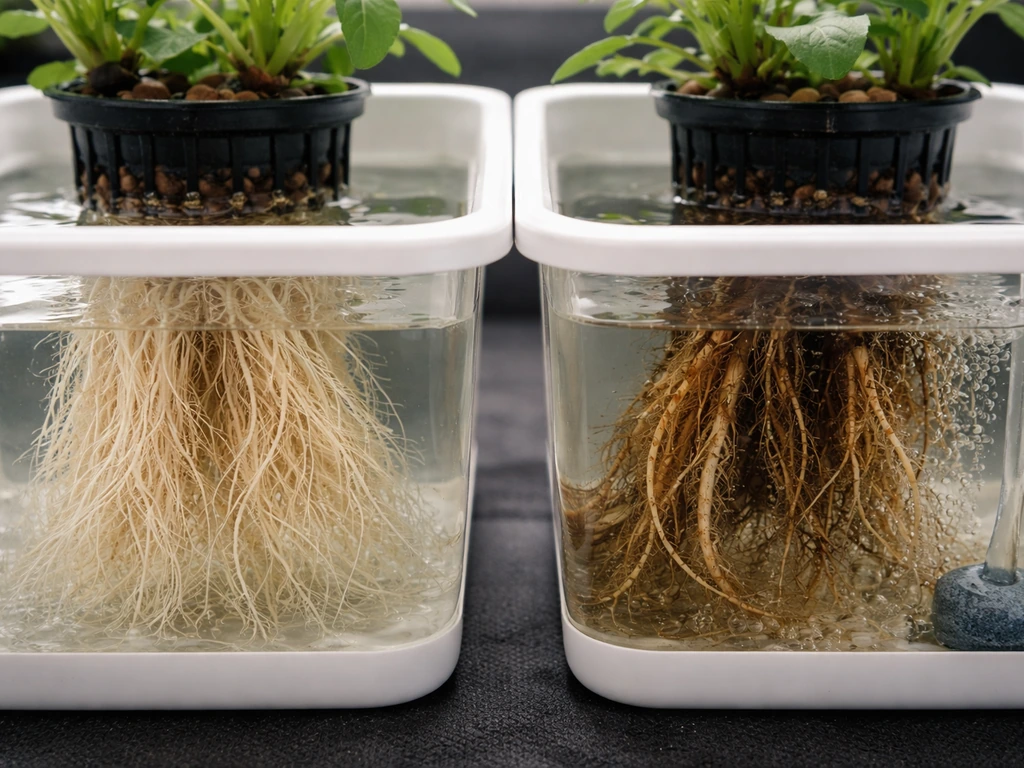
Brown, slimy, or foul-smelling roots are root rot, and the primary cause in hydroponic systems is oxygen deprivation in the root zone. This is an anaerobic condition problem. Fix it by increasing aeration with a stronger air pump and larger air stone, checking that your water temperature is below 72°F (warmer water holds less dissolved oxygen), and flushing the system with fresh, well-oxygenated solution. If you catch it early, hydrogen peroxide added to the reservoir at about 3 ml per gallon of 3% H2O2 can help knock back the pathogen load. Severe root rot usually means starting over.
Algae in the reservoir and on trays
Green or brown slime growing in your reservoir or on exposed parts of your tray setup is algae, and it competes with roots for oxygen and nutrients. The fix is light exclusion. Cover any reservoir openings, wrap clear tubing with tape, and use opaque trays. Algae cannot grow without light, so blocking light from your nutrient solution is the primary prevention tool. If algae has taken hold, drain the system completely, scrub surfaces, and sanitize with a dilute bleach solution (about 1 tablespoon per gallon of water) before rinsing thoroughly and refilling.
Mold on seeds and shoots
Fuzzy white or gray mold on sprouting seeds or at the base of shoots is one of the most common failures in grain sprout systems. The causes are always the same: too much moisture with not enough airflow, seeds sown too densely, or dirty equipment carrying fungal spores from a previous run. Prevention: sanitize trays before every use. Either soak in dilute bleach water or rinse with a hydrogen peroxide solution. Sproutpeople document both approaches for sprouting equipment. During the grow, run a small fan to maintain gentle air circulation across the tray surface. Keep temperatures moderate (65 to 72°F). If you see mold starting, increase airflow immediately and reduce moisture input. Established mold in a tray usually means that batch is lost.
Nutrient imbalances and pH drift
In a recirculating system running for weeks or months, nutrients get consumed unevenly and pH drifts as ions are taken up selectively. This is the part that surprises new hydroponic grain growers who are used to soil's natural buffering. If your plants show yellowing between veins (iron or magnesium deficiency), yellowing of lower leaves (nitrogen), or tip burn (calcium), check pH first before adding more nutrients. Iron becomes unavailable above pH 6.8. Calcium and magnesium get locked out below pH 5.5. Correct pH first, then assess whether nutrient additions are actually needed. Top off the reservoir with fresh nutrient solution rather than plain water when solution levels drop to maintain consistent EC. A full reservoir swap every 7 to 14 days in active systems keeps things from getting too far out of balance.
Pests and disease in grain hydroponics
Short-cycle sprout operations rarely see serious pest pressure because the grow completes before most pest populations can establish. For full grain production indoors, fungus gnats are the most likely insect problem, attracted to moist growing media and decaying organic matter. Yellow sticky traps catch adults. Letting media surface dry slightly between waterings reduces breeding habitat. Powdery mildew can appear on grain foliage if humidity stays consistently above 70% with poor airflow. Keep relative humidity between 50 and 65% and run a circulation fan at all times. Pythium, a water mold causing damping off and root collapse, is a risk in systems with stagnant or warm water. Prevention through good oxygenation and cool reservoir temperatures is your best tool.
Your next steps right now
If you want results fast, grab some food-grade wheat or barley seed, soak it tonight for 8 to 12 hours, and set up a simple tray system tomorrow morning. Sproutpeople also instruct soaking wheatgrass seed in cool water (about 60, 70°F) for 8, 12 hours and note tiny initial roots after the first 1, 2 rinse or drain cycles blank" rel="noopener noreferrer">soak it tonight for 8 to 12 hours. You'll have harvestable wheatgrass or barley greens within 7 to 10 days. That's the fastest proof of concept in grain hydroponics and it actually produces something useful. If you're more ambitious and want to attempt full grain production, start with a single wheat cultivar, map out your system (recirculating DWC or NFT with solid root support), plan for a 90 to 180-day commitment, and build your monitoring routine around daily pH and EC checks from day one. If you later pivot to hops as a long-term indoor crop, you can use the same mindset of planning for stable inputs by reviewing what do hops need to grow as a related checklist. Understanding what your system needs across both the nutrient side and the environmental side is the foundation that separates growers who get grain from those who get frustration. If you’re setting up hydroponics for the first time, start by planning your seed choice, container, light, nutrients, and daily monitoring needs.
FAQ
Can you grow grains hydroponically in a simple countertop setup without a recirculating system?
Yes for sprouting and wheatgrass or barley greens, a non-recirculating tray with daily misting or bottom watering is usually enough. For full kernel production, you generally need recirculation and strong aeration, because the roots expand and the solution chemistry must stay stable for months, not days.
What’s the best grain to start with if I only want something edible quickly?
Wheatgrass or barley greens are the safest first targets. Choose seed meant for sprouting (not feed that may be treated), and harvest around day 7 to 10 when shoots are dense and still bright green for the best flavor and lowest mold risk.
Can I use regular garden seed or feed corn to do hydroponic grains?
It depends on treatment. Many grains sold for planting or animal feed may be chemically treated or heat processed, which reduces germination or can introduce contaminants. Use sprouting-intended seed for tray crops, and if you attempt full grain, confirm the cultivar is reliable and not pre-treated.
How dense should I seed a sprouting tray to avoid mold?
Dense seeding is normal, but the goal is an even blanket of seeds that still gets airflow across the surface. If you see fuzzy growth or musty smell early, reduce the seed rate, improve airflow with a small fan, and avoid over-wetting so the top layer dries slightly between watering cycles.
Do I need a growing medium for wheatgrass hydroponics?
Not necessarily. Bare trays work because you are mainly producing shoots, not a large root system. If you want easier moisture control, a thin layer of coco coir or a moisture-holding hemp mat can help, but keep it thin so you do not trap stagnant moisture against the seed mass.
Can I top off with plain water, or should I always use nutrients in hydro grain systems?
During sprouting trays, plain water or a very dilute nutrient mix is typically fine because the seed provides early energy. In recirculating setups, top off with nutrient solution when the reservoir level drops to maintain EC, otherwise you dilute salts, pH can drift, and deficiency symptoms can appear even though the plants look “hydrated.”
How do I know if my pH problem is real nutrient lockout or something else?
Use pH first. If leaves yellow between veins or you see other symptoms, check whether pH is outside the 5.8 to 6.5 comfort range. Iron tends to become unavailable at higher pH, calcium and magnesium become hard to absorb at low pH. Correct pH, then wait before adding more fertilizer, because repeated dosing during a pH error usually worsens the issue.
What should I do if my reservoir smells bad or roots turn brown and slimy?
That usually points to oxygen deprivation and root rot from anaerobic conditions. Increase aeration (stronger pump and larger air stone), keep reservoir temperature below about 72°F, flush with fresh oxygenated solution, and improve oxygenation immediately. If it is advanced, plan on restarting rather than trying to salvage a badly compromised root system.
Why is algae appearing in my hydro grain setup, and can I fix it without draining?
Algae is a light problem. Cover reservoir openings, keep light off tubing and solution, and use opaque trays. If algae has already spread, draining and scrubbing surfaces plus sanitizing with a dilute bleach solution is usually the fastest way to reset before refilling.
What humidity and airflow targets reduce powdery mildew for grain foliage?
Aim for moderate humidity, roughly 50 to 65% indoors, and keep a constant circulation fan so leaves and seedling surfaces do not stay wet or stagnant. If humidity stays above about 70% with poor airflow, powdery mildew becomes much more likely.
How often should I check pH and EC for full grain production?
For full kernel crops in recirculation, check pH and EC about two to three times per day, not just daily or weekly. Grain roots and nutrient uptake patterns shift over time, pH drifts, and quick corrections prevent cascading issues during heading and grain fill.
When I attempt full grain indoors, is lighting different from sprouting?
Yes. Sprouts need modest light, but full grain requires long photoperiod control to trigger heading and enough intensity to drive grain fill. You will also likely need vertical clearance because wheat can reach about 2 to 4 feet depending on conditions.
Is pollination a concern for indoor hydroponic wheat?
It can be. Wheat is wind-pollinated, so without airflow and gentle plant movement, heading may happen but grain set can be poor. Provide airflow between plants and consider periodic gentle agitation or ensuring the canopy is not stagnant.
How do I know when wheat kernels are mature enough to harvest indoors?
Look for senescence (heads turning golden), drooping heads, and hard kernels that resist pressure. A practical test is to bite a few kernels, mature grain should be firm and starchy rather than doughy. Then dry further in a well-ventilated space before threshing.